Bound by Hope
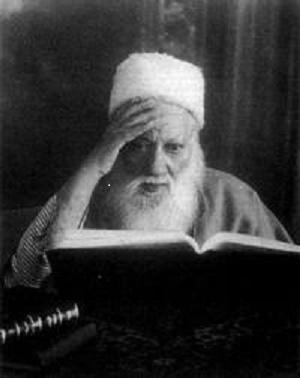
Hakham Yehudah Fetaya passed away this day, the 27th of Menahem Av, 74 years ago. My grandfather told me that during the funeral the sky were covered with dark clouds and heavy rain started pouring. Being that this is very atypical to the Israeli summer, people felt that the heavens were weeping for his death. Since then, each year on his yahrzeit (except between 1948-1967), hundreds of people ascend to his grave on Har HaZetim (Mt. Olives), to read the special prayers he composed for tumultuous times, and specifically the holocaust.
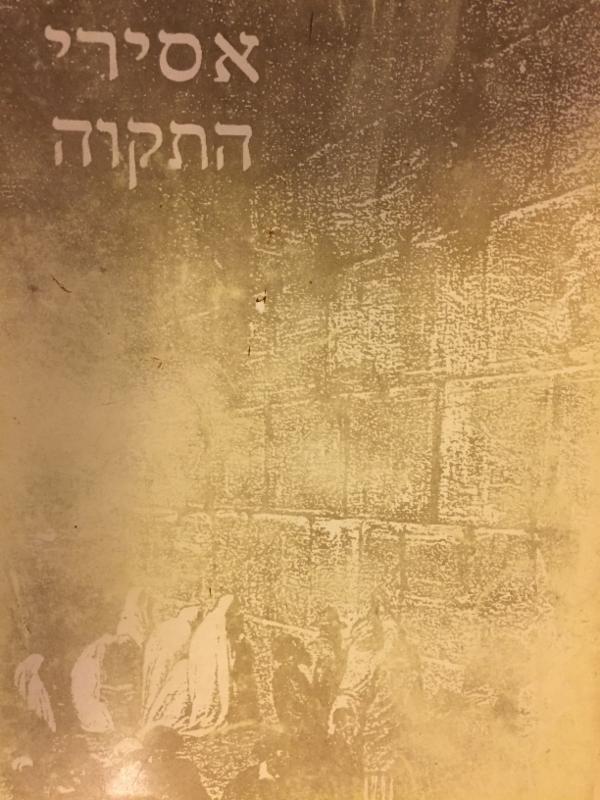
He compiled the prayers in booklet and titled it אסירי התקוה - Bound by Hope[i], a name which conveys the message that despite all the difficulties we are going through, we are still bound to God by our faith and hope.
The introduction to the first edition, printed in 1940, reads:
סדר האמור במחברת זו הוא מה שעשינו לדאבון נפשנו בעיר הקודש ירושלים בשנת תקע בשופר גדול לחרותנו, אשר היתה עת צרה ליעקב ובאו מים עד נפש. והוכרחנו להדפיסו כדי שיהיה מצוי בידי הכל, וכולנו נתחבר כאיש אחד להרבות בתפילה ובתחנונים לפני המקום ברוך הוא, אולי יחנן ה' צבאות על שארית עמו וצאן מרעיתו שלא יהיה דמם נשפך כמים...
The order of prayers in this booklet is what we had to do, with great sorrow, in the holy city of Jerusalem, in the year 1940 (corresponding to the Hebrew date alluded to in the verse: Sound a great shofar and bring forth our freedom), as we were drowning in the tidal waves of disaster [in Europe]. We had to publish it to make it available for all, so we can join together, with one heart, to plead with prayer and supplications in front of God, and hope that He will have mercy for the remnant of his flock and will not let their blood spill like water...
Those special prayers, which Hakham Yehudah conducted almost on a daily basis at Rahel's Tomb and many other sites, were not his only effort in trying to help the Jewish People. He was engaged in works of charity and education, and at one point procured an airplane from the RAF, in order to perform a service of Kapparot over the Land of Israel.
[ii]
God on Trial
At one very dramatic moment, Hakham Yehudah gathered all the sages and Kabbalists of the famed Beth El and Ohel Rahel academies in Jerusalem, and summoned God to a Din Torah, a trial, with the specific purpose of acquitting the Jews and proving that God must stop the massacre in Germany. In order to have a fair trial, he appointed both a prosecutor and a defense attorney [himself, obviously] for the Jews.
My grandfather kept telling me of the warning his father issued to the prosecutor: "Speak briefly. Do not cast the Jews in a negative light. After all, we all are good people." This is a message which guides me till this very day in dealing with questions of Halakha, education, and working with the community. I hope to write about the details of this unique event in the future, but it was certainly typical of Hakham Yehudah, as well of his son, Hakham Shaul, to not shy away from confrontations with God Himself.
A Different Pilgrimage
One example of his unabated love for the Jewish People, his deep pain for their suffering, and his willingness to argue with God, can be found in the prayers mentioned above. I have missed those prayers for several years, but as you are reading this post, the sense of longing for me is greater than ever because even though I am in Israel, I will be boarding a plane while my family, friends, and disciples of the Hakham will ascend the narrow paths leading to his burial site.
These pilgrimages, which were awe inspiring events, left a very deep impression on me as a young child. My grandfather, Hakham Shaul, our cantor, Gurji Yair, and many elders of the Iraqi community would go around the grave seven times, reading the prayers Hakham Yehudah composed during the holocaust, as he was trying frantically to do whatever he could to help Jews in Europe.
Even though the Holocaust was already thirty years behind us when I first attended those prayers, my grandfather's voice reverberated with such intensity, leaving no room for doubt that the world we live in is far from being perfect. Hakham Shaul, following in the pathways of his great father, felt the pain of the needy and the poor, the holocaust survivors whose spirit was broken, and those who felt imperfect, whether spiritually or physically, and his prayers echoed his pain.
The Mother's Prayer
The pinnacle of the prayers of Hakham Yehudah's gravesite were the special poems he composed in honor of our Mothers, Sarah, Rivka, Rahel, and Leah. One could say that he wrote the first modern feminist Midrash, in the early 1900's, as he felt that the traditional Haqqafot, which mention only men, discriminate against women.
Hakham Yehudah wrote four poems, one for each one of the mothers, but Rahel received a special treatment. Her poem, Zekhut Rahel, is three times as long as all the others combined.
The special affinity of Hakham Yehudah for Rahel was in part a product of his Kabbalistic background, and in part of his egalitarian approach, but it also had a very personal element. His wife's name was Rahel (and affectionately, in Iraqi Arabic: Chahla), and they have lost several children, in their infancy. They have also suffered the blow of losing their married daughter Simha and her husband Shimon during the plague of 1914, and have taken the couple's little orphaned daughter, Haviva, under their wing. The tragic life of אמא רחל- Our Mother Rahel, was for him much more than a biblical image and a mystical metaphor for the Shekhina, it was the real life story of a bereaved father sharing the pain with his beloved wife Rahel.
As we shall later see in the analysis of the poem, he pleads with God but also argues bitterly with Him, demanding a better treatment for the nation and the individual.
Click HERE for a PDF of the Hebrew text and my translation. I hope to be able to expand on it tomorrow, God willing.
To be continued...
Rabbi Haim Ovadia
נין ונכד לחכם יהודה פתייה זצ"ל
[i]
The cover of the booklet's most recent edition:
[ii]
The story was documented in The Jerusalem Post, August 14th 1987, under the title "Circle of Blood", as it was told by the British pilot of said airplane.