|
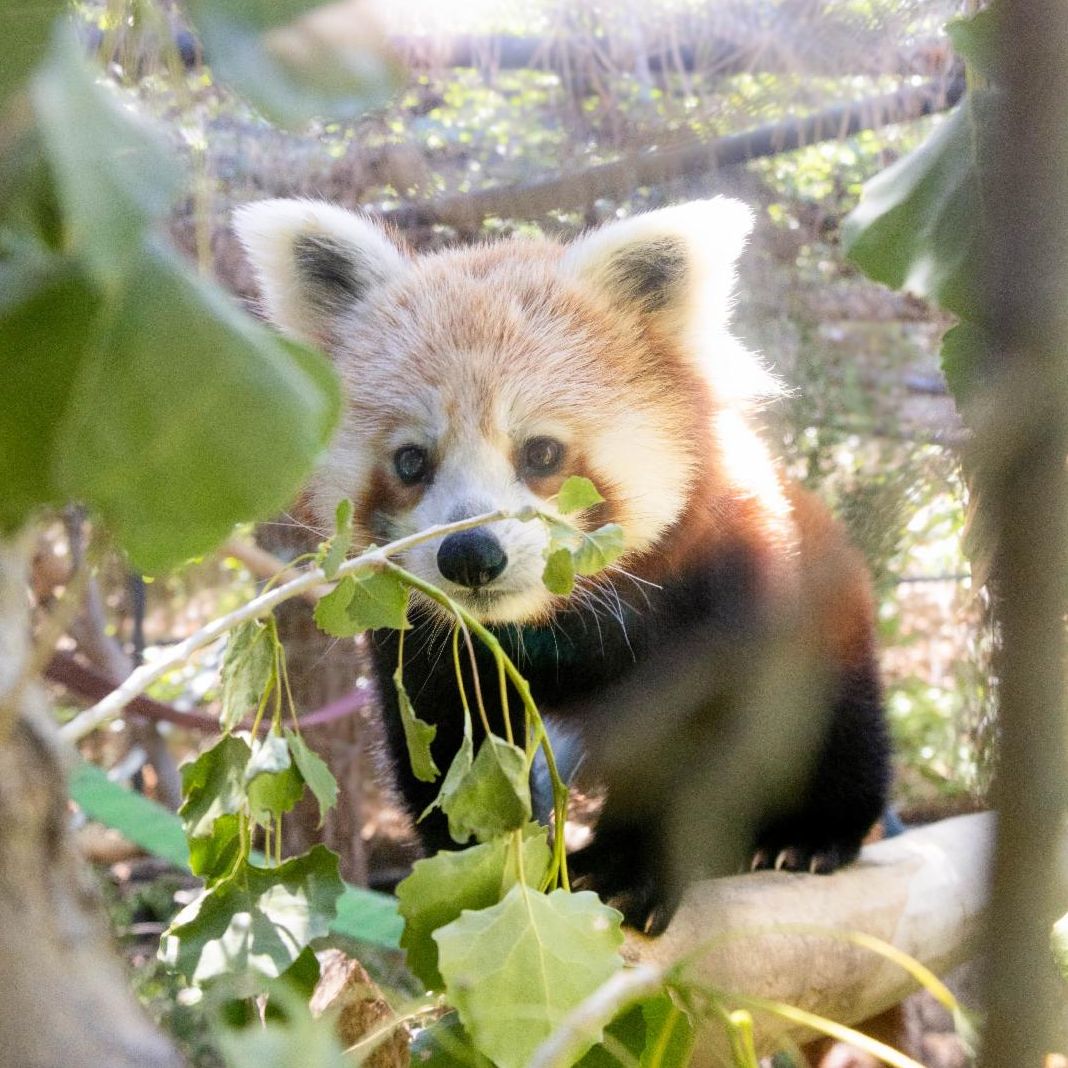
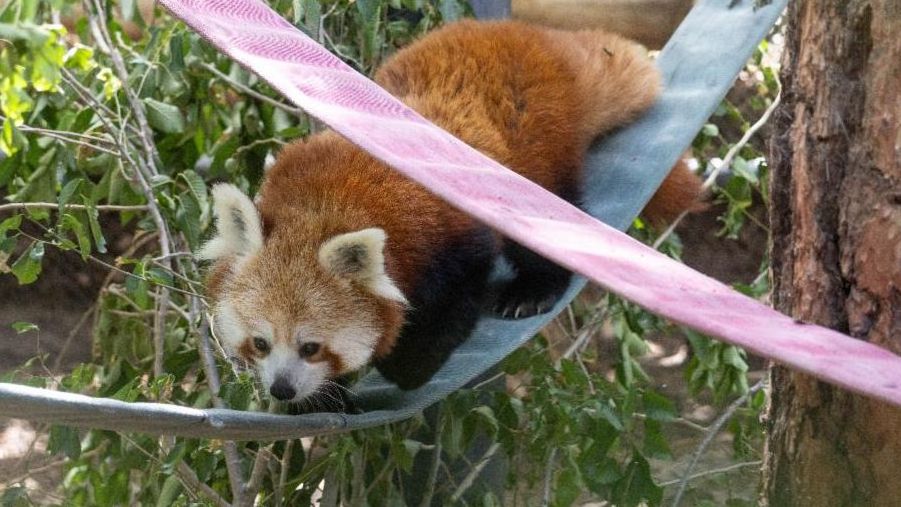
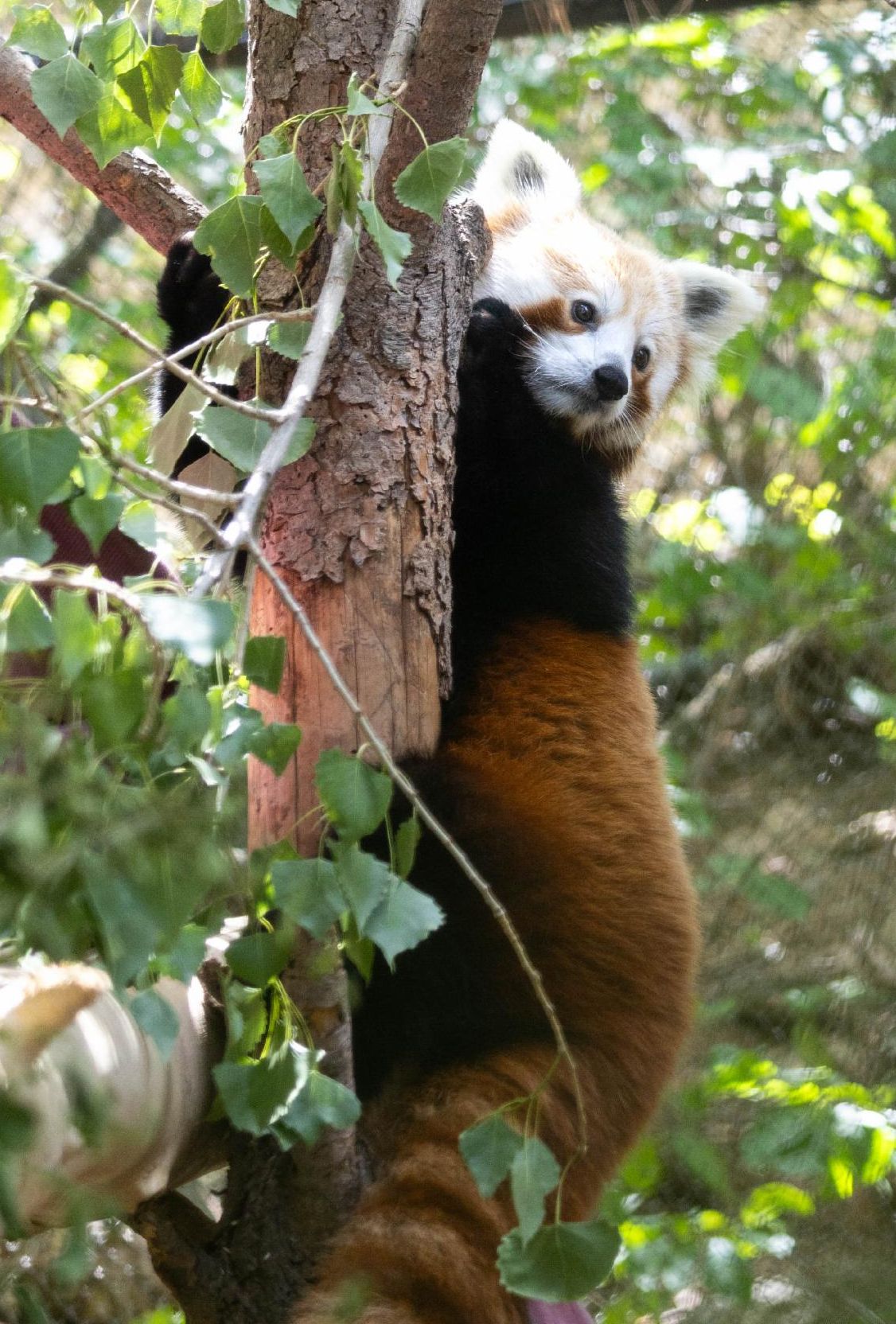
A bamboo-loving, fuzzy-faced addition is settling in at Cheyenne Mountain Zoo. Cora, a 1-year-old female red panda, is the newest resident in Asian Highlands.
“The cuteness factor is off the charts with this one,” Rebecca Zwicker, animal care manager in Asian Highlands, says. “Right now, we’re helping her settle in by providing a calm environment with lots of activities and opportunities to play, eat and rest.”
After an overnight drive from Smithsonian's National Zoo and Conservation Biology Institute, in Washington, D.C., Cora arrived at Cheyenne Mountain Zoo by climate-controlled passenger van on the afternoon of Tues., July 9.
Cora will live solitarily at CMZoo, as red pandas do in the wild. Her move is in support of the Association of Zoos and Aquariums SAFE (Saving Animals From Extinction) Red Panda and the Red Panda Species Survival Plan, and their management of a diverse and healthy population in human care.
Red pandas are arboreal, meaning they prefer to be in trees rather than on the ground, so Cora has a brand-new system of branches to explore. They’re also known for their curious nature, which often leads to adorable clumsiness.
When Cora first arrived at her new home in Asian Highlands, she stepped right out of her travel crate, curiously sniffed her new surroundings and comfortably climbed into one of her trees. Cora immediately set about testing multiple perches, enjoying bamboo snacks and scouting out her new den. While Cora may take some time to completely settle in, she seemed right at home on her first day.
“It’s going to be hard for all of us to contain our excitement, but we will manage for Cora’s well-being,” Rebecca says. “It has been more than 20 years since red pandas lived at CMZoo. We’re thrilled to welcome this species back to the mountain, and to help our guests learn more about them.”
Named to raise awareness for the importance of wildlife corridors, Cora is an outgoing ambassador for her species. In the same 20-year timeline since red pandas’ last appearance at CMZoo, the wild population is estimated to have declined by half. Only approximately 2,500 red pandas remain in their native Eastern Himalayan forests. Habitat loss and fragmentation are the leading factors for the decline.
“Cora is going to help us teach more people about the importance of wildlife corridors,” Rebecca says. “You might have heard of the Interstate 70 wildlife corridor, here in Colorado. It connects habitats and populations of various species that would otherwise be separated by human developments. We can support organizations building similar connections between habitats for red pandas and other species in Cora’s native lands.”
As Cora’s care team gets to know her better, Cheyenne Mountain Zoo will share updates about her on social media. For the next week or so, it may be difficult to spot Cora. Keepers have added some branches to the front of her new home to give her some privacy and barriers will keep guests a little further away than normal while she settles in. Cora’s home is located in Asian Highlands, between the Amur tiger and Amur leopard habitats.
|