Bonnie R. Rabin, Ph.D.
Personalized Educational & College Admissions Services
South Florida 561.509.0021
Boulder/Denver 720.737.9944
Online 833.MY.ESSAY
www.collegecareerconsulting.com
Experience the Difference!
Expert Knowledge & Caring Support
ACADEMIC & COLLEGE ADMISSIONS ADVISING WHEREVER YOU ARE
STEM, Business, Humanities, Creative Arts
IS YOUR STUDENT ON TARGET?
Joyful? Motivated?
Build your personalized Educational & College Admissions Plan!
Bonnie R. Rabin, Ph.D.
guides her clients to define and realize educational and career goals.
With over thirty years of experience as a university professor & admissions committee member you're invited to leverage her extensive knowledge of university curricula and career opportunities to BUILD YOUR COLLEGE PLAN!.
Pre-College Advising!
Be inspired!
Juniors (2022)
WRITERS' BLOCK COLLEGE ESSAY WORKSHOP -
June 21-25, 2021
Space is limited - registration now open!
|
|
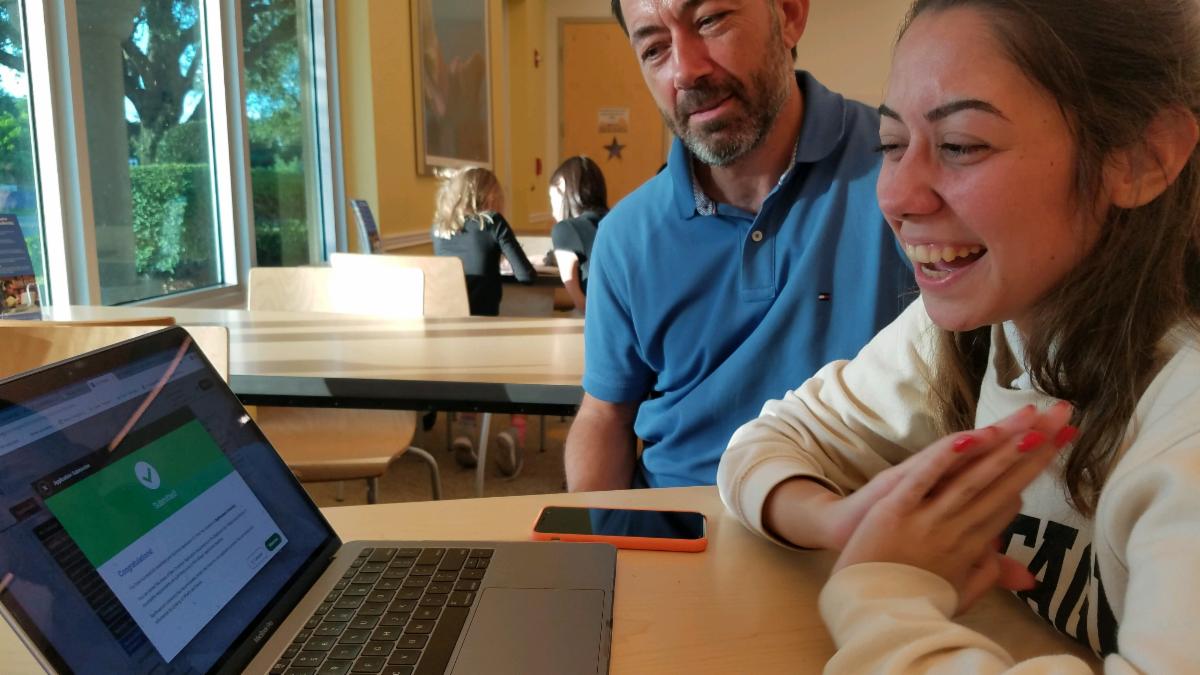
Congrats!!! A SAMPLE of our recent College Acceptances Include:
UPenn, Carnegie Mellon, Brown, Princeton, Cornell, Georgia Tech, NYU, U of Chicago, Northwestern, Bowdoin, WUSTL, UF, Reed, Michigan (Engineering & Other majors), U.Illinois (Engineering & Others), Boston U., UNC, Notre Dame, Miami, Dartmouth, UF, UC Boulder, Duke, SCAD, Tulane, Smith, Haverford, Tufts, Brandeis, Drexel Honors, Parsons, Berklee College of Music, UC Boulder, U.Arizona, Penn State, UT Austin, Pittsburgh, SUNY Stonybrook, RIT, plus many more
COVID POLICY UPDATE
Your College Admissions Goals Haven't Changed - But Your College Plan May Need Adjustments.
All our appointments are held remotely. Access personalized online college counseling with Bonnie Rabin, PhD.
We're not new to remote college counseling. In fact, we've been serving our clients throughout the US through virtual platforms for years. We're ready to answer all your questions about College Admissions, College Applications and College Essays in these uncertain times.
Curriculum Planning: AP, IB, AICE, Dual-Enrollment? What's right for your student and WHY!? Click to View Video: Read details that follow.
|
|
Click to View: AB vs IB vs AICE
Congrats!!! A SAMPLE of our 2021 Early Decision and Early Action Acceptances Include:
(Many with Scholarships)
University of Penn, Penn State, Cornell, Stanford R-EA, Carnegie Mellon, Case Western, Pittsburgh, U of Chicago, Rose Hullman, UCF, NYU, Ohio, Indiana,Syracuse -Newhouse, Fordham, Boston, Miami, Ithaca College, Pratt, Northeastern, UCF, FAU Honors, U Arizona, and many more....
WRITE YOUR STORY!
If you're a Senior '21 in the Regular Decision Pool-
Talk with me about Mid-Year Admissions Update Letters
*** Decisions -- Where will you place your deposit May 2021 - Need some help deciding and evaluating your options or negotiating your financial aid offers ?
|
|
Mid-Year Assessments: Educational & College Admissions Planing !
9th-11th - It's time for Course Planning Discussions for 2021-22 and Summer '22 Program Applications
Juniors (2022) - Attend our June WRITERS BLOCK WORKSHOP - Complete your college core essay before summer
|
|
College Admissions Planning: Insider Tips
High School Course Planning - AP vs IB vs AICE?
Dual Enrollment?
Greetings High School & Middle School Students & Families
It's Time for Course Planning 2020-21
AP, IB, AICE,
School Academies,
Dual-Enrollment??!!
At this time of year, students and parents are focused on course selection for the 2021-22 year. There is always a bit of uncertainty about the value of "Academies", AP classes (too many or too few?), AICE vs. IB diplomas and whether "Dual-Enrollment" classes are appropriate. Middle school parents may also be exploring high school choices - and wondering how to handle the disappointment of missing the lottery for limited spots within "choice" or "charter schools".
Regular readers of my newsletters and blog posts undoubtedly read about the changes in standardized testing formats- in particular, my recent discussion of the removal of SATII Subject tests- (CLICK to re-read "Everything to Know About Testing"). That change will have an impact on HS course planning because selective universities that required /recommended these exams during the college application process will likely replace them with AP exam scores- currently NOT a part of the normal college admissions process. I do NOT see this as a good thing- students are already stressed and pressured to over-enroll in AP classes. More below....
Whether your dream college is a highly selective university, the Ivy League, a liberal arts college, your state's flagship - or any one of several outstanding academic institutions throughout the country ("FIT"??l) - - please consider the following points as you prepare to select your coursework for next year:
-
One of the most important aspects of your high school academic experience is taking coursework that prepares you to succeed in subsequent and increasingly complex courses. This is your EDUCATION!! Please follow your heart- not the crowd. As you'll read about below, the importance of having a foundation in STEM coursework cannot be overstated (even if you aren't a STEM student!). Please don't ask me "what looks good on my application?" - the question you need to be asking is "what courses do I need to be successful in the anticipated educational path? What concepts do I need to learn?" Students should take the most challenging and relevant coursework that they can comfortably manage. (Sometimes that means requesting to override teachers' placement recommendations.)
- In addition, your courses should allow you to explore and discover beyond your comfort zone. Why should any 14 to 17 year old young adult be 100% certain of a path - take interesting electives!!
Don't waste your available spaces on courses that teach little and electives that will likely be removed from your calculated GPA by college admissions officer (yes, that's right- those none core courses are removed in most situations!!)
- Finally- your coursework should always be challenging but not more than you can comfortably manage. I lost track of the number of parents and families that thanked me for talking them out of enrolling in seven AP classes! (Read my Google Reviews)
This is often a busy time of year for my practice serving families of students in all academic levels and majors. This past week I received several phone calls from families completing 8th grade and beginning to explore their high school options. I also spoke to new rising seniors beginning to feel concerned about college applications (we begin the process now - looking at majors and colleges), summer plans, next year's courses. College admissions and college applications do take on a sense of urgency for juniors (this is especially challenging with all the changes taking place during the pandemic - and the missed opportunity to visit most college campuses).
If I can convince you embrace the reality that there's truly no life-changing choices that can be made in high school - and that every student will enroll in a quality post-secondary educational setting -- you will begin to feel a ton lighter. That said,
It is never too early to begin taking steps to ensure your student has a long-term strategic educational plan fostering a love of learning, building solid time management skills and establishing a directed path towards the undergraduate experience. This starts with selecting courses that students ENJOY, MANAGE and DISCOVER ACADEMICS more fully.
Today I will focus on high school course planning.
HIGH SCHOOL CURRICULUM:
Beyond the high school graduation requirements in your state (20 to 24 credits), the classes you select serve some important roles:
- Courses, and in particular-your electives- can help each student explore, develop and deepen an academic interest. Select wisely. There are some high schools offering robust choices -and others are somewhat limited- but can be enriched (not supplanted) thru external opportunities.
- Core/required and elective courses allow students to better prepare for subsequent academic success. Sequencing is important as are appropriate challenges. For example, a foundation in math is essential for STEM fields and Business curriculum. AP art can develop core skills and expand a portfolio. Completing courses in high school is essential for proper academic placement as undergraduates -- but even more important-- the ability to hold your own when arriving on a college campus rests squarely on the quality of courses taken in high school.
- Most universities list their expected requirements for admissions as four years each of high school English and Social Studies, a minimum of two years of foreign language, three of mathematics and three of science. STEM and Creative Arts students have unique high school requirements. Knowing these ahead of time will save moments of catch-up later. With few exceptions, all undergraduates also have distribution requirements- students will not "escape" these - and it's the reason we take a "college prepatory" curriculum now - so that you don't spend time in remedial work later.
- As discussed in depth below, the transcript reveals a student's ability to succeed as a undergraduate and has a direct impact on the likelihood of college admission. Avoid following the crowd!
WEIGHTED vs UNWEIGHTED GPA??
In my practice, I meet families who seem unreasonably misguided about how course choices impact class rank and yes, I also hear unrealistic notions about the value of the weighted GPA. It's short and simple- you need to earn the highest GPA possible.
Students with higher unweighted GPAs, also have higher weighted GPAs. Parents -- if your student has a 3.2 unweighted GPA and you are thinking that their weighted GPA will some how compensate/balance- it doesn't work like this. Other students with higher unweighted GPAs also have higher weighted GPAs. Please don't be super excited by your weighted GPA - your place in line is the same.
Colleges will be looking at your transcript - all of it- courses taken and both the weighted and unweighted GPAs.
Accordingly - don't fret-- there is a college fit for every student- C, B or A! Some students find their stride later or in non-traditional ways.
Families should aim to select a high school and a curriculum that encourages learning and discovery within a community that provides the support for your student's continued emotional development.
Let's get some facts straight:
- The single most important factor for academic success as an undergraduate and in the college admissions process, is taking the most challenging and relevant curriculum a student can comfortably manage.
|
|
- Foundation courses in high school are important to subsequent undergraduate studies. Understanding the potential impact of taking AP Lang or getting off the "calc-path" to your undergraduate experience is essential. For example, if you have an aspiring physician--there is a required set of undergraduate courses for success as a medical student/admissions and high school can prepare you for success in those courses. As an undergraduate, this will include Biology, 2-3 Chemistry courses, Physics and Calculus. If you avoid science in high school you will start behind -- and struggle against your peers who have the foundational coursework. Considering an MBA? -- you need to know statistics and have a year of Calculus behind you. Taking pre-calculus is in your path- either now in high school or as an undergraduate.
-
Your transcript matters most! The National Association for College Admission Counseling (NACAC) annual State of College Admissions report confirms (yet again) that universities continue to indicate that the high school transcript (your curriculum and GPA) is the single most important factor in the college admissions process. If you feel interested in reading the entire report:
While a student's GPA and transcript are a significant determinant of admissions and academic success, there are as many as five to seven qualified applicants for every available space in the freshman class. As a former admissions committee member and a current Cornell alumni interviewer, I can assure you that admission committees seek to create a freshman class that is diverse in intended majors, geographic origin and personal interests.
Let's keep some perspective-- students in the 3.2 to 3.6 GPA range have many more college acceptances than students with 4.0 GPAs. Both the B and A student will receive a fine undergraduate education, be accepted to graduate school and find a meaningful career path. What's different is that nearly every qualified applicant to the most selective colleges has a very high GPA and has taken the most challenging courses. That's insufficient to earn a spot. I meet many students as late as the senior year with a 4.0 but many who didn't take all the other necessary steps to prepare for college academic success, personal joy and college admissions. I hope you read my previous newsletters on the importance of extracurricular activities and competitions and contests in shaping the academic interests - essential in college admissions.
Students who are successful not only in admissions, but as actual undergraduate students, are those who have well defined interests, nurtured as early as middle school and further developed throughout high school.
Having an academic niche or a personal passion outside the classroom builds motivation, focus and academic success.
What inspires your student?
The single most important goal of high school is for each student to develop a love of learning both within and outside the classroom - often accomplished by creating meaningful connections with others -- collaborating on projects at school, in community organizations, and in extracurricular pursuits.
Learning about the types of problems and innovations taking place in a variety of potential fields can be inspirational. Inspiration if you're lucky happens at school- but more often than not it's beyond a textbook or classroom.
Having an opportunity to intern, solve problems, take an EdX course or explore in a collegiate summer program can help to develop a very specific interest area - your niche!
Discovery is sparked within the classroom - but it's nurtured in hands-on activities- sometimes this takes planning to find that opportunity.
I have so many ideas- let's talk!
|
|
AP vs. IP vs. AICE
AP Classes
Yes, these are the most challenging courses available in high school and will prepare your student for the reality of the demands of the undergraduate academic experience. I highly encourage every single high school student to take at least one such course before graduating.
Moreover, your scores on AP exams allow admissions to objectively compare students across high schools. AP exam scores are NOT currently a required element on your college application, but excluding them in the space provided on the Common Application hints at your score. No one fails to share a "4" or a "5" on their college application. BEWARE: some high schools actually report your AP score on your transcript.
As noted earlier in this newsletter and in my previous one on testing-- we anticipate seeing a shift in the next few years to seeing AP scores become an accepted part of college admissions.
There are over 16 AP classes in Humanities, Social Sciences, STEM, visutal and creative arts and foreign language. If you can manage- I suggest increasing the number of AP courses each year- to comfortably handle 2 to 4 by the senior year-- similar to the demands of the freshman year of undergraduate study.
|
|
AP exam scores may also substitute for SAT/ACT scores at Test-Flexible universities. For example, including three exams of your choice allows subject-specific test takers to reduce test anxiety and increase their chances of college admissions.
Ask me which AP tests are invaluable, if not essential, given your student's longer-term educational plans.
For example, aspiring engineers- AP Physics C preferred over AP Physics 1.
For example, heading to medical school -- AP Biology is essential in high school to put you on the footing for the demanding Biology and Chemistry courses ahead.
Business, Humanities, Social Sciences-- depending on your interest area-- I strongly recommend AP Language, AP Statistics or any of the available AP Economics/Government (4 of them ).
Despite the best of intentions and the best time management, enrolling in too many AP classes can create hours of homework thus limiting time available for meaningful extracurricular activities (which are also essential for admissions success), needed sleep and family harmony (parent-child dynamics suffer when students are stressed and unnecessary homework completion "arguments" ensue).
For example, if your student is STEM focused, there is little admissions advantage gained from taking AP History classes which have exceptionally large homework demands. AP World is an absoulte time devourer - the coverage is immense- there is no reason for a STEM student to enroll unless you lovvvveeee history. However, fear of writing - you need to write- and I always gently push my STEM students to take AP English (business students too!)
Likewise, many non-STEM students - feel "iffy" about their success in mathematics classes and many say they don't enjoy high school science. I am going to take some heat here- but Marine Science is NOT a science class that I recommend. Core science is Physics, Biology and Chemistry- it's what we see listed on college admissions recommendations for your college application. Whatever major you select- you will have a required year of science ahead as an undergraduate-- please don't arrive at college with only 9th and 10th grade science behind you and then enroll in Marine or Anatomy for 11th-- You need to have a background in science - it's 2021! Perhaps you'll consider AP Environmental Science-- even a business student or aspiring attorney will one day face the discussions that humanity will address on global warming- learn enough to talk with the scientists - even if you aren't a scientist will level the playing field for you in whatever industry you land. Big picture- it's only high school- every teen is perfectly capable of completing these courses.
COLLEGE ADMISSIONS TIP: Again, admissions representatives aren't impressed by APUSH on a STEM applicant's high school transcript. The flip side, humanities driven students might consider the importance of "big data"! All disciplines are now moving to analytics. So, while AP Physics isn't necessarily your cup of tea, if you're a pre-law, business or even an aspiring English major, consider AP Statistics, AP Psychology or AP Computer Science adding breadth to your file setting you apart from the typical humanities applicant.
Don't follow the crowd- but focus on creating your unique high school curriculum plan
that is relevant to your education, college admissions and career objectives. Leverage my extensive knowledge of academic disciplines and explore some unusual major areas of study (increasing your odds of admission and making you a stronger student).
|
|
THE DIFFERENCES:
AP vs. IB vs. AICE
As noted, the Advanced Placement (AP) and International Baccalaureate (IB) and AICE programs are college-level courses providing the opportunity to earn college credit.
The underlying educational philosophies are quite different. The AP program is offered through the College Board and allows students to select one or a dozen courses tailored to their specific goals.
In contrast, the IB program was developed in Europe and as the name implies, it's an international program. Students earn a diploma by completing a specified number of courses across a range of subjects. To earn a diploma, there are specific distribution requirements. In some high schools, students are allowed to enroll in just a few IBs without earning their diploma. This is also the case for the AICE program.
IB courses and the overall program place a significant emphasis on writing and developing critical thinking skills. Earning an IB diploma requires each student to complete an extended essay on a research paper. Unfortunately, many high schools don't schedule the timing of the essay to offer students the opportunity to submit their IB research papers to nationally sponsored essay competitions or to include on their college applications submitted early in the senior year.
A noteworthy difference between an AICE and IB diploma is flexibility. Students can select courses within three AICE curriculum areas. AICE is the most recent of the programs (piloted within the state of Florida), and it was only recently that the Common Application even recognized AICE as an option for designating course level. It is one of the newest advanced academic programs. AICE courses aren't as difficult as AP or IB courses.
AICE courses don't often prepare students for success on required SATII subject tests - which is no longer a consideration. However, if you look at the college transfer credit requirements-- all colleges have clear guidelines on AP scoring and earning credit/undergraduate placement. That's simply not the case for AICE. AICE diplomas have favorable status in Florida univiersities- but their widewspread appeal is lacking in most settings and the courses aren't simply as rigorous as the gold standard of high school coursework in AP and IB.
Like the IB diploma, students within an AICE program take a variety of different level exams with specific subject area distributions with an option to earn an AICE Diploma. Few competitive colleges accept AICE credits towards the undergraduate transcript.
The AP program creates opportunities for students to learn specific content and subsequently tests this knowledge on AP exams. Courses have content objectives. AP exams have become the gold-standard of an academically rigorous curriculum. Earning a high grade on an AP exam can overshadow the high school transcript.
For STEM students to be competitive in the admissions process, AP Calculus, AP Bio/Chem and/or Physics, APCS are invaluable and often expected on a student's transcript to be a viable candidate in the most competitive of colleges.
Likewise, courses in AP History or AP Economics or AP Lang/Lit will be invaluable to preparation for many Humanities and Business students.
*** By the Junior year- students should have enrolled in at least one or two AP classes related to the intended college major area of interest. This is not only to be a stronger applicant- but it is evidence of academic rigor and preparation that will ease the transition to the undergraduate experience.
|
|
Click to View: Researching Majors
|
|
College Admissions TIP: As discussed in my blog on required testing many competitive colleges used to require SATII subject tests. The fact that AP exams have historically better prepared students for these exams than the AICE or IB classes speaks volumes about coverage- this is especially true for math and science coursework. In some sense, this result was expected, as both AP and Subject tests are administered by the College Board.
Let's discuss whether Dual-Enrollment is right for you!
BOTTOM LINE- There is no reason to take a course at your local college or within your state's dual-enrollment program when the same course is offered at the high school as an AP course. Doing so suggests you were hesitant (scared?) to take the AP exam - the only way that an admissions officer can compare students across the country using the same admissions metric.
Dual enrollment is useful for high lever (200 +) courses or to explore something you cannot at your high school.
Some of my current juniors have expressed an interest in Dual-Enrollment courses. You may be interested in the University of Florida's course offerings and I share the link for your review:
Please review potential classes and give me a shout out to explore how a specific course might fit into your strategic educational plan. It's important to have very clear reasons for enrolling in any course, but especially an online course as these are not always reviewed favorably by admissions representatives at the most competitive colleges.
Rising seniors should only consider courses that truly interest you and the opportunity to swap something out of your high school curriculum. Above all, aim for something you cannot take at your high school. This isn't a substitution process- but an enrichment opportunity.
If you are certain you plan to attend UF, FSU or a college within the Florida system, taking English as a Dual-Enrollment class as opposed to attempting a "5" on AP Lang/Lit would potentially offer a great chance of earning transfer credit towards freshman English as a Florida college student. As a rule- attempting to take English at a local community college instead of taking AP English - is will be less of an educational experience that you deserve-- don't do that!
Given my experience as a University Professor, please keep in mind, the most competitive colleges outside of Florida will not likely accept online credits as transfer classes, and this is especially true for STEM classes.
For rising sophomores and juniors, Dual-Enrollment is an opportunity to possibly experience learning about an interesting subject matter not offered at your high school. There are many communications, finance, psychology, criminal justice, politics, arts and advanced mathematics courses (beyond AP Calc BC) that are really quite interesting and worthy of exploration. But I cannot state too many times- do not replace an AP course with dual enrollment courses- it will appear as though you took the easy route- and that is exactly true.
If you don't see any courses of interest at UF, please contact me to discuss some other competitive online programs available to high school students. Several selective universities offer online courses to high school students- again- select those courses that you cannot take thru AP coursework.
|
|
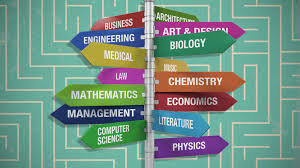
COLLEGE MAJORS -
A Different Question from COLLEGE CHOICE
|
|
"Academies"
I work with students throughout the US and there is some version of South Florida's "Academy" or "Choice" program nearly everywhere. To middle school families, these programs look inviting and yes, there are electives that expose young adults to subject matter and readings outside the core curriculum. If you review suggested "high school curricula" at admissions websites, you'll not find "Academies" noted. These are considered "electives".
So, what is the value of these electives?!
Their value to 9th and 10th grade students is ongoing academy discovery. By 11th or 12th grades, these classes aren't as academically challenging nor as valuable to a successful transition to the undergraduate experience as enrolling in more challenging AP classes.
The core subject matter can spark or solidify an interest. I have yet to find one student who indicates the concepts in these courses or the workload have been challenging. Interesting yes-- challenging-- not so much!
However, if you are working on an academic assignment/project that has the potential for submission to a science fair, essay contest or the like - these elective courses can be enriching and valuable additions to the curriculum. ASK YOUR TEACHER for support! Many of the business and engineering/tech and law "choice" programs have assignments that can launch into an entry in competitive venues.
Let me assist you in shaping your course planning for high school to acheive an appropriate balance of challenging and interesting courses.
|
|
MIDDLE-OF-YEAR Reminders
CONFIRM EXAM REGISTRATIONS:
Please review your College Board and ACT accounts to ensure that registration has been completed for all SAT/ACT and for April, May and June. Yes, invariably some registrations are not accomplished as intended.
*** The test optional list we had experienced in the current admissions cycle will continue for many colleges. Some Ivy League universities just confirmed they are extending policies for students in the class of 2022.
I continue to encourage all families to focus on having students self-manage all their registrations,
I urge all students to take two practice tests under timed conditions.
TESTING ACCOMMODATIONS: Current 9th and 10th grade students with testing accommodations/504 plans should begin the process now of registering with both the College Board (SAT) and ACT
ACTIVITIES RESUME:
All students should revise and update their "Activities Statement/Resume/Brag Sheet" to reflect all activities both formal and informal.
Juniors Your Activities Statement is an essential step in building the contents for the first draft of the required section of your Common Application on Activities.
Competitions:
For those of you perfecting term papers and projects, keep in mind your best work may be suitable for submission to a variety of state and national essay competitions (and scholarship applications during the admissions cycle in your senior year).
I look forward to discussing and reading any of your papers you would like to share. Please don't under-estimate yourself! Competition venues are available in business, STEM, humanities, poetry, legal issues and more.
If you're a Junior '22 now is the time to be actively engaged in research on the variety of college majors. Working with your college advisor, please aim to have your balanced short-list of colleges in place by the time we reach June - and hopefully you'll be joining me at my June Writers Block Workshop.
In June 2020 we successfully pivoted and delivered our workshop, including one-on-one personalized writing conferences entirely on Zoom. We're ready to resume virtually if necessary or return to our online format. Perhaps this year we will be a hybrid model. Adaptability is always essential when faced with an unforeseen challenge.
Spaces are limited. We hope you'll join us! But prior to workshop- we have much to accomplish- learning about what major may be a good fit for you and becoming involved in that area of interest so you know more about yourself and can demonstrate on your applications the essential "informed interest".
|
|
FINAL THOUGHTS:
YOUR COURSES for 2021-22!!
As noted, your student's GPA and transcript are the most significant determinant of admissions and academic success. High school is a time for academic and personal discovery. Developing and sustaining a passion for learning cannot be overstated. Sometimes that discovery is sparked by coursework and other times it is through an extracurricular experience.
There's very little variation in curriculum options across high schools in that all students will complete four years of english, four years of social studies, complete a foreign language and enroll in the math and science classes at a level they can manage.
The differences across high schools and across students are in the electives taken and in whether students enroll in Honors or AP/IB/AICE levels of classes.
Don't waste your electives ! Senior Priv - is nothing of the sort- you are eliminating an opportunity to learn!
As a former university faculty admissions representive, I've reviewed many undergraduate and graduate admissions files. As a Cornell Alumni Rep, I've interviewed and met students who at times were amazing and other times - terribly misguided and woefully unprepared (disinterested?) That made my job more challenging. The decision to be made reviewing a student's admissions file isn't easy- there's tens of thousands of applicants who have basically completed the same high school curriculum, attained the same GPA and achieved the same standardized test scores.
As a former college admissions officer I can tell you without qualification that spending your time throughout high school engaged in activities that hone and deepen academic and personal interests will bring more joy to your days and increase your chances of college acceptances -- very simply -- because you will have spent your time in meaningful and impactful ways that demonstrate a young adult eager to learn and become a part of something -- a community of shared purpose.
Every year, I meet no fewer than a dozen seniors who delayed their college planning until the fall of their senior year-- sometimes they are very strong students arriving at their initial appointment with me with their short lists of highly selective colleges in hand. It's not easy to share my assessment of "chances" - I need to be brutally honest. Chances that would have been higher if we had talked about college plans much sooner than their senior year. A 4.0 GPA, and a pile of 5s on AP exams is insufficient to gain a spot at an Ivy League or other highly selective university. The single most glaring example is a lack of hands-on experience in the intended major field of study.
Discovery and joyful experiences occur within classrooms and in extracurricular experiences. Extracurricular opportunities take place
1) within high school clubs,
2) community organizations ,
3) summer collegiate programs and
4) self- directed participation in competitions and contests -- available in every discipline- (read on...)
I can guarantee you that there's no magic formula for being accepted into a selective university, and any college advisor two tells you otherwise is being less than authentic with you. I can guarantee you that building an Educational & College Admissions Plan as early as eighth grade will greatly increase the likelihood of a student who is intrinsically motivated and prepared for academic success. Students with goals and dreams are better students and live their high school years with greater ease than those who haven't set some objectives.
What's Next?
Freshman-Juniors:
- Review your current classes and make adjustments to learning strategies and time management? Do you need practical solutions to handle difficult classes - schedule a strategic academic consultation!
- Now is the perfect time to determine and refine the most effective academic plan to include the appropriately challenging and relevant courses given potential academic interests. It's important to avoid becoming unnecessarily overwhelmed. Maintenance of a GPA which allows for a healthy balance of academic, extracurricular and personal pursuits will increase the likelihood of a successful transition to college and admissions success. You do not need to enroll in 6-7 AP Classes. If you're looking at a highly selective university- I also discourage Dual Enrollment classes (see above)
- Refine extracurricular activities to include a relevant summer plan! Update your activities resume. Think about ways to deepen an interest and let-go of those activities that do not bring you joy.
- Select appropriate courses for the balance of your high school year that prepare you for success, offer enjoyment and prepare you for relevant standardized testing required for colleges on your radar.
- Determine your standardized testing schedule, including your self-directed regular test preparation for AP exams, and SAT/ACT exams. AP exams are going to take on a greater role (sadly) in college admissions as the SATII subject tests were recently eliminated. Did you miss my recent newsletter- -- contact me to request another copy.
There's no place like home. Where is your academic home?! That is your path to success!
What are your student's
academic and social goals this year?
What motivates your student? Successful students are intrinsically motivated!
What positive and welcomed
steps can parents take to help students remain motivated towards goals?
Success begins with a student-led Strategic Educational & College Admissions Plan with actionable items!
SCHEDULE YOUR EDUCATIONAL and COLLEGE ADMISSIONS ASSESSMENT
SENIORS class of 2021
If financial or family situations changed since you submitted your FAFSA - please reach out and I can assist with ammending/explaining your FAFSA / CSS Profile and working with your admissions reps. I handle successful appeals of financial aid award letters - that process occurs in April. Please reach out AFTER your acceptances and award letters arrive to engage in "negotiation".
Over the next six weeks , this is a great time to reassess your college fit and major choices. Colleges are doing a great job not only with virtual admissions presenations as I've noted - but this is a time to make virtual connections with current students and alumni. Let me help you assess your fit.
JUNIORS '22 and Sophomores '23
It's time to plan for summer 2021. I hope you found my previous newsletter helpful in understanding why attendance at a summer program is a great college planning strategy. I have a comprehensive list of summer programs for all fields of study.
Many colleges are offering several new research programs this year and classes can be completed remotely- a huge savings in room and board.
|
|
Your "Mid-Year Assessment" provides a valuable initial step to creating your strategic educational plan and more clearly understanding the
College Admission and Financial Aid Processes.
- Understand the College Admissions Process- Key Dates, forms and factors for success in admissions and in maximizing financial aid.
- Create your curriculum map of high school and online programs to reach academic potential and prepare for success as a student and in the college admissions process. The foundation of coursework in high school impacts your success as an undergraduate
- Extracurricular Activities: Identify opportunities for enhancing and refining your activities addressing educational and admissions red-flags. Embrace your strengths, take risks and discover uncharted paths!
- Recommendations for relevant summer programs to increase your admissions chances and confirm / discover an academic area of interest
-
Personalized learning strategies to confidence, increase grades and address concerns in one or more classes. Customized solutions for better time management
- Recommendations for Colleges and Majors(conventional and "unusual")
- Clarity on standardized testing (and customized solutions for preparation) and discussion of colleges de-emphasizing their value in admissions decision making
- Activities Resume - Receive proprietary tools to build an eye-catching "activities statement" supporting your summer program applications, Common Application and Scholarship applications.
- Understanding the Real Cost of Education. Specific Strategies for your family and an explanation of Financial Aid and Scholarship Eligibility.
|
|
Warm regards,
Bonnie
Post-Pandemic In-Person
South Florida 561.509.0021
Boulder/Denver and Metro NYC 720.737.9944
VIRTUALLY wherever you are: 833.MY.ESSAY
STEM, Business, Humanities, Creative Arts -
Find Your Passion and Be Unique!
|
|
JUNIORS-- CLASS of 2022 -
Registration is now open for our June Writers Block Workshop
We delivered our content and individual writing conferences virtually with much success-- and if necessary- we wil be online and ready for you!
Followed by our Popular Sunday Fall Series resuming August 2021
JUNIORS Class of 2022--
JUNE 21 TO 25 --
ENROLLMENT IS LIMITED!
Followed by our popular and well attended Sunday Fall Series - Resuming On-Demand Bi-weekly in fall
WORKSHOP GOAL
Build a College Admissions Strategy,
Complete your Common Application Core Essay
Before the Workshop
INCREASE YOUR CHANCES of ADMISSION- PRE-COLLEGE ACADEMIC ADVISING and ADMISSIONS STRATEGY:
Attend your scheduled Educational & Admissions Assessment to understand the college admissions and financial aid processes. Participate in discussions during your extensive educational analysis aimed at matching you to majors and colleges, increasing your chances of admission, easing your transition to college, and ensuring your long-term academic success.
CUSTOMIZED RECOMMENDATIONS
identifying majors & colleges, personalized application strategies, a detailed assessment of your admissions portfolio and much more.
During the Workshop
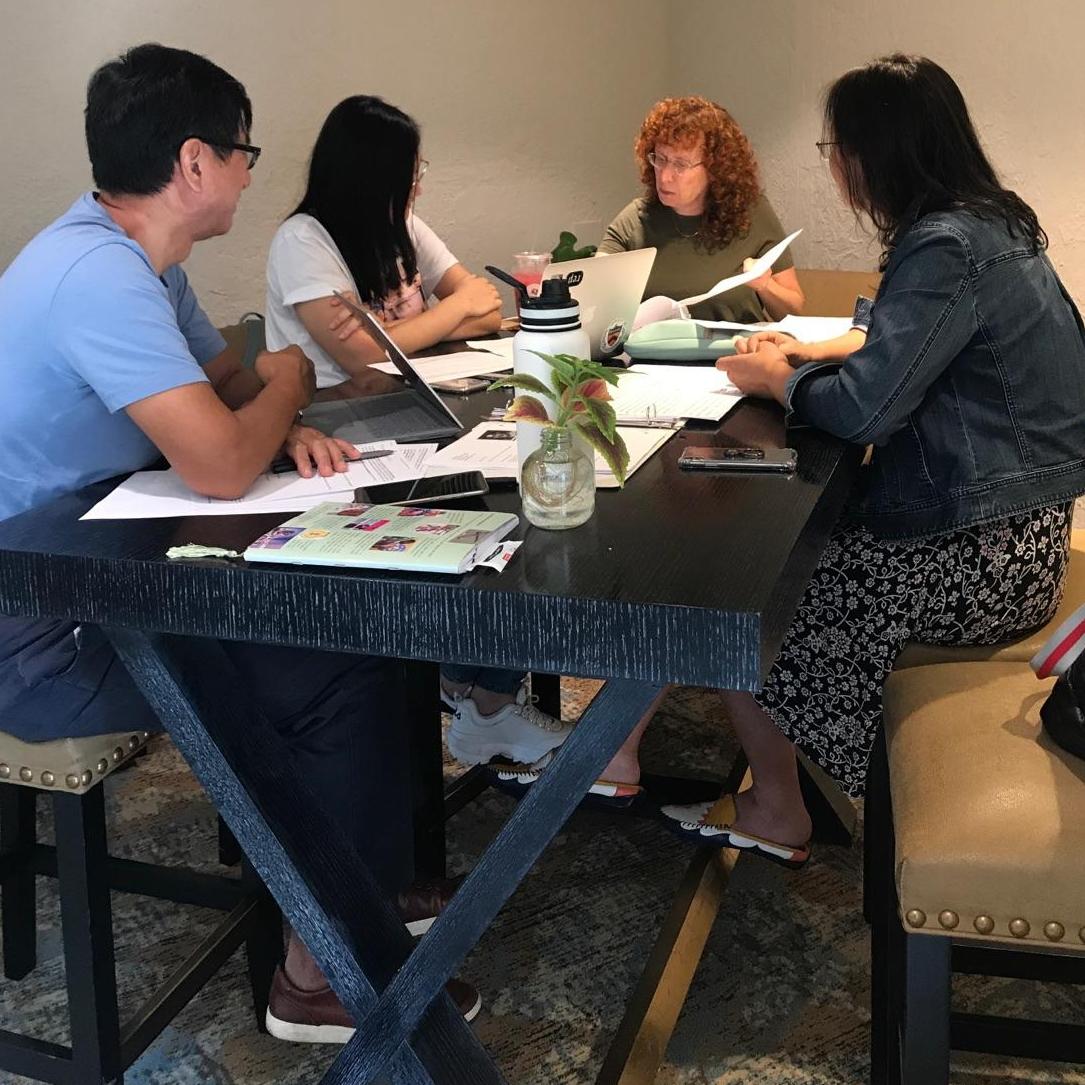
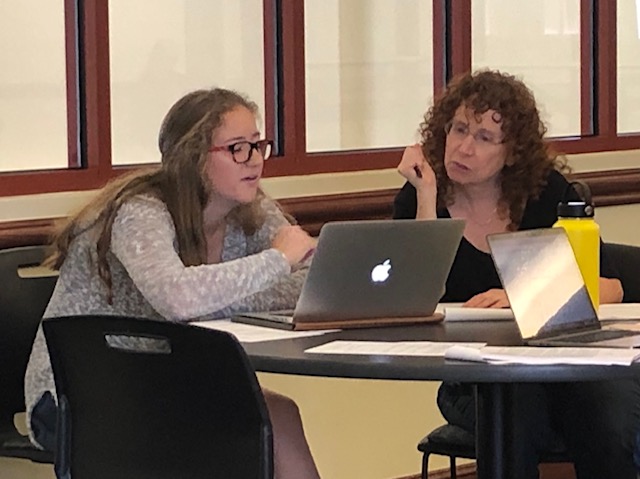
PERSONAL WRITING CONFERENCES:
throughout the week provide you with candid and specific feedback focused on completing your required Common Application Core essay to showcase your strengths and set you apart from other applicants. Students who come prepared to engage, and complete their overnight assignments will leave the workshop with a polished final draft of their core essay and begin work on a secondary essay to adapt for your college-specific supplemental essays.
In June 2020 we adapted and delivered our workshop entirely on Zoom - including daily presentatoins and one-on-one individual writing conferences. We don't yet know if we'll be in-person or online- but are ready to achieve our workshop goals in either format.
CREATE YOUR ACTIVITIES RESUME and
Common Application Activities Statement to highlight your accomplishments for admissions, references, scholarships and admission interviews. Receive proprietary activities resume template.
After the Workshop
Ongoing support and guidance with college-specific supplemental essays.
Arrive prepared with your laptop ready to work during daytime sessions and complete any overnight assignments.
Students of all academic levels are welcome to attend our small group sessions in a supportive and welcoming setting. We meet daily.
|
|
Did You Miss These Earlier Links?
|
|
Bonnie R. Rabin, Ph.D.
561.509.0021
607.280.4905
Request your complimentary consultation.
|
|
|
|
|
|
|