- Get Ahead with Late-season Production
- Peace of Mind
-
Plant Spotlight: Chameleon Little Bluestem
- Coastal Resilience
- Change and Adaptation, Realized
- Exploring the Environmental and Social Benefits of Parks
- Four Steps to Building Resilient Coastal Cities
- Add these Grasses to your Garden to Help your Plants Beat the Heat
- How to Selectively Prune Muhly Grasses
- Low Effort, High Reward
- Why Meadowscaping is the Hot New Lawn Trend
- Interview with Chris Hardy: How to Decarbonize Design
- A Green Approach to Reducing Flood Impacts
- Extreme Heat is Changing How People Experience the Outdoors
- Green Roofs for Healthy Cities Unveils New Policy Guide
- Park(ing) Day 2023: Pollinator Places!
- Upcoming Events
| |
|
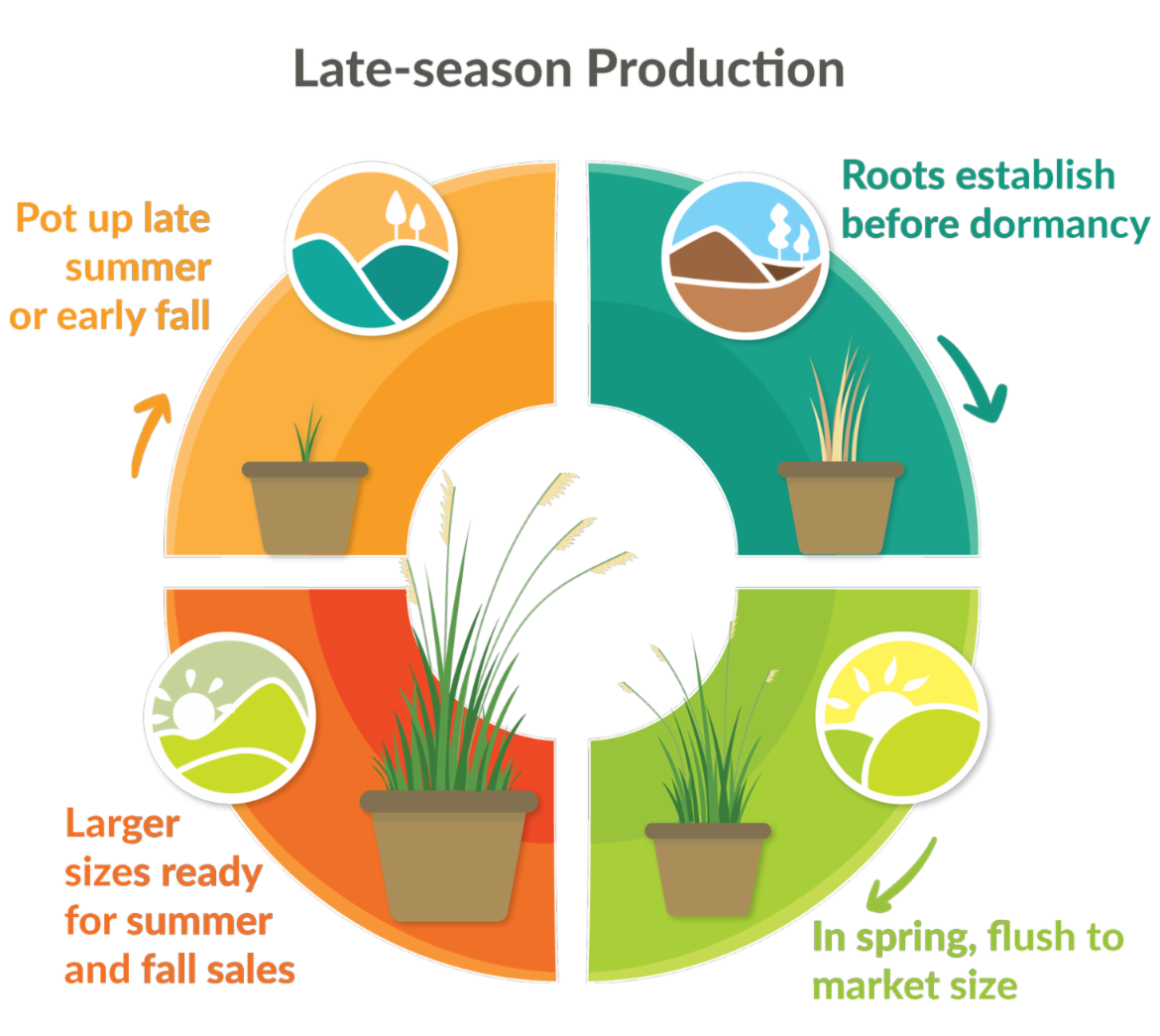
How can being late make you early? When you use late-season production to maximize the next season’s crops! It’s a smart way for growers to make sure grasses are full and ready for the spring rush.
The short-term goal is for the plants to put on roots and established before heading into dormancy. When spring comes, they’ll start stronger and finish faster than if potted up the same season. You can hit prime time earlier with full, finished plants. This strategy also works if you’re aiming for larger sizes like 2- or 3-gallon containers. Starting them at the end of the previous season will give you a fast, robust finish for summer and fall sales.
Learn more in our Late-Season Production blog post on how it works, what it requires, examples of our plants that do well in late-season production, and other helpful resources.
|
|
Peace of Mind
Nursery Management
| |
|
With a new expansion to our production facility and a state-of-the-art greenhouse over the last few years, we were ready to grow. But for the business to grow, we needed more workers to grow and ship more products.
Find out how we get the workers we need and no extra headaches in this article from Nursery Management.
| |
|
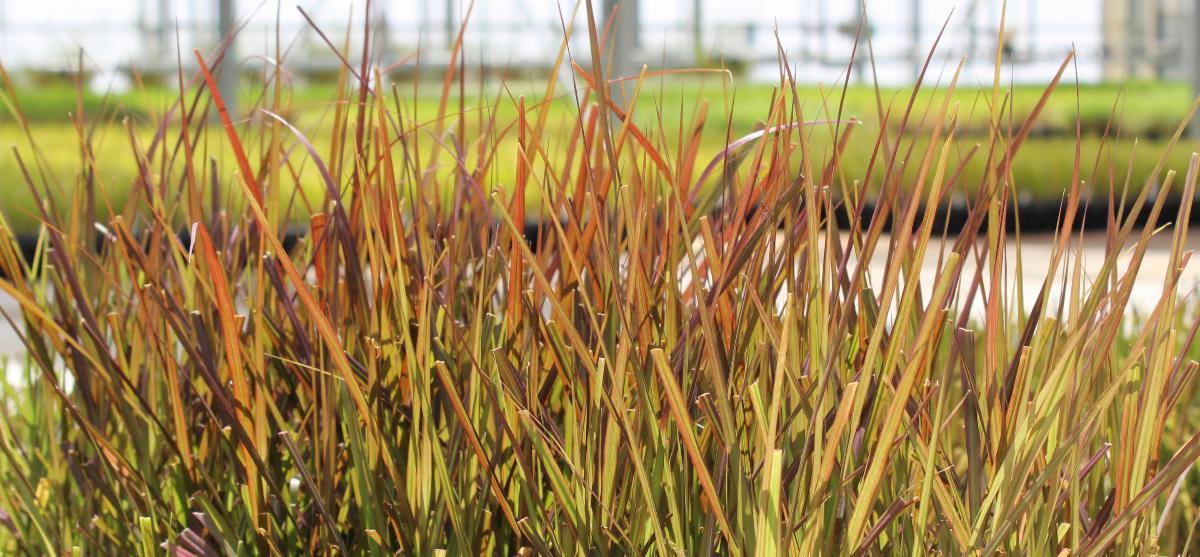
Eye-catching variegation and changing colors elevate Chameleon Little Bluestem to glamour status. Bright white and green stripes adorn the leaves in early spring and summer. In late summer and fall, blades develop a flush of pink and light purple, giving it a rich, lush look. It has a compact habit (2’ tall) that fits in any garden. ‘Chameleon’ was discovered in Hantay, France as a chance seedling in a trial field planted with seeds of S. scoparium ‘The Blues’. Variety protected by USA patent. Propagation without permission strictly forbidden.
Great for:
- Meadow/Prairie plantings
- Erosion Control
- Containers
- Green roofs
- Borders
- Foreground plantings
See our Plant Profile
| |
Resilience and Nature-based Solutions | |
|
Coastal Resilience
National Ocean Service
| |
As a result of ongoing sea level rise and an increase in extreme storm events, coastal resilience — or the ability of communities to recover after hazardous coastal events — is now a national priority. Here are a few examples of how the National Ocean Service improves resilience by providing science-based solutions, funding, and training.
| | |
|
Exploring the Environmental and Social Benefits of Parks
TorantoMet Today
| |
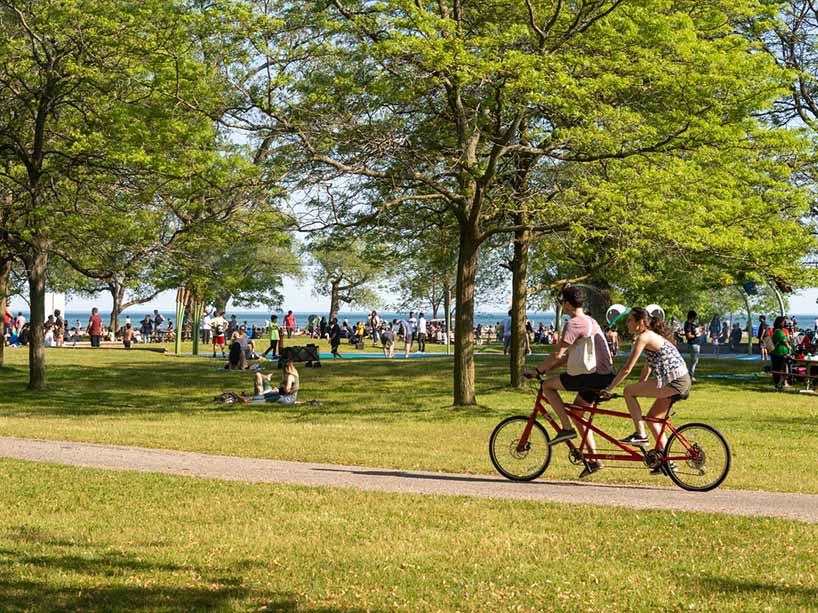
Globally, as we navigate record-breaking heat and unprecedented flood and fire seasons, climate action is top-of-mind. A new exhibition from TMU’s School of Urban and Regional Planning (SURP) and University of Toronto’s Centre for Landscape Research is exploring how city parks are valuable tools for climate action and social engagement.
| | | |
|
Change and Adaptation, Realized
Longwood Gardens
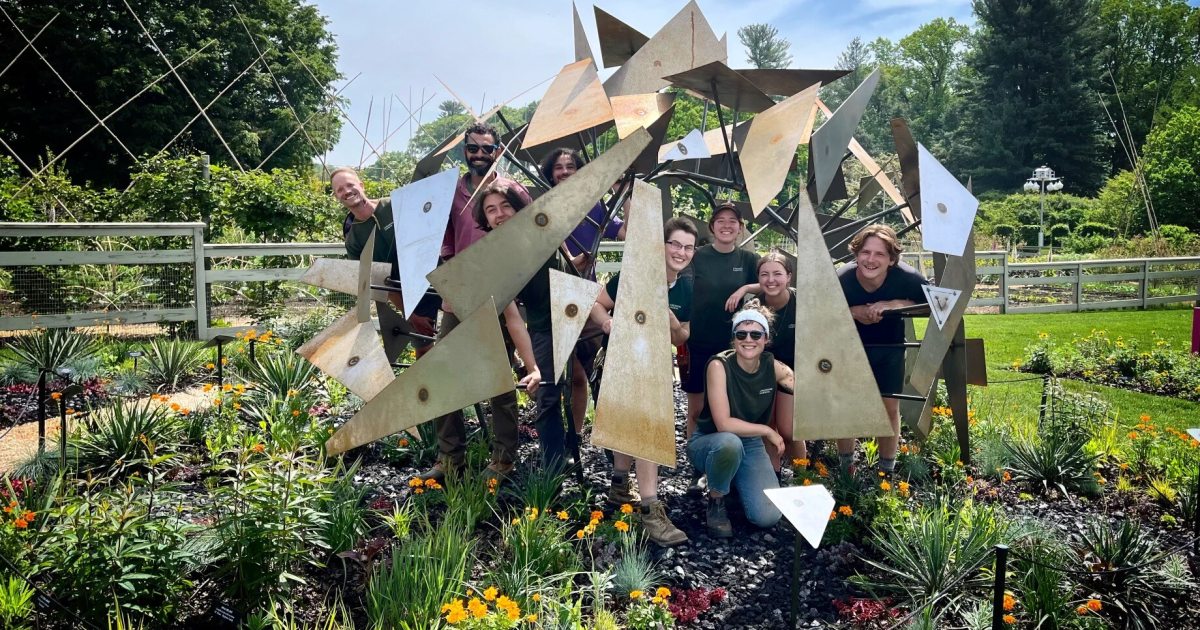
| As part of the Professional Horticulture Program, nine students at Longwood Gardens have been asked to design, create, and maintain three garden designs based on the scheme of change and adaptation. | | | |
|
Four Steps to Building Resilient Coastal Cities
CSR Wire
| The impacts of climate change are being felt across the globe, especially in coastal areas. According to a physical climate risk study by XDI Cross Dependency Initiative, 40 of the top 50 most at-risk states and provinces will be in China, the United States or India by 2050. | | | |
Landscape & Grass Spotlight | |
|
Add these Grasses to your Garden to Help your Plants Beat the Heat
Courier News
| Choosing plants that are adapted to heat stress can save you from worrying when the temperatures get too high. Native warm season grasses are great ornamentals, have ecological benefits and are heat tolerant. These grasses attract pollinators, provide food and shelter for wildlife, mitigate stormwater and stabilize the soil to reduce erosion. Adding native grasses to your garden could provide valuable benefits and beautiful sights to your space! | | | |
|
How to Selectively Prune Muhly Grasses
Fine Gardening
| Annual winter maintenance prepares these grasses for new spring growth with no need for cutting back. Learn how to prune muhly in this article from Fine Gardening. | | | |
|
Low Effort, High Reward
Living Etc.
| Check out these expert gardener's suggestions for the best low-maintenance plants for your front yard. Simply plant them and forget about them, then let the compliments roll in. Don't worry, your secret is safe with us! | | | |
|
Why Meadowscaping is the Hot New Lawn Trend
Real Simple
| Meadowscaping uses native plants and grasses to replace a standard lawn with a gorgeous, meadow-like landscape. See how you can turn your yard into a gorgeous, low-maintenance outdoor space by utilizing meadowscaping in the article from Real Simple. | | |
|
The Importance of Green infrastructure | |
|
Interview with Chris Hardy: How to Decarbonize Design
The Dirt
| Chris Hardy, ASLA, is senior associate at Sasaki and founder of Carbon Conscience. He is Co-chair of the ASLA Climate Action Committee Subcommittee on Carbon Drawdown and Biodiversity. He recently launched a fully revamped version of Carbon Conscience. In this interview with The Dirt, Hardy talks about the platform, what it does, and how can it be used to reduce greenhouse gas emissions and increase carbon sequestration. | | | |
|
A Green Approach to Reducing Flood Impacts
Tech Briefs
| |
As rains get heavier and more frequent, flooding, especially in cities, is becoming a serious problem. The traditional way of managing stormwater has been to quickly get it off the road and into the storm sewer system to be sent downstream, said Lauren McPhillips, Assistant Professor of civil and environmental engineering and of agricultural and biological engineering at Penn State. “With the stormwater out of sight, the problem was out of mind.” However, whisking the water away increases risks of extreme flooding downstream.
McPhillips and her team of Penn State researchers are exploring how green stormwater infrastructure measures can be used to manage severe urban flooding and pollution.
| | | |
|
Extreme Heat is Changing How People Experience the Outdoors
Phys.org
| Summers are getting hotter as greenhouse gas emissions trap heat in the atmosphere-a problem that's impacting how millions of people enjoy the outdoors during the warmest months of the year, according to one NC State expert. | | | |
|
Green Roofs for Healthy Cities Unveils New Policy Guide
Living Architecture Monitor
| |
Green Roofs for Healthy Cities launches a new and comprehensive policy guide for green roofs and green walls. This highly anticipated guide builds upon the previous edition released in 2019 and aims to provide essential information for professionals, policy makers, and advocates seeking to establish or update green roof and wall policies and programs across North America.
"This new report demonstrates that an increasing number of governments are implementing policies and programs to implement green roofs and walls to manage stormwater and adapt to extreme weather", said Steven Peck, GRP, Founder and President, Green Roofs for Healthy Cities.
| | | |
|
Park(ing) Day 2023: Pollinator Places!
Asla.org
| |
Motivated by the desire to activate the metered parking space as a site for creative experimentation, political and cultural expression, and unscripted social interaction, Rebar offers PARK(ing) Day as a prototype for open-source urban design, accessible to all. In response, thousands of people around the globe—working independently of Rebar but guided by common core principles—have created hundreds of “PARK” installations and formed an annual international event.
Park(ing) Day 2023 is Friday, September 15. The focus of this year's Park(ing) Day, which is now in its 17th year, is pollinators. Birds, bats, bees, butterflies, and other insects need our help more than ever. Use your Park(ing) Day space to educate the public. Show them how landscape architects create healthy places for an important pollinator in your community.
| | | |
We are thrilled to attend the Southern Sustainable Stormwater Summit led by Professors from the University of Georgia (Brian Bledsoe), North Carolina State University (Bill Hunt), and the University of Tennessee at Knoxville (Jon Hathaway) that's centered around sustainable stormwater issues happening the South. This event will be held in historic downtown Wilson, NC as well as via Zoom. Their goal is to help communities improve the lives and welfare of their citizens in the realm of stormwater and watershed management. | |
|
Download Availability & Order Form
Prices for liners, number of liners currently in stock, and future availability are listed in PDF and Excel files. You may also use these as order forms. Need details on what the numbers mean? Learn more here.
| |
Join us for the best in grass-related content. | | | | | |











:max_bytes(150000):strip_icc()/meadowscaping-GettyImages-170690806-eeb7bd9750344d629b5197079e66e230.jpg)