|
Semaglutide is a synthetic compound that imitates the effect of the natural hormone GLP-1 in the body. Semaglutide is officially classified as a glucagon-like peptide-1 receptor agonist, and its impact on blood sugar metabolism and calorie intake is multiple.
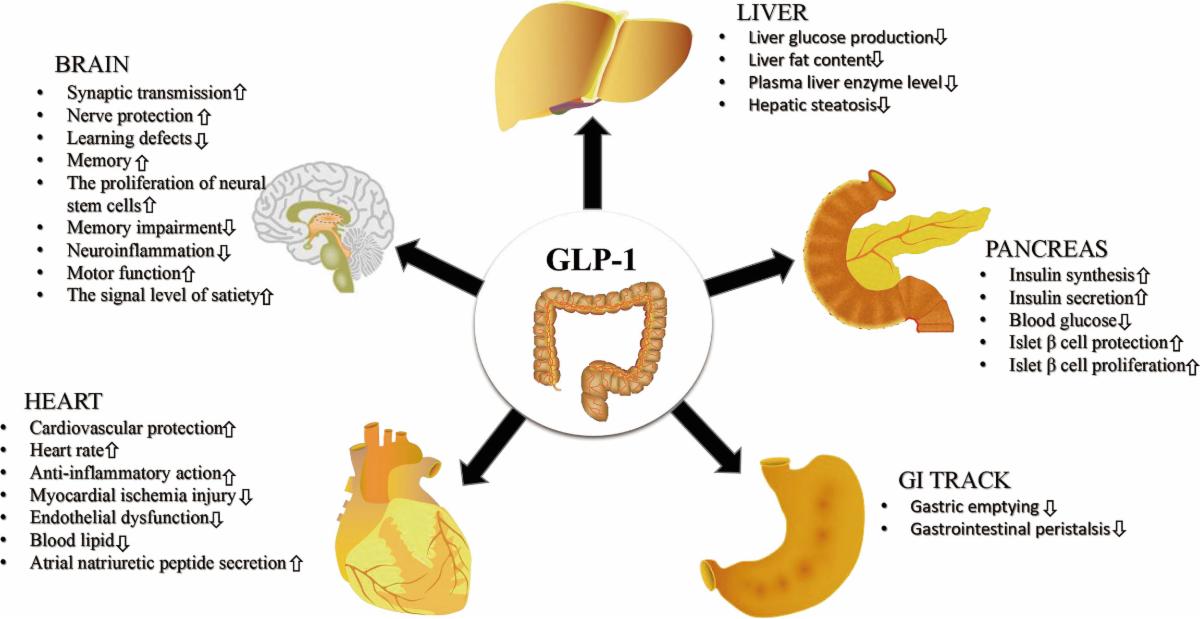
After eating a meal, your intestines release a hormone called GLP-1, which signals your pancreas to release more insulin. Insulin is a hormone that plays a crucial role in reducing blood sugar levels by facilitating the entry of glucose (sugar) into cells, where it can be used for energy or stored for later use. GLP-1 is especially important in ensuring that insulin is released at the right times, particularly after meals when blood sugar levels typically rise.
In addition to its role in insulin regulation, GLP-1 also has the added benefit of reducing the secretion of another hormone, glucagon, produced by the pancreas. Unlike insulin, glucagon has the opposite effect, increasing blood sugar levels by instructing the liver to release stored glucose into the bloodstream. By inhibiting glucagon, GLP-1 prevents the excessive release of glucose from the liver, thus keeping blood sugar levels from becoming excessively high.
GLP-1 also has an impact on the rate at which your stomach empties. When the pancreas releases GLP-1, it helps control the pace at which food moves from the stomach to the small intestine. This action can slow down the absorption of nutrients, including glucose (sugar), from the digestive tract into the bloodstream. Consequently, this prevents rapid spikes in blood sugar levels after meals. Additionally, slower stomach emptying can create a feeling of fullness, reducing overall food intake and contributing to weight management.
|