|
In this Issue
- New Book: The Evolution of Consciousness - Chapter One - Cosmic Evolution - Part II
- New Articles on the History of Science Fiction
- The Evolution of Science Fiction YouTube Series
- New CFC Website
- New Expanded CFC YouTube Channel
|
Director of
The Center for Future Consciousness
| Tom Lombardo's Books on the Future, Wisdom, Psychology, Science Fiction, and Future Consciousness |
The Time Machine to Metropolis
|
|
|
New Book: The Future Evolution of Consciousness
Chapter One - Cosmic Evolution II
|  | |
Dear Friends and Colleagues,
As introduced in the May issue of the newsletter, over the last couple of years I’ve been working on a new book “The Future Evolution of Consciousness.” As everyone is aware, there are an incredible variety of current approaches that attempt to constructively address the many challenges in contemporary times. It seems to me that the key factor to focus upon both in addressing our present problems and creating a positive future is to significantly evolve our consciousness. As such, I’ve been writing a book on this topic.
Beginning with the May issue, I am publishing online, in Future Consciousness Insights, roughly once a month over the next year or so, drafts of each consecutive chapter in this new book.
In May I started with the Introduction to the book. The complete Introduction is available for viewing on my Center for Future Consciousness website:
https://centerforfutureconsciousness.com/wp-content/uploads/2024/05/evol-of-consciousness-intro.pdf.
In the June issue I included Chapter One: Cosmic Evolution Part One.
See: https://centerforfutureconsciousness.com/wp-content/uploads/2024/06/evol-of-consciousness-chp-1-part-one.pdf
In this issue I include Chapter One: Cosmic Evolution Part Two.
See: https://centerforfutureconsciousness.com/wp-content/uploads/2024/06/evol-of-consciousness-chp-1-part-two.pdf
The total published set of draft chapters of the book is available for reading on my Center for Future Consciousness website at:
https://centerforfutureconsciousness.com/the-future-evolution-of-consciousness/.
I am looking for feedback and comments on the book. After reading any parts of the draft chapters you can send any comments or feedback to my email: tlombardo1@cox.net.
|  | |
The Future Evolution of Consciousness
Thomas Lombardo
Chapter One:
Cosmic Evolution - Part Two
Order and Chaos - Entropy and Evolution
As this point, I am going to introduce the significant role of chaos in cosmic evolution, and consequently, as we will see, the importance of chaos in the evolution of humanity and consciousness.
Another key principle in the dynamic cosmic vision of contemporary science is the transformational principle of increasing entropy. Entropy can be described as the level of disorder and lack of differentiated structure within a natural system. Discoveries in nineteenth century science, in particular in the formulation of the second law of thermodynamics, seemed to indicate that the amount of entropy in any closed system in nature could either stay constant or increase through time, but never decrease. Thus for the universe as a whole—if we assume that the universe is a closed system and there is nothing beyond it with which to interact—its entropy is almost certainly increasing across time.
The cosmic law of entropy—a basic principle of transformation within the universe—entails that for the cosmos as a whole the order, structure, and complexity of the universe is decreasing. The universe—from this perspective—is dying a slow death, hence the popular scientific expression “the heat death of the universe” is used to dramatically describe this presumed inevitable decay and disintegration of all ordered structures within the cosmos. Everything will “pass away” and “vaporize” into an undifferentiated totality. This postulated cosmic direction of inexorable entropic decay set at the “beginning of time” created the cosmic “arrow of time;” time flows in directional alignment with increasing cosmic entropy. From this perspective, the fundamental ongoing transformation occurring across the universe as a whole is decay and passing away. Along many fundamental parameters, the future of the universe can be predicted based on this basic scientific principle.
But if the law of entropic decay for the universe as a whole is true, a deep puzzle emerges: How is cosmic evolution possible in a universe that literally is progressively falling apart? How can cosmic evolution, which reveals itself in numerous ways across the full spectrum of forms within the universe, be occurring in a universe that as a whole is disintegrating? The cosmic law of increasing entropy appears to directly conflict with the principle of cosmic evolution, the latter describing a progressive increase in order, differentiated structure, and complexity over time, whereas the former entails increasingly less order, structure, and complexity.
Moreover, evolution can be seen as implying that the transformational direction of the cosmos is toward progressive “becoming” and creation—with new entities emerging through increasing complexity—whereas the law of increasing entropy seems to indicate a general transformational direction toward “passing away”—with existing entities disintegrating due to a loss in complexity. Evolution implies birth; entropy implies death.
All in all, these two fundamental dynamic patterns of change within reality clearly seem opposite in their implications regarding the flow of time and the course of events in the universe. How could both principles be true?
It has, though, been repeatedly argued and demonstrated that the universe is, in fact, both evolutionary and directionally entropic, a seemingly paradoxical, simultaneously occurring combination of becoming and passing away, of birth and death, and of increasing and decreasing complexity. This weaving together of apparently oppositional processes brings drama and tension into the grand saga of the cosmos.
For one thing evolution seems to require entropic decay. Specifically regarding the evolution of life, biological complexity builds through drawing in and utilizing energy generated by entropic decay. Life on the earth feeds on the energy of the sun’s radiance, and this energetic radiance of the sun is an entropic flow spreading outward into space generated by atomic fusion within the sun’s interior. Metaphorically, one could say that life on the earth derives its sustenance and its ongoing further evolution from the inexorable dying of the sun. In turn, animals on the earth feed on the death (the killing, ingestion, and metabolic breaking down) of plants and other animals.
Second, the evolution of complexity actually speeds up the process of entropic decay. Increasing complexity generates increasing waste. Hence, evolution is actually consistent with and an amplification of the process of entropic decay.
Third, evolution or increasing complexity appears in relatively localized regions throughout the cosmos, whereas increasing entropy describes a process occurring in the holistic expanse of the entire universe. Local structures that utilize energy to generate and maintain their complex forms create and expel heat and waste into the surrounding space, thus producing contrasting and opposite effects of increasing complexity locally and increasing entropy in the more expansive surroundings.
Interestingly, evolution and entropic decay within the directional flow of the universe thematically connects with the long standing philosophical issue of the relative roles of order and chaos in the cosmos. Order can be defined as differentiated structure and recurrent patterns of structure, whereas chaos can be defined as a lack of differentiated structure or patterns. One could state that evolution is the direction of increasing order in the cosmos, whereas entropic decay is the direction of increasing chaos in the universe. In the former, differentiated structure increases, hence order increases, whereas in the latter case differentiated structure disappears, hence chaos increases.
Long before the development of the scientific theories of evolution and entropy, the forces of order and chaos and their relationship was one of the key themes in the history of philosophical inquiry and speculation on the basic nature of reality. As many ancient philosophers wondered and debated: Which is primary in the universe—order or chaos—or are these two dimensions of reality somehow coupled together? The oppositional interplay of order and chaos, as a fundamental feature of reality, is a central theme in philosophical and scientific thinking stretching back at least as far as the ancient Babylonians. The Babylonians saw human civilization as an expression of order and complexity in a perpetual conflict and struggle with the natural external forces of chaos assaulting human society. The ancient Greek philosopher Empedocles postulated two fundamental and opposing forces at work in the universe, love and strife, in which the former propels creation (the emergence of new order) and the latter generates destruction and death, hence increasing chaos.
The interplay and connection of order and chaos is still an important topic in contemporary science and philosophy, including evolutionary theory and research. The physicist-philosopher J.T. Fraser developed a comprehensive theory of time based on the idea that order and chaos, as the two fundamental principles of nature, are inextricably entwined in an irreconcilable “conflict,” and generate evolution as a consequence. In the physical-biological sciences it has been argued that the emergence of new complex order can arise “out of chaos,” through intense fluctuations and a shaking up of the parts. And social and psychological scientists have contended that the destruction (and death) of existing psycho-social order is often a pre-requisite for the emergence of new forms of psycho-social complexity and order. For example, new civilizations arise out of the ashes of previous civilizations. Death and destruction precedes the birth of the new. As the popular expression goes, “In order to make an omelet you have to break some eggs.”
All in all, it is important to acknowledge that in the evolutionary process there is both creation and destruction, birth and death, and becoming and passing away. At the cosmic level, stars are born out of gases collecting and compressing, and stars die with great explosive outpourings of gas and nuclear fused elements expelled into surrounding space. In biological evolution there is both the ongoing emergence of new species and the ongoing extinction of existing species. In fact, emergence and extinction within biological evolution are frequently connected together, in which existing species become extinct and are replaced with new species.
In summary, although evolution and entropic decay seem like opposite principles, one could argue that they are interwoven together in the dynamic fabric of reality. Hence, as Fraser argued, order and chaos in the directional flow of the universe are coupled together. The creation of new order both feeds on the surrounding entropic flow—the ambience of chaos—and at times requires the destruction of existing order, thus creating more chaos spreading outward into the surroundings, which in turn, feeds the creation of more order. To use a key concept described in depth in Chapter Three, order and chaos form a reciprocity: Of distinct but complementary realties that are interdependent with each other.
We come then to the question of what are the implications of this vision of the cosmos—of a universe evolving in a tumultuous ambience of emerging order and destructive chaos bound together in an energetic interaction—toward understanding consciousness and its future evolution? For one thing, a dynamic universe of order creating and order destroying processes entails that the evolution of consciousness is not a smooth sailing and steadily progressive process. The evolutionary history of human life and human consciousness has been subjected to ongoing disruptions, death, and destruction. We can consider it amazing and wondrous that human life (or life as a whole) tenaciously keeps progressing along through the sound and fury of our earthly and cosmic existence. But from the above discussion, it seems to be a necessary, if not growth promoting dimension in the cosmos that there is chaos and destruction. The bottom line is that the flow of consciousness in individual life forms and human beings and the overall evolution of consciousness has existed and persisted in a cosmic and ecological ambience that is filled with destructive and chaotic elements.
Moreover, it would stand to reason, that if consciousness reflects the cosmos in which it is embedded, that the flow and evolution of consciousness would contain chaotic and disintegrative features, just as does the natural world. Consciousness may evolve, but it evolves within its own experiential ambience of sound and fury built into its very dynamics.
Envisioning the universe as a whole as inexorably moving toward increasing chaos and disintegration provokes feelings of depression and despair, and a deep sense of hopelessness regarding our ultimate fate. (The universe—everything—is eventually going to die.) Oppositely the cosmic theory of evolution has been seen as providing an uplifting, inspiring, and optimistic vision of the future. At least for some significant period of future time, reality appears progressive, with increasing complexity and the birth of new forms emerging across time. Indeed, from the perspective of cosmic evolution, the “best is yet to come.”
Yet, as should be apparent from the above discussion on entropy and chaos, even if there is this an observable progressive direction within the history of at least local areas of the universe, evolution reveals itself to be far from a totally secure, orderly, and predictable process. Instead we observe in nature repeated calamity, accidents, and turmoil. The argument that the flow of reality is being guided toward some positive end, thus providing a sense of security and predictability seems contradicted by the dimensions of chaos, destruction, and happenstance pervasive within the history of evolution. If we are to be optimistic about the future, it needs to be a guarded and realistic optimism, acknowledging the presence of chaos and death in our journey through time. Hence, we would expect that the future evolution of consciousness (and humanity along all spheres) will not be some peaceful ascent toward universal love and cosmic consciousness; the future evolution of consciousness, in all probability, will be filled with “sound and fury,” blunders and mistakes, and surprises, both good and bad.
* * *
You can complete the reading of this book installment--with added references and footnotes--at Cosmic Evolution Part Two.
https://centerforfutureconsciousness.com/wp-content/uploads/2024/06/evol-of-consciousness-chp-1-part-two.pdf
| New Articles on the History of Science Fiction | |
This month I published two companion articles in:
Roberto Poli (Ed.) Handbook of Futures Studies. Cheltenham and Camberley, UK: Edward Elgar Publishing, Inc. July, 2024.
See: https://www.e-elgar.com/shop/usd/handbook-of-futures-studies-9781035301591.html
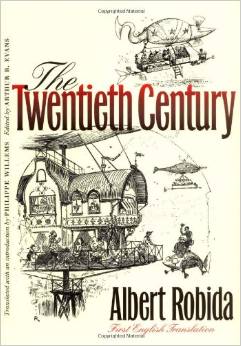
The two articles are: "Science Fiction Futures: Historical Foundations" and "Science Fiction Futures: Contemporary Developments." Together the two articles provide a relatively comprehensive history of science fiction that focuses on science fiction about the future and deals primarily with science fiction literature.
Both articles will be available on my CFC website. This month I include the "Historical Foundations" article; the beginning of the article is included below. The complete article is linked at the end of the opening part of the article. Next month, the second article -- "Contemporary Developments"-- will be included in the newsletter and on the CFC website.
|  | |
Science Fiction Futures:
Historical Foundations
Abstract
This article presents a history of science fiction literature on the future from its mythic and ancient origins through the 1930s. A definition of science fiction is offered and explained, with numerous illustrations provided. For the period covered in this article major historical influences on the genre are described, including the Scientific Revolution, the Western Enlightenment, Romanticism, and the theory of evolution. A representative sample of influential writers and publications are discussed. Key themes and features of the genre, such as optimistic/utopian versus pessimistic/dystopian narratives, space operas and time travel stories, holistic future consciousness, and “futures of everything” perspectives are described. Science fiction stories highlighting different dimensions of the future are identified. Interactive influences between science fiction and human society throughout history are also described.
What is Science Fiction? The Origin and Meaning of the Concept
This article presents a history of science fiction (hereafter SF) approaches to the future from ancient times to the 1930s. See the subsequent article “Science Fiction Futures: Contemporary Developments” for a history of science fiction about the future from the 1940s to the present. Due to space limitations, this article focuses almost exclusively on SF literature with minimal attention given to SF cinema.
A much more in-depth examination of the early history of SF, covering all the authors, stories, and important trends and influences on the genre described in this article, including numerous secondary sources not identified in this article, can be found in my three volume series Science Fiction: The Evolutionary Mythology of the Future. Volume One: Prometheus to the Martians (Lombardo, 2018) covers ancient origins to roughly 1900; Volume Two: The Time Machine to Metropolis (Lombardo, 2021a) covers roughly 1900 to 1930; and Volume Three: Superman to Star Maker (Lombardo, 2021b) primarily focuses on the 1930s.
An extensive discussion of the entire history of SF can be found at my online video webinars The Evolution of Science Fiction:
https://www.youtube.com/@tomlombardo75/playlists (Lombardo, 2023).
References throughout this article identify relevant sections of these sources. Bibliographical references for stories and novels cited in this article are not included, since these fictional works generally have multiple publishers, and a reference list would be exceedingly long given the huge number of publications mentioned in this article.
Although there have been many diverse definitions offered by authors and readers, the following definition highlights many of the essential and distinctive features of SF:
SF can be defined as a literary genre and narrative approach that is primarily, although not exclusively, about the future, involving dramatic plots, action sequences, specific settings, and varied and unique characters, human and otherwise. Although having mythic origins and thematic features, it is, to a significant degree, inspired and informed by modern science, technology, and contemporary thought. Involving imaginative and often detailed scenario building and thought experiments about the future, set in the form of stories, SF stimulates and engages holistic consciousness about the future of everything.
The entrepreneur, inventor, magazine editor, and writer Gernsback is generally identified as the individual who first popularized the expression “science fiction.” Gernsback is usually credited with publishing the first magazine (Amazing Stories, beginning in April, 1926) that was exclusively and unambiguously devoted to SF; Gernsback though used the expressions “scientific fiction” and “scientifiction” in this magazine. It was only in the first issue of his subsequent magazine, Science Wonder Stories, in June, 1929, that he began using the expression “science fiction.” Gernsback conceptualized SF as involving personally engaging narratives, incorporating scientific information and serving an educational purpose, which contained predictions, frequently technological, about the future.
Although Gernsback was a seminal figure in the popularization of SF, and his understanding of the genre identifies many of its salient features, the history of SF extends much further back than Gernsback’s early magazines, and his view of the genre is limited, tending to emphasize technological visions of the future. As explained below, SF has its historical roots in ancient times, and not only does it examine the “future of everything” rather than just technology, but goes beyond “the future,” at times delving into alternate realities and the fundamental nature of the cosmos. Gernsback, in fact, published in his magazines a wealth of literature penned by Wells, Verne, and Poe, writers of the nineteenth and early twentieth centuries, and such authors, among many others that Gernsback enthusiastically published, wrote stories that emphasized social, psychological, and ethical content and often transcended the scientifically credible as defined by mainstream science (Lombardo, 2021b, Chapter 8).
The Mythic Nature and Ancient Origins of SF
The origins of SF can be found in ancient myths, especially in those narrative tales involving “extraordinary adventures” into strange and unknown realms, in which the protagonists encountered fantastical realms and astonishing beings who often possessed super-human attributes and powers. Such mythic tales created by human imagination and informed and inspired by ancient belief systems transcended the commonplace “here and now.” Often ancient myths were cosmic in scope dealing with supernatural deities; the creation of humanity, the earth, and the universe; or “end of the world” prophecies about the future. Moreover, in such mythic tales we find early visions of extraordinary technologies, such as automata and flying devices, that transcended current human abilities. An illustrative example covering many of the above elements is Lucian’s True History (ca. 150 CE) involving traveling to the moon, aliens, battles in outer space, and an early vision of a telescope. All in all, ancient myths were expressions of expansive human consciousness that extended the boundaries of imagination into the fantastical, extraordinary, and cosmic. This extended sphere of consciousness is the mental universe of thought and imagination that modern SF would explore and further amplify.
Although fantastic and cosmic in scope, ancient myths were at the time often viewed as plausible and credible, since such tales were informed by the prevalent theories of reality and belief systems of ancient cultures. Such tales, in fact, provided plausible and inspiring narrative explanations for the nature, meaning, and purpose of life, often containing moral (or ethical) messages and directives. Ancient myths described in a personified and narrative form the deep nature of reality and prescribed the good life and good human society. Such features are also part of SF.
A review of the key qualities of myth—for example, that myths are cosmic and fantastical narratives, with ethical, aesthetic, and iconic features, containing personified protagonists, and often provoking a sense of wonder and mystery—notably align with key qualities of modern SF. The one distinctive difference between ancient myth and modern SF is that the latter is, to a significant degree, grounded in modern, scientifically informed perspectives on reality rather than the supernatural theories of reality embodied in ancient myths. As such, SF can be described as modern mythology that delves into the “credible transcendent,” as understood by our contemporary understanding of reality.
Another important ancient origin of contemporary SF is classical philosophical utopian visions of ideal societies, such as Plato’s Republic, which has served as an archetypal starting point for later utopian narratives, such as Wells’ A Modern Utopia. Contemporary SF frequently envisions in narrative form both utopian and, its opposite, dystopian societies, which are situated in possible futures, as well as in imagined alien and other-worldly settings. Often with a pronounced emphasis on social and ethical, rather than scientific and technological, themes, such modern utopian and dystopian narratives invalidate the common simplistic characterization that modern SF is primarily about technology and science (Lombardo, 2018, Chapters 2 and 3).
Read the complete article at:
Science Fiction Futures: Historical Foundations
https://centerforfutureconsciousness.com/wp-content/uploads/2024/07/sf-futures-historical-foundations-final-copy-inset-references.pdf
| |
The Evolution of Science Fiction:
Complete YouTube Series
|  | |
Consisting of thirty-four videos, I recently completed, with the superb help and support of Tery Spataro, my Evolution of Science Fiction Webinar Series. All the videos on the playlist, chronologically ordered, are available for viewing on my You Tube channel at:
https://www.youtube.com/playlist?list=PLIvBA8u8-18QzwxllJrzh6OAKVAUYfNmS.
The series consists of videos covering each major period in the evolution of science fiction from ancient times to the first two decades of the twenty-first century. For those viewers interested in a condensed accelerative overview of the entire history of science fiction, you can watch the “Comprehensive History of Science Fiction” video (part of the series) at:
https://www.youtube.com/watch?v=8Dqu4YJvXrA&list=PLIvBA8u8-18QzwxllJrzh6OAKVAUYfNmS&index=30&t=9s .
For those unfamiliar with the series, here’s a quick introduction to its content:
“Combining colorful slide presentations and in-depth analysis, in these webinars, based on my emerging book series Science Fiction: The Evolutionary Mythology of the Future, I examine the evolutionary history of science fiction from ancient to contemporary times. I delve into the mythological origins and dimensions of science fiction; fantasy versus science fiction; the rise of the modern scientific world view; utopias and dystopias through the ages; the Enlightenment, Romanticism, and Gothic horror; the impact of evolutionary theory on science fiction; Wells, Stapledon, and the integration of futures studies and science fiction; robots, techno-intelligence, and aliens; time travel and alternate realities; fantastical adventures, space exploration, and the emergence of Space Operas; the Golden Age, the Silver Age, the New Wave, Feminist Science Fiction, Cyberpunk, Steampunk, and the "New Weird;" social, psychological, and religious science fiction; and numerous other key themes and dimensions of science fiction. Covering science fiction literature, art, cinema, and comics, I discuss in depth the appeal, value, and influence of science fiction on the modern world and the impact of intellectual and cultural trends on the evolution of science fiction.”
| |
New Center for Future Consciousness Website
| |
The Center for Future Consciousness website has been totally redesigned and moved to a Word Press platform allowing for continual and speedy updates and revisions in the future. The website address for the Center is still the same address (url) as before: www.centerforfutureconsciousness.com. And all the content of the previous website is still available on the new website.
Some of the most significant updates to the new website, include:
-
An updated and complete listing of all my published books (CFC Book Page) with new reviews and extended descriptions of my newest books.
-
An updated list of my Library of Best Science Fiction Novels, adding over 60 new novels to the previous list and including over twenty newly listed and ranked novels of the last two decades.
-
An updated list of my Library of Best Science Fiction Movies, adding over 100 new movies to the previous list and now covering movies up to 2024.
|
New Expanded CFC
YouTube Channel
| |
With the hard work of Tery Spataro, the CFC YouTube Channel has been greatly expanded. Among the sixty available videos and podcasts on the CFC Channel are all the previous Evolution of Science Fiction Webinars—twenty-eight two-hour videos—now free for viewing.
Go to Tom Lombardo YouTube Channel: https://www.youtube.com/@tomlombardo75/playlists for the complete listing and links for all CFC videos.
The playlists on the CFC Channel include:
- Introduction to the Center for Future Consciousness
- The Future
- Philosophy
- Contemporary Trends and Theories
- Future Consciousness & the Evolution of Consciousness
- The Evolution of Science Fiction Webinar Series
- Other Science Fiction Presentations
|
|