Memoir: Rabbi Moshe Shimon Sivitz
Bernard and Marilyn Caplan Papers
Workmen's Circle
Calendar: The Story of Our Lives (Robyn Fivush/Njaimeh Njie), Adam Brown on frontiers in DNA
Community News
|
|
|
Memoir:
Rabbi Moshe Shimon Sivitz
|
|
Rabbi Moshe Shimon Sivitz was the leading Orthodox rabbi in Pittsburgh for about a decade and likely the only one during that time. Born and trained in the great yeshivas of Lithuania, he came to New York City in 1886, spent two years in Baltimore, and arrived in this city in 1888 to lead what is now known as Beth Hamedrash Hagodol. He left a few years later to lead the new Shaare Torah Congregation, where he remained until his death in 1936.
Rabbi Sivitz’ dominance came to an end in 1901, when Beth Hamedrash Hagodol hired Rabbi Aaron Mordechai Ashinsky. Rabbi Ashinsky quickly became the leading Orthodox rabbi in the region. In the first two decades of the 20th century, Rabbi Ashinsky oversaw one of the largest expansions of Jewish welfare infrastructure in the history of the community. He helped create the Jewish Home for the Aged, the Hebrew Free Burial Society, the Hebrew Institute, the Jewish Home for Babies and Children, and the Zionist Institute, among other institutions, societies, and events.
|
|
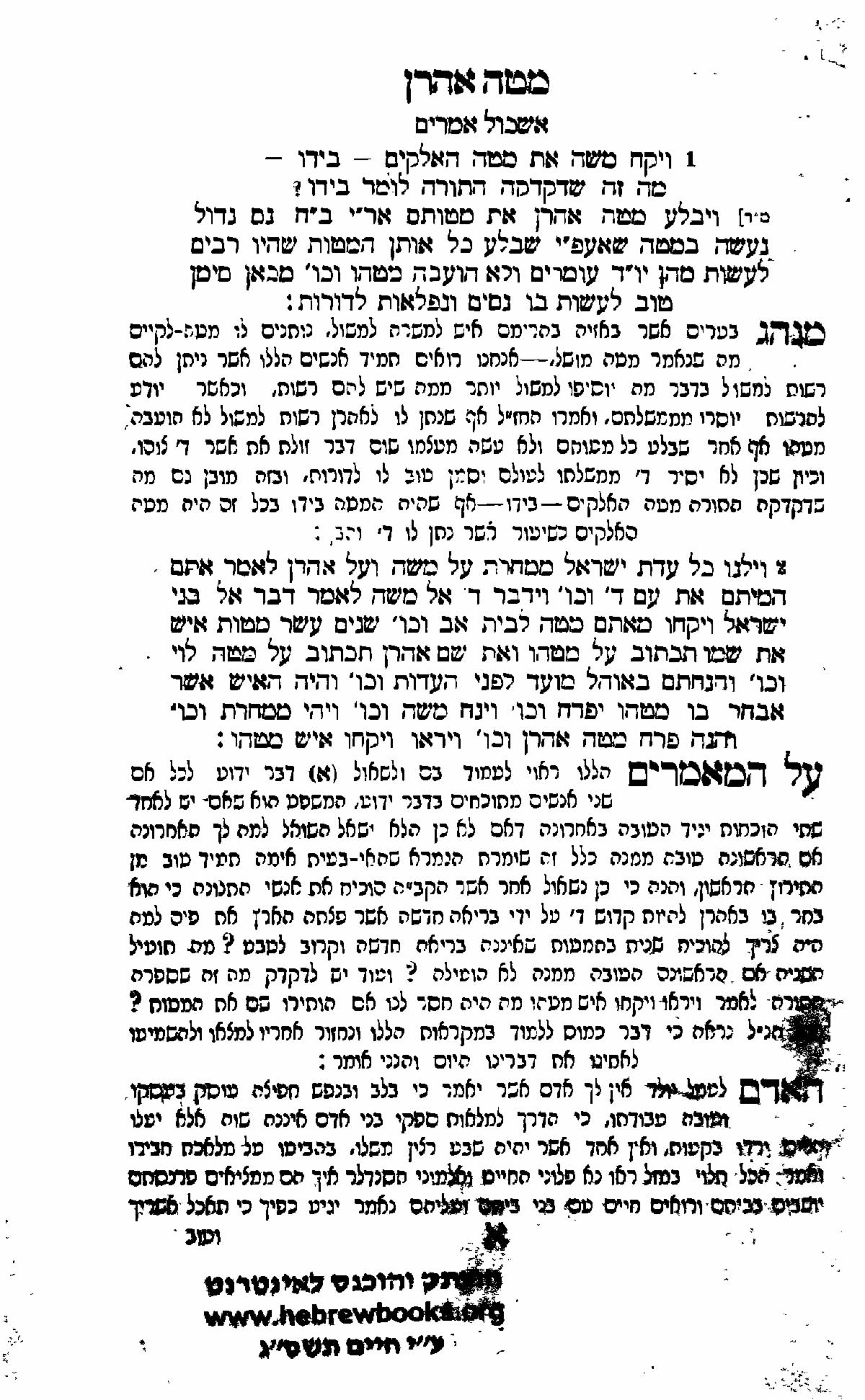
Opening page of Rabbi Moshe Shimon Sivitz' "Mateh Aharon," or "Staff of Aaron," published in Pittsburgh around 1910.
—Digital edition from HebrewBooks.com
|
|
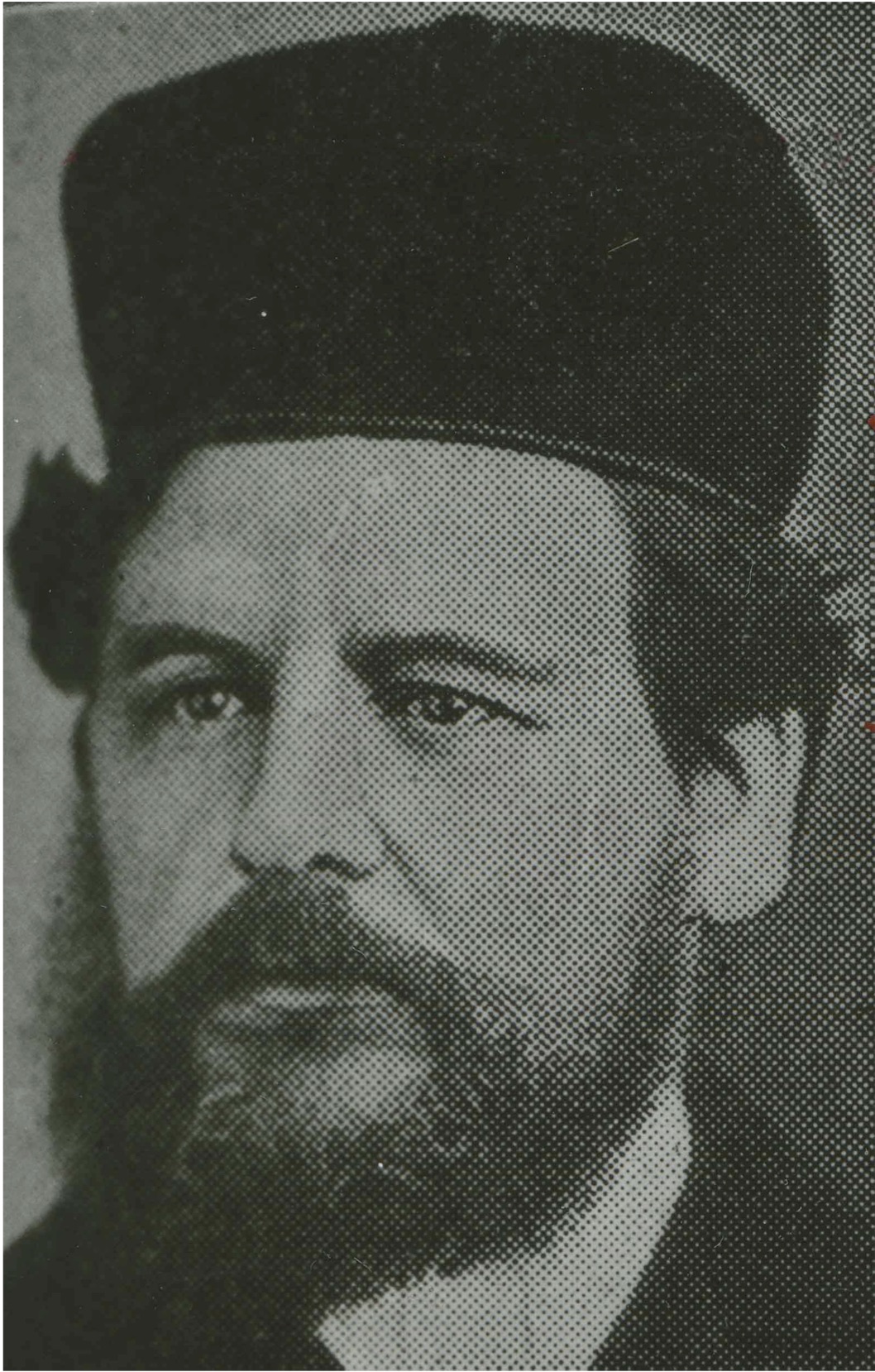
Rabbi Moshe Shimon Sivitz, undated.
—Corinne Krause Photographs [MSP 113]
|
|
During the years when Rabbi Ashinsky was building institutions, Rabbi Sivitz was publishing books. His bibliography earned him a global reputation as Torah scholar, including approval from the Chofetz Chaim, Rabbi Yisrael Meir Kagan.
Because Rabbi Sivitz was best known for scholarship, and because Rabbi Ashinsky was best known for communal work, Rabbi Sivitz’ communal work has often been overlooked. In his memoir, Rabbi Sivitz sought to correct this oversight.
The memoir is not really a memoir. It is an autobiographical introduction appended to his book, “Mateh Aharon"—in English, “Staff of Aaron”—which he published in Pittsburgh around 1910. Rabbi Sivitz wrote the work in Hebrew, but the Jewish Criterion translated an excerpt into English in May 1918.
|
|
In his account, Rabbi Sivitz describes his communal activities in the years before Rabbi Ashinsky came to Pittsburgh. He explains his role in improving the finances and curricula of the Talmud Torah religious school. He decribes a maternal care fund known as Beis Rochel that was an Orthodox alternative to the Gusky Orphanage. He takes credit for starting the first Bikkur Cholim in the city, as well as Jewish healthcare and Jewish housing initiatives.
Within a decade of publishing this account, many of Rabbi Sivitz’s communal undertakings had been thoroughly eclipsed by Rabbi Ashinsky’s initiatives. The Hebrew Institute and the Jewish Home for Babies and Children, for example, were more ambitious and longer lasting than the Talmud Torah or Beis Rochel.
What remains unchallenged is Rabbi Sivitz’ piety and his personal integrity, which can be seen in one dramatic incident described in his memoir.
|
|
“About the same time, I had to fight the Anarchists in our city, who were conducting a pernicious activity, and at one time I had quite a narrow escape. It was during the midnight hour one day, while I was sitting and writing my book. Suddenly I heard knocking at the door, and when my wife opened the door, three men came in. One took out a revolver and placed it right against me, with the following words: ‘We want you to know that we have decided to kill you on account of your interference in our work.’ But I was not afraid and I said, ‘Go ahead and shoot.’ Instead of shooting, they turned around and looked at each other, then left the house. Twenty years passed since that day. While sitting one day on Saturday evening, with my family around the table, a gentleman came into the house; he looked at me and smiled, and asked if I recognized him. I said ‘No.’ The man said, ‘I remember you; I am the one who pointed the revolver at you that night.’ I then asked him, ‘What kept you back from killing me that night?’ And he said, ‘Had you been afraid, then I would have accomplished the deed, but seeing that you were ready to offer yourself, a sacrifice for your ideal, we decided we must not touch you!’ |
|
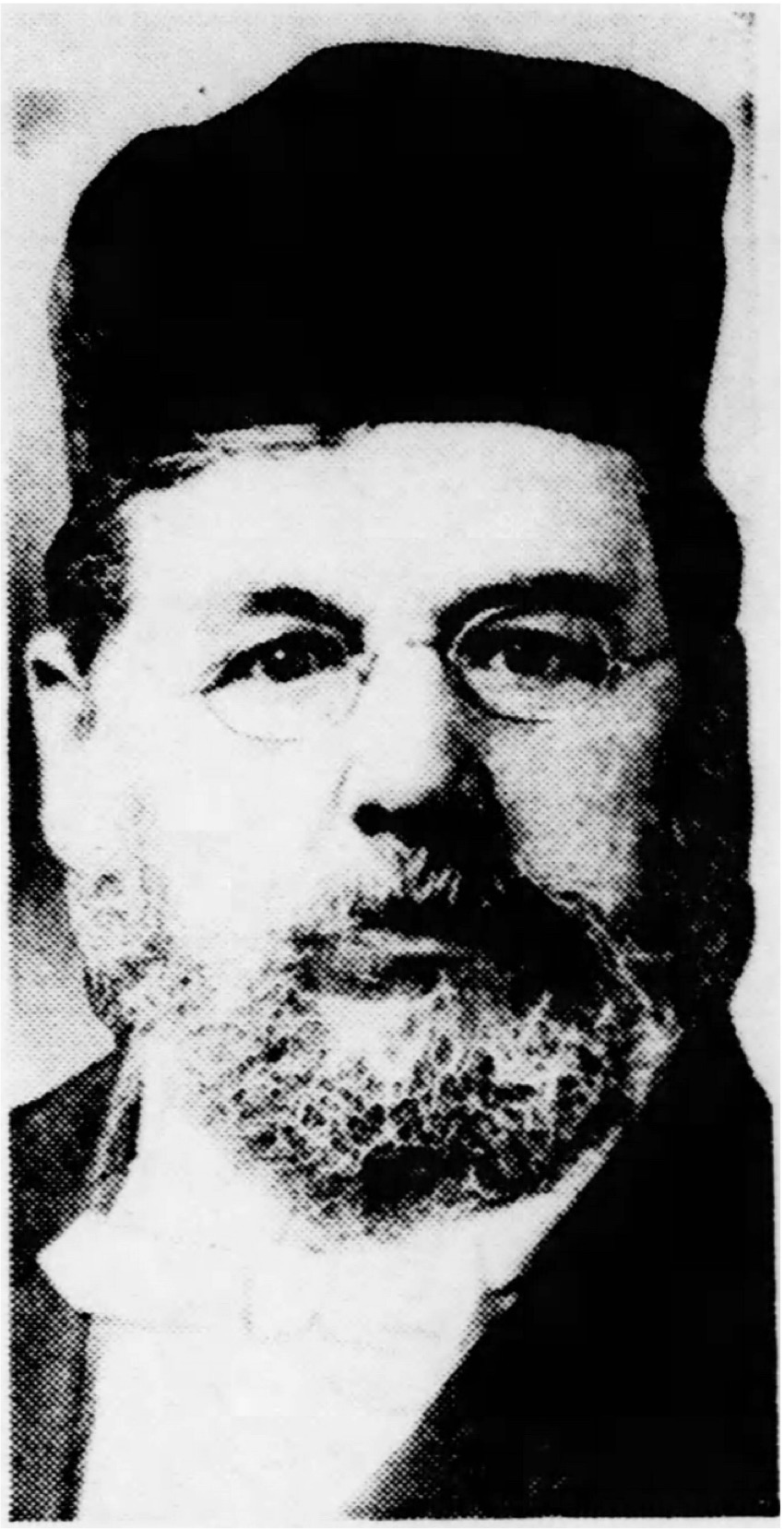
Rabbi Moshe Shimon Sivitz, c.1936.
—Pittsburgh Post-Gazette, July 31, 1936
|
|
All year, the Rauh Jewish Archives is highlighting memoirs of Jewish life in Western Pennsylvania. If you would like to donate a memoir, or just chat about the stories you've read, contact the archive or call 412-454-6406.
|
|
New Collection:
Marilyn and Bernard Caplan
Papers and Photographs [MSS 1227]
|
|
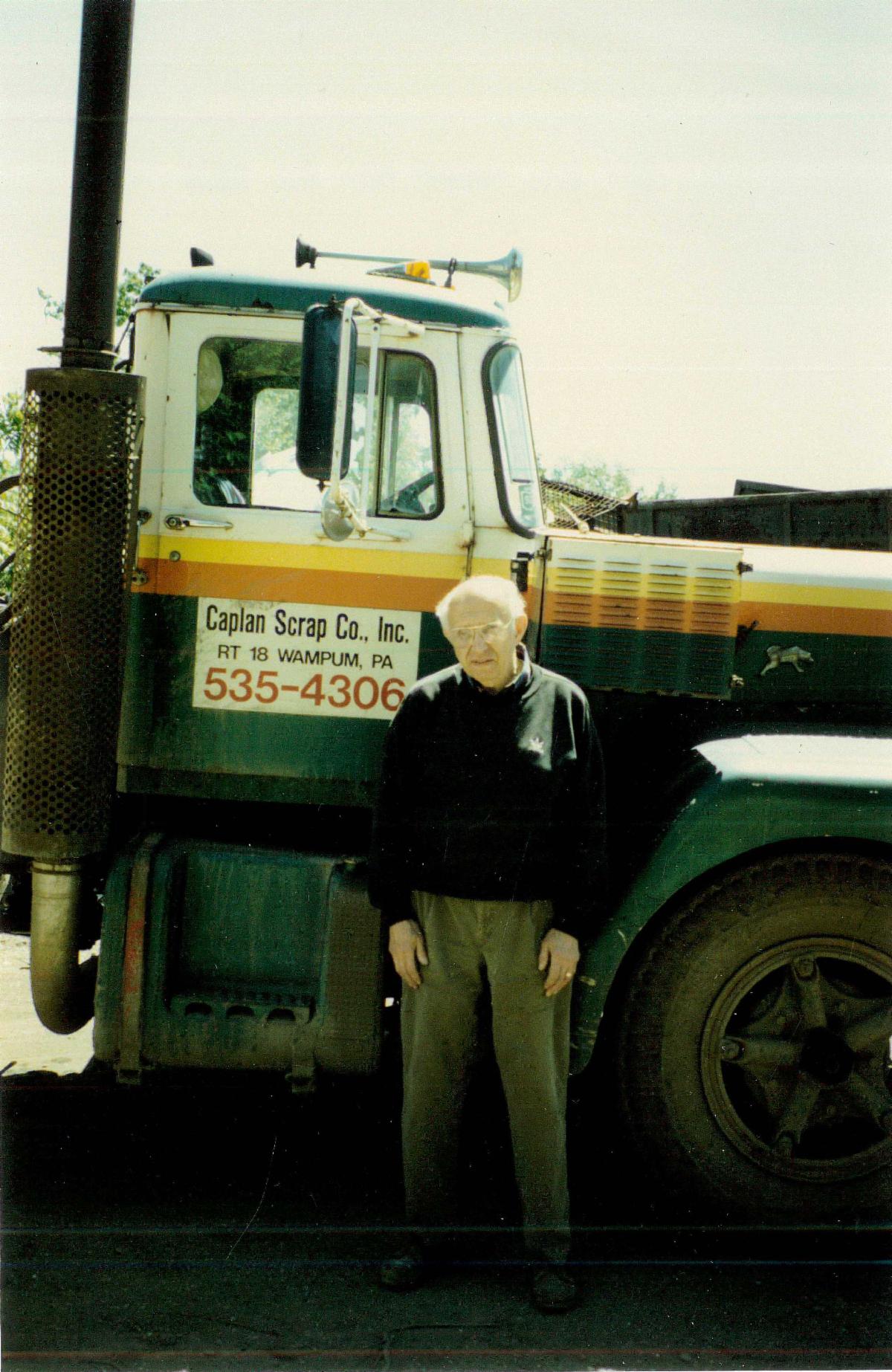
Marilyn and Bernard Caplan were active in several small-town Jewish communities in throughout tristate area during the 20th century, including Beaver Falls, Rochester, Weirton, as well as parts of the city of Pittsburgh. The Marilyn and Bernard Caplan Papers and Photographs [MSS 1227] contains photographs of family members and their businesses in these towns and documents major family life cycle events such as bar mitzvahs and weddings. It also contains important community documents, such as a ledger book from the Beaver Valley United Jewish Community Center.
Marilyn Caplan’s grandfather Alex Glantz was one of the men behind the United Baking Company. The collection includes a silver tallis collar given to Glantz for his service to Poale Zedeck Congregation.
|
|
Bernard Caplan standing beside Caplan Scrap Co. truck in Wampum, Pa.
—from Marilyn and Bernard Caplan Papers and Photographs [MSS 1227]
|
|
Jewish Encyclopedia of Western Pennsylvania:
Workmen's Circle
|
|
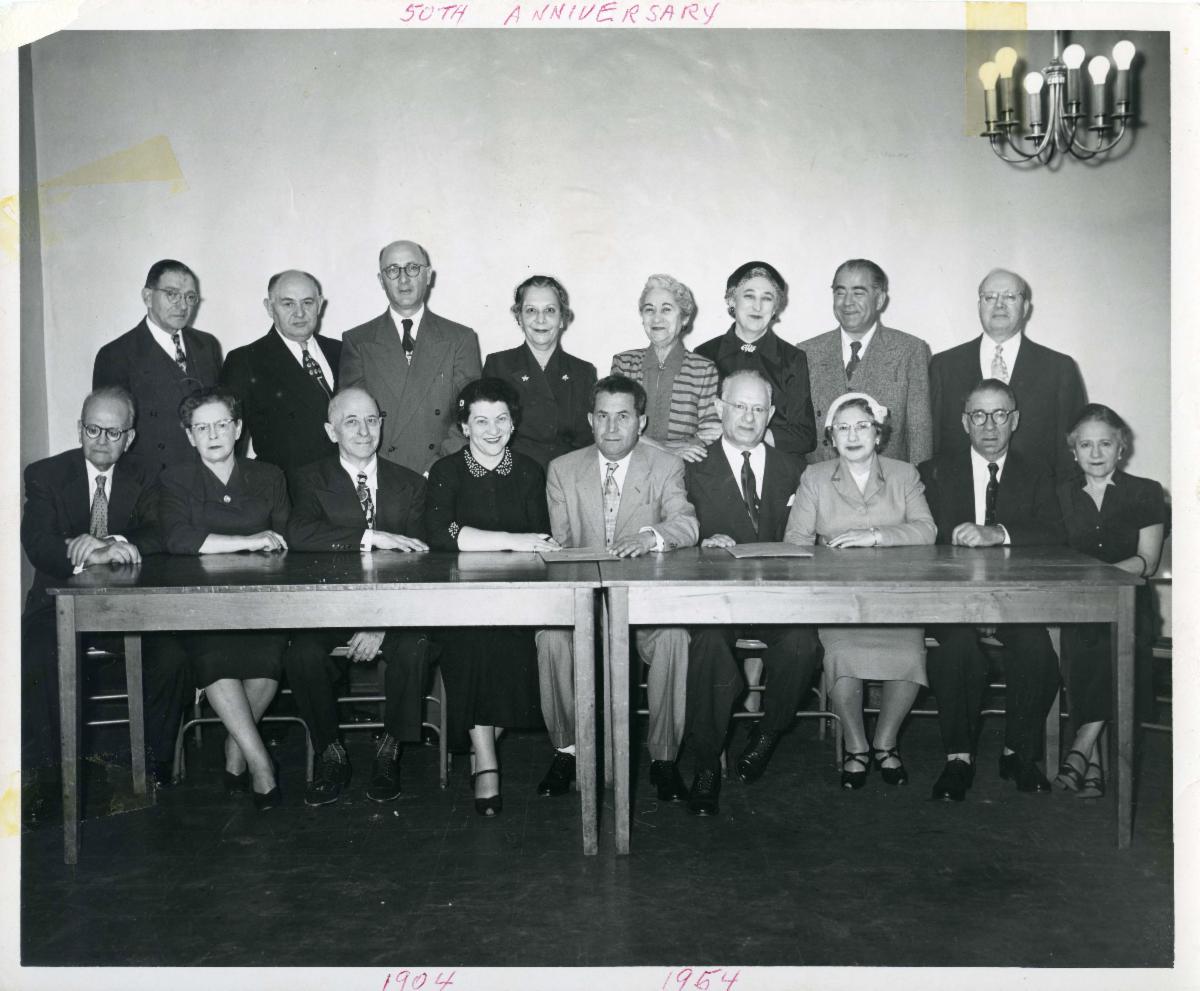
Workmen’s Circle Branch 45 representatives at an unidentified event, likely the 50th anniversary celebration.
—Workmen's Circle Branch 45 Photographs [MSQ 291]
|
|
The Workmen’s Circle, or Arbiter Ring, was an international Jewish welfare organization associated closely with the labor movement. It was founded in New York City in 1900 and expanded to include branches all over the world, including a large presence in Western Pennsylvania. Workmen’s Circle came to Western Pennsylvania around 1904 with the formation of Branch 45 in Pittsburgh. At its peak in the early 20th century, Workmen’s Circle operated at least 11 branches throughout the region—Branch 45, Branch 104, Branch 250, Branch 932 and Branch 975 in Pittsburgh, Branch 158 in Altoona, Branch 161 in Monessen, Branch 416 in Wheeling, W.V., Branch 431 in East Pittsburgh, Branch 617 in Beaver Falls, as well as a branch in New Kensington—and it also maintained some presence in many other small towns throughout the region. Workmen’s Circle also operated at least two cemeteries in the region: the Branch 45 cemetery and the joint Branch 932/Branch 975 cemetery.
Our entry for Workmen's Circle includes photographs of its anniversary committees in 1939, 1954, 1964 and 1969; the program to its 50th anniversary dinner, meeting minutes from 1968-1983, invitations to anniversary dinners from the 1960s through 1980s, and a speech by Nathan Malyn offering reflections on changes in the local Jewish labor movement.
|
|
The Jewish Encyclopedia of Western Pennsylvania brings together numerous online resources into a clearinghouse for conducting research about Jewish history in this region. As we migrate information to this new website, we’ll be announcing new entries and resources in this section of the newsletter. |
|
July 20:
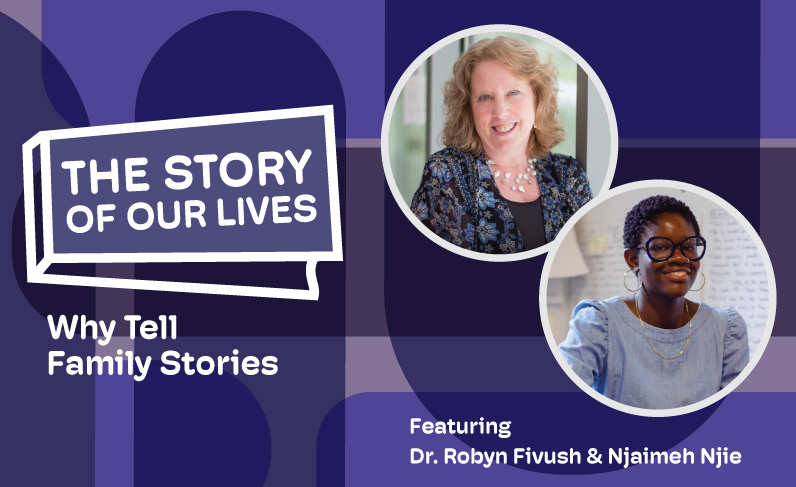
The Story of Our Lives: Why Tell Family Stories
|
|
Whether you’re a seasoned genealogist or simply the keeper of your family stories, the Heinz History Center’s new programming series, “The Story of Our Lives,” promises to open your eyes to new ways of thinking about who you are, why your family matters, and how the work of family storytelling is essential. For the first installment, "Why Tell Family Stories," Dr. Robyn Fivush, a nationally renowned scientist, and Njaimeh Njie, one of Pittsburgh’s most engaging artists and multimedia producers, will discuss the many ways that telling family stories can positively impact people, families, and society.
This hybrid program will take place on Tuesday, July 20 at 7 p.m. at the Heinz History Center. Attendees can participate either online or in person.
|
|
Dr. Robyn Fivush is a professor of psychology who studies the role of reminiscing and sharing family stories in the development of emotionally resilient children. For decades, Fivush and her Emory University colleagues have compiled data on the benefits of family stories on child wellbeing.
Njaimeh Njie is an artist and multimedia producer who uses images and documents of family and neighborhood history to honor everyday experiences and spark visual gateways into the past. In discussing their work, Fivush and Njie will offer insights into the many ways that telling family stories can positively impact people and society at large.
|
|
July 31
JGS Pittsburgh Presents: Adam Brown
|
|
The Avotaynu DNA Study is an ongoing worldwide academic collaboration of scientists, historians, genealogists and community leaders utilizing DNA to illuminate the origins and migrations of the Jewish people. Under the guidance of the Technion, the Avotaynu DNA Study has more than 8,000 participants representing all known Jewish communities from China to Curacao. Adam Brown is Project Administrator of the study. In his talk, “The Genetic Origins and Migrations of the Jewish People," he will answer DNA questions and explain how the Avotaynu study can help you understand your family origins.
This is a virtual program. It will be recorded, and the recording will be made available for JGS-Pittsburgh members who are current on their dues.
This program is possible through the support of the William M. Lowenstein Genealogical Research Endowment Fund of the Jewish Community Foundation.
|
|
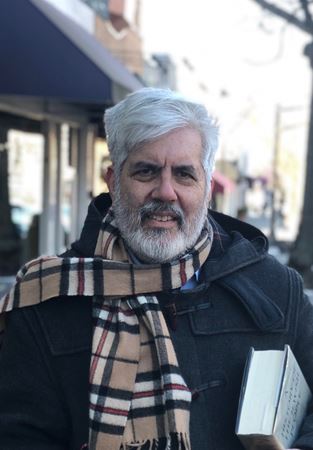
Adam Brown is a frequent lecturer on genealogical subjects at genealogical conferences all over the world. In addition to administering the Avotaynu DNA study, he is the Managing Editor of AvotaynuOnline.com. He was National Chair of the IAJGS 2017 conference in Orlando. A strategic planner by profession, he has led numerous boards and commissions on municipal planning and finance, Jewish education, and scientific research in Israel.
|
|
From the Holocaust Center of Pittsburgh:
Jakob's Torah: An International Journey
|
|
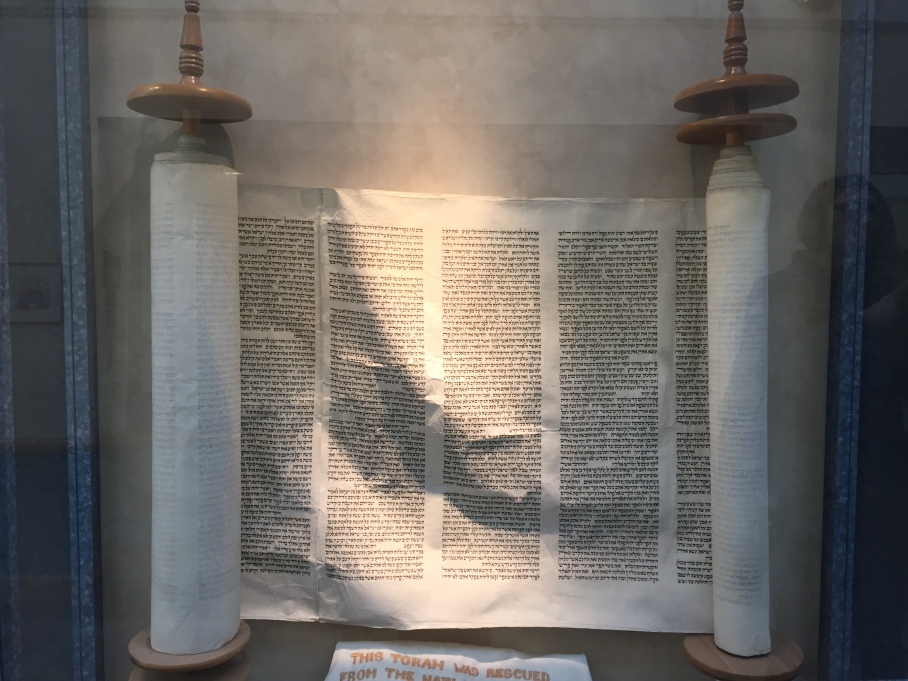
In its newest digital exhibit, the Holocaust Center of Pittsburgh tells the story of Jakob's Torah, which made its way from Germany to Shanghai to San Francisco and New York during and after the War before coming to Western Pennsylvania. It is now on display at the Holocaust Center's new exhibition space at the Jennie King Mellon Library on the campus of Chatham University. |
|
|
|
The 1950 Census is now online.
You can access the census data using the link below. As additional research tools become the coming weeks and months, we'll share them here.
If you would like help using these records, please contact the Archive.
|
|
Pittsburgh Jewish Newspaper Project |
|
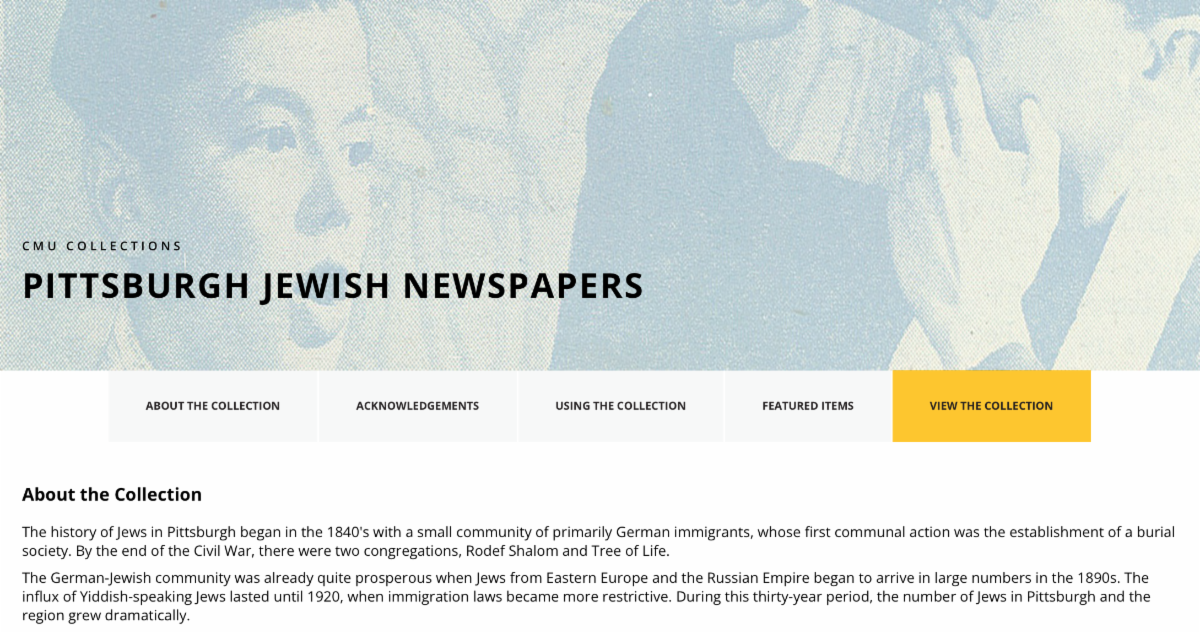
The home page of the new Pittsburgh Jewish Newspaper Project website, hosted by Carnegie Mellon University Libraries. The redesigned website is launching this month. |
|
By now, you're probably expertly zipping around the new Pittsburgh Jewish Newspaper Project platform. But if you still need a little help navigating the features and tools of the website, the Rauh Jewish Archives recently contributed a brief explanatory article to the Jewish Chronicle. It provides some basic tips and techniques for conducting research using the new site.
We plan to provide a live virtual training workshop in the near future to review the website and its functionalities. Until then, we are here to help you troubleshoot problems. You can contact the archive or call 412-454-6406.
|
|
[IMAGE: Marian Schreiber and employees at the Schreiber Trucking Company, c.1943—from Schreiber Family Papers and Photographs, MSS 846.]
If you like this newsletter, why not forward it to a friend? We want to share the story of Western Pennsylvania Jewish history with as many people as possible.
If you've received this newsletter from a friend or neighbor, and you want to read more, just click on the link below to start receiving future editions.
|
|
The Rauh Jewish Archives was founded on November 1, 1988 to collect, preserve, and make accessible the documentary history of Jews and Jewish communities of Western Pennsylvania. You can help the RJHPA continue its work by making a donation that will directly support the work being done in Western Pa. |
|
|
|
|
|
|