|
The Early 1970s:
Synagogue Closings
Jewish Encyclopedia:
Ohave Zedeck Congregation
Resource:
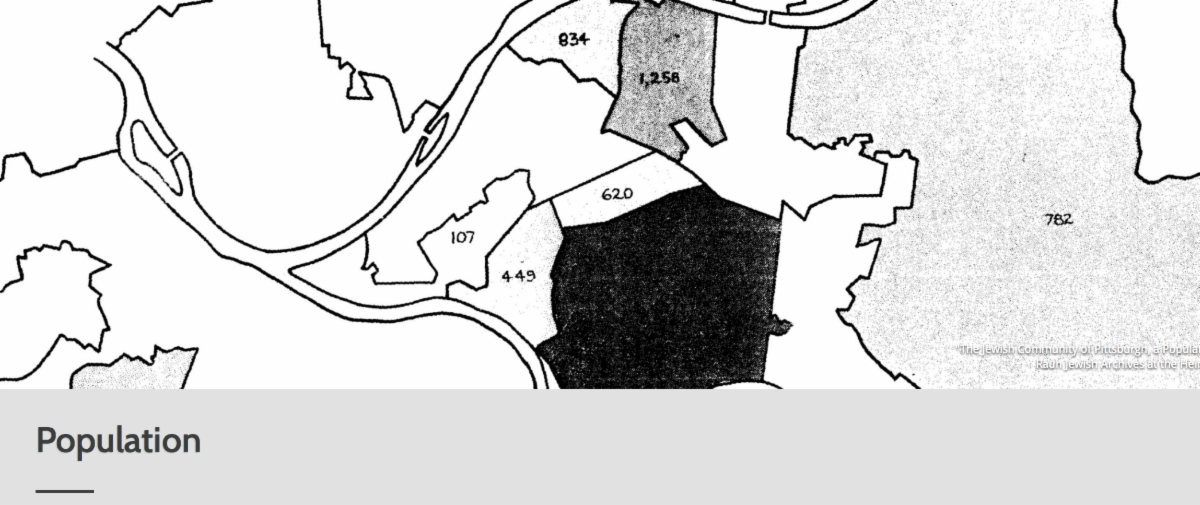
Squirrel Hill Study, 1963
Calendar:
March 3: Finding Maiden Names
April 14: The Future of Genealogy
"The Sofer"
Community:
Fine Fellowship
URA photographs
SHHS archives
"How We Got Here"
JCBA "Road-Trip"
Research Tools:
Newspapers, Cemeteries,
Memorial Plaques, Books,
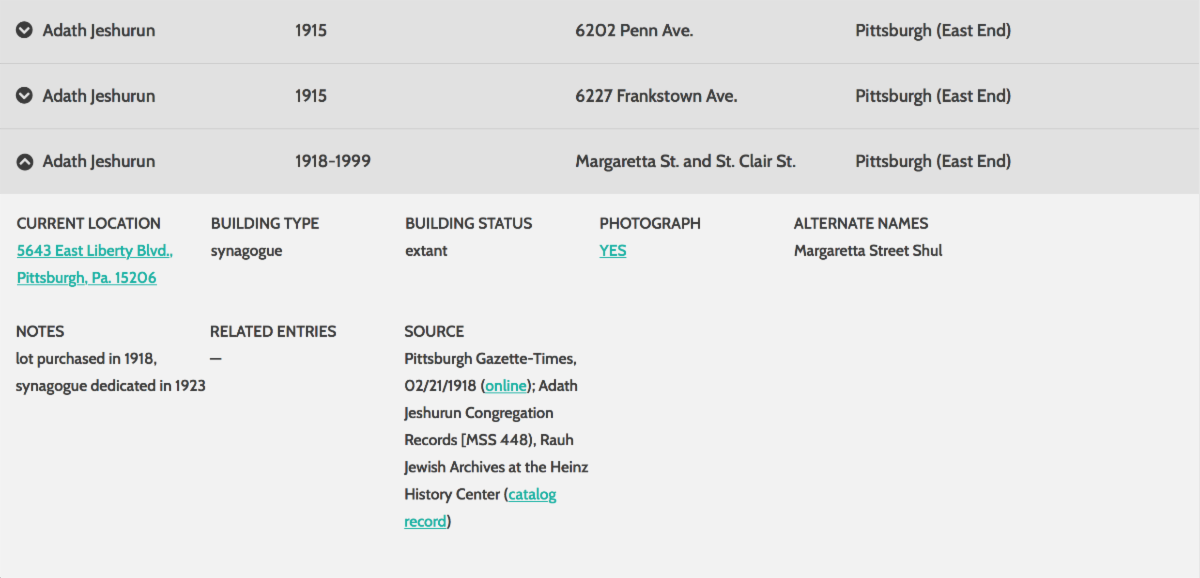
Population Figures, Synagogues, Newsletter Archive,
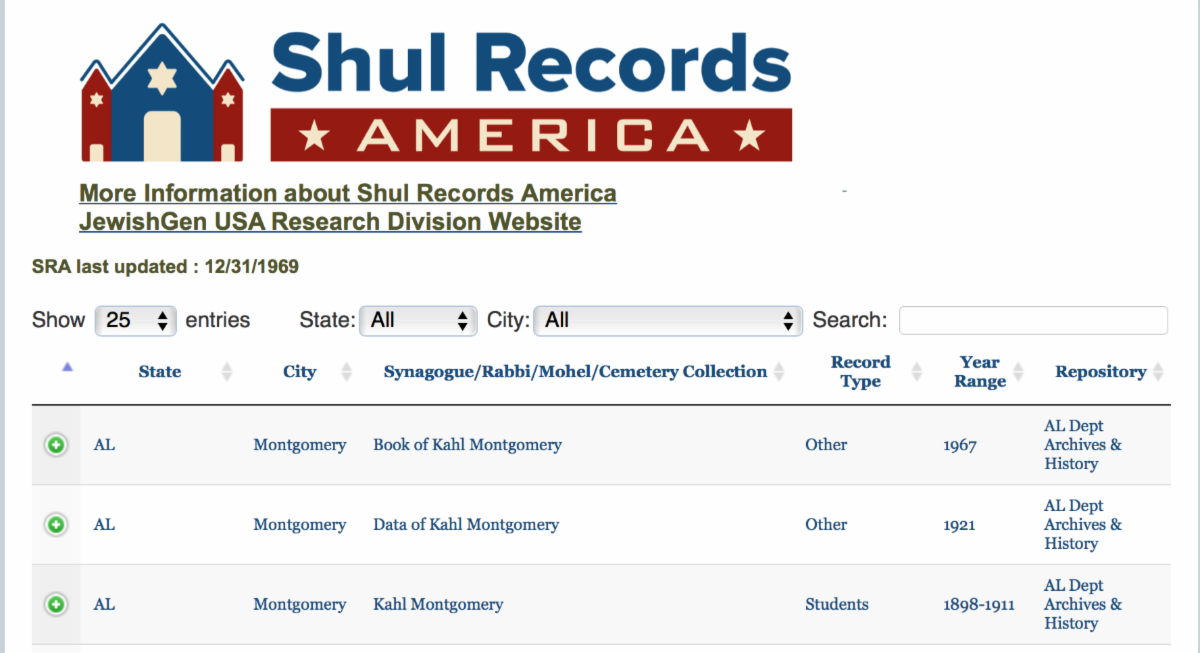
Shul Records America
| |
|
|
The Early 1970s:
Synagogue Closings
| |
|
Black and white photograph of former Congregation Beth Israel (Allegheny, Pa.) synagogue on East Street on the North Side—undated.
—Corinne Azen Krause Photographs [MSP 113]
| |
|
We looked last week at the wave of synagogue expansion projects across the Pittsburgh area from the late 1960s and early 1970s. Several large congregations in the city and suburbs expanded their existing synagogues with beautiful sanctuaries, larger social halls, and new education wings.
Earlier synagogue construction booms usually came at moments of population growth in the community. The boom of 1905 to 1907, for example, followed a 15-year stretch where the Jewish population of Pittsburgh nearly quintupled.
The situation in late 1960s and early 1970s was a little more complicated.
| |
|
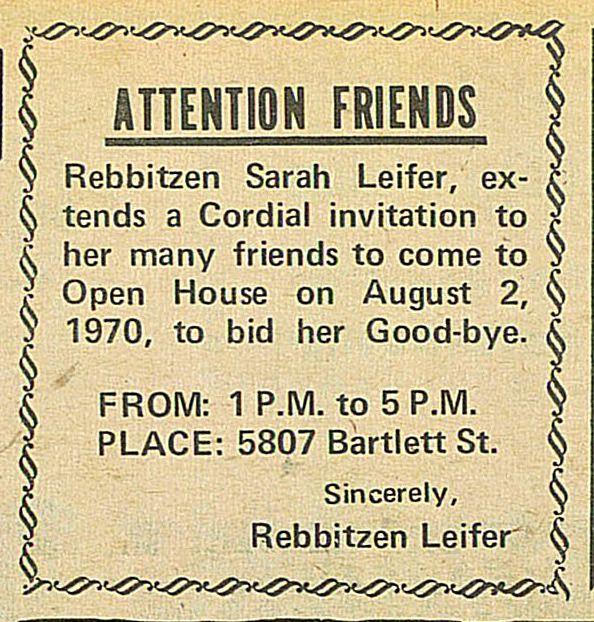
Notice announcing upcoming going-away luncheon for Rebbetzin Sara Leifer, prior to her departure for Israel—July 30, 1970.
—from Jewish Chronicle
Pittsburgh Jewish Newspaper Project
| |
|
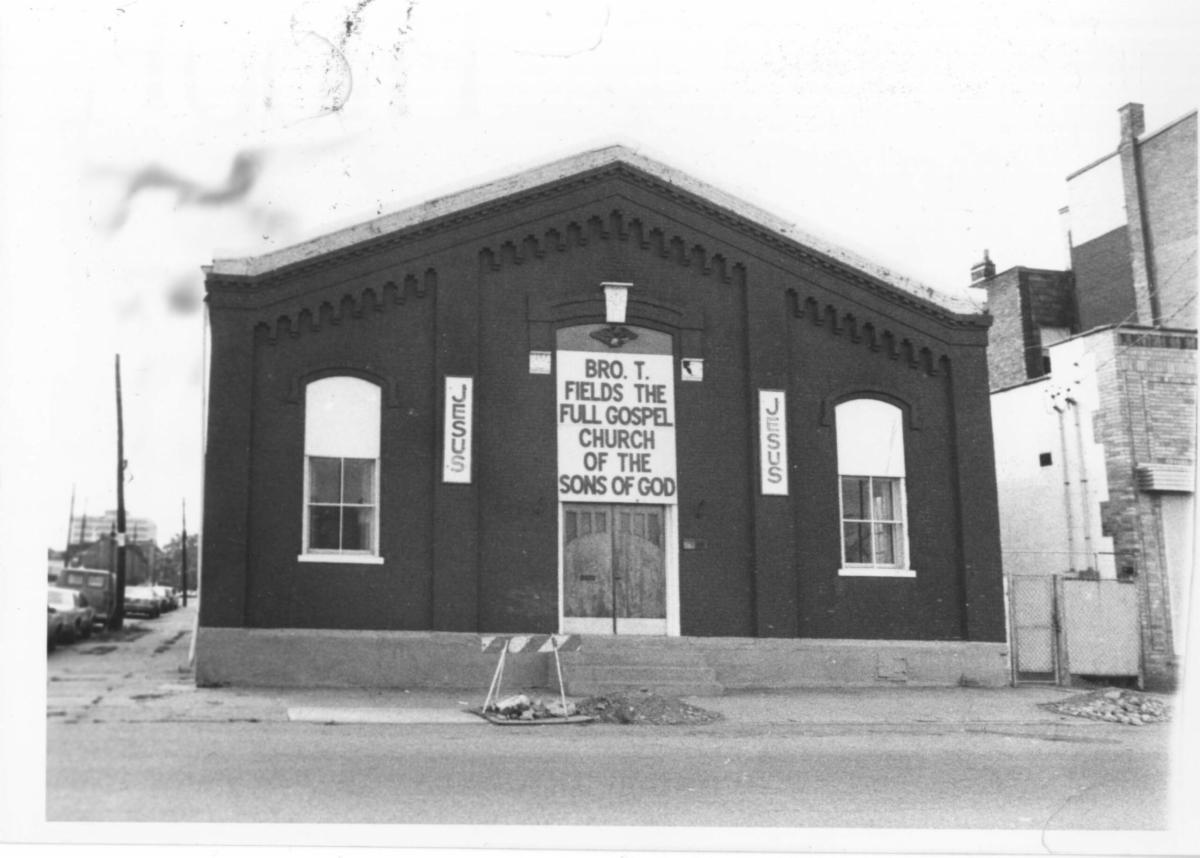
The United Jewish Federation conducts a community population study every 10 to 15 years. If you compare the 1963, 1976, and 1984 studies, you find that the total Jewish population of the greater Pittsburgh area remained relatively stable at around 45,000 people. (The actual numbers rose and fell slightly due to differences in methodology.) But during that stretch of 20 years, many of the smaller Jewish congregations across the city closed:
Was there a relationship between the consolidation of small synagogues and the expansion of large synagogues in these years? What do you think?
| |
All year, the Rauh Jewish Archives is highlighting stories of Jewish life in Western Pennsylvania in the early 1970s. If you would like to donate a material from this time period, or any historically relevant materials documenting Jewish life in this region, contact the archive or call 412-454-6406. | |
|
Jewish Encyclopedia of Western Pennsylvania:
Ohave Zedeck Congregation
| |
|
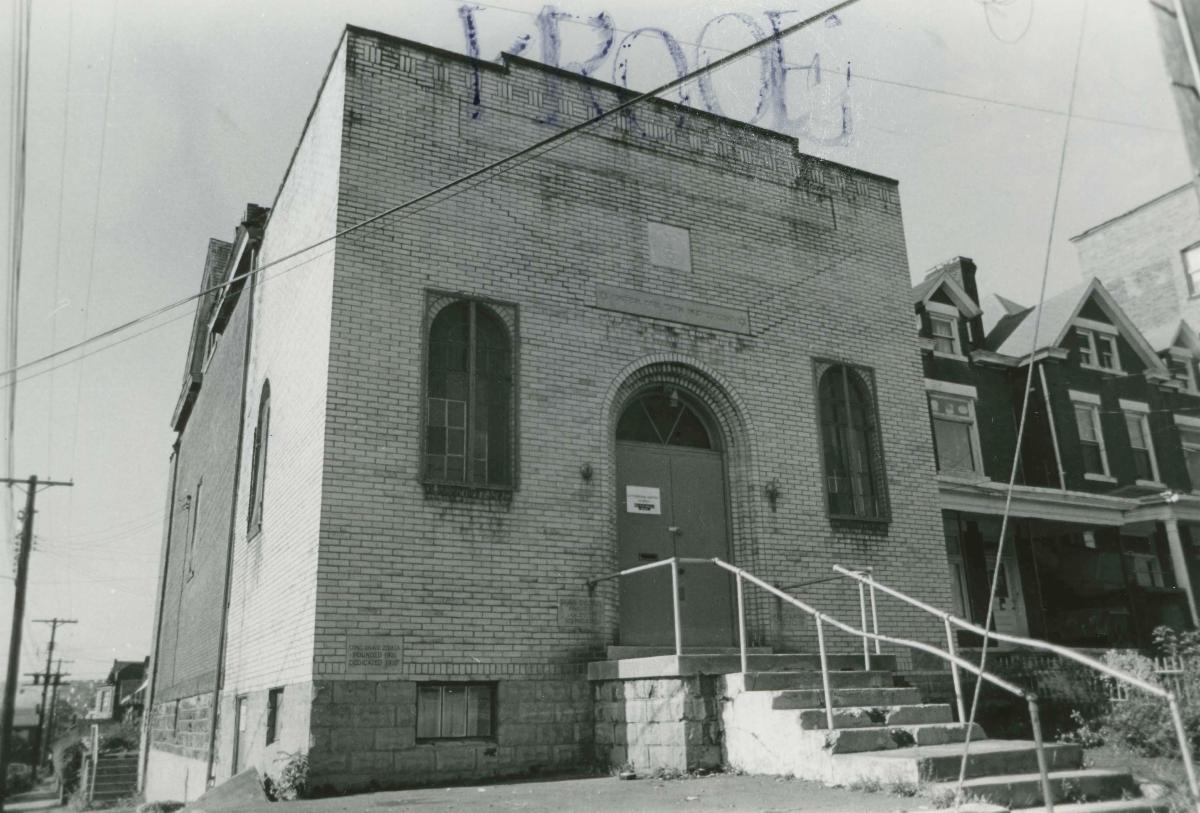
Black and white photograph of the exterior of Congregation Ohave Zedeck of Oakland at 356 Craft Ave.—undated.
—from Corinne Azen Krause Photographs [MSP 113]
| |
|
Bates Street divides South Oakland into two enclaves. We looked last week at the Jewish enclave east of Bates, which started Adath Israel Congregation.
There was another Jewish enclave on the west side of Bates Street, in an area currently known as Oaklcliffe. A group of new arrivals founded Ohave Zedeck Congregation between 1917 and 1921, according to conflicting accounts. The congregation rented various quarters—including a stint at Tree of Life—before purchasing at house at 356 Craft Ave. on the corner of Niagara Street in 1921. In a major renovation in 1936 and 1937, Ohave Zedeck demolished and rebuilt parts of the street-level structure of this building. It expanded the main sanctuary and converted the existing basement into a new social hall.
With increasing outmigration from the Hill District throughout the 1920s, 1930s, and 1940s, at least two synagogues relocated to this part of South Oakland. Kahal Chassidim left Wylie Avenue for 33 Niagara St. in 1932, and Anshe Lubovitz Congregation left Erin Street for 3223 Kennett Sq. in 1944.
This growth lasted only a few years. The extension of the Boulevard of the Allies into Squirrel Hill proper in 1930, and consolidation of the Jewish population into Squirrel Hill after World War II, drew people from Oakland.
Kahal Chassidim moved to Bartlett Street in Squirrel Hill in 1939. Anshe Lubovitz joined the emerging Lubavtich community in the 1940s and early 1950s. Ohave Zedeck persisted for years but gradually faded. Its last advertisement for High Holiday services appeared in newspapers in 1975.
We’ll look next week at the congregations of the upper Hill District.
| |
The Jewish Encyclopedia of Western Pennsylvania brings together numerous online resources into a clearinghouse for conducting research about Jewish history in this region. As we migrate information to this new website, we’ll be announcing new entries and resources in this section of the newsletter. | |
|
Resource:
“A Record of Study:
The Squirrel Hill Community, Its Jewish Citizens"
| |
|
Cover page from “A Record of Study: The Squirrel Hill Community, Its Jewish Citizens”—1963.
—from Jewish Federation of Greater Pittsburgh Records [MSS 287]
| |
The “Community Laboratory” was a course offered by the University of Pittsburgh Graduate School of Social Work in the 1960s. Students were embedded in neighborhoods across the city to study local communities.
For the fall semester of 1963, 12 first-year grad students fanned across Squirrel Hill to study its civic life, with an emphasis on its Jewish population.
The resulting 78-page report is a wide-ranging analysis of Squirrel Hill from an outside perspective. In addition to providing data unavailable anywhere else, it is an invaluable look at the external perceptions, misconceptions, and stereotypes of Squirrel Hill at an important moment in its development as a Jewish neighborhood. The report is also a useful counterpoint to the community study commissioned by the United Jewish Federation the same year, which covers similar information from an inside perspective.
Previously inaccessible, “A Record of Study: The Squirrel Hill Community, Its Jewish Citizens” is now on the Jewish Encyclopedia of Western Pennsylvania.
| |
March 3:
JGS Pittsburgh Presents:
"Bubbie, Who Are You? Finding Maiden Names"
| |
|
Female relatives are difficult to trace but can be found.
Janice Sellers will introduce resources for tracing the women in your family, including family items, oral histories, federal and state census records, immigration records, vital records, religious records, journals, newspapers, legal and court records, library archives, and manuscript collections. Many of these resources are available online.
The program is on Sunday, March 3 from 1-3 p.m. ET. This is an online program, occurring exclusively on Zoom. The program will be recorded, and the recording will be made available to current JGS-Pittsburgh members.
"Bubbie, Who Are You?" is a collaboration between the Jewish Genealogy Society of Pittsburgh and the Rauh Jewish Archives. Please register online. This program is free for JGS-Pittsburgh members and $5 for the general public. To become a member of the JGS-Pittsburgh and to receive a free membership code for this program, please visit its website.
This program is possible through the support of the William M. Lowenstein Genealogical Research Endowment Fund of the Jewish Community Foundation.
| |
Janice M. Sellers is related to actor Peter Sellers and to John of Gaunt, son of a king and father of a king. At least that’s what her grandparents told her. Unfortunately, they were both wrong, but that’s why she has researched her family for 48 years and now helps others find the right pieces to fit their genealogy puzzles. She specializes in Jewish, Black, forensic, and newspaper research and has taught at local to international levels. Her site is ancestraldiscoveries.com. | |
April 14
JGS Pittsburgh Presents:
"The Future of Genealogy"
| |
|
What impact will technology have on genealogy?
Jarrett Ross will discuss the emerging tools and technology that may have a big impact on the future of genealogy and genetic genealogy, including AI, Facial Recognition Software, low SNP artifact testing, and much more.
The program is on Sunday, April 14 from 1-3 p.m. ET. This is an online program, occurring exclusively on Zoom. The program will be recorded, and the recording will be made available to current JGS-Pittsburgh members.
"The Future of Genealogy" is a collaboration between the Jewish Genealogy Society of Pittsburgh and the Rauh Jewish Archives. Please register online. This program is free for JGS-Pittsburgh members and $5 for the general public. To become a member of the JGS-Pittsburgh and to receive a free membership code for this program, please visit its website.
This program is possible through the support of the William M. Lowenstein Genealogical Research Endowment Fund of the Jewish Community Foundation.
| |
|
Jarrett Ross, also known as the Genea Vlogger, began seriously researching his own family history in 2009 while finishing his undergraduate degree at the University of Pittsburgh. Since then he has successfully connected with thousands of relatives all over the World, helped build hundreds of trees for people of varying ancestral backgrounds, and has worked on hundreds of genealogical projects of varying types.
Jarrett has found a specialty in Genetic Genealogy and Sephardic Jewish research with an emphasis on the Portuguese Jewish Community of Amsterdam. Jarrett’s other main focuses of research are in Jewish Agricultural Societies of Southern New Jersey, Ashkenazi Jewish ancestry in the Pale of Settlement, Jews in America, and Jews in Ukraine.
Along with his areas of focus, Jarrett also has extensive experience with research in a variety of ancestral backgrounds from all over the World, including an array of experience in genetic genealogy. Jarrett spent just under 5 years working as the Lead Forensic Genealogist at DNA Labs International, helping create investigative leads to identify unknown human remains and perpetrators of violent crimes. In October 2023, Jarrett left the Forensic industry to pursue a content creation and genealogy education full-time.
| |
through March 18:
Rodef Shalom Congregation Presents:
"The Sofer: A Tribute To My Zayde"
| |
|
The Sofer is a multi-generational narrative about Pittsburgh artist Rosabel Rosalind's relationship with Zayde, her grandfather, a retired Orthodox rabbi with whom she lived for the first twelve years of her life. (He spent part of his career in Western Pennsylvania, leading Beth Samuel Jewish Center in Ambridge.) Fragmented by time and memory, the story recounts details from the years Zayde and Rosalind lived as roommates, interspersed with historical reimaginings and stark cultural observations that span past and present.
The book follows Zayde and Rosalind, as she came of age in a Conservative Jewish household and as she continues to come to terms with her Jewishness. The Sofer is about the haunting of memory, history, and tradition in the face of a resurgence of anti-Semitism, through an intimate and inherited perspective.
The original manuscript of The Sofer is 185 pages and is entirely hand-painted with beet juice, citing Zayde's affinity for Manischewitz brand borscht and the complexities of diasporic Jewishness. Sofer, translates to a Jewish scribe of ancient texts, and it is also Rosalind's maternal name; her Zayde’s last name. Thus she transcribed the familial, ancestral, and historical, using an untraditional hand-made ink, per scribal ritual, with a combination of painting and comic techniques and specific Sofer lettering of Rosalind's design.
| |
|
Jewish Studies Program at the University of Pittsburgh and the Rauh Jewish Archives at the Heinz History Center announce the inaugural Fine Fellowship for the study of the October 27 attack. This $4000 fellowship will provide funding for a scholar to travel to Pittsburgh and work with local materials related to the attack and its aftermath and to engage with the local community.
A committee of representatives from the Jewish studies faculty of University of Pittsburgh, the Rauh Jewish Archives, and the 10.27 Healing Partnership will consider the applications. They will offer the award to an outstanding scholar whose research promises to make excellent use of local materials, stands to gain from thoughtful conversations with the people of Pittsburgh, and will prove instructive to local community-members seeking to better understand the contexts and repercussions of the October 27 attack.
Applications due March 15, 2024. For more information, click link below.
| |
Urban Redevelopment Authority Archives | |
The City of Pittsburgh Archives has launched a new digital archive containing thousands of photographs and documents spanning more than two centuries. Of particular interest to local Jewish history is a collection of more than 2,000 photographs of properties in the lower Hill District taken by the Urban Redevelopment Authority in the late 1950s prior to demolitions in the area. | |
Squirrel Hill Historical Society Archives | |
Squirrel Hill Historical Society has added a collection of 60 historic images of Squirrel Hill to the Historic Pittsburgh website. The collection contains selected images from three organizations: the Squirrel Hill Historical Society, Squirrel Hill Urban Coalition, and Mary S. Brown Memorial-Ames United Methodist Church. The photographs document many aspects of life in Squirrel Hill, including many beloved businesses from the 1990s that no longer exist. | |
From the Jewish Genealogy Society of Pittsburgh
"How We Got Here"
| |
|
Each family is unique.
Each family has its own traditions, its own spirit, and its own dynamics.
Despite all these differences, every Jewish family in Western Pennsylvania has at least one thing in common: They all have a story about how they got here.
Perhaps your family sailed in steerage across the Atlanti in the 19th century.
Or perhaps your family drove the Pennsylvania Turnpike in a station wagon in the 1960s to work for the universities and hospitals during Renaissance.
Or perhaps your arrival into one of the many Jewish communities of Western Pennsylvania involves marriage, or conversion, or a surprising DNA discovery.
Each of these stories is special, and each contributes to the larger story of our community. To collect and honor these origin stories, the Jewish Genealogy Society of Pittsburgh is launching a new initiative called “How We Got Here.” To participate, just write a short account explaining how you or your ancestors came to settle in Western Pennsylvania. All stories are welcome.
Stories will be eligible for inclusion in the JGS-Pittsburgh’s monthly newsletter Z’chor and also for preservation in the Rauh Jewish Archives. For more information about this initiative, or to contribute, contact Eric Lidji.
| |
From the Jewish Cemetery & Burial Association
"Road Trip: The Jewish Cemeteries of Western Pennsylvania"
| |
|
The Jewish Cemetery and Burial Association of Greater Pittsburgh has released a new documentary showcasing Jewish cemeteries in Western Pennsylvania.
“Road Trip: The Jewish Cemeteries of Western Pennsylvania” is a one-hour tour of the many cemetery properties overseen by the JCBA, as well as an overview of the organization’s ongoing work to care for these sacred burial grounds. The video is a wonderful opportunity to celebrate these special Jewish cultural sites in our region. The video includes many historic photographs and documents from the collections of the Rauh Jewish Archives.
| |
Pittsburgh Jewish Newspaper Project | |
The Pittsburgh Jewish Newspaper Project contains digitized, searchable copies of four local English-language Jewish newspapers between 1895 and 2010. It is a valuable tool for researching almost any topic about Jewish history in Western Pennsylvania. For a primer on using the website, watch our video. | |
|
Western Pennsylvania Jewish Cemetery Project | | |
|
The Rauh Jewish Archives launched the Western Pennsylvania Jewish Cemetery Project in 1998 to preserve burial records from Jewish cemeteries across the region. Over a period of fifteen years, the information was compiled into a searchable, online database containing approximately 50,000 burial records from 78 Jewish cemeteries throughout the region. | |
Western Pennsylvania Yahrzeit Plaques Project | |
The Rauh Jewish Archives launched the Western Pennsylvania Yahrzeit Plaques Project in 2020. The goal was to create a comprehensive collection of burial records from memorial boards at synagogues across the region. Volunteers are currently transcribing these boards and records are being added monthly to our online database. The database currently contains more than 2,700 listings. | |
|
Rauh Jewish Archives Bibliography | | |
|
University of Pittsburgh librarian and Rauh Jewish Archives volunteer Laurie Cohen created this comprehensive bibliography of the Rauh Jewish Archives library holdings from 1988 through 2018. It lists nearly 350 volumes arranged by type and then by subject. This a great tool to use early in your research process, as you’re surveying available resources on a given subject. | |
Jewish Population Estimates | |
Looking to figure out how many Jews lived in a certain part of Western Pennsylvania at a certain moment in time? This bibliography includes more than 30 estimates of the Jewish population of Pittsburgh and small-towns throughout the region, conducted between 1852 and 2017. | |
| |
|
A database of buildings throughout Western Pennsylvania known to have hosted Jewish worship services. Includes links to photographs and citations with original source material. Database currently includes 90 locations from 2 institutions | |
Rauh Jewish Archives Newsletter | |
The Rauh Jewish Archives has been publishing a weekly newsletter since 2020. The newsletter contains a variety of articles about local Jewish history, including much original research not found anywhere else. You can find and read every issue—more than 150!— in our new index. | |
| |
|
Online finding aid from JewishGen listing congregational archival collections held at publicly accessible repositories across the United States. Includes 63 listings from the Rauh Jewish Archives, as well as other repositories with Western Pennsylvania congregational records. | |
[IMAGE: Marian Schreiber and employees at the Schreiber Trucking Company, c.1943—from Schreiber Family Papers and Photographs, MSS 846.]
If you like this newsletter, why not forward it to a friend? We want to share the story of Western Pennsylvania Jewish history with as many people as possible.
If you've received this newsletter from a friend or neighbor, and you want to read more, just click on the link below to start receiving future editions.
| |
The Rauh Jewish Archives was founded on November 1, 1988 to collect and preserve the documentary history of Jewish life in Western Pennsylvania and to make it available to the world through research assistance, programing, exhibits, publications, and partnerships. | | | | |