|
Restaurants:
Monroeville
Jewish Encyclopedia:
Beth Israel Congregation
Family Clubs:
Tanowitz Family Club
Calendar:
Nov. 1: 18 Cheshvan study
Nov. 1: Great Lakes Region genealogy
Nov. 1: RJA anniversary
Nov. 5: JGS Presents: Michael Tobias
Nov. 6: Ellis Silvette
through Nov. 21: Violins of Hope
through Nov. 27: Mosaics
Community:
SHHS archives
"How We Got Here"
JCBA "Road-Trip"
Mystery portraits
Research Tools:
Newspapers, Cemeteries,
Memorial Plaques, Books,
Population Figures, Synagogues, Newsletter Archive,
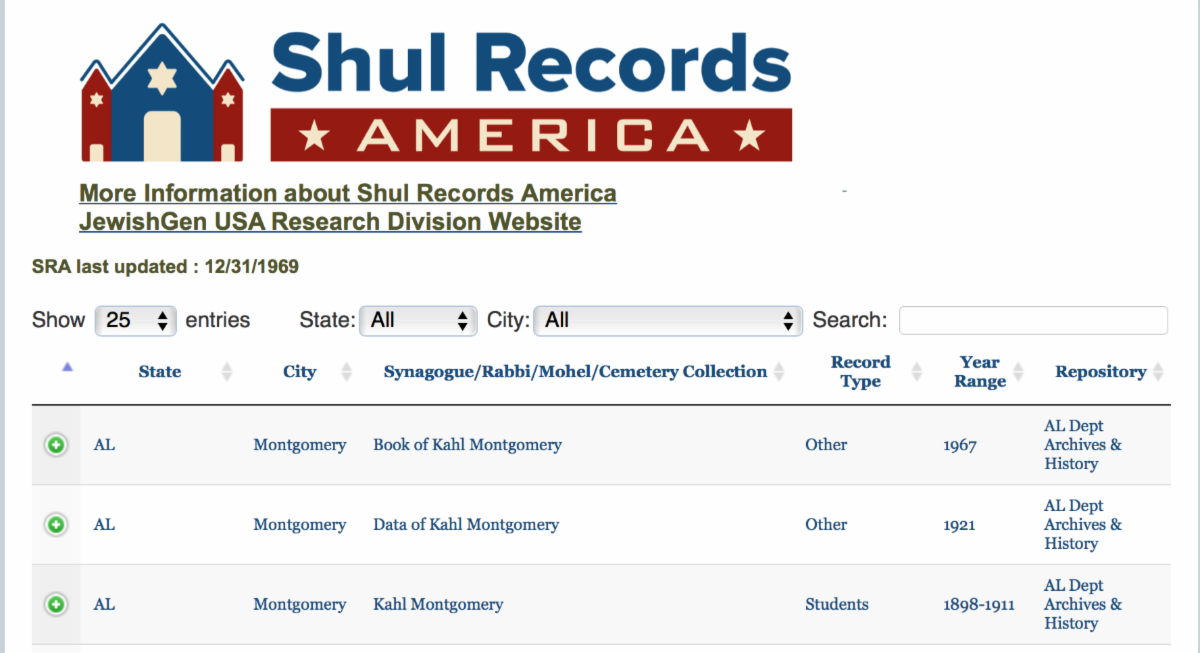
Shul Records America
| |
|
|
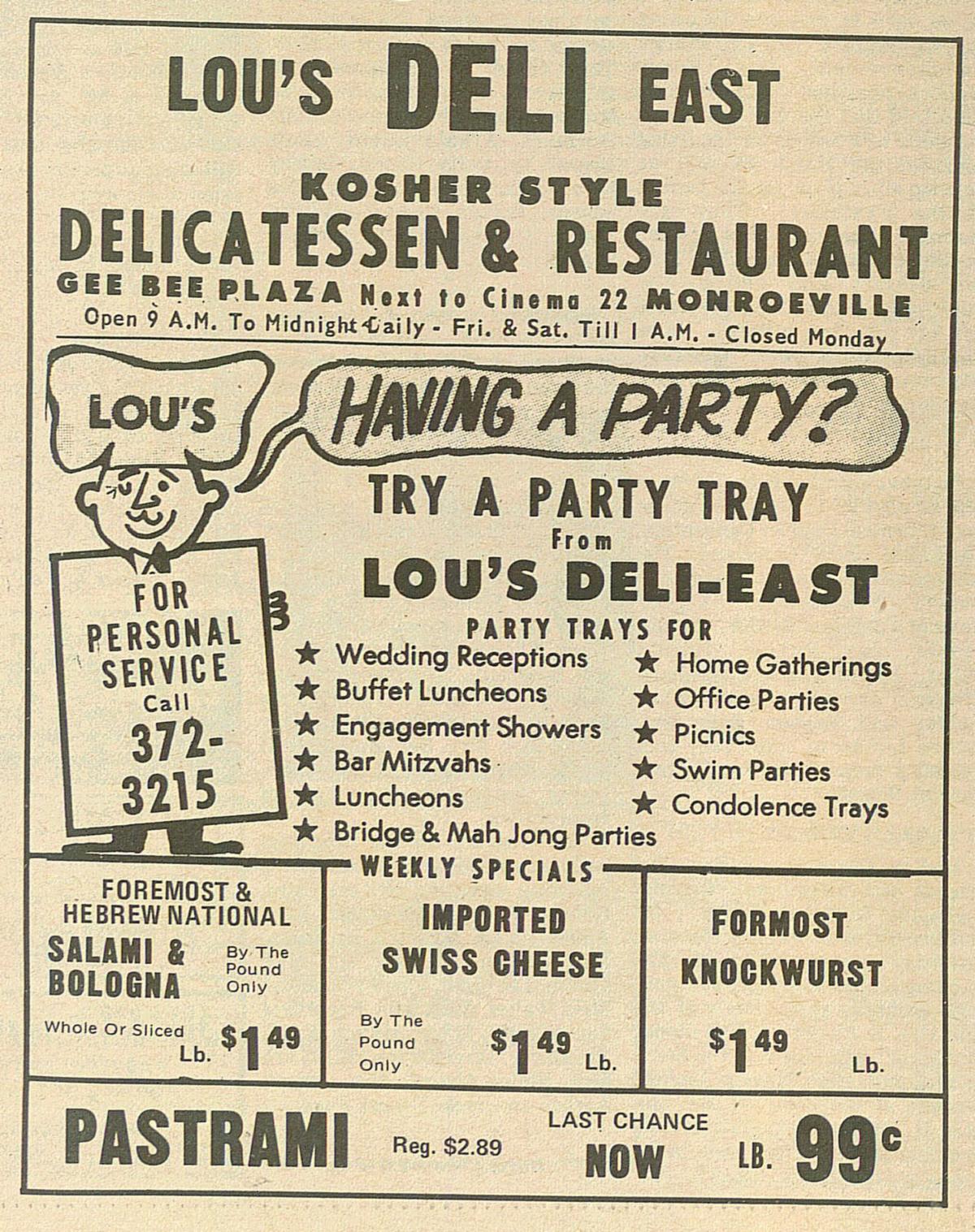
Advertisement for Lou’s Deli-East in Gee-Bee Plaza in Monroeville, listing weekly specials—April 27, 1972.
—from Jewish Chronicle
Pittsburgh Jewish Newspaper Project
| |
|
The restaurants we’ve profiled this year were mostly centered in three parts of the city: Squirrel Hill, the Hill District, and lower Fifth Avenue, with smaller clusters in downtown and Oakland and a few in the East End.
With the growth of suburban Jewish communities after World War II, restaurateurs increasingly attempted to reach the growing Jewish populations in the east and south.
After our recent review of the many restaurants of the Weinstein family, Mike Roteman noted an omission: Itzy’s Terrace Restaurant within the new Monroeville Bowling Center in 1962. In ads, Itzy’s Terrace explicitly marketed its connection with the famous Squirrel Hill restaurant.
A decade later, in 1972, Lou’s Deli East opened next to Cinema 22 in Monroeville, in the former “Gee Bee Plaza,” now called Jonnet Plaza.
We have very little documentation of these or any other Jewish-owned restaurants in Monroeville. If you have information about restaurants in the eastern suburbs of Pittsburgh, please contact the archive.
| |
All year, the Rauh Jewish Archives is highlighting Jewish restaurants in Western Pennsylvania. If you would like to donate a material from a Jewish restaurant, or just reminisce, contact the archive or call 412-454-6406. | |
|
Jewish Encyclopedia of Western Pennsylvania:
Beth Israel Congregation
| |
|
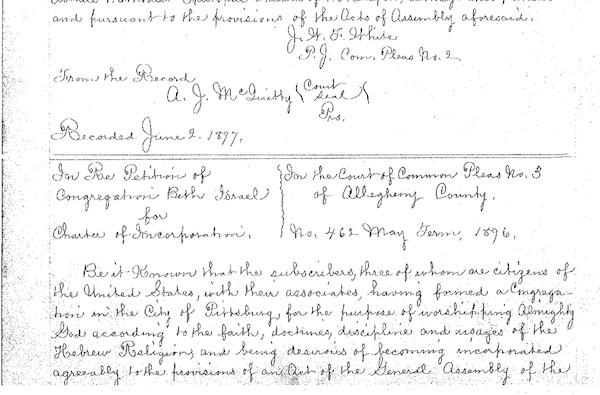
Selection from the charter of Beth Israel Congregation—1896.
—from Allegheny County Charter Books, Vol. 23
Allegheny County
| |
In his seminal book, “The Jewish Experience in Western Pennsylvania: A History,” local historian Jacob Feldman wrote: “The Russians created more new congregations and societies than any other Jewish ethnic group in Pittsburgh. By the 1920s, they comprised 20 to 25 percent of its Jewish community, whereas the Lithuanians comprised 45 to 50 percent. But the Russians functioned in smaller units and their synagogues recurrently divided.”
Over the next two months, we’re going to try to untangle some of these smaller units and recurrent divisions within the Rishishe (Russian Jewish) community in Pittsburgh. Through new research, we have identified at least 11 congregations in the city claiming origins in the former Russian Empire, covering parts of present-day Russia, Ukraine, Belarus, and Moldova.
We’ve previously profiled two of these congregations. Beth Abraham Congregation was the first and began meeting in the mid-1880s. Agudas Achim Congregation broke away in 1890, obtained a charter in 1892, and dedicated a synagogue on Crawford Street in the Hill District in 1894.
This week, we look at Beth Israel Congregation. (This Beth Israel Congregation was one of at least four distinct and unrelated congregations in Allegheny County sharing that name. The other three were the short-lived Beth Israel Congregation established in 1852, Beth Israel Congregation of Allegheny, and Beth Israel Congregation of Wilkinsburg.)
Beth Israel Congregation obtained a charter in 1896. Among its charter members was Solomon Landman, who was previously associated with Agudas Achim. That suggests Beth Israel might have broken away from Agudas Achim.
As early as 1898, Beth Israel appears to have acquired the Crawford Street synagogue constructed four years earlier by Agudas Achim Congregation. But by March 1900, Beth Israel was forced to sell the building at auction to Congregation Poale Zedeck. Beth Israel disappeared soon afterward.
| |
The Jewish Encyclopedia of Western Pennsylvania brings together numerous online resources into a clearinghouse for conducting research about Jewish history in this region. As we migrate information to this new website, we’ll be announcing new entries and resources in this section of the newsletter. | |
|
Family Clubs:
Tanowitz Family Club
| |
|
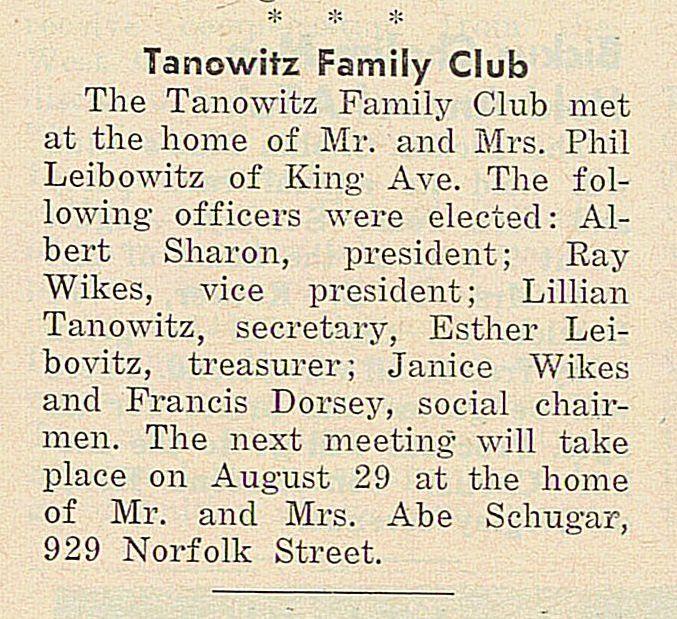
Notice for the Tanowitz Family Club, reporting from meeting at the home of Mr. and Mrs. Phil Leibowitz—August 21, 1959.
—from Jewish Criterion
Pittsburgh Jewish Newspaper Project
| |
|
Isaac and Bertha Tanowitz had at least four children: Rose Schugar, Esther Liebovitz, Louis Tanowitz, and Jacob Tanowitz. Jacob and Martha Tanowitz had at least five children: Shirley Sharon, Frances Dorsey, Marilyn Tanowitz, Phyllis Tanowitz, and Irving Tanowitz. From a separate branch of the family, David Tanowitz had at least three children, Phillip, Jake and Mary. His daughter Mary Tanowitz married Joseph Wikes. These generations started the Tanowitz Family Club as early as August 1959 and continued meeting through December 1961, according to newspaper notices published in the local Jewish Criterion.
Known surnames in the Tanowitz Family Club include Dorsey, Liebovitz, Schugar, Sharon, Tanowitz, and Wikes. The club met at homes in Squirrel Hill, the East End, and towns throughout the Allegheny Valley including New Kensington and Breckenridge. Known meeting places including 929 Norfolk St. (Abe Schugar residence); 4249 Upview Terrace (Albert Sharon residence); 3751 Beechwood Blvd. (Louis Tanowitz residence); 359 Vernon St., New Kensington (Irwin Dorsey residence); 965 Morgan St., Breckenridge, Pa. (Ray Wikes residence); Breckenridge, Pa. (Joe Wikes residence); 1127 King Ave. (Phil Leibovitz residence); Irv Tanowitz residence; and Highland Park.
No known archival collections exist for the Tanowitz Family Club. If you have information about the club or its members, please contact the archive.
| |
Nov. 1:
Rauh Jewish Archives anniversary
| |
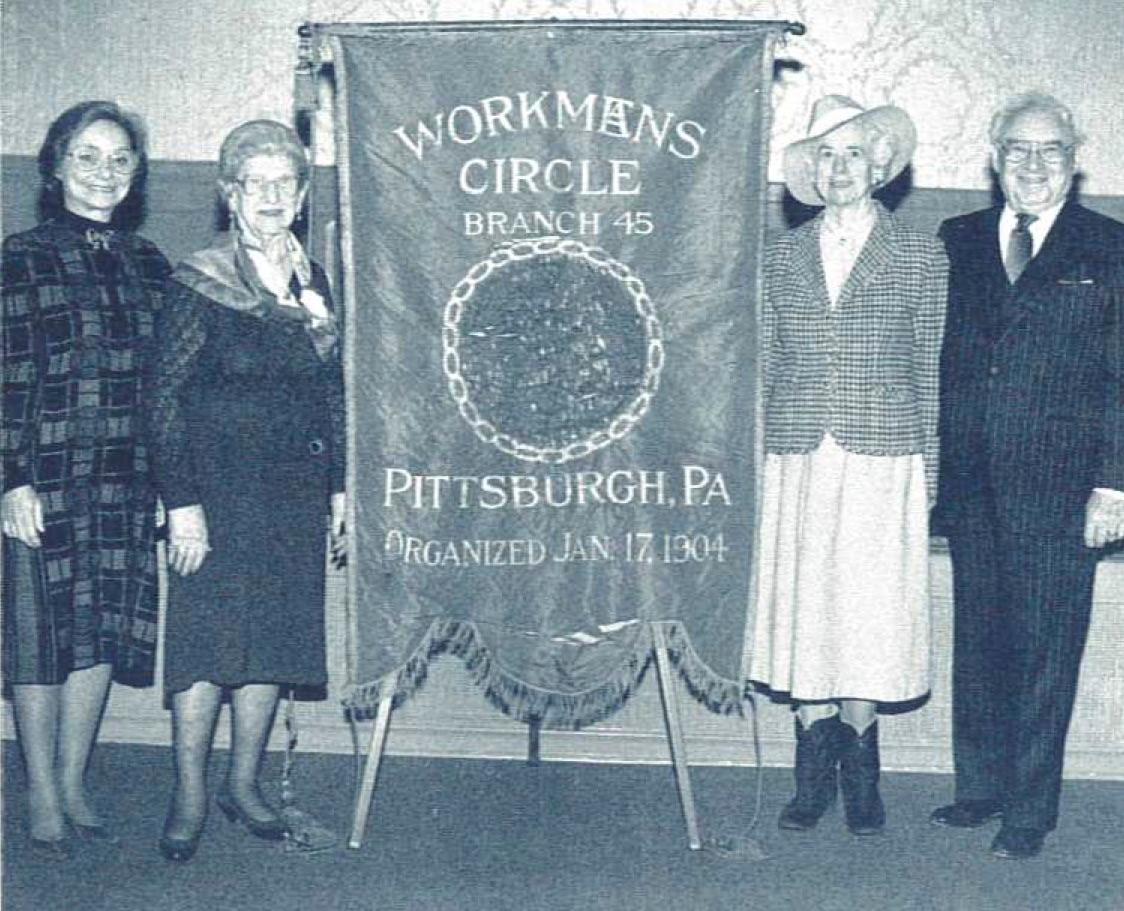
Black and white photograph from the November 1988 newsletter of the Historical Society of Western Pennsylvania showing (from left to right) Jewish Archives’ Chair Corinne Krause, Bess Topolsky, Selma Berkman, and Allen Berkman with the first artifact included in the archive: a banner from Workmen’s Circle Branch No. 45. | |
|
The Rauh Jewish Archives was established on Nov. 1, 1988.
It was known at the time as the Western Pennsylvania Jewish Archives, and that simple name expressed the big ambitions of the new institution. The archive would collect and preserve historic records of Jewish life from throughout the entire region and would share those records with the world.
As the Rauh Jewish Archives celebrates its 35th anniversary this week, it now contains hundreds of collections reflecting the full diversity of the Jewish experience all across Western Pennsylvania: religious and spiritual, economic and philanthropic, artistic and political, athletic and cultural, familial and communal. It is a mission that is never fulfilled and never ends.
The best way to celebrate the archive is to use it. Please take some time to peruse our always growing collection of materials about local Jewish history.
| |
Nov. 1:
Finding Ancestors in the Great Lakes Region
| |
|
Do you have ancestors from the Great Lakes Region?
As part of its "Researching Jewish Families in America" series, JewishGen is hosting a free workshop on Wednesday, Nov. 1 at 2 p.m. ET showing how to use archival resources to research genealogical subjects in Western Pennsylvania, Cleveland, and Detroit. The hour-long talk is free with a suggested donation going to the Barzilai Medical Center in southern Israel.
| |
Nov. 1:
18 Cheshvan yahrzeit study
| | |
|
|
The 10.27 Healing Partnership is hosting an evening of communal Torah study on Wednesday, Nov. 1 at 7 p.m. in commemoration of the fifth yahrzeit of the Pittsburgh synagogue shooting. The yahrzeit (a Yiddish term for the anniversary of a death) marks the day of the shooting on the Hebrew calendar: the 18th of the month of Cheshvan.
The evening program at the Jewish Community Center in Squirrel Hill will feature five break-out sessions on Torah, Talmud, music, poetry, and psychology from local speakers.
| |
Nov. 5:
JGS Pittsburgh Presents: Michael Tobias
| |
|
During the coronavirus pandemic in July 2020, a woman in the United Kingdom asked for help in identifying her Jewish birthfather, who had been newly discovered via DNA. She could not imagine the story about to unfold. In the next three weeks, following the DNA trail and building family trees for each of eight significant DNA hits on three different websites, her ties to four half-siblings were identified, sharing a father but each with a different mother. Verifying the connections between the DNA matches and the half-sibling required using the JRI-Poland database to create family trees going back to the late 1700s. In the process the accuracy of the DNA-estimated family relationships could be compared with the true family relationships and the impact of any endogamy could be analyzed. In his talk “Ich Bin Ein Berliner: (Re)uniting five half-siblings from four different mothers,” Michael Tobias will present this incredible story and share insights.
The program is Sunday, November 5, from 1-3 p.m. This is an online program, occurring exclusively on Zoom. The program will be recorded, and the recording will be made available to current JGS-Pittsburgh members.
"Ich Bin Ein Berliner: (Re)uniting five half-siblings from four different mothers" is a collaboration between the Jewish Genealogy Society of Pittsburgh and the Rauh Jewish Archives. Please register online. This program is free for JGS-Pittsburgh members and $5 for the general public. To become a member of the JGS-Pittsburgh and to receive a free membership code for this program, please visit its website.
This program is possible through the support of the William M. Lowenstein Genealogical Research Endowment Fund of the Jewish Community Foundation.
| |
Michael Tobias is a co-founder and Board Member of Jewish Records Indexing-Poland (1995-), President of the Jewish Genealogical Society of Great Britain (JGSGB; 2022-), Honorary Research Fellow-Genealogical Studies, University of Strathclyde (2020-) and former Vice President of Programming for JewishGen Inc. (1995-2018). He was database matching consultant for the International Commission on Holocaust Era Insurance Claims. Michael received the International Association of Jewish Genealogical Societies Lifetime Achievement Award in Washington, D.C., in 2011. He was awarded the OBE (Order of the British Empire) for services to the Jewish community in the Queen’s 2021 New Year’s Honours List. | |
Nov 6:
Painter Ellis Silvette, My Grandfather
| |
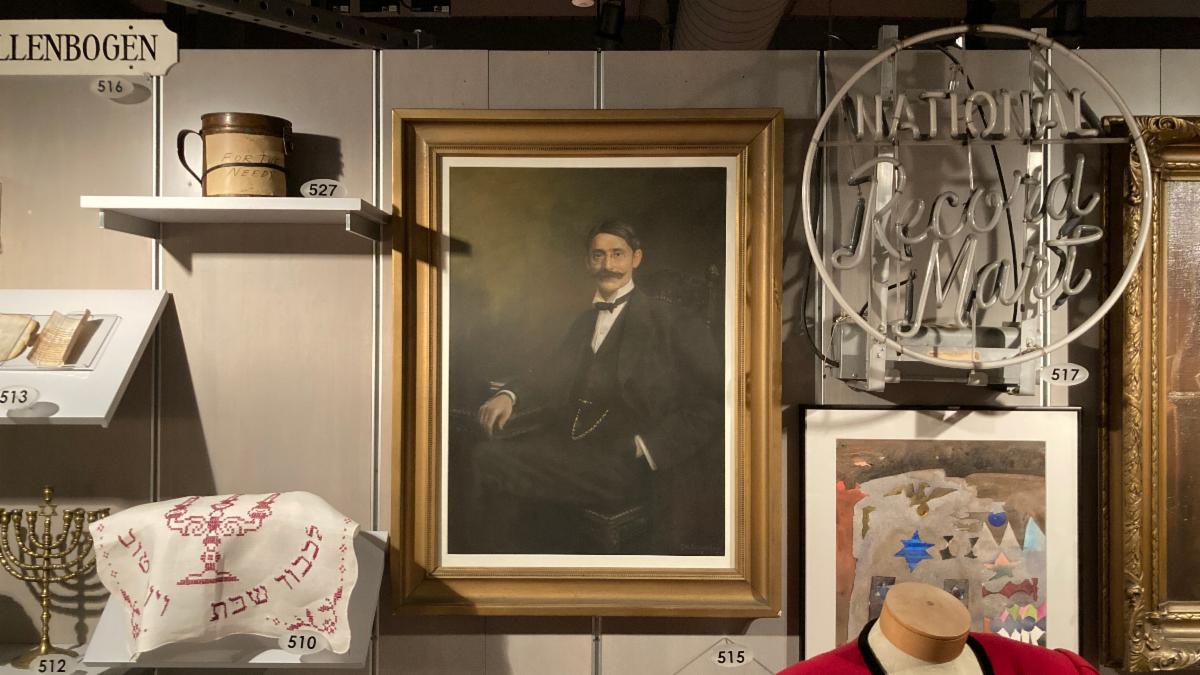
Color photograph showing E. Myer Silverberg’s portrait of Adolph Edlis, hanging in the Jewish section of the Special Collections gallery of the Heinz History Center. | |
E. Myer Silverberg—later known as Ellis Silvette—was a popular painter in the Pittsburgh in the early 20th century. Silverberg known for his warm and humanizing portraits of local civic, business, and communal leaders, including many from the Jewish community. His grandson David Heller has spent years researching Silverberg’s career and will present some of his findings in an evening talk at Rodef Shalom Congregation on Monday, Nov. 6 at 7 p.m. | |
through Nov. 21:
Violins of Hope
| |
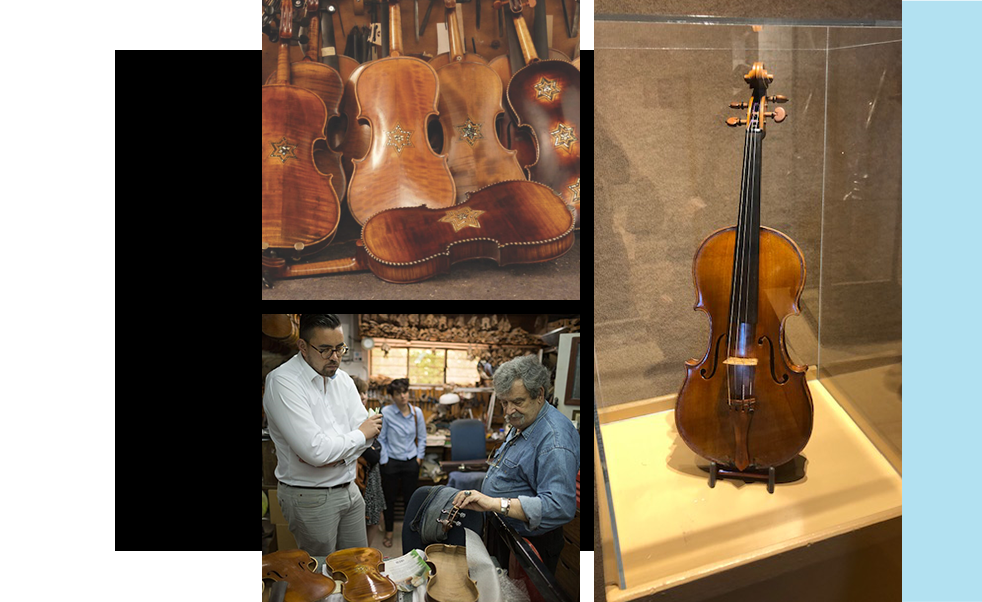
Violins of Hope is a community project of educational and cultural programs surrounding stringed instruments played by Jewish musicians during the Holocaust. The central exhibit at the Posner Center at Carnegie Mellon University relates remarkable stories of these instruments and musicians. Each surviving instrument has a unique and inspiring story that connects both young and old to the history of the Holocaust in a deeply emotional, personal, and relatable way. Paralleling lessons of the past to present day issues is key to creating a future where diversity, equality, and inclusion are valued. | |
through Nov. 27:
From Darkness to Light
| |
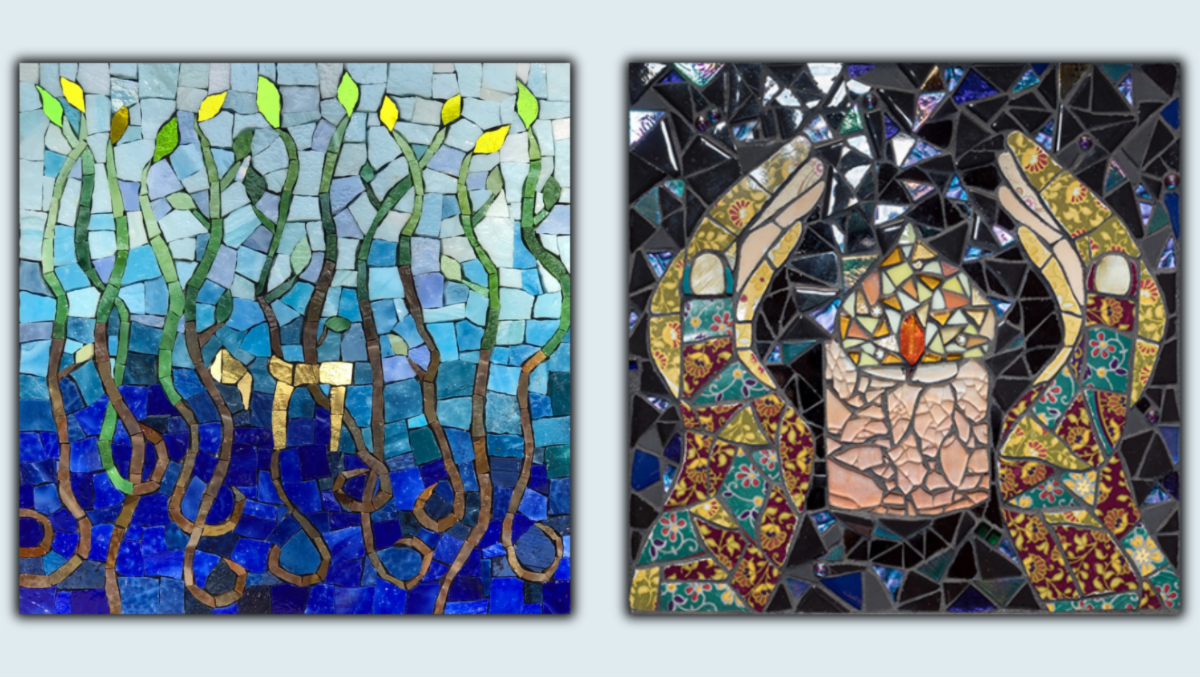
Presented in collaboration with Violins of Hope, this free exhibit in the Commons of Rodef Shalom Congregation features mosaics from artists around the world, created in response to October 27. Through their pieces, artists tackle antisemitism and injustice, and promote hope, resilience, and peace. | |
Squirrel Hill Historical Society Archives | |
Squirrel Hill Historical Society has added a collection of 60 historic images of Squirrel Hill to the Historic Pittsburgh website. The collection contains selected images from three organizations: the Squirrel Hill Historical Society, Squirrel Hill Urban Coalition, and Mary S. Brown Memorial-Ames United Methodist Church. The photographs document many aspects of life in Squirrel Hill, including many beloved businesses from the 1990s that no longer exist. | |
From the Jewish Genealogy Society of Pittsburgh
"How We Got Here"
| |
|
Each family is unique.
Each family has its own traditions, its own spirit, and its own dynamics.
Despite all these differences, every Jewish family in Western Pennsylvania has at least one thing in common: They all have a story about how they got here.
Perhaps your family sailed in steerage across the Atlanti in the 19th century.
Or perhaps your family drove the Pennsylvania Turnpike in a station wagon in the 1960s to work for the universities and hospitals during Renaissance.
Or perhaps your arrival into one of the many Jewish communities of Western Pennsylvania involves marriage, or conversion, or a surprising DNA discovery.
Each of these stories is special, and each contributes to the larger story of our community. To collect and honor these origin stories, the Jewish Genealogy Society of Pittsburgh is launching a new initiative called “How We Got Here.” To participate, just write a short account explaining how you or your ancestors came to settle in Western Pennsylvania. All stories are welcome.
Stories will be eligible for inclusion in the JGS-Pittsburgh’s monthly newsletter Z’chor and also for preservation in the Rauh Jewish Archives. For more information about this initiative, or to contribute, contact Eric Lidji.
| |
From the Jewish Cemetery & Burial Association
"Road Trip: The Jewish Cemeteries of Western Pennsylvania"
| |
|
The Jewish Cemetery and Burial Association of Greater Pittsburgh has released a new documentary showcasing Jewish cemeteries in Western Pennsylvania.
“Road Trip: The Jewish Cemeteries of Western Pennsylvania” is a one-hour tour of the many cemetery properties overseen by the JCBA, as well as an overview of the organization’s ongoing work to care for these sacred burial grounds. The video is a wonderful opportunity to celebrate these special Jewish cultural sites in our region. The video includes many historic photographs and documents from the collections of the Rauh Jewish Archives.
| |
From Rodef Shalom Congregation
A mystery in primary colors
| |
The Pittsburgh Jewish Chronicle reports on an effort by Rodef Shalom Congregation to identify two people from a pair of mid-19th century portraits in the congregation's holdings. Do you recognize these two people? | |
Pittsburgh Jewish Newspaper Project | |
The Pittsburgh Jewish Newspaper Project contains digitized, searchable copies of four local English-language Jewish newspapers between 1895 and 2010. It is a valuable tool for researching almost any topic about Jewish history in Western Pennsylvania. For a primer on using the website, watch our video. | |
|
Western Pennsylvania Jewish Cemetery Project | | |
|
The Rauh Jewish Archives launched the Western Pennsylvania Jewish Cemetery Project in 1998 to preserve burial records from Jewish cemeteries across the region. Over a period of fifteen years, the information was compiled into a searchable, online database containing approximately 50,000 burial records from 78 Jewish cemeteries throughout the region. | |
Western Pennsylvania Yahrzeit Plaques Project | |
The Rauh Jewish Archives launched the Western Pennsylvania Yahrzeit Plaques Project in 2020. The goal was to create a comprehensive collection of burial records from memorial boards at synagogues across the region. Volunteers are currently transcribing these boards and records are being added monthly to our online database. The database currently contains more than 2,700 listings. | |
|
Rauh Jewish Archives Bibliography | | |
|
University of Pittsburgh librarian and Rauh Jewish Archives volunteer Laurie Cohen created this comprehensive bibliography of the Rauh Jewish Archives library holdings from 1988 through 2018. It lists nearly 350 volumes arranged by type and then by subject. This a great tool to use early in your research process, as you’re surveying available resources on a given subject. | |
Jewish Population Estimates | |
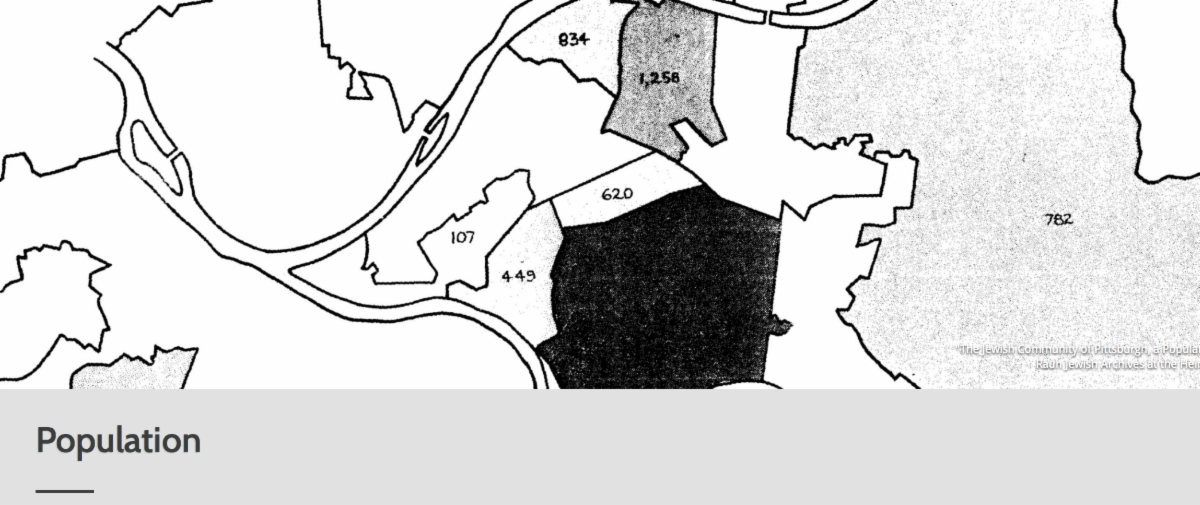
Looking to figure out how many Jews lived in a certain part of Western Pennsylvania at a certain moment in time? This bibliography includes more than 30 estimates of the Jewish population of Pittsburgh and small-towns throughout the region, conducted between 1852 and 2017. | |
| |
|
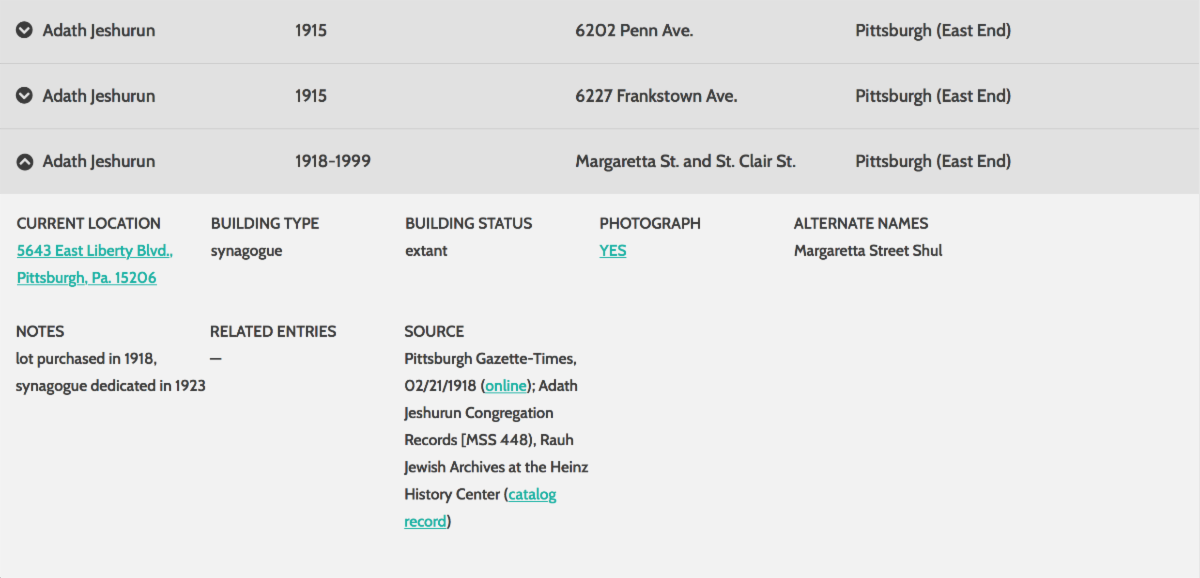
A database of buildings throughout Western Pennsylvania known to have hosted Jewish worship services. Includes links to photographs and citations with original source material. Database currently includes 90 locations from 2 institutions | |
Rauh Jewish Archives Newsletter | |
The Rauh Jewish Archives has been publishing a weekly newsletter since 2020. The newsletter contains a variety of articles about local Jewish history, including much original research not found anywhere else. You can find and read every issue—more than 150!— in our new index. | |
| |
|
Online finding aid from JewishGen listing congregational archival collections held at publicly accessible repositories across the United States. Includes 63 listings from the Rauh Jewish Archives, as well as other repositories with Western Pennsylvania congregational records. | |
[IMAGE: Marian Schreiber and employees at the Schreiber Trucking Company, c.1943—from Schreiber Family Papers and Photographs, MSS 846.]
If you like this newsletter, why not forward it to a friend? We want to share the story of Western Pennsylvania Jewish history with as many people as possible.
If you've received this newsletter from a friend or neighbor, and you want to read more, just click on the link below to start receiving future editions.
| |
The Rauh Jewish Archives was founded on November 1, 1988 to collect and preserve the documentary history of Jewish life in Western Pennsylvania and to make it available to the world through research assistance, programing, exhibits, publications, and partnerships. | | | | |