|
The Early 1970s:
Identicom
Jewish Encyclopedia:
Montefiore Hebrew Congregation
Databases:
Plaques: Temple Sinai
Synagogues
Calendar:
TODAY: Chuck Weinstein
Jan. 15: "The Sofer"
Feb. 4: Nolan Altman
Community:
URA photographs
SHHS archives
"How We Got Here"
JCBA "Road-Trip"
Research Tools:
Newspapers, Cemeteries,
Memorial Plaques, Books,
Population Figures, Synagogues, Newsletter Archive,
Shul Records America
| |
|
|
The Early 1970s:
Identicom
| |
|
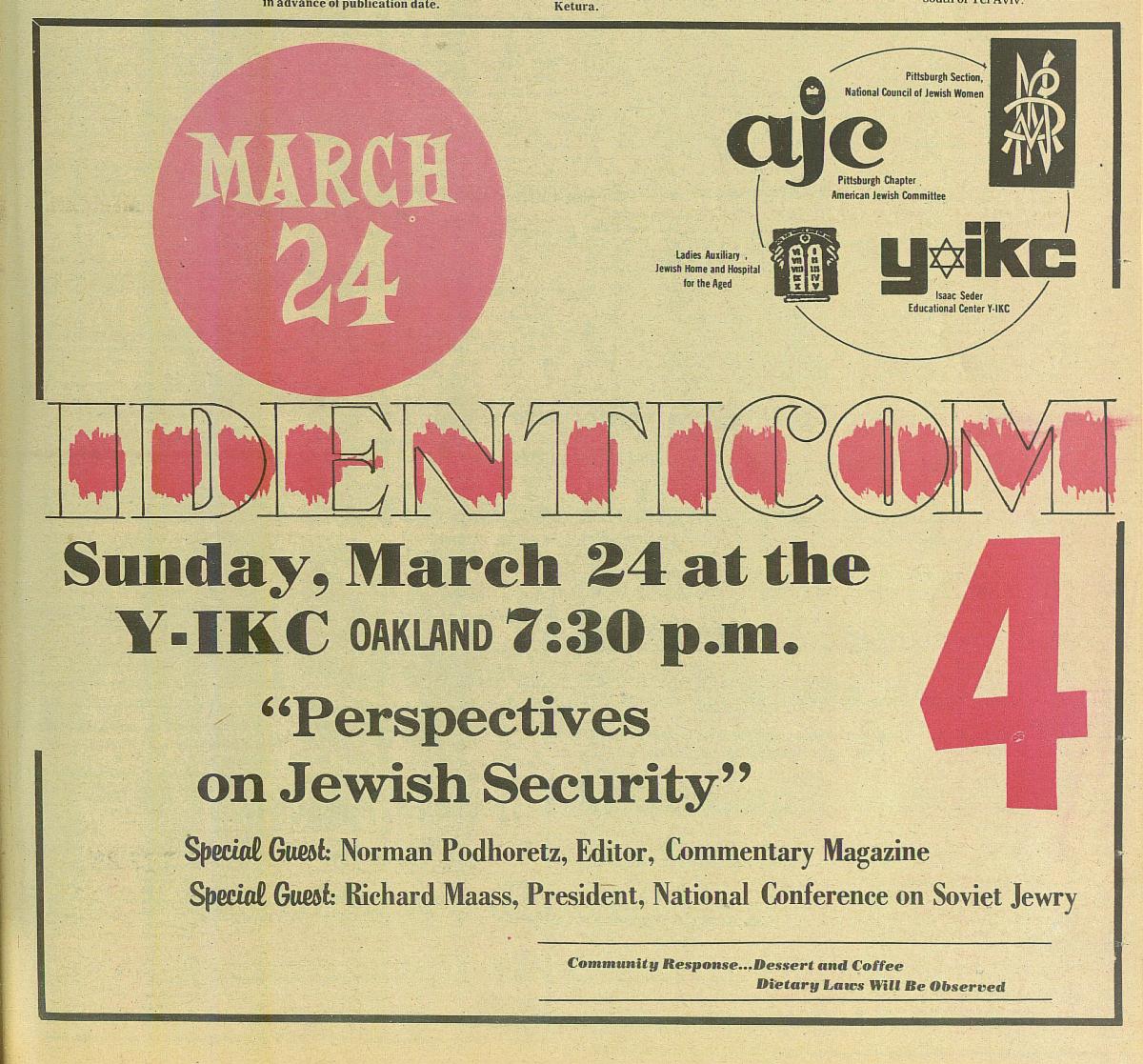
Advertisement for Identicom 4, “Perspectives of Jewish Security,” to be held at the Oakland Y-IKC—March 7, 1974.
—from Jewish Chronicle
Pittsburgh Jewish Newspaper Project
| |
|
At the start of the 1970s, the Y-IKC was a vast organization.
The Y-IKC was created in 1961 through the merger of two legacy Jewish communal institutions: the Irene Kaufmann Center and the Young Men’s and Women’s Hebrew Association. Through a sequence of moves after the merger, the Y-IKC left the Hill District but maintained branches in Squirrel Hill, Oakland, the East End, and the South Hills, as well as its out-of-town camps.
The membership of the Y-IKC included the last generation of elderly Eastern European immigrants, as well as their thoroughly American grandchildren. Offerings like the Y Music Society and the Health Club were enjoyed by thousands of Jewish people and increasingly by many non-Jewish neighbors.
Expecting a dynamic future, the Y-IKC convened a Long Range Planning Committee in April 1970. In its final report issues toward the end of the year, the Committee articulated a mission to provide “greater appreciation and awareness of our Jewish identity through leisure time activities.”
Y-IKC genealogy begins with the Columbian Council School, which the National Council of Jewish Women-Pittsburgh Section founded in 1895. In the late 19th century, any concerns over “Jewish identity” and “leisure time activities” were overshadowed by the demands of providing basic human services to an underserved immigrant population. By the early 1970s, the local Jewish population was experiencing new heights of prosperity and acceptance, leading to communal concerns about the weakening ties of Jewish identity.
One of the Y-IKC initiatives of the early 1970s was Identicom. It was an au-currant mash-up of two pressing Jewish concerns: “Identity” and “Community.”
In partnership with the Pittsburgh Chapter of the American Jewish Committee, and funding from an anonymous donor, the Y-IKC hosted a free, two-day symposium n February 1971, featuring talks by leading Jewish intellectuals.
The Y-IKC and the American Jewish Committee-Pittsburgh Chapter hosted Identicom annually through 1974. They partnered in later years with the NCJW-Pittsburgh Section and the Jewish Home for the Aged Ladies Auxiliary.
The theme of the first Identicom was “The Jewish Family.” It considered ways to improve communication between generations at a moment of great social change. Other sessions analyzed the impact of Israel on the American Jewish identity, as well as the structure of decision-making in the Jewish community.
If you want to research Identicom today, you are mostly limited to coverage in the local Jewish Chronicle. The newspaper covered the symposium each year, including interviews with panelists. (The writer assigned to cover the 1974 edition was a young Sally Kalson, who was a cub reporter at the time.)
When it comes to materials emerging from the symposium, little survives—even though all four sponsors have large collections in local repositories.
The Rauh Jewish Archives holds the records of the Jewish Community Center of Greater Pittsburgh [MSS 389], the Pittsburgh Area Jewish Committee [MSS 1146], and the Jewish Association on Aging Ladies Auxiliary [MSS 544]. The University of Pittsburgh Archives & Special Collections holds the records of the NCJW-Pittsburgh Section [AIS 1964.40].
And yet, these collections contain only glancing references to the symposium.
Through coverage in the Chronicle, we know that the sponsors published the proceedings of the inaugural Identicom in 1971, but we have not yet found a copy in the archives. If you have a copy of these proceedings, or any other documentation for the Identicom symposium, please contact the Archives.
Next week: an impromptu youth gathering happening outside Identicom II.
| |
All year, the Rauh Jewish Archives is highlighting stories of Jewish life in Western Pennsylvania in the early 1970s. If you would like to donate a material from this time period, or any historically relevant materials documenting Jewish life in this region, contact the archive or call 412-454-6406. | |
|
Jewish Encyclopedia of Western Pennsylvania:
Montefiore Hebrew Congregation
| |
|
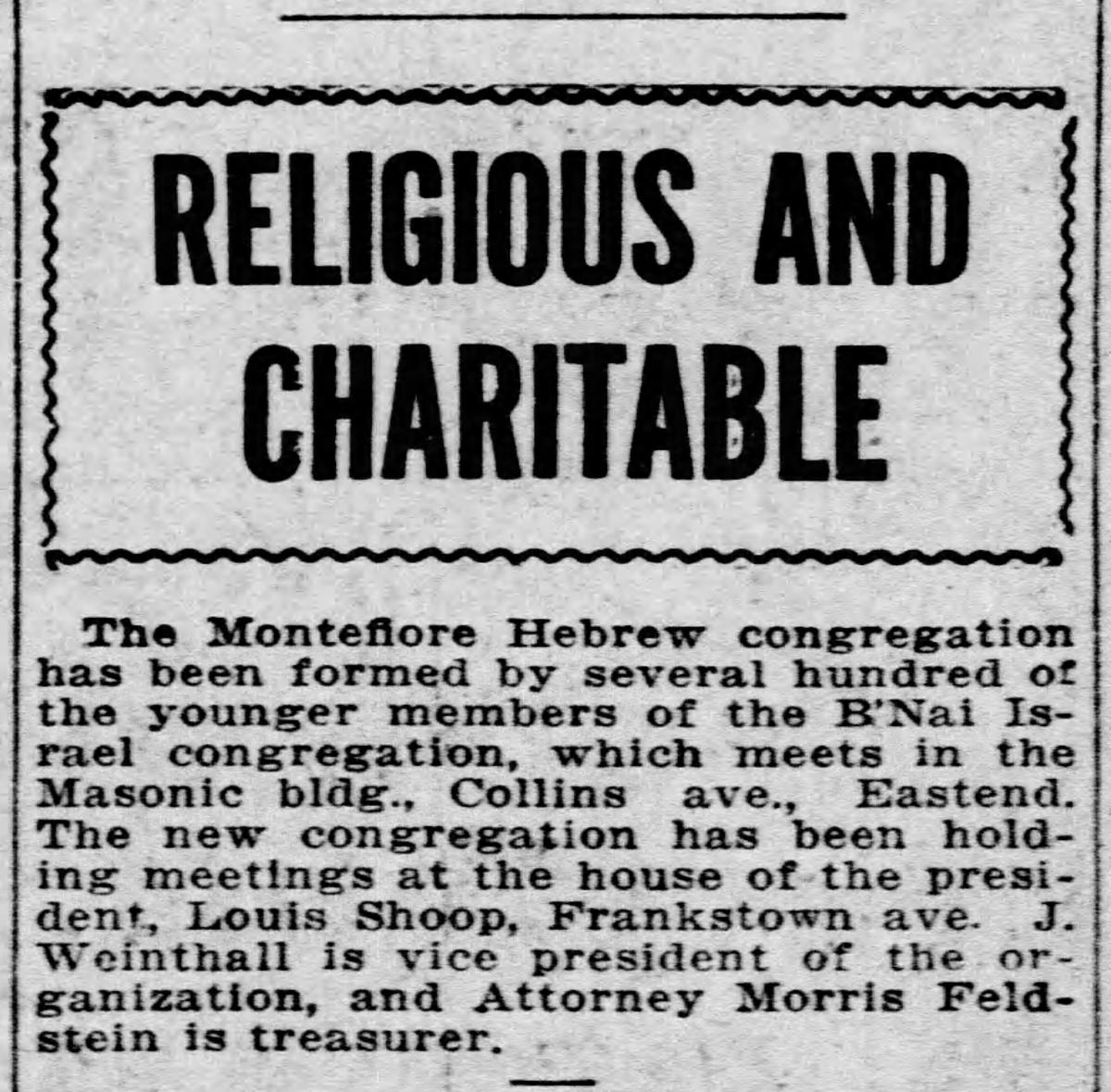
Article announcing the formation of the Montefiore Hebrew Congregation—July 20, 1915.
—from Pittsburgh Press
Newspapers.com
| |
|
Over the next three weeks, we’re going to fill the gaps in our coverage of the former Jewish community of the East End, specifically its congregations.
The East End was the first Jewish suburb in Western Pennsylvania. The opening of Bigelow Boulevard (originally Grant Boulevard) in 1901 established a commuter link to downtown Pittsburgh. Within a few years, Jewish families began leaving the Hill District and relocating to the eastern neighborhoods.
The first Jewish organization established in the East End was B’nai Israel Congregation. It began meeting as early as 1908, obtained a charter in 1911, and hired Rabbi S. M. Neches as its first spiritual leader in August 1914.
The following summer, in July 1915, a few members of B’nai Israel formed the Montefiore Hebrew Congregation. The group presented itself as younger and more Orthodox. They held Sabbath services and religious school classes as early as August 1915 and arranged High Holiday services that September.
In newspaper accounts, they announced plans to obtain a charter and acquire a synagogue soon after the High Holidays. But by early 1916, they had rejoined B’nai Israel Congregation. The following year, some of the same people started a more enduring breakaway: Adath Jeshurun Congregation.
| |
The Jewish Encyclopedia of Western Pennsylvania brings together numerous online resources into a clearinghouse for conducting research about Jewish history in this region. As we migrate information to this new website, we’ll be announcing new entries and resources in this section of the newsletter. | |
|
Databases:
Western Pennsylvania Yahrzeit Plaques Project
| |
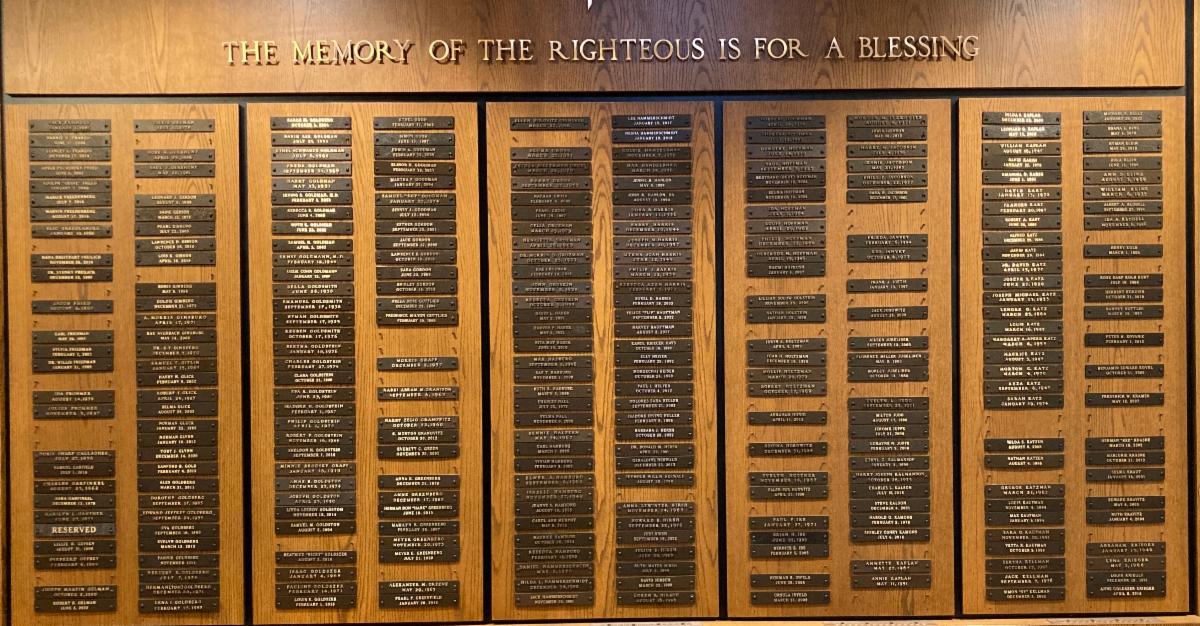
Color photograph of memorial boards from Temple Sinai in Squirrel Hill. | |
|
The Western Pennsylvania Yahrzeit Plaques Project currently contains 4,304 records from 16 institutions. We recently added 1,131 plaques from 20 memorial boards at Temple Sinai in Squirrel Hill. Rauh Jewish Archives volunteers Claudia Siegel and Jon Halpern transcribed the plaques.
We are actively transcribing yahrzeit plaques from congregations from throughout the region. Each month, we’ll use this space in the newsletter to report on additions to the database. We are currently working through a backlog of nearly 20,000 individual records. The more help we have, the quicker we’ll go. We’re currently looking for volunteers who can read and transcribe Hebrew names and dates. Work can be completed remotely or in-person at the Archive. To volunteer, email us or call 412-454-6406.
| |
|
Databases:
Western Pennsylvania Synagogues Project
| |
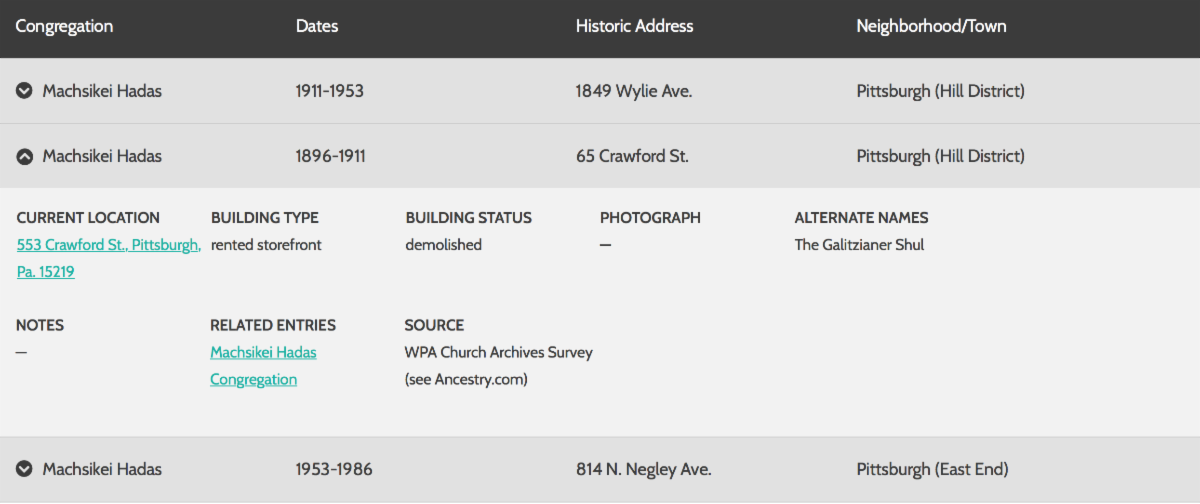
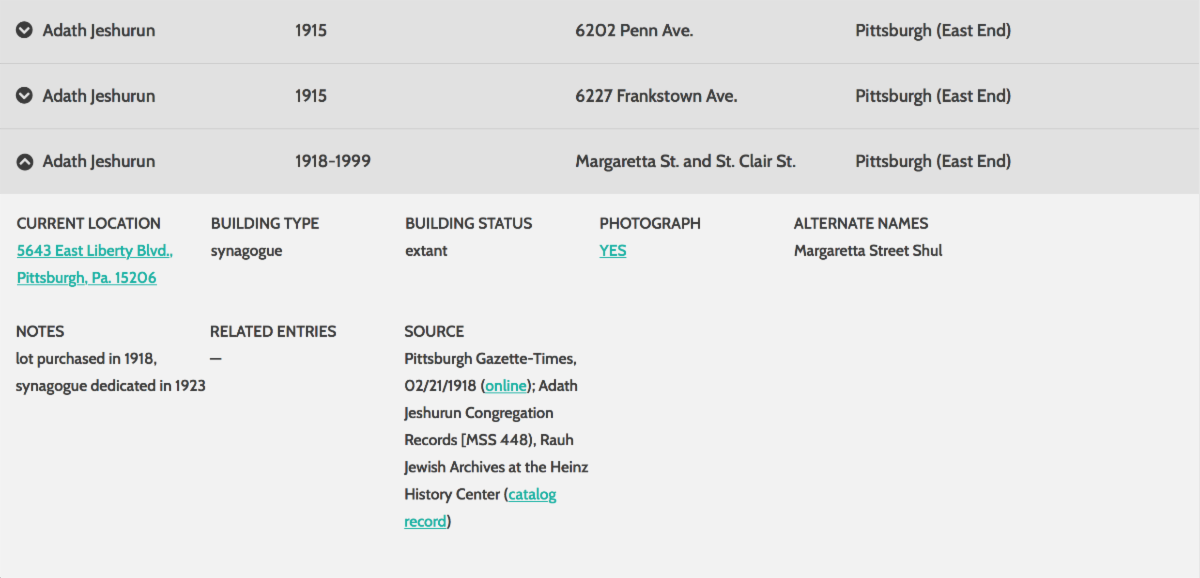
Screen capture from the Western Pennsylvania Synagogue Project database, showing listings from Machsikei Hadas. | |
The Western Pennsylvania Synagogues Project now includes 159 listings from 47 congregations throughout Greater Pittsburgh. Recent additions include Machsikei Hadas Congregation (Hill District/East End), Montefiore Hebrew Congregation (East End), Poale Zedeck Congregation (Hill District/Squirrel Hill), Rodef Shalom Congregation (Downtown, North Side, Shadyside/Oakland), Shaare Shamayim Congregation (Downtown), Shaare Zedeck Congregation (Hill District/Squirrel Hill), and Talmud Torah Congregation (South Side). | |
TODAY:
JGS Pittsburgh Presents:
Choosing a Genealogy Software
| |
|
Chuck Weinstein will walk you through the criteria for selecting software to record and track your software, along with reviews of the features and benefits of the most popular software packages currently on the market.
The program is on TODAY, from 1-3 p.m. ET. This is an online program, occurring exclusively on Zoom. The program will be recorded, and the recording will be made available to current JGS-Pittsburgh members.
"Choosing a Genealogy Software" is a collaboration between the Jewish Genealogy Society of Pittsburgh and the Rauh Jewish Archives. Please register online. This program is free for JGS-Pittsburgh members and $5 for the general public. To become a member of the JGS-Pittsburgh and to receive a free membership code for this program, please visit its website.
This program is possible through the support of the William M. Lowenstein Genealogical Research Endowment Fund of the Jewish Community Foundation.
| |
Chuck Weinstein has been tracing his family history for more than 30 years. A past-president of the JGS of Long Island, Chuck has also been active with JewishGen for over 28 years. In that time, he has served as a Moderator for the JewishGen Discussion Group, Director of KehilaLinks, and is now the Towns Director of the JewishGen Research Division. His family tree goes back to the 15th century and he has helped numerous researchers break through the brick wall in their own family trees. He was Co-chair of the 2016 IAJGS Conference in Seattle, and wasLead Chair of the 2023 IAJGS Conference in London. | |
opening January 15:
Rodef Shalom Congregation Presents:
"The Sofer: A Tribute To My Zayde"
| |
|
The Sofer is a multi-generational narrative about Pittsburgh artist Rosabel Rosalind's relationship with Zayde, her grandfather, a retired Orthodox rabbi with whom she lived for the first twelve years of her life. (He spent part of his career in Western Pennsylvania, leading Beth Samuel Jewish Center in Ambridge.) Fragmented by time and memory, the story recounts details from the years Zayde and Rosalind lived as roommates, interspersed with historical reimaginings and stark cultural observations that span past and present.
The book follows Zayde and Rosalind, as she came of age in a Conservative Jewish household and as she continues to come to terms with her Jewishness. The Sofer is about the haunting of memory, history, and tradition in the face of a resurgence of anti-Semitism, through an intimate and inherited perspective.
The original manuscript of The Sofer is 185 pages and is entirely hand-painted with beet juice, citing Zayde's affinity for Manischewitz brand borscht and the complexities of diasporic Jewishness. Sofer, translates to a Jewish scribe of ancient texts, and it is also Rosalind's maternal name; her Zayde’s last name. Thus she transcribed the familial, ancestral, and historical, using an untraditional hand-made ink, per scribal ritual, with a combination of painting and comic techniques and specific Sofer lettering of Rosalind's design.
| |
February 4:
JGS Pittsburgh Presents:
Patronymic Naming and Cemetery Research
| |
|
Headstone inscriptions provide one of the most important tools for researching Jewish genealogical history: patronymic naming, or names derived from paternal ancestors. This presentation will familiarize attendees with the evolution of family surnames and the practice of patronymic naming. Recognizing the components of patronymic naming, participants will learn how to take advantage of these clues to link their family through generations. Nolan Altman will review an actual case study using headstone inscriptions and will show participants online resources to help find headstone information.
Altman will also show examples of headstones and explain what you’re likely to find if you take a trip to the cemetery. He will explain the meaning of symbols that you will find on stones. Even if you can’t read Hebrew, you can understand the inscriptions. He will also show many examples of inscription trends, some odd inscriptions, and errors in inscriptions…even well-known ones. With a presentation on cemetery records, you wouldn’t expect to leave laughing, but he guarranties you will.
The program is on Sunday, Feb. 14, from 1-3 p.m. ET. This is an online program, occurring exclusively on Zoom. The program will be recorded, and the recording will be made available to current JGS-Pittsburgh members.
"Patronymic Naming and Cemetery Research" is a collaboration between the Jewish Genealogy Society of Pittsburgh and the Rauh Jewish Archives. Please register online. This program is free for JGS-Pittsburgh members and $5 for the general public. To become a member of the JGS-Pittsburgh and to receive a free membership code for this program, please visit its website.
This program is possible through the support of the William M. Lowenstein Genealogical Research Endowment Fund of the Jewish Community Foundation.
| |
Nolan Altman was bit by the “genealogy bug” when he was inspired to write his family history in 1996 in memory of his mother. After making use of the valuable information on JewishGen, he volunteered to do data entry on various projects. In time, he was asked to become the Coordinator for JewishGen’s Holocaust Database and subsequently the Coordinator for the JOWBR (JewishGen’s Online Worldwide Burial Registry) project. Nolan works with volunteers from around the world helping to grow both databases for the benefit of family members and researchers. Nolan currently holds the position of JewishGen’s Director for Data Acquisition and focuses on growing the JOWBR, Holocaust and Memorial Plaques databases. In 2021, JOWBR won the IAJGS Outstanding Project Award. | |
Urban Redevelopment Authority Archives | |
The City of Pittsburgh Archives has launched a new digital archive containing thousands of photographs and documents spanning more than two centuries. Of particular interest to local Jewish history is a collection of more than 2,000 photographs of properties in the lower Hill District taken by the Urban Redevelopment Authority in the late 1950s prior to demolitions in the area. | |
Squirrel Hill Historical Society Archives | |
Squirrel Hill Historical Society has added a collection of 60 historic images of Squirrel Hill to the Historic Pittsburgh website. The collection contains selected images from three organizations: the Squirrel Hill Historical Society, Squirrel Hill Urban Coalition, and Mary S. Brown Memorial-Ames United Methodist Church. The photographs document many aspects of life in Squirrel Hill, including many beloved businesses from the 1990s that no longer exist. | |
From the Jewish Genealogy Society of Pittsburgh
"How We Got Here"
| |
|
Each family is unique.
Each family has its own traditions, its own spirit, and its own dynamics.
Despite all these differences, every Jewish family in Western Pennsylvania has at least one thing in common: They all have a story about how they got here.
Perhaps your family sailed in steerage across the Atlanti in the 19th century.
Or perhaps your family drove the Pennsylvania Turnpike in a station wagon in the 1960s to work for the universities and hospitals during Renaissance.
Or perhaps your arrival into one of the many Jewish communities of Western Pennsylvania involves marriage, or conversion, or a surprising DNA discovery.
Each of these stories is special, and each contributes to the larger story of our community. To collect and honor these origin stories, the Jewish Genealogy Society of Pittsburgh is launching a new initiative called “How We Got Here.” To participate, just write a short account explaining how you or your ancestors came to settle in Western Pennsylvania. All stories are welcome.
Stories will be eligible for inclusion in the JGS-Pittsburgh’s monthly newsletter Z’chor and also for preservation in the Rauh Jewish Archives. For more information about this initiative, or to contribute, contact Eric Lidji.
| |
From the Jewish Cemetery & Burial Association
"Road Trip: The Jewish Cemeteries of Western Pennsylvania"
| |
|
The Jewish Cemetery and Burial Association of Greater Pittsburgh has released a new documentary showcasing Jewish cemeteries in Western Pennsylvania.
“Road Trip: The Jewish Cemeteries of Western Pennsylvania” is a one-hour tour of the many cemetery properties overseen by the JCBA, as well as an overview of the organization’s ongoing work to care for these sacred burial grounds. The video is a wonderful opportunity to celebrate these special Jewish cultural sites in our region. The video includes many historic photographs and documents from the collections of the Rauh Jewish Archives.
| |
Pittsburgh Jewish Newspaper Project | |
The Pittsburgh Jewish Newspaper Project contains digitized, searchable copies of four local English-language Jewish newspapers between 1895 and 2010. It is a valuable tool for researching almost any topic about Jewish history in Western Pennsylvania. For a primer on using the website, watch our video. | |
|
Western Pennsylvania Jewish Cemetery Project | | |
|
The Rauh Jewish Archives launched the Western Pennsylvania Jewish Cemetery Project in 1998 to preserve burial records from Jewish cemeteries across the region. Over a period of fifteen years, the information was compiled into a searchable, online database containing approximately 50,000 burial records from 78 Jewish cemeteries throughout the region. | |
Western Pennsylvania Yahrzeit Plaques Project | |
The Rauh Jewish Archives launched the Western Pennsylvania Yahrzeit Plaques Project in 2020. The goal was to create a comprehensive collection of burial records from memorial boards at synagogues across the region. Volunteers are currently transcribing these boards and records are being added monthly to our online database. The database currently contains more than 2,700 listings. | |
|
Rauh Jewish Archives Bibliography | | |
|
University of Pittsburgh librarian and Rauh Jewish Archives volunteer Laurie Cohen created this comprehensive bibliography of the Rauh Jewish Archives library holdings from 1988 through 2018. It lists nearly 350 volumes arranged by type and then by subject. This a great tool to use early in your research process, as you’re surveying available resources on a given subject. | |
Jewish Population Estimates | |
Looking to figure out how many Jews lived in a certain part of Western Pennsylvania at a certain moment in time? This bibliography includes more than 30 estimates of the Jewish population of Pittsburgh and small-towns throughout the region, conducted between 1852 and 2017. | |
| |
|
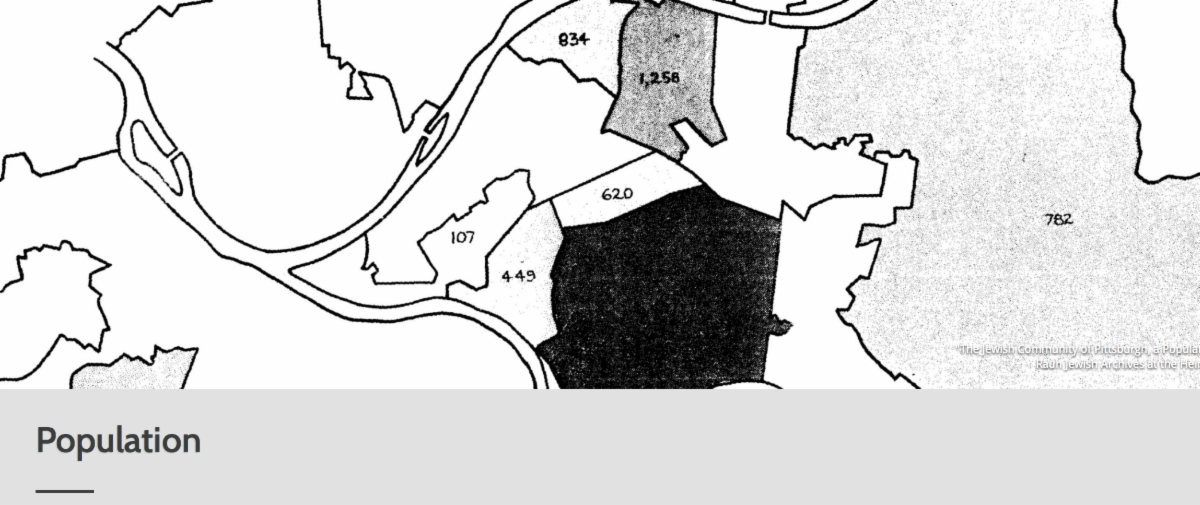
A database of buildings throughout Western Pennsylvania known to have hosted Jewish worship services. Includes links to photographs and citations with original source material. Database currently includes 90 locations from 2 institutions | |
Rauh Jewish Archives Newsletter | |
The Rauh Jewish Archives has been publishing a weekly newsletter since 2020. The newsletter contains a variety of articles about local Jewish history, including much original research not found anywhere else. You can find and read every issue—more than 150!— in our new index. | |
| |
|
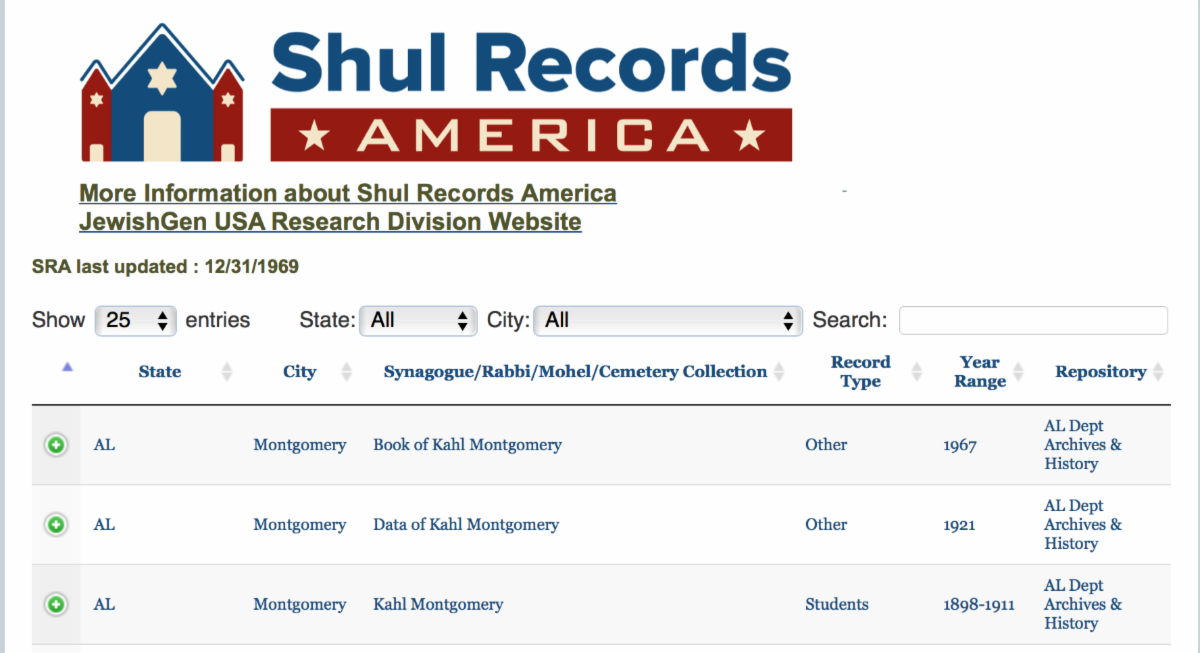
Online finding aid from JewishGen listing congregational archival collections held at publicly accessible repositories across the United States. Includes 63 listings from the Rauh Jewish Archives, as well as other repositories with Western Pennsylvania congregational records. | |
[IMAGE: Marian Schreiber and employees at the Schreiber Trucking Company, c.1943—from Schreiber Family Papers and Photographs, MSS 846.]
If you like this newsletter, why not forward it to a friend? We want to share the story of Western Pennsylvania Jewish history with as many people as possible.
If you've received this newsletter from a friend or neighbor, and you want to read more, just click on the link below to start receiving future editions.
| |
The Rauh Jewish Archives was founded on November 1, 1988 to collect and preserve the documentary history of Jewish life in Western Pennsylvania and to make it available to the world through research assistance, programing, exhibits, publications, and partnerships. | | | | |