|
Restaurants:
Hotel Penn-Shady
Jewish Encyclopedia:
Ahovy Sholem Lubovitsh Congregation
Article:
The Swastika Epidemic
Calendar:
Jan. 14: JGS presents: Chuck Weinstein
Feb. 4: JGS presents: Nolan Altman
Community:
URA photographs
SHHS archives
"How We Got Here"
JCBA "Road-Trip"
Research Tools:
Newspapers, Cemeteries,
Memorial Plaques, Books,
Population Figures, Synagogues, Newsletter Archive,
Shul Records America
| |
|
|
Restaurants:
Hotel Penn-Shady
| |
|
Advertisement for the Hotel Penn-Shady at 226 Shady Ave., announcing "strictly kosher kitchen" for "Weddings—Bar Mitzvahs—Parties—Banquets—etc."—August 20, 1954.
—from American Jewish Outlook
Pittsburgh Jewish Newspaper Project
| |
|
If you want to hold a kosher event in a large venue in Pittsburgh, several hotels can make the necessary accommodations. Through the years, many hotels have offered this amenity. One early example was the Hotel Penn-Shady.
The Hotel Penn-Shady was built at 226 Shady Ave. in East Liberty in 1928. It was designed as a "bachelor hotel" for well-off single men who wanted the conveniences of suburban living without the hassle of keeping a home. Webster Hall in Oakland also started as a bachelor hotel around the same time.
To make life especially easy for these tenants, the Hotel Penn-Shady had an affiliated dining room and a pharmacy. The hotel, the dining room, and the pharmacy went through numerous ownership changes over the years before Alfred M. Karlin took over the business in the late 1940s. Karlin was active in the local Jewish community. His wife Ruth Millstone Karlin was even more active, holding prominent positions at the United Jewish Federation, Hadassah, the Women’s Division of Israel Bonds, and other local organizations.
In the mid-1950s, Adath Jeshurun Congregation in East Liberty renovated its social hall and hired Alfred Karlin as its exclusive caterer. Around the same time, the Hotel Penn-Shady began advertising a “strictly kosher kitchen” available for weddings, bar mitzvahs, and other social events in the Jewish community. The Hotel Penn-Shady became a popular meeting place for local Jewish organizations, including many Jewish family clubs in the city. The Karlins eventually left Pittsburgh for Los Angeles. The hotel cycled through various owners, and the former dining hall became best known as Minutello’s.
| |
All year, the Rauh Jewish Archives is highlighting Jewish restaurants in Western Pennsylvania. If you would like to donate a material from a Jewish restaurant, or just reminisce, contact the archive or call 412-454-6406. | |
|
Jewish Encyclopedia of Western Pennsylvania:
Ahovy Sholem Lubovitsh Congregation
| |
|
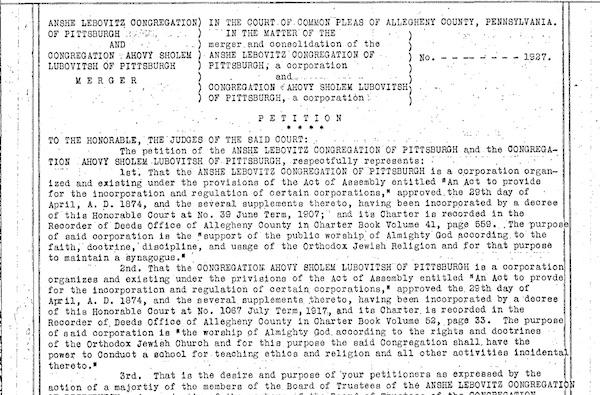
Selection from merger of Anshe Lubovitz and Ahovy Sholem Lubovitsh—1927.
—from Allegheny County Charter Books
Allegheny County
| |
|
We’ve spent the past few months following the development of the local Rishishe community, comprising the thousands of Jewish immigrants who came to Pittsburgh from the former Russian Empire in the late 19th and early 20th centuries. We’ve been tracking a sequence of nine inter-related congregations created in the Hill District between 1882 and 1936: Beth Abraham, Agudas Achim, Beth Israel, Beth Zedeck, Beth David, Shaaray Tefilah, Moogen David, Ezras Tzadickem, and Kehilleth Isaac/Beth Mogen David. These congregations evolved through breakaways and mergers over half a century.
During that time, other Rishishe congregations were forming in Pittsburgh, unrelated to this sequence. These new congregations were often distinguished by a sub-regional identity, representing specific corners of the Russian Empire. (And there were also many Jewish fraternal orders, or landsmenshaftn, which we will consider in greater depth in future issues of the newsletter.)
A group of recent arrivals to Pittsburgh from the province of Volhynia in present-day northwest Ukraine formed Anshe Volinia in 1907. They later opened membership to others and became Kether Torah Congregation. Also in 1907, a group from Lyubavitsh in present-day Belarus formed Anshe Lubovitz Congregation. Both of these congregations eventually built synagogues on Erin Street, and both of those buildings are still standing today.
A segment of Anshe Lubovitz broke away in 1916 to form Congregation Habad. The name may have represented an adherence to the Chassidic movement founded by Rabbi Shneur Zalman of Liadi. Chabad had been centered in Lyubavitsh/Lubavitch for more than a century but left the town in 1915 during the upheavals of World War I. Congregation Habad was short-lived and is not well documented. In 1917, several of its members chartered Ahovy Sholem Lubovitsh Congregation [Lovers of Peace, Lubavtich]. Ahovy Sholem Lubovitsh formally reunited with Anshe Lubovitz in 1927.
| |
The Jewish Encyclopedia of Western Pennsylvania brings together numerous online resources into a clearinghouse for conducting research about Jewish history in this region. As we migrate information to this new website, we’ll be announcing new entries and resources in this section of the newsletter. | |
|
Article:
Snapshot from a Forgotten Epidemic
| | |
|
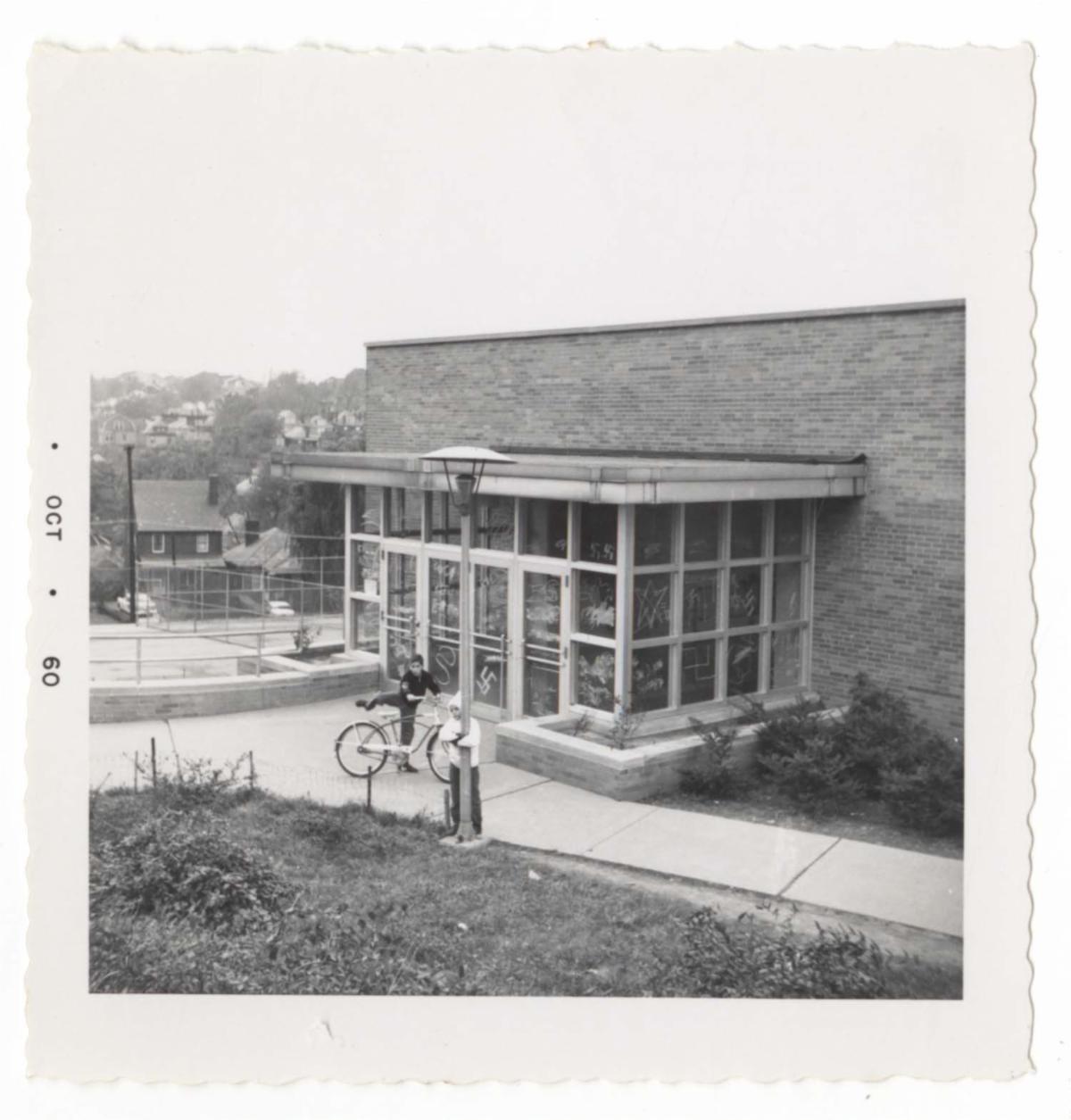
"The only reason we know anything happened is because one person felt compelled to photograph it. The photographer was Clarence 'Code' Gomberg. He was a lovely man, a proud veteran, a jack-of-all-trades. His photographs show the entrance to Minadeo Elementary School in October 1960, covered in swastikas, slogans and other antisemitic graffiti." | |
Black and white photograph showing two children standing in front of a vandalized Minadeo Elementary School—October 1960.
| |
January 14:
JGS Pittsburgh Presents:
Choosing a Genealogy Software
| |
|
Chuck Weinstein will walk you through the criteria for selecting software to record and track your software, along with reviews of the features and benefits of the most popular software packages currently on the market.
The program is on Sunday, Jan. 14, from 1-3 p.m. ET. This is an online program, occurring exclusively on Zoom. The program will be recorded, and the recording will be made available to current JGS-Pittsburgh members.
"Choosing a Genealogy Software" is a collaboration between the Jewish Genealogy Society of Pittsburgh and the Rauh Jewish Archives. Please register online. This program is free for JGS-Pittsburgh members and $5 for the general public. To become a member of the JGS-Pittsburgh and to receive a free membership code for this program, please visit its website.
This program is possible through the support of the William M. Lowenstein Genealogical Research Endowment Fund of the Jewish Community Foundation.
| |
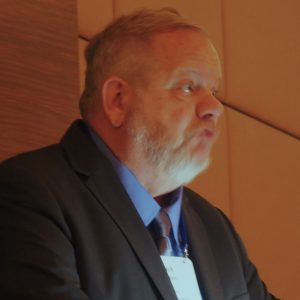
Chuck Weinstein has been tracing his family history for more than 30 years. A past-president of the JGS of Long Island, Chuck has also been active with JewishGen for over 28 years. In that time, he has served as a Moderator for the JewishGen Discussion Group, Director of KehilaLinks, and is now the Towns Director of the JewishGen Research Division. His family tree goes back to the 15th century and he has helped numerous researchers break through the brick wall in their own family trees. He was Co-chair of the 2016 IAJGS Conference in Seattle, and wasLead Chair of the 2023 IAJGS Conference in London. | |
February 4:
JGS Pittsburgh Presents:
Patronymic Naming and Cemetery Research
| |
|
Headstone inscriptions provide one of the most important tools for researching Jewish genealogical history: patronymic naming, or names derived from paternal ancestors. This presentation will familiarize attendees with the evolution of family surnames and the practice of patronymic naming. Recognizing the components of patronymic naming, participants will learn how to take advantage of these clues to link their family through generations. Nolan Altman will review an actual case study using headstone inscriptions and will show participants online resources to help find headstone information.
Altman will also show examples of headstones and explain what you’re likely to find if you take a trip to the cemetery. He will explain the meaning of symbols that you will find on stones. Even if you can’t read Hebrew, you can understand the inscriptions. He will also show many examples of inscription trends, some odd inscriptions, and errors in inscriptions…even well-known ones. With a presentation on cemetery records, you wouldn’t expect to leave laughing, but he guarranties you will.
The program is on Sunday, Feb. 14, from 1-3 p.m. ET. This is an online program, occurring exclusively on Zoom. The program will be recorded, and the recording will be made available to current JGS-Pittsburgh members.
"Patronymic Naming and Cemetery Research" is a collaboration between the Jewish Genealogy Society of Pittsburgh and the Rauh Jewish Archives. Please register online. This program is free for JGS-Pittsburgh members and $5 for the general public. To become a member of the JGS-Pittsburgh and to receive a free membership code for this program, please visit its website.
This program is possible through the support of the William M. Lowenstein Genealogical Research Endowment Fund of the Jewish Community Foundation.
| |
Nolan Altman was bit by the “genealogy bug” when he was inspired to write his family history in 1996 in memory of his mother. After making use of the valuable information on JewishGen, he volunteered to do data entry on various projects. In time, he was asked to become the Coordinator for JewishGen’s Holocaust Database and subsequently the Coordinator for the JOWBR (JewishGen’s Online Worldwide Burial Registry) project. Nolan works with volunteers from around the world helping to grow both databases for the benefit of family members and researchers. Nolan currently holds the position of JewishGen’s Director for Data Acquisition and focuses on growing the JOWBR, Holocaust and Memorial Plaques databases. In 2021, JOWBR won the IAJGS Outstanding Project Award. | |
Urban Redevelopment Authority Archives | |
The City of Pittsburgh Archives has launched a new digital archive containing thousands of photographs and documents spanning more than two centuries. Of particular interest to local Jewish history is a collection of more than 2,000 photographs of properties in the lower Hill District taken by the Urban Redevelopment Authority in the late 1950s prior to demolitions in the area. | |
Squirrel Hill Historical Society Archives | |
Squirrel Hill Historical Society has added a collection of 60 historic images of Squirrel Hill to the Historic Pittsburgh website. The collection contains selected images from three organizations: the Squirrel Hill Historical Society, Squirrel Hill Urban Coalition, and Mary S. Brown Memorial-Ames United Methodist Church. The photographs document many aspects of life in Squirrel Hill, including many beloved businesses from the 1990s that no longer exist. | |
From the Jewish Genealogy Society of Pittsburgh
"How We Got Here"
| |
|
Each family is unique.
Each family has its own traditions, its own spirit, and its own dynamics.
Despite all these differences, every Jewish family in Western Pennsylvania has at least one thing in common: They all have a story about how they got here.
Perhaps your family sailed in steerage across the Atlanti in the 19th century.
Or perhaps your family drove the Pennsylvania Turnpike in a station wagon in the 1960s to work for the universities and hospitals during Renaissance.
Or perhaps your arrival into one of the many Jewish communities of Western Pennsylvania involves marriage, or conversion, or a surprising DNA discovery.
Each of these stories is special, and each contributes to the larger story of our community. To collect and honor these origin stories, the Jewish Genealogy Society of Pittsburgh is launching a new initiative called “How We Got Here.” To participate, just write a short account explaining how you or your ancestors came to settle in Western Pennsylvania. All stories are welcome.
Stories will be eligible for inclusion in the JGS-Pittsburgh’s monthly newsletter Z’chor and also for preservation in the Rauh Jewish Archives. For more information about this initiative, or to contribute, contact Eric Lidji.
| |
From the Jewish Cemetery & Burial Association
"Road Trip: The Jewish Cemeteries of Western Pennsylvania"
| |
|
The Jewish Cemetery and Burial Association of Greater Pittsburgh has released a new documentary showcasing Jewish cemeteries in Western Pennsylvania.
“Road Trip: The Jewish Cemeteries of Western Pennsylvania” is a one-hour tour of the many cemetery properties overseen by the JCBA, as well as an overview of the organization’s ongoing work to care for these sacred burial grounds. The video is a wonderful opportunity to celebrate these special Jewish cultural sites in our region. The video includes many historic photographs and documents from the collections of the Rauh Jewish Archives.
| |
Pittsburgh Jewish Newspaper Project | |
The Pittsburgh Jewish Newspaper Project contains digitized, searchable copies of four local English-language Jewish newspapers between 1895 and 2010. It is a valuable tool for researching almost any topic about Jewish history in Western Pennsylvania. For a primer on using the website, watch our video. | |
|
Western Pennsylvania Jewish Cemetery Project | | |
|
The Rauh Jewish Archives launched the Western Pennsylvania Jewish Cemetery Project in 1998 to preserve burial records from Jewish cemeteries across the region. Over a period of fifteen years, the information was compiled into a searchable, online database containing approximately 50,000 burial records from 78 Jewish cemeteries throughout the region. | |
Western Pennsylvania Yahrzeit Plaques Project | |
The Rauh Jewish Archives launched the Western Pennsylvania Yahrzeit Plaques Project in 2020. The goal was to create a comprehensive collection of burial records from memorial boards at synagogues across the region. Volunteers are currently transcribing these boards and records are being added monthly to our online database. The database currently contains more than 2,700 listings. | |
|
Rauh Jewish Archives Bibliography | | |
|
University of Pittsburgh librarian and Rauh Jewish Archives volunteer Laurie Cohen created this comprehensive bibliography of the Rauh Jewish Archives library holdings from 1988 through 2018. It lists nearly 350 volumes arranged by type and then by subject. This a great tool to use early in your research process, as you’re surveying available resources on a given subject. | |
Jewish Population Estimates | |
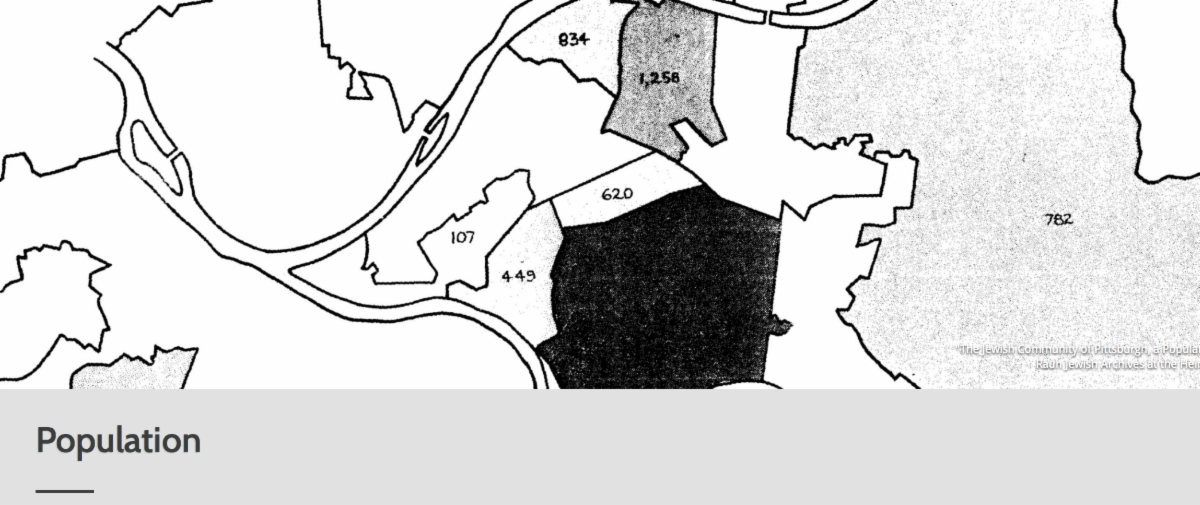
Looking to figure out how many Jews lived in a certain part of Western Pennsylvania at a certain moment in time? This bibliography includes more than 30 estimates of the Jewish population of Pittsburgh and small-towns throughout the region, conducted between 1852 and 2017. | |
| |
|
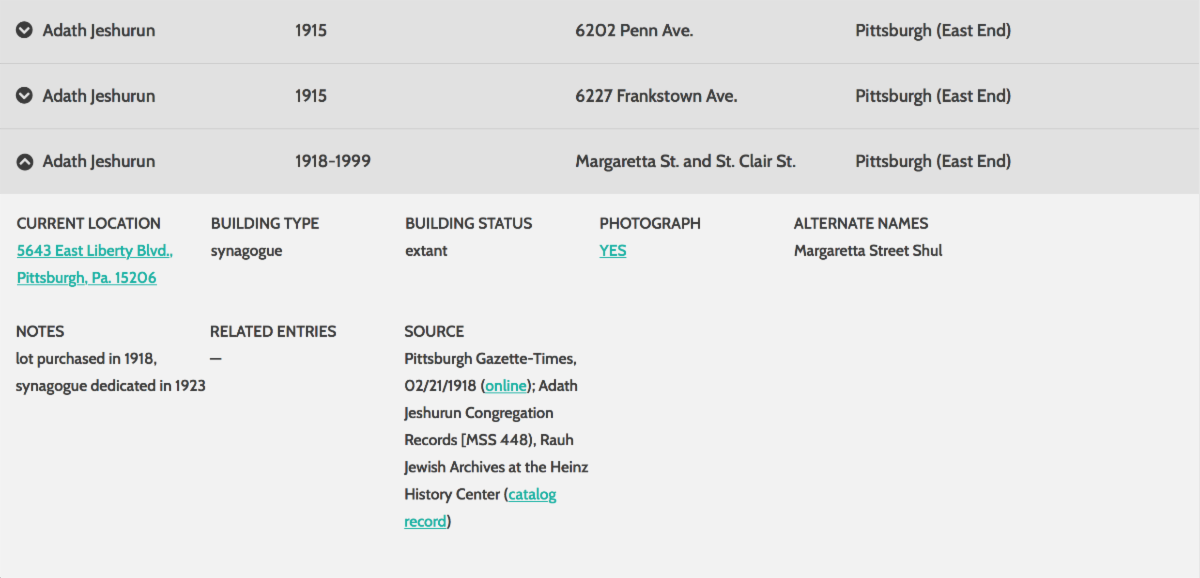
A database of buildings throughout Western Pennsylvania known to have hosted Jewish worship services. Includes links to photographs and citations with original source material. Database currently includes 90 locations from 2 institutions | |
Rauh Jewish Archives Newsletter | |
The Rauh Jewish Archives has been publishing a weekly newsletter since 2020. The newsletter contains a variety of articles about local Jewish history, including much original research not found anywhere else. You can find and read every issue—more than 150!— in our new index. | |
| |
|
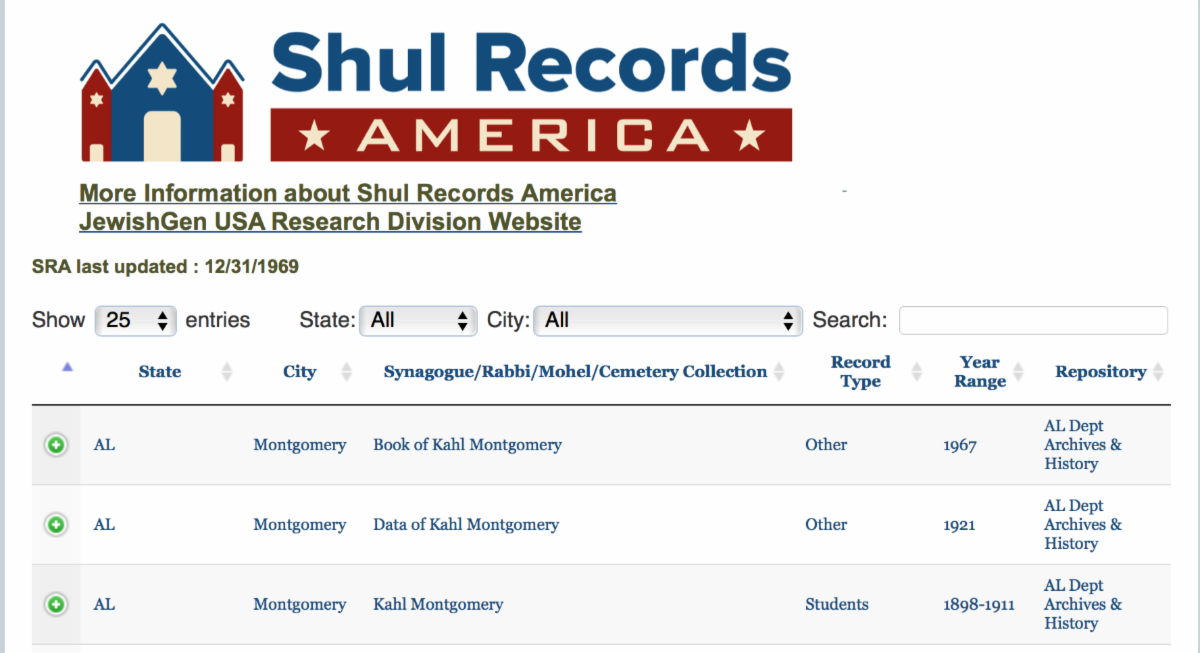
Online finding aid from JewishGen listing congregational archival collections held at publicly accessible repositories across the United States. Includes 63 listings from the Rauh Jewish Archives, as well as other repositories with Western Pennsylvania congregational records. | |
[IMAGE: Marian Schreiber and employees at the Schreiber Trucking Company, c.1943—from Schreiber Family Papers and Photographs, MSS 846.]
If you like this newsletter, why not forward it to a friend? We want to share the story of Western Pennsylvania Jewish history with as many people as possible.
If you've received this newsletter from a friend or neighbor, and you want to read more, just click on the link below to start receiving future editions.
| |
The Rauh Jewish Archives was founded on November 1, 1988 to collect and preserve the documentary history of Jewish life in Western Pennsylvania and to make it available to the world through research assistance, programing, exhibits, publications, and partnerships. | | | | |