|
KEARNEY KIDS' CORNER
By Nancy Faria
| |
|
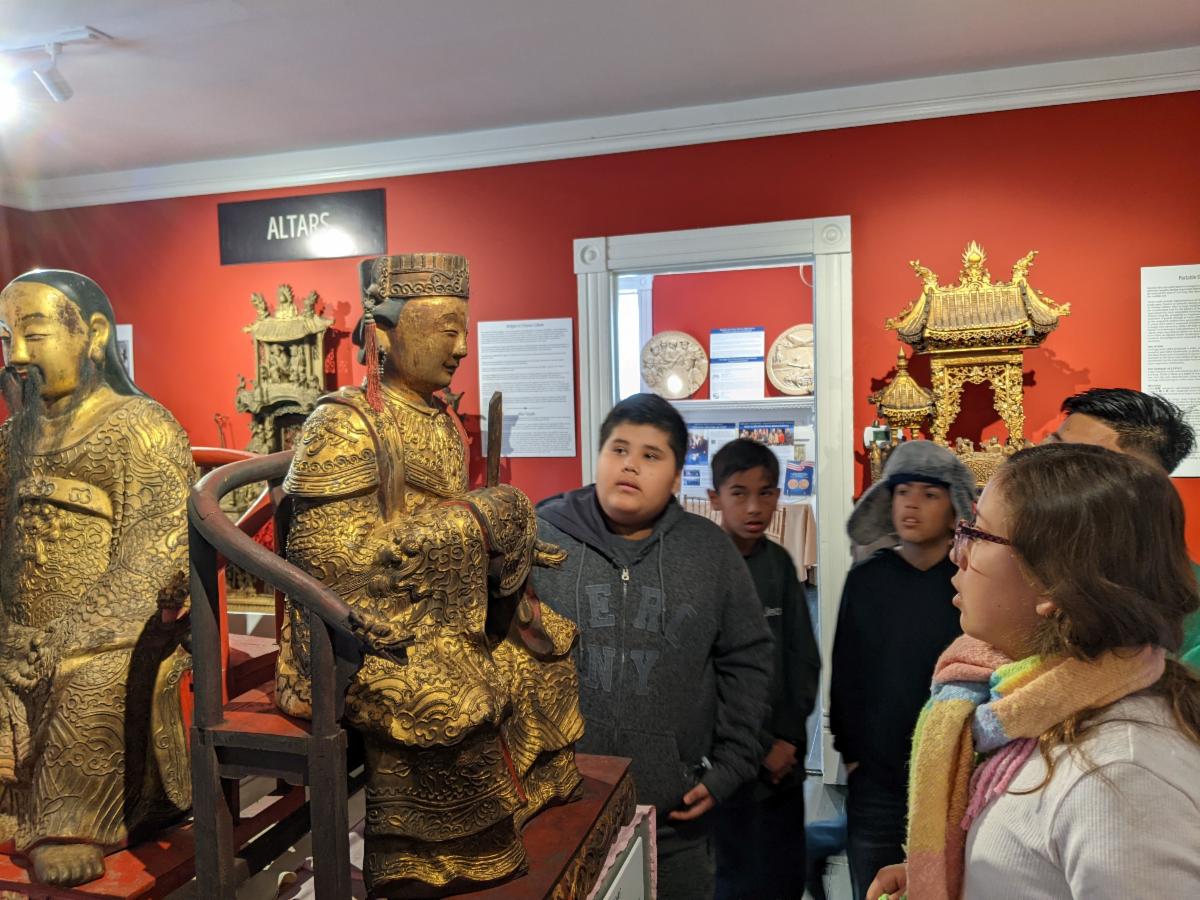
The Kearney Mansion was filled with artisans, performers, and reenactors at our February 21st Time Travelers event. Guests were treated to music from the Fresno Folklore Society, visits with M. Theo Kearney, ropemaking, tasty candy and fortune cookies, and so much more. The California Living History Group helped kids experience what life would be like for immigrants coming to California. A member of the Chinese Consolidated Benevolent Association, Fresno, provided guided group tours of our exhibit From China to Fresno: A 150-Year Cultural Journey. And, for the first time ever, students were invited to the third story of the Mansion, where they could see what the Fruit Vale Estate looked like in its heyday.
If you missed it, you are in luck! The next Time Travelers program is taking place on May 8th. See below for additional information! Registration is open.
| |
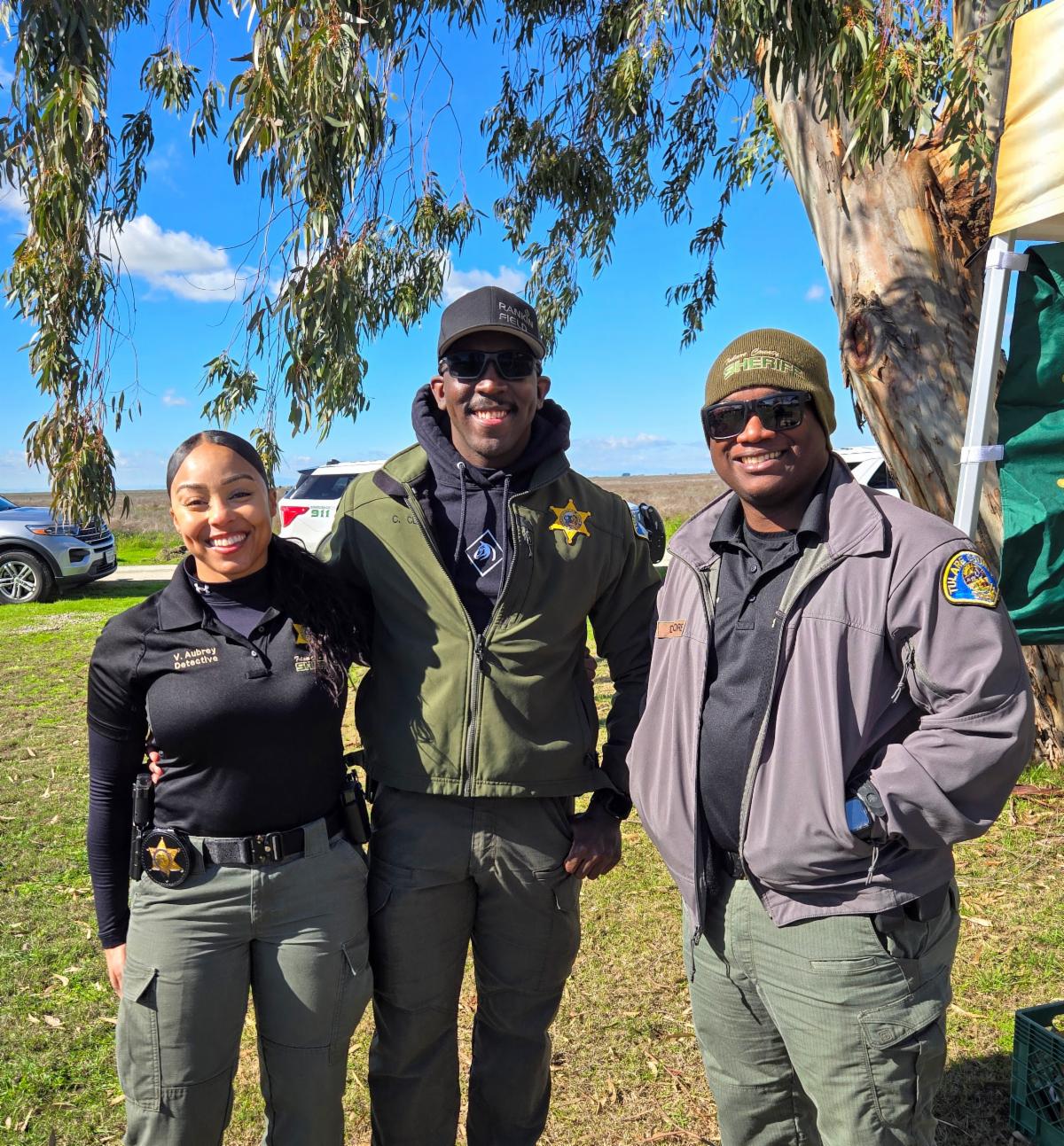
We also had the privilege and honor to participate in the celebration of Black History Month at Colonel Allensworth State Park on February 10th. In addition to speakers, music, dancing, vendors, and fantastic food, the West Fresno Family Resource Center, who works closely with our friends and neighbors, the African American Farmers of California, were on site promoting their Sweet Potato Project, which “aims to prevent and/or reduce school drop-out, gang involvement, and substance use initiation for African American youth ages 12-15.” Click here to learn more about their program.
| |
|
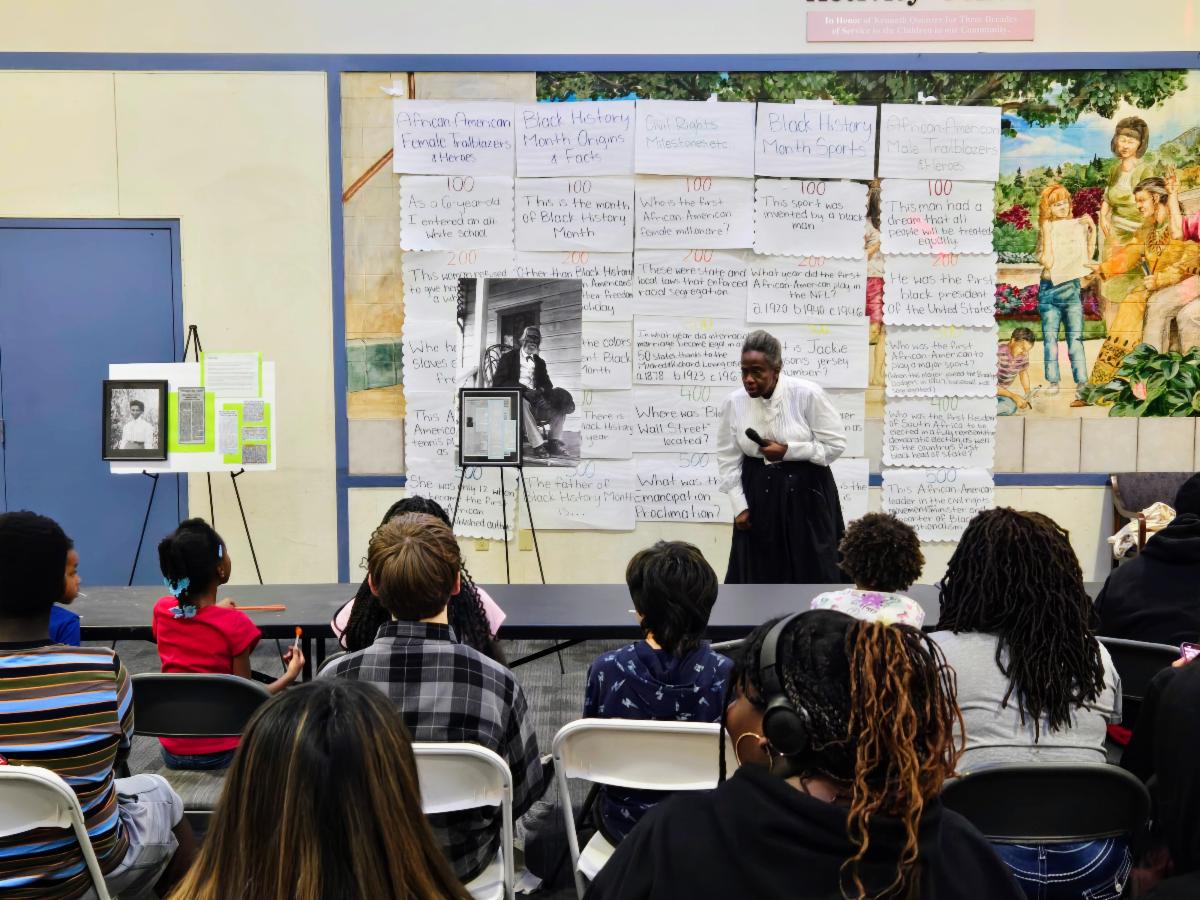
Even more, we had a blast with the kids at the Zimmerman Boys and Girls Club on February 9th as they commemorated Black History Month. One of the amazing reenactors we work with, Nancy Idlet-Whittle, portrayed inspirational legend, Julia Bell. If you do not know her story, you should!
Next, have you heard about Camp Kearney Summer Camp? It is going to be sensational! There will be characters visiting in period dress, walking field trips, animal guests, hands-on activities, and crafts to take home. Campers will learn about local history, cultures, and our community. Spots are limited so make your reservations today.
| |
Back to Time Travelers...on Wednesday, May 8th, travel back in time to Fresno County’s early years with this immersive experience.
Your class will be transported to the Fruit Vale Estate, home of the Kearney Mansion and a thriving community of shopkeepers, blacksmiths, farmers, and families that called the site home at the turn of the century.
Meet a real live “sawbones,” a doctor complete with the instruments and medicines of the period. Learn about the refuge Fresno’s Chinatown provided and see precious Chinese artifacts. Local historical figures like Minna Eshleman, pioneer of the ethical treatment of farm animals and leader of a group of teachers who became some of the first female raisin growers in Fresno, will be on hand to chat . Mr. Kearney will be in his office to talk about his time on the Estate, and the plight of the first Armenian immigrants in the Valley will come alive with a presentation from the Armenian Museum of Fresno.
Don’t forget a trip to the gift shop, where books, toys, and souvenirs will be available for purchase as one of the stations you will visit.
In all, students will have the chance to complete a circuit of 10 stations, each with its own special look at local history and the impact that early settlers had on our Valley and our Nation. Is your child's class registered for the May 8th Time Travelers? If not, share with your teachers.
| |
|
BATHING IN BLOSSOMS:
REFLECTIONS ON THE FIELDS OF FRESNO
By Candice Calderon, Tour Director
| | |
|
|
Have you ever opened a crop’s blossom with your hands to see what the core inside, or ovary, of the flower looks like? Sometimes arborists cannot even identify whether a tree is a peach or a nectarine just by looking at it. If there is no fruit on a tree to identify it, you may have to pick a bloom, open its center to see if its core is furry (a peach) or not (a nectarine). This is what our agricultural tour guests discovered at Naylor’s Organic Family Farm Stay during the recent visit to an intimate farm in Dinuba, CA. This quaint farm offers lodging for the person or couple that enjoys U-Pick options on a farm. We thank Mike and Nori Naylor for guiding our guests on their property, explaining in detail the process of how they organically grow peaches and nectarines, harvest honey, garden, raise chickens, and host visitors.
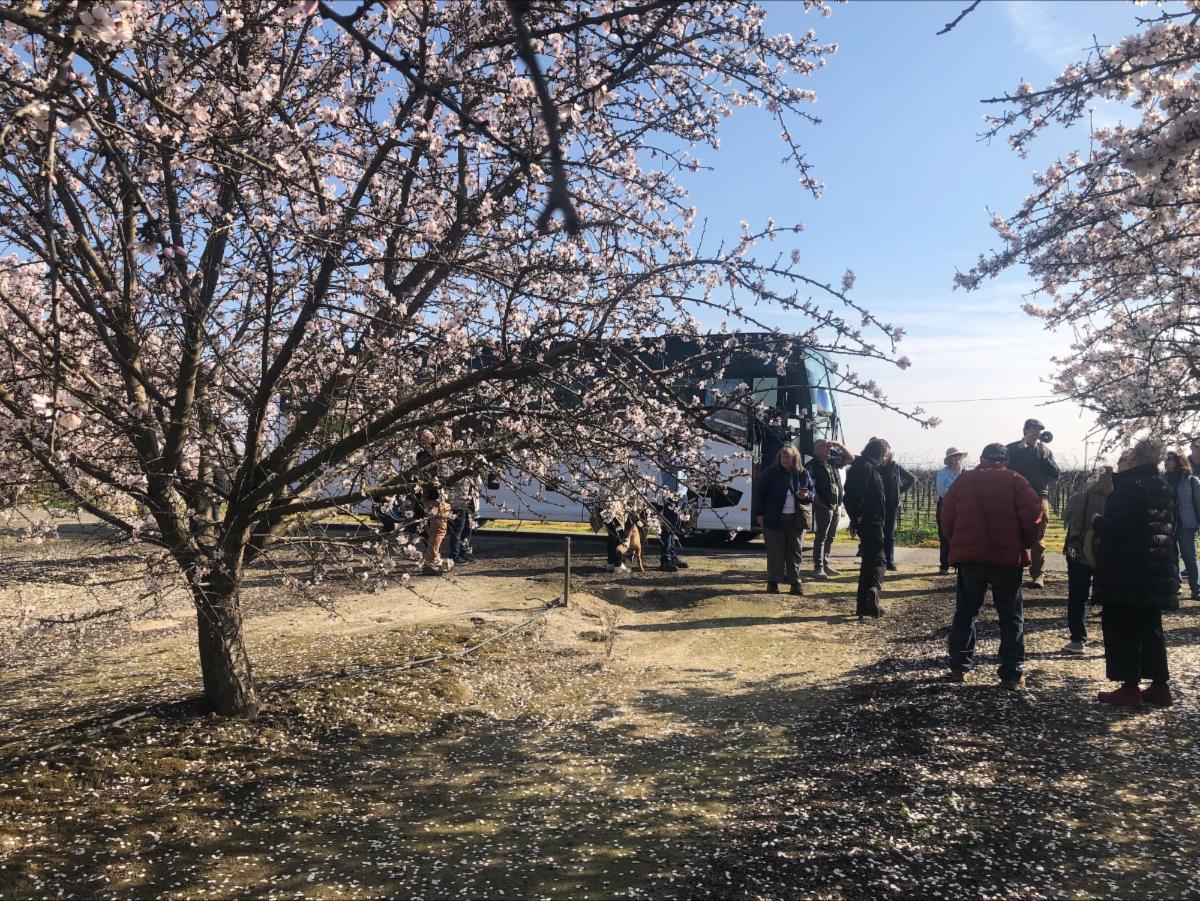
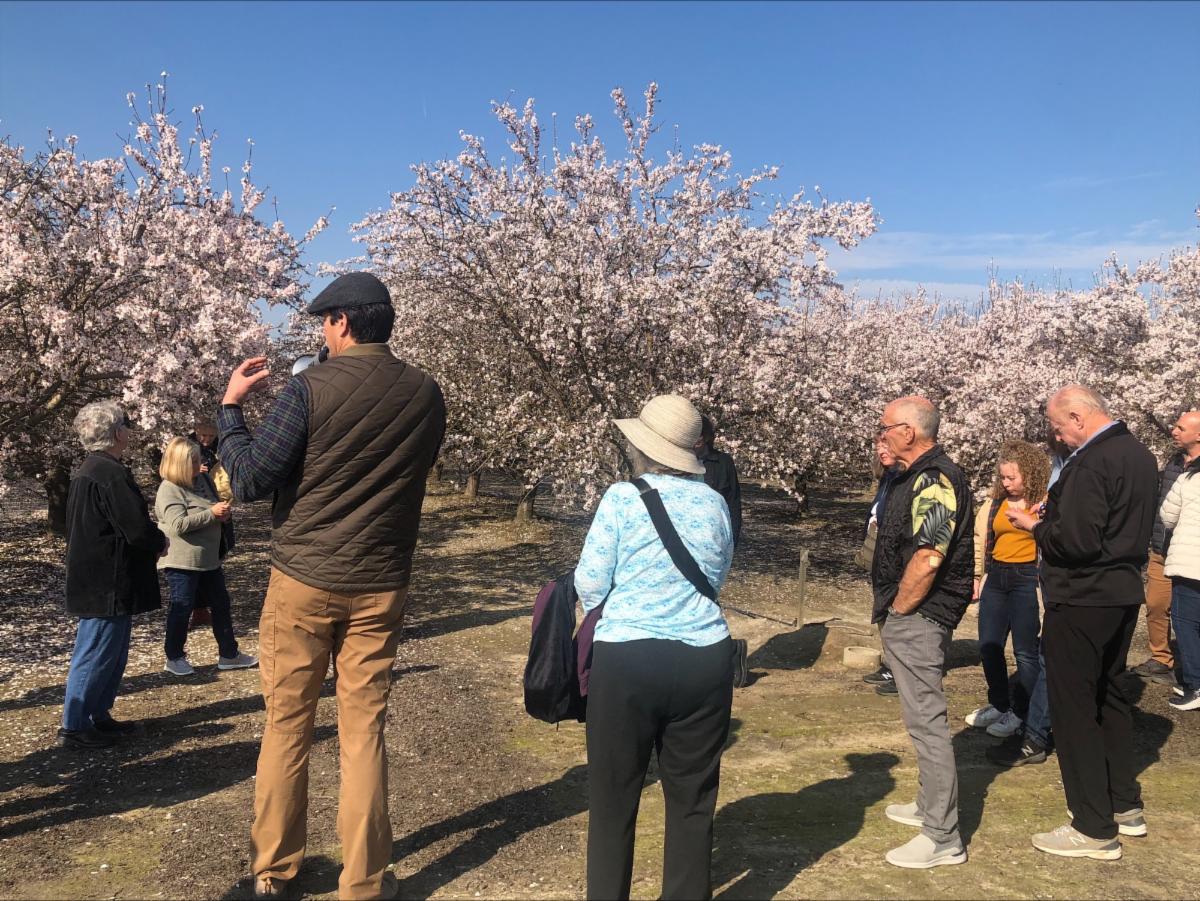
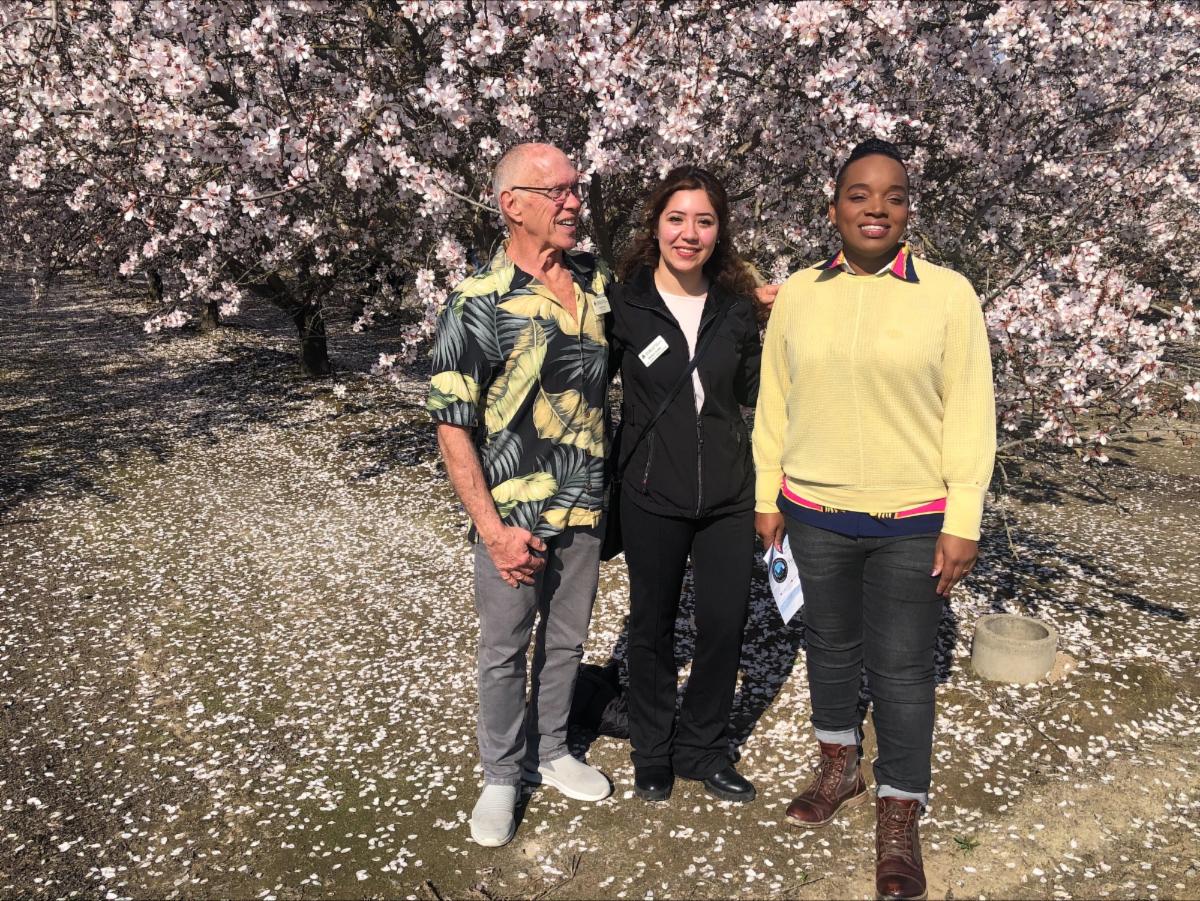
Bathing in blossoms was a treat at Chandler’s Almond Farm in Selma, CA. John Chandler and his father graced us with an invitation to enjoy the blossoms on their private property. Birds and bees, pollination, and the fertilization process were some of the many interesting topics reviewed by John. This location, that has been in operation since the 1880s, made a perfect spot for blossom photography. Access to this private orchard is only available on our Fields of Fresno Ag Tour. Many thanks to the Chandler family for hosting us.
A. Nonini Winery never disappoints! Jim Nonini and his mother, Judy, who has an expert palette, always give a warm welcome to our guests. Their over 100-year-old farm story will make you fall in love with their family history, from pursuing the cattle business to diverting into the wine-making industry. We appreciate how Jim is keeping his family legacy alive and well.
Our next Fields of Fresno Ag Tour is Saturday, April 27th along the Madera Wine Trail, featuring our sister county. Reserve your seats now for the next Fields of Fresno bus as space is limited!
| |
|
ARCHIVAL SPOTLIGHT
By Cami Cipolla, Director of Educational Services
| |
|
Hello Friends of the Archives!
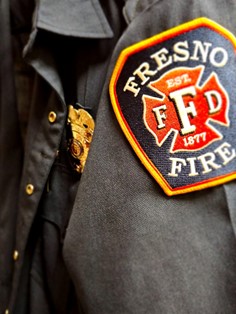
Our latest documentary project has led me down the rabbit hole of research into our amazing collections held within the Archives. This endeavor is about our very own Fresno Fire Department; the history, the culture, and the camaraderie of the humble and brave people that have dedicated their lives to protecting and serving our community.
| | |
|
|
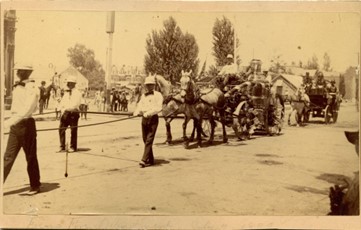
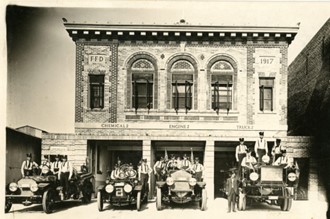
The Archives hold an extensive photo and ephemera collection chronicling the beginnings of the FFD and their continued service to the City and citizens of Fresno.
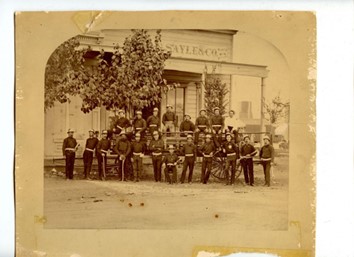
In 1872, the founding year of the City of Fresno, a primary concern for officials and citizens alike was fire due to the climate and the plethora of wooden structures. Up until 1878, a multitude of blazes nearly destroyed burgeoning community. The devastation resulted in the creation of Fresno’s first volunteer fire department (FVFD) in 1876.
Designated as one of the oldest Fire Departments in the state, the Fresno Hook and Ladder Company was formed on February 24,1877, consisting of all volunteers with Fresnan Leopold Gundlefinger named as the first Foreman, or Chief. Accounts detail that the FVFD raised $500 in silver from local businesses to purchase ladders, ropes, axes, buckets, and a wagon for their Department. As the City grew, officials realized the need to have a paid Fire Department. By 1902, Fresno Volunteer Fire Department transitioned into Fresno Fire Department with twelve paid firemen and twenty additional men on-call.
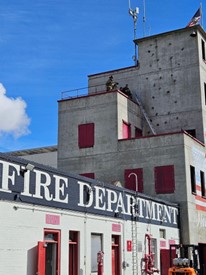
Located in Chinatown, Station 3 is the oldest firehouse in Fresno. Built in 1938, it is affectionately termed “The Rock” due to its single concrete block-like construction. The Station is on the State Register of Historic buildings. Station 3 serves downtown Fresno, Chinatown, and much of southwest Fresno. The block occupied by Station 3 is also home to the Fresno Fire Department’s Drill Tower.
The North Central Fire Protection District was formed on July 31, 1947. The District served three hundred square miles, including the north-western borders of the cities of Fresno, Kerman, and Biola. Today, the District covers 230 square miles with a population of 50,000.
Station 4 was established in 1948 and is now known as the Fire Factory due to the high volume of structure fires the Station tackles. In 2023 alone, YourCentralValley.com reported that Station 4 had responded to 1,199 fire-related calls!
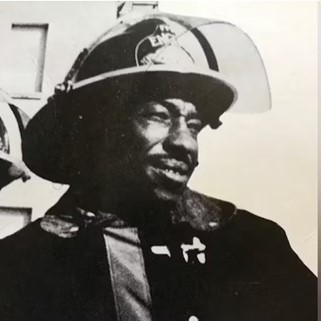
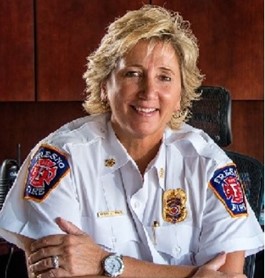
In 1954, the FFD hired brothers Floyd and Jim White, the first Black firemen, to join the Department. Floyd White retired from the Fresno Fire Department as First Assistant Chief, similar to a Deputy Chief today. He was the first Black person to become a Fire Chief in the central San Joaquin Valley. Another groundbreaking moment in FFD history happened in June 2013, when Kerri Donis was named Interim Fire Chief. Six months later, she became the FFD’s 15th Chief and first-ever female leader in its 139-year history.
The FFD has a vast community all its own with an extensive history and story to tell. Despite the abundance of photos, however, I am struggling to find the stories behind the images, the stories of the people, the stories that I know exist. These depictions of the past have chronicled the abundant wealth of memories the FFD elders hold, but they are not a narrative to bring the past to the present and then beyond into the future. It is not enough to preserve our history through photographs alone. We must preserve the accounts that accompany them to provide the interpretations to educate, enhance, and inform future generations. As I continue my journey through our FCHS collection and that of the FFD, I look forward to sharing tales of valor, camaraderie, and community with you!
Cheers Friends!
| |
|
ROOTS OF THE VALLEY:
San Joaquin Light & Power
By Joshua Villanueva
| |
Just one hundred years ago, the San Joaquin Light & Power Company finished constructing a monumental building in downtown Fresno—one that still stands tall to this day. Founded by an engineer named John Samuel Eastwood, San Joaquin Light & Power started on April 1, 1895 as the San Joaquin Electric Company. It was along the San Joaquin River where the Company had built Powerhouse No. 1, thirty-seven miles from Fresno. Even in its earliest days, the San Joaquin Light and Power Company saw fierce competition with the local Fresno Gas and Electric Company. Was largely controlled by Fulton G. Berry, who, at the time, owned Fresno's Grand Central Hotel. To subvert the competition, Berry used riparian claims filed on water upstream from San Joaquin Electric Company's intake flume in order to divert water away from his opponent's powerhouse through a mile-long ditch. Berry’s crafty plans, combined with several years of drought, led San Joaquin Electric to go into bankruptcy in 1899.
Despite the Company's bankruptcy, San Joaquin Electric continued to operate. Bondholders, seeking to protect their investment, provided the Company's Powerhouse with a steady source of water. In 1901, these investors financed the construction of what would become the Crane Valley Dam and the reservoir at Bass Lake. The following year, lumber magnate and president of Pacific Light & Power, William C. Kerckhoff, as well as Los Angeles investors A. C. Balch and Henry E. Huntington, came together and purchased the Company and would name Alfred G. Wishon as the General Manager. The year after that, the Company bought out the competing Fresno Gas and Electric Company for $25,000. San Joaquin Light & Power rapidly expanded to serve ever-increasing needs in the region. It was on May 13, 1905, that they adopted the name San Joaquin Power Company.
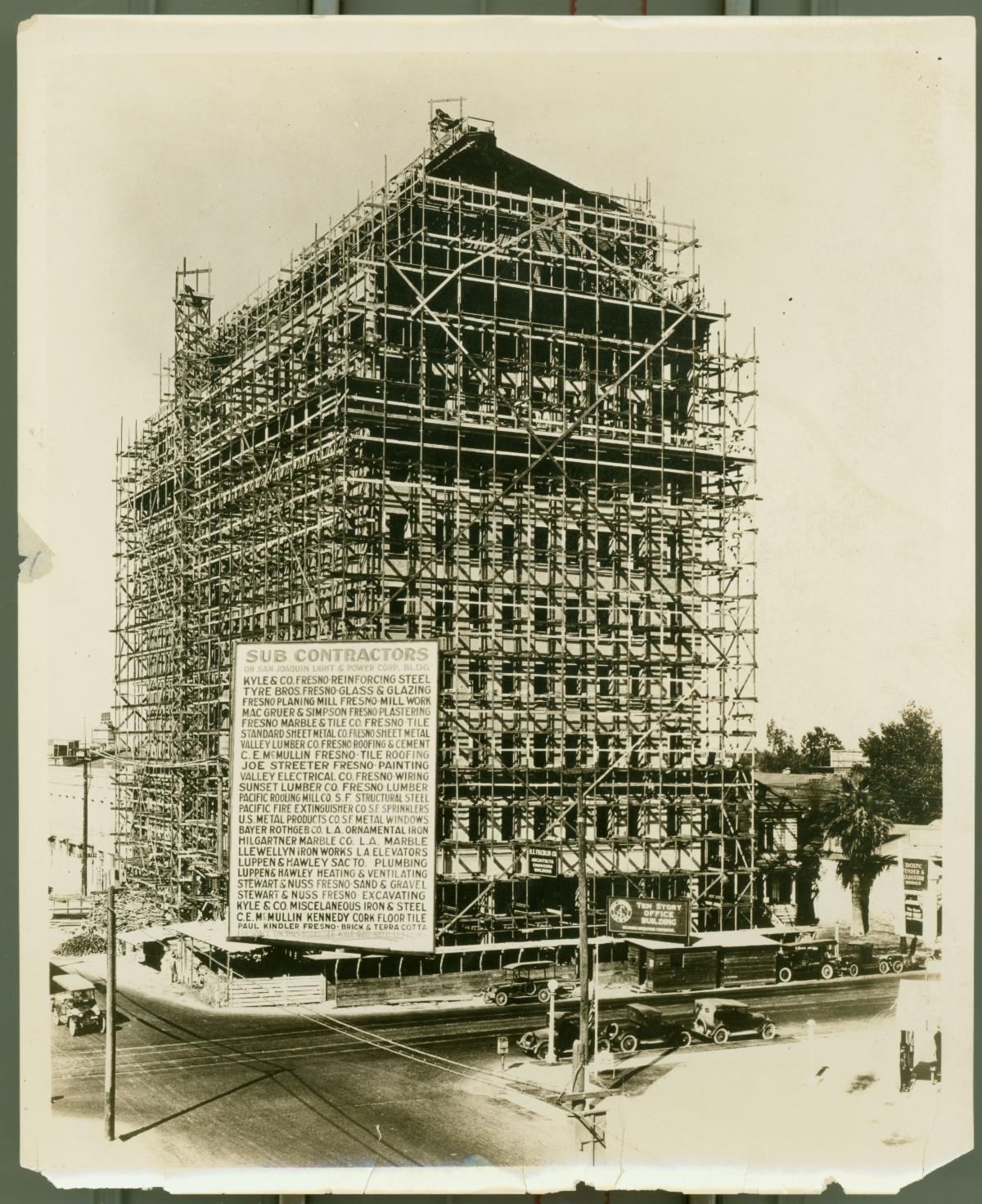
| 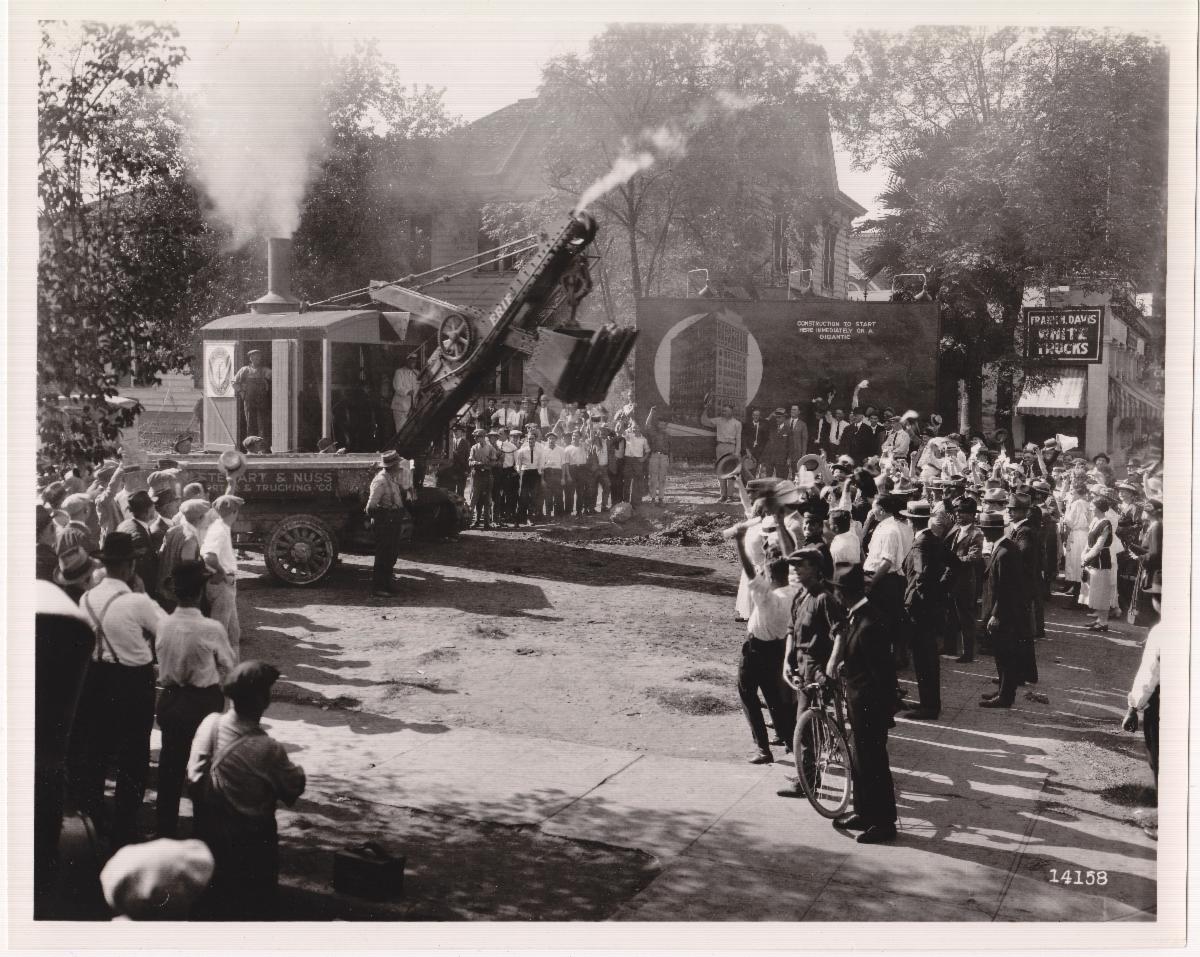 | At this time, the City of Fresno had grown from a small town made from the Southern Pacific Railroad to a major city in the heart of California. This was during the time of a “building boom” through the 1910s and 1920s, the times which brought about the creation of structures like the Hotel Fresno, the Helm Building, the Bank of Italy, and the Radin-Kamp Department Store. Chief designer, Raymond R. Shaw of the R. F. Felchlin Co., designed and constructed the San Joaquin Light & Power building, completed at the end of 1923 and opened in March 1924. The structure that Shaw’s firm created was (and still is) in the Italian Renaissance Revival-style near Fulton and Tuolumne streets. It would be these edifices that still largely make up the skyline of Fresno today. | |
The San Joaquin Light & Power Company had crafted a symbiotic relationship with the agricultural industry of Fresno, both of which were booming, and provided electricity to seven counties. In addition, they also supplied the electrical current distributed by the Midland County Public Service Corporation throughout Monterey, San Luis Obispo, and Santa Barbara counties. Once incorporated, the Company played a crucial role in the growth of the San Joaquin Valley as the leading agricultural force in California. By 1920, the SJLPC was an established and significant public utility, with eleven Powerhouses and a vast array of transmission lines throughout the Valley. A decade later, the SJLPC merged with the Great Western Power Company, thus becoming part of the Pacific Gas & Electric Company (PG&E). San Joaquin Power would merge completely into the parent PG&E Company in 1939, but the name on the roof sign did not change to PG&E until well after World War II. PG&E left the building in 1987. | 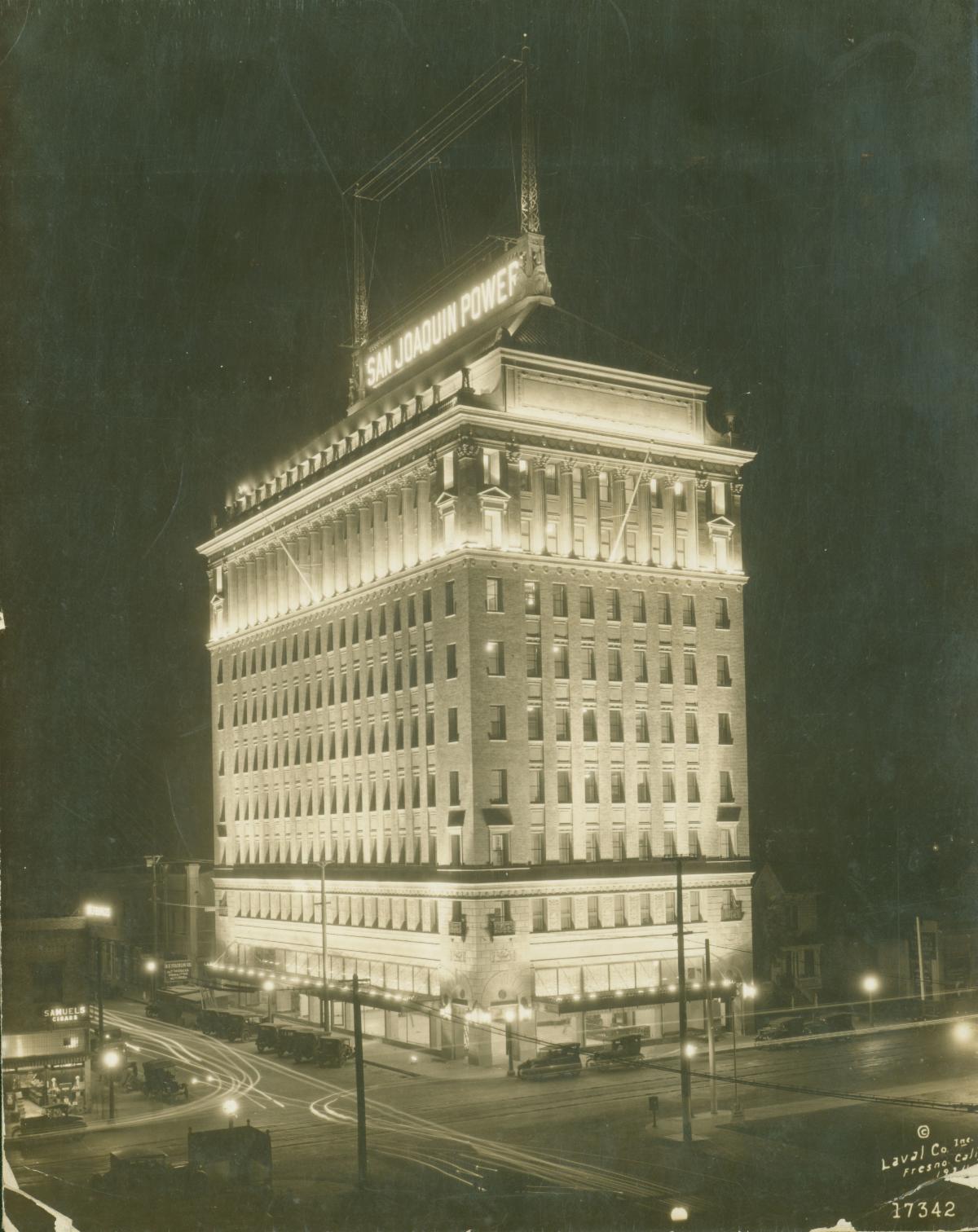 | To this day, this landmark resides in the heart of downtown Fresno. It reminds us of the past, both long ago and just yesterday. It stands as the fourth-largest building in our City and as a beautiful reminder of our history. Just one of the many ways in which Fresno helped to shape the legacy of the Central Valley. | |
|
HISTORY HAPPY HOUR AT KEARNEY MANSION
SATURDAY, MARCH 9, 2024
| | |
|
|
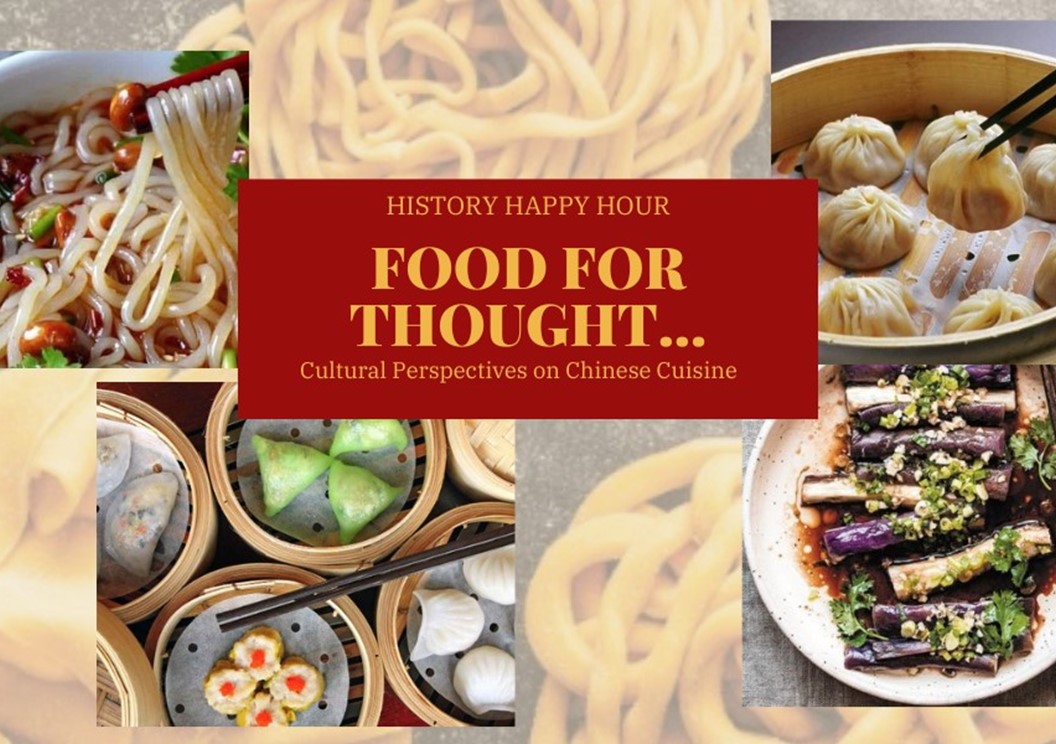
Food For Thought… Cultural Perspectives on Chinese Cuisine is a panel discussion that will delve into the rich heritage of Chinese cooking and examine the balance between tradition and modernity in the Americanization of authentic Chinese fare. Dining customs can serve as a bridge between different cultures, allowing people to learn about and appreciate other ways of life. They play a significant role in social interactions and rituals, often serving as the centerpiece of celebrations and gatherings, weddings, birthdays, and holidays. Traditional dishes are passed down from generation to generation, and family recipes are cherished. The preparation and sharing of meals bring people together and create a sense of community and belonging. Families share their recipes and cooking traditions with their children and grandchildren, ensuring that they are passed down to future generations. Traditional restaurants and markets also play a role in preserving cultural heritage by promoting traditional dishes and ingredients.
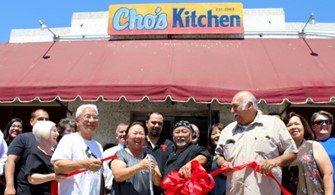
Our panel consists of four experts in the diverse world of cookery: Beverly Cho, Jay Louie, KC Yang, and Gary Dunn, all of whom are Chinese Americans with a rich history in the food industry.
We invite you to join us in a riveting interactive panel discussion about the relationship between food, heritage, and cultural identity.
| |
|
5:00PM: Reception and light hors d’oeuvres in the Museum Gallery with viewing of our exquisite exhibit From China to Fresno: A 150-Year Cultural Journey.
5:30PM: Panel Discussion in Historic Kearney Mansion.
| |
|
MAKING HISTORY EVERY DAY:
Beekeeper offers $100,000 reward
in brazen Fresno beehive thefts
by: Melissa Gomez
Originally published in Los Angeles Times, February 15, 2024
|  | |
Andy Strehlow felt a deep and familiar sting when he saw the beehives were missing.
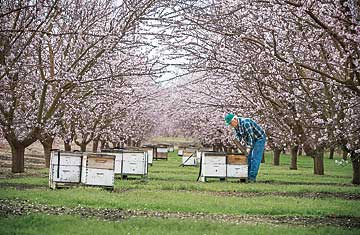
Just days before, the bees had been trucked more than 1,700 miles from his bee farm in South Dakota to a sprawling almond orchard near Firebaugh in Fresno County. He’d unpacked the boxes — 416 hives housing millions of buzzing bees — and placed them strategically around the property so his bees could work their magic, pollinating the almond blossoms in time for a late-summer harvest.
Three days later, on Jan. 31, he sensed a gap — a dismaying silence where bees should have been active — and it didn’t take him long to realize 96 hives were missing, brazenly kidnapped sometime in the night.
“I felt violated,” said Strehlow, a commercial beekeeper who has grown Strehlow Bees Inc. into one of the largest beekeeping operations in the U.S. “Quite likely it’s another beekeeper, and that’s what really stings about it: beekeepers stealing from other beekeepers.”
And it wasn’t the first time his hives had gone missing. In the 25 years he’s been raising bees, Strehlow estimates he’s had close to 1,000 hives stolen. It was time, he thought, to take a stand.
So Strehlow is advertising a $100,000 reward for information on the bee thief — about three times more than the 96 hives are worth. He’s hoping that sizable sum is enough to get someone close to the culprit — a wife, sister, brother — to turn him in.
“It’s not just me, but for my friends,” Strehlow said. “It’s more important to get the guy found just so that he can be stopped.”
Late winter is a critical time of year for beekeepers and the Central Valley orchards that rent their services. Pollination of the vast acreage dedicated to almonds alone requires many millions of bees. In Fresno County, where almonds have long been a top crop, yielding more than a billion dollars in annual revenue, bees are an important asset in the local economy.
But that high-value demand also creates a lurking danger for legitimate beekeepers, who might spend a whole year gearing up for the pollination season. Too often, February is also a time when criminals tend to strike, taking beehives to sell or rent to eager farmers who may not realize the bees are stolen.
There have already been nearly a dozen reports of bee theft this year, involving hundreds of hives in Fresno, Madera, Glenn and Butte counties, according to data compiled by the California State Beekeepers Assn.
About two miles from the Fresno orchard where Strehlow’s hives went missing, beekeeper Andy Beld had 96 hives stolen the same night, sometime between 5:30 p.m. and dawn the next day. Beld told Fresno County sheriff’s deputies he’d seen a Chevy 3500 flatbed truck with a red-and-yellow sticker and a yellow Hummerbee forklift both idling nearby as he moved his hives. Strehlow suspects the same person who targeted Beld’s hives hit him and other beekeepers working in the county.
While the sheriff’s department has not identified any suspects in the rash of thefts, they suspect the culprit is someone with knowledge of beekeeping, including how to handle and transport hives, said Tony Botti, public information officer for the Fresno County Sheriff’s Office.
“It’s a consistent thing we deal with,” Botti said. Most times, their investigations hit a dead end.
People unfamiliar with beekeeping might think kidnapping active hives poses a high risk of being stung. But hive thefts can happen quickly and quietly. Working at night, when bees are dormant, the thieves wouldn’t have to wear protective gear that might make them stand out. Employing a forklift can make pilfering a large number of boxed hives an easy half-hour turnaround. The stolen hives can rent for anywhere from $150 to $200 apiece, bringing a lucrative payday.
While commercial beekeepers typically engrave their boxed hives with their names or business logos, thieves often discard the original boxes or repaint them with another logo. So some beekeepers are turning to GPS tracking devices and surveillance cameras to hunt down their hives.
Cord Anderson, a third-generation Montana beekeeper who works in Madera and Fresno counties during pollination season, is ready to join that trend. Last week, he discovered 108 beehives missing from a Fresno County orchard he is servicing. He said the theft will mean $40,000 in lost income.
“It hurts. It’s tough on the industry,” Anderson said. “It would be very nice if we could catch these guys and put this to a stop.”
Anderson said he doesn’t have the resources to offer the kind of reward Strehlow is floating. But he’s glad someone is taking a stand.
“The majority of a beekeeper’s revenue is pollination, and it takes an entire year of work and investment to have your bees ready to go this time of year,” he said. “In an hour, [thieves] come in and cash out on your investment.”
| |
|
SAN JOAQUIN VALLEY TOWN HALL CORNER
March 20, 2024
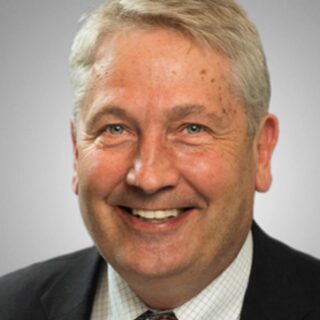
Ken Duckworth, MD
| |
Mental health is a topic that requires more conversation than ever before.
San Joaquin Valley Town Hall is honored to bring to Fresno one of the foremost experts in this field, Dr. Ken Duckworth. His presentation promises to make this difficult discussion relatable to all.
Dr. Duckworth’s journey into psychiatry started when he was a boy growing up with a dad who experienced severe bipolar disorder. His father was loving, kind and periodically quite ill, hospitalized for months at a time. Ken became a psychiatrist in part to help his father. He is very fortunate to serve as the Chief Medical Officer for NAMI and to be part of this remarkable community.
Ken recently authored NAMI’s first book, “You Are Not Alone: The NAMI Guide to Navigating Mental Health―With Advice from Experts and Wisdom from Real People and Families.” Written with authority and compassion, this is the essential resource for individuals and families seeking expert guidance on diagnosis, treatment and recovery, featuring inspiring, true stories from real people in their own words.
Get your tickets now at valleytownhall.com
|  | | | | |