|
Researched by Alliance CEO Gael Strack and written by Alliance President Casey Gwinn, SB 989, authored by Senator Angelique Ashby, makes the following legislative findings about suspicious death cases:
(a) Suspicious death cases, where there is a history of being victimized by domestic violence, are inadequately investigated at times, when a premature decision is made to
determine the cause of death as suicide even before a comprehensive investigation has been completed by law enforcement professionals.
(b) Domestic violence-related homicides are highly susceptible to staging or alteration of the death scene before investigators can conduct a scene investigation, which hampers the responsibilities of the coroner or medical examiner and compromises the ability of investigators to evaluate death cases adequately.
(c) Research has identified 10 red flag markers in suspicious death cases, where there is a history of being victimized by domestic violence, that should be evaluated in any death investigation.
(d) An independent right of family members of homicide victims has been created in federal law to obtain information, access victim services, and request an independent review of initial findings or the investigation of the death of their family member but the law applies only to those cases under federal jurisdiction. It is the intent of the Legislature to provide victim services and support to family members in suspicious death cases and support family members who seek a second opinion on the death of their loved one at no cost to any public agency whenever practicable.
SB 989 goes on to add family members of lost loved ones to those having a right to death records when there is a prior history of domestic violence, recognizes family members in suspicious death cases as survivors of crime deserving of victim services and support, and adds apparent suicides and apparent accidental deaths with a history of prior domestic violence as deserving of special consideration for autopsies by medical examiners and coroners. SB 989 then adds the Alliance’s Ten Red Flag Factors in Suspicious Death cases to California law to raise awareness about evaluating these factors each death case. The ten research-based factors include:
(1) The decedent died prematurely or in an untimely manner.
(2) The scene of the death gives the appearance of death due to suicide or accident.
(3) One partner wanted to end the relationship.
(4) There is a history of being victimized by domestic violence that includes coercive control.
(5) The decedent is found dead in a home or place of residence.
(6) The decedent is found by a current or previous partner.
(7) There is a history of being victimized by domestic violence that includes strangulation or suffocation.
(8) The current or previous partner of the decedent, or child of the decedent or the decedent’s current or previous partner, is the last to see the decedent alive.
(9) The partner had control of the scene before law enforcement arrived.
(10) The body of the decedent has been moved or the scene or other evidence is altered in some way.
California Senator Susan Rubio and Senator Anna Caballero co-authored SB 989 with Senator Ashby.
Alliance President Casey Gwinn praised the California Senate today. “This bi-partisan vote to raise awareness about staged crime scene and suspicious death cases where there is an identifiable history of domestic violence is a historic step forward in our work on ‘hidden homicide’ cases in California and across the country. If investigators miss the truth in these cases, they need to fix them, but our real goal is to see these investigations done right the first time. These types of cases should be presumed to be homicides until proven otherwise.” Alliance CEO Gael Strack thanked Patricia Hunter, Joanna’s mom, and Sacramento Fire Captain Joe Hunter, Joanna’s brother, and other family members of lost loved ones in cases across the country that supported SB 989. “We will never stop advocating for the rights of family members and their loved ones to advocate for complete investigations and for justice for their mothers, sisters, and daughters. Family members are robbed of hope when investigations of death cases are rushed and when mistakes are made. Today, we are ensuring their loved ones did not die in vain. And we now have a statute every state can model and adopt.”
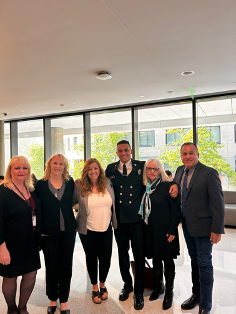
The amazing team at the Sacramento Regional Family Justice Center also praised the Senate vote and shared their vision for Family Justice Centers across the country becoming aware of these types of cases and becoming the team everyone needs them to be in asking questions and advocating for justice. The photo below commemorates our first meeting in Sacramento when we pursued SB 989 in California.
|