|
|
|
|
Ron Young, Program Manager |
Dear Flight Opportunities community,
Happy New Year! From all of us in the Flight Opportunities community, we hope 2018 is off to a prosperous and productive start for you. As the year gets underway, we're preparing for upcoming flights and excited to share news about flights that were completed in the final months of 2017.
In this month's newsletter you can read about:
- Blue Origin's first launch for Flight Opportunities, carrying a promising medical technology payload for testing
- Generation Orbit's recent flight to test its hypersonic flight testbed
- Our latest staff spotlight, featuring Tim Chen, project manager for small satellite launch vehicle technologies
- New opportunities, including a pre-solicitation announcement to help you plan ahead
- Upcoming events you'll want to put on your calendar
As always, we hope you enjoy reading and thank you for being a valued member of the Flight Opportunities community.
Ron Young,
Program Manager
NASA's Flight Opportunities program
|
|
|
Blue Origin Completes First Launch for Flight Opportunities, With Promising Medical Technology Onboard
|
|
|
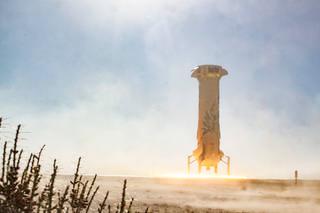
Blue Origin's New Shepard booster rocket returns to its West Texas launch pad on December 12 after completing a flight that tested the Evolved Medical Microgravity Suction Device technology. NASA provided funding to support the flight cost for the payload.
Credits: Blue Origin |
|
Blue Origin successfully launched its New Shepard reusable space vehicle on December 12 carrying a medical technology that could potentially treat chest trauma in a space environment.
The New Shepard reusable vertical takeoff and vertical landing (VTVL) space vehicle was launched with the experimental technology from Blue Origin's West Texas launch site. The launch was the company's first under the auspices of the Flight Opportunities program.
"This flight marks the first of many Flight Opportunities' flights of payloads with Blue Origin," said Ryan Dibley, NASA Flight Opportunities campaign manager for Blue Origin. "New Shepard brings new capabilities to the program. This launch platform allows for larger payloads, provides lower launch accelerations, and maintains a sealed pressure environment."
With NASA funding to support the flight cost, the Evolved Medical Microgravity Suction Device technology was developed by Charles "Marsh" Cuttino and his team at Orbital Medicine, Inc. in Richmond, Virginia.
The device could potentially assist in treating accidents such as a collapsed lung where air and blood enter the pleural cavity. The payload was constructed in collaboration with the Purdue University of Aeronautics and Astronautics in Indiana.
"My hope is that in the future, this type of medical device will be able to save the life of an astronaut, to continue their mission of exploration," said Dr. Cuttino. "These types of medical treatment options could be required to explore the Moon and Mars."
|
|
NASA Flight Tests Generation Orbit's Hypersonic Testbed
|
|
|
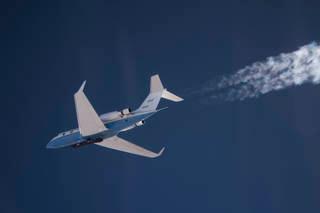
NASA's C-20A with Generation Orbit's hypersonic pod attached undergoes a flight test in the skies above Armstrong Flight Research Center.
Credits: NASA Photo/Jim Ross |
NASA and Generation Orbit Launch Services Inc. (GO) have completed the GO1 Inert Test Article captive carry flight test program. Under a public-private partnership with NASA's Armstrong Flight Research Center in California, GO developed the GO1-ITA, a mass properties and outer mold line simulator for the GO1 hypersonic flight testbed, and earned NASA's airworthiness approval for flight on
NASA's C-20A.
A campaign of three flight tests was conducted over the last year, successfully completing all test objectives including clearing the operational flight envelope of the C-20A with the GO1 pod as well as demonstrating a unique launch abort maneuver designed for air launch of the GO1 on operational flights starting in 2019.
The GO-NASA partnership was conducted under a 2015 NASA Space Technology Mission Directorate (STMD) Announcement of Collaborative Opportunity (ACO): Utilizing Public-Private Partnerships to Advance Emerging Space Technology System Capabilities entitled "Technology Maturation and Flight Validation for Air Launched Liquid Rockets." The non-reimbursable Space Act Agreement was signed in April 2016.
"Over the course of this collaboration with NASA, we've learned a great deal from working with the NASA Armstrong team, especially through the flight test operation portion of the collaboration," said GO CEO AJ Piplica. "The culmination of this partnership in the successful flight test campaign has demonstrated the value of NASA's public-private partnership model for supporting the advancement of novel, commercial aerospace technologies."
|
|
|
|
Pre-Solicitation Notice for Flight and Payload Integration Services
Editor's Note: The following is excerpted from NASA's full pre-solicitation announcement. View the full announcement here.
NASA's Armstrong Flight Research Center intends to solicit and award multiple Indefinite Delivery Indefinite Quantity (IDIQ) contracts for Flight and Payload Integration Services. The duration of the contract period is anticipated to be 5 years.
...
This requirement is to provide flight and payload integration services. Typical platforms will include (but are not limited to) high-altitude balloons, spacecraft, sounding rockets, and vertical flight testbeds, which must be capable of meeting one or more of the required flight profiles.
|
|
NASA Announces Opportunities to Advance 'Tipping
Point' Space Technologies
NASA's Space Technology Mission Directorate (STMD) is seeking industry-developed commercial space technologies that are at a "tipping point" in their development cycle. NASA seeks to enable industry to develop and qualify selected technologies for market through the solicitation titled "Utilizing Public-Private Partnerships to Advance Tipping Point Technologies" released on November 30.
Each proposal to the Tipping Point solicitation must be spearheaded by a U.S. for-profit entity. Funding will occur through milestone payments as part of firm-fixed-price contracts that require a minimum 25 percent contribution from the industry partner.
|
|
Upcoming Conferences & Events
|
|
Thanks For a Great NSRC!
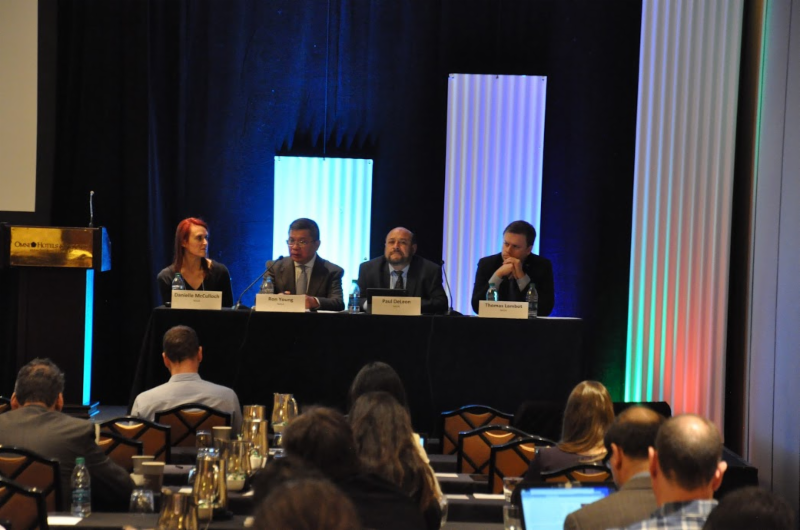
For those of you who made it out to the Next-Generation Suborbital Researchers Conference (NSRC) last month-and there were many of you-it was wonderful to meet you in person. We had lots of productive meetings and were pleased to see so many of you actively involved in this growing community. If you didn't get a chance to meet with a Flight Opportunities representative, or if you have any follow-up questions, feel free to
get in touch. We'd love to hear from you.
And as always... Be sure to note these upcoming events:
|
Ha
ve ideas
or
feedback
for the
Flight Opportunities
newsletter
?
|
|
NASA Flight Opportunities Program
|
|
Flight Opportunities is part of NASA's Space Technology Mission Directorate.
|
|
|
|
|
|