KOL ECHAD | Weekly Newsletter 

August 17, 2023

298!!

By Dr. Steven Lorch, Head of School


In my welcome-back-to-school letter last week, I wrote that I would reveal our enrollment numbers when they are official, after the school year starts. But I can’t wait!


As of yesterday, 298 students were enrolled in Kadima, including -


  • 96 in ECEC
  • 143 in elementary school
  • 59 in middle school


This is a huge increase (more than 20%!) over last year’s enrollment of 245, and, while it’s not the largest number of Kadima students ever, the last time we had this many students was 15 years ago, in 2007-08.


Included in this number are 122 new students (see below for a listing of their names). This means that 41% of our school community is new this year.


Here are a few top-line implications of our rapid enrollment increase:


1. Arrival and - Especially - Dismissal - 20% more students means 20% more cars. But our parking lot is still the same size as last year. Therefore, it will take substantially longer this year for students to arrive and be dismissed safely. Be prepared for longer waits, and try to stay patient and calm as we figure out the new traffic patterns together.


Pro Tip: DO arrive earlier in the morning (7:40-7:50 is your best bet for K-8), but DON’T join the carline earlier in the afternoon. (The reason not to arrive earlier at the end of the day: We dismiss K-8 beginning at 3:30 - 2:50 on Fridays. If you arrive before 3:25 - 2:45 on Friday - you’ll just be stuck waiting in line, without moving, until after the first children are dismissed.)


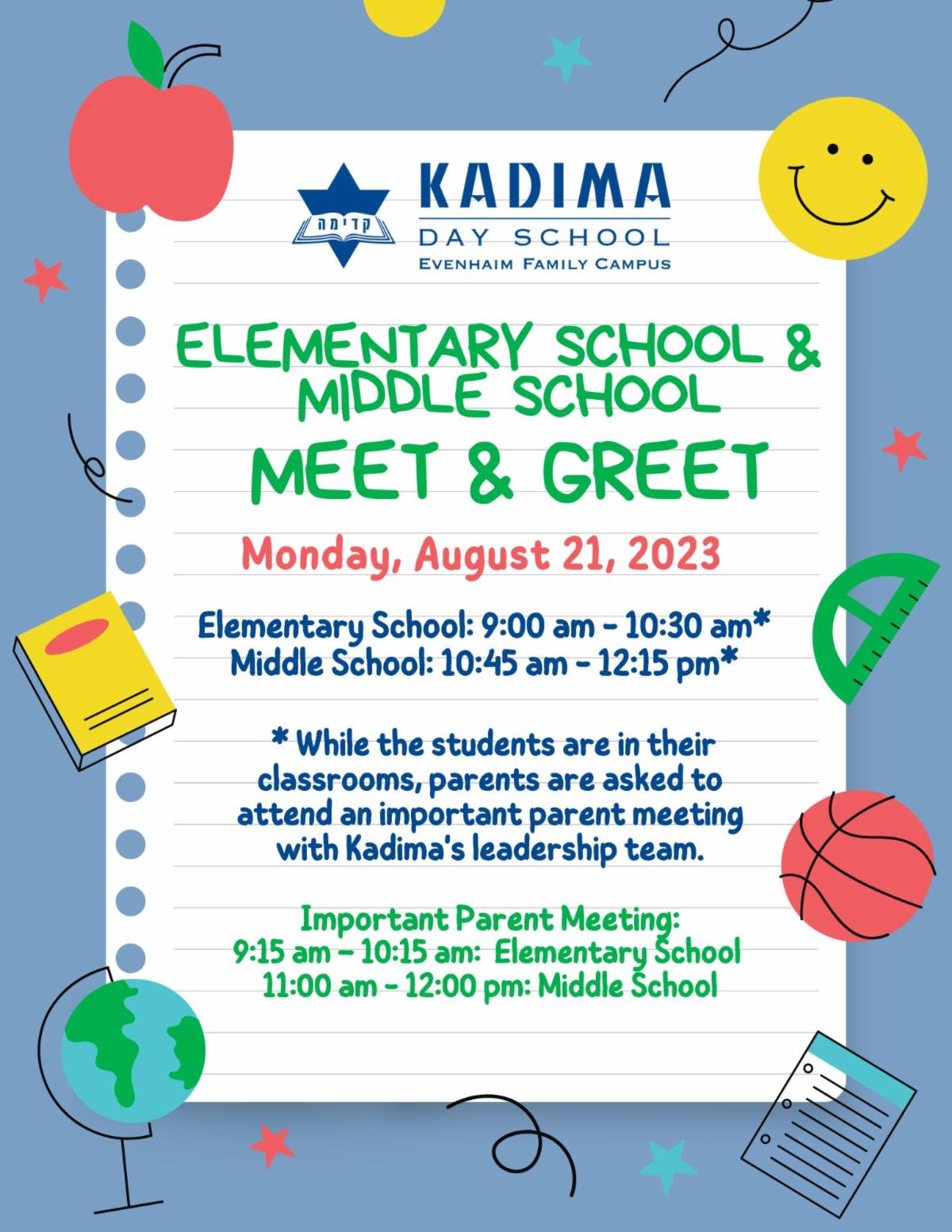
2. School Culture - With so many new students entering at nearly grade level, we have a lot of work ahead of us to orient and socialize them - and their parents! - to the Kadima way. We will spend more time teaching, reviewing, and practicing routines, and we encourage new parents to use returning parents as a resource - one to one and in WhatsApp groups - to learn and internalize how we do things at Kadima. That’s also why this coming Monday’s parent meetings during Meet and Greet are particularly important.


3. Communication - One of Kadima’s hallmarks is our responsiveness: When a parent emails, texts, or calls, we get back very promptly (we have a 24-hour rule, but it seldom takes longer than a few hours). With so many more students and parents, we anticipate that it might be more of a challenge to reply as quickly as parents have become accustomed to. We ask for your understanding as we learn how to provide excellent service to nearly 300.


Please note: 298 isn’t our opening-day number. There are a few applicants still in the pipeline, and there’s always a possibility that someone who’s enrolled won’t show up on the first day. Stay tuned!


We can’t wait to see everyone on Monday at Meet and Greet, and again on Tuesday, as the first day of school dawns on a bigger, better Kadima.


Shabbat shalom,


Dr. Steven Lorch

Head of School

Important Dates


Monday, August 22


  • Meet & Greet:

ECEC: 9:00 am-1:00 pm (open house)

Elementary School: 9:00 am-10:30 am

Middle School: 10:45 am-12:15 pm


Tuesday, August 23


  • First Day Of School
  • PTO Welcome Back Coffee, 8:10 am, on the Kadima yard


Tuesday, September 5


  • Middle School Back-to-School Night, 6:00 pm


Wednesday, September 6


  • ECEC Back-to-School Night, 6:00 pm


Tuesday, September 12


  • Elementary School Back-to-School Night, 6:00 pm


*For the full school year calendar, please click HERE.

A Warm Welcome to Our New Students!

Jonathan Agassi (8th Grade)

Mia Agassi (8th Grade)

Eliav Aizenkut (8th Grade)

Milan Algem (8th Grade)

Aline Algem (6th Grade)

Maya Amit (8th Grade)

Orin Amsili (E3)

Ben Avitan (4th Grade)

Nadav Bachar (Gesher)

Ray Baron (Kindergarten)

Renee Baron (E2)

Lian Ben David (8th Grade)

Ori Ben David (7th Grade)

Amit Ben David (E2)

Elai Ben Eliyau (E2)

Liam Ben Haim (E2)

Ariel Ben Tov DePas (Kindergarten)

Liel Benisho (1st Grade)

Rafael Benisho (E3)

Lielle Bikszer (8th Grade)

Asher Dov Blau (E3)

Judah Bryman (E3)

Rafael Chack (Kindergarten)

Yannai Chayo (E2)

Lian Cohen (2nd Grade)

Halley Cohen (1st Grade)

Leo Cohen (Kindergarten)

Leo Cohen (E3)

Lev Cohen (E3)

Jaidan Cohen(E2)

Ariel Costa (8th Grade)

Yarden Costa (7th Grade)

Lin Dadosh (Gesher)

Eliana Dahbash (E2)

Abraham Dannett (Gesher)

Adelaide Dannett (E2)

Oshrey Diner (8th Grade)

Shawn Drori (Gesher)

Jordan Drori (E2)

Shylee Elal (7th Grade)

Emile Elkayam (E2)

Miel Emunna (E3)

Jonathan Enav (E3)

Mila Engle (E3)

Noah Fayner (2nd Grade)

Bar Gabai (E3)

Miley Gabay (7th Grade)

Lia Gannot (6th Grade)

David Gannot (3rd Grade)

Shylie Gold (8th Grade)

Shayel Goldberg (Kindergarten)

Via Goldberg (Kindergarten)

Royal Goldberg (Gesher)

Nadine Gong (7th Grade)

Ofri Grinberg (8th Grade)

Ivri Grinberg (2nd Grade)

Mila Hadad (E3)

Oriel Hagag (7th Grade)

Eytan Michael Haim (E3)

Gaya Hajaj (6th Grade)

Liam Hajaj (Kindergarten)

Miel Hajaj (Kindergarten)


Daniel Hakimian (6th Grade)

Ezra Hankoff (E2)

Adi Iny (7th Grade)

Elai Moshe Isacharov (E3)

Matan Itah (8th Grade)

Miel Ellie Kedmy (E2)

Leo Kirschenbaum (4th Grade)

Shai Kirschenbaum (1st Grade)

Eitan Klein (E3)

Natan Kochlani (Kindergarten)

Aaron Meir Kohan (E3)

Celine Kohen (E3)

Aiden Kohen (E2)

Emma Koifman (Gesher)

Yalli Levi (E2)

Emma Louria (6th Grade)

Emilia Malka (1st Grade)

Leeyah Malka (Kindergarten)

Emelia Mandelman (E3)

Asaf Marer (6th Grade)

Adam Meirovitch (E2)

Elijah Messian (Kindergarten)

Ariya Ester Mizrahi (Gesher)

Maya Mordechaev (E3)

Romi Moshehai (E3)

Jonathan Navid (E3)

Jacob Navid (E3)

Shai Ozar (1st Grade)

Shya Lev Peyrot (E3)

Abigail Rabinovitch (7th Grade)

Sean Asher Revah(E3)

Reign David Rosenberg (E2)

Shaya Samara (Gesher)

Lenny Samara (E2)

Ella Schulman (E2)

Ari Menachem Schwartzberg (E3)

Ella Shaubi (E3)

Isabella Shenky (8th Grade)

Harel Shilon (6th Grade)

Leeray Shosha (E3)

Matan Skolnick (7th Grade)

Emmelie Skolnick (Kindergarten)

Yougev Bar Skolnick (Gesher)

Ari Swisa (E2)

Ann Tradelsi (Kindergarten)

Leeor Tubi (6th Grade)

Milan Tubul (7th Grade)

Noya Twito (6th Grade)

Leo Vardi (Kindergarten)

Morelle Vilner (8th Grade)

Eden Vilner (7th Grade)

Yam Voldman (Kindergarten)

Noam Weiner (E3)

Elliot Weiner (E2)

Sun Izhak Yamin (7th Grade)

Lia Yitzhary (E2)

Riley Yitzhary (E2)

Edan Zered (8th Grade)

Reef Ziboni (E3)

Liv Zukerman (E3)


Kadima Welcomes New School Staff!

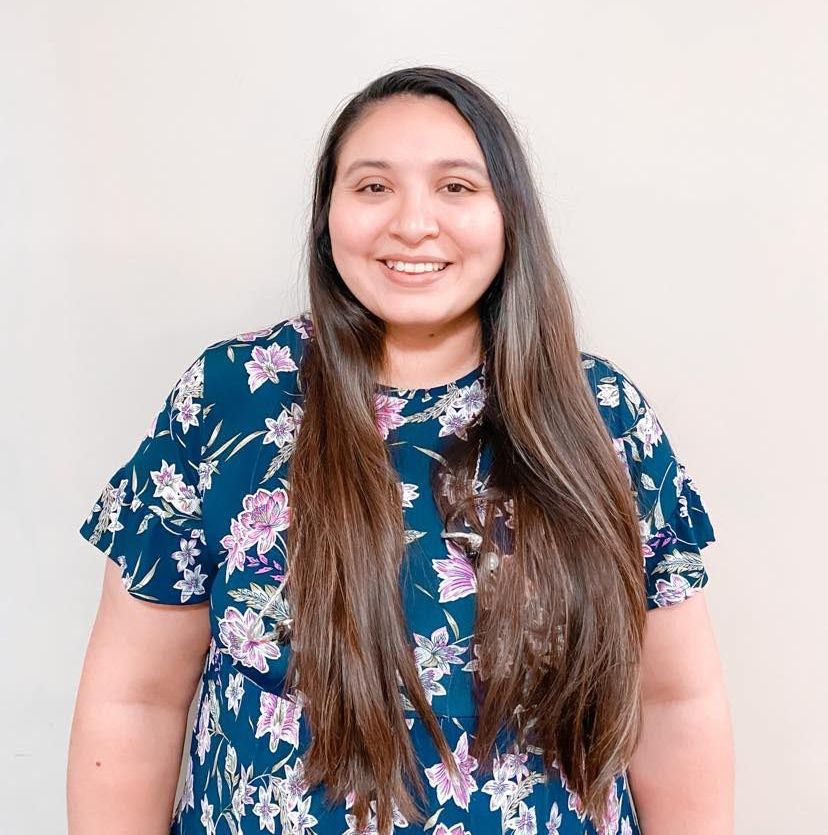
Jennifer Merida - Kindergarten Teacher

Hi! I'm so excited to be part of the Kadima family this year! My name is Jennifer Merida and I've been working in education since 2017. A fun fact about me is that I love singing along to Ms. Rachel with my daughter.

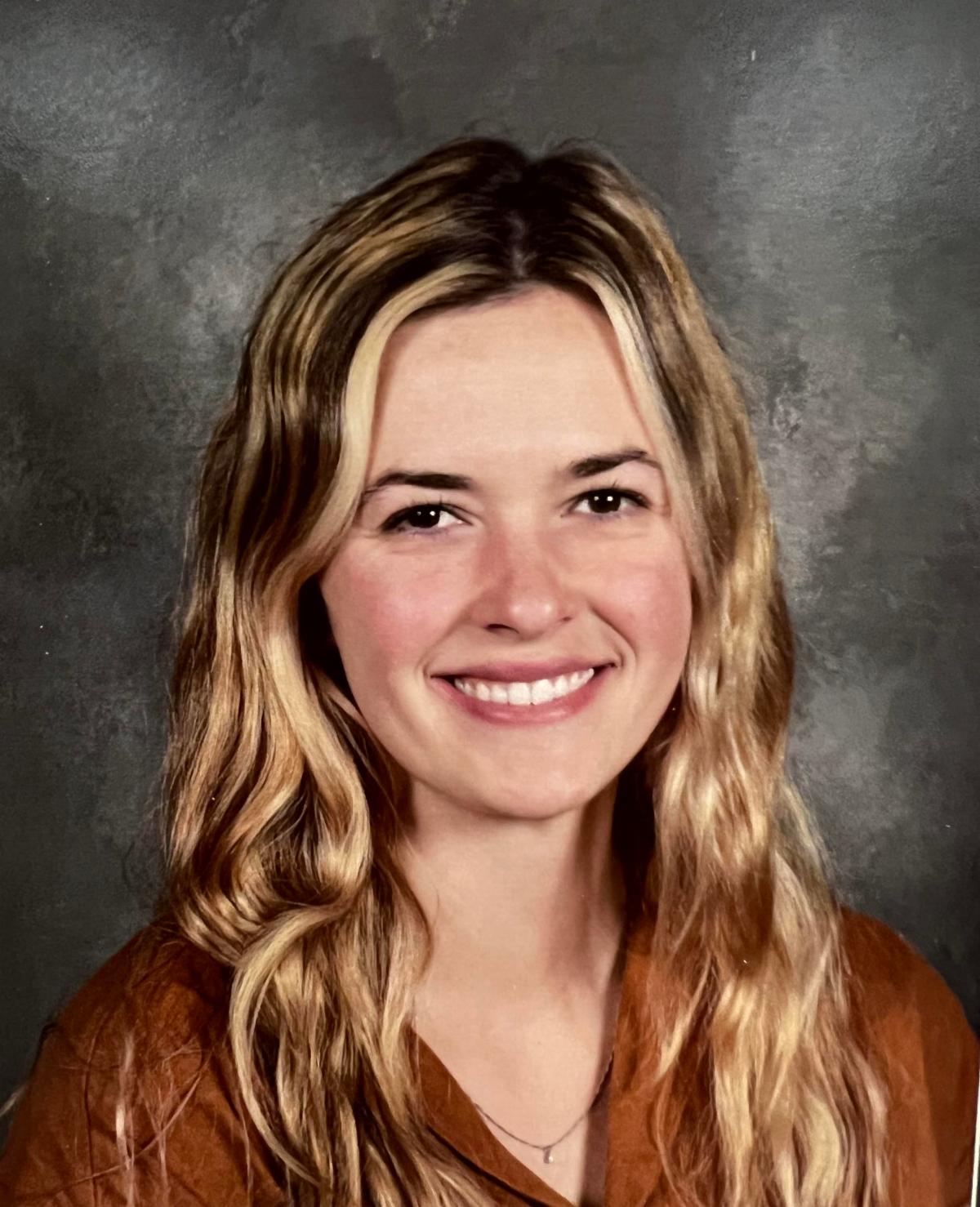
Chelsey Bell - Second Grade General Studies


My name is Mrs. Bell and I am new to California but not to teaching! I love to spend time with my son and husband, going to the beach, and reading on my Kindle!

Danielle Bayer - Second Grade General Studies


Hi, my name is Ms. Bayer ("Ms. B"). I am so excited to be joining Kadima this year! I have been in education for over 10 years. It has been an amazing journey so far! I have a strong passion for working with children and helping them explore the world. When I am not in school, you can usually find me hiking, on the water, or adventuring with my two dogs. I can't wait to meet you and your family! 

Dawn-Marie Furlong - Middle School Language Arts


Literature and writing are my passions! I have written three (as yet unpublished) novels, and I love reading historical fiction. I live in Thousand Oaks with my husband James, and our two cats Clio and Calliope. My hobbies include playing video games, reading, and rooting for the Dodgers.  

Shahaf Klein - Mathematics and Judaic Studies


My name is Shahaf John Klein. I have been in Jewish education for almost 30 years, and I hold a post- graduate degree in teaching. I have a variety of interests, such and reading, music, and sports. I am a father of twins, who are now freshman in college. I have been married for 23 years to a wonderful lady. As a family, we enjoy vacationing together, especially taking cruises. We have two additional kids (furry, four-legged) named Norman and Dovee.


First PTO Meeting of the Year

Monday, August 22, 8:10 am


Join us for our first PTO meeting of the year, to be held after morning drop-off on the Kadima yard. We will be discussing all our upcoming events for the year and look forward to seeing our returning and new parents.

Security Decals


If you have not already done so, please be sure to pick up your car security decal in the main office during the Meet and Greet on Monday, August 21. You must have this year's security decal to enter campus. Please click here to complete the form and bring it to the main office to receive your car decal.

Lulav and Etrog Sets


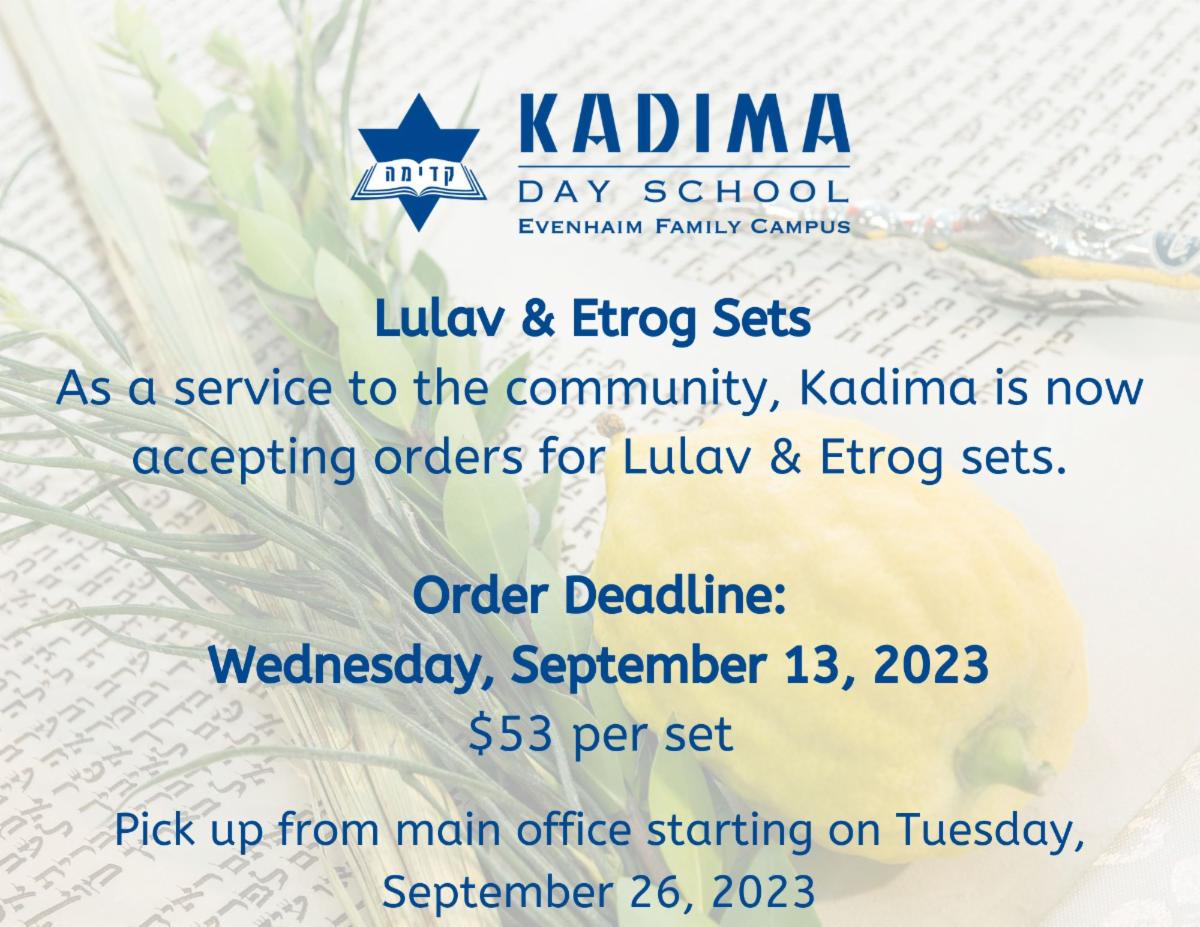
We are now accepting orders for lulav and etrog sets. If you would like to purchase a set, please click here or on the flyer.

The deadline to order is Wednesday, September 13. Late orders will not be accepted. Order pick up will be at the main office starting on Tuesday, September 26.


Class of 2023 Gift


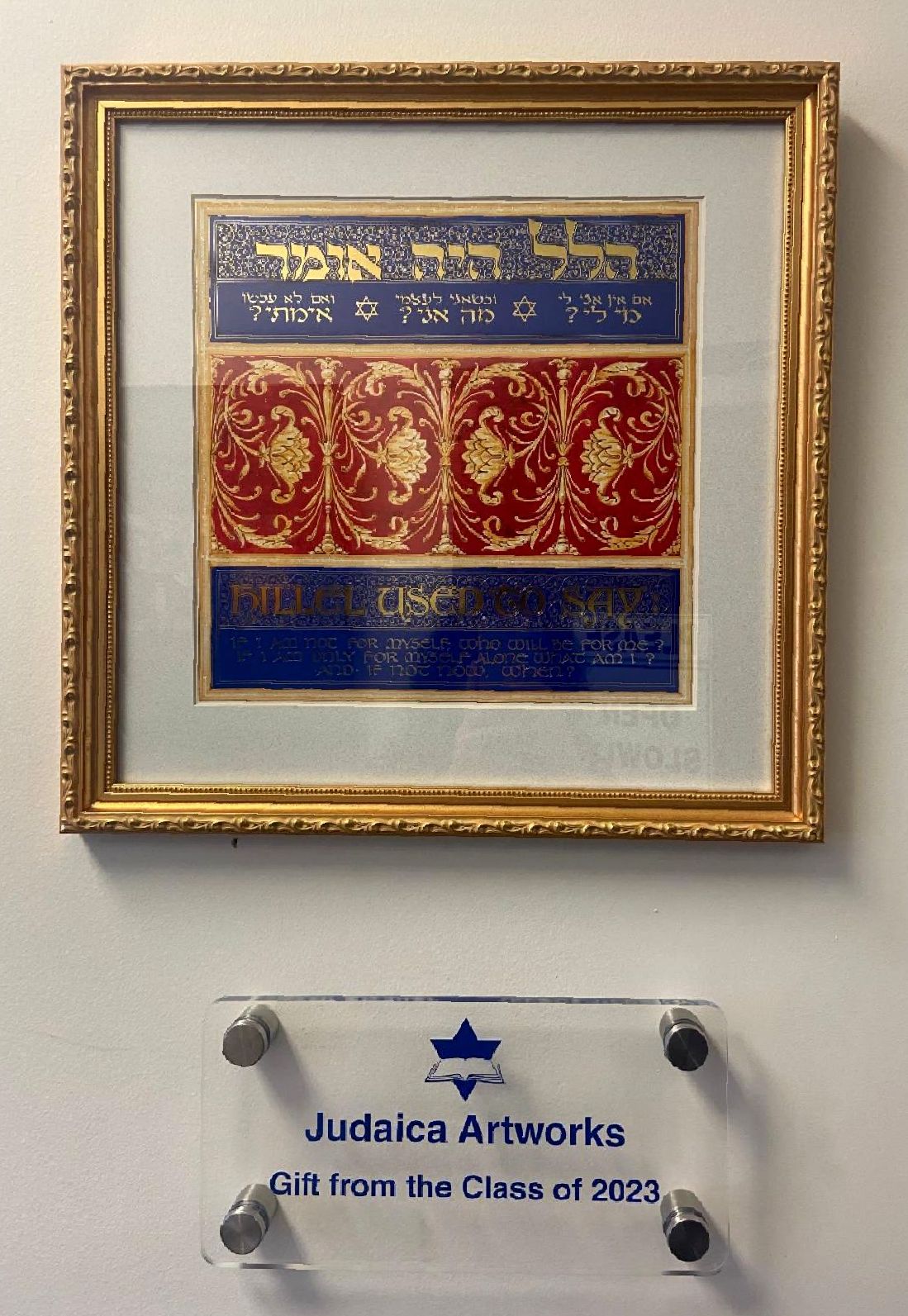
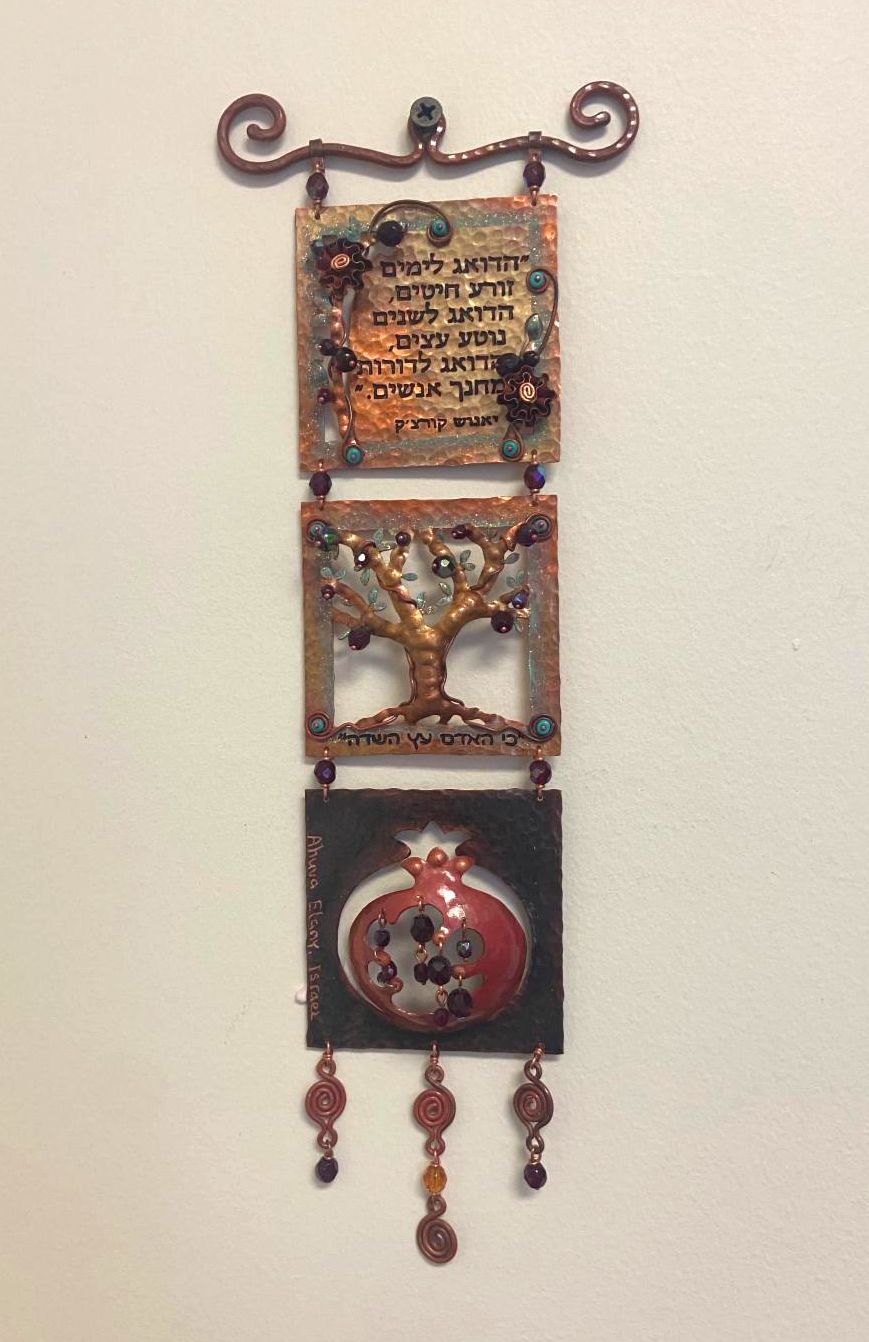
Have you noticed our beautiful new art pieces? These beautiful Judaica works of art are a special gift to Kadima from our Class of 2023 families. You can find these extraordinary pieces in the main office hallway. Thank you, Kadima Class of 2023!


Top 10 Conversation Starters: Parashat Shoftim

By Dr. Steven Lorch


#10 - The first section of Parashat Shoftim is about judges and justice. The first instruction is to B'nei Yisrael to appoint judges who will judge the people justly. The second instruction is to the judges to judge fairly - not to take bribes, not to show favoritism. The third pasuk is ambiguous: "צדק צדק תרדף - Justice, justice shall you pursue (D'varim 16, 20)." Is this addressed to B'nei Yisrael or to the judges? What does it add to the previous two instructions? Explain.


#9 - Judges are not allowed to take bribes. If a judge takes a bribe but then ignores the bribe and judges fairly without favoring the one who paid him, does he violate the prohibition? Why, or why not?


#8 - Judges are not allowed to show favoritism. Is it wrong to show favoritism to a poor or weak person (for example, a widow or an orphan), or just to a rich and powerful person? Explain.


#7 - While describing court procedures, the Torah says: "על פי שנים עדים או שלשה עדים יומת המת - A person shall be put to death based on the testimony of two or three witnesses" (17, 6). Why is it necessary to mention that a conviction can be based on the testimony of three witnesses? If two witnesses' testimony is enough, isn't it obvious that three witnesses' testimony is also enough?


#6 - The Torah instructs: "ובאת אל...השופט אשר יהיה בימים ההם - You shall appear before the judge who is serving in those times" (17, 9). The rabbis ask: why did the Torah have to specify this? Is it possible to appear before a judge who served at a different time and not in your time?


#5 - The Torah continues: "לא תסור מן הדבר אשר יגידו לך ימין ושמאל - Don't deviate to the right or to the left from the verdict they announce to you" (17, 11). The rabbis add: even if they say that what's left is right or what's right is left. If the judges make such an obvious error, why do we have to follow their incorrect ruling?


#4 - The instruction to appoint a king states: "ואמרת אשימה עלי מלך ככל הגויים אשר סביבותי - If you say, 'I will set a king over me as do all the nations around me'" (17, 14). In most cases, the Torah forbids us to follow the practices of neighboring nations. Why is other nations' practices a sufficient reason here to appoint a king?


#3 -  The king is not allowed to do three things: to keep many horses, to have many wives, or to amass lots of gold and silver. Reasons are given for the first two: horses, so that he won't send the people back to Egypt to add to his horses; and wives, so that his heart won't go astray. No reason is given for having too much money. Why is no reason given? What's the reason that's unstated? And why does it go unstated?


#2 - There are four exemptions from military service: having built a new house but not having dedicated it, having planted a vineyard but not having harvested it, having gotten engaged to be married but not getting married, and being afraid. It's not obvious why each of these should be an exemption. Why should they be? Why shouldn't they be?


#1 - In the case of an unsolved murder, the elders of the nearest town need to declare: "ידינו לא שפכו את הדם הזה ועינינו לא ראו - Our hands did not spill this blood and our eyes didn't see" (21, 7). Does anyone seriously suspect the town's elders of having committed the murder with their own hands? If not, why do they make this declaration? What does it mean?

Kadima Day School | Evenhaim Family Campus
7011 Shoup Avenue | West Hills | CA | 91307
818.346.0849
. . . . . . . . . . . . . . . . . . . . . . . . . . . . . . . . . . . . . . .
Stay Connected
Facebook  Twitter  Instagram  
. . . . . . . . . . . . . . . . . . . . . . . . . . . . . . . . . . . . . . .

. . . . . . . . . . . . . . . . . . . . . . . . . . . . . . .

Kadima Day School Student & Parent Handbook 2023-24


Kadima Website


. . . . . . . . . . . . . . . . . . . . . . . . . . . . . . .