We encourage institutions, unions, law firms, and individuals to donate to help support the National Center’s research and programming. | |
|
In this month's newsletter, we encourage you to register for our 51st annual conference, which will take place on March 17-19, 2024 in New York City at the Roosevelt House Public Policy Institute at Hunter College and the CUNY Graduate Center.
The conference agenda is rich with a broad range of sessions and speakers of interest to administrators, faculty, post-doctoral scholars, graduate and undergraduate employees, and staff.
In this newsletter, we welcome two new members to our Board of Advisors: Hunter College's Jessica Alvarez and Tufts University's Ahsan Ali.
In addition, we report on legislation to expand collective bargaining rights in higher education as well outcomes in unionization efforts at the University of Southern California, Wellesley College, Bennington College, California State University, and the California Institute of Technology involving non-tenure track faculty, post-doctoral scholars, graduate assistants, and undergraduate student assistants.
The newsletter also includes updates and information concerning pending representation efforts at New York University, Chatham University, Western Michigan University School of Medicine, the University of Chicago, Dartmouth College, the University of Vermont, Smith College, Worcester Polytechnic Institute, and three museums.
Lastly, the newsletter includes a report on our September regional conference at the University of Illinois-Chicago, links to video recordings from our 2023 annual conference in March, links to articles in the current volume of our Journal of Collective Bargaining in the Academy, announcements about four recently published books that will be the subject of panel discussions at our annual conference, and job postings from Hunter College, the Professional Staff Congress, the Massachusetts Teachers Association, AAUP, and the California Faculty Association.
| |
|
Register Now for the National Center's 51st Annual Conference
in New York City on March 17-19, 2024
Early Bird Special
| |
|
The National Center's 51st annual national conference will take place on March 17-19, 2024 in New York City. The conference will be held at the Roosevelt House Public Policy Institute at Hunter College and at the CUNY Graduate Center.
The theme of the conference will be New Crossroads in Collective Bargaining and Labor Relations in Higher Education and the Professions.
Click here to register.
Below is a list of confirmed panels and speakers. Additional panels will be announced in future newsletters and on our website.
Keynote Presentation
| |
|
Thomas A. Kochan, George Maverick Bunker Professor of Management, Emeritus, MIT Sloan School of Management.
Thomas A. Kochan is the Post-Tenure George Maverick Bunker Professor at the MIT Sloan School of Management and a faculty member in the MIT Institute for Work and Employment Research. Professor Kochan focuses on the need to update America's work and employment policies, institutions, and practices to catch up with a changing workforce and economy. His recent work calls attention to the need for a new social contract at work, one that anticipates and engages current and future technological changes in ways that build a more inclusive economy and broadly shared prosperity. Through empirical research, he demonstrates that fundamental changes in the quality of employee and labor‐management relations are needed to address America's critical problems in industries ranging from healthcare to airlines to manufacturing. His most recent book is Shaping the Future of Work: A Handbook for Action and a New Social Contract (Routledge, 2021). He is a member of the National Academy of Human Resources, the National Academy of Arbitrators, and past president of the International Industrial Relations Association and the Industrial Relations Research Association. Currently he is member of the MIT Task Force on Work of the Future. Professor Kochan holds a BBA in personnel management as well as an MS and a PhD in industrial relations from the University of Wisconsin.
Our keynote speaker will be introduced by: Adrienne Eaton, Dean, Office of the Dean and Distinguished Professor, Labor Studies and Employment Relations (LSER), Rutgers University.
| |
Panel: Higher Education Leadership in Challenging Times: The Year Ahead with Ann Kirschner, Interim President, Hunter College, CUNY, Daniel Greenstein, Chancellor, Pennsylvania State System of Higher Education, Catherine Bond Hill, Managing Director, Ithaka S+R, and former President, Vassar College, and Frederick P. Schaffer, former General Counsel, CUNY, Moderator.
Panel: Supreme Court Affirmative Action Decisions: Impact on DEI in Higher Education Labor Relations and Collective Bargaining with Kapil Longani, SUNY Senior Vice Chancellor for Legal Affairs and General Counsel, Channing Cooper, AFT Legal Department Deputy Director, J. Brian Charles, Senior Reporter, The Chronicle of Higher Education, and Angela Thompson, Member, Administrative Review Board, United States Department of Labor, Moderator.
Panel: Navigating Generative AI in Higher Education: Implications for Collective Bargaining, Pedagogy, and Research with Kyle Arnone, AFT Collective Bargaining Center, Anthony G. Picciano, Professor, Hunter College, School of Education and CUNY Graduate Center, M'Hammed Abdous, Associate Director, Faculty Innovation & Teaching, Academic Affairs, Old Dominion University, and Rob Weill, AFT Director of Policy, Research and Field Services, Panelist and Moderator.
Panel: The First Amendment and the Erosion of Managerial Authority with Martin Malin, Professor Emeritus at Chicago-Kent College of Law, Illinois Institute of Technology, Monica C. Barrett, Bond, Schoeneck & King PLLC, and Rachel Paster, NYSUT, Commentators, and John Wirenius, Chairperson, New York State Public Employment Relations Board, Moderator.
Panel: Collaborating Across the Table: The Value of Labor-Management Cooperation in Reversing Contingency with Carla Katz, NTT Faculty, Bargaining Team Member, Rutgers University, Kim O’Halloran, VP of Academic Planning & Administration, Bargaining Team Member, Rutgers University, Heather Pierce, Adjunct Faculty, Bargaining Team Member, Rutgers University, and Melissa Sortman, Director of Faculty and Academic Staff Affairs, Michigan State University, Moderator.
Panel: Addressing Institutional Betrayal at the Table: Tackling Harassment and Title IX Issues Through Collective Bargaining with Risa Lieberwitz, Professor of Labor and Employment Law in the Cornell University School of Industrial and Labor Relations, and AAUP General Counsel, Karen R. Stubaus, National Center Affiliated Researcher, and former Vice President for Academic Affairs, Rutgers University, Alexandra Matish, Associate Vice Provost for Academic and Faculty Affairs and Senior Director, Academic Human Resources, University of Michigan, Cora Bergantiños-Crespo, UAW 4100 President - Columbia University, and Paula E. Burke, Senior Associate, Huron Consulting Group, Moderator.
Facilitated Session: Bargaining Over Job Security for Contingent Faculty with Benjamin Superfine, Assistant Vice Provost for Faculty Relations, University of Illinois-Chicago and Mia McIver, Lecturer, UCLA; President, CFT Universities Council; former President and Lead Negotiator, UC-AFT Local 1474, Facilitators and Theodore H. Curry, Associate Provost and Associate Vice President for Academic Human Resources Emeritus, Professor Emeritus, School of Human Resources and Labor Relations, Michigan State University, Moderator.
Book Discussion: Contingent Faculty and the Remaking of Higher Education: A Labor History with Gwendolyn Alker, Associate Arts Professor, Department of Drama, New York University, Joe T. Berry, City College of San Francisco and University of Illinois (retired), COCAL, HELU, Anne McLeer, Director of Higher Education and Strategic Planning, SEIU Local 500, Gary Rhoades, Professor and Director, Center for the Study of Higher Education, University of Arizona, and Eric Fure-Slocum, Associate Professor of History (Emeritus), co-editor, Contingent Faculty and the Remaking of Higher Education, Moderator.
Panel: Best Practices in Collective Negotiations with Pamela Silverblatt, Senior Counsel, Bond, Schoeneck & King PLLC, Joseph P. McConnell, Partner, Morgan, Brown & Joy, LLP, Frederick Floss, Professor, Economics and Finance, and Co-Director, Center for Economic Education, SUNY Buffalo State University, Elizabeth Vignaux, Labor Relations Specialist, NYSUT, and Scott M. Sommer, Commissioner, Federal Mediation and Conciliation Service, Moderator.
Panel: Best Practices in Arbitration with Homer LaRue, Labor Arbitrator, Mediator, and Professor, Howard University Law School, Marlene Gold, Labor Arbitrator, Mark Gaston Pearce, Labor Arbitrator, Visiting Professor and Executive Director, Workers’ Rights Institute, Georgetown University Law School, and Katie Rosen, Labor Arbitrator. Co-sponsored by the National Academy of Arbitrators.
Facilitated Session: Practices to Cultivate Calm and Resilience for Labor & Management Professionals with Monique Schubert, Adjunct Lecturer, Bronx Community College and Lili Palacios-Baldwin, Deputy General Counsel for Labor, Employment and Dispute Resolution, Tufts University.
Panel: Annual Legal Update (CLE) with Henry Morris, Jr., ArentFox Schiff, LLP, Amy L. Rosenberger, Willig, Williams & Davidson, Aaron Nisenson, Senior Legal Counsel, AAUP, Brian Selchick, Cullen and Dykman LLP, and Jessica Alvarez, Acting General Counsel, Hunter College, CUNY, Moderator.
Panel: Enrollment and Degree Attainment in the United States: Patterns in States with and without Collective Bargaining with Nathaniel J. Bray, Professor, Program Coordinator, Higher Education Administration, Associate Director, Education Policy Center, University of Alabama, Senior Fellow, College Promise, Noel Keeney, Research Associate, Education Policy Center, University of Alabama, F. King Alexander, Professor, Florida Gulf Coast University, Senior Faculty Fellow, Education Policy Center, University of Alabama, Faculty Affiliate, Cornell University, and Higher Education Research Institute Senior Fellow, College Promise, and Stephen G. Katsinas, Professor, Higher Education Administration & Political Science, Director, Education Policy Center, University of Alabama, Senior Fellow, College Promise, Moderator.
Panel: Graduate Student Representation Election Outcomes, 2020-2023: Navigating a New Era of Graduate Student Unionization with Jacob Apkarian, Associate Professor, Sociology, York College, CUNY, Gary Rhoades, Professor and Director, Center for the Study of Higher Education, University of Arizona, Commentator, Nicholas DiGiovanni, Partner, Morgan, Brown & Joy, LLP, Commentator, and Kathy Collins, Director, Huron Consulting Group, Moderator.
Facilitated Session: A New Wave of Undergraduate Student Unionization in Higher Education with Cory McCartan, founder, Union of Grinnell Student Dining Workers; former bargaining committee member, HGSU-UAW L. 5118 and Joseph Jelincic, Assistant Vice Chancellor in Collective Bargaining at the California State University, Facilitators, and Dylan Belknap-Lerner, Labor Advocate, AFSCME, Moderator.
Book Discussion: The Costs of Completion: Student Success in Community College with Robin G. Isserles, Author, The Costs of Completion: Student Success in Community College, Professor of Sociology, Borough of Manhattan Community College, CUNY, and Grievance Counselor for Full-time Faculty, PSC BMCC Chapter, Christine Mangino, President, Queensborough Community College, CUNY, James McKeever, Sociology, Los Angeles Pierce College, CA, AFT 1521 Faculty Guild President, Brian Kapitulik, Sociology, Greenfield Community College, MA, Department Chair, Social Sciences; Former Acting Dean of Faculty, Colena Sesanker, Associate Professor, Philosophy, Gateway Community College, CT, Member of Board of Regents of CSCU, and Jennifer Shanoski, Chemistry, Merritt College, Oakland California, Moderator.
Panel: Academic Union Responses to Vaccine Mandates at Higher Education Institutions in Canada and the United States with Alison Braley-Rattai, Associate Professor, Department of Labour Studies, Brock University, Larry Savage, Professor, Department of Labour Studies, Brock University, Jean Grassman, Associate Professor, Environmental, Occupational, and Geospatial Health Sciences, CUNY School of Public Health, Kara Laskowski, Professor and Chair, Communication Studies, Shippensburg University and State APSCUF Meet and Discuss Chair, and Ellie Barbarash, CPEA, AFSCME Senior Health and Safety Advocate, Moderator.
Panel: Trustees’ Perspectives on Collective Bargaining with Susan Solomon, City College of San Francisco Trustee, Mark Gaffney, Wayne State University Board of Governors, Paul Brown, University of Michigan Board of Regents, and Kenneth M. Mash, President, APSCUF, Moderator.
Panel: Bargaining Issues For Classified, Clerical, and Other Campus Staff with Sarah Wofford, AFT Vice President, Oregon School Employees Association, Christine O'Connell, President, Union of Rutgers Administrators AFT Local 1766, Rainah Chambliss, Co-President of the Faculty and Staff Federation of Community College of Philadelphia, and Andre’ Poplar, Vice Chancellor – Human Resources and Diversity, Equity, Inclusion & Justice, Oakland Community College – District, Moderator.
Panel: Collective Bargaining Concerning Library Personnel in Higher Education with Meredith Kahn, LEO AFT-MI 6244, Campus Chair, Galleries, Librarians, Archivists and Museums (GLAM) and Librarian for Gender & Sexuality Studies, University of Michigan, Ann Arbor, Kelly McElroy, United Academics of Oregon State, AAUP/AFT Local 9609, Adriene Lim, Dean of Libraries; Professor of the Practice, College of Information Studies, Dean's Office, University of Maryland - College Park, Consuella Askew, Vice President for University Libraries and University Librarian, Rutgers University Libraries, and Ahsan Ali, Director of Labor Relations, Tufts University, Moderator.
Panel: Resident and Fellow Unionization: Lessons from State Medical Schools with Banks Evans, Assistant Vice President, Labor Relations, University of Washington, Cindy Hamra, JD, MA, Associate Dean, Graduate Medical Education, University of Washington School of Medicine, Wade Baughman, Associate Director of Labor Relations, University of Michigan, Commentator, David Dashefsky, Director of Strategic Campaigns, CIR-SEIU Healthcare, Commentator, Michael Kelly, Rutgers Robert Wood Johnson Medical School, Associate Dean for Graduate Medical Education, Commentator, and Sara Slinn, Associate Professor, Osgoode Hall Law School, York University, Moderator.
Panel: Collective Bargaining and Museums with Amanda Tobin Ripley, Graduate Teaching Associate, Ohio State, Maida Rosenstein, Director of Organizing, Technical, Office and Professional Union, Local 2110 UAW, Trish Jeffers, Deputy Director, Human Resources, Guggenheim Museum, Halcyone Schiller, President, Local 397, AFSCME DC47, and Michael Loconto, Labor Arbitrator, Loconto ADR, Moderator.
Panel: Labor Justice and Labor Studies in Higher Education with Joy Blanchard, Associate Professor, Lutrill and Pearl Payne School of Education, Louisiana State University, Jordan Harper, Assistant Professor of Higher Education and Student Affairs, Morgan State University, Ananya Malik, doctoral student, Louise McBee Institute of Higher Education, University of Georgia, Letitia F. Silas, Labor and Employment Attorney and Consultant, Commentator, Calvin John Smiley, Associate Professor, Sociology Hunter College, Commentator, and Adrienne Eaton, Dean, Office of the Dean and Distinguished Professor, Labor Studies and Employment Relations (LSER), Rutgers University, Moderator.
Book Discussion: The Right to Learn: Resisting the Right-Wing Attack on Academic Freedom with Jennifer Ruth, Professor of Film, College of the Arts, Portland State University, Ellen Schrecker, Professor of History, retired, Yeshiva University, Helena Worthen, labor educator, retired, University of Illinois, School of Labor and Employment Relations, and Charles Toombs, Professor of Africana Studies, San Diego State University; President, California Faculty Association, Moderator.
Book Discussion: Unionizing the Ivory Tower: Cornell Workers' Fifteen-Year Fight for Justice and a Living Wage with Al Davidoff, Organizational and Leadership Development Director, Solidarity Center, author, Unionizing the Ivory Tower: Cornell Workers' Fifteen-Year Fight for Justice and a Living Wage, Carlos Aramayo, President, UNITE HERE Local 26, Commentator, Carrie Barbash, President, Harvard Union of Clerical and Technical Workers, Commentator, and Scott Phillipson, Chair of Higher Ed Council, SEIU, Moderator.
| |
51st Annual National Conference Sponsors | |
Join the Campaign for an Interactive Collective Bargaining Website | |
|
Join the National Center's campaign to fund a permanent interactive website that will provide access to the National Center's database of information and contracts concerning all academic collective bargaining relationships listed in our upcoming 2024 Directory of Bargaining Agents and Contracts in Institutions of Higher Education.
The funds from the campaign would help build the website and allow us to employ graduate students to maintain the website and regularly update our database with information such as successor agreements and new collective bargaining relationships.
The features of the interactive website would include the ability of negotiators, representatives, and scholars to:
- search our repository of close to 900 current contracts individually or in a group utilizing a word search function.
- search and display variables in our database by institution, bargaining agent, unit composition, and state and would allow the download of data in different formats so that users would be able to analyze the data using their favorite program.
Lastly, the website would include a data entry portal for users to update the data by adding or correcting any data points.
An interactive website will be of immense value to all institutions of higher education, unions representing faculty, post-doctoral scholars, and graduate assistants, law firms representing institutions and unions, as well as scholars of higher education and labor.
Making the interactive website a reality requires financial support. The creation of an operational website may cost as much as $50,000 with additional annual costs to employ graduate students to maintain and update the website.
We, therefore, encourage higher education institutions, unions, law firms, and others to contribute toward the creation and maintenance of the interactive website, which we hope to put online by the end of 2024.
The following are suggested donation amounts to fund the interactive website:
$10,000
$ 5,000
$ 2,500
$ 1,000
$ 500
Other amounts: $250, $100, $50, or $25.Donate Now
| |
The National Center Welcomes New Members to our Board of Advisors: Jessica Alvarez and Ahsan Ali | |
 |  | Jessica Alvarez is Interim General Counsel at Hunter College. As the college’s in-house legal counsel, Ms. Alvarez provides advice and counsel to the president and administrators on matters including governance, labor relations, litigation, students’ rights and responsibilities, and faculty tenure and promotion. As legal-affairs designee, Ms. Alvarez manages the college’s litigation in coordination with the offices of the New York State Attorney General and the University’s Senior Vice Chancellor for Legal Affairs and General Counsel. As labor designee, she manages instructional-staff labor relations with the Professional Staff Congress and serves as the liaison with the office of the Vice Chancellor for Labor Relations. Alvarez also serves as the ethics officer and public-records access officer. Before joining Hunter College, Ms. Alvarez worked as a litigation associate for Davis Polk & Wardwell LLP and served as a law clerk for The Honorable Edgardo Ramos of the Southern District of New York. She holds degrees from Dartmouth College and New York University School of Law.
| |
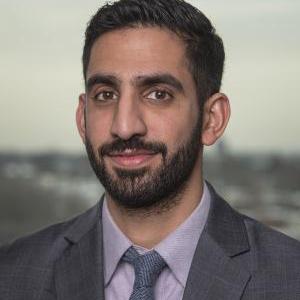
Ahsan Ali is the Director of Labor Relations at Tufts University. Previously, he held various positions at MIT for a decade, culminating in his role as the Associate Director of Labor Relations. During his tenure at MIT, significant developments occurred in labor organization, including the establishment of a libraries union and a graduate student union of around 3500 student employees. Additionally, there was a de-certification of an existing international local union and the formation of a new independent union, along with the incorporation of existing positions into existing labor unions. Before his time at Tufts and MIT, Mr. Ali served as Labor Counsel for the City of Boston. In this capacity, he worked with a team of attorneys who were responsible for negotiating and overseeing collective bargaining agreements with the city's 21 unions, which represent 7,500 employees.
| |
Legislation to Expand Higher Education Collective Bargaining | |
|
Effective February 13, 2024, graduate student research assistants or someone holding an equivalent position at a Michigan public institution of higher education is a public employee for purposes of collective bargaining under legislation signed into law by Governor Whitmer.
The following is a description of pending legislation that would also expand collective bargaining rights in higher education:
In Maryland, a bill was introduced on February 9, 2024 to extend collective bargaining rights to university faculty, part–time faculty, post doctoral associates, and graduate assistants and defines the appropriate bargaining units by title.
In Virginia, a bill was introduced on February 14, 2024 to extend collective bargaining to higher education with each public institution of higher education having their own bargaining units distinct from units of other state employees.
Legislation is pending in Hawaii to create a distinct bargaining unit for graduate assistants working for the university of Hawai'i and community college system. The bill would effectuate the January 4, 2024 decision by the Hawai'i Labor Relations Board granting a petition by Academic Labor United for a declaratory ruling finding that graduate assistants at the University of Hawai'i are public employees under that state's collective bargaining law.
In Congress, Senators Murphy, Sanders and Warren have introduced the College Athlete Right to Organize Act to amend the National Labor Relations Act to grant collective bargaining rights to college athletes at both private and public institutions of higher education. In New York, there is pending legislation seeking to amend the State Employment Relations Act to grant jurisdiction to the state Public Employment Relations Board to determine representation issues involving college athletes at private and public institutions of higher education.
| |
USC: Adjunct Faculty Vote for UAW Representation | |
|
University of Southern California, NLRB Case No 31-RC-330947
On February 23, 2023, the NLRB tallied the ballots in a representation election concerning a representation petition filed by Adjunct Faculty Alliance-UAW seeking to represent a bargaining unit of approximately 290 non-tenure track faculty at the University of California’s School of Cinematic Arts. The tally demonstrated that the non-tenure track faculty voted 206-13 in favor of representation by the Adjunct Faculty Alliance-UAW.
The following is the description of the at-issue non-tenure track faculty bargaining unit at the University of Southern California:
Included: All regular part-time non-tenure track faculty who are employed by the University of Southern California and who teach at least one credit-earning class, section, lesson, or lab within the academic unit known as the USC School of Cinematic Arts either remotely or in-person at the Employer’s instructional facilities at the University Park Campus.
Excluded: All other employees, all tenure or tenure-track faculty; all visiting faculty; all full-time faculty; all faculty teaching at an academic unit other than the USC School of Cinematic Arts; all emeritus faculty; all non-faculty employees; and all managers, supervisors, and guards as defined in the Act.
| |
Wellesley Coll.: NTT Faculty and Postdocs Vote for UAW Representation | |
|
Wellesley College, NLRB Case No. 01-RC-330948
On January 30, 2024, the NLRB tallied the ballots in a representation election concerning a petition filed by the Wellesley Organized Academic Workers-UAW seeking to represent a bargaining unit of approximately 127 non-tenure track faculty and post-doctoral scholars at Wellesley College. The tally demonstrated that the faculty and post-doctoral scholars voted 90-8 in favor of collective representation by the Wellesley Organized Academic Workers-UAW.
The following is the description of the at-issue bargaining unit at Wellesley College:
Included: All full-time and regular part-time employees employed by Wellesley College at any of the Employer's facilities, regardless of funding source, in the following positions: faculty on term appointments, defined as visiting lecturers, lecturers, senior lecturers, adjunct assistant professors, distinguished visiting lecturers, visiting assistant professors, distinguished visiting associate professors, distinguished visiting professors, distinguished senior lecturers; instructors in science laboratory, and senior instructors in science laboratory; and fellows funded by the Andrew Mellon post-doctoral fellowship endowment (EN34823).
Excluded: Tenured and tenure-track faculty; faculty in physical education recreation & athletics (PERA), director of the writing program; director of the botanical garden; director of the child study center; director of theatre and theatre studies; curator of special collections; associate provost; co-chair of computer science; director of New England arts & architecture program; director of book studies program; co-chair of music; research scientists and administrators within the Wellesley Centers for Women; all other employees, including but not limited to undergraduate student employees, post-doctoral workers/fellows (other than Andrew Mellon Post-Doctoral Fellows Endowment (EN34823)); and guards, and supervisors as defined in the Act.
| |
Bennington College: AFT Recognized to Represent Faculty and Staff | |
According to media reports, Bennington College recently voluntarily recognized Bennington College United-AFT Vermont to represent bargaining units of non-tenure track faculty and staff following a card check conducted by the American Arbitration Association. Details relating to these new bargainning units are unavailable at this time. | |
Cal. State Univ.: Undergraduates Vote for CSUEU-SEIU Representation | |
Trustees of the California State University, CPERB Case No. LA-PC-18-H
On February 23, 2024, a tally of ballots took place in an electronic representation election with respect to a petition filed by California State University Employees Union, SEIU Local 2579 (CSUEU) seeking to represent close to 20,000 undergraduate student assistants working for California State University. The electronic election was conducted by the American Arbitration Association on behalf of the California Public Employment Relations Board (CPERB).
According to the CPERB tally, the CSU student assistants voted 7050-202 in favor of CSUEU representation. The voter particpation rate was 36.38% among the 20,007 eligible voters.
Once CSUEU is certified by CPERB, it will represent the largest undergraduate student union in the country.
| |
NYU: Contract Faculty Election Taking Place on February 27 and 28 | |
|
As we reported last month, on January 3, 2024, New York University (NYU) and Contract Faculty United-UAW (CFU-UAW) entered into a neutrality and non-NLRB election agreement that could lead to the university voluntarily recognizing CFU-UAW as the exclusive representative for a unit of approximately 940 non-tenure track contract faculty.
The election concerning the non-tenure track contract faculty is taking place on Febraruary 27 and 28. The results of that election will be reported on in our March newsetter.
| |
Chatham University: Petition Filed for FT-RPT Faculty Unit | |
|
Chatham University, NLRB Case No: 06-RM-336076
Following a demand for voluntary recognition made by Chatham Faculty United-AFT, Chatham University filed a representation petition on February 16, 2024 with the NLRB seeking an election concerning a bargaining unit of 133 full-time and regular part-time faculty at its institution.
The following a description of the at-issue bargaining unit proposed in the Chatham University petition:
Included: All full time and regular part time Chatham University faculty members.
Excluded: Supervisors, non-teaching administrators, clerical employees, adjunct faculty members, and maintenance employees.
| |
Cal Tech: UAW Certified to Represent Postdocs and Graduate Assistants | |
|
California Institute of Technology, NLRB Case No. 21-RC-331055
On February 15, 2024, Caltech Grad Researchers and Postdocs-United-UAW was certified by the National Labor Relations Board to be the exclusive representative of separate bargaining units of 1439 graduate assistants and 558 post-doctoral scholars at the California Institute of Technology.
The certifications followed February 7, 2024 tallies of ballots, which demonstrated that the graduate assistants had voted 799-246 in favor of representation by Caltech Grad Researchers and Postdocs-United-UAW and the postdoctoral scholars had voted 240-50 in favor of representation.
The following are the descriptions of the newly certified collective bargaining units at California Institute of Technology:
Graduate Assistant Unit:
Included: All graduate students enrolled at the California Institute of Technology (“Caltech”) and appointed in teaching-related positions, including Graduate Teaching Assistants, and all graduate students enrolled at Caltech and appointed in research-related positions, including Graduate Research Assistants (regardless of funding sources and those compensated through fellowships and/or training grants).
Excluded: All other employees, postdoctoral scholars, undergraduate students, visiting students, all other students, office clerical employees, managerial employees, professional employees, guards, and supervisors as defined in the Act.
Post-doctoral Scholars Unit:
Included: All postdoctoral scholars employed by the California Institute of Technology
(“Caltech”) in teaching-related jobs as Postdoctoral Teaching Fellows, and all
postdoctoral scholars employed by Caltech in research-related jobs, including as
Postdoctoral Scholar Research Associates, and Postdoctoral Scholar Fellowship Trainees subject to the limitations in this Agreement (regardless of funding sources and those compensated through fellowships and/or training grants).
Excluded: All other employees, graduate students, all other students, postdoctoral
scholars employed solely by the Jet Propulsion Laboratory who do not have a Caltech
appointment, visiting postdoctoral scholars, office clerical employees, managerial
employees, professional employees, guards, and supervisors as defined in the Act.
| |
Western Michigan Univ. School of Medicine: Faculty Election Scheduled | |
|
Western Michigan University Homer Stryker M.D. School of Medicine,
NLRB Case No. 07-RC-335379
On February 6, 2024, Resident and Fellow Alliance, AFT Michigan, AFT AFL- CIO filed a petition with the NLRB seeking to represent a bargaining unit of instructors working for Western Michigan University Homer Stryker M.D. School of Medicine, located in Kalamazoo.
On February 22, 2024, the NLRB issued a notice scheduling a mail ballot election, with the ballots to be tallied on March 21, 2024.
The following is the stipulated unit description:
Included: All full-time and regular part-time Resident Instructors, Chief Resident
Instructors and Fellow Instructors employed in clinical roles by the Employer.
Excluded: All Assistant Professors, Associate Professors, Professors, managers
and guards and supervisors as defined by the National Labor Relations Act, and all other employees.
| |
Dartmouth College: Basketball Team Representation Election Scheduled | |
|
Trustees of Dartmouth College, NLRB Case No. 01-RC-325633
On February 5. 2024, NLRB Region Director Laura A. Sacks issued a Decision and Direction of Election concerning a representation petition filed by SEIU Local 560 seeking to represent a bargaining unit of approximately 15 Dartmouth College men's varsity basketball players.
In her decision, the Region Director concluded that the the basketball players met the definition of an employee under the National Labor Relations Act because they performed work that benefited the college, the college exercises significant control over the players' work, and the work is performed in exchange for compensation. Although the Dartmouth athletes do not receive scholarships, the Region Director found that they were compensated with valuable equipment and apparel, tickets to games, lodging, meals along with the benefits of the college's peak performance program, which includes sports and counseling psychology, nutrition, strength and conditioning, sports medicine, and integrative health and wellness.
A representation election among the Dartmouth College men's varsity basketball players.is scheduled to take place on March 5, 2024.
The following is a description of the at-issue bargaining unit at Dartmouth College:
Included: All basketball players on the men’s varsity basketball team employed at the
Employer’s Hanover, New Hampshire location.
Excluded: All managers, guards, and professional employees and supervisors as defined in the Act.
If the vote is in favor of representation by SEIU Local 560, it is likely that Dartmouth will refuse to negotiate setting the stage for a legal challenge to the Region Director's decision.
| |
Univ. of Chicago: UE Files to Represent Law School Graduate Assistants | |
|
University of Chicago. NLRB Case No. 13-RC-335852
On February 15, 2024, Graduate Students United (GSU)–UE filed a petition seeking to represent a unit of 34 graduate assistants who work at the University of Chicago School of Law. Last March, UE was certified to represent a bargaining unit of 3,200 graduate assistants employed at the university.
The following is the proposed unit of graduate assistants working at the University of Chicago School of Law:
Included: All graduate students enrolled in University of Chicago degree programs who are employed to provide instructional or research services in the Law School.
Excluded: Undergraduate students, graduate students who are not employed to provide instructional or research services, Workshop Coordinators, Peer Mentors, office clerical employees, managers, guards and supervisors as defined in the Act.
| |
Smith College: OPEIU to Represent Undergraduate Dining Workers | |
The Trustees of the Smith College, NLRB Case No. 01-RC-330314
On March 9, 2024, OPEIU Local 153 was certified by the NLRB to represent a bargaining unit of 152 undergraduate dining workers at Smith College. The certification followed a tally of ballots demonstrating that the student workers voted 66-1 in favor of representation by OPEIU Local 153. Notably, UFCW Local 1459 was certified in December, 2023 to represent a separate unit of Smith College undergraduate resident advisors.
The following is a description of the new undergraduate student dining worker unit at Smith College represented by OPEIU Local 153.
Included: All undergraduate students enrolled at Smith College who are employed in Dining Services.
Excluded: All other employees, including non-student employees, managerial employees, and guards, professional employees and supervisors as defined in the Act.
| |
Worcester Polytechnic Institute: UAW Files to Represent RAs | |
|
Worcester Polytechnic Institute, NLRB Case No. 01-RC-335594
On February 12, 2024, WPI Resident Advisor Union-UAW (WPI-RAU) filed a petition seeking to represent 72 resident advisors and graduate housing advisors working for the Worcester Polytechnic Institute (WPI). In 2022, WPI Graduate Workers Union-UAW was certified to represent a unit of 535 graduate assistants at WPI.
The following is the description of the proposed unit set forth in the WPI Resident Advisor Union-UAW representation petition:
Included: All resident advisors and graduate housing advisors employed at WPI.
Excluded: All other employees, guards and supervisors as defined in the Act.
| |
University of Vermont: VLRB Rules Graduate Assistants Can Unionize | |
|
The University of Vermont, VLRB Docket No. 23-43
On February 20, 2024, the Vermont Labor Relations Board (VLRB) issued a decision regarding a representation petition filed by United Auto Workers, Local 2322 seeking to represent a bargaining unit of approximately 627 graduate assistants, advisors, and pre-doctoral trainees.
In its decision, the VLRB rejected, with one dissent, the university's argument that graduate assistants are not employees under Vermont's State Employees Labor Relations Act because they are not specifically included in the statute's definition of "State employee."
In support of the agency's ruling that graduate assistants were employees under Vermont's collective bargaining law, the majority noted that:
"The graduate assistants provide work or effort to the University in exchange for a stipend or payment. The graduate assistants teach undergraduate students, contribute to the success of those students, grade papers and exams, perform administrative tasks, provide orientations and other onboarding tasks. In exchange for their efforts, the University compensates or pays them a stipend. The University prohibits their ability to earn additional compensation from the University while they work as graduate assistants. The assistants are compensated by and receive a paycheck from the University for their assistantships."
The decision also rejected the university's alternative arguments that the agency should decline jurisdiction because it would be inconsistent with the intent and purpose of the state collective bargaining law, and that the proposed unit was inappropriate.
The VLRB found that the proposed unit to be appropriate and ordered the scheduling of a representation election involving the following bargaining unit:
All full-time and regular part-time graduate teaching assistants, graduate research
assistants, graduate assistants, and pre-doctoral trainees, pre-doctoral trainees/fellows,
and all other graduate students in other titles employed in an academic position,
| |
Recent Representation Cases Involving Museum Workers | |
|
Unionization among museum workers continues to expand. Below are recent representation efforts at three museums in Colorado and California.
1. The Denver Art Museum, NLRB Case No. 27-RC-333730
An election has been scheduled on March 6 and 7, 2024 concerning a representation petition filed by AFSCME State Council No. 18 to represent a bargaining unit of approximately 238 employees at the Denver Art Museum.
2. Oakland Museum of California, NLRB Case No. 32-RC-336210
On February 21, 2024, the Oakland Museum of California Workers United, AFSCME District Council 57, filed a petition to represent a bargaining unit of 92 employees at the Oakland Museum of California.
The following is the proposed bargaining unit set forth in the petition:
Included: All full-time and regular part-time employees employed by the Employer.
Excluded: Guards and supervisors as defined by the Act.
3. SMUD Museum of Science and Curiosity, NLRB Case No. 20-RC-33642
On February 22, 2024, Communications Workers of America Local 9421 filed a petition with the NLRB to represent a bargaining unit of 47 employees at the SMUD Museum of Science and Curiosity in Sacramento, California.
The following is the proposed bargaining unit set forth in the petition:
Included: Guest Service Reps, Coordinators, Schedulers & All Other Non-Managers
Excluded: Directors, security, guards, managers, confidential employees and supervisors as defined by the Act.
| |
Heller School Program on Negotiating Labor Agreements | |
|
Our friends at the Heller School for Social Policy and Management at Brandeis University have initiated a new workshop series on Negotiating Labor Agreements: New Issues, New Approaches, New Negotiators.
The following is information about the Heller School negotiations workshop:
We have a bold vision – shaping collective bargaining so that it best meets the needs of 21st Century workplaces.
At this two-day virtual workshop, you will build capabilities in…
- Forging constructive labor-management relations.
- Negotiating first contracts that are a foundation for success.
- Negotiating continuing contracts that combine good jobs with high-performance.
- Advancing equity, trust, and voice through collective bargaining.
- Aligning long-standing collective bargaining traditions with the expectations of the next-generation workforce.
- Addressing the benefits and risks of new technology.
- Taking into account the interests of diverse stakeholders – within labor and management, as well as others (suppliers, customers, clients, communities).
- Learning how to be hard on the issues, not each other.
Labor and management participants will learn from each other through interactive exercises.
The instruction team features world-leading experts in negotiation and conflict resolution, labor-management partnerships, high-performance work systems, equity and fair treatment at work, labor and employment law. The program features interactive exercises, practical worksheets, and keynote talks (each with dialogue sessions):
- “Collective Bargaining in the 21st Century” by Thomas Kochan, MIT
- “Leading a Bargaining Team” by Dennis Dabney, Kaiser Permanente (retired) and Kris Rondeau, AFSCME
- “The Economics of Collective Bargaining” by Lisa Lynch, Brandeis University
- “New Frontiers in Labor Law” by Wilma Liebman, NLRB (retired)
- “Facilitation, Mediation, Conciliation, and Arbitration” by Javier Ramirez, FMCS
- “Bargaining over new technology in the workplace” by Søren Viemose, Konsensus, Denmark
- “Collective Bargaining as an Engine of Innovation” by Joel Cutcher-Gershenfeld, Brandeis University
Registration information for upcoming sessions is available here:
| |
September 2013 Regional Higher Education Collective Bargaining Workshop at the University of Illinois-Chicago | |
|
On September 14 and 15, 2013, the National Center held a regional higher education collective bargaining workshop at the University of Illinois-Chicago. The regional conference was co-sponsored by the University of Illinois System, and the University of Illinois School of Labor & Employment Relations’ Labor Education Program.
The sold-out workshop included over 100 attendees and speakers from Illinois, Michigan, Ohio, Minnesota, New York, New Jersey, Oregon, and California.
This was the third regional workshop organized by the National Center since 2013, with the last two being held in California. It is part our effort to revive the tradition of holding regional programming similar to the events the National Center sponsored in earlier decades.
| |
The workshop program at the University of Illinois-Chicago included facilitated sessions on specific collective bargaining issues as well as traditional panel discussions on collective bargaining, community colleges, academic freedom and free speech rights on campus, affirmative action and discrimination, best practices in arbitration, and legal obligations under public sector collective bargaining laws and the National Labor Relations Act. The conference keynote speaker was Sameer Gadkaree, President, The Institute of College Access and Success.
| |
|
Best Practices in Collective Bargaining Panel with (l-r) Diana Valera, President CFAC/IFT, Columbia College, Mark Bennettt, Laner Muchin, Marcia Mackey, Michigan Education Association (moderator), Melissa Sortman, Assistant Provost and Director, Faculty and Academic Staff Affairs, Michigan State University, and Elizabeth Towell, SEIU Local 73 | |
Best Practices in Collective Bargaining Panel with (l-r) Stephen Yokich, Dowd, Bloch, Bennett, Cervone, Auerbach & Yokich, LLP, Robb Craddock, Labor and Employee Relations Executive Director, University of Illinois, Urbana-Champaign, Mike Newman, Deputy Director, AFSCME Council 31, Richard W. Fanning, Jr., Clark Hill, PLC, and Terry Curry, former Associate Provost and Associate Vice President, Michigan State University (moderator) | |
Collective Bargaining, Discrimination, Affirmative Action, & Title IX Panel with (l-r) Ricky Baldwin, Assistant Director, State Division, SEIU Local 73, Risa Lieberwitz, Professor of Labor and Employment Law, Cornell ILR and AAUP General Counsel, Augustus Wood, Assistant Professor, School of Labor & Employment Relations, University of Illinois, Urbana-Champaign, Julie Miceli, Husch Blackwell, and Karen Stubaus, Vice President for Academic Affairs, Rutgers University and National Center Affiliated Researcher (moderator) | |
Legal Obligations under Public Sector Statutes and NLRA Panel with (l-r) Richard W. Fanning, Jr., Clark Hill, PLC, Ellen Strizak, General Counsel, Illinois Educational Labor Relations Board, Angie Cowan Hamada, National Labor Relations Board Region 13 Director, and Alice Johnson, General Counsel Cook College Teachers Union (moderator) | |
|
Community Colleges: Distinct Bargaining Issues and Challenges Panel with (l-r) Robert Boonin, Dykema, PLLC, Tony Johnston, Cook County Teachers Union Local 1600 President,
Andre' L. Poplar, Vice Chancellor for Human Resources and Diversity, Equity, & Inclusion, Oakland Community College,
Shannon Altson, Director of Business, Legal & Human Resources, Michigan Education Association, and Joshua Welker, Dean of Business and Institutional Effectiveness, John Wood Community College (moderator)
| |
|
10 Best Practice Tips from Experienced Labor Arbitrators with (l-r)
Meeta Bass, Arbitrator
Cary Morgen, Arbitrator, and Betty Widgeon, Arbitrator, (moderator and panelist)
| |
50th Anniversary Conference Video Recordings | |
|
The National Center's 50th anniversary conference on March 26-28, 2023 was a major success.
Click here for the full conference program. And click here for the webpage dedicated to the 50th Anniversary conference, which was developed with the assistance of Iris Finkel, Hunter College Web and Digital Initiatives Librarian.
Below are links to video recordings of certain presentations at the National Center's 50th Anniversary Conference.
We thank Roosevelt House Production Coordinator Daniel T. Culkin and Peter Jackson, Hunter College's Chief Digital Media CLT & Production Coordinator and the students of the Hunter College Film & Media Department for recording and producing the videos.
Welcoming Remarks by National Center Executive Director William A. Herbert, Anne Ollen, Managing Director, TIAA Institute, Gary Rhoades, University of Arizona and Co-Editor-in-Chief, Journal of Collective Bargaining in the Academy, and Karen Stubaus, Rutgers University and Associate Editor, Journal of Collective Bargaining in the Academy.
Keynote Presentation by Michael Sandel, Political Philosopher and Harvard University Professor with Introductory remarks by Hunter College President, Jennifer J. Raab.
Panel: Title IX: Its Past, Its Present, and Its Future with Frazier Benya, Senior Program Officer, National Academies of Sciences, Engineering, Lance Houston, Title IX Coordinator and Director of Equity and Compliance, Adelphi University, Risa Lieberwitz, Professor of Labor and Employment Law in the Cornell University School of Industrial and Labor Relations and General Counsel of the American Association of University Professors (AAUP), Tamiko Strickman, Special Advisor to the President and Executive Director of the Office of Equity, Civil Rights, and Title IX, University of Michigan, and Moderators: Karen R. Stubaus, Ph.D., Vice President for Academic Affairs, Rutgers University and Alexandra Matish, J.D., Associate Vice Provost for Academic and Faculty Affairs and Senior Director, Academic Human Resources, University of Michigan. This panel was co-organized by the National Academies' Action Collaborative on Preventing Sexual Harassment in Higher Education.
Panel: Treasuring the Past and the Spirit of Change: Perspectives from Experienced Arbitrators with Rosemary A. Townley, Arbitrator and Mediator, Howard C. Edelman, Arbitrator and Mediator, Jacquelin F. Drucker, Arbitrator and Mediator, and Homer LaRue, Arbitrator, Mediator, and Professor, Howard University Law School, Moderator. This panel was co-sponsored by the National Academy of Arbitrators.
Panel: Higher Education Unionization: Perspectives from Labor Relations Agencies with John Wirenius, Chairperson, New York State Public Employment Relations Board, Marjorie Wittner, Chairperson, Massachusetts Commonwealth Employment Relations Board, Mary Beth Hennessy-Shotter, Director of Conciliation and Arbitration, NJ Public Employment Relations Commission, and Michael P. Sellars, Executive Director, Washington State Public Employment Relations Commission, Moderator. This panel was co-sponsored by the Association of Labor Relations Agencies.
Panel: Annual Legal Update with Amy L. Rosenberger, Willig, Williams & Davidson, Monica C. Barrett, Bond, Schoeneck & King PLLC, Henry Morris, Jr., Partner, ArentFox Schiff LLP, Aaron Nisenson, Senior Legal Counsel, AAUP, and Brian Selchick
Cullen and Dykman LLP, Moderator.
Panel: Yesterday and Today: Experienced Faculty Leaders in Higher Education with Jamie Dangler, former Vice President for Academics, United University Professions, Art Hochner, Associate Professor Emeritus, Management, Temple University & former President, Temple Assn. of University Professionals, AFT 4531, Charles Toombs, President, California Faculty Association, Kenneth Mash, President, APSCUF, and Penny Lewis, Secretary, Professional Staff Congress/CUNY, AFT Local #2334, Moderator.
Panel: Exploring the Retirement Income Equity Gap with Brent Davis, Economist, TIAA Institute, John Dorsa, Chief Pension Officer, Office of the New York City Comptroller, Valerie Martin Conley, Provost and Vice President for Academic Affairs, Idaho State University, and Anne Ollen, Managing Director, TIAA Institute, Panelist and Moderator.
Panel: College Athletes, NCAA and the NLRA: An Update with Gabriel Feldman, Sher Garner Professor of Sports Law, Tulane Law School, Joshua Nadreau, Fisher Phillips LLP, Mark Gaston Pearce, Executive Director, Workers’ Rights Institute, Georgetown University Law School, and former National Labor Relations Board Chairman, and Jeffrey Hirsch, Geneva Yeargan Rand Distinguished Professor of Law, University of North Carolina School of Law, Panelist and Moderator.
Panel: Labor Issues Facing Independent Musicians with Marc Ribot, Guitarist and Composer, Phillip Golub, Pianist and Composer, Amir Elsaffar, Trumpeter and Composer, Sulynn Hago, Guitarist and Composer, and Larry Blumenfeld, Moderator. This panel was co-sponsored by the Music Workers Alliance.
| |
|
The National Center's Journal of Collective Bargaining in the Academy has published Volume 14. The volume title is "Learning from the Past to Enhance our Future."
The Journal's Editors-in-Chief are Gary Rhoades, University of Arizona, Karen Stubaus, Rutgers University, and Jeffrey Cross, Eastern Illinois University (Emeritus).
Op-Ed:
A New Foundation, Revisited by Richard J. Boris
Articles:
Protecting Academic Freedom Through Collective Bargaining: An AAUP Perspective by Michael Mauer
In the Beginning, Long Time Ago: A Brief History of the National Center’s Origin and Evolution by William A. Herbert
Power Despite Precarity: A Conversation with the Authors, Joe Berry and Helena Worthen by Gary Rhoades
Centering Anti-Racism and Social Justice, Toward A More Perfect Union: A Conversation with the Authors, Cecil E. Canton and Charles Toombs
by Gary Rhoades
Practitioner Perspective:
Factors that Led to Crossing the Picket-Line: An Autoethnography of a Faculty Striker by Giovanna Follo
Proceedings Materials:
50th Anniversary: Proceedings of the National Center for the Study of Collective Bargaining in Higher Education and the Professions by Daniel J. Julius
The Academic Mission and Collective Bargaining by Sidney Hook
Management Rights Issues in Collective Bargaining in Higher Education by
Margaret K. Chandler and Connie Chiang
The Yeshiva Case: One Year Later by Joel M. Douglas
State Support of Higher Education: A 20-Year Contextual Analysis Using Two-Year Percentage Gains In State Tax Appropriations by Edward R. Hines
Sexual Harassment on Campus and a Union's Dilemma by Rachel Hendrickson
Collective Bargaining and Technology by Christine Maitland
Faculty and Management Rights In Higher Education Collective Bargaining: A Faculty Perspective by Ernst Benjamin
The Current Status of Graduate Student Unions: An Employer's Perspective
by Daniel J. Julius
New Models of Contingent Faculty Inclusion by Frank Cosco
The Professionalization of Non-Tenure Track Faculty in the United States: Three Case Studies From Public Research Institutions: Rutgers, the State University of New Jersey, University of Illinois At Urbana-Champaign, and University of Oregon by Karen Stubaus
This Much I Know is True: The Five Intangible Influences on Collective Bargaining by Nicholas DiGiovanni Jr.
The History Of Collective Bargaining in Higher Education: The Case of HBCUs
by Derryn Moten
Collective Bargaining and Labor Representation for Higher Education in a “Right to Work” Environment by Thomas Auxter
The Journal is an open access, peer-reviewed, online periodical, the purpose of which is to advance research and scholarly thought related to academic collective bargaining and to make relevant and pragmatic peer-reviewed research readily accessible to practitioners and to scholars in the field.
We encourage scholars and practitioners in the fields of collective bargaining, labor relations, and labor history to submit articles for potential publication in future volumes.
The Journal is supported, in part, by a generous contribution from TIAA and is hosted by the institutional repository of Eastern Illinois University.
| |
|
New Book: The Costs of Completion-Student Success in
Community College by Robin G. Isserles
| |
|
New Book: Contingent Faculty and the Remaking of Higher Education-
A Labor History, edited by Eric Fure-Slocum and Claire Goldstene
| |
New Book: The Right to Learn- Resisting the Right-Wing Attack on Academic Freedom, Edited by Valerie C. Johnson, Jennifer Ruth, and Ellen Schrecker | |
New Book: Unionizing the Ivory Tower-Cornell Workers' Fifteen-Year Fight for Justice and Living Wage by Al Davidoff | |
|
Job Posting:
Hunter College Legal Counsel and Labor Relations
| |
|
Hunter College invites applications for the position of Legal Counsel and Labor Relations Director. Hunter College, a flagship campus of the City University of New York (CUNY), is a vibrant institution with a diverse and accomplished student body and eminent faculty. With more than 23,000 students, it is CUNY’s most populous senior college campus with a strong commitment to educating those whose access to higher education has historically been limited.
The Legal Counsel and Labor Relations Director reports to the General Counsel and provides legal advice to the College on a broad range of issues including employment and labor law, contracts, compliance, governance, ethics, intellectual property and immigration. The position provides legal support to Vice Presidents, Deans, Chairs, faculty, and administrators, and serves as a liaison to the University Office of Legal Affairs with respect to litigation and arbitration.
Title Overview, the responsibilities include but are not limited to:
- Negotiate and draft of contracts, licenses, releases, and other legal documents.
- Work with attorneys in CUNY Office of the General Counsel and Office of Labor Relations in connection with litigation and arbitration including matters relating to students, employees, and third parties.
- Represent the college at hearings and arbitrations as the hearing officer and oversee the prompt completion of confidential staff investigations.
- Provide legal counsel with respect to compliance with legal requirements, college and university policies and procedures, and contractual obligations.
- Research sensitive college-wide HR issues and provide recommendations to the Assistant Vice President of Human Resources.
- Review and respond to subpoenas, Freedom of Information Law requests, and other requests for college, employee, and student records.
- Educate senior leadership on various labor relations policies and procedures.
- Develop a thorough understanding of labor agreements, rules, and policies of the City University of New York (i.e. PSC/ CUNY Collective Bargaining Agreement, CUNY's Rules and Regulations, New York State Civil Service Laws, etc), and apply CUNY regulations appropriately by providing Deans, Vice Presidents, and Department Heads with guidance and mentorship.
QUALIFICATIONS
Bachelor’s degree and eight years’ related experience required.
Membership in New York State Bar required.
Preferred Qualifications
-Ability to work well as part of a team, take on a supervisory role when needed, work effectively and independently on multiple tasks.
-Substantial non-profit law and contract negotiation and preparation experience.
-Experience in large law firm setting with increasing managerial responsibility.
-Experience in higher education setting.
-Exceptional analytical and communication skills and judgment.
-Experience interpreting laws and drafting and interpreting organizational regulations, policies, procedures and guidelines.
CUNY TITLE OVERVIEW
Directs College Labor Relations functions requiring the highest degree of confidentiality, skill, sound judgment and attention to detail.
- Represents the College at grievances and disciplinary proceedings
- Writes labor/legal related briefs and decisions
- Responds to policy and procedural inquiries from a wide variety of College officials, including Vice Presidents, Deans and Department Chairs
- Responds to a variety of requests, such as employment discrimination complaints from the Equal Employment Opportunity Commission (EEOC) and the New York State Division of Human Rights; subpoenas, and document requests
- Provides time-sensitive reports and information to internal and external sources, such as the New York Commission on Public Integrity
- Serves as liaison to the Office of the Vice Chancellor for Labor Relations, Office of the Vice Chancellor for Human Resources Management, and Office of the General Counsel
- Performs related duties as assigned.
Job Title Name: Legal Counsel and Labor Relations Director
CUNY TITLE
Higher Education Officer
FLSA
Exempt
COMPENSATION AND BENEFITS
Salary commensurate with education and experience($129,310-$141,858).
CUNY's benefits contribute significantly to total compensation, supporting health and wellness, financial well-being, and professional development. We offer a range of health plans, competitive retirement/pension benefits and savings plans, tuition waivers for CUNY graduate study and generous paid time off. Our staff also benefits from the extensive academic, arts, and athletic programs on our campuses and the opportunity to participate in a lively, diverse academic community in one of the greatest cities in the world.
HOW TO APPLY
Applications must be submitted online by accessing the CUNY Portal on City University of New York job website www.cuny.edu/employment. To search for this vacancy, click on SEARCH ALL POSTINGS and in SEARCH JOBS field, enter the Job Opening ID number
Click on the "APPLY NOW" button and follow the application instructions. Current users of the site should access their established accounts;. New users should follow the instructions to set up an account.
Please have your documents available to attach into the application before you begin. Note, the required material must be uploaded as ONE document under CV/ Resume (do not upload individual files for a cover letter, references, etc.). The document must be in .doc, .docx, .pdf, .rtf, or text format- and name of file should not exceed ten (10) characters – also DO NOT USE SYMBOLS (such as accents (é, è, (â, î or ô), ñ, ü, ï , –, _ or ç)).
Incomplete applications will not be considered. Please include:
- Cover Letter and/ or Statement of scholarly interests
- Curriculum Vitae/ Resume
- Names and contact information of 3 references
Upload all documents as ONE single file-- PDF format preferred
CLOSING DATE
The search will remain open until the position is filled. The committee will begin reviewing complete applications on December 8, 2023. Applications submitted after the deadline will only be considered if the position/s remain open after initial round.
JOB SEARCH CATEGORY
CUNY Job Posting: Managerial/Professional
EQUAL EMPLOYMENT OPPORTUNITY
CUNY encourages people with disabilities, minorities, veterans and women to apply. At CUNY, Italian Americans are also included among our protected groups. Applicants and employees will not be discriminated against on the basis of any legally protected category, including sexual orientation or gender identity. EEO/AA/Vet/Disability Employer.
| |
|
Job Posting:
Director of Legal Affairs
Professional Staff Congress
| |
|
The Professional Staff Congress, AFT Local 2334, is a progressive, activist union representing 30,000 faculty and staff at the City University of New York and the CUNY Research Foundation. The PSC provides a collaborative, supportive environment to drive progressive change in the context of the nation’s largest urban public university. The PSC is seeking to hire an attorney to direct our Legal Department; lead the union’s legal strategy; handle disciplinary proceedings, arbitrations, and proceedings before relevant agencies; and coordinate legal issues related to internal union governance.
EXEMPT/NON-EXEMPT: Exempt, Unionized, Professional Bargaining Unit
FULL TIME/PART TIME: Full Time
REPORTS TO: Executive Director
Summary of Responsibilities:
- Advises the Officers, Executive Director and union staff on issues related to contract enforcement, collective bargaining, internal governance, and the legal affairs of the union
- In consultation with Officers and Executive Director, develops and carries out a legal strategy which aligns with the union’s overall strategic vision and goals
- Supervises and mentors Coordinator of Legal Affairs, and co-supervises Administrative Associate
- Represents instructional staff charged with disciplinary infractions
- Represents union at arbitration of contract grievances
- Represents union in proceedings before relevant federal, state and local agencies
- Coordinates on legal matters with outside counsel and state and national affiliates
- Coordinates with and advises Contract Enforcement Director and staff
- Responds to inquiries from union chapter officers, grievance counselors and members regarding contract enforcement and disciplinary issues
- Leads special projects
Qualifications:
- Admitted to the New York State Bar
- Demonstrated commitment to progressive trade unionism and social justice
- Uncommonly strong written and spoken language skills; excellent organizational skills
- Demonstrated ability to exercise excellent judgment in handling confidential material and to work with and relate to others
- J.D. from an accredited law school
- Excellent research, writing, and analytical skills
- Strong oral advocacy and communication skills
Experience Requirements:
- 6+ years’ experience in labor law
Compensation:
Salary: $122,000 + depending on experience. Comprehensive benefit package
The PSC supports justice and equity for all people facing oppression and exclusion. We particularly encourage women and people of color to apply for this position.
Application deadline: January 26, 2024, at 5PM
To Apply:
Send cover letter, résumé and legal writing sample to: Denise Poché Jetter, Director of Human Resources and Operations, dpjetter@pscmail.org
| |
|
Job Posting:
Open Education Research and Policy Specialist
Massachusetts Teachers Association
| |
|
The Massachusetts Teachers Association (MTA) Center for Education Policy and Practice is hiring an Education Research and Policy (ERP) Specialist who will work with educators, students, community groups and other experts to identify obstacles to success for students and educators that are rooted in structural racism, economic inequality, and other forms of oppression and develops solutions that dismantle those barriers. The ERP specialist also works with our government relations, field, grassroots, and communications teams on campaigns to achieve those policy goals.
The full job description and information on applying can be found here: Recruitment (adp.com)
In addition to working for a union, you will belong to a staff union with all the advantages and feeling of solidarity that unions provide. The salary scale for this position is $103,000 to $137,000, depending on experience. Wherever you start, each year you move up one step each year that you are in the position until you reach the top step.
| |
Job Posting: AAUP Executive Director | |
|
The American Association of University Professors (AAUP) is seeking qualified candidates for the position of Executive Director in our Washington, DC office. Application packets and resumes for this position will be reviewed on a rolling basis. Screening will continue until the position is filled. This position requires a commitment to racial equity and involves working with diverse individuals both inside and outside of the AAUP office.
Duties and Responsibilities
The executive director is the chief administrative officer of the Association, appointed by and responsible to the AAUP’s governing Council. The executive director is responsible for implementing Council and executive committee policies, initiatives, plans and personnel directives, along with actions and mandates approved by the biennial meeting. The person appointed to that office shall be well acquainted with academic institutions and committed to core AAUP principles, including academic freedom, shared governance, and collective bargaining. The executive director approves academic freedom and shared governance investigations, collective bargaining campaigns, and searches for positions on the administrative staff. In all aspects of employment, the executive director promotes and furthers the AAUP’s mission.
The executive director is responsible for the financial stewardship of the association as well as managing the budget and operations; day-to-day decisions are delegated to the deputy executive director who is responsible for the routine management of the national office and for ensuring its smooth and efficient operation. The executive director exercises a significant role in the planning and coordination of the Association’s programs and services in line with Council’s initiatives and priorities. Currently these include (1) fighting back against inappropriate interference into higher education, especially partisan legislative interference and other inappropriate interference into academic institutions by politicians and donors, (2) an initiative to enact permanent, structural, organizational change in order to view all AAUP work through a racial equity lens and to address racial justice in the AAUP and the academy, and (3) overseeing the ongoing implementation of the AAUP affiliation with the American Federation of Teachers – infusing AAUP standards and principles more widely into higher education and building membership while AAUP retains its independence and autonomy.
The executive director provides staff service to the AAUP president, executive committee, Council, and the AAUP Foundation board. The executive director speaks for the Association and serves as a national voice on higher education issues, when appropriate. The executive director is expected, as a member of the Washington Higher Education Secretariat, to collaborate with chief officers of other higher education organizations. The executive director works with key education leaders in government and higher education. The executive director coordinates relationships with other higher education unions and promotes collective bargaining nationally. The executive director shall seek adherence to AAUP's recommended standards in the community of higher education.
The executive director will be accountable to and will report directly to the Council. The Council will evaluate the performance of the executive director on an annual basis using this position description as a basis for evaluation. In the evaluation process, the Council will solicit the views of the staff, Association chapters and members, and others in the higher education community who work and interact with the executive director on a regular basis.
Qualifications
Candidates must be very familiar with and committed to AAUP principles. Experience as a faculty member is desirable.
Administrative experience, knowledge of collective bargaining, leadership within the AAUP at the local, state, and/or national level are desirable.
Education: Required: Advanced terminal degree.
Skills: Required: Demonstrated organizational, interpersonal, leadership, and
management skills. Proven communications, public relations, and writing
skills. Must have the ability to manage multiple tasks and priorities.
Experience in development/fundraising a plus.
Compensation
Expected salary range is $200,000-$230,000, commensurate with educational background and work experience. Generous benefits package including health, dental, and vision insurance; and 401(K).
Position Classification
This regular full-time position is categorized as a confidential staff position and is excluded from the staff bargaining unit. This is an exempt position and is not eligible for overtime pay.
To Apply
Applications will be accepted until the position is filled. Applications must include a statement of interest and a curriculum vitae and should be emailed to the Chair of the Search Committee at edsearchcommitteechair@aaup.org. Questions, inquiries, and nominations should also be directed to edsearchcommitteechair@aaup.org. No phone calls please.
The AAUP is an equal opportunity employer and does not discriminate on the basis of age, sex, disability, race, color, religion, national origin, marital status, gender identity or expression, sexual orientation, personal appearance, family responsibilities, genetic information, matriculation, political affiliation, homelessness, or other characteristics unrelated to professional performance. (EEO Know Your Rights | Family Medical Leave Act | Employee Polygraph Protection Act).
Women and minorities are encouraged to apply.
| |
|
Job Posting: Open Staff Positions
California Faculty Association
| |
|
A union of 29,000 tenure-track faculty, coaches, librarians, and counselors, CFA is seeking candidates with a strong knowledge and background in racial and social justice work. Candidates who have relevant experience (formally or informally) and can translate that into the range of job responsibilities listed below are strongly encouraged to apply.
CFA is proud to be a member-run union and believes in employing hard-working and creative staff whose talents complement those of our elected leadership.
CFA is an Affirmative Action Employer. Women, People of Color/Native People, members of the LGBTQIA+ community, and people with disabilities are strongly encouraged to apply.
CFA complies with federal and state disability laws and makes reasonable accommodations for applicants and employees with disabilities. If reasonable accommodation is needed to participate in the job application or interview process, to perform essential job functions, and/or to receive other benefits and privileges of employment, please contact searchcommittee@calfac.org.
Click here to view job listings.
Job Postings
| |
Campus Service Representatives – NorCal & SoCal
The CSR responsibilities are communicated by the CFA campus Field Representative and will work in coordination with the CFA Chapter Executive Board’s, which organizes and represents approximately 29,000 faculty, librarians, counselors, and coaches.
General Summary
The CSR is a non-exempt part-time position.
The position ensures that the California Faculty Association’s (CFA) new member recruitment and organizing goals are executed through the work of the CSR and chapter that they are assigned to support. Overall, the position will support and help add capacity to well-functioning ongoing priorities for new member recruitment and organizing support.
Rate of Pay: $25.00 hour
Hours Per Week: 19 hours per week.
Working Days/Hours: Monday-Thursday 10am – 2pm, Fridays 2pm-5pm
**Any alterations to the scheduled days/hours must receive prior approval by the Field Rep
Job Functions and Essential Duties
Recruitment of new members:
- Daily hall walking campus buildings to engage in recruitment discussions with non-members – nonmember target lists and tracking form provided during bi-weekly check ins
- Provides welcoming experience and exceptional service to non-members
Required meeting attendance:
- Attends monthly membership organizing committee meetings
- Attends monthly luncheons, workshops, and other activities – coordinates with OM to identify rsvp’s of non-members to engage with during the event
-
Attends 2nd Executive Board meeting of each month to provide report progress made in chapter goal of recruitment
- Events/activities in which membership organizing committee has scheduled for the upcoming month
- What has been successful for recruitment and what has not
Optional meeting attendance:
-
1st Executive Board meeting of the month
- Events, workshops and activities where no nonmembers have rsvp’d
Reporting:
- Friday bi-weekly – turn in tracking form from prior weeks and workplan for upcoming week to field rep and chapter president
- Friday 3pm bi-weekly check in with field rep (and occasionally chapter president) – meeting will be to discuss and review progress on recruitment goals using tracking form, workplans and hall walking scheduling for the upcoming weeks, overcoming any obstacles to recruitment
- Weekly check-in with regional organizing director and team meetings
Office Organization and Administrative/ Clerical Duties (when needed):
- Keeps track of all conversations with nonmembers with dates, times, issues/concerns and follow up, if any, that is needed
- Communication with Executive Board members who have volunteered to assist in activities as to time, date, location i.e. tabling event, appreciation event, etc.
- Communicates to Field Representative if supplies are needed i.e. membership cards, pens/pencils, paper, binders, etc.
- Updates and maintains the CFA bulletin boards in each campus building with membership recruitment materials
Knowledge, Skills and Abilities:
- Excellent verbal, written and interpersonal communication skills.
- Ability to work independently and under general supervision, and to handle multiple projects simultaneously. Effective organization and time management skills.
- Ability to work collaboratively, creatively and strategically in a team environment, including CFA officers, members, interns and staff.
- Ability to learn and communicate CFA organizational structure and policies
- Attention to detail and problem-solving skills.
- Ability to communicate professionally with nonmembers, members, staff, students and leadership.
- Ability to follow verbal and written instructions.
- Ability to work independently and under general supervision to meet required tasks/duties.
- Possess high integrity and demonstrated ability to handle highly confidential information
- Effective and appropriate communication with members, staff, administrators, and supervisors.
- Ability to lift 25 lbs. (subject to reasonable accommodation).
To apply send cover letter and resume to: searchcommittee@calfac.org.
| | | | |