|
FAMILIAR FACES | Special Edition
| |
|
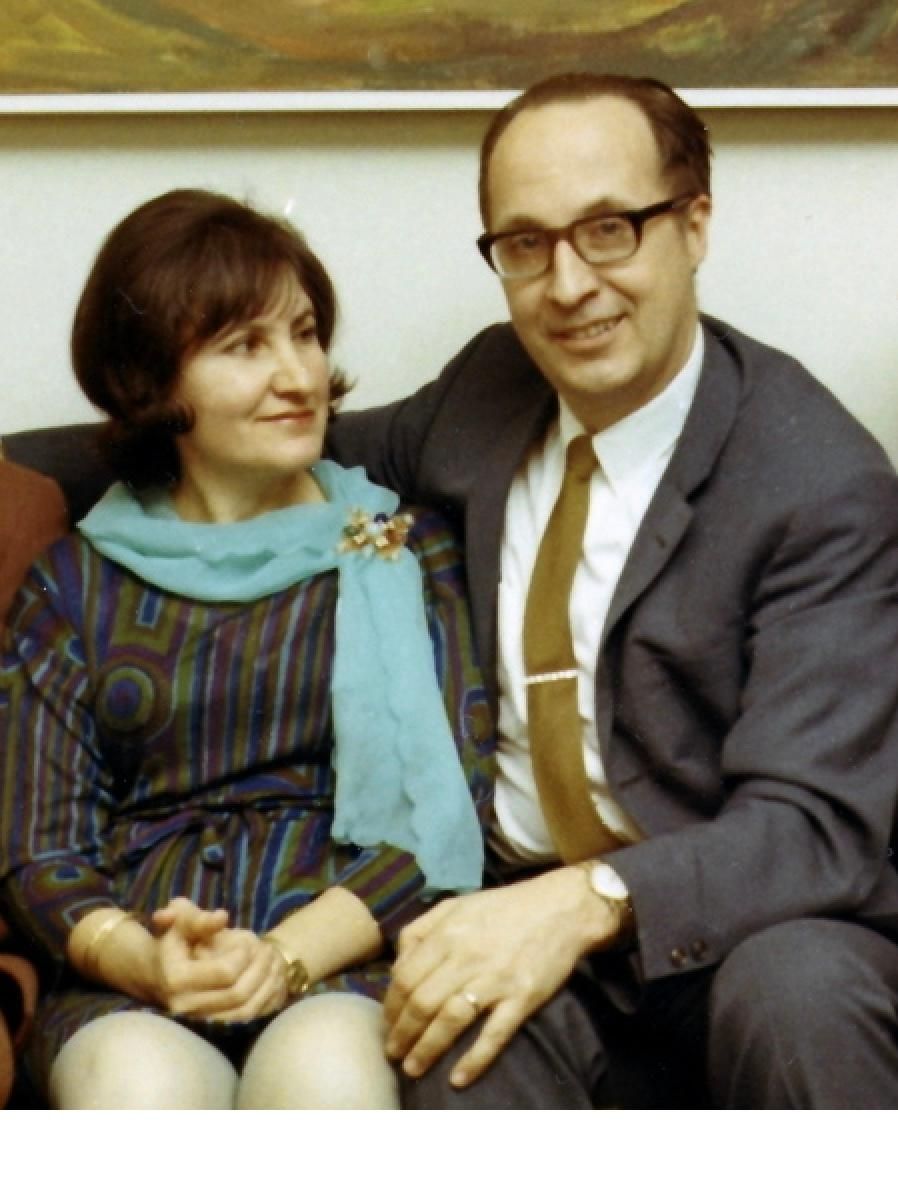
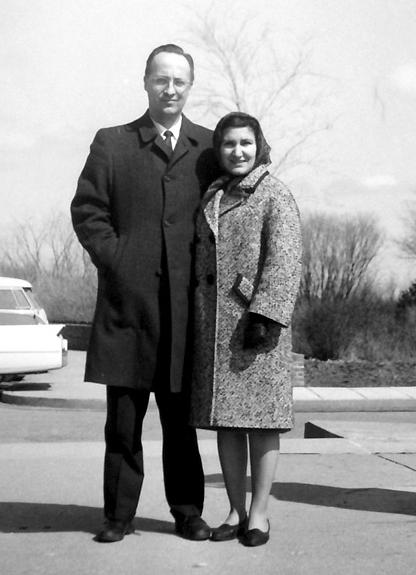
Rudy and Amelia Wilhelm
Founders of the Detroit Waldorf School, 1966
| |
|
A Legacy of Love and Devotion
Two very striking portraits greet visitors, students, parents and staff as they enter the Detroit Waldorf School: those of a man and a woman who by all accounts could be viewed as an original Detroit power couple. The portraits are those of Rudolf (Rudy) and Amelia Wilhelm, co-founders and sustaining benefactors of the Detroit Waldorf School. Of the many kinds of power, theirs was rooted in love and devotion. The combination of their superpowers was essential to create the Detroit Waldorf School. Rudy’s primary strengths were inspirational ideas, brilliant strategies, and the will to see goals brought to fruition. Amelia’s strengths were more tactical, including tough yet gentle discipline, abiding faithfulness to a commitment, and heart forces as big as Rudy’s ideas.
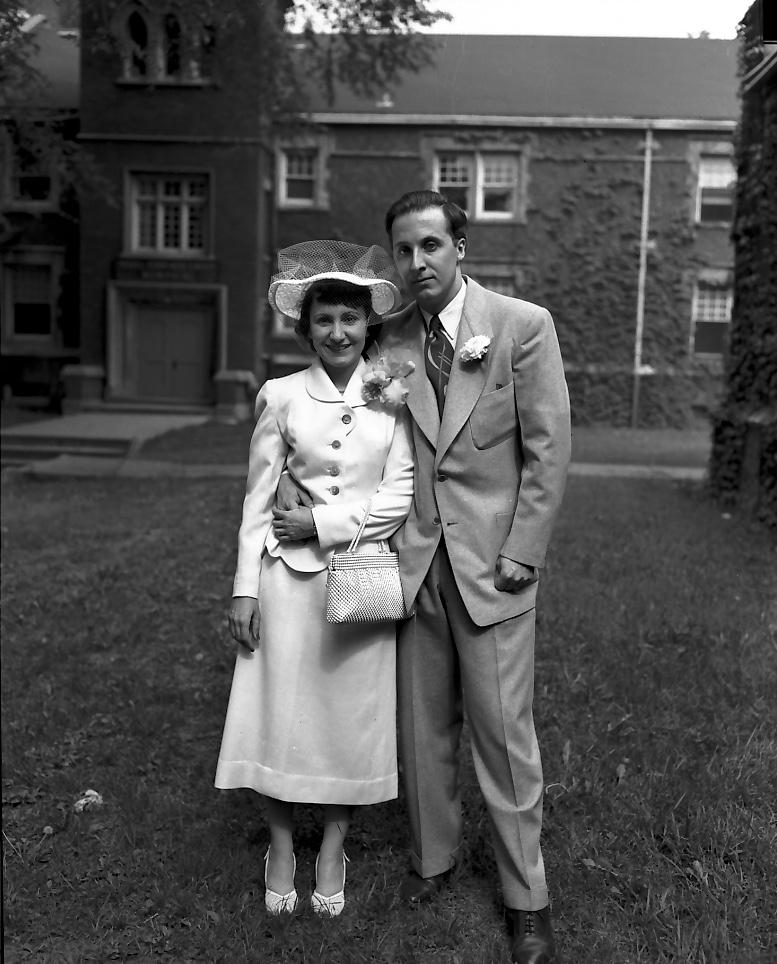
| But who were these individuals, and how did they come to found a Waldorf School in Detroit? Both Rudy and Amelia were immigrants to the United States from different continents: Rudy from Hanover, Germany and Amelia from Baghdad, Iraq. Courageous individuals, they found their way to Detroit in the aftermath of World War II where they met. Rudy came to do a medical internship at Detroit Receiving Hospital while Amelia was studying Occupational Therapy at Wayne State University. One can glean a sense of the will and independence of these human beings through the fact that it took Rudy five proposals and a promise to jointly create a medical clinic before the two could embark on their first joint venture: marriage! | Rudy and Amelia on their Wedding Day, 1952 | Rudy and Amelia settled into making a home in Detroit and bringing three children into the world (Christopher, Mark and Cynthia), while Rudy was beginning his medical practice. At that time, the Wilhelm children attended Detroit Public Schools which were struggling to keep music and art programs funded. Rudy went to the Superintendent of Schools and offered to help fund the programs at the school his children attended, but his offer was rejected. Many parents would have bemoaned this loss, but not Rudy. He and his family were attending Central Methodist Church, and the church—known even now as a peace and justice church—was at the time sponsoring a program called the Character Research Project, in which parishioners’ families could commit to helping with one of several areas of need faced by the City. The Wilhelms chose education as their focus. Rudy’s father was actively involved in Waldorf education in Germany, and Rudy himself attended the Hanover Waldorf School. He had mentioned to Amelia many times that he would like to start a school. On those occasions Amelia thought that this was simply one of Rudy’s “ten thousand ideas”. But when he mentioned it this time, she asked him if he was really serious, and when he said yes, she replied “Well then, let’s go!” She didn’t have first-hand experience with Waldorf schools but thought that if a man like Rudy was a product of such education, it must be worthwhile. This decision would soon engulf them and their family in myriad efforts leading to the creation of the Detroit Waldorf School. This was ultimately a truly unselfish decision, since their children would never end up being able to attend the school because they were already in higher grades when the fledgling school began. | Rudy was an organizational genius and was clearly up to the immense task at hand. Just think of what starting a school would involve! And this was not just any independent school, this was a Waldorf School with a specialized curriculum and unique approaches to education and school organization. Only nine other schools existed in the United States at the time. Achieving this goal would require qualified Waldorf teachers, a facility, financial backing, governmental approvals and staff with the charisma to attract a sufficient number of students. | |
So began the task of putting the school together with its “headquarters” located in the Wilhelm home and entirely at their expense. To find capable and charismatic teachers, Rudy reached out to the Waldorf teacher training institute in California. There, Rudy found Theo and Marianne Buergin. He persuaded them to come to Detroit by promising to help fund Theo as he finished his Master’s Degree program while Marianne started the kindergarten. It also helped that Theo had terrible allergies and Rudy was an allergist! | |
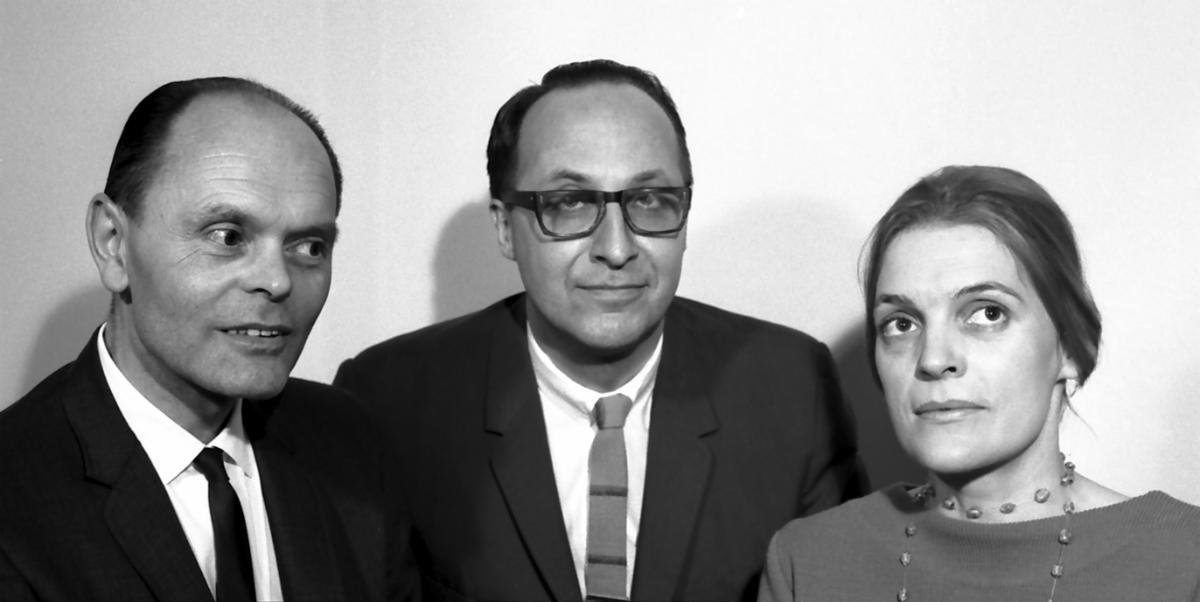
Left to right: Theo Buergin , Rudy Wilhelm, Marianne Buergin | |
Next— the facility. The Wilhelms initially sought to start the school at Central Methodist Church, but there was strong pushback from Board members who were protective of public schools. Rudy asked one of the prospective parents, who was African-American, to accompany him to the Board meeting where this decision was being debated. This parent spoke forthrightly to the mostly white board members, stating that each of them could afford to take their children to any independent school, but where was the independent school for his children? The Board subsequently voted to allow a kindergarten to be established on church premises, and thus began the Detroit Waldorf School. | |
However, Central Methodist Church was not to become the final home of DWS. The Fire Marshall would not allow expansion of the school to include a first grade the following year so a new home had to be found. It happened that Rudy and Amelia were visiting Rudy’s parents in Hanover, Germany, and wanted to visit communist East Berlin, which involved crossing Checkpoint Charlie. Rudy and Amelia emptied everything that was non-essential from their belongings, including their checkbook. After crossing the border, Rudy received an urgent message that the Liggett School in Indian Village was for sale and that a check for $5,000 (the equivalent of $45,000 today) was needed immediately to secure the facility. It had been Amelia’s habit to tuck a spare check in the zippered part of her purse, which she had forgotten to remove. What made her look? Perhaps a flash of destiny? She triumphantly pulled it out, thus initiating the purchase of this beautiful historic building for DWS’ home. A kindergarten and first grade began in the building in 1966. | |
The following year Rudy began the task of finding another class teacher. As there was no internet at the time, he arduously hand wrote letters to schools world- wide in search of a teacher. In the end, Theo Buergin agreed to mentor a fine local teacher in Waldorf pedagogy. However, Rudy decided that it would be far easier for him to start a teacher training institute in Detroit than go through writing all of those letters every year. He reached out again to California and contacted Werner Glas, a gifted teacher of teachers but with no formal academic credentials. Through a study of arcane aspects of Wayne State University, Rudy discovered that it was possible to obtain a degree by examination, thus enabling Werner to acquire a Bachelor’s Degree. He eventually went on to earn a PhD. Rudy secured approval of the training program from the State of Michigan and succeeded in having it incorporated into the teacher training program at Mercy College of Detroit. For years, this program not only graduated teachers for Detroit but for all of North America. | |
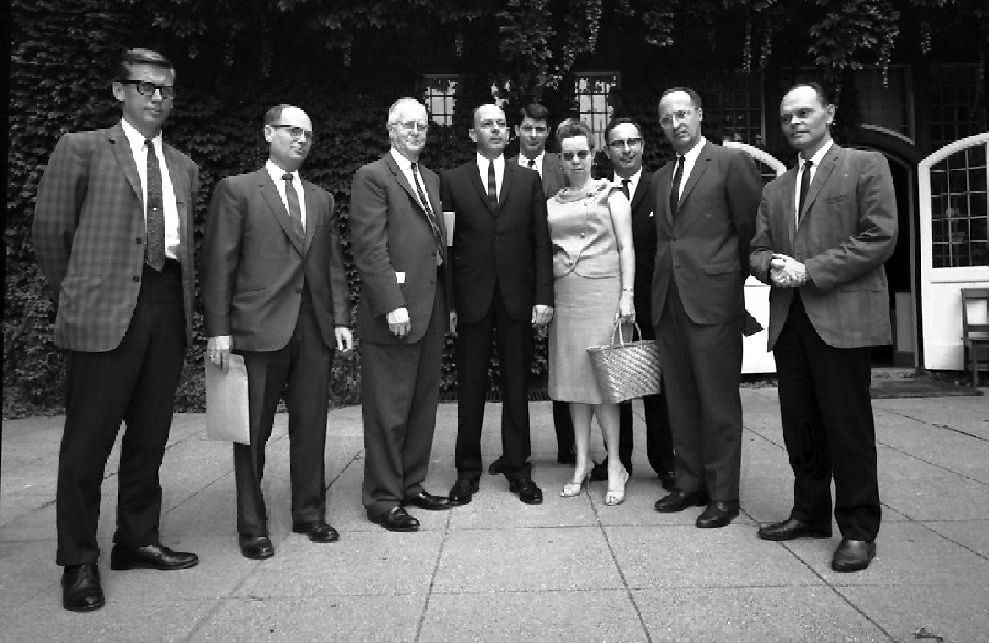
An early organizational meeting circa 1969: (right to left) Theo Buergin, Rudy Wilhelm, Werner Glas, and others | All of this intense work was accomplished over a five year period during which, of course, Rudy ran a full-time medical practice. He took his responsibilities seriously to the extent that, over the course of his relationship with a couple in the Waldorf family, he agreed without hesitation to become a godparent for their special needs child. And until this child’s passing at age 9, he never missed visiting the child’s home on his birthday. | |
Thanks to Rudy’s vision, strength of will, persistence, shrewd character judgement, and skill working with bureaucracies, both the Detroit Waldorf School and the Waldorf Institute of Mercy College grew and thrived. The school had two outstanding founding teachers, a charismatic outreach person in Dina Soresi Winter, who built the enrollment of the school, and a thriving teacher training institute led by Werner Glas. Throughout all of this intense activity, Amelia was Rudy’s closest advisor and confidant, as well as the loving protectress of their family. Amelia served on the Board of Trustees of the school and training institute and lent her steady presence and extraordinary common sense to all of the proceedings. Matching Rudy in intelligence and independence, there were times when the two would disagree over a particular issue and would then have to ride home together after a particularly rough decision, making home life more difficult. Rudy, being a man of “ten thousand ideas”, felt that he had accomplished his vision of bringing the school into being, and decided that it was time to leave the Board. While Rudy was the visionary, Amelia was the heart person and decided to stay on the Board and continue to nurture the fledgling school. | 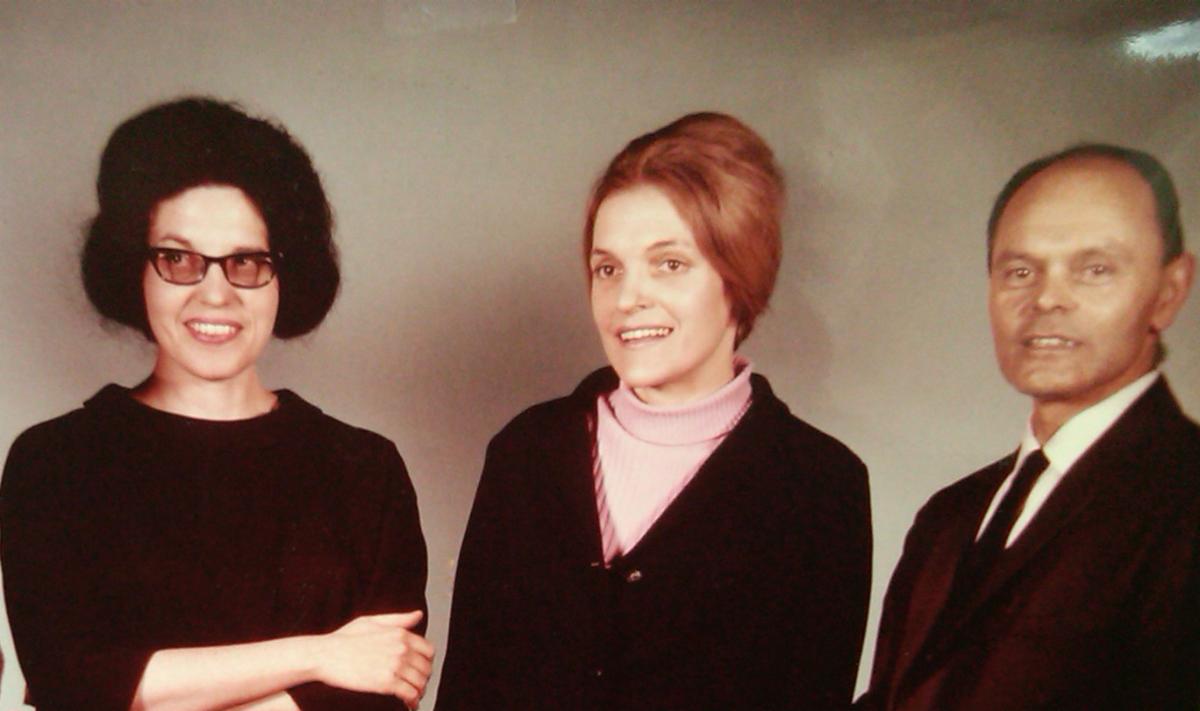 | Left to right: Dina Soresi Winter with Marianne and Theo Buergin | |
As a board member, Amelia watched over all of its decisions, from personnel to finances, with meticulous care and detail. Her leadership was crucial for setting a tone of educational excellence and financial responsibility for the school. While the school grew quickly in the early years, it suffered setbacks periodically as the years went by, and Amelia’s presence was the glue that held the school together. Just as things became financially tough, she would insist adamantly that no part of the Waldorf program be eliminated, that it had to remain whole. And just as adamantly, Amelia stood behind and admired the school’s teachers who had pledged themselves to such a difficult and demanding task. Her respect and admiration for their commitment, and her love for the children at the school, moved her to give substantially of her own resources to the school when she saw a need. But she didn’t stop there. Amelia was one of the school’s most prominent ambassadors and encouraged donations from her friends, family and business acquaintances. In this way she became the Grand Marshall of the school’s annual Walkathon. Amelia enthusiastically signed up her own pledges and walked with students herself until her 92nd year! One class in particular became her walking buddies, and one young student in the class declared that Amelia must be the grandmother of the school. Without a doubt she was also the school’s guardian angel. | 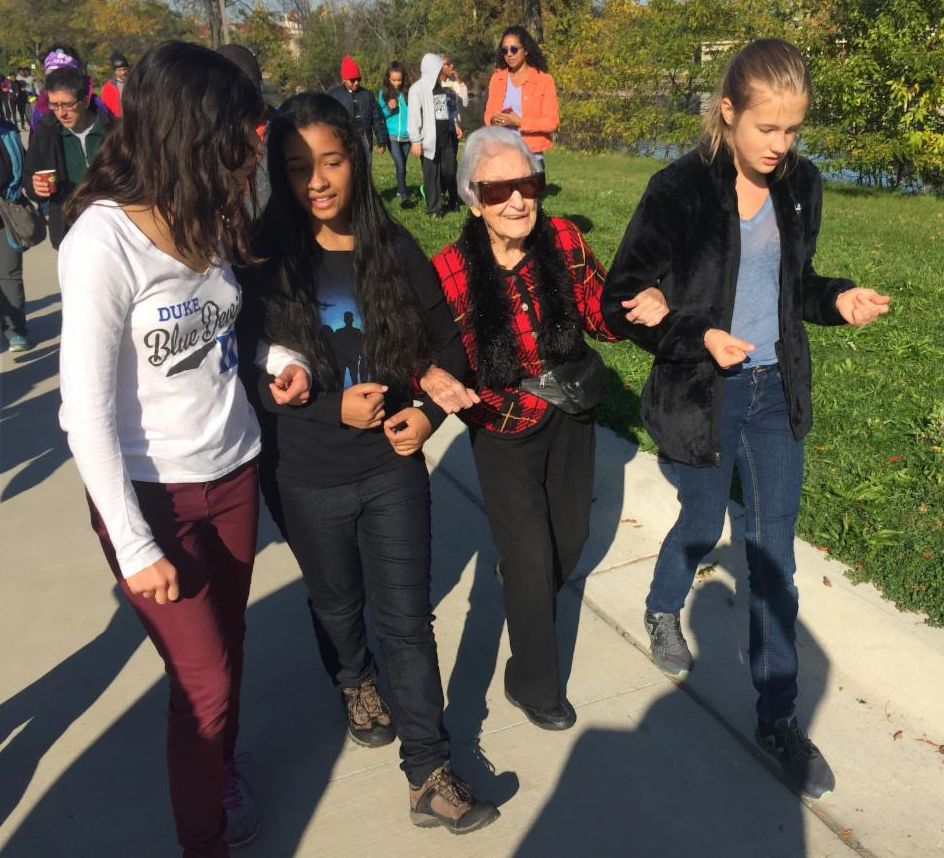 | 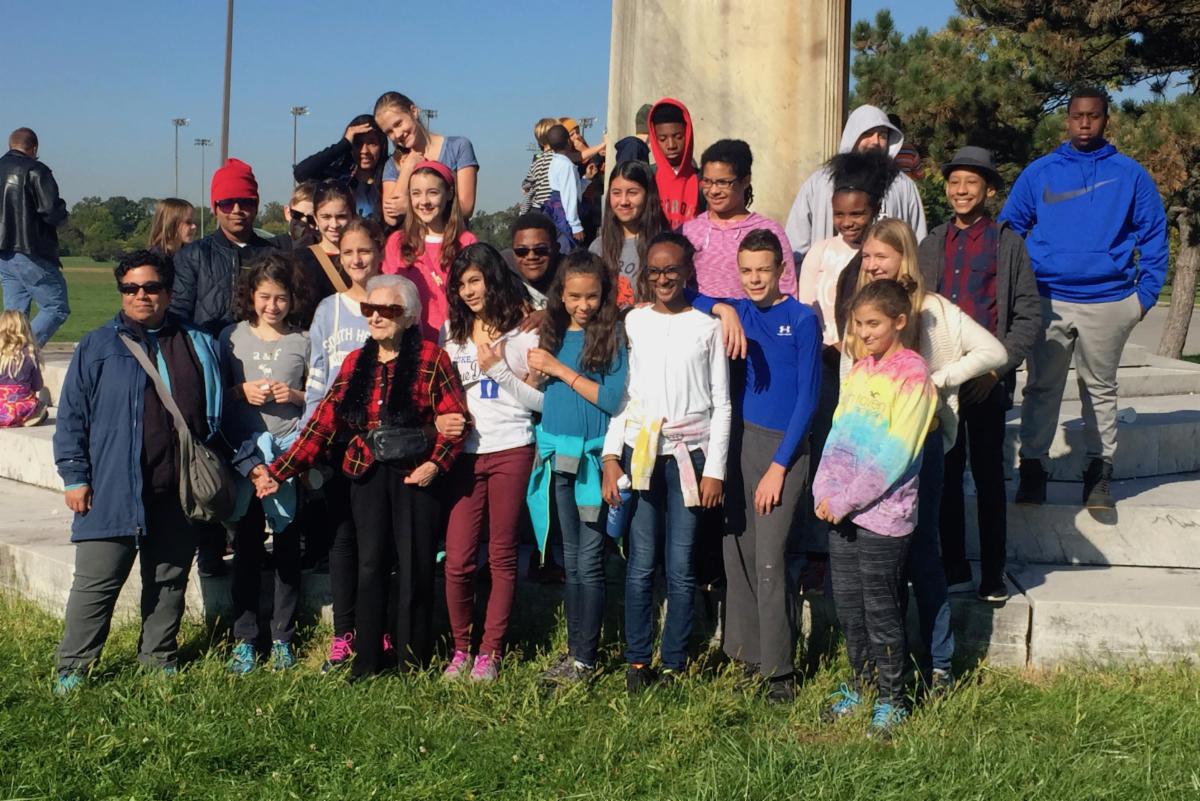 | Walkathon 2016: Amelia walking with the 8th grade class of 2018, who had accompanied her for many years | In 1989, Amelia recorded a StoryCorps interview in which she eloquently and lovingly described her and Rudy’s work in founding the DWS and the teacher training institute. Asked what difference she felt the school had made in Detroit, she unhesitatingly stated that students were the school’s contribution: human beings with imagination and courage who had developed the will to act on their convictions. In reply to how Rudy would like to be remembered, Amelia said that “he would want to be remembered as a bridge builder”—he was a man who could see another person’s striving and say, you can do better and I will help you. When asked about her own legacy, Amelia demurred and said she would prefer to leave the school with this admonition: “Don’t water down Waldorf. Close it before you water it down. Keep it whole. And do everything you can to help the teachers, for God bless them, their hearts are in the school.” As was Amelia’s heart. Her love for the school knew no bounds. Those that knew her well think that her love for the school was greater than that for anything else, except for the deep and abiding love she had for her family. Her final and supreme act of generosity was to leave a bequest of $500,000 to the school. But far more important is the legacy of her love, generosity of spirit, insistence on the highest standards, and faithfulness to her commitments. | 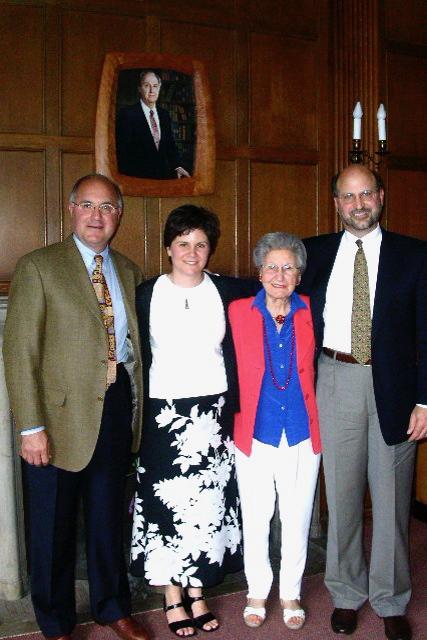 | |
Chris, Cynthia, Amelia, and Mark Wilhelm, with Rudy looking on, 2005 | |
It is hardly possible to adequately acknowledge the inestimable contributions that Rudolf and Amelia Wilhelm have made to the Detroit Waldorf School and its students, parents and teachers. Indeed, their contributions have reached beyond Detroit as so many teachers and students carry their example and influence world- wide. May they long be remembered. Their legacy is precious, timeless and touches us every day in both tangible and intangible ways. Two remarkable human beings whose efforts live on in the heart of a city and in the hearts of all who are touched by their extraordinary deeds. | Contributed by Eric Winter and Candyce Sweda with assistance from Cynthia, Mark, and Chris Wilhelm | |
Rudy and Amelia Wilhelm, Co-Founders of the Detroit Waldorf School, 1967 | | | | |