Greetings! June and July have been busy months for many of our members and clubs…end of year luncheons, installations of new officers and time to harvest cool weather vegetables and enjoy our gardens! It was a pleasure to preside over officer installations at the Danbury Garden Club, Spring Glen Garden Club and a mini-installation at the Wallingford Garden Club. Our July Board of Directors’ Meeting was held at Harkness Memorial State Park in Waterford. The docents gave us tours of both the mansion and grounds… just gorgeous! It was a treat to visit the 2021 Presidents’ award-winning Westbrook Garden Club Meadow Walk. Please remember, I would enjoy a visit to your club meeting and to admire the beauty your club has created in your towns!
We are still in search of chairs for Scholarship and Historic and Memorial Gardens. Neither is extremely time consuming and you will get to know a great group from around the state.
The Presidents’ Day meeting will be held in person this year! We will gather at Jones Auditorium, 123 Huntington Street, New Haven at 10 AM on Tuesday, September 26. Registration will be sent to all club presidents so mark your calendars.
|
|
|
|
|
|
To those of you lucky enough to bring home a native dogwood from the Annual Meeting in April, I would love to see a picture of its new home and growth. Mine is about 30” with numerous very healthy leaves.
“Care for Our Air – Plant a Tree.” My spider plants helped keep the air in our home clean all winter, but are now in my garden-barrels making babies for next winter’s inside display!
|
|
|
|
The Federated Garden Clubs of Connecticut, Inc., is a member of the New England Garden Clubs. The NEGC Annual Meeting will be held in Plymouth, MA, on October 10-11, 2023. All members are welcome to this historic venue! The registration is available on the NEGC website. The New England Garden Clubs’ Photography Group is sponsoring a NEGC Photography Show titled “Rejoice in the Sun” — Celebrating New England’s Ecosystems. Anyone interested in more information please contact Arabella Dane for the schedule or let me know and I will forward the information.
As a member of National Garden Club, you are eligible to receive The National Gardener, also known as TNG, delivered free to your inbox just as you receive CFNews. Go to https://gardenclub.org and click “get involved” at the top left, then scroll down to subscribe to The National Gardener. In the process, spend some time investigating all the other resources available to club members!
|
|
|
|
SAVE THE DATE!
Registration will open September 1.
|
|
|
|
Gardening School — Course 4 Series 8
The Gardening Council is pleased to announce the fourth course in the Eighth Series of Gardening School Courses. All NGC schools are open to the public, so ask your fellow Club members or friends from your community to come on Zoom and let’s learn together!
Sign up now by clicking here.
Gardening School Course 4 Series 8 ~via Zoom
~ September 13-14, 2023 ~
Course 4 Curriculum
- Invasive Plants
- Plant Classification and Nomenclature
- Outdoor Identification of Plants
- Specialized Styles of Gardening
- Techniques for Growing Woody Ornamentals
- Pruning techniques
Enjoy the summer and we’ll see you at the Gardening School!
|
|
|
|
Environmental School — Course 2, "The Living Earth, Land and Related Issues"
The Federated Garden Clubs of Connecticut, Inc., will present Environmental School Course 2, “The Living Earth”, Land and Related Issues this September.
Orange skies, drought, deluge, heat domes — what’s wrong with our climate? What can be done to prevent these events? Those of us wishing to understand our Earth’s ecosystems and how we can protect them, will want to join us on September 21 and 22, 2023 for a comprehensive look at Land and its contribution to the well being of all life on Earth.
Once again, we have gathered experts from from the fields of science, agriculture and industry to teach 8 one-hour modules plus a two-hour field trip over the two days. You can do this from the comfort of your home, as the course is being offered virtually, via Zoom.
Some of the topics covered include land types and the life each sustains, how food production affects land, the impact of extracting resources from the earth, and how to be better stewards of the earth using best practices to preserve the soil. Improving our lands has the added benefit of improving air and water quality, because everything in nature is interconnected.
|
|
|
|
Introduction to Creative Design Workshop
(Beyond Beginning Reimagined)
Presented by the Judges Council of The Federated Garden Clubs of Connecticut, Inc.
In this workshop, the principles and elements of design as applied to floral design will be presented via a hands-on-creative design with pizzazz! Techniques to be discussed include foliage manipulation, sheltering, receding, and advancing colors, and spatial considerations. Tips on using selected flowers will be included. All materials will be supplied, and small group analysis of the finished designs will conclude the two and a half-hour session.
We anticipate that the workshop will be held in late September or early October in Litchfield. Look for details, including costs, on The Federation’s Events Calendar at https://ctgardenclubs.org/events/
If you’d like an e-mail with details of date/place/cost/registration process, please email us.
|
|
|
|
Care for Our Air - Plant a Tree
Hello Gardeners!
Our President, Karin Pyskaty, has initiated this project for 2023-25. We challenge each club to donate to the National Garden Club "Penny Pines" project. Visit the NGC website at National Garden Club “Penny Pines” or use the QR code to go directly to the Penny Pines project!
How can your club participate?
We are asking clubs to get creative and let us know your best ideas for promoting “Penny Pines.”
A big thank you to the Garden Club of Orange for sending in their $136.00 contribution in June.
We are also encouraging individuals to Care For Your Air — Grace Your Home With Houseplants.
Certain plants have been found to purify our indoor air and provide allergy relief as well as improve sleep quality and reduce stress levels. Good choices are English Ivy, Bamboo Palm, Dracaena Janet Craig, Rubber Plant, Weeping Fig, Peace Lily, Spider Plant, Philodendron and Pothos.
I can’t wait to hear from you! Carmelina
|
|
|
|
Greetings from the FGCCT Office! |
I hope you all are having a nice summer. Here are a few reminders:
1. Some clubs are still sending mail to our old Branford P.O. Box. Please send all correspondence to our new office:
The Federated Garden Clubs of CT, Inc.
P.O. Box 902
Wallingford, CT 06492
2. If you need assistance, you may contact me at office@ctgardenclubs.org or on the office phone 203-488-5528. I’m usually in the office on Mondays and Wednesdays, from 10 am to 2 pm.
3. Note: We are no longer using fgcctoffice@gmail.com.
4. Make sure you update The Federation’s new office address and contact information on your Club’s website, brochures and social media.
5. Did you recently elect new Officers? Kindly email their names and contact information so they will receive the correct Federation correspondence.
Thanks for your help.
Joan Lenart
FGCCT Office Administrator
|
|
|
|
Treasury Notes
Three Things to Know from our Treasury Committee!
|
|
|
|
1. Does the Federation assist with our club filing?
If your club enjoys its Tax Exempt Status under the FGCCT umbrella, AND files the 990 N for organizations with less than $50,000 in total annual receipts, download our permission form and we’ll do it for you!
|
|
|
|
2. Does your club accept PayPal, Square, etc., for credit or debit card payments?
|
|
|
|
Square, PayPal, etc. will report to the IRS the total payments processed when the annual amount exceeds $600 using the EIN or SSN on file with your processors. Check to ensure that the tax ID number on your account with the processor is that of your club and NOT the SSN of your Treasurer!
3. Have your treasurer visit our FAQ section on our website.
The Federation cannot replace professionals such as accountants, attorneys or tax experts, but we hope to help your club by answering some basic questions and pointing out correct procedures and forms for your use.
|
|
|
|
CT Legislative Action Report
Just a quick list of some Environmental Bills that passed this Session, and some that didn’t:
Passed:
Tree removal on Properties controlled by DEEP
Restoration of Eel Grass
Harvesting of Horseshoe Crabs
Limiting nighttime lighting of State-owned buildings at certain times for the protection of birds
Managing waste and creating a waste authority
Authorizing the establishment of a Seabird and Shorebird Protection Program
Authorizing certain killing of Black bears, Prohibiting Bird Feeders and other unintentional feeding
Failed:
The use of certain Rodenticides
Use of Neonicotinoids
Greenhouse Gas emissions
Zero carbon emissions
Intentional release of certain balloons
The State Plan of Conservation and Development
Financial Incentives for certain Streamside River buffers
Note on Pesticides: Senate Bill 963, a bill banning of neonicotinoids, and Senate bill 962, which sought to restrict the use of deadly rodenticides, were critical measures for protecting our pollinators and bird populations. The Senate co-chair of the Environmental Committee refused to raise these bills in his chamber, and both failed.
The bill on banning release of helium balloons, but only after removing the fine! More work needs to be done on this bill. We must continue to press for NO RELEASE.
— Gerri Giordano, FGCCT Legislation Chair
|
|
|
|
NGC Youth Poster Contest ~
Smokey Bear Celebrates His 80th Birthday in 2024!
Students in first through fifth grade can help Smokey Bear celebrate his 80th birthday by participating in this year's Smokey Bear & Woodsy Owl Youth Poster Contest sponsored by the U.S. Department of Agriculture, Forest Service and the National Garden Clubs, Inc.
All posters submitted this year must feature Smokey Bear along with his wildfire prevention message. Click here for more information about the contest, its rules and deadline.
|
|
|
|
New from NGC: Plant America, Feed America |
|
|
|
Upcoming Tours—Join the Wait List!
August 21-29 ~ Nova Scotia and Prince Edward Island
October 27-November 14 ~ South Africa, Safari, Victoria Falls
January 13-23, 2024 ~ Galapagos and Equador
June 23-July 7, 2024 ~ Scotland with Yorkshire Extension
Tours in Planning for 2024 --- Join the Interest List for a specific tour
May 1-4 ~ Washington DC & Annapolis
July 21-23 ~ Cape Ann
August 10-18 ~ Glacier National Park
Oct. 24-Nov 2 ~ Sicily
Keep checking the website for new tours!
|
|
|
|
Horticulture: The Journey
By Renee Marsh, FGCCT Horticulture Chair
|
|
|
|
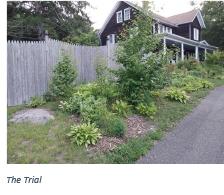
There are times I hate gardening. Weeds leaping, deer chewing, Asian worms jumping and borers in the ash tree. I wonder if it is time to pack it in and sell the house just so I can stop being haunted by the garden. It doesn’t help that I lost two very old, very large maples in the front of the house, creating an unwelcome crisis. The combined canopy had posed a gardening challenge for sure but I had planted hosta, sedge and liriope in every pocket over a period of years. It was an expanse of foliage, which I prefer, and low maintenance. Then the apocalypse and two massive stumps stand like tombstones, reminders of friends gone. |
|
|
|
The garden now bakes in the sun on a slope that is rocky and dry. Last year I waited for rain, unwilling to undertake the work of digging and replanting without water. It never happened. This spring I waited once again. No water. Finally in late June I decided to suck it up, strap on my hori knife and grab my Japanese hoe/digging fork. Nothing like a hefty weapon of carbon steel to make you feel in control. The hostas and sedge were frying, the liriope was not happy but hanging on and the weeds have sprung from the ground like demons. My other beds are full and I have few places to put hosta where deer won’t chow down on them but try to save them I must. There is no joy in this effort, it is a forced march.
As I assessed the toasted hostas — variegated ones crisp up real well — I realized that in my absence, natural succession had started. Pioneer plant species did not whine and lay around in the shade like I did. These intrepid plants had stepped in to colonize my disturbed ecosystem — low moisture, full sun, high temperatures and poor soils be damned. There are six sweet birch (Betula lenta), one of which is almost eight feet tall and shading the hostas around the base already. There are three small eastern red cedar (Juniperus virginiana) that I was happy to see. I am a big fan and sad that many of my larger ones are being shaded out in other areas of my property. And finally there is a valiant little white oak. There is only ten feet between the fence and the driveway but I will let them all stay. I hope to be gone by the time that decision has consequences.
|
|
|
|
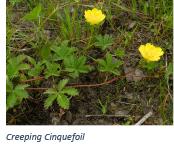
Then there are the weeds. There are clumps of field grass which kind of look like switchgrass so they can hang in there for a while. More troubling is a covering of creeping cinquefoil (Potentilla reptans), a perennial weed that is rather new to my garden. I have been ignoring it for a while and thought it was wild strawberry (mea culpa, they are going to rip off my master gardener epaulets). Despite my tolerance for weeds, it is in the “you’ll be sorry” category. It spreads aggressively by stolons and anchors itself with a long taproot so it will be impossible to weed out – even with carbon steel. Apparently I am providing the perfect conditions for this little pernicious terror so that needs to change. Taller plants that will out compete the little suckers and better soil conditions are in order. And mulch. I hate mulching. Mercifully there are stretches of ledge that can be uncovered as “features.” My niece thinks rocks are awesome – she is from the Midwest where there are none. And of course there is the ever present mugwort and Canada goldenrod courtesy of the empty lot across the street which hosts legions of them. I sense more are looking over and plotting, waiting for the chance to leap across the road and join in, and feel doomed.
|
|
|
|
I start the process. Tiny ants have colonized the roots of every sedge and let me know, in no uncertain terms, that they are not happy with my efforts. I have to dig and set aside the plants until the hordes subside. I dig the hostas only to find the ants have also colonized every place I want to replant them. It is a banner year for ants. I win that battle but then raccoons dig up the newly planted hostas overnight. I replant raccoon-dug hostas. The ants bite me again. I don’t know what circle of hell this is but I don’t recall reading about it in Fine Gardening.
So now you understand why I just want to retreat to the porch with a gin and tonic. I will try to be the intrepid gardener and nobly work in harmony with nature on this succession. It could end up looking like a highway median strip, a questionable look for the front of the house. Roundup and a lawn mower could end this quickly and it is mighty tempting but I give it another season, sigh….
Gardening is a journey but sometimes, not one you want to be on.
|
|
|
|
Artificial Light — A Cause for Concern
By Holly Kocet, Garden Club of Newtown & Co-Chair, FGCCT Conservation Committee
Less than 100 years ago, a person could look up into the night sky and see thousands of bright stars. Today, widespread and ever-increasing artificial light makes this impossible in many places across the globe. This excessive use of artificial light is light pollution. Just as with pollution of our water and air, light pollution can have serious environmental consequences for humans, wildlife and even our climate.
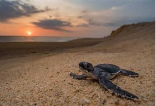
Plants and animals depend on the Earth’s daily cycle of light and dark. For animals, this is important for life-sustaining behaviors such as reproduction, sleep, and protection from predators. There is scientific evidence that artificial light can have deadly effects on many creatures from hummingbirds to wallabies. Birds that migrate at night are navigating by moonlight and starlight. Each year, artificial light is responsible for millions of deadly bird collisions with buildings and towers. Monarch butterflies also rely on darkness. This is when they process proteins that are key to their internal compass that points the way towards their wintering grounds and return. Researchers found that butterflies roosting near porch or streetlights are disoriented the next day. Amphibians like frogs and toads are nighttime breeders so lights interfere with reproduction, thus reducing populations. Sea turtle hatchlings must get from the beach to the sea. They can only find their way by detecting the bright horizon over the ocean. Artificial lights draw them away from the water and each year millions die in this way.
This time of year, we are hopeful for witnessing fireflies blinking along woodland edges and in moist meadows as we did in our youth. But more and more fireflies are disappearing. Most researchers believe loss of habitat due to increased housing and commercial development is a main factor. Open fields and forests are being destroyed. Increased activity along waterways is also detrimental to these valuable critters, whose larvae are hugely beneficial for controlling snails and slugs. There is no question pesticides are having a detrimental effect on all invertebrate species, especially fireflies. Mosquito spraying, for example, is totally ineffective for mosquito control but does kill fireflies and many other beneficial insects.
And, it should come to no surprise that artificial light is extremely harmful to fireflies who need to communicate with one another to find mates. Lights from homes, cars, businesses and streetlights, make it difficult for fireflies to signal each other, resulting in fewer larvae born the following season.
Much of our outdoor night lighting is inefficient and, in many cases, unnecessary. Artificial lighting is often overly bright and improperly shielded. Light spills into the night sky instead of focusing on objects for which the light is intended. According to a 2016 study, 80% of the world’s population lives under sky glow, which is an artificial brightening of the sky. These polluted skies are of worldwide concern.
But unlike other forms of pollution, light pollution can be reversible if we take the appropriate steps. Each one of us can make a difference. The International Dark-Sky Association indicates Five Lighting Principles for Responsible Outdoor Lighting:
- Use light only if it is needed. Consider how the light will impact wildlife and their habitats.
- Direct light so it falls only where it is needed. Shield lighting to point downward and so it does not spill beyond the targeted area.
- Light should be no brighter than necessary. Use only the lowest light level needed.
- Use light only when it is necessary. Timers or motion detectors ensure light is available as needed.
- Use warmer color lights where possible. Limit the amount of shorter wavelength (blue-violet) light.
Lights Out Connecticut also suggests keeping blinds and shades drawn to keep light inside, especially on upper floors and when working at night.
Good news! On June 27th, Governor Lamont signed Substitute House Bill No. 6607, Public Act No. 23-143 — An Act Concerning the Nighttime Lighting of State-owned Buildings at Certain Times for the Protection of Birds — requiring state-owned and leased buildings to turn off nonessential outdoor lighting during peak avian migration periods in order to assist in preventing birds from flying into the sides of such buildings. Nonessential outdoor lighting shall be turned off between the hours of eleven o’clock p.m. and six o’clock a.m.
There’s much more to do. It is important for our Garden Clubs to continue our efforts as leaders in our communities on all environmental and conservation issues. Members are highly qualified, with vast experience as gardeners, master gardeners, birders, activists and educators. The public isn’t always aware of the negative impacts of practices such as excessive use of artificial lights. As ambassadors, we can help bring awareness to this growing problem and inspire more people to take necessary steps to protect our natural night sky that will benefit us and the wildlife with whom we share this world. For more information, visit www.DarkSky.org
|
|
|
|
Sea turtle hatchlings are disoriented by artificial lights. |
|
Fireflies need darkness to communicate and find mates. |
|
Artificial light causes fatal collisions during bird migration. |
|
|
|
SPOTLIGHT on our FGCCT Affiliates! |
|
|
|
|
|
|
KNOX was founded in 1966 by city councilwoman Betty Knox when she established a fund to help improve her hometown of Hartford, Connecticut. Two areas of focus were established – funding community development and operating “greening” programs.
|
|
|
|
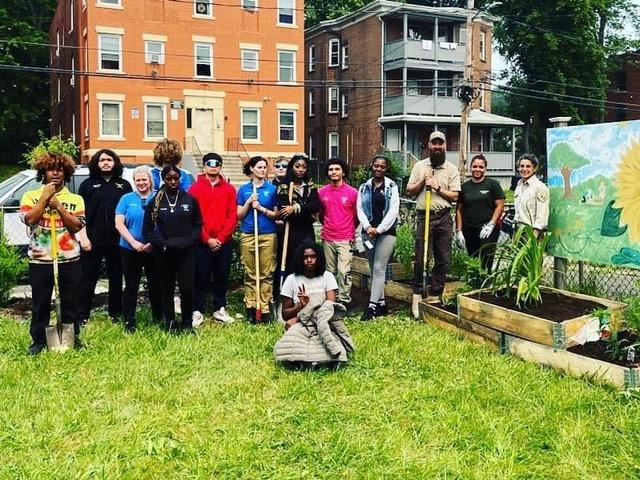
Using horticulture as a catalyst for community engagement, KNOX forges partnerships between residents, businesses and government, providing leadership to build greener, stronger, healthier and more beautiful neighborhoods. KNOX coordinates a variety of programs including, Green Jobs Apprenticeships, Youth Environmental Education, Community Gardening, City Planters, Trees for Hartford Neighborhoods, Greater Hartford Green Team, Urban Farming, and Hartford Cleans Up. You can find them at the Connecticut Flower and Garden Show where they participate in the Landscape Design exhibits. Learn more at: https://knoxhartford.org
|
|
KNOX, US Fish and Wildlife Service and Prince Tech High School creating the first pollinator garden at The Cabot Street Garden. |
|
|
|
|
|
You can learn more about KNOX, INC at their August 17 Beer Garden Event at Hartford’s only working farm, located right on Laurel Street.
Scan the QR code above for ticket information.
|
|
|
|
"Club Corner" is designed to be a place where clubs can showcase recently completed club achievements and activities. Has your club done something unique (or uniquely successful?) that you'd like to share? Visit "Club Corner" on the FGCCT website for more of the latest news from— and for—our member clubs! (Please note that this area is not for upcoming events—you can post those on the FGCCT Club Calendar.)
Send photos, along with a brief writeup (200 words or less) and detailed photo captions, to CFNewsManager@ctgardenclubs.org to be considered for inclusion. Please ensure you have appropriate permissions for all photos. We reserve the right to edit copy and select photos for inclusion.
|
|
|
|
FEATURED CLUB: Naugatuck Garden Club Celebrates 30 Years in Style!
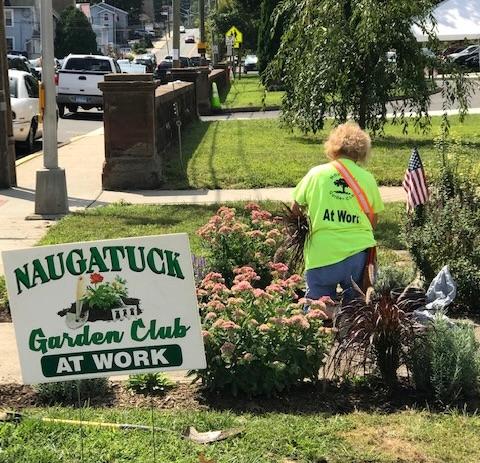
The Naugatuck Garden Club celebrated its 30th Anniversary in style on June 15 with Mayor N. Warren "Pete" Hess III on hand to offer his thanks for all the great work the club does. A club of approximately 50 members, The Naugatuck Garden Club’s objectives are to encourage interest and educate members in all phases of home gardening and promote better horticultural practices, civic beauty, educate in the conservation of natural resources, and to engage in charitable projects within the local community. They meet on the third Thursday of each month and welcome all garden enthusiasts for fun, refreshments, and an enlightening program. Among the projects the club manages are the garden in front of Town Hall, The Gazebo on the Green, The Welcome Sign Garden, the O'Donnell Memorial Garden, the Whittemore bridge boxes, the Great War Monument, and the Butterfly Garden behind the library. At their celebration, they honored four members who have been with the club since its founding.
Warmest congratulations to the Naugatuck Garden Club on their Anniversary and their many projects! Keep up the great work! To learn more, visit the club on Facebook!
|
|
|
|
Above, left: honoring members who have served the club since its start (L to R) Daryl Masone, Marty Lee Fenton, Susan Holland and incoming President Gerry McCabe joined by FGCCT 2nd VP Kelle Ruden at the celebration. Above, right: At work at the Great War Monument |
|
|
|
In New Milford, Celebrating 100 Years with a Blue Star Memorial |
|
|
|
Kathy Schmidt, Jan Parsons, Kathi Barringer (President), Lauren Toth |
|
|
Left to right: Gordon Hills, Georgia Schneider, Charles Chapin, George Pounder |
|
|
|
The Garden Club of New Milford proudly sponsored an exciting project in celebration of their 100th anniversary in 2023. They placed a Blue Star Memorial Marker on the lawn in front of the Roger Sherman Town Hall at 10 Main Street in New Milford, CT. The dedication ceremony took place on June 14, 2023.
The Blue Star Program is a tribute to all men and women who serve in the United States Armed Services. The double-sided Blue Star Memorial Marker is prominently displayed for passersby and complements an existing garden that our Club members have revitalized for this special occasion.
Jan Parsons and her team, Kathy Schmidt and Lauren Toth, organized the program and celebration. Jan explained that the Garden Club chose this project because they wanted to give back to the town with something meaningful and long-lasting.
During the ceremony, four WWII veterans were recognized for their service by Pete Bass the Mayor of New Milford. Approximately 40 Boy Scouts attended the ceremony, assisting with the Pledge of Allegiance.
Parsons, delighted with the turnout, emphasized why the Garden Club, often associated with flowers, has an interest in both the Blue Star Memorial Highway Marker and the Blue Star Memorial Marker because they hold historical significance for Connecticut, dating back to 1946 and continuing to the present day.
|
|
|
|
Goshen Garden Club on Parade!
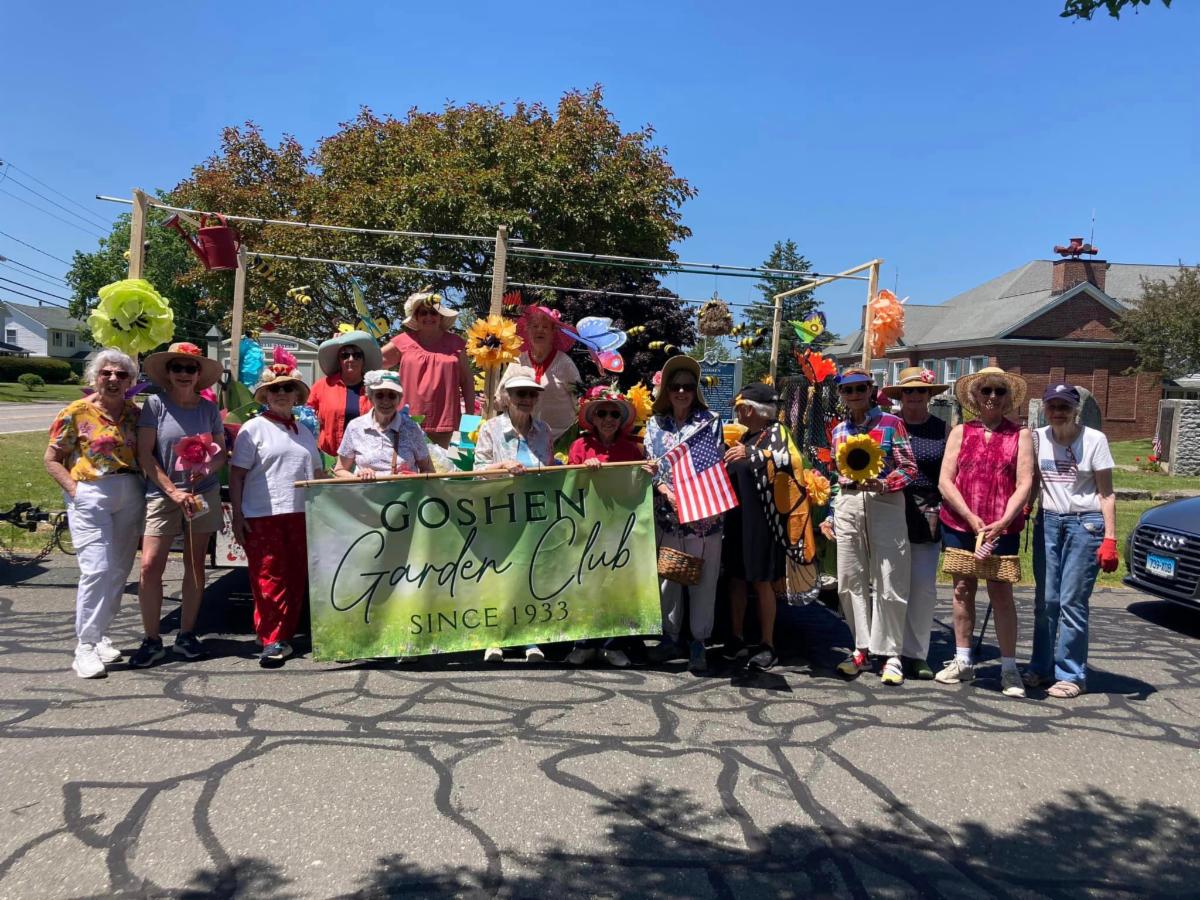
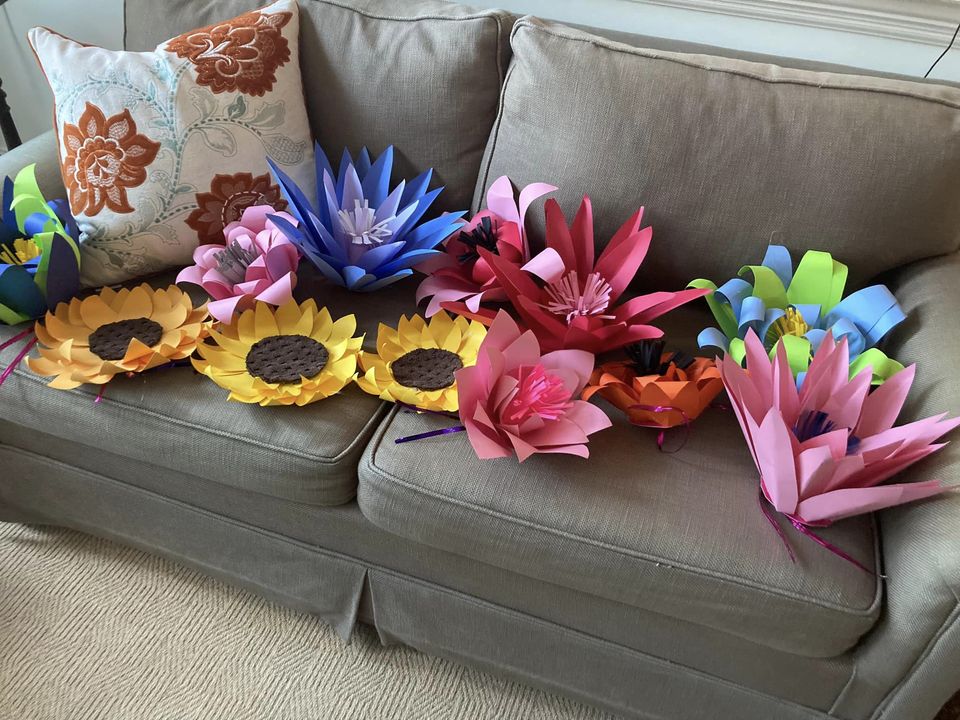
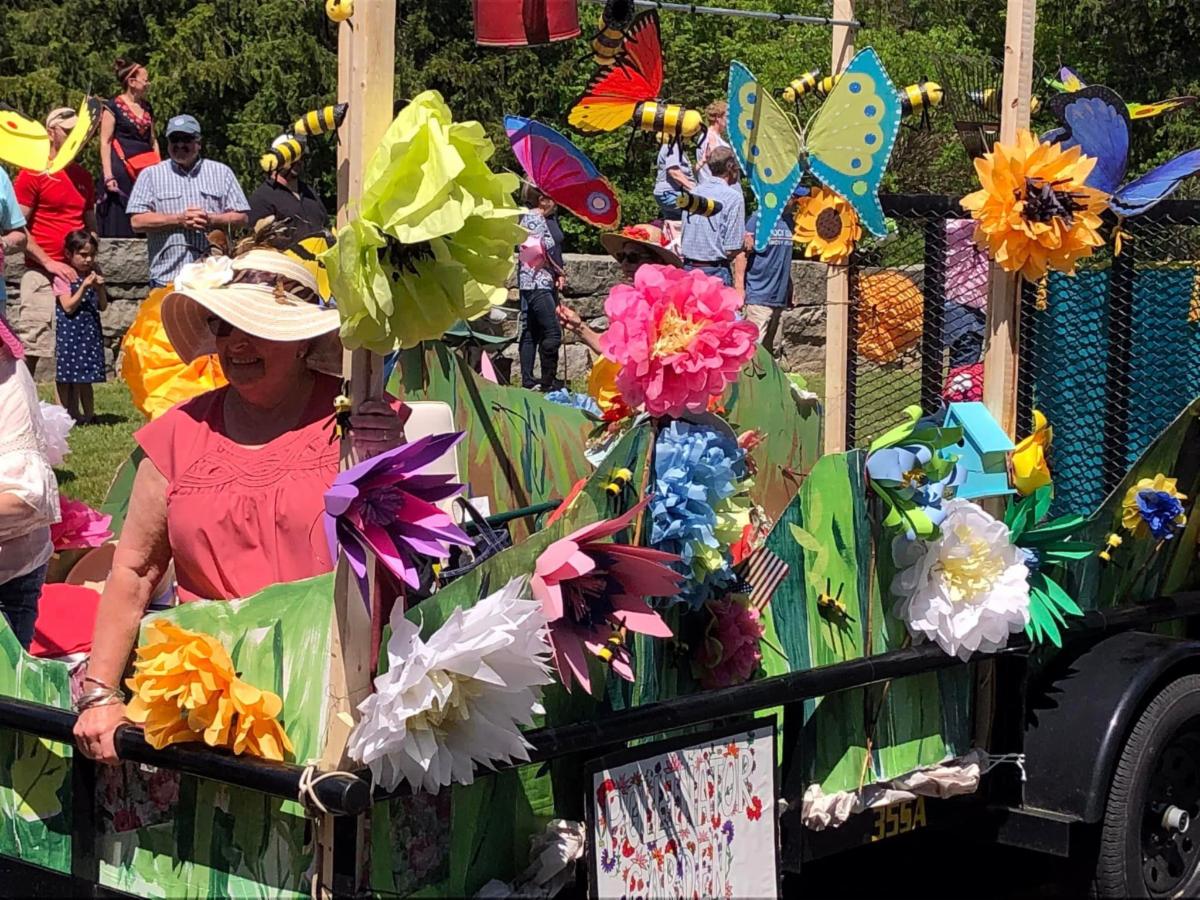
The Goshen Garden Club, as part of their ongoing celebration of their 90th Anniversary, marched in the Goshen Memorial Day Parade with a float decorated by flowers and bees made by Club Members. Packets of seeds were handed out to parade goers to encourage planting of pollinator gardens.
|
|
|
|
Donations by Garden Clubs to FGCCT's Scholarship, Garden Therapy and World Gardening Funds |
|
|
|
We thank the following Garden Clubs for their recent donations to the FGCCT Scholarship Fund.* For almost 40 years, the Federation has awarded scholarships to college and university students who major in Agronomy, Botany, City Planning, Conservation, Environmental Studies, Floriculture, Forestry, Horticulture, Land Management, Landscape Design, Plant Pathology, or allied subjects. We welcome donations of any size. Our appeal is ongoing to give all of our clubs the opportunity to make a contribution in the amount of their choosing.
|
|
|
|
Scholarship Donations since the last issue of CFNews |
|
|
|
Cheshire Garden Club
Guilford Garden Club
Newtown, Garden Club of
Old Greenwich, Garden Club of
Old Saybrook Garden Club
Olde Ripton Garden Club
Orchard Valley Garden Club
Sasqua Garden Club
Thames River Garden Club
Town & Country Garden Club of Newtown
|
|
$ 75.00
$ 50.00
$ 100.00
$ 500.00
$ 100.00
$ 50.00
$ 200.00
$ 100.00
$ 300.00
$ 250.00
|
|
|
|
Garden Therapy Donations since the last issue of CFNews |
|
|
|
Cheshire Garden Club
Guilford Garden Club
|
|
|
|
|
World Gardening Donations since the last issue of CFNews |
|
|
|
Cheshire Garden Club
Guilford Garden Club
|
|
|
|
|
Please send all Scholarship Fund donation checks to the appropriate chair (see below). Make checks out to "FGCCT" with the appropriate Fund listed on the memo line.
*Please note that due to the deadline for articles and information for the CFNews, some donations may not be received and deposited in time to be included in the bi-monthly donation acknowledgement, but will be included in the next issue of our newsletter.
PLEASE MAIL CHECKS TO:
|
|
|
|
For World Gardening & Garden Therapy:
The Federated Garden Clubs of CT, Inc.
Attention: Rosemary Bonaguide
PO Box 902
Wallingford, CT 06492
|
|
For FGCCT Scholarship Fund:
The Federated Garden Clubs of CT, Inc.
Attention: Deborah Osborne
PO Box 902
Wallingford, CT 06492
|
|
|
|
Follow us on Facebook and Instagram!
FGCCT is on Facebook and Instagram and we love to post your news and photos! Please send upcoming events, club activities, civic projects, milestones, and hort tips. Include photos and a brief writeup of the news your club would like to share. The best format is text in an email with jpg photos attached. Take active photos showing members at work or showcasing beautiful gardens, flowers, and plants (please name the flower if it is a hort only photo). Let’s follow each other! Send submissions to social@ctgardenclubs.org
|
|
|
|
Deadline to submit articles/photos, ads and calendar events for the October/November 2023 issue of the CFNews is September 10, 2023. Please submit to:
|
|
|
|
ARTICLES/PHOTOS
Marty Sherman
ADVERTISING
|
|
|
|
|
Reminder from NGC: The National Gardener is ONLINE (and free!)
The official publication of the National Garden Clubs, The National Gardener, appears quarterly, and features articles of interest to environmentalists, gardeners, landscapers, floral designers, educators and photographers. Subscribe here.
|
|
|
|
|
|
|
State, Regional &
National Events
|
|
|
|
|
|
|
|