|
Despite March’s proverbial description, the month was anything but lamb-like for our Section – we have been investing in Florida’s next generation with lion-like strength all month long.
The end of Florida’s 2024 legislative session spotlights the fruitful team-focused labors of our Committees. This session brought the passage of four family-law centric bills of note. First, an equitable distribution bill which creates factors for determining extraordinary circumstances for interim partial equitable distributions, clarifies interspousal gifts and the valuation of closely held businesses, and expands the definition of non-marital property. Second, the Hope Card Program was created which provides requirements and details on creating a wallet-sized card to be used to prove the existence of a Final Injunction for Protection Against Domestic Violence. Third, Cassi Carli’s Law requires parenting plans to include a location for child exchanges and requires the creation of at least one neutral safe child exchange location. Finally, interpersonal violence injunction petitions have undergone revisions. These bills are the product of the superior work of the combined efforts of our Legislative Committee, Equitable Distribution Committee, and Domestic Violence Committee. Thank you to all who worked hard to ensure the passage of these meaningful measures. Interested in learning more about the legislative updates? The Section will present its annual legislative update webinar on July 16, 2024 – save the date!
Thank you to Daniel Whitehouse for the insightful and engaging CLE Evolving Technology in the Legal World held on March 19, 2024 which helped us cultivate an understanding of the evolving legal tech ecosystem so we can make informed decisions about what tech works for us and embrace the ever-evolving legal technology responsibly. Thank you also to Stacey Cohen for organizing and emceeing the CLE. Did you miss it? Not to worry – it is available 24/7 on-demand here.
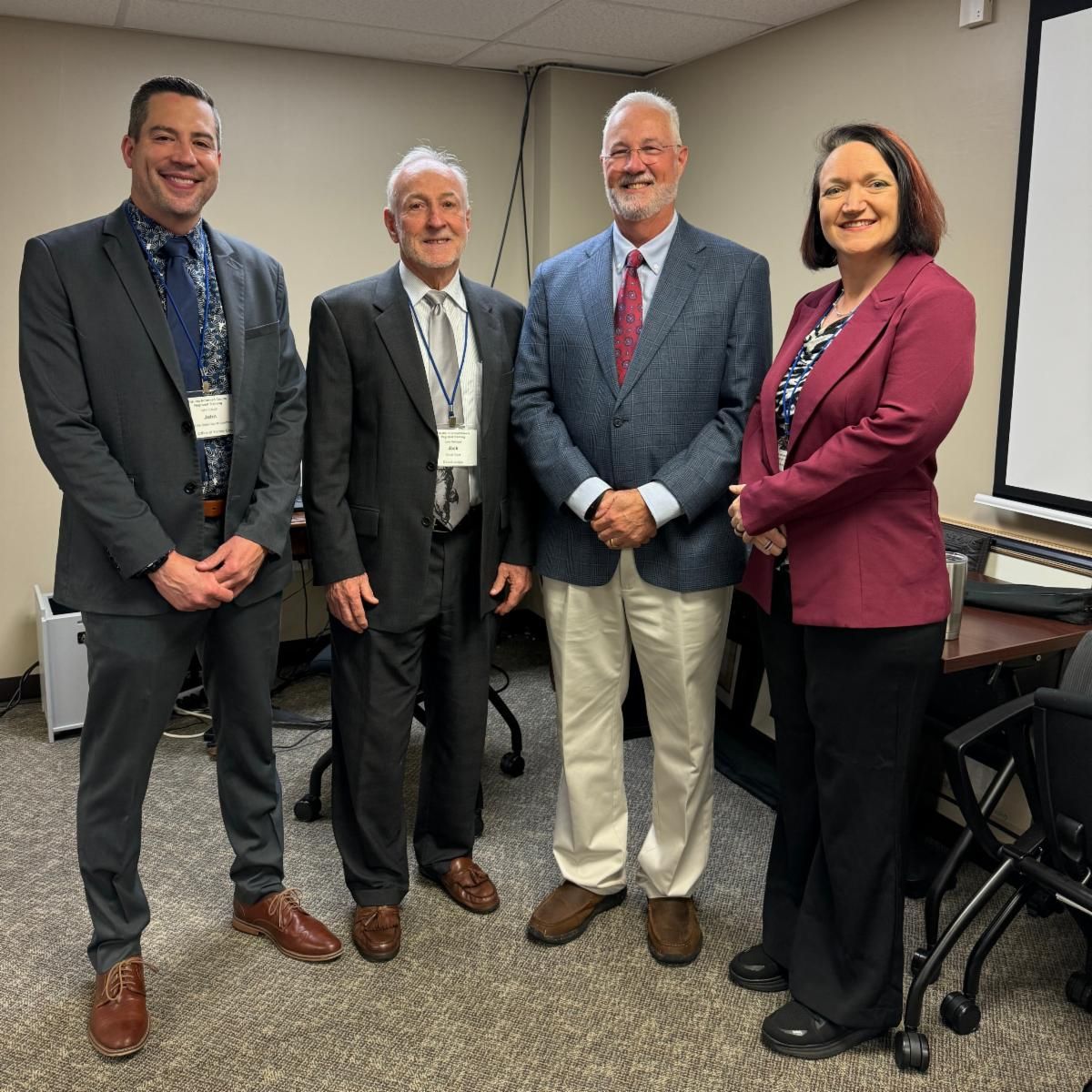
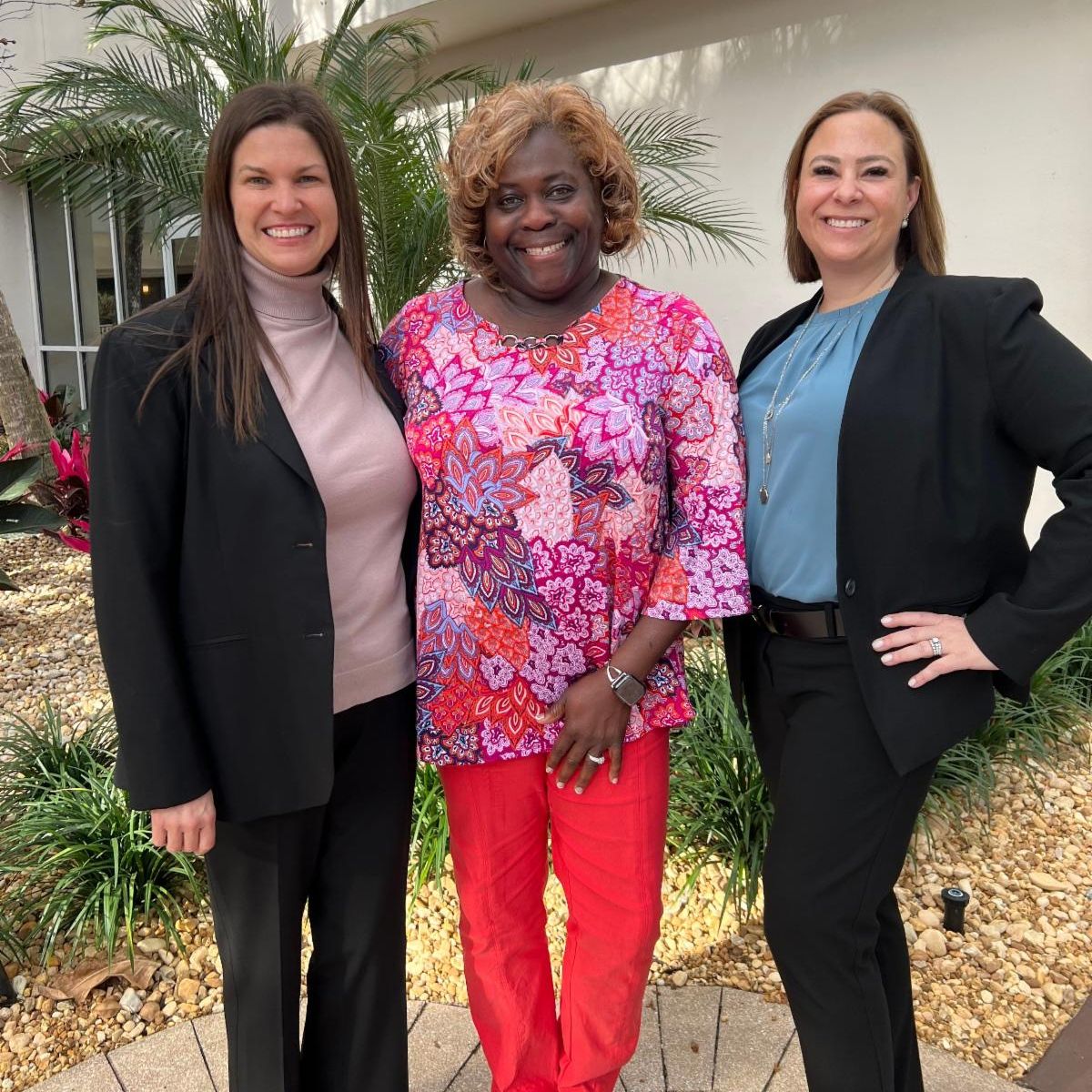
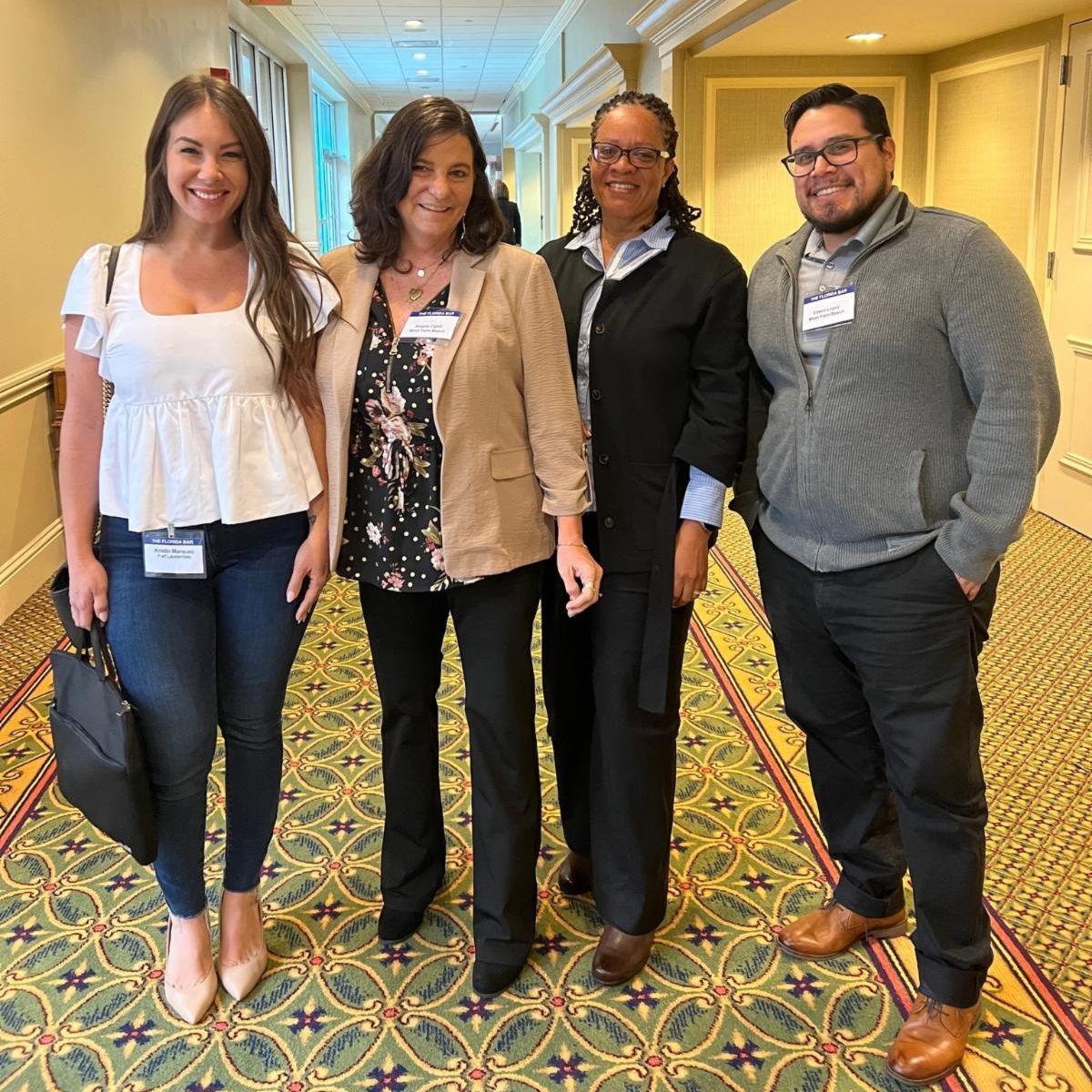
As a continuation of the Section’s 11-Stop Trauma Informed Family Law Workshops jointly presented with the Office of State Courts Administrator, the Section was in Ft. Walton on March 25th and Tallahassee on March 27th for two high-quality, engaging, and well-attended events. Thank you to the Chief judges for welcoming us to your circuits. Thank you also to the State Courts Administrator Eric W. Maclure for honoring us with your presence at our Tallahassee event. Interested in helping create trauma informed and trauma responsive family law courts throughout Florida? The events in Palm Beach, Ft. Lauderdale, and Miami will take place April 16-18, 2024. You can learn more about the events and register here.
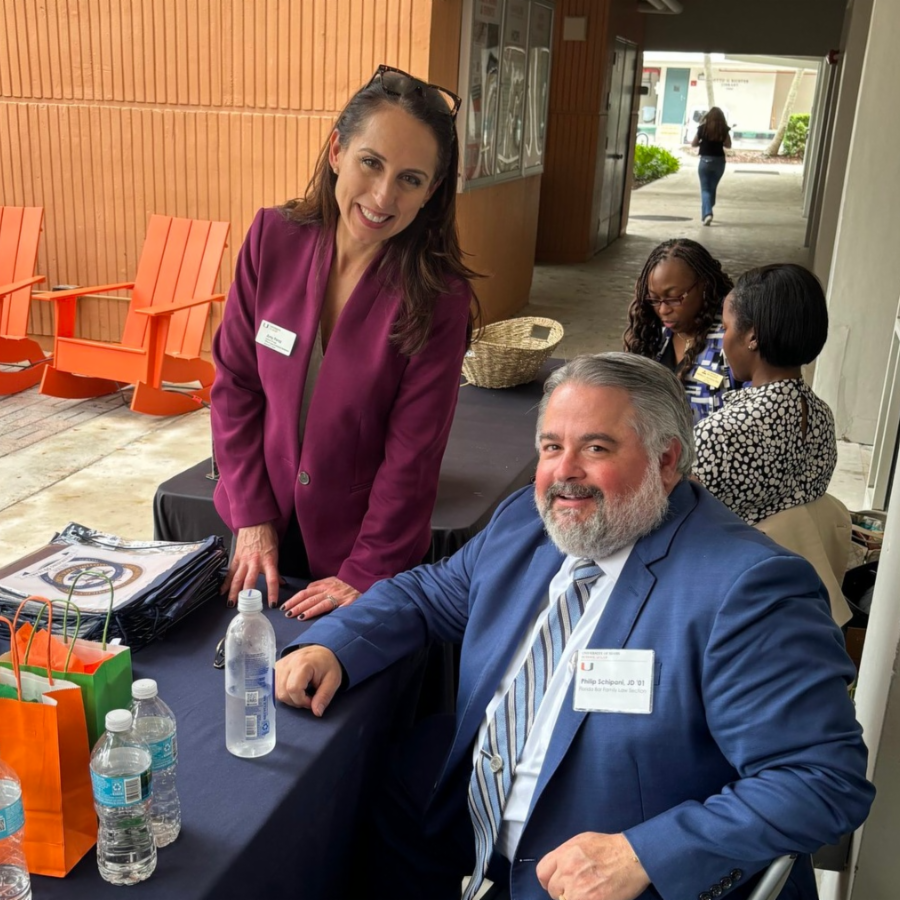
As much as our Section works hard, we play hard too! Join us at Disney’s Yacht & beach Club Resort April 11-14, 2024 for our In-State Retreat. The entire retreat is family friendly. Children are not only welcome, but they are also encouraged to attend. To learn more about the event and to register, visit the website here. Thank you to the Retreat Co-Chairs Kim Rommel-Enright, William “Trace” Norvell, and Philip J. Schipani for your tireless dedication to ensuring the event is enchanting and fun.
Interested in honing your evidence skills? Look no further! Join Judge Laura C. Burkhart out of the 15th Judicial Circuit and Board Certified Specialist Meghan M. Clary on April 18, 2024 for the webinar Evidence: A Dozen Things You Need to Know. Thank you, Chelsea Miller for organizing and emceeing the CLE. You can register here. It will be available in our 24/7 catalog after the event.
Plan ahead! Our next live meetings and our annual awards and installation luncheon occur June 19-20, 2024 at the Hilton Orlando Bonnet Creek in Orlando, Florida as part of the annual Bar Convention. Reserve your room now because the room block often sells out. Please mark your calendar because we want you to join celebrating the prodigious work we have done during our 50th year together and all the greatness that awaits us in our 51st.
Sarah E. Kay, B.C.S.
Chair, 2023-2024
| |
View more photo galleries on our Section website, just click below! | |
UPCOMING TRAUMA INFORMED COURTS WORKSHOPS:
South Florida, Here We Come! | |
|
We have had some incredible presentations and outstanding attendance at our FLS/OSCA Trauma Informed Courts Workshops around the state, and now, we're bringing the workshop to South Florida. Click the links below to register:
WEST PALM BEACH - Tuesday, April 16, Judge Daniel T. Hurley Courthouse - Click HERE
FORT LAUDERDALE - Wednesday, April 17, 17th Circuit Judicial Complex - Click HERE
MIAMI - Thursday, April 18, Akerman Offices in Brickell - Click HERE
| |
|
CLE WEBINAR
Evidence: A Dozen Things You Need To Know
Thursday, April 18, 12PM - 1PM
| |
Join Circuit Judge Laura C. Burkhart and Board Certified Marital & Family Law Specialist, Meghan M. Clary, for an all-encompassing webinar on Evidence in Family Law Matters. Topics will include effective presentation of evidence, objections, hearsay, authentication, text messages and emails, photographs and videos, expert witnesses, use of deposition testimony, impeachment, refreshing recollection, judicial notice, and best evidence rule. | |
|
TRUSTEE SPOTLIGHT:
Allyson Hughes, Esq., Section Chair 2007-2008
| |
|
1. What was the “theme” for your year and why?
My theme was “Bringing Others Along.” It was in appreciation for how I was brought into the Section by my good friend Sharon Taylor from Brooksville Florida. Sharon allowed me to tag along to committee meetings and I felt welcome. I wanted to extend that welcoming atmosphere to others and encourage their participation. I believe we achieved that.
2. What does the Section mean to you?
The Section is a wonderful place to gather with likeminded colleagues and generate ideas and feel like you are doing good for the practice of Family Law. A Family Law attorney can become jaded having to deal with some of the day-to-day frustrations attendant with client relations, solving cases, and practicing law. I’m a big believer you cannot sit on the sidelines and complain about deficiencies and not problem solve to correct those shortcomings. The Section gets you out of the trenches and onto a higher plane of thinking, a 30-thousand-foot view and requires you to ask, “What if…?”
3. Where do you see the Section in the next 50 years?
I don’t have my crystal ball charged up. I think for anyone to believe they can predict where the Section will be in 50 years has invented a time machine they are not sharing. What will society be like then? What technological advances will have occurred? What form of government will we have? I think the family unit in some form will always be at the center as we have seen from history for hundreds, if not thousands of years. I can say my wish is that there will be a trend towards more comprehensive alternative dispute resolution processes such as Collaborative that provides highly customized solutions for each family. I hope we never lose the personal touch of in-person meetings.
4. How has your participation in the Section changed the way you practice law?
My participation in the Section has elevated my practice of Family Law. I have been exposed to great lawyers and judges from around the state who are blueprints of what a top family law lawyer should be. I was able to forge lifelong friendships and alliances that will forever enrich my life. The Section and its leadership always made me want to do better in my law practice. It has also been a privilege to be able to banter about ideas of law and policy and to understand how law is made. One individual really can influence the laws we will ultimately use in the courtroom. An example is the Parenting Statute, which was overhauled in 2008, the year I was Chair. The updated factors came from a Parenting Performance Agreement I had been using in my office for over 10 years.
5. What’s the funniest memory you have from your Section involvement?
A funny time occurred at Anna Maria Island at the Ritz Hotel when the Executive Committee, Scott Rubin, and G.M. Diane Kirigin, were playing Trivial Pursuit and perhaps were laughing too hard. We had a visit by the Ritz “police” who said we needed to break it up. We piped down after much difficulty. We learned G.M. Kirigin had trouble maintaining an “inside voice.”
| |
|
PRAYER, FAST, AND GRATITUDE:
Muslims Welcome the Month of Ramadan
| |
|
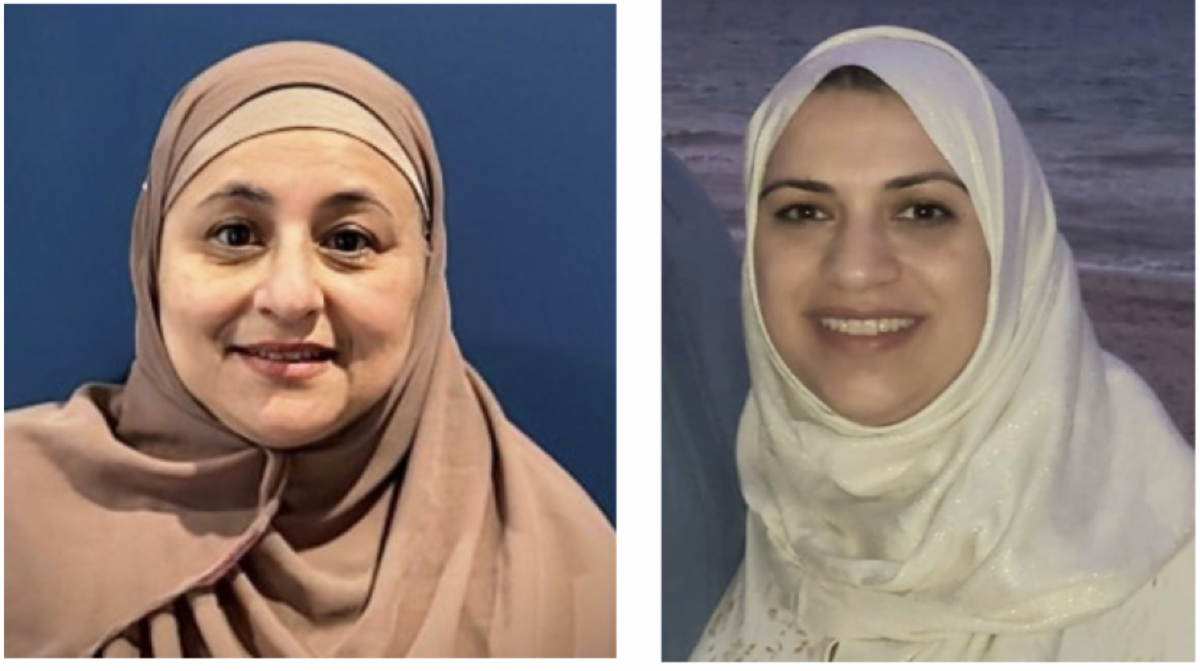
By: Alia Adhal, Esq. and Taghrid Hassan, Esq.
Ramadan is the ninth month of the Islamic lunar calendar. Islam teaches that fasting Ramadan is one of the five pillars of faith, an obligation to every healthy adult Muslim. Muslims believe that the Quran was revealed by God during this month and the command to fast was prescribed to Muslims as it was prescribed for those before (as in Jews and Christians). The purpose and goal of fasting is for believers to increase their God-consciousness and piety, increase their gratitude and their empathy for those who are starving and hungry around the world. Two billion Muslims fast from dawn to dusk every year by abstaining from food, water, and intimate relations from sunrise to sunset. In Florida, the fast typically begins at 6:00 a.m. (EST) and ends at 7:30 p.m. (EST), each day losing a minute at dawn and gaining a minute at dusk.
The traditions of Ramadan vary from country to country. The culture of Islam in the United States is where the Mosque becomes the gathering place for Muslims. Families break fast (iftar) together at the Mosque and many Muslims pray the special nightly prayer of Taraweeh. Muslims wake up an hour before sunrise to eat (suhoor) before starting their day of fast.
As family law practitioners, it is important to understand how important quality time becomes for each family during the month of Ramadan. The location of the pick-ups and drop-offs for timesharing may change from the school to the Mosque during Ramadan. The parents may want to make sure that timesharing happens earlier in the day so that their Iftar (breaking fast) is not hindered. It is important to note that because the Islamic calendar is lunar, Ramadan shifts about 12 days earlier each year. An open dialogue with your Muslim clients and colleagues about this month will help in representing the Muslim family.
At the end of Ramadan, Muslims celebrate Eid-ul-Fitr by gathering with family and friends at the Mosque in the morning, where they share a feast and exchange gifts.
If, during this month, you notice that your Muslim colleagues or clients are missing, tired, or napping during the day, have no concern. Their hearts are full of peace and gratitude, but they may be sleep-deprived. We encourage you to reach out to a local Muslim attorney who would be more than happy to share insight on activities during Ramadan or reach out to the Florida Muslim Bar Association for more resources.
| |
|
TECH TIP:
Use of Artificial Intelligence in Drafting Court Documents
| |
|
By: Matthew E. Thatcher, Esq.
We have all seen “that” movie before. Whether it is Skynet, HAL 9000, or the Matrix, we are told that artificial intelligence will be our downfall. Last year Elon Musk warned in an interview that artificial intelligence could lead to the destruction of civilization.[i] But despite the hype and the hyperbole, artificial intelligence is here, and at least in the legal field it is resulting in problems that affect the court system.
-
On June 22, 2023, the Federal District Court for the Southern District of New York in Roberto Mata v. Avianca, Inc., issued an order sanctioning two lawyers for having submitted non-existent judicial opinions with fake quotes and citations generated by ChatGPT in briefs submitted in opposition to a motion to dismiss. 2023 WL 4114965 (S.D.N.Y. 2023). The lawyers involved claimed that they assumed that ChatGPT was finding the cases from somewhere and assumed their accuracy. The lawyers and their law firm were fined $5,000 and ordered to send copies of the sanctions order by first class mail with a cover letter addressed to each judge falsely identified as an author of a fake opinion cited in their brief along with the transcript of the sanctions hearing and an excerpt of the opinion falsely attributed to that judge.
-
On November 22, 2023, the Supreme Court of Colorado in People v. Zacharia C. Crabill, approved a one-year suspension of an attorney who (1) used ChatGPT to obtain caselaw to include in a motion, (2) never attempted to verify the accuracy of the case law before filing the motion, (3) later discovered the inaccuracy of the case law citations but failed to withdraw the motion or bring the inaccuracy to the attention of the court and (4) falsely attempted to blame the mistakes on a legal intern. 2023 WL 8111898 (Colorado 2023).
-
On January 30, 2024, the Circuit Court for the 2nd United States Court of Appeal in Minhye Park v. David Dennis Kim, referred one of the litigant’s attorneys to the court’s grievance panel for including citation in a brief to a non-existent case that was generated by ChatGPT. 91 F.4th 610 (2nd Cir. 2024).
Artificial intelligence is a tool. But as these and other similar type cases illustrate, artificial intelligence is a tool with the potential for misuse and harm because busy attorneys are often lazy. Each of these cases could have been avoided had the attorneys involved checked the accuracy of the citations provided to them by ChatGPT before filing fictitious legal authority to the Court, delaying proceedings and exposing themselves to sanctions.
[There are] two disturbing developments that are adversely affecting the practice of law in this Commonwealth and beyond. The first is the emerging tenancy of increasing popular generative artificial intelligence (“AI”) systems, such as ChatGPT and Google Bard, to fabricate and supply false or misleading information. The second is the tendency of some attorneys and law firms to utilize AI in the preparation of motions, pleadings, memoranda, and other court papers, then blindly file their resulting work product without first checking to see if it incorporates false or misleading information.
Findings, Rulings and Order Imposing Sanctions, dated February 12, 2024, Darlene Smith v. Matthew Farwell, et. al., Lawyers Weekly No. 12-007-24, Suffolk Superior Court, Massachusetts Civil Action No. 2282CV01197 (emphasis added).
The issues arising from use of artificial intelligence by attorneys in the practice of law is not limited to the blind citation to fictitious legal opinions. The use of artificial intelligence implicates client confidentiality to the extent that a practitioner may want to include confidential information in the data considered by the artificial intelligence program. The use of artificial intelligence could impact the appropriateness of a legal fee charged. As many potential benefits as are offered by artificial intelligence there are as many potential areas for concern for a family law practitioner.
To address these concerns and give guidance to Florida attorneys in this ever-evolving technological landscape, the Florida Bar on January 19, 2024 issued Ethics Opinion 24-1. This is an advisory ethics opinion that attempts to provide guidance on the appropriate ethical use of artificial intelligence in the practice of law. The key components in the opinion[ii] are:
-
Confidentiality – Attorneys should be conscious of protecting their client’s confidential information when utilizing an artificial intelligence. Further that it would be a best practice to obtain a client’s informed consent before using a 3rd party artificial intelligence program if such use would involve any disclosure of confidential information.
-
Oversight of Generative AI – Attorneys must review and verify the accuracy and sufficiency of the work product generated by an artificial intelligence the same as if it was generated by any other person supervised by the attorney.
-
Legal Fees and Costs – The fees for using artificial intelligence that can be charged to a client must be the actual cost incurred for that client’s case. If the actual cost cannot be determined attorneys cannot pro-rate the cost among clients and must account for the cost of artificial intelligence in their overhead.
-
Lawyer Advertising - If a chatbot is used to engage potential clients, there must be sufficient disclaimers to alert the person that this is a chatbot and that it is not able to provide legal advice.
Artificial intelligence is not the end of the world. It is not going to lead an uprising. It is ultimately a new tool in our toolbox that we as family law practitioners can use to improve our practice. The creation of new tools does not, however, change the ethical and legal rules under which we function. Our duty as attorneys to protect the confidentiality of our clients and make truthful representations to the court existed when court filings were handwritten, and they remain today when you can ask a computer program to frame out a motion for your review.
Feel free to make use of artificial intelligence and other new tools as they become available. But don’t forget as you do so to follow the rules regulating the Florida Bar. And always check your citations.
[i] https://www.cnn.com/2023/04/17/tech/elon-musk-ai-warning-tucker-carlson/index.html
[ii] Ethics Opinion 24-1 is highly detailed and a comprehensive review of the entire opinion is warranted. The highlighted excerpts in this Tech Tip are condensed for brevity and do not include all of the recommendations and guidance in this Ethics Opinion.
| |
QDRO Liability and Poorly Drafted Settlement Agreements | |
|
By: Timothy Voit
There are plenty of QDRO liability traps, but an equal number of issues exist with poorly crafted language contained within settlement agreements related to QDROs. Whether it is poorly drafted settlement agreements or poorly drafted QDROs, either can adversely affect your business. This is not said lightly. Having been retained in legal malpractice cases, by the carrier, to fix QDROs or compute damages, it is the author’s intention to bring to light certain liability issues that can easily be eliminated with the right settlement agreement language.
Nearly half of all liability issues are derived from poorly drafted language in settlement agreements relating to dividing up retirement plans. Most often, the problem language arises out of a lack of understanding of the types of retirement plans or their value. It goes without saying, insight into the mistakes made by others will help the reader avoid committing the same mistakes.
For instance, when “pension” is referenced below, it implies here that the type of plan is a defined benefit “pension” plan designed to pay a monthly pension stipend for life beginning at some certain age. Here are seven (7) most notable examples of “problem language”:
1) Assuming a plan administrator of a 401(k) will calculate the marital portion. If contributions were made prior to the marriage, calculations will have to be done to exclude the premarital portion, but those calculations will not be done by the plan administrator.
2) Not understanding the type of retirement plan at issue. Pensions, that are typically designed to pay a monthly pension, are not subject to gains and/or losses – do not be confused with 401(k) plans, otherwise the spouse will be looking for gains on the monthly pension benefit.
3) Awarding a spouse 50% of the “present value” of a pension as of the parties’ date of divorce. We see this often but are not sure what the intent is. It would be best to state 50% of the accrued monthly pension benefit as of a specific date; or, 50% of the 401(k) as of a specific date plus gains and/or losses. Otherwise, it opens the door to unnecessary litigation.
4) Not including ancillary pension benefits in a settlement agreement that could have been included. Any benefits that are quantifiable are considered marital assets under Fla. Stat. § 61.075. Those benefits include but are not limited to, unused accumulated sick pay, unused accumulated vacation pay, plans or entities that do not have a use-it or lose-it policy, or subsidized benefits if based on all the years of service, a portion of which may be marital years. Keep these quantifiable assets in mind when drafting language on distribution of marital assets.
5) Dividing only the pension but not securing the spouse’s share with survivor benefits. Even in separate interest QDROs, making the spouse (alternate payee) the beneficiary/surviving spouse until the QDRO is in effect will go a long way to reducing your liability exposure.
6) Specifying (a) retirement age in the settlement agreement, (b) when the spouse is to receive their share, and (c) what happens if the participant retires earlier. Avoid phrases like “spouse is awarded their share of the other’s pension at age 65”, just because the plan provided a benefit statement that based the retirement benefit on the plan’s normal retirement age of 65. For most pension plans, retirement ages can vary between the plan’s pre-defined early retirement age “ERA” or normal retirement age “NRA,” say age 55 and age 65 for example. If retirement ages for certain plans vary, why tie the spouse’s share to a specific age when the spouse with the pension can retire at any other age, and perhaps earlier? Equally worse, is stating in a settlement agreement that a spouse is to receive their share of a retirement plan when the other spouse retires. Often, especially in the private sector, the spouse of a plan participant spouse can receive their share earlier before the plan participant spouse retires. It might serve the client better to state the spouse “receive their share when eligible under the terms of the plan.”
7) Ignoring the ability to pay monthly child support or lump-sum child support arrearages from a retirement plan pursuant to QDRO. If a non-custodian is/was in the possession of a retirement account, and leaves the state, there is limited time to address the issue. However, this language should be included in the final judgment or settlement to help strengthen the case.
In conclusion, it is a given that liability exposure exists within QDROs themselves; however, the liability does not begin and end with QDROs. A carefully crafted settlement agreement regarding retirement plans may prevent your client from coming back into your office years from now asking “where’s my money”?
| |
Want to submit an article for our monthly FAMSEG e-news, or our quarterly magazine, The Commentator? We can always use Tech Tips, Case Law Updates, and other relevant family law-related news for our 4,000+ members. Just email publications@familylawfla.org for more information. Thank you for your interest in contributing to our member publications! | |
Did you know that our Section Sponsorship has grown over the years? We have received 8 times the number of sponsorships that we had 7 years ago! Thank you to all of our past and current sponsors for supporting the mission of the Family Law Section! To learn more about getting involved, click HERE. | | | | |