"Scenarios are not predictions. They are vehicles

for an imaginative leap into the future."


— Peter Schwartz, author of The Art of the Long View

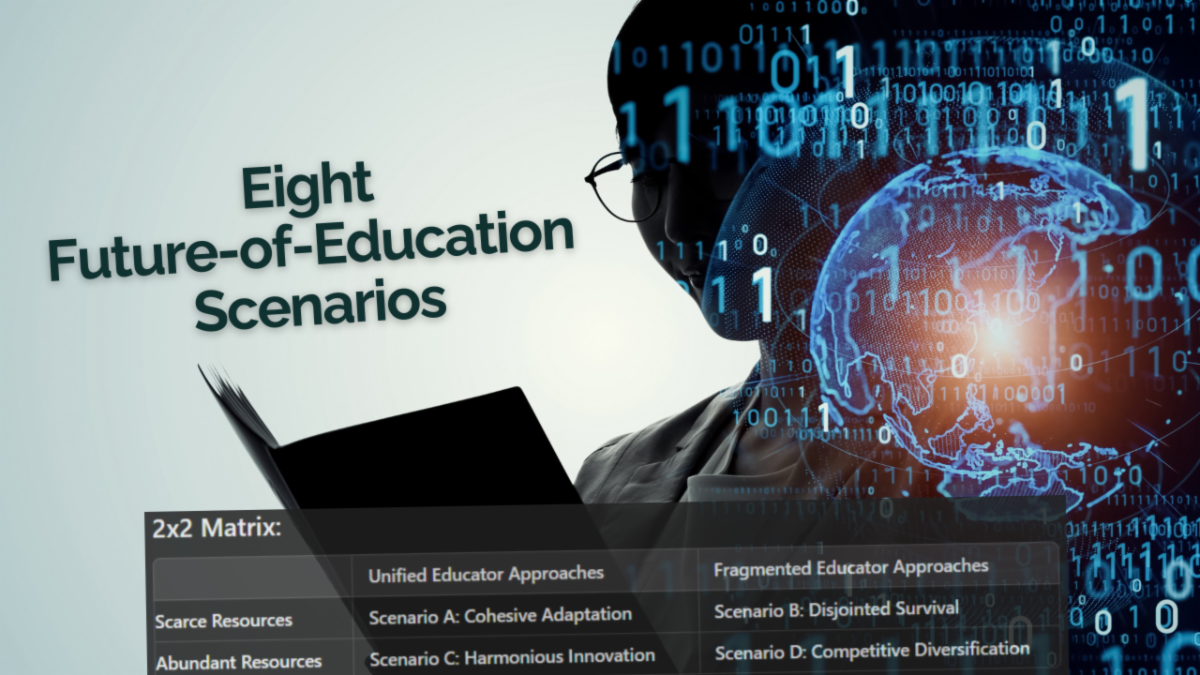
Prompt: "I am interested in developing an education strategy for the future. Please explore how the strategy might differ under varying AI development scenarios. Consider the following variables: Resource availability: Scarce vs. Abundant and Educator approaches: Unified vs. Fragmented.”


Setser Group believes that understanding the potential trajectories of AI is crucial for preparing educators and leaders to navigate the complexities of a rapidly evolving landscape.


We turned to The Four Futures Planner GPT to develop scenarios that provide comprehensive, data-driven, and forward-thinking analysis and insights. We do this because AI can process vast amounts of information, identify emerging trends, and generate diverse, plausible futures, enabling organizations to make informed strategic decisions. Four Futures identifies the STEEP (Social, Technological, Economic, Environmental, and Political) factors in scenario planning. 


These are the same scenario-planning techniques used by the World Economic Forum, RAND Corporation, Stanford University, and many others. Now, we can all benefit from these same strategies and techniques with AI. Let's explore the four types of scenarios, and then we'll apply our prompt to see them in action:

As Good as It Gets: This scenario is based on the possibility that current AI systems represent the peak of what we can achieve, similar to other technologies that have plateaued after rapid initial development.

Slow Growth: This scenario reflects a more gradual, manageable rate of technological improvement, similar to the steady evolution of consumer electronics or pharmaceuticals.

Exponential Growth: This scenario extrapolates the rapid growth in computing power and other technologies to AI, considering a future where AI capabilities double at an accelerated rate.

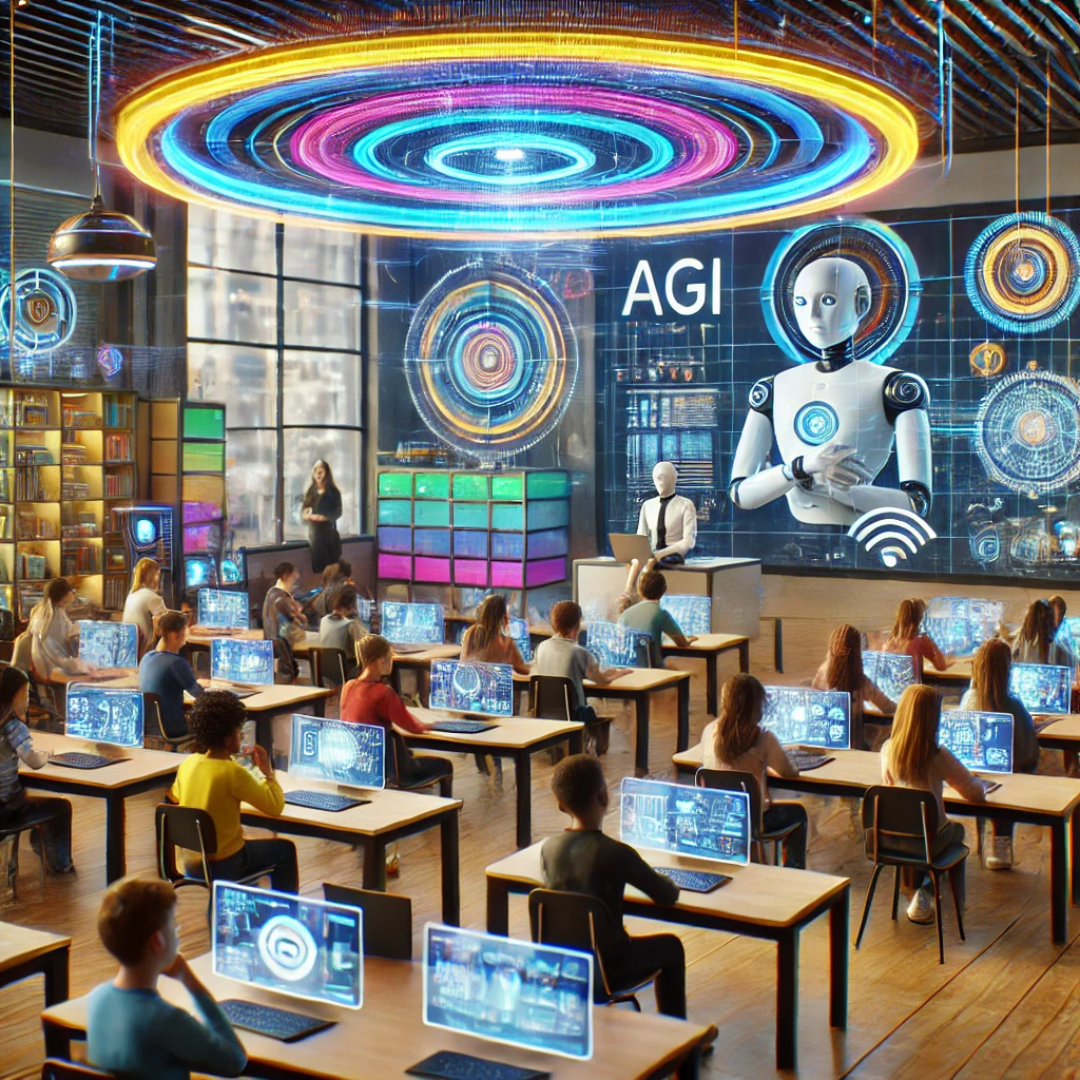
AGI (Artificial General Intelligence): This scenario is based on the theoretical possibility that AI could achieve general intelligence, leading to a transformative and possibly superintelligent future.

EIGHT FUTURE-SCHOOL SCENARIOS

Scenarios are tools that help you anticipate challenges and seize opportunities. Use these insights to ensure our systems can adapt and flourish. We don’t want just to survive; we want to thrive.


To better understand each potential future, we have broken down the scenarios into key components: Scenario title, Key Theme, and AI Development Stage. The Vignette provides a narrative glimpse into the possible future, while the Indicators help us recognize when a scenario is unfolding in real time.

Scenario: "Rallying Together"

Key Theme: Cohesive Adaptation 

AI Development Stage: As Good as It Gets

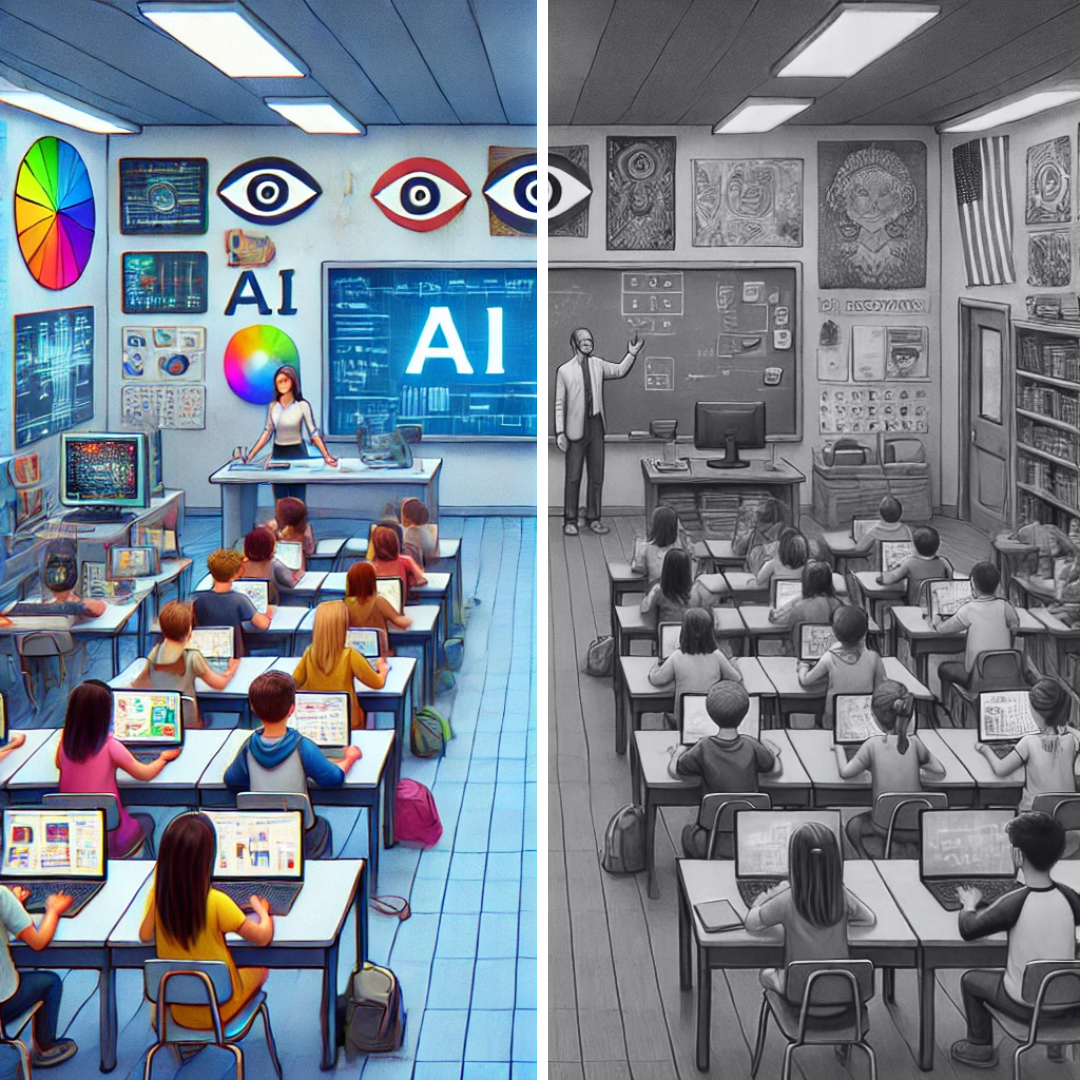
Vignette: In a world where AI advancements have plateaued, educational resources remain scarce. However, educators unite to maximize limited resources. They share best practices, collaborate on open-source materials, and develop standardized curricula that leverage existing AI tools to the fullest. Community-driven efforts ensure that even under resource constraints, education remains accessible and effective.

Indicators:

  • Increased collaboration among educators and institutions.
  • Widespread adoption of open-source educational materials.
  • Emphasis on practical and essential skills.

Scenario: "Survival of the Fittest"

Key Theme: Disjointed Survival 

AI Development Stage: As Good as It Gets

Vignette: AI development stalls and resources remain limited. Without a unified approach, educators and institutions adopt varied strategies to cope with scarcity. Some schools focus on vocational training, while others emphasize traditional academic subjects. The lack of coordination leads to significant disparities in educational quality and access.

Indicators:

  • Diverse and inconsistent curricula across regions.
  • Significant differences in educational outcomes.
  • Localized innovations but widespread inefficiencies.

Scenario: "Building the Future Together"

Key Theme: Harmonious Innovation 

AI Development Stage: Slow Growth

Vignette: AI development continues at a steady pace, leading to gradually increasing resources. Educators unite to innovate and integrate AI into the curriculum. They collaborate to develop adaptive learning systems, personalized education plans, and new teaching methods that enhance student engagement and outcomes. This cooperative approach ensures that the benefits of AI are widely shared.

Indicators:

Development of adaptive learning technologies.

Consistent improvements in student performance.

Broad implementation of personalized education plans.

Scenario: "Race for Excellence"

Key Theme: Competitive Diversification 

AI Development Stage: Slow Growth

Vignette: With moderate growth in AI capabilities and resources becoming more abundant, educational institutions and educators pursue diverse strategies independently. Competition drives rapid innovation but also leads to fragmentation. Some schools become centers of excellence in specific fields, while others struggle to keep up. The landscape of education becomes highly varied, with pockets of exceptional quality and areas of mediocrity.

Indicators:

Emergence of specialized educational institutions.

Varied adoption rates of new technologies.

Disparities in educational access and quality.

Scenario: "AI-Empowered Education"

Key Theme: Coordinated Progress 

AI Development Stage: Exponential Growth

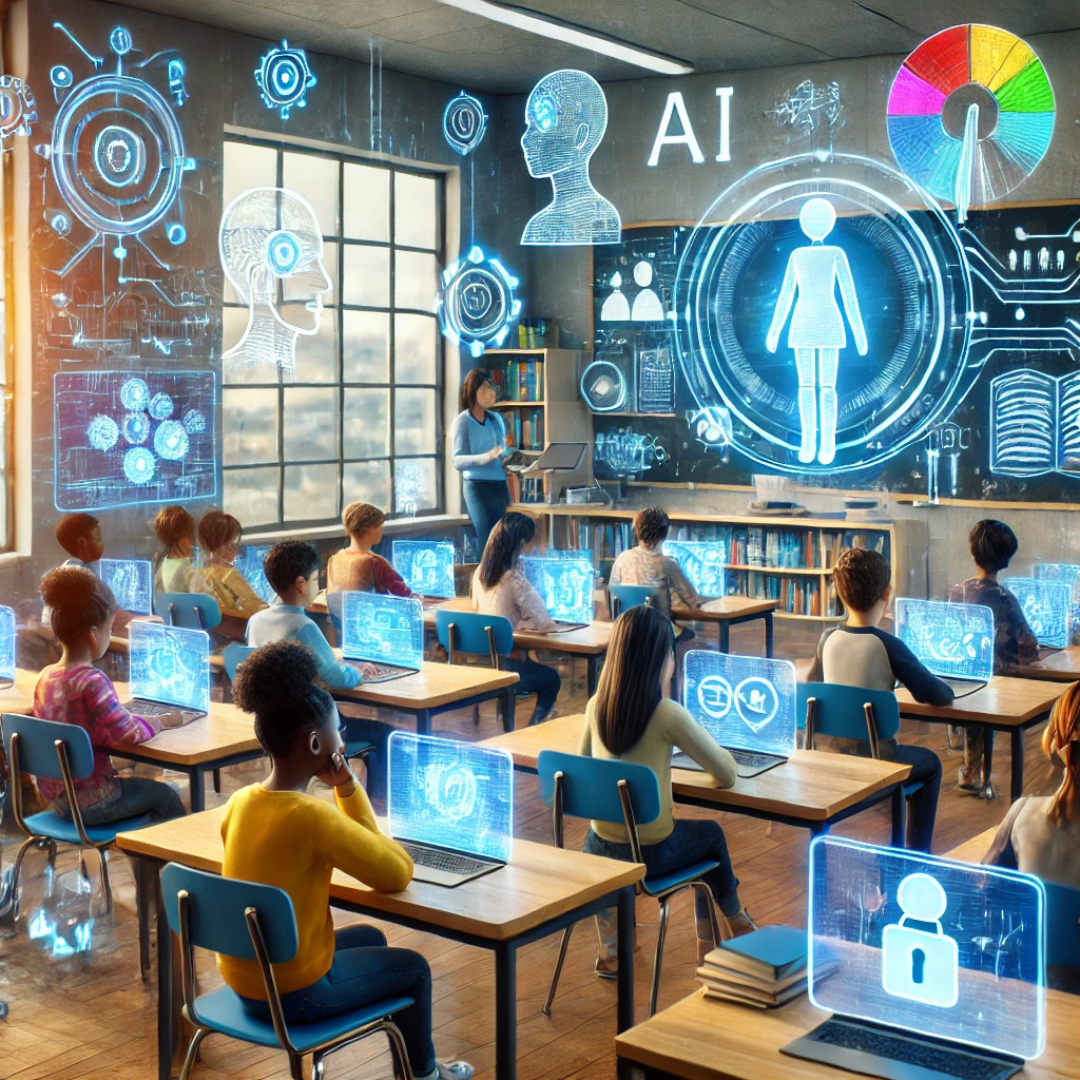
Vignette: Exponential growth in AI capabilities brings abundant resources and opportunities. Educators come together to harness AI's full potential, creating a highly integrated and efficient education system. AI tutors, virtual classrooms, and personalized learning experiences become the norm. Unified efforts ensure that all students benefit from the rapid advancements in technology.

Indicators:

  • Ubiquitous use of AI in classrooms.
  • Highly personalized learning experiences.
  • Reduction in educational inequalities.

Scenario: "Diverging Paths"

Key Theme: Fragmented Evolution 

AI Development Stage: Exponential Growth

Vignette: AI capabilities grow exponentially, but educators take divergent paths. Some institutions embrace AI wholeheartedly, creating cutting-edge learning environments, while others lag due to resistance or lack of resources. This results in a fragmented education system where students' experiences and outcomes vary widely based on their school's approach to AI integration.

Indicators:

  • Wide variance in technology adoption.
  • Mixed educational outcomes.
  • Pockets of innovation alongside traditional practices.

Scenario: "A New Era of Learning"

Key Theme: Unified Renaissance 

AI Development Stage: AGI

Vignette: The advent of AGI transforms education. With abundant resources and unified approaches, educators collaborate globally to redefine learning. AGI tutors provide individualized instruction, and curricula adapt in real-time to students' needs. This unprecedented level of personalization and support leads to a renaissance in education, with every student reaching their full potential.

Indicators:

  • Global standardization of educational excellence.
  • Real-time adaptive learning systems.
  • Elimination of traditional educational barriers.

Scenario: "Islands of Knowledge"

Key Theme: Fragmented Future 

AI Development Stage: AGI

Vignette: AGI emerges, but educational strategies remain fragmented. Some regions or institutions harness AGI to revolutionize learning, while others fail to adapt due to political, cultural, or economic barriers. The education landscape becomes a mosaic of high-tech and traditional approaches, leading to significant disparities in student outcomes and opportunities.

Indicators:

  • Uneven distribution of AGI benefits.
  • High variability in educational quality.
  • Persistent educational inequalities.

Understanding how different AI development stages and resource conditions might shape the future allows us to anticipate challenges and seize opportunities. These insights empower us to build resilient, adaptable education systems that thrive in any potential future.

YOUR TOMORROW BEGINS TODAY

We invite you to reflect on these scenarios and consider how your organization can prepare for the future. Join us on this journey by leveraging the power of AI to develop your own strategic scenarios. Reach out to Setser Group to learn how we can help you harness these insights and create a robust plan for your educational institution. Together, we can navigate the future of education and ensure every student has the opportunity to succeed.


Contact us today to start planning for tomorrow!

Schedule a Session

TAKE OUR WAYFINDER POLL

Which AI development scenario do you believe will most likely shape the future of education?
As Good as It Gets: AI advancements plateau, and we work within existing capabilities.
Slow Growth: AI develops steadily, leading to gradual improvements and adaptations.
Exponential Growth: AI capabilities expand rapidly and quickly transform education.
AGI: AI achieves general intelligence, leading to profound changes in education.

Share on Social Media


The latest Wayfinder newsletter explores the future of education through 8 AI-driven scenarios! Learn how varying levels of AI development—from slow growth to AGI—could transform learning and teaching. Equip yourself with the insights to thrive in any future!


#Education #AI #FutureOfLearning #ScenarioPlanning #SetserGroup

LinkedIn Share This Email
X Share This Email
Facebook  X  Linkedin  Instagram