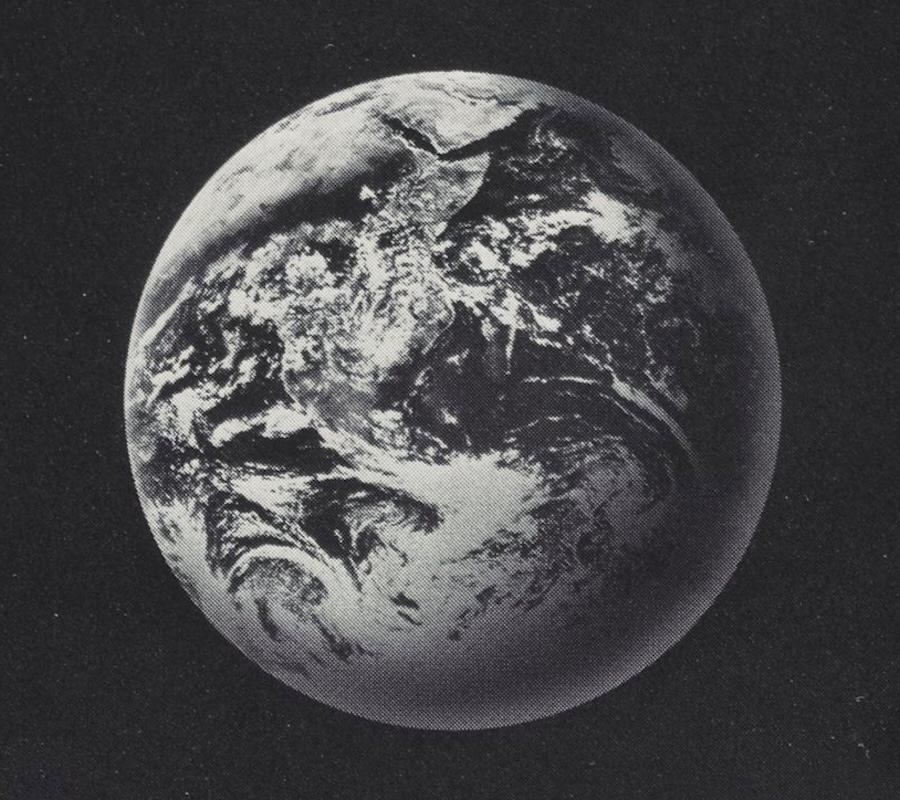
Population: 4,019,000,000, a Beckman Instruments ad featuring a view of Earth from outer space, 1977. 📷 Science History Institute | |
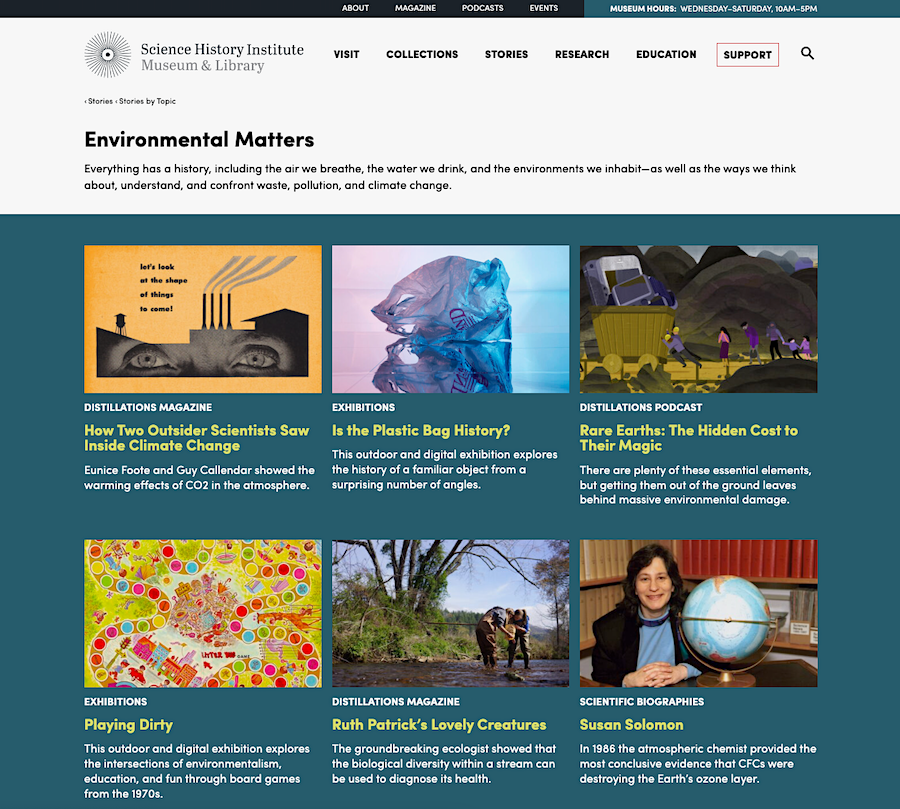
Screenshot of the Environmental Matters page from our site’s new Stories by Topic section. 📷 Science History Institute | |
|
Sciencehistory.org Is 2024 Webby Honoree
The Institute is proud to announce that sciencehistory.org has been named a 2024 Webby Honoree in the 28th Annual Webby Awards in the science category. Hailed as the “internet’s highest honor” by the New York Times, the Webby Awards are presented by the International Academy of Digital Arts and Sciences, the leading awards organization honoring excellence on the internet. We share this prestigious recognition with our partners at Zivtech, the Philadelphia-based design and development agency that worked so diligently with us on our recent site redesign.
| |
|
Our Celestial Celebration Was Out of This World!
We’d like to thank everyone near and far who came out for our First Friday Celestial Celebration on April 5! As one of our most popular First Friday events ever, visitors made their own rockets, explored the workings of the astrolabe, saw sunlight translated to sound via assistive technology, decoded alchemical planetary symbols, and so much more. But the star of the show was most definitely our super cool solar eclipse glasses! We hope they made viewing this extraordinary natural phenomenon even more fun.
If you’re looking for an Earth Day-friendly way to reuse your eclipse glasses, we’ve teamed up with sustainable store Good Buy Supply to ship leftover glasses to schools in South America for the solar eclipse taking place there in October. You can drop off your glasses—yes, even non-Institute ones—when you visit our museum or at Good Buy Supply at 1737 E. Passyunk Avenue.
| |
All events are free and take place online or at the Science History Institute at 315 Chestnut Street in Philadelphia unless otherwise noted. | |
|
Wednesday, April 17, 2024
5pm–8pm EDT
| | |
Join the American Association of Textile Chemists and Colorists (AATCC) for An Evening of Color filled with insightful textile topics. Take a tour of the Institute’s BOLD exhibition, hear from PANTONE’s color of the year creator, and learn about natural dyes. Tickets are $40 for general admission; $20 for students. A 15% Science History Institute discount will be automatically applied at check out. | |
|
Thursday, April 18, 2024
6pm–8pm EDT
| | |
Join us in person or online for our next Science and Society talk featuring experts from Philadelphia’s leading fashion sustainability initiatives, who will discuss what the future looks like for sustainable fashion and how circular design can help combat “fast fashion” pollution and transform the relationships between us, our clothes, and our environment. The lecture will begin at 6pm for both online and in-person attendees. A reception follows at 7pm. | |
|
Saturdays
April 20, 27, 2024
May 4, 11, 18, 25, 2024
10am–5pm EDT
| |
|
Join us in our museum EVERY SATURDAY for Stories of Science, a family-friendly program that highlights the many strange and surprising stories from the history of science! Our fun, interactive activities are designed for science lovers of all ages. Admission is free and reservations are not required. | |
|
Saturday, April 20, 2024
2pm EDT
| | |
Join our museum’s Gallery Guides for a Dyes & Textiles “drop-in” tour highlighting the remarkable scientific properties of natural dyes and textiles, the technology behind synthetic clothing, and the impact of fashion on human health and the environment. Admission is free and reservations are not required. | |
|
Tuesday, April 23, 2024
6pm–7pm EDT
| | |
The Science History Institute has teamed up with online learning platform Roundtable by the 92nd Street Y, New York to offer you compelling courses from the history of science. Join our Distillations podcast team for the third session of this five-part course as we discuss the ethical treatment of human remains and how this practice, when done correctly, is imperative to our understanding of the past. This programming is part of Innate, an ongoing project that explores the roots of racism in American science and medicine. The course is free, but registration is required. | |
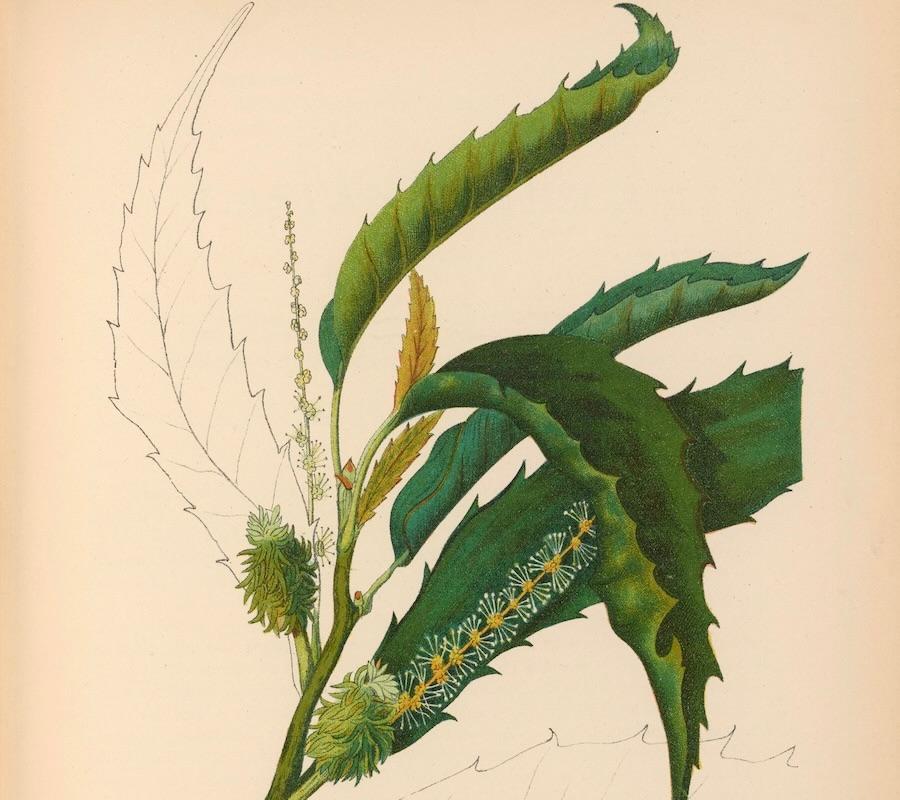
Hand-colored illustration of castànea vésca (sweet chestnut), from Medicinal Plants, 1892. 📷 Science History Institute | |
|
Friday, May 3, 2024
5pm–7pm EDT
| | |
At our May First Friday, step into the shadows of medicine and mystery and join us for the grand opening of our newest ExhibitLab, Poisons and Panaceas: Inside the 19th-Century Medicine Cabinet. First Fridays are free and open to the public. Attendees will receive a 10% discount to National Mechanics restaurant. | |
|
Saturday, May 4, 2024
2pm EDT
| | |
Join our museum’s Gallery Guides for a “drop-in” Women in Chemistry Tour highlighting the central role of women in shaping chemistry and the material sciences throughout history. Admission is free and no reservations are necessary. | |
|
Wednesday, May 8, 2024
5:30pm–8pm EDT
| | |
Join us for our annual celebration of exceptional achievements in chemistry, chemical engineering, the life sciences, and allied fields and industries honoring MIT professor Paula Hammond, TIAX founder Kenan Sahin, and Scripps CEO Peter Schultz. The evening will feature brief talks from our awardees, great conversation about science, and light refreshments, all for free! Registration required. | |
Senator Edmund Muskie addresses the Earth Day crowd at Philadelphia’s Fairmount Park, 1970. 📷 1970 Earth Week Committee of Philadelphia | |
All Wrapped Up in Ethocel, ad for the Dow plastic used in packaging material that promises to “wrap up the world,” 1938. 📷 Science History Institute | |
|
The Science History Institute Digital Collections house more than 13,330 curated items, including rare and modern books, scientific instruments, letters, photographs, advertisements, videos, oral histories, and more:
-
Pollution Solution, environmental board game whose objective is to clean up the polluted areas of PS Township, 1989
-
Earth, allegorical illustration of a woman representing the earth element, from The Grasselli Chemical Company Catalog, ca. 1900
| |
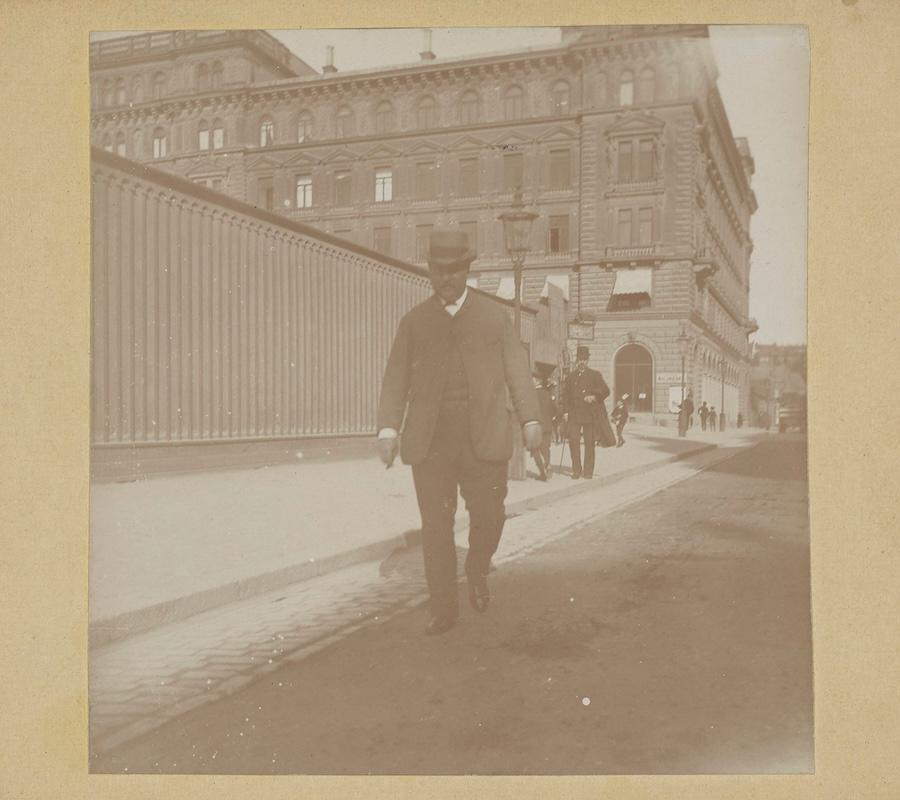
Photo of physical chemistry founder Svante Arrhenius walking down a street in Stockholm, 1895. 📷 Science History Institute | |
|
Svante August Arrhenius
A Swedish scientist who studied both chemistry and physics, Svante August Arrhenius (1859–1927) became a founding father of a new field: physical chemistry. The 1903 Nobel laureate also applied physicochemical principles to the study of meteorology, cosmology, and biochemistry. Arrhenius was an early discoverer of the effects of increased carbon dioxide in the atmosphere, proposing that higher concentrations of greenhouse gases cause global warming.
| |
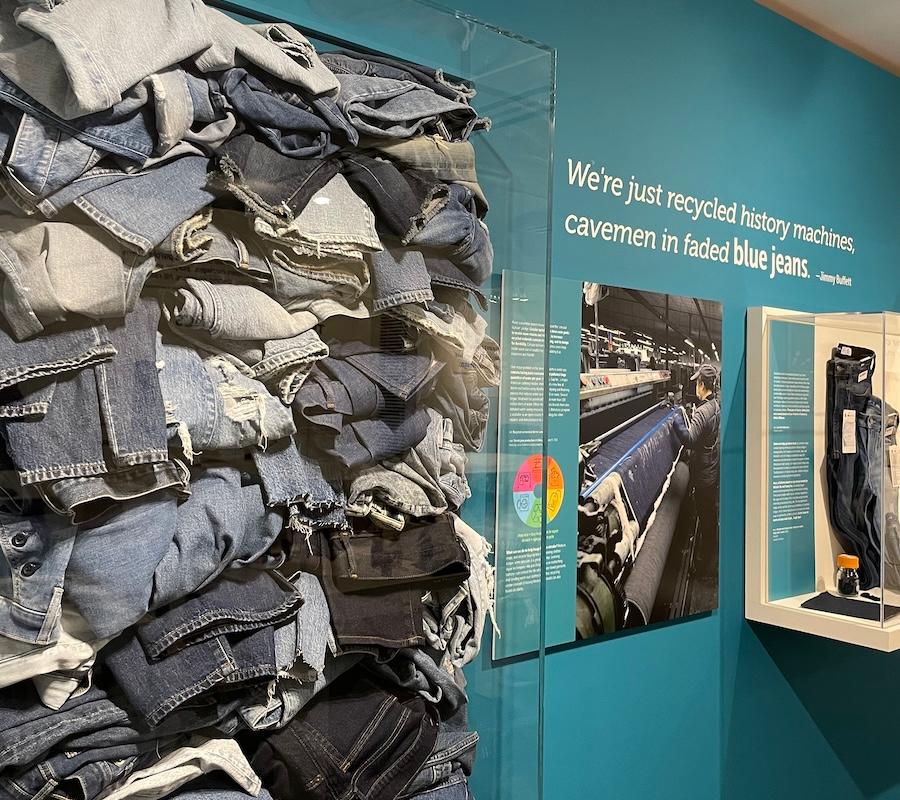
Display case of environmentally unfriendly blue jeans featured in the Sustainable Futures section of our BOLD exhibition, which highlights the need for a more sustainable approach to denim-making. 📷 Science History Institute | |
|
The Science History Institute Museum is open Wednesday through Saturday, 10am to 5pm. Admission is free.
HACH GALLERY
HORIBA EXHIBIT HALL
BUILDING FAÇADE
MUSEUM MEZZANINE
DU PONT GALLERY
DU PONT LOBBY
| |
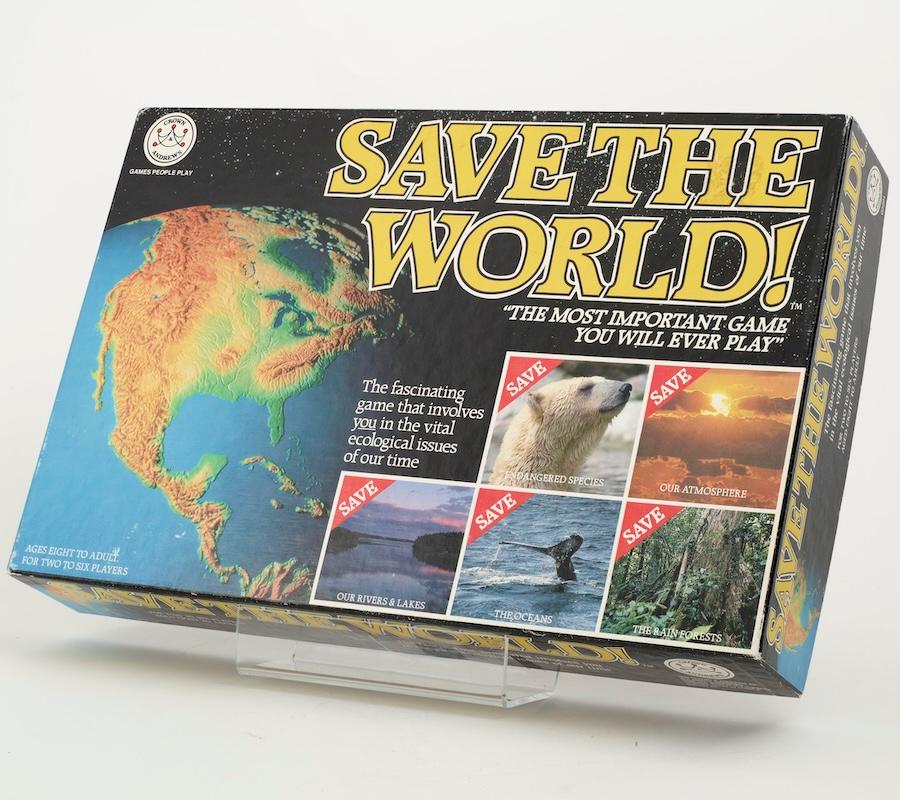
Save the World!, “roll-and-move” ecological quiz board game, 1990. 📷 Science History Institute | |
Yes, there’s a game for that! Make a gift in honor of Earth Day and score some points with fellow science aficionados. | |
| | | |