Council of Producers & Distributors of Agrotechnology

Terry Kippley, CPDA

September 3, 2024

In this Issue:

  • Endangered Species Act Drift Reduction Adjuvants Mitigation
  • Urgent Alert: Additional DRA Data Needed
  • EPA's Webinar on Draft Strategy to Better Protect Endangered Species from Insecticides
  • Miscellaneous Tariff Bill Meetings
  • PRIA Backlog
  • Farm Economy: Challenges Ahead
  • CPDA-PAC Silent Auction Fundraiser

Endangered Species Act Drift Reduction Adjuvants Mitigation

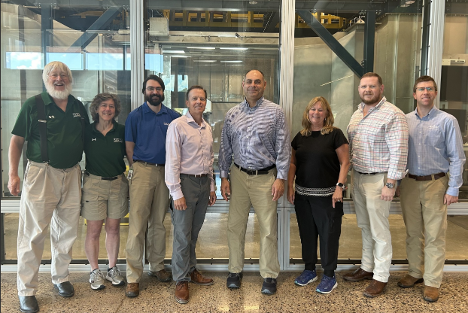
Last week, Simplot’s Dr. Connor Ferguson and CPDA’s Andrew Walmsley had the opportunity to participate in a Weed Science Society of America tour for officials from the U.S. Environmental Protection Agency, the U.S. Fish & Wildlife Service along with consultants and researchers. The highlight of the trip was a tour of the state-of-the-art Winfield United Innovation Center in River Falls, Wisconsin. Attending the tour on behalf of EPA were Ed Messina, Director of the Office of Pesticide Programs and Jan Matuszko, Division Director of the Environmental Fate & Effects Division.


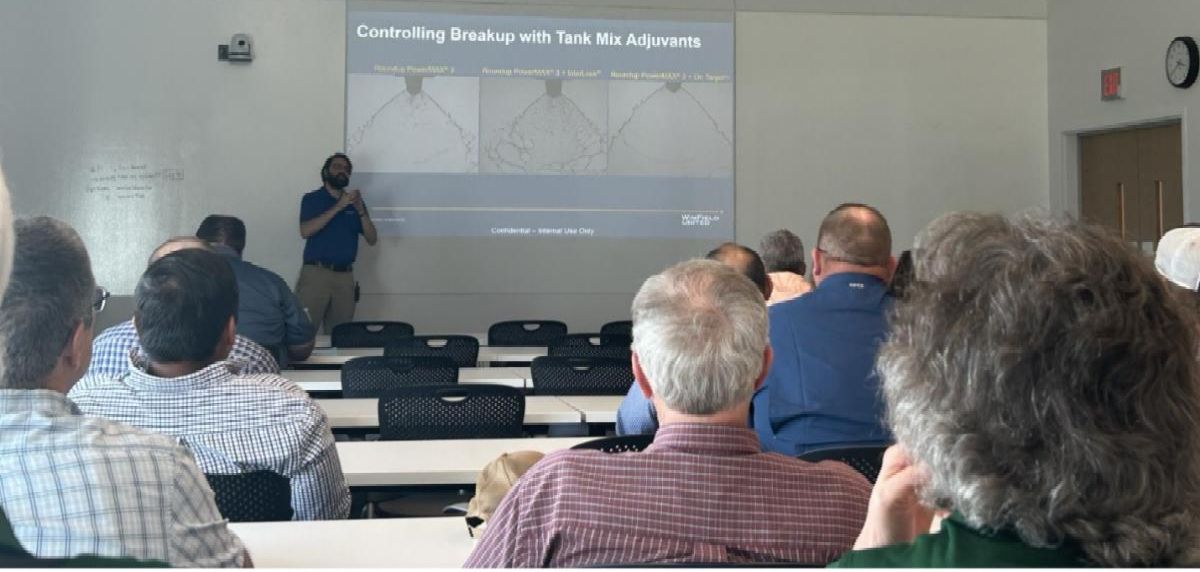
This was an excellent opportunity to showcase the science and data behind Drift Reduction Adjuvants and their importance in mitigating Endangered Species Act (ESA) restrictions.


Special thanks to WSSA’s Greg Dahl for organizing the tour and to Dr. Eric Spandl and Dr. Steven Fredericks of Winfield United for their incredible hospitality!

Greg Dahl, President WSSA; Hilary Sandler, President-Elect WSSA; Steven Fredericks, Winfield United; Eric Spandl, Winfield United; Ed Messina, EPA; Jan Matuszko, EPA; Andrew Walmsley, CPDA; Connor Ferguson, Simplot

Dr. Fredricks provided an overview of DRAs to the tour group.


Urgent Alert: Additional DRA Data Needed

CPDA is working to get a wider range of DRAs certified under EPA’s ESA Strategies, so we are still requesting any existing data to be submitted as soon as possible. This request for data is for any data you have that shows effective drift reduction with a commercial polymer or guar gum DRA.


Please send the data to Dr. Ferguson at connor.ferguson@simplot.com as soon as possible. Dr. Ferguson is the co-chair of CPDA’s ESA committee. Once EPA has a greater volume of data of polymer and guar gum DRAs, they will be able to expand the types of DRAs that get buffer zone reductions under EPA’s ESA Strategies. Your effort in providing data has been immensely appreciated and has been pivotal in the progress we’ve made with EFED.

EPA's Webinar on Draft Strategy to Better Protect Endangered Species from Insecticides

EPA held a public webinar on September 5, 2024, providing an overview of its draft Insecticide Strategy. The webinar discussed the following:

  • The proposed three-step framework to identify potential population-level impacts to species, identify mitigation measures to address these impacts, and determine the geographic extent of the mitigation measures; and
  • An overview of case studies to illustrate how the framework could be applied to representative insecticides and how EPA expects to implement the strategy in its registration and registration review actions.

EPA specifically mentioned CPDA and our work to provide data on the importance of DRAs as a mitigation option.

Miscellaneous Tariff Bill Meetings

On September 10, Jay Vroom and Andrew Walmsley headed to Capitol Hill to lobby on behalf of the Miscellaneous Tariff Bill (MTB). At issue is the MTB Reform Act which would temporarily reduce or eliminate import duties on thousands of materials that are not produced domestically or available in sufficient quantities. For CPDA members, this includes raw materials that are required for the production of pesticides, adjuvants and other products that are part of the farmer-to-food value chain.


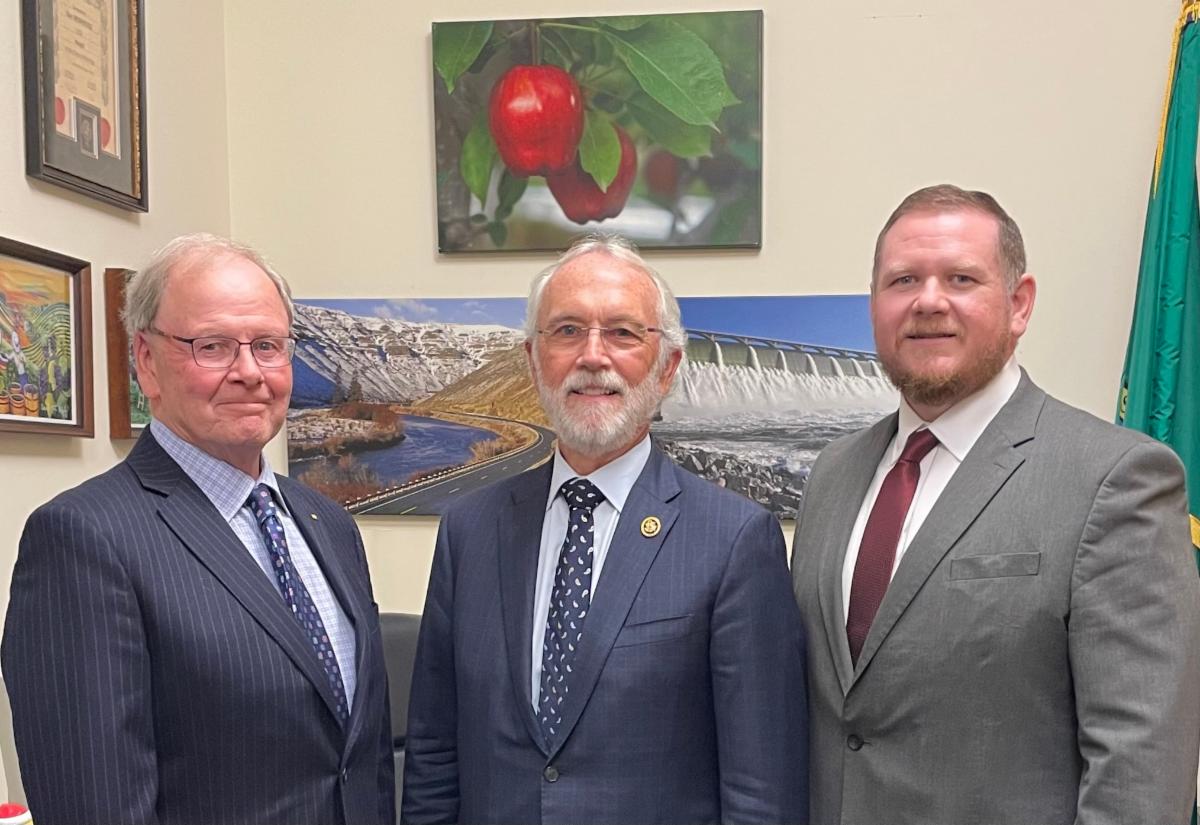
Included in these meetings was a visit with Congressman Dan Newhouse. Dan is a third-generation farmer from the Yakima Valley of Washington. He also served as the former Director of the Washington State Department of Agriculture, so he understands agricultural issues.

Jay Vroom, CPDA; Congressman Dan Newhouse, Andrew Walmsley, CPDA.

PRIA Backlog

As part of its efforts to improve transparency about the pesticide registration process, the EPA Office of Pesticide Programs (OPP) has committed to regularly sharing certain key data with the Pesticide Registration Improvement Act (PRIA) Coalition. This data provides transparency into how long various registration actions are taking, which can provide some predictability to registrants when planning product launches. The data does show what we already know – timelines for actions are well past PRIA due dates. However, the insights and trends provided in this real-time data can be useful for business planning purposes when viewed separately from the overall issue of Agency timeliness.


CropLife America and RISE have prepared a PRIA scorecard that synthesizes this data quarterly to help monitor trends in PRIA processing. Updated statistics will be posted on the PRIA Resources Website maintained by RISE. For a copy of the current scorecard, please contact Andrew Walmsley at Andrew.walmsley@cpda.com.

Farm Economy: Challenges Ahead

USDA’s September 2024 farm income forecast projects this to be yet another challenging year for American farmers, who are expected to lose nearly a quarter of their income in two years. Net farm income, a key measure of profitability, is forecast at $140 billion for 2024, marking a $6.5 billion decline (4.4%) from 2023, following a sharp 19.5% drop from 2022 to 2023. Inflation-adjusted figures indicate even greater financial strain, with net farm income expected to fall by $10.2 billion (6.8%) from the previous year.


Many agricultural economists had anticipated USDA would lower its February net farm income projections in light of mounting economic pressures. Instead, the September report revised forecasts made in February up, adjusting the original estimate from $116 billion to $140 billion. This upward revision, which places net farm income above the 20-year average (2004–2023), reflects a smaller decline than initially expected. The February estimate had forecast a steep 25.5% drop from 2023, but the updated projection now shows a more moderate 4.4% decrease. USDA also revised net farm income for 2023 down from $155.9 billion to $146.5 billion, which made the decline in 2024 look less extreme. This shift in estimates is largely attributed to a stronger-than-expected performance in the livestock sector and an expected slight decline in total production expenses.


Despite these improvements, however, broader economic pressures persist. Record costs for labor, interest, and taxes, along with reduced government support, continue to present significant challenges for U.S. farmers, who remain financially vulnerable as they head into another difficult year. The unexpected upward revision would appear to offer some relief, but it may understate the economic hurdles farmers – especially crop farmers – are facing in 2024.

CPDA-PAC Silent Auction Fundraiser

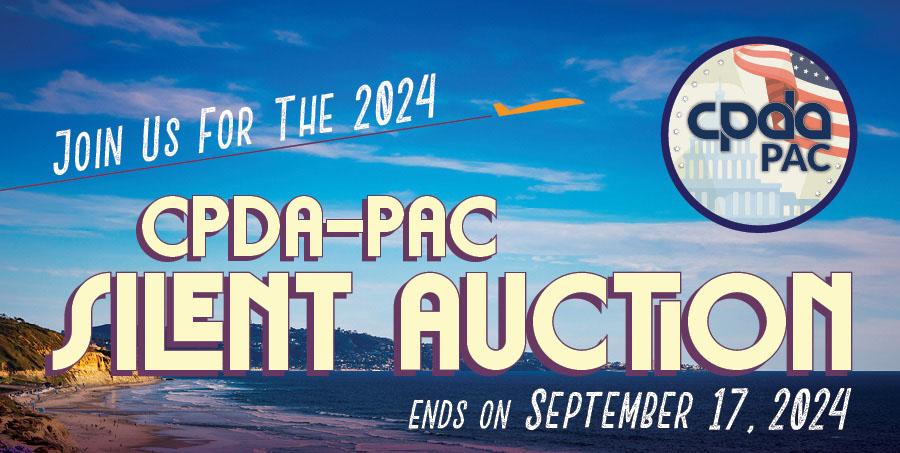
CPDA is holding a CPDA-PAC fundraiser in conjunction with next week’s Annual Meeting. The Silent Auction is now open and concludes on Tuesday, September 17th following the conclusion of the day’s events. The CPDA-PAC is a critical political tool that allows CPDA to leverage your support and give us access to key Washington DC policymakers.


If you are joining us in San Diego, I hope that you will bid often and generously. If you can’t join us, you can still bid online. More information about the silent auction fundraiser is available here.

Until next time...

Connect with us!

LinkedIn  Email  Web

ABOUT CPDA

NEWS

EVENTS

LIKE US ON LINKEDIN