|
July is a mix of things to highlight and be informed about to include Minority Mental Health Awareness Month and World Day Against Trafficking Persons Below we go into further detail to discuss July offerings:
Minority Mental Health Awareness Month
Not to be confused with Minority Health Awareness Month, July is Minority Mental Health Awareness Month, an event dedicated specifically to mental health in demographics that may be considered minorities. It has been observed since 2008, and it exists to raise awareness for disparities in care, mental health statistics, and suicide prevention.
July is National Minority Mental Health Awareness Month. It is a time to bring awareness to the unique challenges that racial and ethnic minorities in the United States face when it comes to mental illness. In 2020, fewer than one in every two African American adults got care for mental health. In 2018, Asian Americans were 60 percent less likely to receive mental health treatment than non-Hispanic Whites. Obstacles for many include a lack of health insurance, less access to treatment, and stigma.
Mental illness can affect women of all races and ethnicities. Show your support this month and beyond by learning more about mental health. You can also use and share the resources below to help spread awareness about mental health in your communities and families.
What Is Mental Health?
Mental health includes emotional, mental, and social well-being. Mental health impacts how a person thinks and feels. It also affects how you act, manage stress, and make choices. When you take care of your mental health, you are better able to cope with stress or challenges.
Sometimes it can be hard to manage your mental health. If you have noticed a change in thoughts, behaviors, or moods that disrupts your life, talk to your health care provider. You can also contact a mental health specialist or a trusted loved one for help if you have noticed these changes in yourself or in a loved one.
What Causes Mental Illness?
There is no single cause for mental illness. Multiple mental illnesses can occur at the same time and at random. They can also last for a short or long period of time.
Your mental health can change at any point. Some risk factors that can play a role in developing mental illness include:
Use of alcohol or drugs
Feeling lonely or isolated
Biological factors or chemical imbalances in the brain
Adverse childhood experiences, like child abuse or sexual assault
Experiences tied to ongoing medical conditions, like cancer or diabetes
Symptoms of a Mental Illness
Most of the same mental illnesses can develop in both men and women. However, women may have more distinct symptoms.
Some common symptoms can include:
Pulling away from people and usual activities
Appetite or weight changes
Ongoing sadness or feelings of hopelessness
Intense changes in eating or sleeping habits
Clear changes in mood, energy level, or appetite
Mental Illnesses Common to Women
Having a mental illness is more common than most people may think. At least one in five women in the United States has had a mental illness at some point. Those that are common in women include depression and anxiety. Postpartum depression can develop after giving birth.
Anxiety Disorders in Women
While they can happen to anyone, anxiety disorders are twice as likely to occur in women than men. Anxiety is a feeling of worry, nervousness, or fear about an event or situation. Anxiety is a normal reaction to stress and helps you cope. But when it gets hard to control and affects day-to-day life, it can be disabling. Anxiety disorders happen when extreme anxiety affects your daily activities, such as going to work or school or spending time with friends and family.
Signs of an anxiety disorder include anxious thoughts or feelings of dread. The symptoms can keep you from living as you normally would.
Depression in Women
Studies show that about 1 in 10 women in the United States reported symptoms that suggest they experienced an episode of major depression in the last year, and women are nearly twice as likely as men to have had depression. It is normal to feel sad at times. However, depression can cause people to feel sad on most days. This can affect your daily life and how you engage with your loved ones.
Certain types of depression are unique to women and can occur at different stages of a woman’s life. Pregnancy, the postpartum period, perimenopause, and the menstrual cycle are all associated with physical and hormonal changes that could impact your mental health. If you have depression and get pregnant, your depression may get worse during pregnancy.
There are many signs of depression. A few of them include feeling sad, hopeless, or tired most of the time. Speak with your health care provider if you have noticed signs of depression. You can discuss next steps and treatment options with your health care provider.
More Than Just the Baby Blues: Postpartum Depression
It is normal for some women to feel sad or have no emotion after giving birth. But if such feelings last more than two weeks, you may have postpartum depression. This can happen up to a year after giving birth. Once you give birth, your hormone levels quickly drop back to normal. The decrease can be sudden and extreme, which can lead to this condition.
Postpartum depression is not a normal part of life after giving birth. If you notice signs of this condition, speak to your health care provider. You can also call the National Maternal Mental Health Hotline. It offers free and confidential support for new mothers. Call or text the hotline at 1-833-TLC-MAMA (1-833-852-6262).
Managing Your Mental Health
Many parts of daily life can impact your mood and mental health. They can include stress, your physical health, or the regular demands of life. But you can improve your quality of life when you take charge of your mental health.
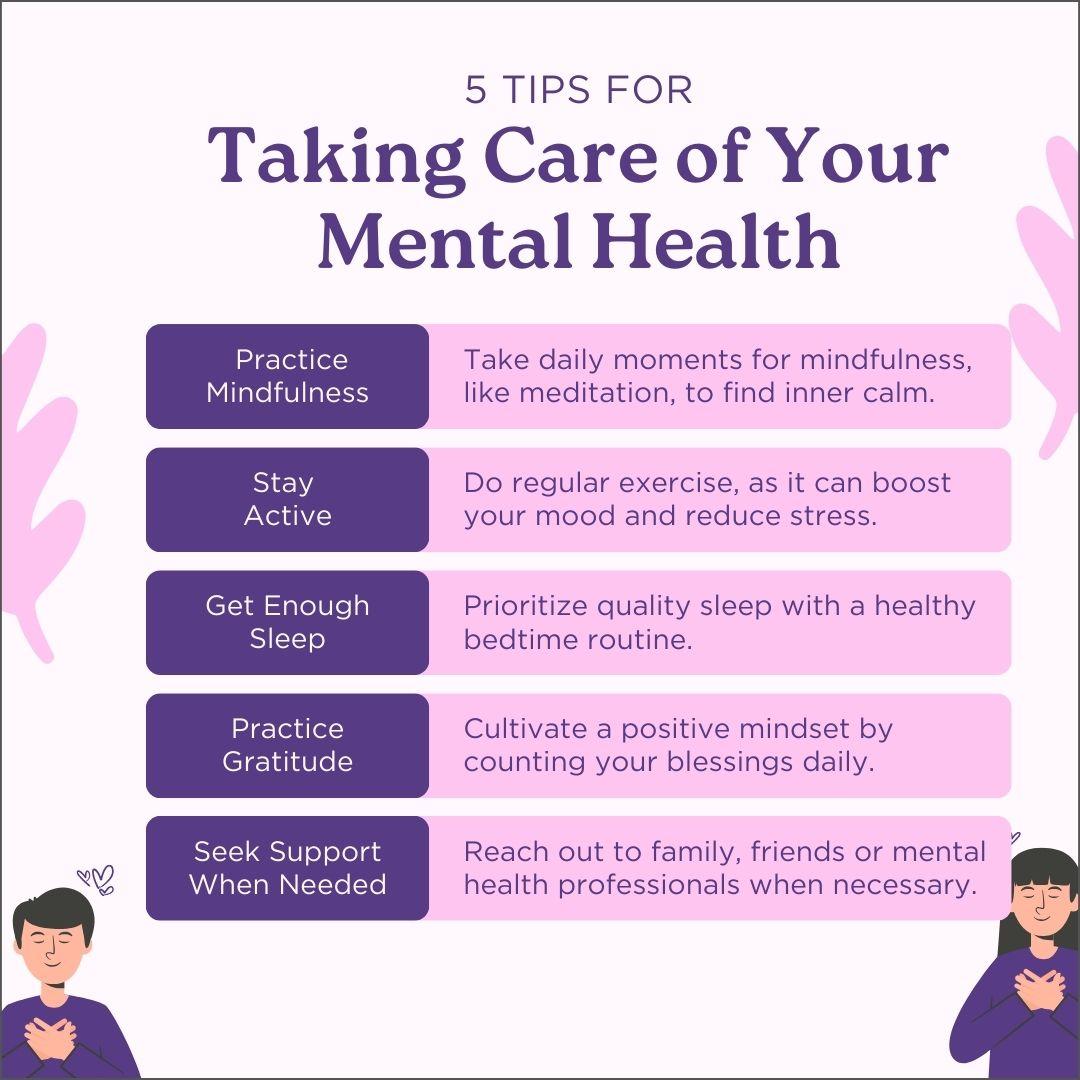
Here are a few ways to manage your mental health overall:
Get enough sleep each night (at least 7 hours)
Engage in healthy habits, like exercising and eating well
Stick to a treatment plan given by your health care provider
Find a support group and seek out your health care provider for support
Today, good mental health is achievable thanks to many forms of support. Share the resources in this blog to spread awareness of the importance of good mental health and to help ensure that everyone has equal access to the mental health resources they need. You can also use the blog as a source to find tools to help you manage your mental health. Together, we can all do our part to support better mental health for ourselves and others.
World Day Against Trafficking Persons
Globally, one in three victims of human trafficking is a child, and the majority of these trafficked children are girls.
According to the Global Report on Trafficking in Persons (GLOTIP) by the UN Office on Drugs and Crime (UNODC), children are twice as likely as adults to face violence during trafficking.
The proliferation of online platforms poses additional risks, as children often connect to these sites without adequate safeguards.
Children are subjected to various forms of trafficking, including forced labor, crime, begging, illegal adoption, sexual abuse and the online dissemination of abusive images, and some are also recruited into armed groups.
The reasons for child trafficking are also numerous. Some of the most prominent are: poverty, insufficient support for unaccompanied minors in the face of increasing migration and refugee flows, armed conflicts, dysfunctional families, and lack of parental care.
To date, the fight against child trafficking has not been effective. There is an urgent need to take comprehensive measures to protect vulnerable groups and help child victims. This requires joint efforts at national and international level.
States must prioritize the protection of children, strengthen laws, improve law enforcement and provide more resources to combat child trafficking.
Preventive measures should focus on addressing root causes such as poverty and inequality. Particular attention should be paid to the trafficking of unaccompanied refugee minors. It is important to strengthen child protection networks and adapt criminal law to better meet the needs of children.
This year, we observe the 10th World Day Against Trafficking in Persons. This year’s campaign focuses on raising awareness of the causes and vulnerabilities associated with human trafficking. It emphasizes the critical need for dedicated support for child victims of trafficking and urges the public and policymakers to address the current shortcomings and accelerate action to #EndHumanTrafficking.
Sexual exploitation, forced labor, slavery…
Trafficking in persons is a serious crime and a grave violation of human rights. Every year, thousands of men, women and children fall into the hands of traffickers, in their own countries and abroad. Almost every country in the world is affected by trafficking, whether as a country of origin, transit or destination for victims. UNODC, as guardian of the United Nations Convention against Transnational Organized Crime (UNTOC) and the Protocols thereto, assists States in their efforts to implement the Protocol to Prevent, Suppress and Punish Trafficking in Persons (Trafficking in Persons Protocol).
The Protocol to Prevent, Suppress and Punish Trafficking in Persons defines Trafficking in Persons as the recruitment, transportation, transfer, harboring or receipt of persons, by means of the threat or use of force or other forms of coercion, of abduction, of fraud, of deception, of the abuse of power or of a position of vulnerability or of the giving or receiving of payments or benefits to achieve the consent of a person having control over another person, for the purpose of exploitation. Exploitation shall include, at a minimum, the exploitation of the prostitution of others or other forms of sexual exploitation, forced labor or services, slavery or practices similar to slavery, servitude or the removal of organs.
The World Day against Trafficking in Persons was proclaimed by the United Nations General Assembly, in its resolution A/RES/68/192.
____________________________________________________________________________________________________________________________________________________________________________________________________________________________________________________________________________________________________________________________________________
Community Resources:
Utilize this website for the following resources
https://americanaddictioncenters.org/
Visit FoundinFaithMD.org/get-help/apply/
to apply to the Fresh Start Furniture Program TODAY!
If you do not have computer access, please call 443-519-2464 ext. 2
ALL FURNITURE REQUESTS ARE SCHEDULED BY APPOINTMENT ONLY
If you need immediate help finding shelter or a place to eat, call 211.
Meals
Baltimore- Our Daily Bread Employment Center
725 Fallsway, Baltimore City
443-986-9000
PG CO- Bethel House 301-372-1700 & Salvation Army of Prince George’s County Food Pantry 301-277-6103
AA CO- Anne Arundel County Food Access WARM Line 410- 222- 3663 &
Anne Arundel County Food Bank
120 Marbury Drive Crownsville, MD 21032
Harford CO- Breathe 379, 2124 Nuttal Ave. Edgewood. Groceries, prepared food, clothes.
& EPICENTER, EPICENTER at Edgewood, 1918 Pulaski Hwy, Edgewood. 443.981.3742.
Mental Health Assistance
National Alliance for Mental Illness
National Suicide Prevention Lifeline
Call 24/7: 1-800-273-8255
Baltimore Crisis Response, Inc.
Call 24/7: 410-433-5175 if you or someone you know needs help with a mental health crisis
Legal Services
Homeless Persons Representation Project (HPRP)
201 N. Charles St., Suite 1104, Baltimore City
410-685-6589 / 800-773-4340
Provides free legal aid to those experiencing or at risk of homelessness
Maryland Legal Aid
500 E. Lexington St., Baltimore City
410-951-7777
Provides a full range of free civil legal services to financially eligible individuals, with a focus on legal issues concerning elder rights, employment, family, public benefits, health care and housing
Reentry Services
Assists prisoners, ex-prisoners and others in need become independent, responsible citizens through civil legal assistance and re-entry services
Baltimore- Alternative Directions
2505 N. Charles St., Baltimore City
410-889-5072
PG CO- People Ready 5814 Baltimore Ave.
Hyattsville, Maryland 20781 (301)277-2172
AA CO- AmeriCorps (800) 942-2677
Identification
Beans and Bread
402 South Bond St., Baltimore City
410-732-1892
ID cards and birth certificates available on the first business day of the month to the first 5 to 10 people who arrive
Manna House
435 East 25th St., Baltimore
410-889-3001
Provides assistance with birth certificate and ID cards applications
Employment Assistance
ONE STOP CAREER CENTERS
Downtown One Stop Career Center
1100 North Eutaw St., Room 101, Baltimore City
410-767-2148
Eastside One-Stop Career Center
3001 East Madison St., Baltimore City
410-396-9030
Provides assistance with job search strategies, employment referrals and placement and other workforce services; offers access to copiers, faxes and phones
Northwest American Job Center (Re-entry Center)
Mondawmin Mall, Suite 302
2401 Liberty Heights Avenue
Baltimore, MD 21215
Telephone: 410-396-7873
DROP-IN CENTERS
Manna House
435 E. 25th St., Baltimore City
410-889-3001
Franciscan Center
101 W. 23rd St., Baltimore City
410-467-5340
H.O.P.E.
2828 Loch Raven Rd., Baltimore City
410-327-5830
Provides clothing, communication, laundry, food, recreation and showers
** For any other region specific info email socialmedia@emrcgroup.org **
|