e-Newsletter | January 5, 2024 | |
|
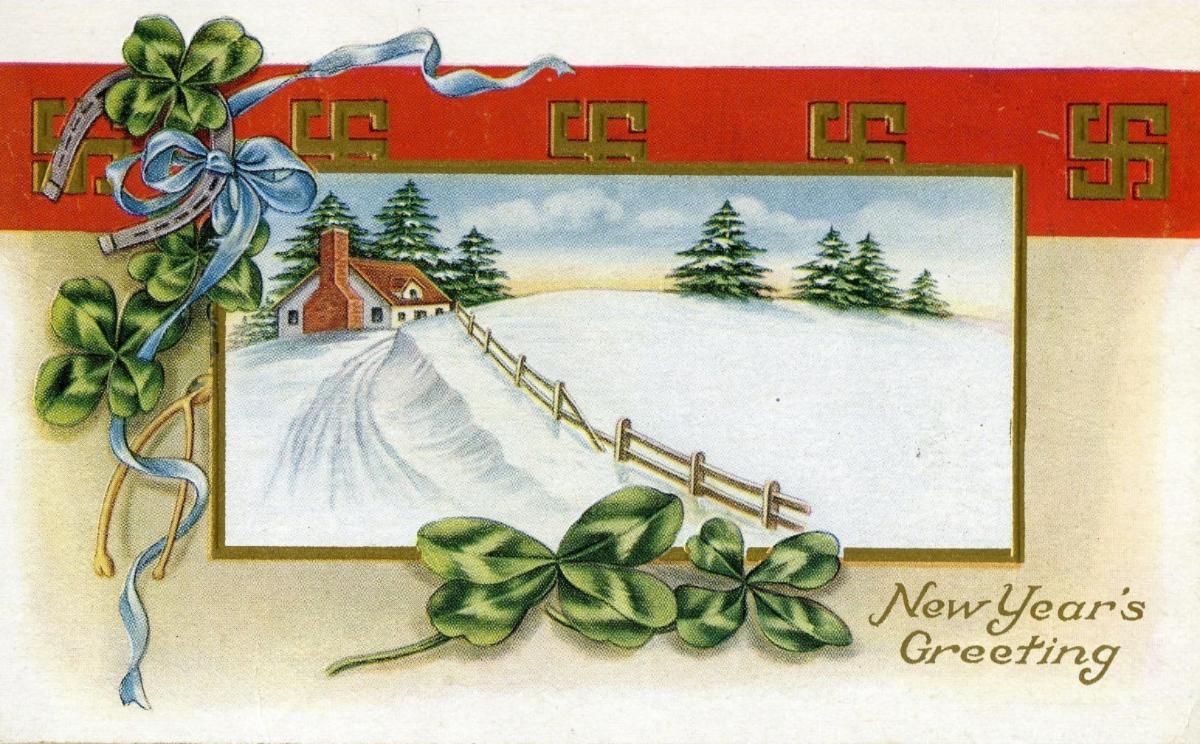
Happy New Year from all of us at the Museum of Old Newbury!
This card, identified only as belonging to "Ethel", is part of our extensive collection of trade and greeting cards.
| |
|
"A Good and Sufficient Jail" Part III: A Visit from the Boston Prison Discipline Society
by Bethany Groff Dorau, Executive Director
| |
|
This is a continuation of a previous article. For the last installment, click here.
Note: “Jail” and “Gaol” were used interchangeably during this time period, but for ease of reading, we have employed the modern spelling.
Louis Dwight, born in Stockbridge in 1793, was a promising Yale student when an accident during a chemistry class caused him to inhale “exhilarating gas.” The resulting burns cost him his voice, his lung capacity, and his planned career as a Congregational minister. Determined that fresh air and long stretches on horseback were the only way to relieve his pain, Dwight left Boston on October 28, 1824 for “a journey of many months, during which he intended to visit some of the Southern States and carry Bibles for those who were without them in prisons.” What he found in every jail he visited was depravity, misery, sickness, and vice of every imaginable kind.
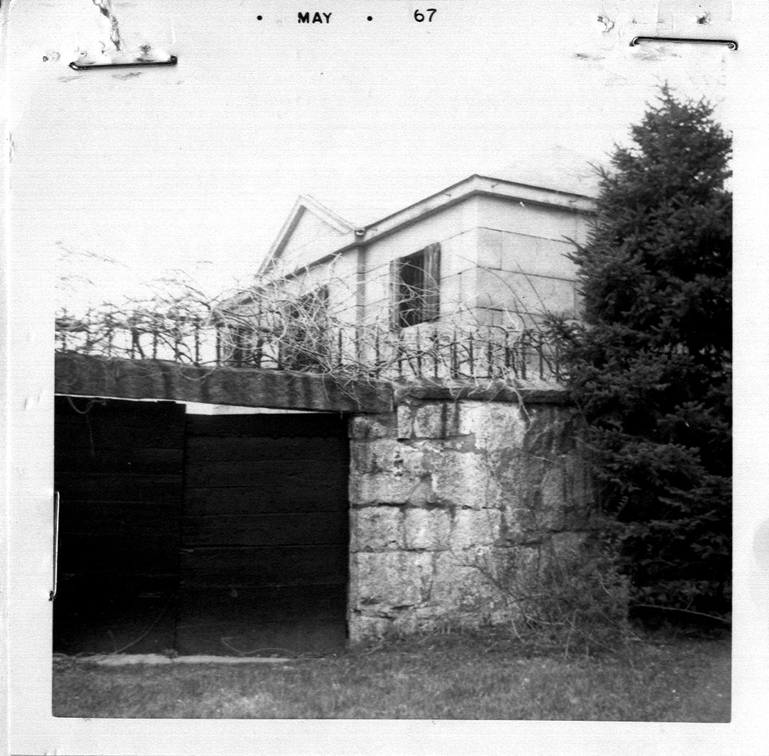
As Louis Dwight visited prisons up and down the eastern seaboard, Newburyport was putting the finishing touches on its new granite jail. Designed by Stuart J. Park, the jail was administered by the county, and was considered a vast improvement on the crowded, dark 1744 Federal Street jail, where men and women were housed together, and the wind whistled through the walls.
When Louis Dwight returned, horrified, from his southern journey, his reformist zeal, and the Newburyport disciples he found to carry on his work, would lead him inside the cold stone walls of Newburyport’s “modern” jail, and as the 19th century wore on, it would be found increasingly wanting.
| |
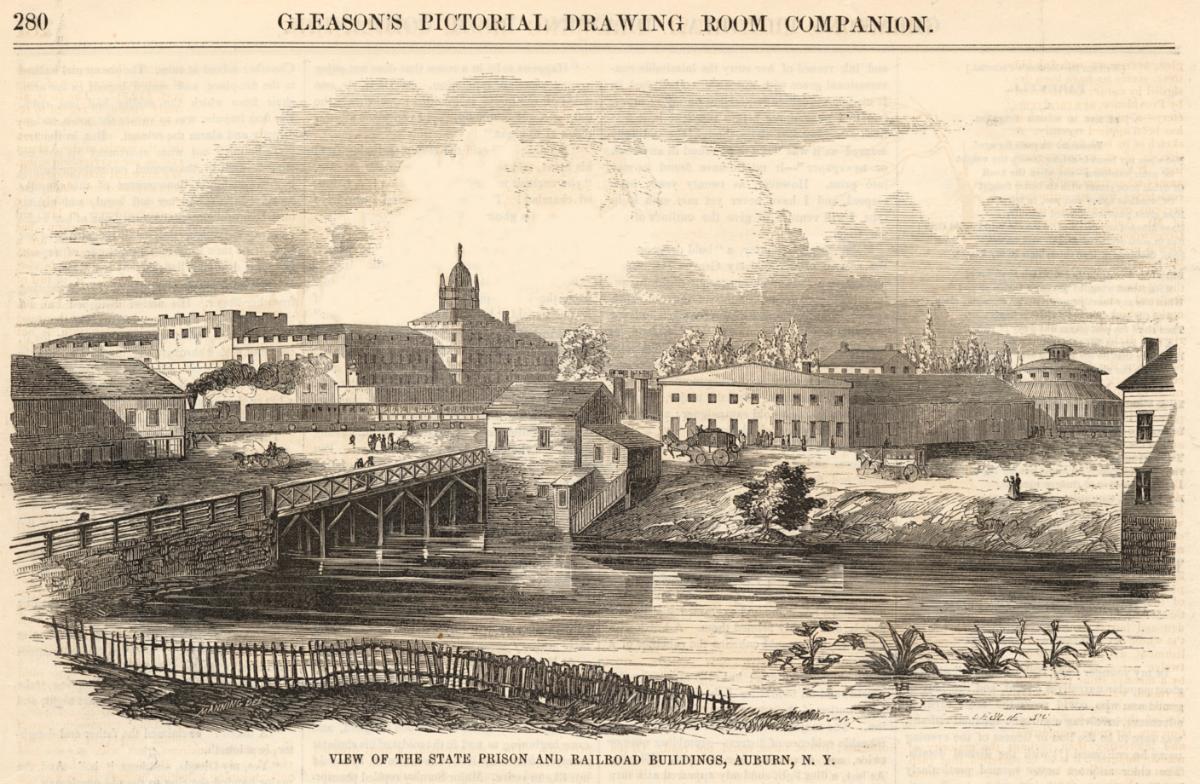
The New York State Prison at Auburn, opened in 1816, was the model of the "Auburn System" of enforced silence, hard labor, and strict isolation at night. This was the system promoted by Dwight and the Prison Discipline Society. | |
|
Dwight found his calling in the reform of New England prisons, founding the Prison Discipline Society of Boston in 1826, and though he was part of a much larger penal reform movement, the group he founded became one of the most vocal and rigorous agitators for the study of prison conditions and populations.
And thank goodness, because recordkeeping at the Newburyport Jail seems to have been haphazard at best. An 1833 report states that “if there were records previously kept, the Jailer does not know where they are.” The Prison Discipline Society fanned out across New England, studying every aspect of incarceration and advocating for the end of imprisonment for debt, the institution of strict silence and solitary confinement, and religious instruction for inmates, among other initiatives. They loved charts and graphs, and no less than Ebenezer Moseley, one of Newburyport’s most prominent citizens, signed up to gather statistics on incarcerations in Essex County from 1822 to 1830. Moseley also noted that the most common crimes in Newburyport were “larceny and assault and battery…of about an equal number”.
| |
|
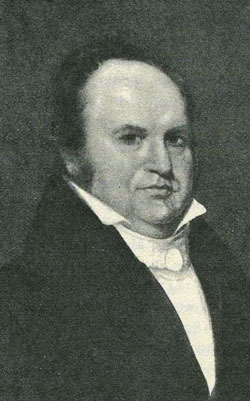
Ebenezer Moseley, 1781-1854, a prominent Newburyport lawyer, was also interested in prison reform and gathered statistics useful to the Prison Discipline Society.
The reports of the Prison Discipline Society paint a rich picture of the early years of the Newburyport jail, though the prisoners were never identified by name. On November 15, 1833, there was no moral or religious instruction for prisoners in Newburyport, which held four prisoners in its eight rooms. Two had rooms to themselves, but for some reason, “Room No.9 is occupied by two prisoners, one for attempt to kill, and one for adultery: the first appears to be deranged, and the other a man of uncommon depravity…”
The two prisoners in 1833 who were not considered deranged or depraved were interviewed about their drinking habits, a favorite topic for the Society. “One prisoner (for debt) has been in the habit of drinking spirits a little in haying and harvesting, but never drank much.” This same prisoner, age 53, owed $60, and had been in the Newburyport jail for two months already. He was a farmer when he was free and had been put to work sawing wood while in the jail. The other prisoner, a young man who was being held for an unspecified criminal act, “says he has parents living in England who are respectable…knows every part of the Bible…says he has been led into all his difficulties by strong drink.”
| |
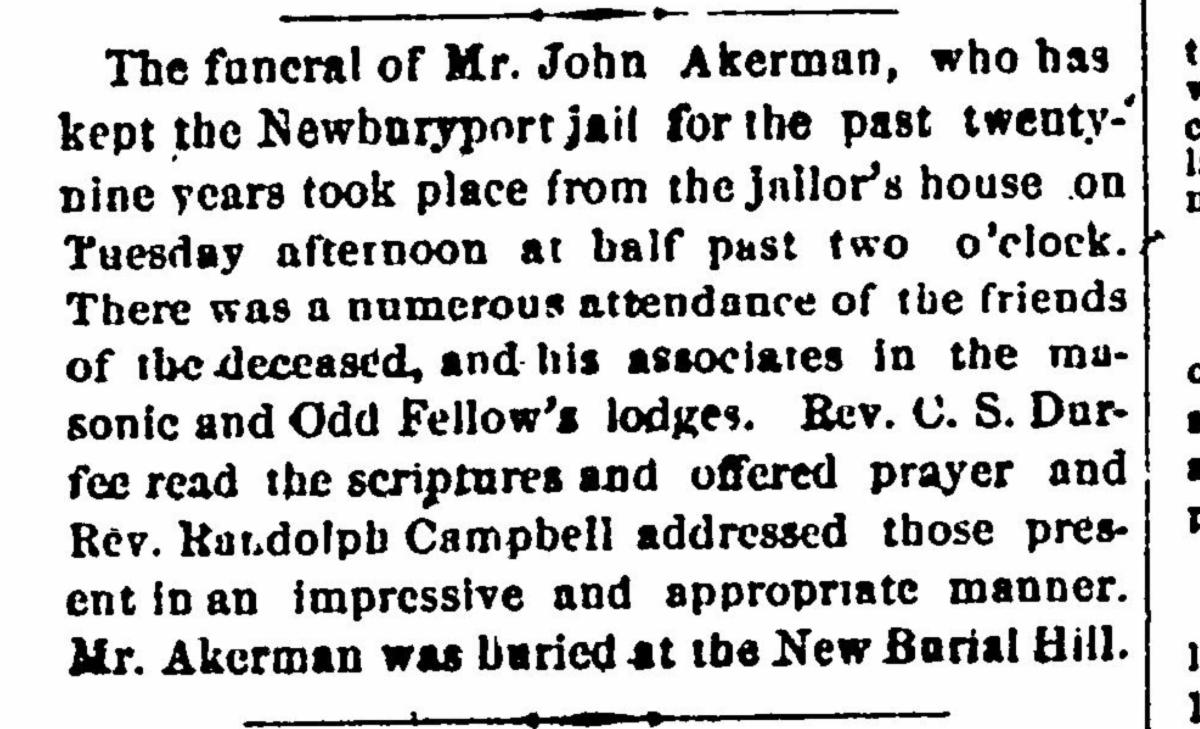 | 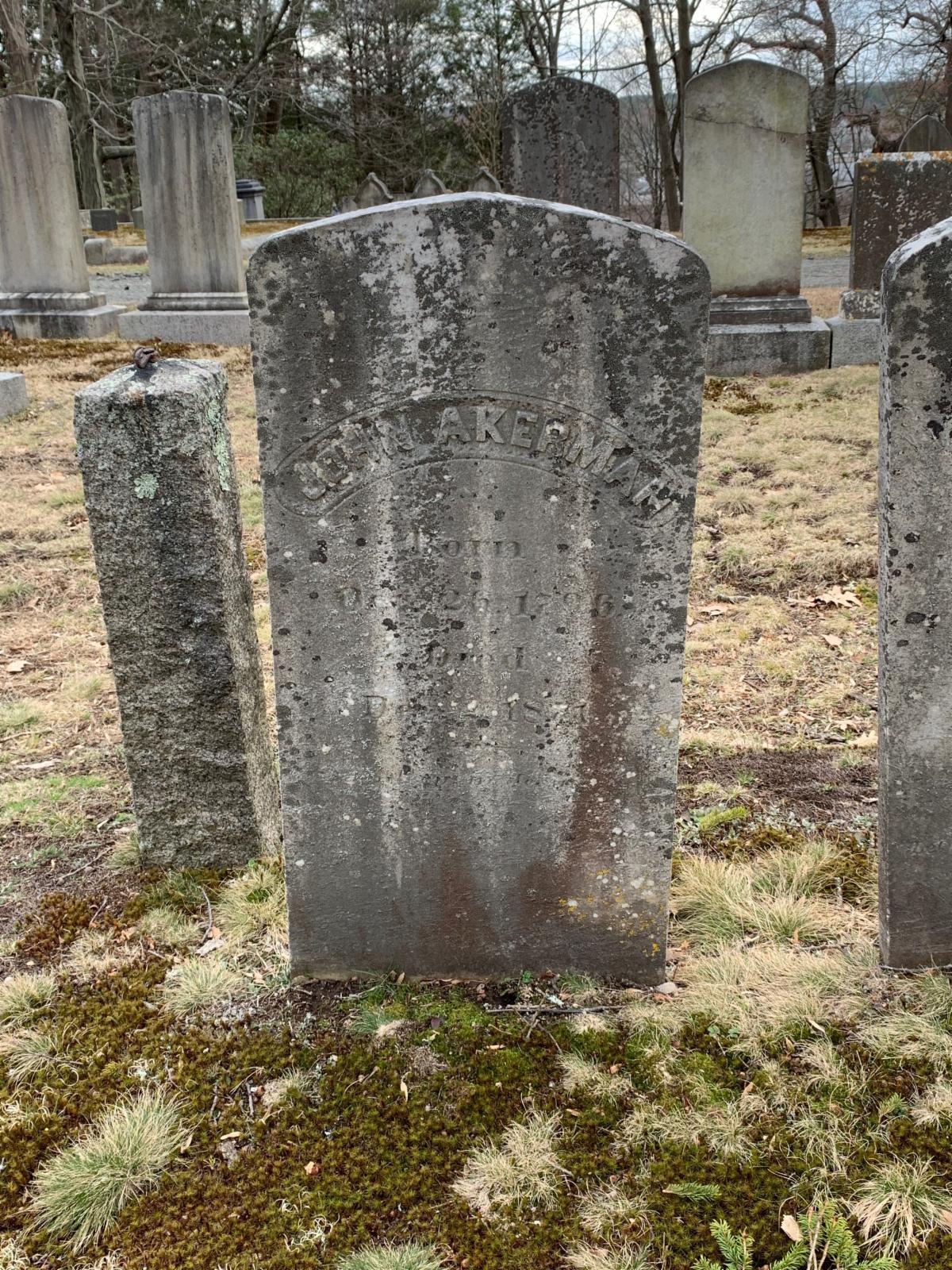 | |
John Akerman (1796-1871) was the Newburyport jailer for nearly thirty years and lived on the site with his wife, Elizabeth, who was matron of the jail. His funeral in 1871 was held in the jailer's house, and he is buried at Oak Hill Cemetery.
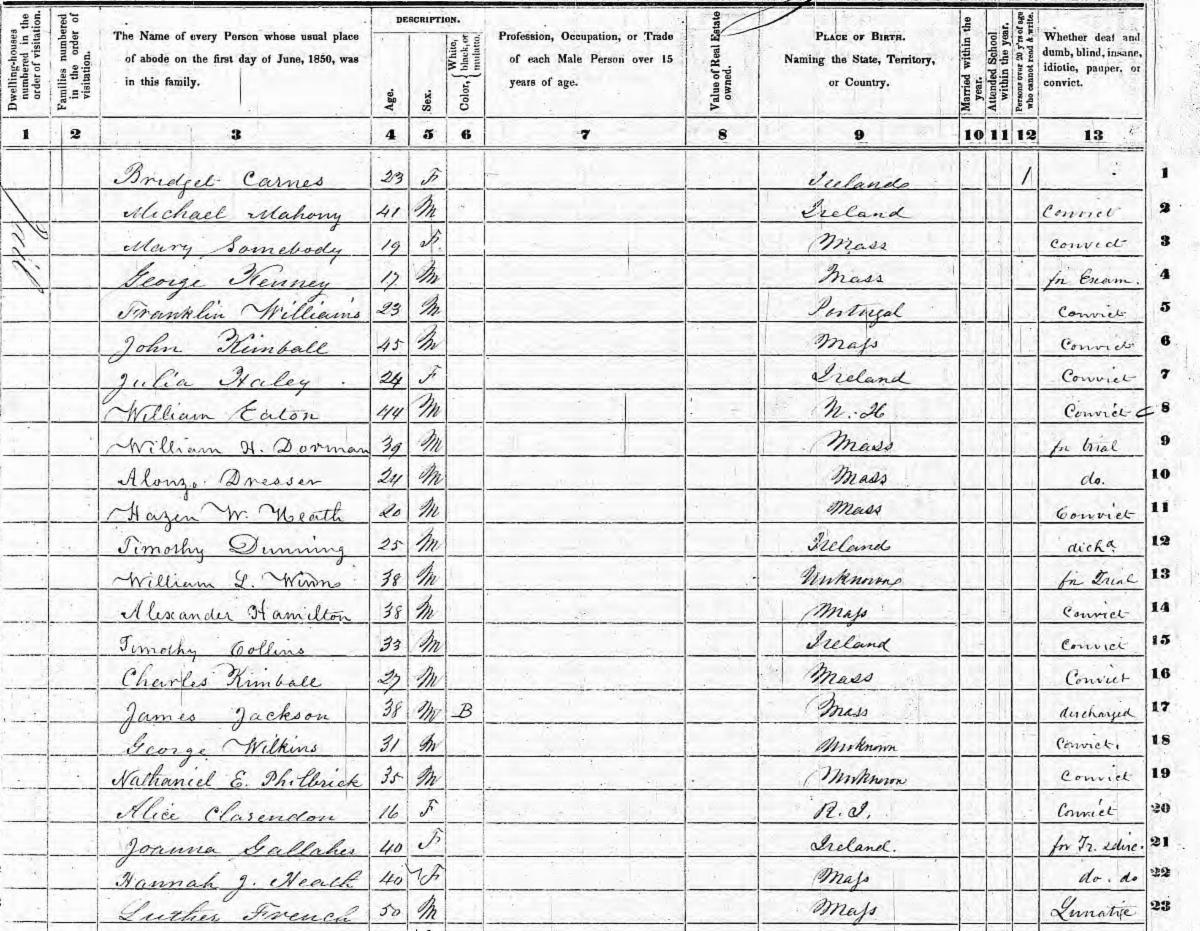
A decade later, the Newburyport jailer was Mr. John Akerman, a kind, reformist, temperate man who would spend three decades tending to the inmates. In April 1844, he proudly reported to the Prison Discipline Society that “there has been no commitment to the Jail in Newburyport for the crime of drunkenness since December 4.” Akerman had also furnished every room with a Bible upon his assumption of the post, but “there is no religious service on the Sabbath.” Akerman had only one resident prisoner that month, 50-year-old Luther French (identified in census records), according to the Society report, “a poor Lunatic who has been in Jail 3 years (and is) unsafe to be at large. He has been at the Asylum at Worcester and has been returned as incurable.”
In 1851, Jailer Akerman was asked to provide a report on the spiritual and educational progress at his institution. He admitted that “the Bible furnished by the county, religious tracts, copies of the Sailor’s Magazine, and religious books, furnished by myself, are the only means of instruction furnished for prisoners under my care.” Despite repeated invitations to “impart religious instruction” to his wards, Newburyport’s ministers only visited “occasionally,” though several of them were members of the Society. Akerman was still trying his best, however. “I make it a special duty to advise all my prisoners, upon their discharge, to conduct (themselves) soberly and honestly, and in almost all cases receive a promise from them that they will.”
| |
|
The 1850 census has 23 residents of the 6-8 useable rooms at the Newburyport Jail, some awaiting court sessions, along with places of birth.
Newburyport jail was never intended to be a place where inmates served lengthy sentences. The population, with the exception of several local "regulars," was transient, held at the jail until they were bailed or a court session was held and then they were generally sent elsewhere to serve their time. Census records capture the names of prisoners at distinct moments in time, and a deep study could, and should, follow their trail. The Prison Discipline Society was more interested in statistics than individuals.
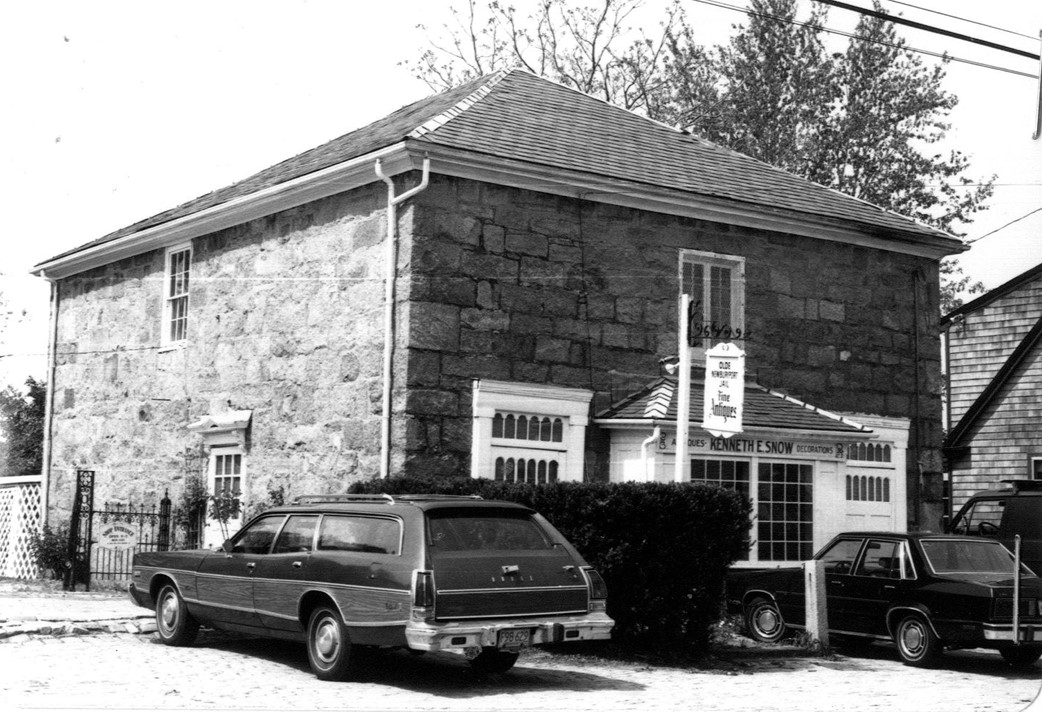
Louis Dwight died on July 12, 1854, still at the helm of the Prison Discipline Society, which had counted among its officers and supporters Newburyport’s most influential citizens, male and female, including Caleb Cushing, William Bartlett, Moses Brown, two Mary Greenleafs, and more. The organization disbanded shortly after Dwight’s demise. The Newburyport Jail led many more lives, serving as the home of legendary Mayor Andrew “Bossy” Gillis and his equally legendary mother, an antique shop, and now the cherished home and offices of the Griffin family, among other incarnations. It will survive us all, one hopes.
| |
|
The Newburyport Jail and its outbuildings were used as part of an antiques business when this photo was taken in 1980.
Special thanks to Charles Griffin for the inspiration for this series.
| |
|
"True British Valor": Celebrating General Wolfe in Newbury(port)
Thursday, January 25, 7 p.m.
| |
"Mad, is he? Then I hope he will bite some of my other generals."
King George II on James Wolfe - 1759
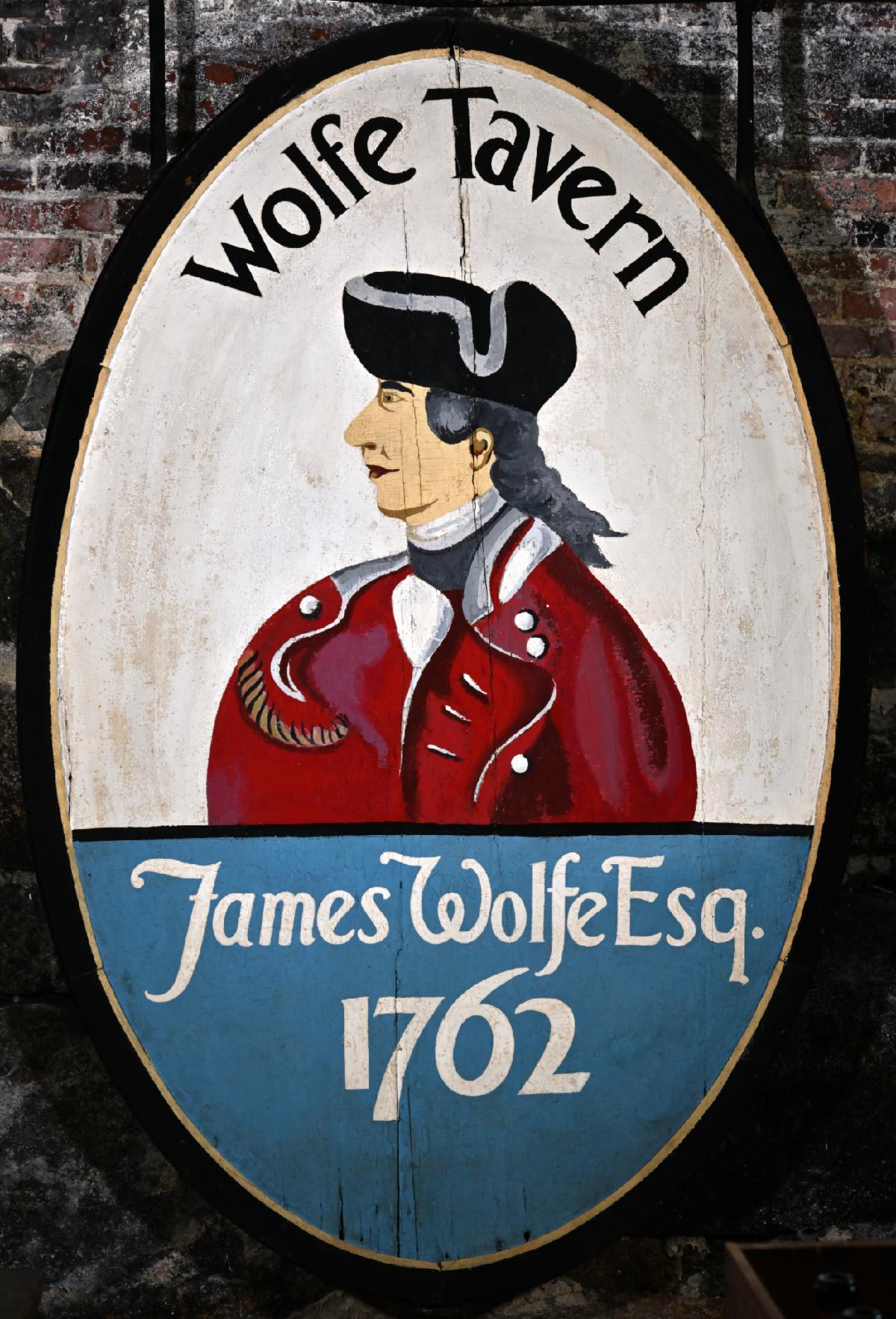
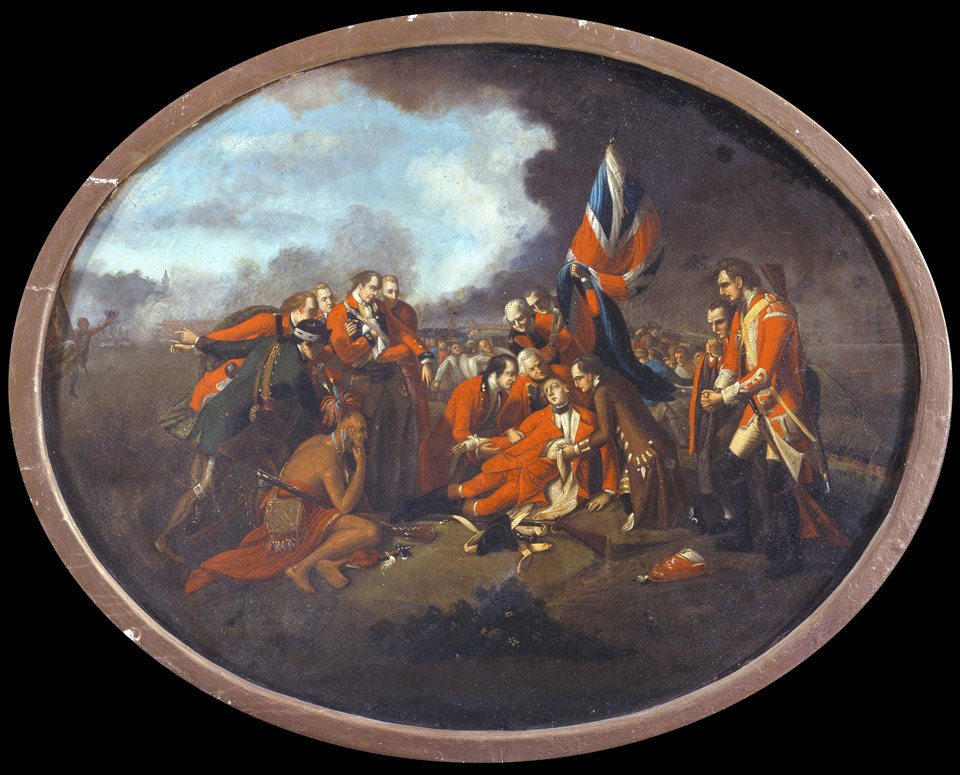
James Wolfe was a bold, young British officer who led Newbury men (and others) into battle on Quebec's Plains of Abraham on September 13, 1759. His death at the moment of victory became legend, and Wolfe a martyr to the cause of British supremacy in North America.
How Wolfe's name and reputation survived Newburyport's patriot fervor during the Revolutionary War, emblazoned proudly on the tavern and hotel that were local institutions, is a story of loyalty, courage, and grief told through images, documents, and artifacts in the collection of the Museum of Old Newbury.
James Wolfe was born in January, 1727. We will explore his legacy with a brief illustrated history and celebrate with cake, punch, and a performance of the haunting lament General Wolfe on the fife.
This event is $5 for museum members and $15 for non-members.
| |
|
Silverware, Sex, and Stirpicults: John Humphrey Noyes and Oneida Community Silver
...by Bethany Groff Dorau, Executive Director
| |
|
Part Three
This is a continuation of a previous article. For the last installment, click here.
| |
|
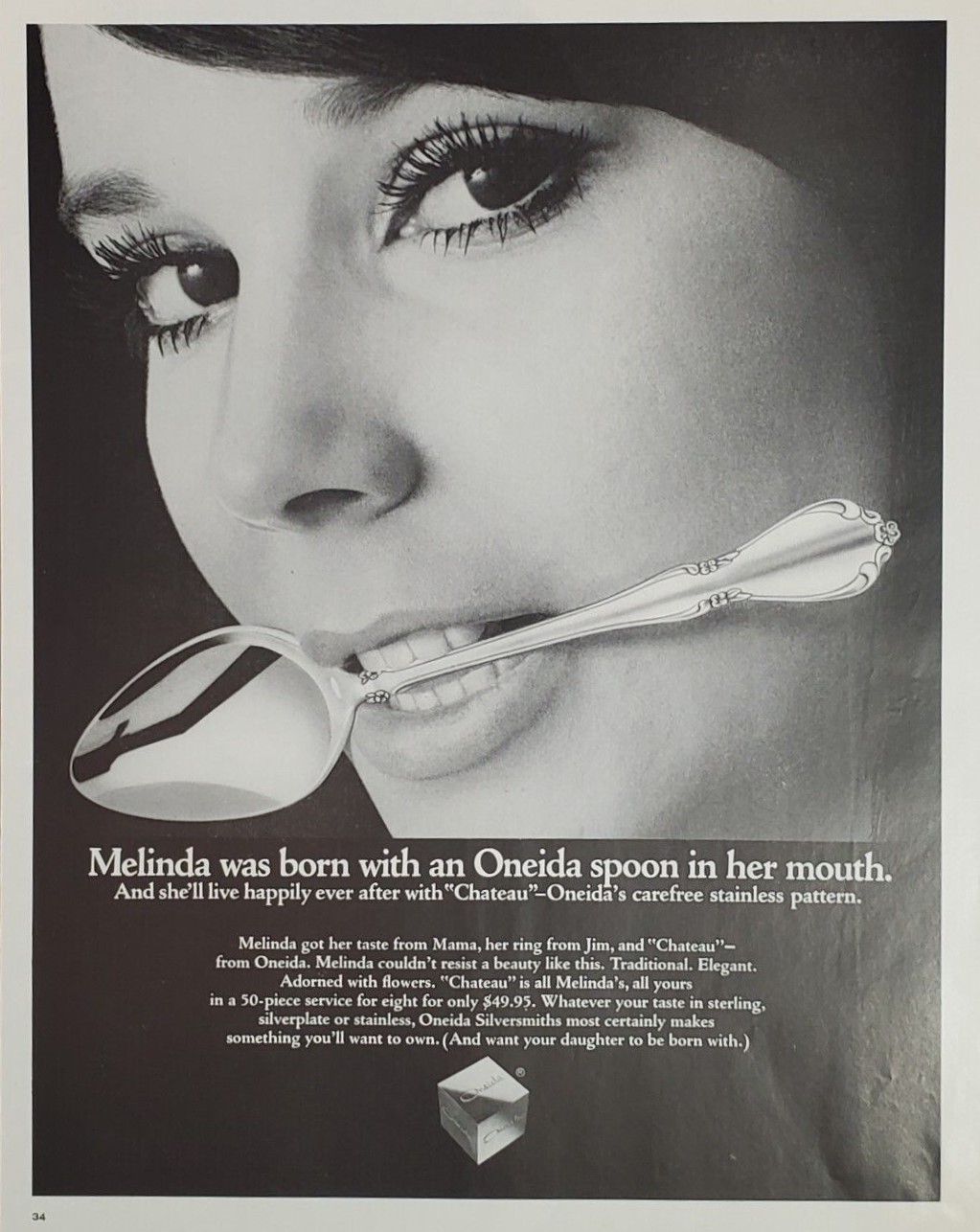
Don't you worry, my friends. This is the last naughty spoon ad to which I will subject you. But still, it does get the point across, does it not? Over fifty years later, it still gets a "whoa!" from my very worldly officemate.
The overt sexiness of Oneida in the 1960's is a not-so-subtle nod to the Oneida Community of a century earlier, a bastion of "complex marriage" where all community members were considered equally married to each other, their sexual "interviews" charging the spiritual batteries of the community in which they lived, worked, and played.
When we left our dubious hero John Humphrey Noyes, founder of the Oneida Community, whose family hailed from Newbury, and whose exploits were breathlessly reported in the sizzling pages of the Newburyport Herald, he had fled from the law for the second time in his life. First, in 1848, he had hightailed it from Putney, Vermont, to establish the community in Oneida, New York which, by almost any measure, had been a roaring success. Then, thirty years later, amid internal upheaval and national debate over the Mormon practice of polygamous marriage, and believing he was about to be charged with statutory rape, Noyes left New York for Niagara Falls, Canada, never to return.
Two months after his exit, Noyes sent word to his followers that it was time to end the practice of complex marriage, the foundational principal of the Oneida community. At 10 a.m. on August 28, 1879, the doors closed on the last "interview." It should have been the end of it all, and in a way, it was. But it was also the beginning.
| |
|
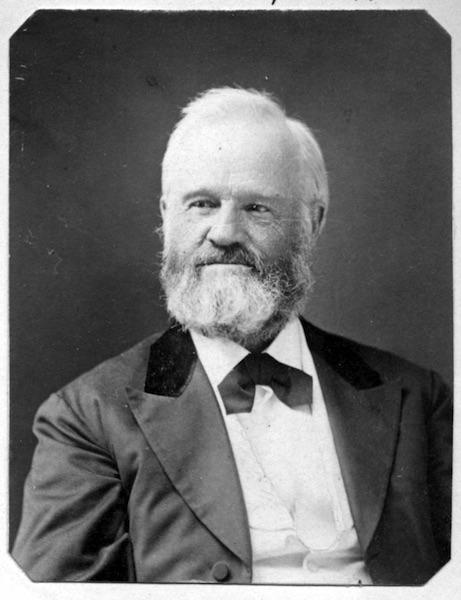
John Humphrey Noyes (1811-1886), leader of the Oneida Community, shortly before his flight to Canada.
The Community was in turmoil. Noyes' attempts to install his son Theodore as his successor had backfired after the younger Noyes turned out to be less devout and more monogamous than his father had realized. The industrial endeavors at the heart of the Community were increasingly complex and the Community was nearing bankruptcy. And so, in 1881, the group abandoned communal ownership, the other foundational principal of the group, and formed a joint-stock company. Members of the Community were given stock in this new company, Oneida Community Limited. Older members received support payments, and Noyes himself was provided with a house in Canada, a horse and carriage, and a stipend for life. John Humphrey Noyes lived for seven more years, dying on April 13, 1886. His body was returned to his beloved Oneida and buried there with other members of the Community.
And then what? I will admit that my heart goes out to the children of Oneida, those who had been raised to believe in the possibility of sinless perfection and a benevolent, sustaining community that would provide for them. And this is where my own experience of the end of communal life intrudes on this tale.
I was raised on a commune too, except we had no successful industry, no free love, and no mansion houses. My parents were followers of a charismatic preacher named Sam Fife, and, guess what? He was all about sinless perfection. Unlike John Humphrey Noyes, however, Sam Fife preached that the chosen people had to survive the end-times and the best way to do that was to decamp to the wilderness of northern Canada. So, I suppose we have that in common with Noyes as well. We all ended up in Canada, though I think he may have had the better deal.
Let's just say that I understand deeply and personally how difficult it is to transition to society at large when you have been raised apart. For the Oneidans, there was the sometimes desperate scramble for a spouse as the Community disintegrated. And there was the question of whose children were whose, since in some cases only the mother was known conclusively. And if men had fathered multiple children, there was the question of which mother to marry and which adult children could marry each other. In the game of marital chairs of the early 1880's, some lost out and experienced isolation and profound loneliness for the first time.
The managers of Oneida Community Limited did their best to parcel out the assets of the Community, building houses on formerly shared land and trying to provide some measure of financial and social stability, but the business, controlled by older members of the former community, was floundering.
John Humphrey Noyes was at it again, this time from beyond the grave. So attached were his former followers to the advice of their charismatic leader that the board members of Oneida would have seances to seek financial advice from Noyes who, perhaps unsurprisingly, generally came back from the dead to agree with whoever was asking.
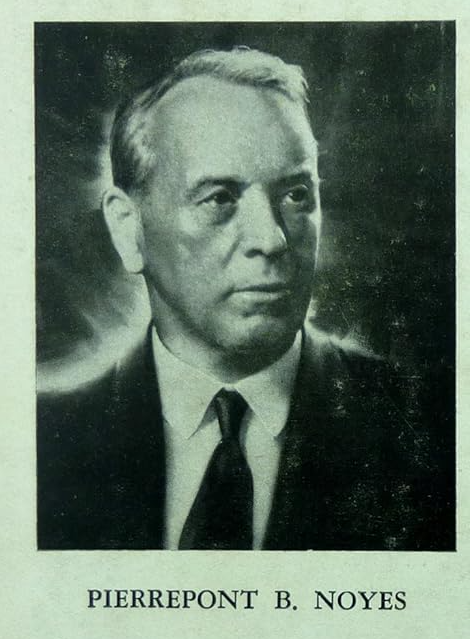
Finally, in 1893, one of the "stirpicults," children born as part of the Oneida Community's genetic engineering project that began in 1869, put an end to the seances and wrested control, finally, from the cold dead hands of his father. Twenty-five year old Pierrepont Noyes replaced the elderly board, hired his half-brothers and sisters to help run the company, and at twenty-nine, became General Manager of the Oneida Corporation.
| |
|
It was Pierrepont who decided that the company should sell off the animal traps business and focus on silverware. A new factory was built in 1913, and the company was reorganized to honor many of the principals that were the best of the Oneida Community. Decisions were made by consensus, intellectual pursuits, recreation, and leisure time were valued, and profits, which soared, were often put to community purposes. Still, the sexual exploits and fringe beliefs of their parents and grandparents was increasingly embarrassing, and a liability to the thriving international corporation, and in 1947, much to this historian's dismay, the documents and records of the Oneida Community and John Humphrey Noyes were taken to the dump and burned by their descendants.
| 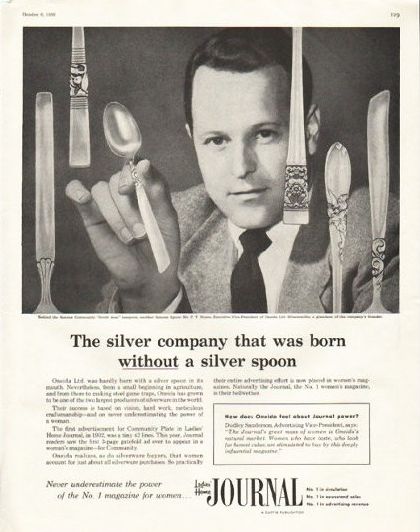 | |
By 1956, re-branding was in full swing, with a full-page advertisement in the Ladies Home Journal touting the company's "small beginnings in agriculture" and their principals of "hard work, meticulous craftsmanship, and never underestimating the value of a woman." And the clean-cut 1950's young executive looking back from the page? John Humphrey Noyes' grandson, P.T. Noyes, who controlled the company until 1981. No mention of communism, unsurprisingly.
Still, if the descendants of John Humphrey Noyes knew anything, it was the power of sex and industry, the twin pillars of the original Oneida Community, and by the late 1960's, a time when, once again, America was examining its feelings about monogamy, work, and spirituality, Oneida silverware was sold in the mouths of beautiful young women. John Humphrey Noyes must have been smiling, his spiritual batteries finally fully charged.
Note: Should you wish to read more about John Humphrey Noyes and the Oneida Community, I thoroughly enjoyed Oneida: From Free Love Utopia to the Well-Set Table by Ellen Wayland-Smith at the recommendation of my friend Doris Noyes. Order it here.
| |
Something Is Always Cooking... | |
|
Newburyport Spice Cookies
Just because it's the new year doesn't mean you have to go cold turkey on the cookies! These are from the kitchen of Helen Tuxbury Bliss, wife of Charles Arthur Bliss of the Bliss & Perry Shoe Company, and they are a favorite of former assistant director Kristen Fehlhaber, who brought them to our attention. Enjoy!
Heat oven to 375 degrees
Mix:
1 C sugar
¼ C molasses
1 beaten egg
1 tsp. cinnamon
1 tsp. ginger
½ tsp. cloves
1 tsp. vanilla
Add and beat in:
¾ C canola oil
Add and mix well:
2 C flour
2 tsp. baking soda
½ tsp. salt
Make small balls of dough, roll them in sugar, then flatten with the bottom of a glass dipped in sugar on a greased cookie sheet.
After baking, sprinkle in sugar and cool.
Editor's note: No baking time is given but similar recipes call for 10-12 mins, rotating the sheet halfway through.
| |
|
Click the image to do the puzzle
The death of General Wolfe was commemorated in this 1770 painting by Benjamin West.
A bayonet taken from the scene by a Newbury soldier is in the collection of the Museum of Old Newbury.
| | |
Museum e-Newsletter made possible through the
generosity of our sponsors:
| |
| | | |