The Native Hawaiian Place of Learning Advancement Office at UH Mānoa focuses on implementing recommendations from Native Hawaiian reports authored over the last 30 years that guide UH Mānoa in becoming a Native Hawaiian place of learning; a place that is responsive to kanaka (Native Hawaiian) communities and reflective of Native Hawai‘i for ALL people to learn, connect, grow, and heal from:

  • Native Hawaiian Student Success
  • Native Hawaiian Staff and Faculty Development
  • Native Hawaiian Environment 
  • Native Hawaiian Community Engagement

We cannot do this work alone. It is our mission to foster the potential within each of you to positively contribute to our collective kuleana to make UH Mānoa a Native Hawaiian place of learning. These monthly newsletters are meant to keep you connected, highlight your work and continue to inspire you.

NATIVE HAWAIIAN STUDENT SUCCESS
GOALS:
  • Native Hawaiian students are holistically supported from recruitment through post-graduation.
  • Best practices are gleaned from efforts to support Native Hawaiian students and are applied to student success strategies for all students across the campus.

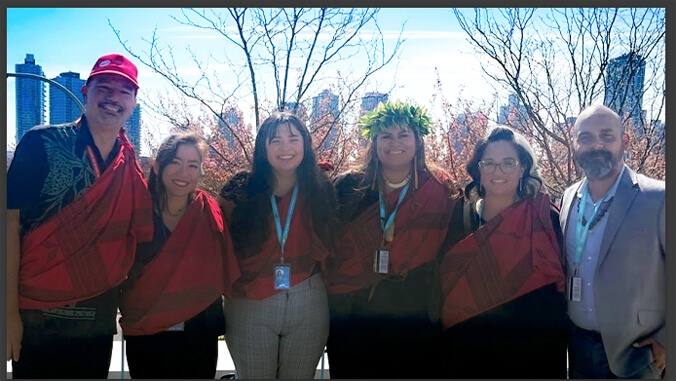
Moʻopono Project Showcased at the United Nations

Attendees from UHM Kealiʻi Gora, Alyssa ʻĀnela Purcell, Haliʻa Osorio, Makanalani Gomes, Brandi Ahlo, and Hawaiʻi community organizer participant Chris Oliveira

PC: UH News

Hoʻomaikaʻi to the Moʻopono —Hawaiian Ancestry Project on a successful presentation at the United Nations Permanent Forum on Indigenous Peoples Issues. The project was launched in 2021 by Hawaiʻinuiākea School of Hawaiian Knowledge, Hawaiian Studies kumu Lilikalā Kameʻeleihiwa. The Moʻopono team stewards 55 books of Hawaiian genealogy and documented knowledge, of which they have transcribed 7,385 of 9,000 pages so far. Click here to read the full article by UH News.

STAFF & FACULTY DEVELOPMENT
GOALS:
  • Native Hawaiian staff & faculty are holistically supported from recruitment through promotion and leadership development in every unit across the campus.
  • All staff & faculty at UH Mānoa are more knowledgeable and culturally rooted in Mānoa and Hawai‘i.

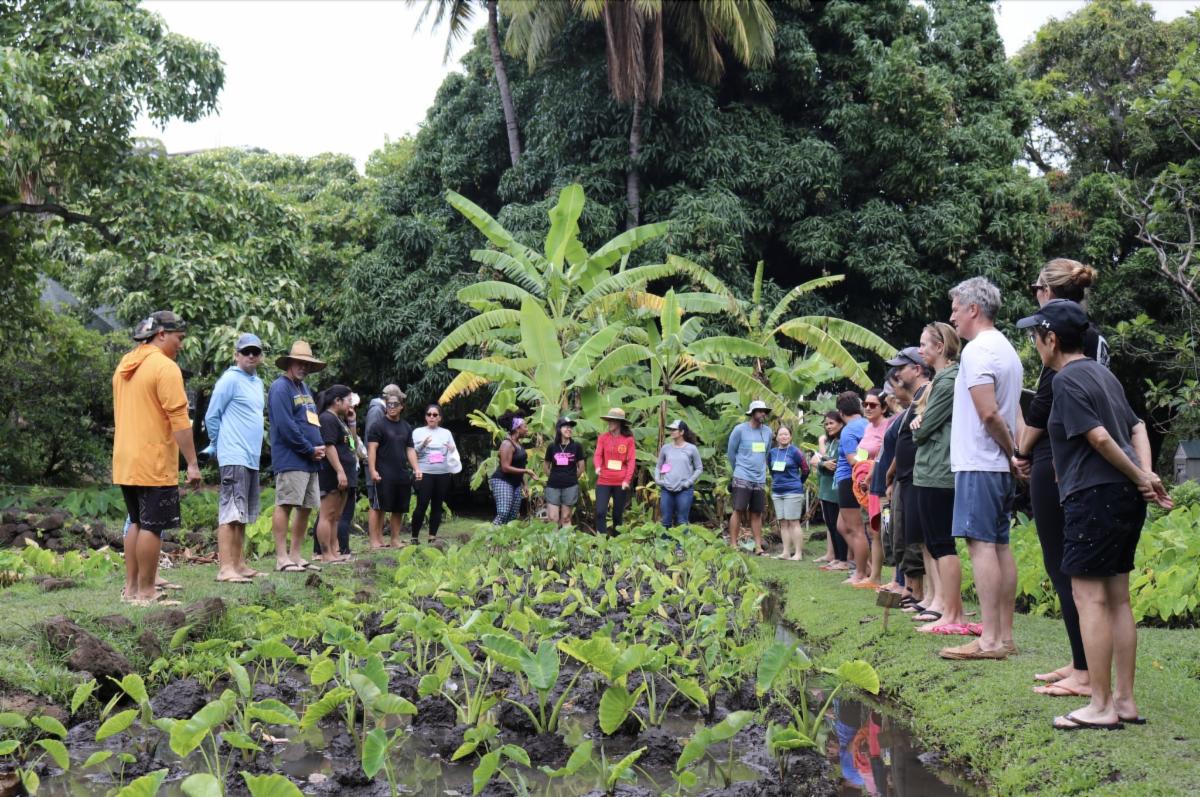
Cohort Kumukahi May Session

by hope matsumoto and Makanalani Gomes

Pictured: Facilitators and Participants of the second session at Ka Papa Loʻi o Kānewai

After the UH Mānoa campus approved the current strategic plan Mānoa 2025: Our Kuleana to Hawai‘i and the World, the Native Hawaiian Place of Learning (NHPoL) Advancement Office began working on our strategy to support the plan’s three goals specific to becoming a Native Hawaiian Place of Learning. One of the three goals is “100% of schools and colleges and other similar nonacademic units will have a five-year strategic plan to address each of the four Native Hawaiian place of learning strategic focus areas relevant to their particular units” (p. 19) by the end of the strategic plan period.


In spring 2023, we contacted the Provost’s Council, and a set of deans, directors of ORUs, and vice provosts gauged readiness within their units and asked to participate. Cohort Kumukahi is the result. 


Please join us in celebrating our second session by checking out our online blog here for a more in-depth week compilation.


A note on the name Kumukahi:

Kumukahi is the name of the easternmost point of Hawai‘i Island and thus the easternmost point of the Hawaiian archipelago. Because of this, Kumukahi is often referred to poetically when speaking of beginnings, of something new. Since this is the first of its kind, we thought Kumukahi was particularly fitting.

NATIVE HAWAIIAN ENVIRONMENTS
GOAL:
UH Mānoa campus is a physical, cultural, spiritual, and interactive environment that exemplifies the values of ‘ohana and community, mālama ‘āina, and kuleana; thereby, perpetuating Native Hawaiian values, culture, language, traditions, and customs.

Congratulations to all who participated in FestPac 2024

Image of FestPac 2024 Hoʻoulu Lāhui Regenerating Oceania

Hoʻomaikaʻi to all who attended and participated in the 13th Festival of Pacific Arts & Culture (FestPAC) through ceremony, conferences, community organizing, and cultural practionership. How meaningful that UHM was able to help support the gathering through housing and co-hosting our Oceaniac ʻohana. May we all continue to remember that the ocean connects us. Well done e kō Hawaiʻi!

Celebrating Juneteenth in Hawaiʻi and Beyond

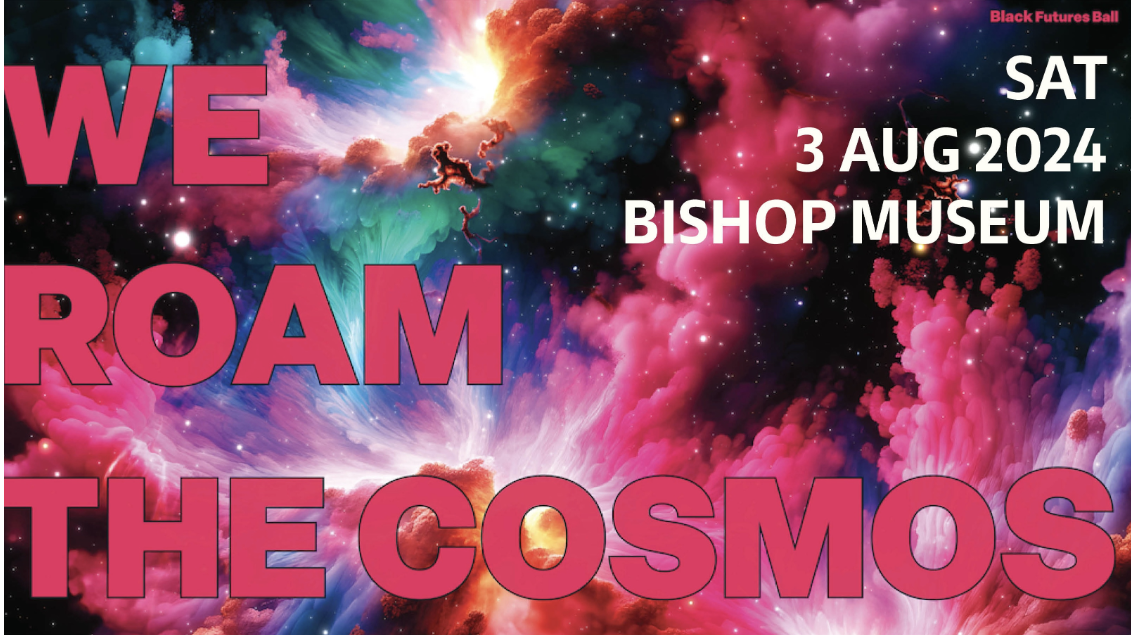
We hope you were able to attend some of the wonderful events celebrating Juneteenth in Hawaiʻi. Here are some ways to continue engagement: Subscribe to The Pōpolo Project's Newsletter here or attend one of their amazing upcoming events like Black Futures Ball- We Roam the Cosmos.

Black Futures Ball- We Roam the Cosmos Flyer

NATIVE HAWAIIAN COMMUNITY ENGAGEMENT
GOAL:
UH Mānoa and Native Hawaiian communities are consistently connected and engaged in order that there can be reciprocal teaching and learning for positive impact throughout Hawai‘i.

Community Highlight:

The Pōpolo Project


By Makanalani Gomes

Picture of The Pōpolo Project's Logo

For this community spotlight, we wanted to highlight the brilliant and powerful community organization, The Pōpolo Project. Our office was particularly moved to reflection and thought after reading this month's email newsletter entitled: Juneteenth & Lessons from FestPAC. Visit the link to the whole newsletter here.


Their mission: "We redefine what it means to be Black in Hawaiʻi. Our work redefines what it means to be Black in Hawiʻi- and in turn what it means to be Black in the world-by creating spaces and opportunities for our people to radically reconnect ourselves, our communities, our ancestors, and the land."


They articulate their vision and kuleana as follows: "We envision a just future for Hawaiʻi, achieved by investing in the intersections of our diverse histories and cultures to build connections across communities. By making the lives of Black folks visible amount what we commonly think of as Local, the Pōpolo Project highlights the vivid, complex diversity of Blackness. We produce educational and cultural learning opportunities, host community gatherings, and create original media that create new narratives for and about Black people, rooting our experiences and identities in a lush ecosystem of knowledge and kingship."


One call-in to the community I was drawn to was the direct reminder that our collective liberation is critical for all of us, including our Earth mother. "As many in our community prepare this week to observe Juneteenth in Hawaiʻi, there is a bright line that connects the slavery our ancestors endured in the Americas and contemporary colonialism in the Pacific." Despite these systems of oppression, we must remember that the ocean connects us through beautiful stories and heartbreaking ones, but it connects us nonetheless. As many of our Oceanic relatives stated during FestPAC, "Our genealogies, our languages, and culture are non-negotiable," and neither is our collective liberation.


We uplift the incredible and inspiring work of The Pōpolo Project.For more information and to be in community with the Pōpolo Project and their incredible work visit their website here.

NĀ LAMAKŪ O KE ALOHA ʻĀINA

Kanaka Highlight Series

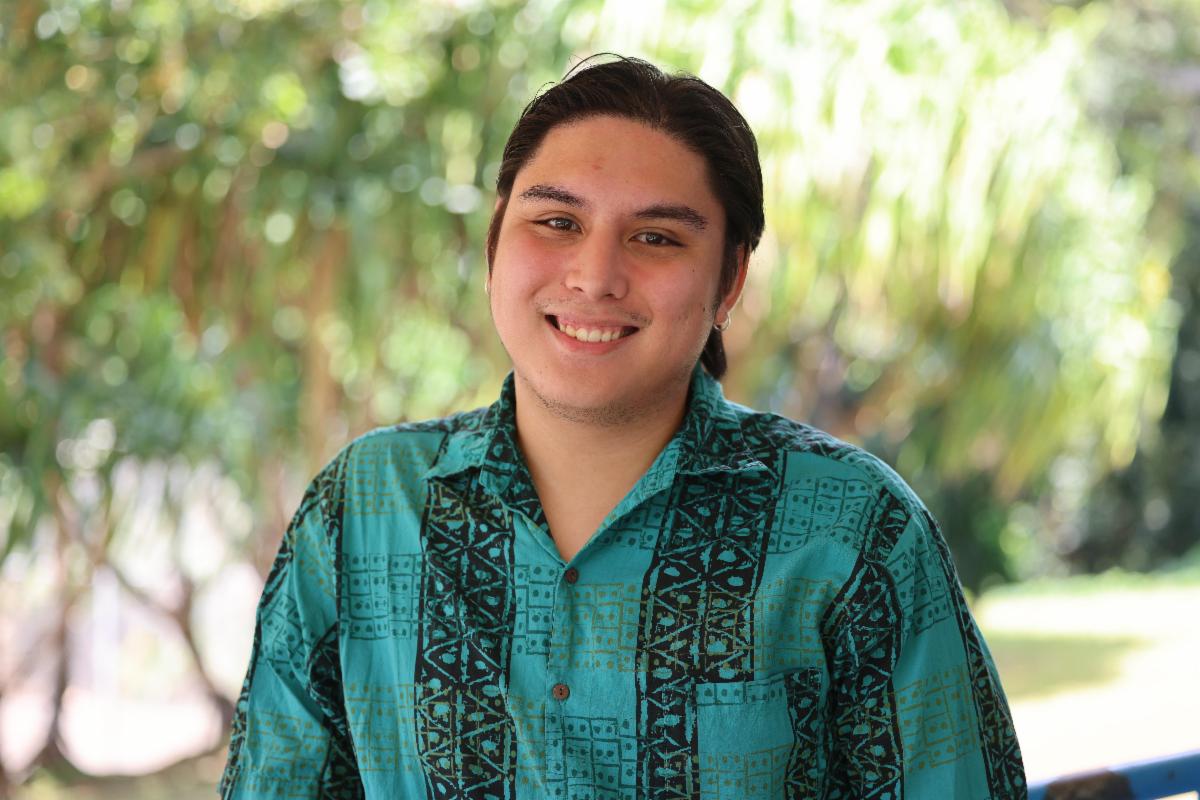
Picture of Donavan Kamakanimaikalani Albano the highlighted student

Donavan Kamakanimaikalani Albano 


Birthplace/Hometown:

Kalihilihiolaumiha, Oʻahu 


High School:

McKinley High School


UHM Degrees: 

BA, Ethnic Studies (2021)

MA, Political Science (currently pursuing) 


Current Occupation:

Graduate Research Assistant


What inspired/inspires the path for your academic major? 

In addition to my kūpuna and kumu, the moʻopuna who have yet to be born and Moananuiākea (the vast and expansive Pacific ocean) are a big part of my educational journey and genealogy in the ways that I envision, create, and live in my body and ʻāina. My mother also inspires the work that I do in the ways that I remember her beyond her passing. As a māhū ʻŌiwi, recognizing that my shapeshifting experiences has often been a confluence of desires for access to cultural, political, and bodily self-determination & sovereignty for Hawaiʻi and Pasifika, while navigating higher education as a first-generation, low-income college student, has ultimately led me to my current pursuit in political science focused in Indigenous politics. Having started learning in undergraduate about, and continue to actively participate in, organizing liberatory movements related to demilitarization, de-occupation, and decolonization in Hawaiʻi and internationally, I have found that the need to continue engaging political education and working to make it accessible to our Pasifika ʻohana has become a strong rationale for my pursuit of Indigenous politics. A poet of the ocean, I have also been deeply inspired by the bridging of the creative and the critical; the poetics and the politics. This continues to inspire the ways that I view our relationships to ʻāina and intimacies with our Native bodies, and truly how I navigate the world each day.


What are your future goals in your work? 

Simply, I want to continue creating and learning. I would really love to work with aspiring and emerging writers and artists, especially ʻŌiwi, Pasifika, Black and brown students of color, and find healing and connection through creative writing and literature as a future professor. Following the conferral of my MA in Political Science, I hope to pursue a PhD in English to focus in Hawaiian & Pacific literature and creative writing. Poetry has been a practice of discovering decolonial healing and has transformed my life in many ways, especially finding remembrance to my pilina to my māhū ʻŌiwi body and learning about ocean feminisms. Another goal is to publish poetry books and contribute to pushing the boundaries of academic scholarship by weaving the creative and critical through Hawaiian epistemologies and methodologies. I also hope to continue increasing awareness of the Missing and Murdered Native Hawaiian Women, Girls, and Māhū crisis, a deeply personal issue. 


How do you see your time at UH shaping the way you aloha ʻāina?

I think that UH, in various ways, has shaped the way that I aloha ʻāina. Personally, I think that to be aloha ʻāina engages a reciprocal care that recognizes the importance of kūʻē—to stand in protection of lands and waters that is of Hawaiʻi and throughout Moananuiākea that connects us to our Pasifika relatives. In fact, I have engaged a lot of conversations related to aloha ʻāina in many spaces throughout my time at UH, in and out of the classroom and the Mānoa campus. For example, I have participated in the Nā Koʻokoʻo Hawaiian Leadership Program in my undergraduate journey and served as the ASUH President during the COVID-19 pandemic. I have learned that there is a political aspect of aloha ʻāina. I have also learned through my relationships with ʻŌiwi and Pasifika writers and literary artists at UH to understand the deep connection between one's body and ʻāina; to remember our kuleana to Papāhanaumoku, our island earth mother. I am continuously shaped by UH in the ways that I aloha ʻāina because I recognize that my community is not just outside of the university; it is also right here. Community issues impact our experiences at the university everyday. Papa is actively breathing here in Mānoa, and so are we.


What does UHM as a Hawaiian place of learning mean to you? 

UHM as a Hawaiian place of learning means many things to me. To share a few: It is an aspiration because we are not there yet, and it is a remembrance of our practices, stories, knowledge systems, and ʻāina and protectors of the ʻāina who have been watching over Mānoa prior to the establishment of the institution (such as Kahalopuna, Kauakuahine and Kahaukani). It means that we work towards always centering Hawaiʻi, from the depths of the ocean that is the womb of Papahānaumoku to the skies of Wākea and pō that is the realm of our ancestors. It is about deeply listening to Kānaka ʻŌiwi who have and continue to live and breathe on this campus and build pilina. It means that we recognize our kuleana to Hawaiʻi and Moananuiākea. It means that we look towards our kūpuna, our moʻolelo, our moʻokūʻauhau, our moʻopuna, our lāhui, our nation, and keep living and pushing towards collective liberation because it is political and cultural. In various ways, it can be about survival. It also means that we pause and listen, and are intentional about what we breathe life to—the language we use everyday and the interactions in our relationships and communities.