Hello fellow sewist!
We all have a shared interest in sewing, and we want to be able to sew more in the future, right? The act of sewing can certainly exercise our brain activity, but let's not neglect our bodies.

So today, let's talk about sewing ergonomics, the correct way to step up and sit by your sewing machine, and how to sew longer without harming our bodies.

First, you'll want to set up your machine on a table large enough to have ample room to the left and behind the machine to rest your project over. You'll have better control of your fabric and less stress on your arms and shoulders trying to prevent your fabric from sliding off the table.
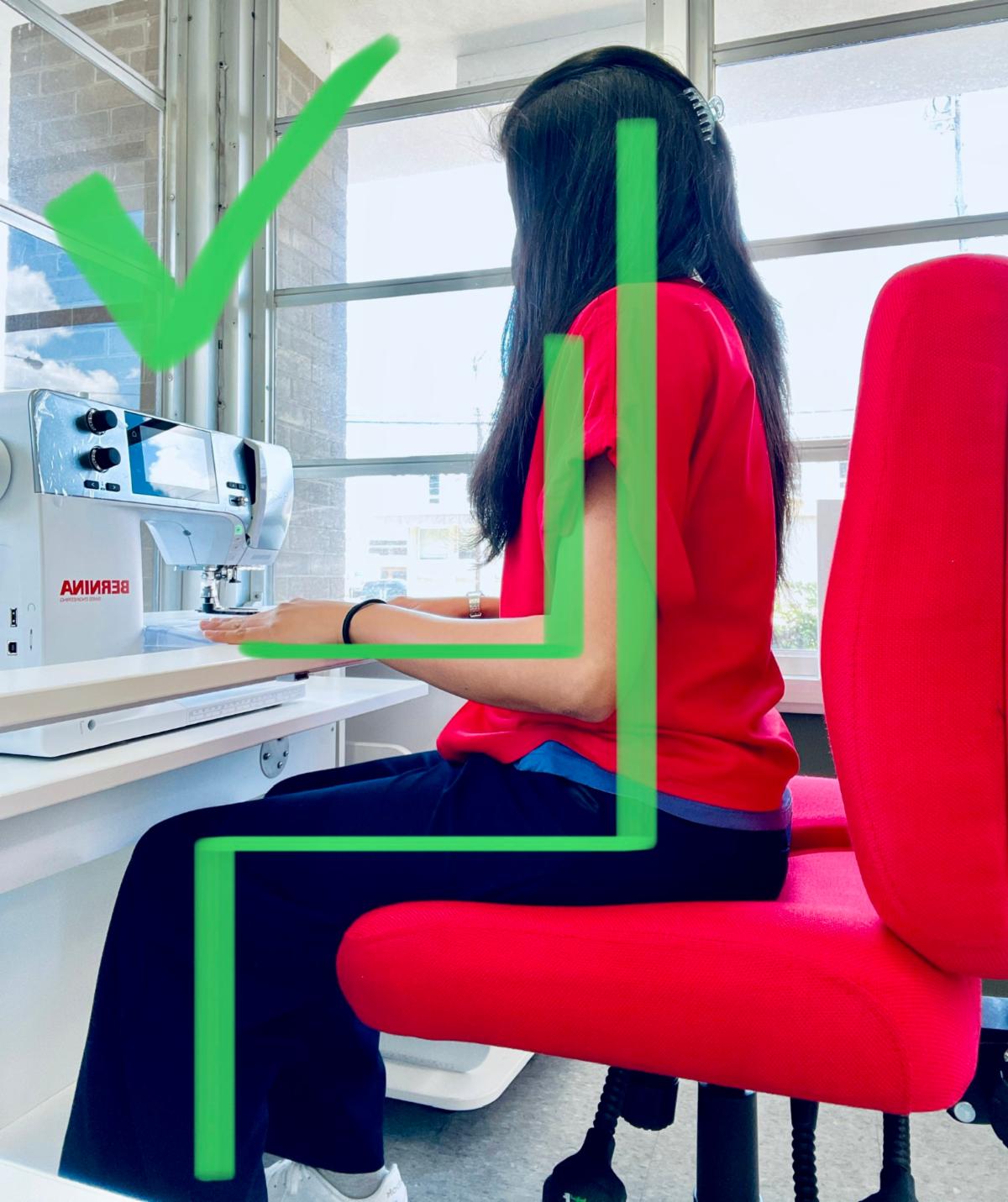
Most of us sew on a dining table, while some have the luxury of setting the machines in a sewing cabinet that allows you to have the sewing machine bed level to the table. Regardless of whether you have a specific table or not, it's important to note that the bed of your sewing machine, where the stitching takes place, needs to be parallel to the bottom of your ribcage. It automatically sets your back straight, forming a 90-degree angle with your arms over the sewing machine bed.

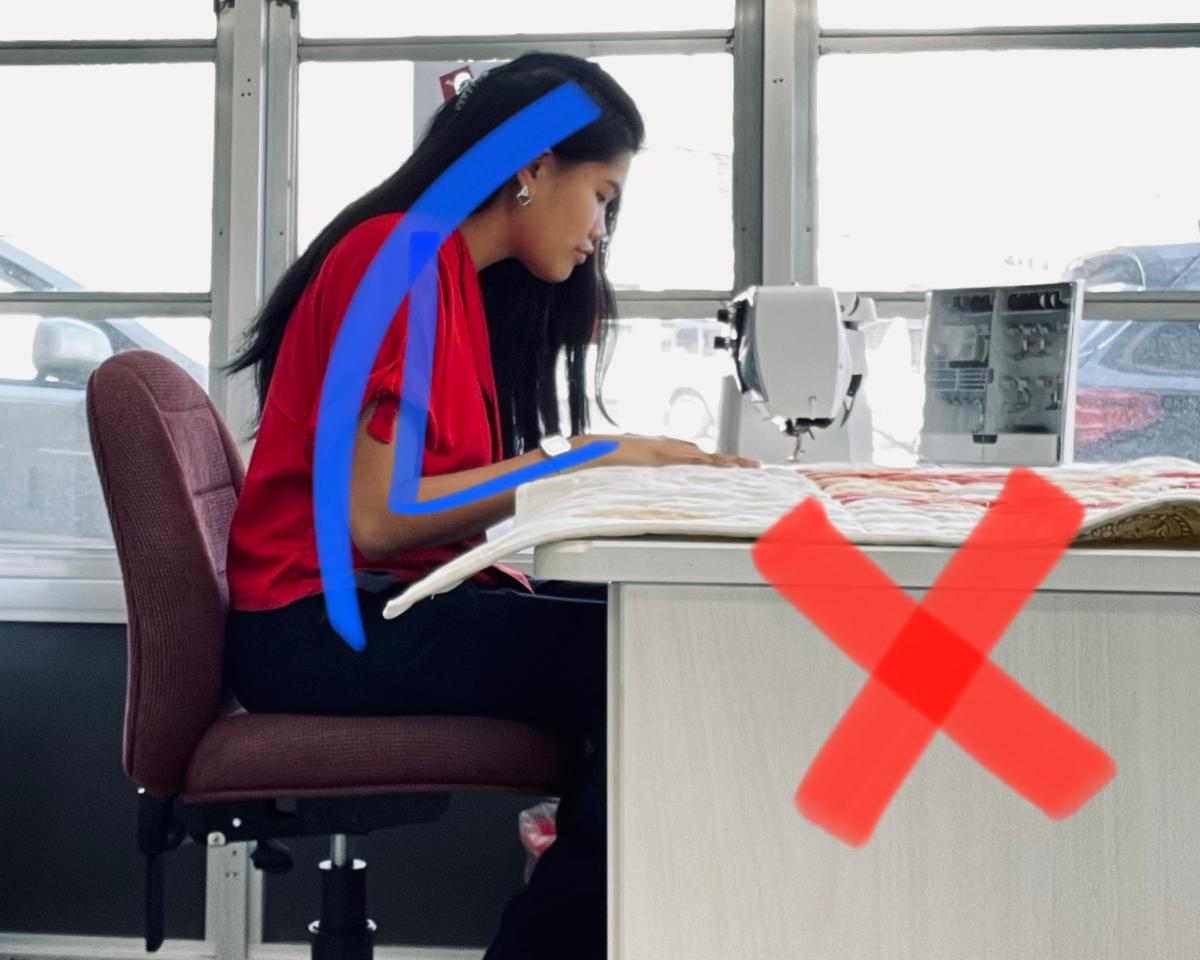
Depending on your body type, you may need to adjust the height of your chair to achieve this. I have my machine on a regular desk at home, which means there's an additional 4" height to reach my sewing machine stitching area. Sitting on a standard-height chair is too low for my arms to form a 90-degree angle - my hands are raised, wrists bent, back slouched, and shoulders are up. Doesn't sound too comfortable, does it?

I would stack some books and pillows on my seat to sit at a comfortable height. Eventually, I purchased a bar stool with a backrest and found it was the right seat height for my body type to establish a strain-free sitting position.

Of course, a height-adjustable chair will do well. The images shown here are of me at the store, by the Koala sewing cabinets - they have hydraulic-powered surfaces that allow you to set the height of your sewing machine.
Have your head rest on your neck and not protruding over your machine like a giraffe. Your eyes will be gazing down, but at least you won’t have any neck and shoulder problems in the long run.

With your back straight, shoulders relaxed, and elbows positioned at a right angle, you’ll also want to have your knees at a right angle. So, if your seat is higher, rest your presser foot on a box or stool to achieve that.

Having your joints at right angles is the most natural form your body can take, especially when positioned for prolonged periods. However, I wouldn’t recommend sitting and sewing for three hours straight either! Make sure you take breaks after 30-45 minutes of continuous sewing. Chances are you’ll want to press your seams after you sew them, so getting up and walking to the ironing board counts as giving your body a break from sitting.
At first, you may find that sitting up straight causes a bit of strain, which means your core muscles are engaged correctly. To deter that, drink plenty of water. It’s generally good for your muscles and good for your brain.

Lastly, when taking a break from sewing, make sure to stretch those muscles. Do some neck rotations, arm and shoulder stretches, a seated twist, and calf and hamstring stretches are a few examples. Or try sew-ga (yoga for sewists)!

You’re all set to continue sewing and, hopefully, sore-free from now on.

Happy Sewing!

- Carla
Are you ready to join learn a new skill?
If you have a friend or family member looking to learn how to sew, please feel free to forward this newsletter to them. We would greatly appreciate it!
Store Address - Telephone - Hours


Phone: 240-283-8307

Monday - Saturday 9:30 AM to 7:30 PM
Sunday 11:00 AM to 6:00 PM


We're having so much fun with our Social Media!
Join us for daily pics of new projects and fabric.