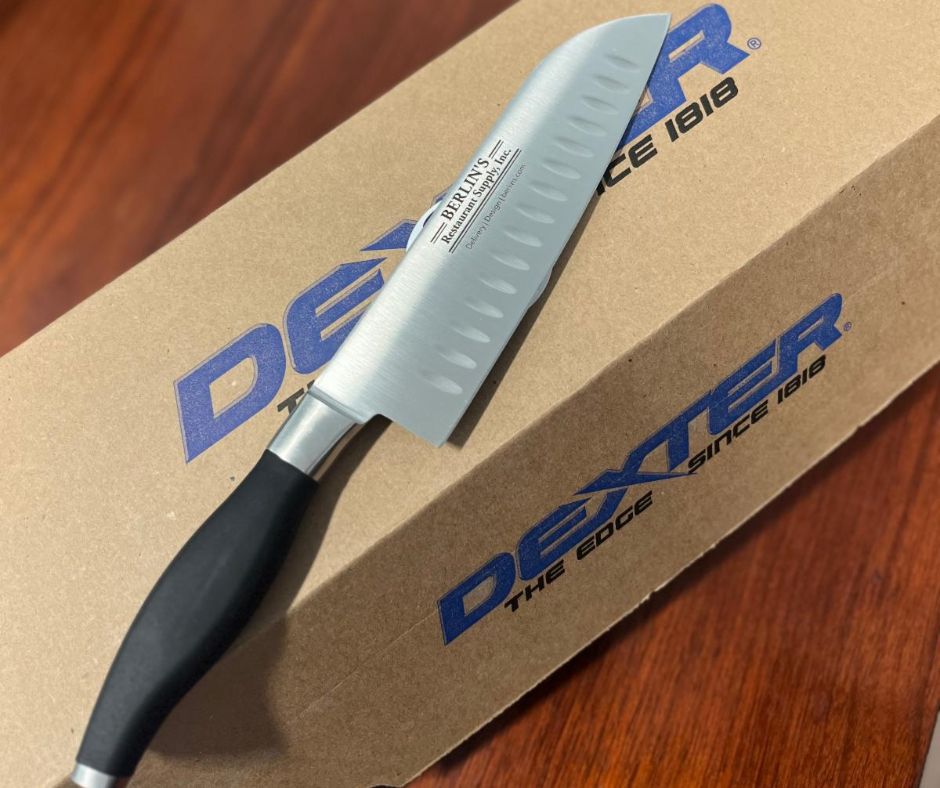
Let's discuss Commercial Knives. | |
Commercial knives are knives that are designed for professional use in restaurants, hotels, catering, and other food service establishments. They are usually made of high-quality materials, such as stainless steel, carbon steel, or ceramic, and have different shapes and sizes to suit various cutting tasks. They can help you prepare food faster, easier, and more efficiently. Commercial knives are an investment that can last for a long time if you take good care of them. You should always wash, dry, and store your knives properly after each use. You should also sharpen your knives regularly to maintain their edge and performance. You can use a sharpening stone, a honing steel, or an electric sharpener to sharpen your knives. You should also use a cutting board that is suitable for your knives, such as wood, plastic, or bamboo. You should avoid using glass, metal, or marble cutting boards, as they can damage your knives. Call 843-744-4499 to speak with a customer representative today!!
| |
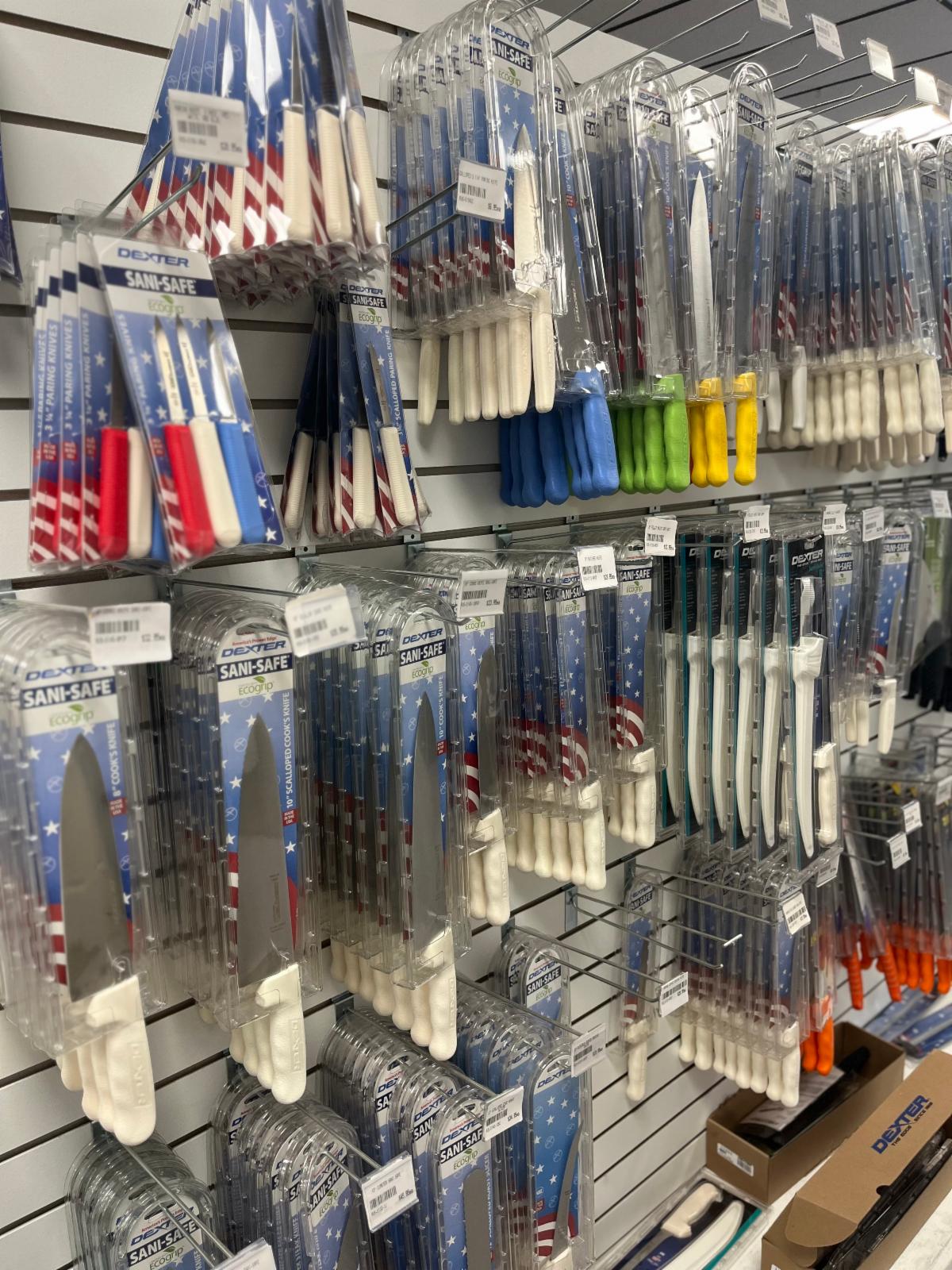 | |
TYPES OF KNIVES:
-
Chef’s knife: A versatile knife that can be used for slicing, dicing, chopping, and mincing various foods. It has a broad blade that tapers to a point and a curved edge that allows for a rocking motion. A chef's knife can range from 6-14" in length.
-
Paring knife: A small knife that is used for peeling, trimming, and slicing fruits and vegetables. It has a straight edge and a pointed tip and is usually 3-4" long.
-
Bread knife: A long knife that has a serrated edge that can cut through crusty breads, cakes, and pastries without crushing them. It is usually 8-10" long.
-
Boning knife: A narrow knife that is used for removing bones and skin from meat and fish. It has a flexible or stiff blade that can curve around bones and joints. It is usually 5-7" long.
-
Fillet knife: A thin knife that is used for slicing thin pieces of fish or meat. It has a flexible blade that can bend easily and a sharp tip that can pierce through skin and scales. It is usually 6-11" long.
-
Cleaver: A heavy knife that is used for chopping through bones, cartilage, and hard vegetables. It has a wide blade that can also be used for crushing garlic and ginger. It is usually 7-9" long.
-
Santoku knife: A Japanese knife that is similar to a chef’s knife but has a shorter and thinner blade. It is used for slicing, dicing, and mincing vegetables, meat, and fish. It has a rounded tip and is usually 5-7" long.
-
Sashimi knife: A Japanese knife that is used for slicing raw fish for sushi and sashimi. It has a long and narrow blade that can make precise and thin cuts. It has a single bevel edge and a pointed tip. It is usually 8-12" long.
| |
CHOOSING THE BEST KNIVES FOR YOUR KITCHEN:
|
-
Material: The material of the blade affects the durability, sharpness, and corrosion resistance of the knife. Stainless steel is the most common material for commercial knives, as it is strong, easy to maintain, and resistant to rust and stains. Carbon steel is harder and sharper than stainless steel, but it can also be more brittle and prone to rust and discoloration. Ceramic is very sharp and lightweight, but it can also be fragile and difficult to sharpen.
-
Edge: The edge of the blade affects the cutting performance and ease of use of the knife. A straight edge is ideal for slicing and chopping, as it can make clean and smooth cuts. A serrated edge is ideal for cutting through hard and crusty foods, as it can grip and tear them. A granton edge is a straight edge that has hollows or dimples along the blade, which can reduce friction and prevent food from sticking to the knife.
-
Handle: The handle of the knife affects the comfort, safety, and control of the knife. The handle should fit your hand size and shape, and have a good balance and grip. The handle can be made of various materials, such as wood, plastic, rubber, or metal. Wood handles are natural and attractive, but they can also be porous and prone to cracking and warping. Plastic handles are durable and easy to clean, but they can also be slippery and brittle. Rubber handles are soft and comfortable, but they can also be sticky and hard to sanitize. Metal handles are strong and hygienic, but they can also be cold and heavy.
-
Size: The size of the knife affects the versatility and convenience of the knife. The size of the knife should match the size of the food and the cutting board that you are using. A larger knife can handle bigger and tougher foods, but it can also be more cumbersome and tiring to use. A smaller knife can handle smaller and finer foods, but it can also be more limited and unsafe to use.
| | | | |