Root-Pike WIN Logo White Mission blue bkgrd.png

LESSON FIVE: Rain Gardens Outperform Turf Grass 

Who: USGS, the City of Madison, and WDNR

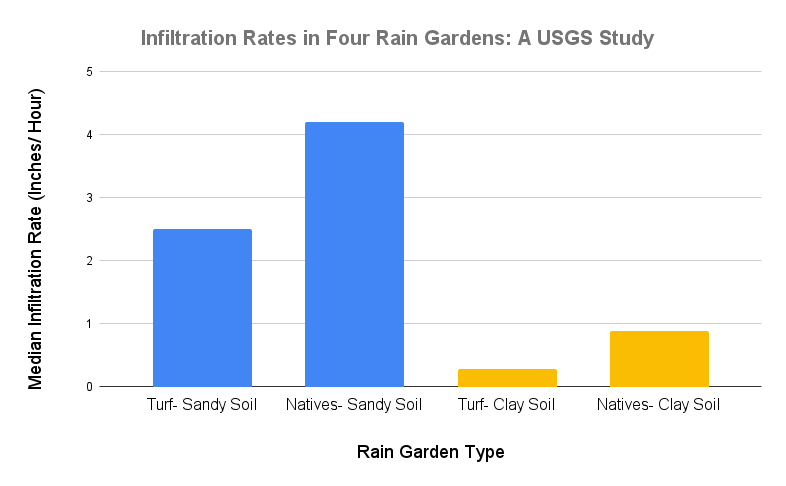
What: Studied the infiltration rate of two raingardens planted with turf grass and two planted with native vegetation in both clay and sandy soils (Read the report here)

When: 2004-2008

Where: Madison, Wisconsin 

Results: Rain gardens planted with native prairie vegetation always outperformed those planted with turf in both clay and sandy soil. Only the turf grass rain garden in clay soil was not able to infiltrate 100% of the precipitation and snowmelt throughout the study period.

_Infiltration Rates in Four Rain Gardens_ A USGS Study.png

Technical differences between bioretention devices and rain gardens: 


Bioretention Devices: Maximum size is 2 acres and includes engineered soils.

Great for small, redevelopment sites where wet pond construction may be difficult. 

WDNR Standard for Bioretention


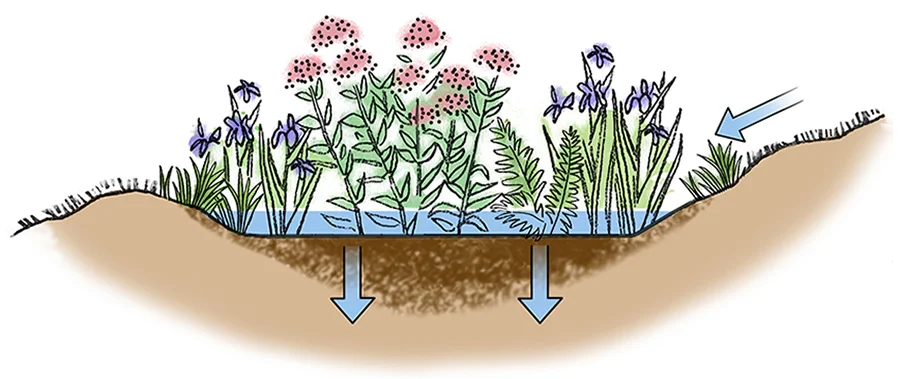
Rain Gardens: Maximum size is 5000 square feet (0.1 acre) and often uses soil from site. Best for managing roof and impervious surface runoff for a small drainage area. WDNR Standard for Rain Gardens

Rain Gardennn.png

Questions or comments? Reach out to Root-Pike WIN's Stormwater Resource Consultant, Kristi Heuser, at kristine@rootpikewin.org or call 262-327-0167.

Root-Pike WIN Logo PMS 295 square.jpg
final _002_.gif

This Email is Sponsored by KCI Technologies

We Thank Them for Their Support!

KCI Resource Management / La Crosse Office Contact 

Root-Pike Watershed Initiative Network

4116 12th St.

Kenosha, WI 53144


info@rootpikewin.org | 262-883-4018 | www.rootpikewin.org


STAY CONNECTED

Facebook  Instagram  LinkedIn  Twitter