|
|
|
Presented by the Zinn Education Project
A Collaboration between Rethinking Schools and Teaching for Change
|
Disguising Imperialism: How Textbooks Get the Cold War Wrong and Dupe Students
 |
|
|
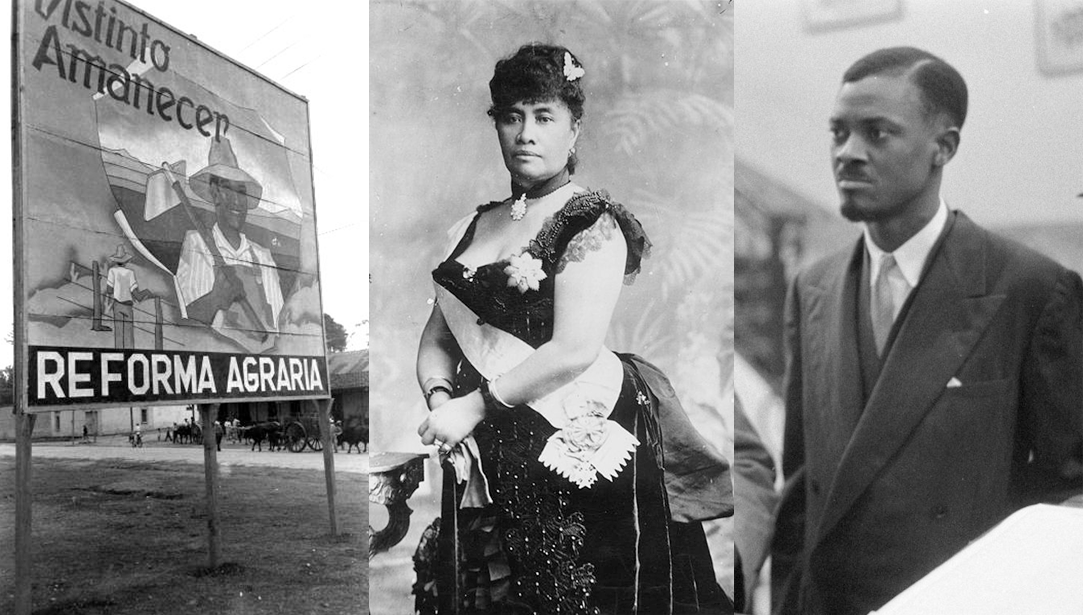
Leaders and movements overthrown with the help, or at the direction, of the U.S. government.
|
By Ursula Wolfe-Rocca
The dominant periodization of U.S. history ---- in most textbooks and curricula ---- would have us learn something called "Westward Expansion," separately from "U.S. Imperialism," separately from "The Cold War." In reality, these are better understood as a continuum. The political, economic, racial, and religious rationales used to justify the theft of Native land on this continent were the very same trotted out in 1893 and 1898 to steal the faraway lands of Hawaii, the Philippines, Puerto Rico, and Guam.
The same insatiable greed for resources that led U.S. sugar barons to overthrow Queen Lili'uokalani also fueled United Fruit's seizure of land across Central America and its collaboration with the CIA to install business-friendly regimes there. U.S. imperialism cannot be neatly periodized; it is not an era to be bounded by the pages of a chapter. As long as the drive for profits remains paramount to U.S. foreign policy, imperialism will be central to the very existence of the United States. Continue reading.
_____________________________________________________________
"Disguising Imperialism: How Textbooks Get the Cold War Wrong and Dupe Students" is the
newest article in the Zinn Education Project series,
If We Knew Our History
,
posted at
Common Dreams.
You can help us reach a wider audience
in three easy steps:
Promote people's history today!
______________________________________________________
|
|
Free Book Offer
|

Tell Us Your Classroom Story,
Get a Free Book
We want to hear stories from teachers who have taught about housing discrimination. In appreciation for stories and (when possible) photos, we will send a hardcover copy of
The Color of Law
.
|
|
2018 NCSS Conference
|
 Workshop Proposals Due Feb. 26
Be sure to submit your workshop proposal for this year's National Council for the Social Studies Conference being held in Chicago, Nov. 30-Dec. 1.
|
|
President's Day Resources
|
 |
Rethinkin' Lincoln
Students need to rethink the Great Emancipator myth by examining Abraham Lincoln's first inaugural address, the Emancipation Proclamation, his timid approach to ending slavery, and, by contrast, the heroism of the abolitionists and the enslaved people themselves. By Bill Bigelow.
 |
| |
|
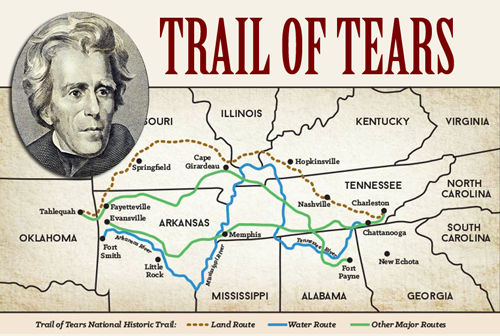 |
Andrew Jackson Revisited
What does it tell us about the Trump administration that Andrew Jackson's portrait now hangs prominently in the Oval Office? As Howard Zinn explained, "Jackson was a land speculator, merchant, slave trader, and the most aggressive enemy of the Indians in early American history." By Howard Zinn.
|
| |
|
 |
Missing from Presidents Day: The People They Enslaved
Erasing enslaved African Americans from the White House and the presidency presents a false portrait of our country's history. If young people ---- and all the rest of us ---- are to understand a fuller, people's history of the United States, they need to recognize that every aspect of early America was built on slavery. By Clarence Lusane.
|
| |
|
 |
Teaching After the Election of Trump
When he ran for president, Trump lied and used hate speech when talking about people of color, Muslims, immigrants, Native Americans, LGBTQ people, people with physical disabilities, and women. Trump's first year in office has shown that these were not empty words, but a preview of the biased policies to come. We invite you to draw on curriculum at the Zinn Education Project to help your students make sense of this context.
|
|
|
You Can Bring People's History to Students Across the U.S.
|
|
 |
The goal of the Zinn Education Project is to introduce students to a more accurate, complex, and engaging understanding of United States history.
|
|
|
|
|
|
|
|
|
|
| |
|
|
|
|
|
| |
|