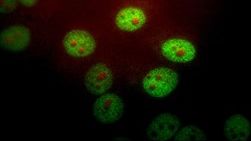
Pin1, a unique peptidyl-prolyl cis-trans isomerase (PPIase), regulates protein function, stability, and localization by catalyzing conformational changes in phosphorylated Serine/Threonine-Proline motifs. It plays a crucial role in synaptic plasticity, neuronal differentiation, and the pathogenesis of neurodegenerative diseases like Alzheimer's and Parkinson's, as well as various cancers, including brain cancers. Recent studies implicate Pin1 in epilepsy, tau-related issues, and Alzheimer's disease, where its downregulation is associated with tau hyperphosphorylation, APP amyloidogenesis, Aβ42 accumulation, and neuronal degeneration. These findings highlight Pin1's significance in brain processes and its potential as a therapeutic target, making it an attractive subject for neuroscience and cancer research. |