Alpha-internexin, also known as INA, is a 66 kDa Class IV intermediate filament protein that is a prominent constituent of the intermediate filament network in interneurons and cerebellar granule cells. Changes in alpha-internexin are associated with degenerative diseases like Alzheimer's and Parkinson's disease, amyotrophic lateral sclerosis, dementia with Lewy bodies, and other neuropathies, making it an important focus of research. Antibodies against internexin aid in identifying and studying its expression in neural tissues, contributing to our understanding of its roles in the brain and neuropathology.

BIOSENSIS ALPHA-INTERNEXIN ANTIBODIES

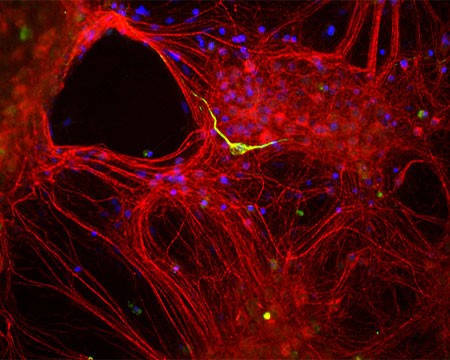
R-1379-50

Mixed neuron-glial cultures stained with rabbit polyclonal antibody to internexin alpha (red, R-1379-50), co-stained with chicken polyclonal antibody to peripherin (green, C-1399-50), and Blue: DAPI nuclear stain.

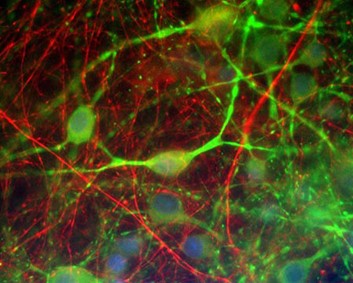
M-1378-250

Rat CNS cells stained with mouse monoclonal antibody to internexin alpha [1D2] (red,

M-1378-250), co-stained with chicken polyclonal antibody to microtubule associated protein (green, C-1382-50), and Blue: DAPI nuclear stain.

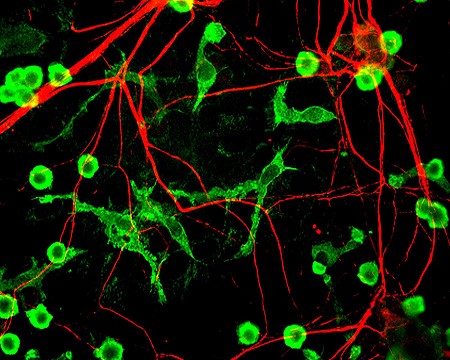
C-1377-50

Mixed neuron-glial cultures stained with chicken polyclonal antibody to internexin alpha (red, C-1377-50), co-stained with rabbit polyclonal antibody to Coronin 1a: whole serum (green, R-1335-50), and Blue: DAPI nuclear stain.

Biosensis' alpha-internexin antibodies are specific for the 66kDa protein and detect alpha-internexin in Western blot (WB), immunocytochemistry/immunofluorescence (ICC/IF), and immunohistochemistry (IHC) applications. They react to human, mouse, and rat samples and will serve as excellent tools for alpha-internexin research.

Uncover the potential of Alpha-Internexin in neurobiology and gain insights into its connections with neurodegenerative diseases.

Discover more

Biosensis is a company that is passionate about Science

LinkedIn  Twitter