Disability Inclusion Solutions logo banner

Go Beyond Accessibility:

How to Design for All

Creating welcoming and participatory environments for everyone should be a top priority for all architects and designers. But while accessibility plays a vital role, it's just one piece of the puzzle. Universal Design strives to create solutions that work for everyone from the outset. By understanding and integrating both concepts, we can build a more universally usable space.

Understanding the Difference Between Accessibility and Universal Design

Accessibility: Addressing Specific Needs

Accessibility focuses on ensuring products, services, and environments can be used by people with disabilities. It often involves making specific accommodations or modifications to meet the needs of the disability community. This might include retrofitting existing structures to add features like wheelchair ramps or screen readers to enhance usability.


Universal Design: Designing for All

Universal Design, on the other hand, takes a more comprehensive approach. This method anticipates the needs of a broadly diverse group of people and creates solutions that are inherently usable by everyone without the need for further modifications. Think of curb cuts on sidewalks. While they obviously benefit wheelchair users, they also help parents with strollers, delivery personnel, and travelers with luggage. Automatic doors are another example, providing convenience for everyone.

Applying Accessibility and Universal Design Principles

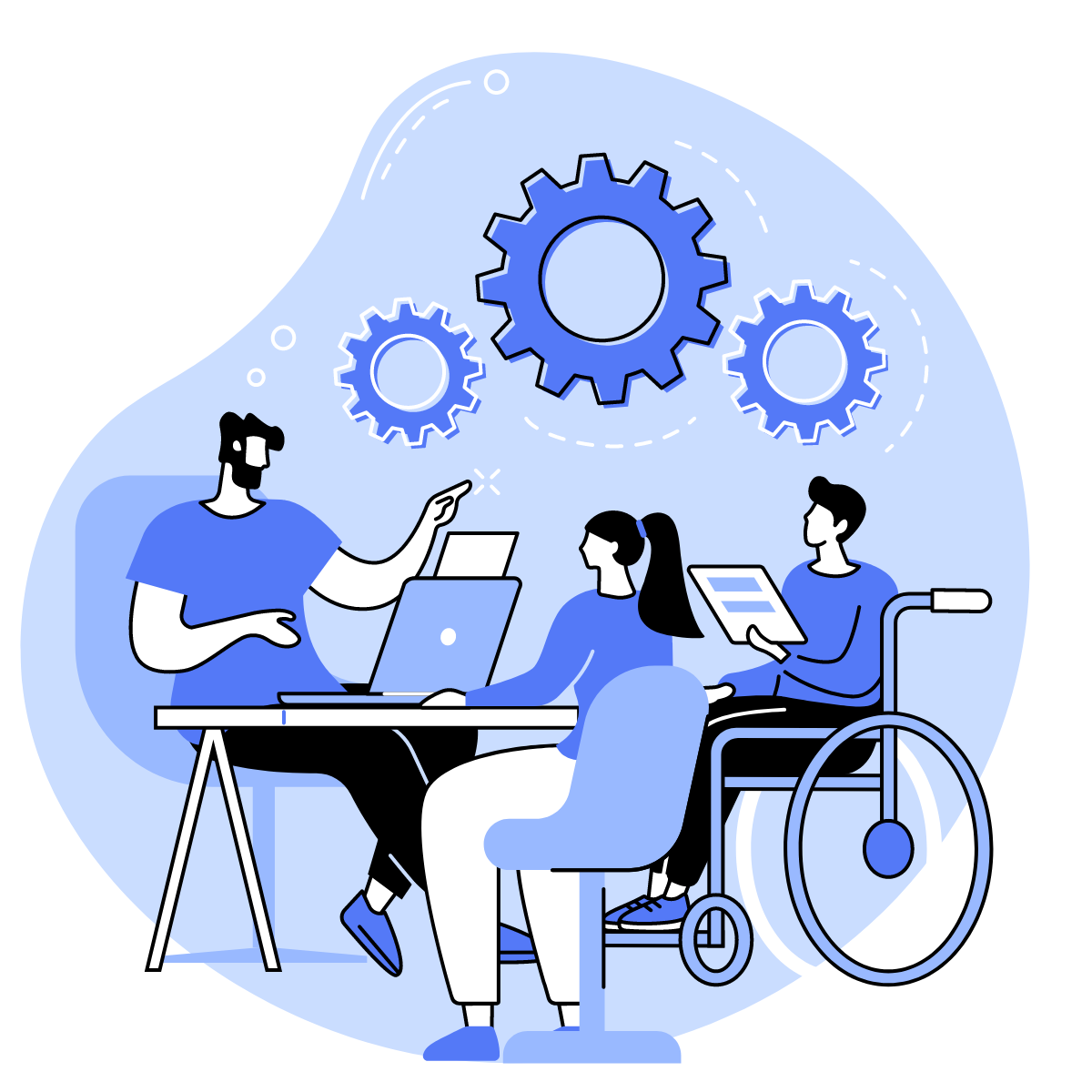
Applying accessibility and universal design principles in your workplace can create a more efficient environment for everyone. Here’s how to integrate these principles effectively:


Accessibility


  1. Conduct an accessibility audit: Evaluating your current environment, products, and services to identify barriers for people with disabilities will highlight areas that need improvement.
  2. Implement assistive technologies: Incorporate tools like screen readers, voice recognition software, and alternative input devices into your system to support employees with disabilities.
  3. Use accessible communication: Ensure all digital content, including websites and documents, comply with the Web Content Accessibility Guidelines (WCAG) to ensure it’s usable by people with disabilities
  4. Provide training and awareness: Educate your team about accessibility best practices and the importance of providing access to all. Regular training sessions can keep accessibility at the forefront of your organizational culture.


Universal Design


  1. Design workspaces with access for all: Include features that can accommodate a wide range of abilities and preferences, such as adjustable desks and ergonomic chairs. 
  2. Adopt flexible policies: Flexible work policies, such as remote work options and flexible hours, can help accommodate various life circumstances and preferences.
  3. Incorporate user-centered design: Involve a diverse group of users in the design process to ensure products and services meet a broad range of needs. 
  4. Implement universal communication: Use clear, simple language provided in multiple formats, including text, audio, and video, to ensure information is accessible to all employees.

Moving from Accessibility to Universality


While accessibility remains crucial, Universal Design offers a more comprehensive approach. By embracing UD principles, you create an environment that enhances usability and convenience for everyone.


Schedule a consultation with me, and I'll help you create a design that meets the needs of everyone.

Schedule a consultation with me on Calendly
Andrew Houghton
Disability Inclusion Solutions (DIS), founded by CEO Andrew Houghton, specializes in the development of programs and services that promote full inclusion for people with disabilities. Andy has used a wheelchair since a 1986 motorcycle accident that resulted in paraplegia. For over 20 years, his expert team has offered inclusion solutions that work. With offices in South Florida and production facilities in Southern California, DIS has the capacity to mobilize teams across the country and abroad to meet our clients’ needs.
Andy Houghton Headshot

Email Andy Directly
Linkedin  

Visit our website