Yammine talks smoking cessation | |
|
As of 2020, according to the Centers for Disease Control and Prevention, an estimated 30 million adults in the United States smoked cigarettes. Cigarettes remain the leading cause of preventable disease, disability, and death in the United States.
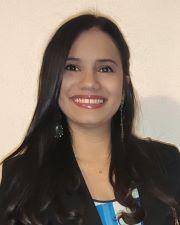
Luba Yammine, PhD, associate professor in the Faillace Department of Psychiatry and Behavioral Sciences, is a research scientist specializing in treating substance use disorders. Her primary research interest focuses on tobacco cessation and mitigation of post-cessation weight gain. She is currently the principal investigator of a NIH/National Institute on Drug Abuse funded multisite clinical trial evaluating a glucagon-like peptide 1 receptor agonist, exenatide extended release, as a potential treatment for smoking cessation and post-cessation weight management.
“Most people start smoking during their teenage years,” Yammine said. “Those who have peers or parents who smoke are more likely to start smoking than those who don’t. Some teenagers say that they just want to see what it tastes like or they think that smoking is cool.”
Yammine says teenagers are more likely to use alternative tobacco products, such as e-cigarettes. There is a perception that e-cigarettes are safe, because those come in flavors such as candy or bubblegum, which appeal to youth.
Vaping among youth is currently a major public health concern. While e-cigarettes contain fewer toxins and carcinogens than combustible cigarettes, they are not toxin-free. In addition, most e-cigarettes contain nicotine, which is the principal addictive component found in combustible cigarettes. There is substantial evidence that e-cigarettes may serve as a gateway to initiating cigarette smoking.
A common resolution around the New Year is to quit smoking. Yammine offers some advice for those wanting to quit and how they can be successful. Yammine says quitting smoking is one of the most important things you can do to improve your health in the new year.
- Talk to your doctor about getting help with quitting. There are various treatments, pharmacological and behavioral, that are quite effective in helping people quit.
- Set a quit date.
- Remove cigarettes, other tobacco products, and items used when smoking (lighters, ashtrays) from your home, car, and workplace.
- Stay busy. Boredom is a common trigger for smoking.
- Use distractions when you experience cravings - take a brisk walk, chew sugarless gum, call a friend.
- Anticipate and plan for challenges you will face while quitting. For example, think of the things (foods, beverages, places, etc.) that you associate with smoking and to the extent possible, try to avoid them, at least temporarily. Coffee and alcohol are some examples.
- Make an earnest attempt to quit, but don’t get discouraged if you slip. Remember that it is not uncommon for people to make several quit attempts before finally quitting.
Yammine encourages anyone interested in quitting smoking to consider participating in her clinical trial. Eligible individuals will receive individual smoking cessation counseling, nicotine patches, and the study medication at no cost. Call 713-500-3784 to participate in a phone screen interview.
| |
Registration for the 2023 UTHealth Houston Psychiatry Update Conference is now open! | |
|
A message from course director, Ossama Osman, MD:
The 2023 UTHealth Psychiatry Update Conference will provide practitioners with updates on the latest advances in the recognition, behavioral and pharmacologic management of some major psychiatric disorders. This will be in the context of introducing clinicians to the opportunities and challenges that data science and digital health can offer to improve the quality of care they provide for their patients. The presentations will also give guidance on the ethical and effective use of technologies and the realistic planning for its clinical deployment.
Join us for this conference to hear the latest in behavioral and pharmacologic practices and to understand the current limits, implementation challenges, equity issues, and privacy and security considerations of available tools for the care of patients with mental health and substance use disorders.
This conference is intended for medical professionals, including physicians, psychologists, scientists, nurses and nurse practitioners, physician assistants, social workers, as well as residents, fellows, interns, and medical students.
Click here for registration information.
| |
Congratulations to CaDRE award winners! | |
|
The Faillace Department of Psychiatry and Behavioral Sciences department is proud to announce the winners of the 2022-23 Career Development and Research Excellence (CaDRE) program awards.
The purpose of the CaDRE awards is to provide individual mentorship for junior investigators within the department by supporting research activities that will lead to submission of external grants.
“Research excellence and career guidance are core commitments of the department’s strategic plan," Anil Pillai, PhD, the director of the CaDRE program, said. "We hope that this research funding for one year will serve as a catalyst to help our junior researchers to achieve extramural funds through mechanisms, such as K awards.”
| |
|
Edison Leung, MD, is a PGY-4 research track resident. His research studies focus on the systematic changes that occur in co-misuse of alcohol and opioids. The goal of his CADRE Program project, titled “Determining the Mechanistic and Neurocircuitry Changes in Co-Misuse of Alcohol and Opioid Use Disorders Compared to Mono-Misuse of Alcohol or Opioids,” Leung will examine postmortem samples for transcriptomic, proteomic, epigenetic, and neurocircuitry changes that occur in co-misusers of alcohol and opioids compared to mono-misusers of those substances, as well as to link those changes to the accompanying psychological autopsy.
| |
|
Heather Webber, PhD, is an instructor (research faculty) at the Center for Neurobehavioral Research. Webber primarily employs human electrophysiological methods to study the underlying neural mechanisms of motivation, reward and punishment sensitivity, and emotional functioning, and how these processes contribute to addiction. In her CaDRE project, titled “Identifying Electrophysiological Targets for Transcranial Magnetic Stimulation for Cocaine Use Disorder”, she will assess the effects of brain stimulation to the dorsomedial prefrontal cortex, compared to sham stimulation, on electroencephalogram markers of reward functioning in individuals with cocaine use disorder.
| |
|
Camila Lima, PhD, is a postdoctoral fellow. Her research interests, underlying her work for the past ten years, have been largely focused on understanding the pathways and biological mechanisms underlying bipolar disorder pathophysiology and its treatment. In her CaDRE project, she will conduct the study “Prenatal COVID-19 Exposure and Epigenetic Aging: Implications for Pediatric Neurocognitive Development.”
| |
|
Vijayasree V Giridharan, postdoctoral fellow. Giridharan’s long-term goal is to understand the pathophysiology of neuropsychiatric disorders that will help develop treatment strategies. Currently, she is investigating the infection-induced long-term behavioral outcome in experimental models. In her CaDRE program project titled, “Influence of Post COVID-19 on Neuropsychiatric Complications,” she will study the role of gut microbiome and inflammation on long COVID-induced neuropsychiatric sequelae.
| |
|
Spotlight:
Machado-Vieira becomes ACNP Fellow
| |
|
Rodrigo Machado-Vieira, MD, PhD, MSc, professor and director of Bipolar Disorder Program, was named as a ACNP Fellow by the American College of Neuropsychopharmacology.
The American College of Neuropsychopharmacology, founded in 1961, is a professional, international organization of leading brain scientists. Selected primarily on the basis of their original research contributions, the membership of the College is drawn from scientists in diverse subfields of neuroscience, including behavioral pharmacology, clinical psychopharmacology, epidemiology, genetics, molecular biology, psychiatry, psychology, and other specialties.
The principal functions of the College are research and education. The goals in research are to offer investigators the opportunity for cross-disciplinary communication, and to promote the application of various neuroscientific disciplines to the study of all forms of mental illness and their treatment. Educational goals are to encourage young scientists to enter research careers in neuropsychopharmacology and to develop and provide accurate information about psychiatric disorders and treatment.
Machado-Vieira received this honor at the organization's 61st Annual Meeting in Phoenix, Arizona from December 4-7.
| |
More from the ACNP conference | |
Faculty and postdoctoral students presented their work at the ACNP conference. Gabriel Fries, PhD; Giselli Scaini, PharmD, PhD; Krista Wartchow, PhD; and Camila Lina, PhD, all presented posters as part of the conference. Jair Soares, MD, PhD, chair of the Faillace Department of Psychiatry and Behavioral Sciences and the Pat R. Rutherford, Jr. Chair in Psychiatry at McGovern Medical School, also gave a lecture at the conference. | |
|
Jair Soares, MD, PhD, giving a presentation
Photo credit: Gabriel Fries/UTHealth Houston
| | |
|
Gabriel Fries, PhD, presenting a poster
Photo credit: Gabriel Fries/UTHealth Houston
| |  |
|
Giselli Scaini, PharmD, presenting a poster
Photo credit: Gabriel Fries/UTHealth Houston
| | |
|
Krista Wartchow, PhD, presenting a poster
Photo credit: Gabriel Fries/UTHealth Houston
| | |
|
Camila Lina, PhD, presenting a poster
Photo credit: Gabriel Fries/UTHealth Houston
| | |
Atkinson and Karnes named associate program directors | |
|
Dean Atkinson, MD, and Brandi Karnes, MD, both assistant professors in the Faillace Department of Psychiatry and Behavioral Sciences, were named associate program directors of the residency training program. Both are graduates of UTHealth Houston McGovern Medical School, and participated in the psychiatry residency training program.
“We are excited to take up the charge as the newest associate program directors,” Karnes said. “We plan to continue the program’s mission of developing and optimizing resident education for our expanding resident cohort with the assistance and support of current program leadership.”
The duo is continuing the legacy of long-term associate director, Amanda Helminiak, MD. They recognize the immense impact her leadership and mentorship, both of which were invaluable during their time as trainees and early faculty members.
Atkinson and Karnes say they will work diligently to lead trainees in their personal and professional development, supporting resident exploration, growth, and clinical expertise. Together they hope to utilize the diverse opportunities afforded to our trainees with the growing department and UTHealth Houston Behavioral Sciences Campus to provide the utmost in quality graduate psychiatric education.
"We welcome Dr. Karnes and Atkinson to the Residency Leadership Team," Vineeth John, MD, MBA, Director of the Psychiatry Residency Training Program said. "There is indeed a synergy of interests, experiences and unique skills which exponentially enhances our educational mission."
| |
The following clinical trials are in operation, following all necessary safety guidelines. If you're interested, contact the appropriate study.
We are conducting a study to develop adaptive treatment interventions; that is, interventions that change based on how the participant is doing. Individuals seeking treatment for cocaine addiction may qualify to participate in this two-phase program.
Contact: 713-500-DRUG (3784)
This study aims to examine the safety and efficacy of allogenic mesenchymal stem cells as an adjunctive treatment of treatment-resistant bipolar depression. Patients will be assigned into a treatment or a placebo group.
Contact: 713-486-2627
The UTHealth Houston Center of Excellence on Mood Disorders at the Faillace Department of Psychiatry and Behavioral Sciences is collaborating with LivaNova, a global medical technology company, to start a new clinical trial – the “RECOVER study” – to help treat depression.
Contact: 713-486-2627
To see all open studies, visit our website.
| |
|
Single-Dose Psilocybin for a Treatment-Resistant Episode of Major Depression - New England Journal of Medicine - November 2022
Guy M. Goodwin, F.Med.Sci., Scott T. Aaronson, M.D., Oscar Alvarez, M.R.C.Psych., Peter C. Arden, M.P.H., Annie Baker, R.G.N., James C. Bennett, M.Sc., Catherine Bird, M.Sc., Renske E. Blom, M.D., Christine Brennan, M.Sc., Donna Brusch, C.C.R.C., Lisa Burke, M.Sc., Kete Campbell-Coker, R.G.N., J.C. Soares
Management of Chronic Pain and PTSD in Veterans With tDCS+Prolonged Exposure: A Pilot Study - PubMed.Gov - November 2022
Melba A Hernandez-Tejada, Kathryn E Cherry, Sheila A M Rauch, Ron Acierno, Gabriel R Fries, Wendy Muzzy, Ellen J Teng, Bethany Wangelin, Hyochol Ahn
| |
|
Jennifer Bahrman, PhD, went on Doug Pike’s Fifty+ show on KPRC Radio to discuss the mental health toll of spending the holidays without loved ones (9:37 mark)
| |
|
Louis A. Faillace, MD, Department of Psychiatry and Behavioral Sciences at McGovern Medical School at UTHealth Houston
713-486-2500
Email
Website
| |
| | | |