May 2022
Newsletter
President's Message

Dear Members of the IISE Data Analytics & Information Systems (DAIS) Division,

I wish you a successful conclusion to your 2021–2022 school year. It gives me great pleasure to be able to update you on the recent activities of the IISE DAIS Division. DAIS has shown that it can stay strong and keep providing high-quality services to the community through both established programs and new, innovative ideas.

As you are all aware, the 2022 IISE Annual Conference & Expo will take place in Seattle, Washington from May 21–24 at the Hyatt Regency Hotel. If you are attending the conference, I strongly recommend you attend the town hall meeting to hear about the DAIS Division's present condition and recent initiatives. Attending the town hall meeting also gives you the opportunity to provide input to the DAIS board of directors on existing programs and recommend new ones. Additionally, at the town hall meeting, we will reveal the winners of the "Best Track Paper Competition," "Best Student Paper Competition," "Data Analytics Competition," and "Mobile/Web App Competition." There will also be a "Data Analytics Education Award" and a "Professional Achievement Award." I strongly advise you to attend these presentations.
Competition Schedules
Web/Mobile Application Competition: 
DAIS Best Track Paper Competition: 
DAIS Best Student Paper Competition: 
Data Analytics Competition:
Town Hall Meeting:
May 22, Sunday 11:00 am-12:20 pm
May 22, Sunday 12:30 pm-1:50 pm
May 22, Sunday 2:00 pm-3:20 pm
May 22, Sunday 4:30 pm-5:50 pm
May 23, Monday 4:30 pm- 5:50 pm
I would like to express my gratitude to our president-elect for 2022–2023, Xiao Liu (University of Arkansas), and current board directors, Nathan Gaw (U.S. Air Force Institute of Technology), Fei Gao (Cruise), Chenang Liu (Oklahoma State University), Haifeng Wang (Mississippi State University), and Zimo Wang (Binghamton University). We are really appreciative of their selfless contribution to the division! I also want to express my gratitude to our board directors, whose terms are ending this spring: Hyunsoo Yoon (Yonsei University), Cheng-Bang Chen (University of Miami), and Ziteng Wang (Northern Illinois University). Without their help, all the activities that our division organized this year would not have been done.

Finally, I want to share with you our election results. Na Zou (Texas A & M University) has been elected president-elect for the 2023–2024 academic year, and Yu Jin (Binghamton University), Xiaowei Yue (Virginia Tech), Ashif Sikandar Iquebal (Arizona State University), and Adam Meyers (Post Doctorate Research Associate at Pacific Northwest National Laboratory) have been elected as new board directors.

I would like to welcome our newly elected members, and I wish the team the best of luck in their endeavors. I am convinced that 2022–2023 will be another fantastic year.

We look forward to seeing you at the 2022 IISE Annual Conference and Expo on the DAIS track and wish everyone a wonderful summer!

Sincerely,
 
Sinan Onal, Ph.D., MSEM
IISE DAIS Division President
Associate Professor of Industrial Engineering
Southern Illinois University, Edwardsville
EB 2045- Box 1805, Edwardsville, IL, 62026
Tel: (618) 650-5889
Data Analytics and Information Systems (DAIS) Division Election Results

Based on the recent election results, DAIS division welcomes the following five officers:

President-elect: Dr. Na Zou, Texas A & M University
Board Director: Dr. Yu Jin, Binghamton University
Board Director: Dr. Xiaowei Yue, Virginia Tech
Board Director: Dr. Ashif Sikandar Iquebal, Arizona State University
Board Director: Dr. Adam Meyers, Pacific Northwest National Laboratory

We would also like to thank the leaving board members, Dr. Changqing Cheng (immediate past president), Dr. Hyunsoo Yoon (board director), Dr. Cheng-Bang Chen (board director), and Ziteng Wang (board director) for their past service to the division.
Data Analytics and Information Systems (DAIS) Track Highlights at 2022 IISE Annual Conference & Expo

As the IISE Annual Conference & Expo 2022 is just around the corner, we would like to present some highlights from the Data Analytics and Information Systems (DAIS) Track. 

The DAIS Track has a total number of 37 sessions, including 5 invited sessions, 4 competition sessions, and 4 joint sessions with the QCRE, HS, and OR divisions. The presentations will cover a range of topics from Deep Learning, Information Discovery, Smart Manufacturing, Healthcare, Artificial Intelligence, etc.

Here we like to share with you some highlighted session information of the DAIS track at the 2022 IISE annual conference and Expo:

DAIS Best Student Paper Competition
Sunday, May 22, 2:00 pm-3:20 pm

Finalists
Shancong Mou, Georgia Institute of Technology; Advisor: Jianjun Shi
Paper Title: “SPAC: Sparse Sensor Placement Based Adaptive Control for Perturbed Systems with An Application in Fuselage Assembly”

Michael Biehler, Georgia Institute of Technology; Advisor: Jianjun Shi
Paper Title: “ANTLER: Bayesian Nonlinear Tensor Learning and Modeler for Unstructured, Varying-Size Point Cloud Data”

Lingchao Mao, Georgia Institute of Technology; Advisor: Jing Li;
Paper Title: “Weakly Supervised Transfer Learning with Application in Precision Medicine”

Zhiyuan Wei, University at Buffalo, SUNY; Advisor: Sayanti Mukherjee
Paper Title: “Mapping Human Mobility Variation and Identifying Critical Services During a Disaster Using Dynamic Mobility Network”

DAIS Best Track Paper Competition
Sunday, May 22, 12:30 pm - 1:50 pm

Finalists
Institute: Duke University; Authors: Ruda Zhang and Simon Mak
Paper Title: “GPΣ: Gaussian Process Covariance Prediction with Applications to Stochastic Simulation”

Institute: Georgia Institute of Technology; Authors: Shancong Mou and Jianjun Shi
Paper Title: “Compressed Smooth Sparse Decomposition”

Institute: University of Florida; Authors: Jaeyoung Park, Muxuan Liang, and Xiang Zhong
Paper Title: “Calibrating Multi-Task Learning for Target Label Prediction”

Institute: Virginia Polytechnic Institute and State University
Institute: University of Michigan–Ann Arbor; Authors: Yinan Wang,
Wenbo Sun, Jionghua (Judy) Jin, Zhenyu (James) Kong, Xiaowei Yue
Paper Title: “WOOD: Wasserstein-based Out-of-Distribution Detection”

DAIS Web/Mobile Application Competition
Sunday, May 22, 11:00 am - 1:50 pm

Finalists
“Bridge To Students: School Donations Support Application”
Student Members: Taima El Frieh, Nieqing Cao, Vignesh Swamy, Srimadhaven Thirumurthy
Faculty Advisor: Dr. Sang Won Yoon; State University of New York at Binghamton

“Data-Driven Interdiction Game App for Teaching and Research”
Student Members: Nan Jiang, Xiaohan Ma, Boshen Zhang
Faculty Advisor: Dr. Weijun Xie; Virginia Polytechnic Institute and State University

“Improving Community Paramedics via E-Health (ICoPE)”
Student Members: Katherine Shiying Zhang, Nimal Padmanabhan, Shuihan Liu, Kyle Tong (High School Junior)
Faculty Advisors: Dr. Nan Kong; Purdue University

“Design of a Mobile App to Integrate an Omnichannel Environment at Nanostores in Bolivia”
Student Members: Jhon Fernando Calle Macusaya, Alexander Erik Salinas Flores
Faculty Advisors: Dr. Fernando Amado López Gutiérrez; Universidad Católica Boliviana – San Pablo

DAIS Data Analytics Competition
Sunday, May 22, 4:30 p.m. - 5:50 p.m.

Finalists
“A Machine Learning-Based Tumor Progression Prediction through De-ionization and Flattening”
Student members: Oyekanmi Olatunde, Kanishkan Tamilarasan
Faculty advisor: Daehan Won; Binghamton University

“Brain Tumor Classification Using CNN-LSTM for MRI Images”
Team members: Minsung Kang, Jaeyoung Park
University of Florida

“A Neural Network Approach to Predict the MRI Type”
Team members: Roya Aghaeifaror and Dheerj Tommandru
Faculty advisor: Mohammad T Khasawneh; Binghamton University

“A Deep Learning Approach for Malignant Brain Tumor Identification”
Team members: Qiyang Ma, Zhenxuan Zhang, Ziqi Guo, Jiajing Huang
Binghamton University, Arizona State University

Joint Sessions

DAIS-QCRE Joint Session
Online Analysis of Spatiotemporal Data - Tuesday, May 24, 8:00 am-9:20 am

DAIS-HS Joint Sessions
Analytics for COVID-19: Part 1 - Sunday, May 22, 2:00 pm - 3:20 pm
Analytics for COVID-19: Part 2 - Monday, May 23, 2:00 pm - 3:20 pm

DAIS-OR Joint Session
Recent Advances in IIoT Cyber Security - Tuesday, May 24, 12:30 pm-1:50 pm

The DAIS Town Hall Meeting - Monday, May 23, 4:30 pm- 5:50 pm. 

We look forward to seeing you soon!

2022 IISE - DAIS Track Chairs:
Sayanti Mukherjee (sayantim@buffalo.edu)
Nathan Gaw (Nathan.Gaw@afit.edu)
Afrooz Jalilzadeh (afrooz@arizona.edu)
Nasibeh Fard (nafeie@rit.edu)
DAIS Member Research Spotlights

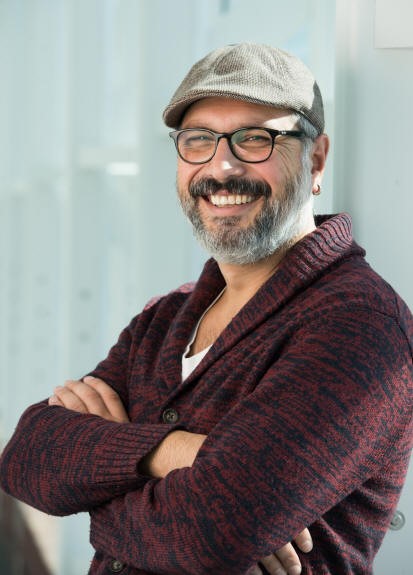
Dr. Nathan Gaw is an Assistant Professor in the Department of Operational Sciences at Air Force Institute of Technology. He received his BSE and MS in biomedical engineering and a PhD in industrial engineering from Arizona State University (ASU), Tempe, AZ, USA, in 2013, 2014, and 2019, respectively. Nathan's research focuses on multi-modality fusion in healthcare and military applications fusing imaging, genetics, and telemonitoring data. He is a member of IISE, INFORMS, and IEEE.
 
Q1: What is your research area? What research problems do you solve?
My research develops new statistical machine learning algorithms to optimally fuse high-dimensional, heterogeneous, multi-modal data sources generated in the healthcare & military settings. The focus of my research spans various applications from quantifying pilot workload using physiological signals to predicting future weather patterns using multimodal remote sensing images to applications in combat recovery and veteran care (e.g., Post-traumatic Headache, Parkinson’s Disease, etc.).
 
Q2: Why did you choose to work in your area?
I initially developed an interest in biomedical engineering with the focus of neurorehabilitation and had a desire to develop devices that could improve the well-being of stroke patients. After taking a couple of courses in industrial statistics during my undergraduate studies, I found that there could be greater impact in improving the lives of many patients through building models that can handle the large, heterogeneous data collected from medical imaging and other devices. I gradually found the concept of integrating multiple modalities from seemingly disparate data sources to be an interesting problem across various domains. My research has evolved to include several applications that have potential to significantly improve the quality of human lives.
 
Q3: What is unique about your research?
I focus on finding unique solutions to combine seemingly disparate data from a number of approaches, including (1) spatio-temporal fusion, (2) semi-supervised learning, (3) simultaneous feature and instance selection, and (4) robust models to handle missing data modalities.
 
Q4: What is the happiest moment of your research experience?
I have the privilege of working with many practitioners and introducing machine learning into new application domains. I find the greatest joy when I get to see the result of an algorithm that I or one of my students have made having a practical impact in the field. One of my fondest memories is patenting a hybrid algorithm I developed to fuse mechanistic modeling and machine learning for prediction of brain tumor cell density. This showed me the potential of a model I developed to make a meaningful and practical impact on society.
 
Q5: Do you have any suggestions for those who are interested in the same research area?
Multimodality fusion is a constantly evolving field that requires diligence to keep up with the latest developments. Although peer-reviewed articles guarantee a certain standard of quality, they tend to be a couple of years behind the most recent innovations by the time of publication. I highly suggest staying current by following high-profile machine learning researchers on Google Scholar, Twitter, Medium and LinkedIn to keep your research as fresh and current as possible.
Yanqing Kuang

Yanqing Kuang is a Ph.D. Candidate in the Department of Industrial Management and Systems Engineering at University of South Florida. She expects to get her PhD degree in May 2022.
 
What is your research about?
My research involves developing statistical modeling and inference tools to improve the quality and efficacy in healthcare systems.
 
How can your research be applied?
I work on statistical monitoring of the quality of health care delivery processes, which develops systematic data-driven analytics methodologies for process modeling and monitoring, quality control, and performance improvement in healthcare systems. I have applied these approaches to analyze different datasets collected from various sources such as electronic health records, clinical trials and claims data. My research is also applicable to many other service systems (e.g. transportation systems, call centers, computer networks and manufacturing systems) for quality assurance and improvement.
 
Why did you choose this research area?
In today’s healthcare industry, quality of care is a growing focus in the delivery processes of healthcare. To improve the quality of care in healthcare delivery, many studies focus on the long-term operational decision making to meet the expectations of healthcare providers and users, such as medical resource allocation, bed planning, staff scheduling, etc. These problems are typically part of long-term operational decisions. However, time is essential in healthcare system. To ensure the adherence to a high quality of care and to track the system performance in real time, the quality of healthcare services should be measured over days or hours instead of just months or years. Therefore, it is critical for researchers to develop easy-to-implement and effective statistical monitoring methods that can quickly detect deterioration in the performance of healthcare quality indicators in real time.
 
Can you recommend some resources for interested readers to learn more about your research area?
I would refer our readers to the healthcare systems process improvement conference and IISE annual conference archives. A wide range of tutorials and papers related to quality control & monitoring methods and healthcare data analytics can be found there.
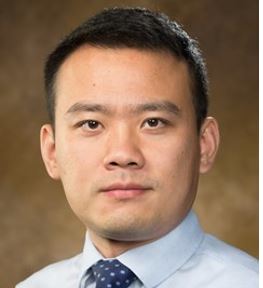
Dr. Xiao Liu
 
Q1: What is your research area? What research problems do you solve?
My research focuses on physics-informed or domain-aware data-driven methodologies that integrate essential domain knowledge into statistical learning for various engineering applications. For high-stakes engineering applications, fundamental governing physics imposes critical constraints on how data should be modeled and how models can be interpreted. The paradigm of “letting the data speak for themselves” is quickly falling away---calling for the new capability of “letting the data speak based on the laws of nature/engineering”. Some applications include the modeling and prediction of the smoke propagation process due to wildfires that affect the short-term solar power forecasting and the situational awareness of our national utilities; building physics-informed statistical models for predicting the collision process between unmanned aircraft systems and aircraft governed by nonlinear structural dynamics; constructing interpretable data-driven models for the degradation and prognostics of critical infrastructure, etc.
 
Q2: Why did you choose to work in your area?
The ideas and vision were initially conceived from my previous experiences at the Nation’s largest industry lab—IBM Thomas J. Watson Research Center (New York and Singapore). After I joined IBM, I was involved in a joint research project between IBM and the National Environmental Agency of Singapore. This was IBM’s first research initiative tackling urban environmental problems which required tremendous amount of domain/physics knowledge (e.g., urban air pollution, extreme tropical storms, spread of dengue fever, etc.). During those years, I had multiple weekly meetings with different domain experts with diverse backgrounds. The in-depth industry engagement helped me come to realize not only the missing components in my own education/research, but also the rapidly escalating tension between the need for increasingly complex data-driven approaches and the need for interpretable models and actionable insights from industry. The lack of explainable models and actionable insights has become the main barrier that impedes the further penetration of data-driven approaches into high-stakes engineering applications.
 
Q3: What is unique about your research?
Traditionally, governing physics is added to data-driven models as auxiliary constraints, regularizations or explanations. My research aims to transform how governing physics can be integrated into data-driven models by creating a more intrusive statistical learning paradigm (where governing physics is no longer used as auxiliary regularizations, but an inherent component that is directly integrated into data-driven models during model construction). In a nutshell, this often involves exposing the solution structure of governing physics, and embedding data-driven models into the solution space of governing equations.
 
Q4: What is the happiest moment of your research experience?
The moment when an idea, a model or an algorithm finally works, and the moment when my students make great progress in their research.
 
Q5: Do you have any suggestions for those who are interested in the same research area?
Interactions with industry greatly help to identify real needs and research gaps. The nature of this research also requires borrowing interdisciplinary knowledge from multiple domains.
 
Q6: Would you like to share a recent piece of your research work?
A recent piece of my work is, Liu, X., Yeo, K.M. and Lu, S.Y., (2021), “Statistical Modeling for Spatio-Temporal Data From Stochastic Convection-Diffusion Processes”, Journal of the American Statistical Association, https://doi.org/10.1080/01621459.2020.1863223. We propose a physical-statistical modeling approach for spatio-temporal data arising from a class of stochastic convection-diffusion processes. Such processes are widely found in scientific and engineering applications where fundamental physics imposes critical constraints on how data can be modeled and how models should be interpreted. The idea of spectrum decomposition is employed to approximate a physical spatio-temporal process by the linear combination of spatial basis functions and a multivariate random process of spectral coefficients. Unlike existing approaches assuming spatially and temporally invariant convection-diffusion, this article considers a more general scenario with spatially varying convection-diffusion and nonzero-mean source-sink. As a result, the temporal dynamics of spectral coefficients is coupled with each other, which can be interpreted as the nonlinear energy redistribution across multiple scales from the perspective of physics. Because of the spatially varying convection-diffusion, the space-time covariance is nonstationary in space. The theoretical results are integrated into a hierarchical dynamical spatio-temporal model. The connection is established between the proposed model and the existing models based on integro-difference equations. Computational efficiency and scalability are also investigated to make the proposed approach practical. The advantages of the proposed methodology are demonstrated by numerical examples, a case study, and comprehensive comparison studies. We also provide the computer code on GitHub.
Have you considered a corporate membership? If not, why? Companies large and small enjoy the benefits. Include your entire team and receive all the benefits of individual membership, plus lowest rates to attend the Conferences and much more.
 
Contact Doug Long IISE Global Director for Strategic Alliances for more details.
Please follow us on Twitter at #DaisIise.