The Latest Lab Safety Information From

A monthly newsletter to help organizations create safety savvy laboratories.

September 2024

Volume 11

Number 9

Contact us:

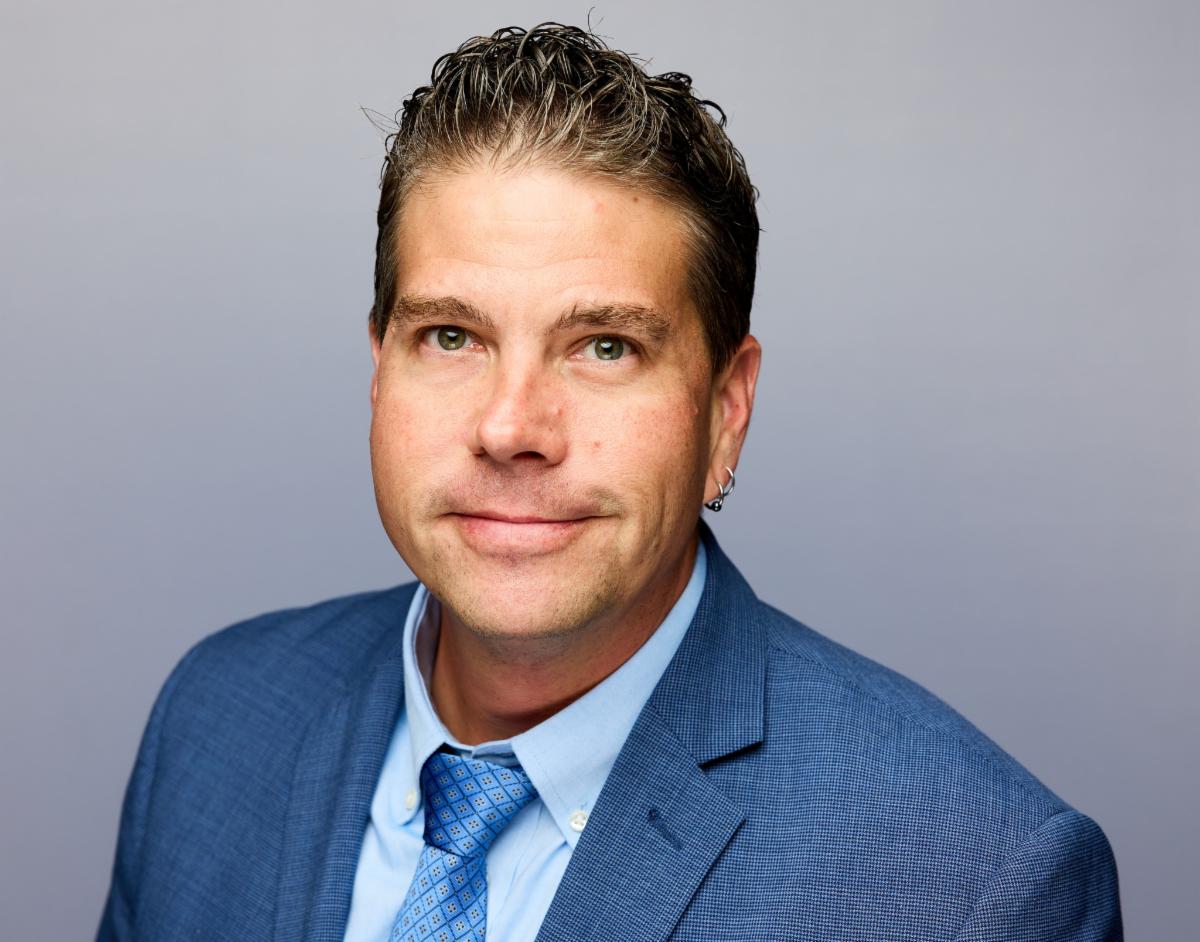
Dan Scungio, MT (ASCP), SLS, CQA (ASQ)

Phone: 1-877-894-7004

Fax: 815-301-9814

105 Percussion Road

Williamsburg, Virginia 23185

info@danthelabsafetyman.com

Join My Mailing List
Facebook  Linkedin  


The Latest Laboratory Safety News:


It's that time of year when parents, teachers and students think about going back to school. What safety education topics will you be covering in the next few months? There are enough lab safety subjects out there that you can highlight a different one every month and not repeat yourself for at least a couple of years! On my safety training calendar September is reserved for Chemical Hygiene, and there are so many things that can be covered under that heading! If you need ideas for lab safety training, I would be happy to help. Reach out and we can plan lab safety together.


Lab Respirator Regulation Clarity

Regulatory oversight from multiple agencies has generated confusion for many about the use of air-purifying respirators and other respirator types. OSHA, NIOSH, and the FDA have varying requirements for respirators based on use, and they do not match up in a clear fashion. To help provide clarity, the organizations have provided some resources to assist labs and healthcare organizations with guidance for selection and use of respirators in the workplace. To learn more and to access the resources, click here.


Safe Disposal of a BSC in the Lab

Biosafety Cabinets are a common engineering control used in the lab, but what do you do with that large piece of equipment when you need to replace it? A recent article provides the steps to take and specific disposal considerations that must be addressed. Be sure to work with a qualified BSC professional when bringing in a new unit and disposing of the old one. To learn about some other considerations, click here.


Pros and Cons of Safety Incentives

There has been much discussion over the years about whether or not incentivizing safety is good for an organization. Some say incentives for time without incidents can lead to staff hiding safety events. A recent article argues that if the safety culture is strong, safety incentives can work well. Which side of the debate makes sense to you? To read more, click here.

Lab Safety Star


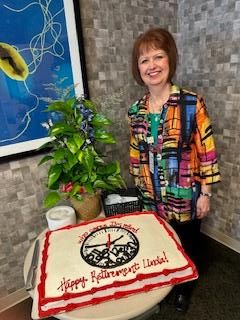
This month we highlight the recent retirement of Linda Gylland who has worked tirelessly for over 48 years with a focus on microbiology and lab safety! Linda has worked with me and Terry Jo Gile (the Safety Lady), she has worked on CLSI safety documents and currently serves on the ASCP QLS exam committee. Thank you, Linda, for your consistent excellent service to laboratory safety! Best wishes on your retirement!


Do you have a Lab Safety Star moment you'd like to celebrate? Send it to info@danthelabsafetyman.com for possible inclusion in the newsletter!


This Month's Product Spotlight:

 The 2023 Academy for Lab Safety Excellence

is Here!!!


Do you need lab safety knowledge and training? Do you need help with your lab safety culture? Do you have issues finding and understanding lab safety regulations? If you answered yes to any of these questions, then the 2025 Academy for Lab Safety Excellence is for you!


Filled with useful topics, this annual virtual training course provides multiple options to choose from which include webinars, group discussion sessions with other Safety Masterminds, and many other safety resources and products. See the full advertisement below! Or...


To order today, click here.

The 2025 Academy for Lab Safety Excellence!


As a lab safety professional, people are looking to you to manage your entire safety program, even during these busy times. Whether you are new in the role or have many years of experience, it can be difficult to figure out how to get the resources you need. Your time is valuable, and the Academy virtual training options will provide you the opportunities you need to improve your overall lab safety culture and to keep your staff safe! With innovative programs and diverse option offers, the 2025 Academy for Lab Safety Excellence will make you a safety champion and a safety leader for your laboratory team! 


Here are some exclusive offers in the 2025 program:


  • Eight live and recorded 60-minute training sessions-watch recordings at your convenience all year!
  • Safety Mastermind Groups - interactive sessions with fellow lab safety professionals - the only such network available anywhere where clinical lab leaders solve safety issues- a customer favorite (add 2 PACE credits)!
  • A book offer for Option 3 purchases: 52 Laboratory Safety Tips for Leaders!!
  • Access to the previous year’s Academy recordings with option 3. (A $400 value!)


The 2025 Academy is a perfect way to advance your lab safety knowledge if you:


  • Find it frustrating to locate safety information from a variety of sources
  • Want to expand the impact of your lab safety expertise
  • Want to increase your effectiveness in educating staff on lab safety issues
  • Need ready access to colleagues whose expertise in lab safety is well known
  • Would like to network with your peers on a regular basis for lab safety ideas 


Your Lab Safety colleagues have this to say about the annual Academy:


“We find the Safety Academy program to be an extremely valuable forum for the discussion of Laboratory Safety issues for our organization. Topics are well presented and Dan is a knowledgeable, personable and effective individual. We have become better at Laboratory Safety because we have participated in the Safety Academy Program!”

Michael Lonigro, Executive Director, Hospital Laboratory Operations, ACL Laboratories


“Attending the Academy for Lab Safety Excellence with Dan was a game-changer for me. Being newer to my role and to lab safety, Dan's way of breaking down complicated safety protocols into easy-to-follow steps made them easier to understand and to implement. His enthusiasm for lab safety is contagious, and it’s clear he genuinely cares about making labs safer places to work. The practical insights I have learned throughout attending the Academy and Mastermind sessions have already made an impact and have helped create a safer environment for patients, staff, and students in our lab spaces. If you're looking to boost your lab's safety standards, I can’t recommend this Academy enough!”

Kayla Borton, Laboratory Compliance Officer, Wexner Medic\al Center


“Every opportunity to interact with Dan through educational presentations or the interactive discussions of Mastermind are learning experiences. Always fresh and relevant. I welcomed repeated safety topics because the reality is priorities change so I can take from the sessions what I need at that moment.”

Crystal Sands, Manager, Quality, Regulatory, and Safety NorDx Laboratories


You can expect: Eight webinars over a 12-month period with other members of the Academy to brainstorm safety issues and cover a particular safety topic including: 


January 8, 2025 – Laboratory Design: Planning for Safety


February 12, 2025 – How to Ace Your Next CAP Inspection


April 9, 2025 – You’ve Heard the Best of Biosafety, Now Hear the Rest. 


May 14, 2025 – Ready for Anything- Responding to Workplace Violence


August 13, 2025 – S.T.A.N.D. Up for Lab Safety 


September 10, 2025 – Safety in the Medical Microbiology Laboratory: An Update


October 8, 2025 – The ABCs of Lab Chemical Management


November 12, 2025 – The PPE Mystery: Compliance Issues Unraveled


Sessions will be presented by Dan Scungio with special guest speakers such as Jason Nagy, PhD, MLS (ASCP), QLS, Sean Kaufman, MPH, CHES, CPH, CIC, and Rodney E. Rohde, PhD, SM (ASCP), SV, MB, FACs!


All webinars will be held at 1 pm ET, noon CT, 11 am MT and 10 am PT and are 60 minutes in length.


The value options:


Option 1 includes:

  • the eight part lab safety webinar series ($800 value) for up to ten (10) participants (per site)(that’s less than $50 per session if you use the early bird registration)
  • does NOT include P.A.C.E.® contact hours (see ** below)


Option 2 (your best value option) includes:

  • a one-on-one phone call between the site coordinator and Dan the Lab Safety Man™, a lab safety expert with over 30 years in the field prior to the start of the series ($150 value)
  • the eight part lab safety webinar series ($800 value) for up to ten (10) participants (per site)
  • eight (8) P.A.C.E.® contact hours of continuing education that can be used for recertification or licensure for up to ten (10) participants (+ 2 PACE credits for those in the Mastermind program)
  • access to current safety information as it applies to the clinical laboratory from a variety of experts and sources enrollment in the 2025 Safety Mastermind Group
  • unlimited access to laboratory safety experts until December 2025
  • networking opportunities with your fellow safety officers to solve your safety issues in real time and avoid heavy OSHA penalties or lack of accreditation due to safety issues by CAP, COLA or the Joint Commission (priceless!)


Option 3 includes:

  • a one-on-one phone call between the site coordinator and Dan the Lab Safety Man™, a lab safety expert with over 30 years in the field prior to the start of the series ($150 value)
  • the eight part lab safety webinar series ($800 value) for up to ten (10) participants (per site)
  • eight (8) P.A.C.E.® contact hours of continuing education that can be used for recertification or licensure up to ten (10) participants (+ 2 PACE credits for those in the Mastermind program)
  • access to current safety information as it applies to the clinical laboratory from a variety of experts and sources enrollment in the 2025 Safety Mastermind Group
  • unlimited access to laboratory safety experts until December 2025
  • one print OR digital copy of 52 Laboratory Safety Tips for Leaders authored by Dan Scungio ($25 value)
  • access to all eight 2024 Safety Academy webinar recordings all year ($600 value).
  • networking opportunities with your fellow safety officers to solve your safety issues in real time and avoid heavy OSHA penalties or lack of accreditation due to safety issues by CAP, COLA or The Joint Commission (priceless!)


A La Carte Options are also available:

  • Choose one or more individual virtual training sessions- pick your favorites! - $150 each
  • Join the Safety Mastermind Group for the year with option 1! - $75 per person (2 PACE credits)
  • Purchase the Academy for multiple sites- ask for discounts!
  • a one-on-one phone call between the site coordinator and Dan the Lab Safety Man™ - $50 each


The investment:


Option 1 - $498 per site – ($800 value) – does NOT include P.A.C.E.® contact hours (see ** below)

Option 2 - $685 per site – ($1300 value) includes 8 P.A.C.E.® contact hours for up to 10 participants

Option 3 - $1055 per site – ($1,800 value) includes 8 P.A.C.E.® contact hours for up to 10 participants


Early Bird Registration- Save $100 NOW!!


If you register before December 1, 2024 you can SAVE $100 off any one of the options as follows:


Option 1 - $398 per site– ($800 value)– does NOT include P.A.C.E.® contact hours (see ** below)

Option 2 - $585 per site – ($1,300 value) includes 8 P.A.C.E.® contact hours for up to 10 participants

Option 3 - $955 per site – ($1,800 value) includes 8 P.A.C.E.® contact hours for up to 10 participants


Are you only interested in a few of the programs?

Each individual session can be purchased for $150

Early Bird before 12/1/2024 - $99 per program


**Call or email for special discount pricing for multiple labs!**


Are you on a limited budget and need to make installment payments? Call 877-894-7004 or email for more information. Great multi-site discounts offered!


There is no other laboratory safety training that provides this high level of value for this pricing.


To register for the 2025 Academy:


  1. Use the QR code below to register and pay via PayPal or credit card.
  2. Fill out the order form below and fax it to 815-301-9814 with your Purchase Order.
  3. Fill out the order form below and mail it to the address below with a check or Purchase Order.
  4. Fill out the order form, fax or scan it in, call 877-894-7004 to make a credit card payment.


Order Form:


Sign me up for Option # __________ at $____________________


OR: Sign me up for the following individual sessions:


_______________________at $150 each for $________________


This order form MUST accompany a purchase order or check. When using PayPal®, please fax this order form to 815-301-9814 to ensure the site coordinator is properly identified and can receive the program materials.


PLEASE PRINT


Name_____________________________________


Facility____________________________


P.O. Number_______________________


Address______________________________________________


City______________________ State______ Zip________


Email(required)___________________________


Phone____________________


Mail to:

Dan the Lab Safety Man, Inc.

105 Percussion Road Williamsburg,

Virginia 23185


Confirmation of your registration will be sent to your email address. Early Bird registration deadline is December 1, 2024

Need More Information? Contact Dan Scungio at 877- 894-700


This Month's Safety Blog


It might be a new thing to place the topic of Workplace Violence under Lab Safety, but it fits there very well. Labs definitely need to be talking about it. We need to teach our staff how to recognize such violence, how to de-escalate it, and how to respond to it appropriately. Take those first steps by reading this month's blog.


Click here to read this month's safety blog at DantheLabSafetyMan.com

Jason the Safety Liaison


Ergonomics Now!


My wife and I sometimes share vehicles, so I know when she has to take mine to work or to run an errand. I can tell right away if my wife was the last to drive my car because my knees are pressed up against the steering wheel the moment I get in. I need to make adjustments so the car fits me.

When I work at a shared bench or workspace in the lab, I first need to adjust the height of the chair. This ensures that my legs are positioned properly, with my knees at 90° angles with feet flat on the floor or on a footrest. I make sure that the height of the chair is not too high so that I have to jump into the seat or risk twisting an ankle when I get down from a taller task chair. 


Now that my body is positioned properly, I can ensure that my monitor is at the correct height with my head aligned with the top of the monitor. I reposition the mouse and keyboard, so they are at the correct distance from my body, and that I am not overreaching to type. Don’t forget the wrist rest – relieving the pressure on the base of the wrist is key in preventing carpal tunnel syndrome.


One great tool to avoid ergonomic complications is the 20-20-20 rule, which helps reduce digital eye strain. Many of us in the lab industry are looking at computer screens or microscopes for much of the day. The 20-20-20 rule teaches us that every 20 minutes, we should shift our gaze away from our monitors or scope and focus on an object at least 20 feet away for 20 seconds.


Of course, there’s much more to ergonomics than just adjusting your chair or computer. It’s the same as with your car- there’s more to driving than simply adjusting your seat. Years of stretching, bending, or sitting improperly will take a toll on the body that might not be realized in the moment. We won’t see the aftereffects until it’s too late. In the fast-paced world we live in, we sometimes forget about taking a moment to ensure our safety at work, but we should- and we should do it now!


Jason P. Nagy, PhD, MLS (ASCP), QLS, is a Lab Safety Coordinator for Sentara Healthcare, a hospital system with laboratories throughout Virginia and North Carolina. He is an experienced Technical Specialist with a background in biotechnology, molecular biology, clinical labs, and most recently, a focus in laboratory safety.

September Safety Case Study


The laboratory did not manage the chemical waste manifests, they let the Facilities department handle it. When the EPA inspector looked at the records, they saw the manifests were just tossed into the binder in random order, and they noticed final manifests were not matched up to the initial ones. Once they put the records in order, the inspector tallied up the waste volumes and discovered the site was incorrectly registered as a Small Quantity Generator (SQG), but in reality, they were a Large Quantity Generator (LQG). The EPA fined the facility for erroneous registration and reporting.


  • Be sure to keep and manage accurate lab waste manifest records.
  • If the manifests are managed by another department, check them regularly for proper organization.
  • Keep an eye on the total waste volumes from the entire facility, not just the lab.


Use Your Safety Eyes!
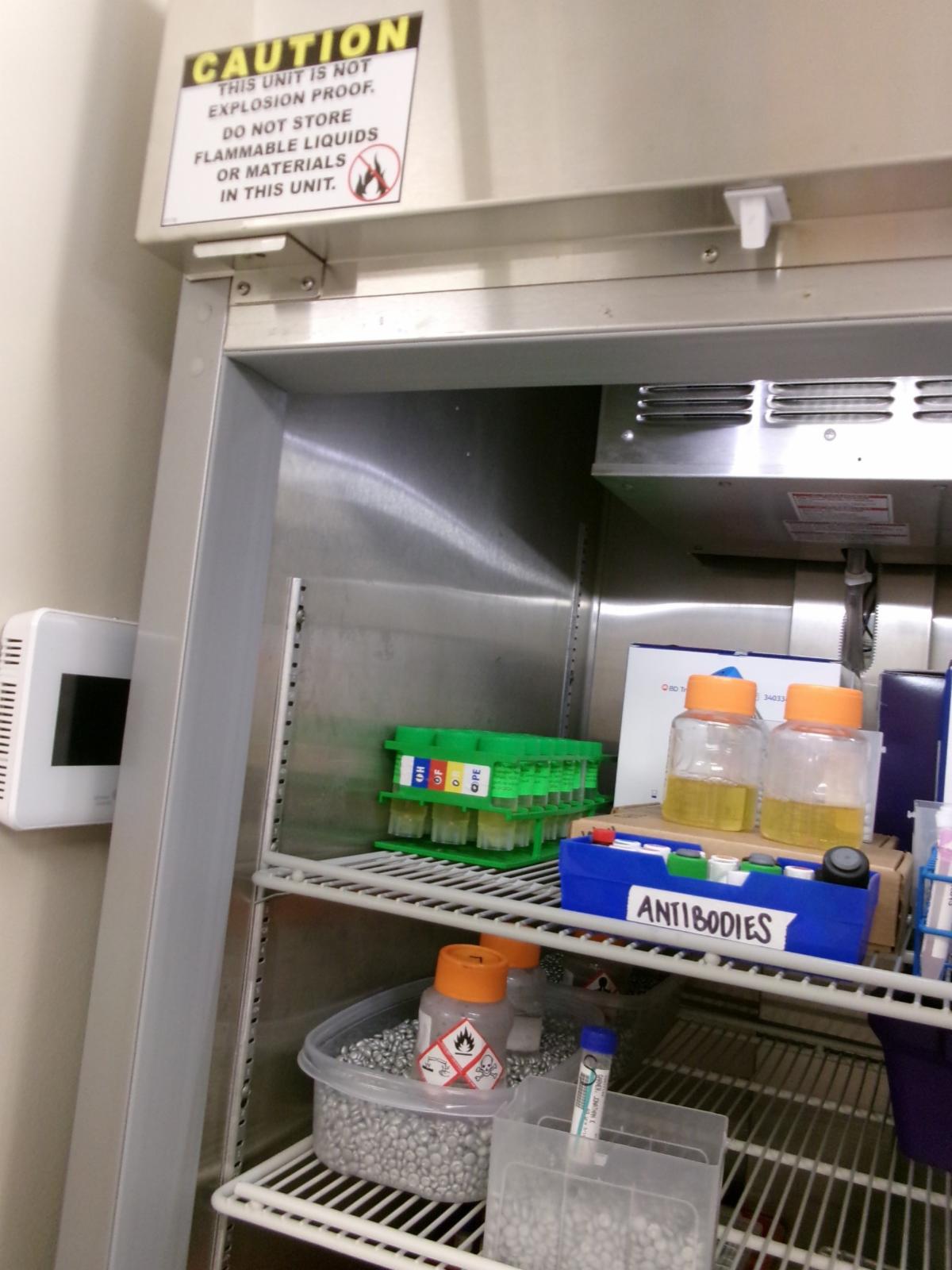
What's wrong with this picture?

Each month in this section a photo will be shown of a lab safety issue. Develop one of your most useful super powers- your Safety Eyes! 
 
If you're not sure what is wrong, 
the answer appears at the end of this newsletter! 

Questions and Answers 


Do you have a laboratory safety question you would like to see answered? Send your question in to Dan the Lab Safety Man, Inc. at  info@danthelabsafetyman.com


Question:


A manufacturer seems to have a supply issue with plastic blood culture bottles. If the lab is switching to glass bottles in the interim, what are some safety/infection prevention issues that may need to be addressed?


Dan the Lab Safety Man says:


The biggest safety concern with switching to glass bottles will be disposal. The plastic bottles can be disposed of into red bag (biohazard) trash bins since they cannot be broken to create sharp edges.

Glass bottles should definitely be disposed of into sharps containers.

(Some microbiology labs do place positive plastic bottles into sharps containers to make sure they are incinerated.)


Question:


Is hand cream and its use prohibited in laboratories?


 Dan the Lab Safety Man says:


Hand cream is allowed in a lab, but it should be limited to a brand that is approved by the hospital/laboratory. Some creams can cause allergic reactions or even break down glove material (especially petroleum-based creams). Check with Infection Prevention or even Materials Management to see what brands may be used in the facility.


Question:


Can tape of any type be used to hang items in a laboratory? Would a lab be cited by TJC for using tape? Is cardboard allowed in the laboratory? Many lab products come in cardboard boxes, and paperwork is being placed in cardboard boxes for storage. Does a lab need to remove all cardboard?

Dan the Lab Safety Man says:


Most hospital accrediting organizations (TJC, DNV, etc.) do not have specific standards preventing tape or cardboard. If a hospital seeks a special Infection Prevention certification, stricter rules may apply. It is also possible that the hospital will create its own rule based on interpreting (or mis-interpreting) a standard. (One unrelated example of this is the misunderstanding that TJC does not allow anything to be stored under hospital sinks.) In certain Infection Control guidelines, tape is prohibited because it leaves a residue that attracts bacteria and other contaminants thus creating a potential infection issue. In place of tape you can use velcro, tacks, etc. In other guidelines, corrugated cardboard is not permitted in hospitals because it is a source of insects (particularly cockroaches) and their eggs. Cardboard used for storage should be replaced with plastics and other options. Supplies that come in cardboard should be removed and placed into bins or other storage containers. Some cardboard cannot be eliminated (such as in reagent or chemical cubes), but most can and should be for infection control purposes.


Question:


It has always been laboratory procedure to wear lab coats on the units when performing venipuncture to minimize the risk of splashes. However, staff members argue that nurses/CNAs do not wear such PPE and are not required to, yet their risk of splashes is arguably similar. In the interpretation of OSHA standards regarding PPE, it would seem that all need to wear some type of non-permeable gown for blood/body fluid collection. What are your thoughts on this issue and possible guidance on addressing the difference in guidelines between nurses and lab?


Dan the Lab Safety Man says:


Through a letter of interpretation about the Bloodborne Pathogens standard, OSHA clearly states that lab coats are not required for phlebotomists UNLESS you perform a risk assessment and determine that there is a risk for blood splash/spatter above the wrist during venipuncture procedures. Some hospitals require the use of lab coats for phlebotomists, others do not. It is not a matter of what other unit employees (i.e. nurses) wear, it has to do with the assessment of risk for lab employees performing these procedures in patient rooms or in draw rooms. OSHA would require other personnel who collect blood to perform their own risk assessments. In my experience, there is very little risk of splash above the risk, but others have seen different results.

While I do not feel it is necessary to have phlebotomists use lab coats, you are perfectly justified in making that decision if your risk assessment determines it is necessary.


Question:


A bottle of concentrated bleach did not have any GHS symbols on the individual bottle. However, the pictograms were on the SDS for the bleach. Is it required to have symbols on the container which match the SDS? 


Dan the Lab Safety Man says:


In general, it is required for primary chemical containers to have a pictogram (as well as the SDS). However, some manufacturers bypass (via an FDA regulation) the requirement for products that are sold at stores or used in homes. You can add the pictogram to the container for use in the laboratory.


Question:


Does a sharps container have to have a lid on it at all times? It should have one if it is going to be moved from the original work area, but what if is on or next to a work bench (on the floor) without a lid? If and when it is moved, still within the dept, it must have a lid (but lid does not have to be closed) -the lid can still be “open” at this point with the opening used for the addition of other items. Once the container is moved out of the dept, for disposal, it must have a CLOSED lid. Is all of this correct? 


Dan the Lab Safety Man says:


While the wording of OSHA's Bloodborne Pathogens standard matches closely with what you state, OSHA also says that sharps container should have an opening on the lid that is large enough only to accommodated the items being deposited. That certainly implies that a lid should be in place. In an OSHA letter of interpretation regarding this topic, OSHA says "The disposal opening on a sharps container should be of a size and design that would permit safe disposal of sharps." They also use information from NIOSH which states, "In situations where the small opening on the lid of the container is of sufficient size to accommodate all sharps requiring disposal, there should be no need for the entire lid to be opened. If the employer is finding the need to open the entire lid, perhaps further evaluation is needed to assure that the container selected is suitable to accommodate sharps of all types and sizes that require disposal. It is likely that a container of a different size, type or design configuration would be more appropriate in the specific situation of use." Given that, it is clear lids on containers is a better, safer practice.


Question:


What do you think about service dogs in the clinical lab? What are "reasonable accommodations" and is this something labs should be preparing for in new design models?  


Dan the Lab Safety Man says:


The topic of service animals in the lab is a complicated one. I have dealt with a service animals in labs before, and we made it work - in part because we had to. One main concern in this lab was the dog's safety, and we worked to make sure the lab was a safe environment for the animal. All trash containers had lids, the floors were cleaned regularly, and the dog went outside the department for water and food. It worked in that situation, but it was also a small lab where there was only one technologist. Things could get stickier with a larger lab. I noticed in an article on the topic that the dogs wore PPE! That would be useful if the dog is willing and able to wear it. Labs need to accommodate for the employee if there is a need for a service animal, in many cases we are required to do so by law. I don't necessarily think that labs need to be designed differently in case a service animal will be used in the future. There should not be safety issues with other employees (unless allergy issues exist), the bigger issue is the animal's safety in an environment with chemical and biohazards.


Question:


In the Histology lab, xylene is used on an instrument. The lab safely (and correctly) transfers the contents of a 5 liter bottle into a smaller glass containers that are used on the instrument. Staff are having difficulty with the labels and GHS decals becoming stained, unreadable, and destroyed with random drips. Do you have any recommendations on how we can label our bottles without them becoming defaced? 


Dan the Lab Safety Man says:


OSHA's Hazard Communication standard states that you can also identify secondary chemical containers using signs or placards. As long as the container is positively identified by the placard or the sign is placed next to the container, that can be used as a labeling option. You could create a permanent label and laminate it so it does not become wet. Some labs will also place clear tape over a secondary container label provided the information on the label does not change.


Question:


There is a room in one of the labs that was used for receiving outpatient specimens. One of the leaders would like to convert that room to an office for a new supervisor. Is it possible to convert a “dirty” lab area to a “clean” one, and if so, what would need to be done? 


Dan the Lab Safety Man says:


To convert a room to a clean space, it simply needs to be cleaned and disinfected, and you need to make sure it is separate from any lab spaces, that is, separated from ceiling to floor and has a door.


 Question:


It was noted that the vendors hooked up a surge protector to an analyzer and have multiple plugs plugged in. Do you consider this acceptable? 


Dan the Lab Safety Man says:


Yes, a multi-plug adaptor with a surge protector is acceptable as part of your analyzer set up.

Ask Dan the Lab Safety Man A Question Here.

Dan's Calendar


NSH Annual Meeting - New Orleans, LA

September 20-24, 2024

Click here.


Biotech Lab and Facilities Conference & Exhibition - Lisbon, Portugal

October 24-25, 2024

Click here.


Future Labs Live - Philadelphia, PA

October 30-31

Click here.


The 2024 -2025 calendar is open and I am booking consultations and presentations. If you are interested in hiring Dan the Lab Safety Man for your event (live or virtual) or for on-site training and consulting, call 877-894-7004 to check available dates. 


Does your staff need lab safety training? I can provide that as well.

Looking for something different?  Give me a call and see what other presentations are available!

Dan The Lab Safety Man also writes for
a monthly newsletter for laboratorians and clinicians. 

In Closing...


If there is a particular issue you would like to have discussed in this newsletter, please email me at info@danthelabsafetyman.com


Feel free to forward this newsletter to a colleague that you think will benefit from the information and encourage him/her to sign up to receive it. As always, I welcome your comments, questions and suggestions.

I am here to help you create a safety savvy laboratory!


Other services offered by Dan the Lab Safety Man:

  • On-site safety audits and safety solutions
  • On-site training
  • Safety Policy Creation/Review
  • Consultation phone calls
  • Lab Design Safety Reviews
Phone: 1-877-894- 7004 | Fax: 1-815-301-9814 | info@danthelabsafetyman.com | www.danthelabsafetyman.com
Facebook  Linkedin  

Safety Eyes Answer:


If you look closely, you should see there is a reagent stored in this refrigerator which has a flammable pictogram on it. The sign on the refrigerator states it is not to be used for storing flammable materials inside. If a lab has flammable reagents that need refrigerated storage, they must use a flammable storage (or 'explosion-proof') refrigerator.


Do you have a great picture for the "Safety Eyes" section? E-mail it in along with permission to print it to info@danthelabsafetyman.com.