|
|
Provided by the American Dairy Science Association® (ADSA®)
in cooperation with Feedstuffs
If you received this issue of ADSA Dair-e-news from a friend and would like to receive
your personal copy in the future, please visit
Opinion and editorial content included in the
Dair-e-news
represent the views of the authors.
Publication does not represent endorsement of any position by the ADSA. Depending on your email preview settings, all text may not be visible. If you find that to be the case, simply click to open the email or use the link at the top to open the web version.
Ken Olson, Ph: 630-237-4961, keolson@prodigy.net |
Welcome to the ADSA Annual Meeting Dair-e-news
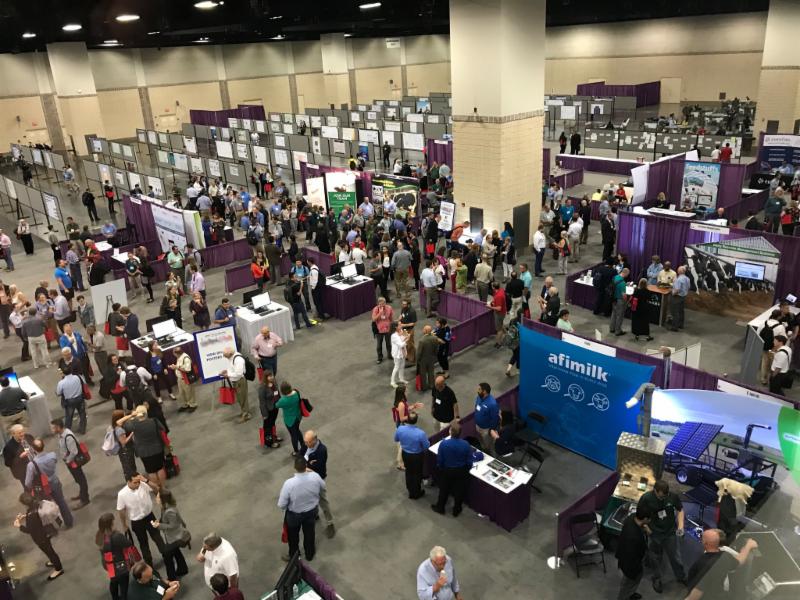
The ADSA Annual Meeting is underway in Knoxville, Tenn., with well over 1,700 registered for the meeting as of late Sunday afternoon.
Once again we are pleased to be sending "Special Editions" of this newsletter to you from the meeting. We are pleased to again have an outstanding group of graduate students working with us to help provide daily coverage of scientific sessions and other activities that are taking place throughout the meeting.
This year we are pleased to include a great group of undergraduate student writers, allowing us to expand coverage of Student Affiliate division activities.
If you are at the meeting we will have news of some of the activities that are coming up for you.
We welcome you to the meeting and invite you to stop by the ADSA and Feedstuffs booths to say "Hello." If you aren't able to attend, we hope that you get a taste of the meeting and begin making plans to attend next year's meeting that will he held
June 23 to 26, 2019 in Cincinnati, OH.
|
|
News from ADSA Annual Meeting
|
Management, nutrition of dairy cattle in new era of automation
By Gustavo Mazon
Dairy farmer adoption of precision dairy technologies has become more common over the past years. However, two questions are always asked when discussing technology adoption:
1 - How can farmers use technology to improve management?
2 - What we should expect from precision dairy technologies in the future?
In order to answer those questions, researchers and industry representatives presented during the Ruminant Nutrition Symposium of the 2018 American Dairy Science Assn. (ADSA) Annual Meeting in Knoxville, TN. Topics ranged from the use of technologies to manage transition cows to data integration for decision management were covered.
The speakers showed how farmers use technology to make management decisions. For example, in dairy calves, automated milk feeders can pick up decreases in milk intake and drinking speed and alert the farmer who will possibly check and treat the animal. Another example, now with dairy cows, in-line milk analysis systems can be used to detect ketosis. Once the disease is detected, farmers can evaluate the cow's body condition score using an automated camera and program the milking robot to provide sick cows with propylene glycol during milking. Those are just two of the many of the technology management strategies presented during the symposium.
One issue that all presenters agreed on is that there is still a lack of data integration inside dairy farms. The technologies still cannot communicate to each other or to the herd management software. Therefore, there is a big opportunity to integrate all the data generated in a dairy farm (milk yield, milk components, diet composition, environment, etc.). The integrated data can be used in complex machine learning models that have been shown to predict diseases in dairy cows better than models without integrated data.
In summary, precision dairy technologies are already helping dairy farmers make management decisions. However, there are plenty of opportunities for data integration that will highly benefit farmers in the future.
Gustavo Mazon is from Belo Horizonte, Brazil. He earned his BS from the Federal University of Viçosa and is currently pursuing a master's degree from the University of Kentucky focusing on transition cow nutrition and estimations of dry matter intake using precision dairy technologies.
|
Roundtable serves as connection point for students, industry
By Lilly Robertson
T
he Student Affiliate Division hosted a variety of industry professionals and graduate programs. Students had the opportunity to talk to four professionals of their choice, where they gained insight into the positions available at the company of program, as well as gain career advice. Students were exposed to industries they may not have been familiar with, and the small group or even one-on-one setting allowed for the exchange of personal stories and resumes. This event was extremely beneficial according to the students that attended, and facilitated them in thinking about their place in the future of the dairy industry. Students, mostly those that have recently graduated and rising juniors/seniors, came from various backgrounds with diverse interests that will well serve those companies represented in addition to others in the industry. Many of the participating professionals of all ages had affiliated with ADSA-SAD or GSD while pursuing their education. The ADSA-SAD would like to thank all representatives that attended for their welcomed advice and willingness to participate.
Lilly Robertson is an Animal Science student at the University of Kentucky. She works in Dairy Science Research since beginning school. Lilly is a 4th generation dairy farmer from Franklin, Kentucky.
|
Milk fat implications more complex than once thought
Right or wrong, for more than 50 years, the general consensus has been that saturated fat consumption is associated with increased risk of cardiovascular disease.
According to Moises Torres-Gonzalez, director of nutritional research at the National Dairy Council, current dietary guidelines, therefore, place limits on saturated fat and/or saturated fat sources, including whole milk dairy foods. Likewise, recommendations for dairy products consumption largely are limited to low-fat and fat-free versions.
|
Undergraduates take to podium in production paper seminar
|
|
|
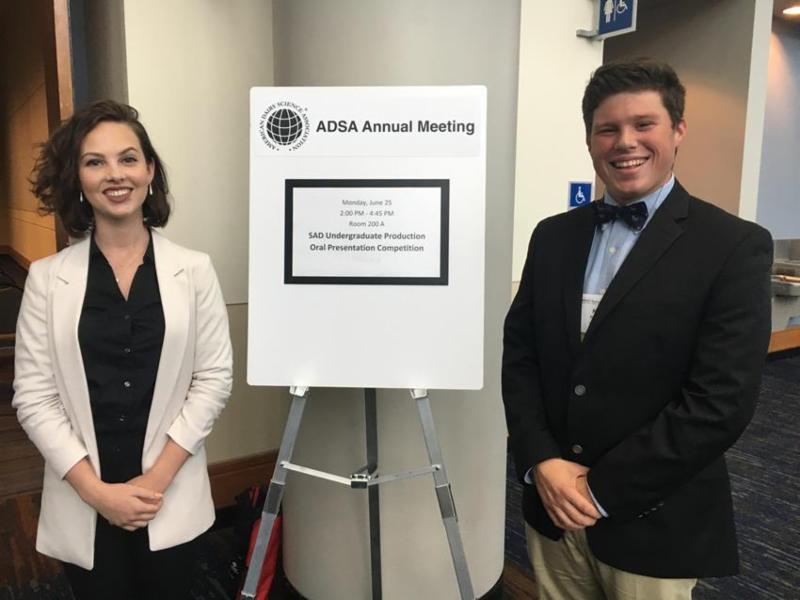
| Gloria Rodriguez and Nicholas Uzee in front of the competition sign. |
|
By Michelle Taepakdee
Monday's undergraduate production paper seminar boasted a high turnout, with nine fantastic speakers and an enthusiastic audience. Given the chance to explore the dairy industry, students investigated many different, but relevant topics -- everything from environmental enrichment and judicious antibiotic usage to branch chain amino acid supplementation and earlier disease detection using precision ag technologies.
From the University of Florida, Gloria Rodriguez addressed the growing issue of industry sustainability. She enjoyed the experience, especially the opportunity to network with other students, faculty, and industry members. "It's really nice to come together with colleagues, both people I know and industry representatives, who show a like-minded love for the dairy industry, but in so many different ways," said Rodriguez.
Nicholas Uzee, hailing from Louisiana State University, discussed the challenges of reducing methane emissions. "I enjoyed the paper presentations because they allow students to discuss topics that are relevant to the ever-changing dairy industry," he said.
Congratulations to Jaime Uren from Ohio State University for first place, and congratulations to all the other winners. Thank you to all the students who participated and all the advisors and industry representatives who supported their endeavors. We couldn't hold programs like this without you.
Michelle Taepakdee is the ADSA SAD National Secretary. She is a recent graduate from the University of Florida, majoring in Food Animal Science with an emphasis on dairy)
|
Milk, calcium influence human, skeletal health
Calcium and vitamin D are among the key nutrients contributing to growth and bone development in humans.
According to Berdine Martin of Purdue University, it is estimated that approximately 40 to 50% of consumed calcium comes from fluid milk and another 20% from other dairy sources. Martin spoke Monday during the American Dairy Science Assn. annual meeting in Knoxville, Tenn.
"Building peak bone mass to optimal levels during childhood and adolescence will reduce the risk of fracture later in life," Martin said. Dietary calcium and physical activity have the strongest level of evidence for positive effect followed by dairy intake and vitamin D. Later in life, she said, the goal of lifestyle modification is to reduce bone loss.
"It is prudent to have a diet that includes adequate amounts of calcium. Cow's milk and dairy products are nutrient dense and bioavailable sources," said Martin.
|
Robotic milking systems present challenges, opportunities
Milking robots were first introduced in Europe in 1990 and in Canada in 1999. According to David Kelton, University of Guelph, an estimated 15% of dairy farms across Canada utilize robotic milking systems. While some systems have been installed in retrofitted barns, others have had new housing systems designed to maximize their potential for improved animal and labor efficiency.
Kelton said advocates of robotic milking point to labor savings of up to 30%, the ability to easily segregate milk from cows with non-marketable milk and welfare advantages related to cows being able to determine their own milking frequency. Detractors, on the other hand, suggest that the milk from robot milked herds is of inferior quality (higher SCC and bacteria counts) and may contain more free fatty acids due to more aggressive milk handling than milk from farms using traditional milking systems.
|
Disease predictability related to precision technology evaluated
Work presented by Elizabeth A. Eckelkamp of the University of Tennessee, during the American Dairy Science Assn. annual meeting assessed disease detection accuracy by precision dairy technology health alerts and machine-learning techniques. It was hypothesized that the technology would detect health events, machine-learning would improve disease detection and the incorporation of cow history with behavior changes would improve disease detection.
Eckelkamp said the study occurred from October 2015 to October 2016 on four Kentucky dairy farms (1,374 cows). Health alerts were generated based on changes in eating (h/d), lying (h/d), standing (h/d), walking (h/d), and activity (steps/d). The FREQ procedure of SAS 9.4 was used to identify true positives, true negatives, false positives and false negatives based on technology-generated cow alerts and recorded disease events by the lead researcher and dairy producers. Sensitivity, specificity, accuracy and balanced accuracy were also calculated. Daily information collected by the technology (eating time, lying time, standing time, walking time, and activity) and cow history were incorporated into machine-learning prediction models.
Read more
|
News and Updates for the 2018 Annual Meeting
ADSA Award Winners
Monday evening was the time to recognize the accomplishments of many ADSA members. During the annual awards program the following individuals were recognized:
Alltech Inc. Graduate Student Paper Publication Award
Sonia L. Gelsinger
American Feed Industry Association Award
Ian J. Lean
Cargill Animal Nutrition Young Scientist Award
Michael A. Steele
DeLaval Dairy Extension Award
Marina von Keyserlingk
Elanco Award for Excellence in Dairy Science
Herman Barkema
Hoard's Dairyman Youth Development Award
Gene McCoy
International Dairy Foods Association Research Award in Dairy Foods Processing
Paul Kindstedt
International Dairy Foods Association Teaching Award in Dairy Manufacturing
Sanjeev Anand
J. L. Lush Award in Animal Breeding
Flávio Schenkel
Lallemand Forward Award for Scientific Excellence in Dairy Nutrition
Antonio Faciola
Purina Animal Nutrition Teaching Award in Dairy Production
Elizabeth Karcher
National Milk Producers Federation Richard M. Hoyt Award
Zheng Zhou
Nutrition Professionals Inc. Applied Dairy Nutrition Award
Mary Beth Hall
ary Beth Hall
West Agro Inc. Award
Sarne De Vliegher
Zoetis Physiology Award
Lance Baumgard
The Genevieve Christen Distinguished Undergraduate Student Award
Sabrina Portner
ADSA Foundation Scholar Award in Dairy Production
Kevin Harvatine
ADSA Award of Honor
Alois Kertz
ADSA Distinguished Service Award
Harjinder Singh
ADSA Fellow Awards
Eric Bastian
Arlyn Jud Heinrichs
Alois Kertz
Young Park
Journal of Dairy Science
® (JDS®) Most-Cited Awards
Dairy Foods
Leo Gaze
Physiology and Management
Laura Solano
Nutrition, Feeding, and Calves
Michael Van Amburgh
Genetics and Breeding
Nicolas Gengler
Following the Awards Program, the annual Ice cream social provided a great networking opportunity along with the flavorful treat.
2018-19 ADSA Officers Installed
Officers for the coming year were installed at the end of the Awards program on Monday evening. They include:
President - Geoffrey Dahl, University of Florida
Vice President - Rafael Jiménez-Flores, the Ohio State University
Past President - Karen Schmidt, Kansas State University
Past, Past President - Lou Armentano, University of Wisconsin
Secretary/Treasurer - Tom McFadden, University of Missouri
Director - Dairy Foods - Beth Panko Briczinski, National Milk Producers Federation
ADSA Director - Production - Marina (Nina) A. G. von Keyserlingk, University of British Columbia
Outgoing Board members leaving the board were thanked for their years of service on the Board. They included:
Past, Past President - Sue Duncan, Virginia Tech
Secretary/Treasurer -Marj Faust - Data Driven Genetics
Director - Dairy Foods - Stephanie Clark - Iowa State University
Director - Production - Ken Griswold -Kemin Animal Nutrition & Health
ADSA Issues Spokesperson Program
Join us today from 8:00 am-9:00 am at the ADSA exhibit booth (#417) for a Q and A on the ADSA Spokesperson program. Learn how you can be part of this important outreach effort to communicate with the public about the value of dairy and agricultural research.
STOP and Visit about FASS Science Policy
John McNamara, chair of the FASS Science Policy Committee, and Ken Olson, FASS Science Policy Coordinator, will be at the FASS Display (booth 606) today from 11:00 am-1:00 pm and at other times throughout the day. Stop by to visit about recent FASS Science Policy activities, discuss how you can help to advocate for science and encourage support for research funding.
|
|
Thanks to our Corporate Sustaining Members
We appreciate your ongoing support of ADSA and the
Journal of Dairy Science
®.
Ag Processing Inc.
ANDHIL LLC
Arm & Hammer Animal Nutrition
Dairy Nutrition Plus
Darling Ingredients Inc.
Diamond V
DuPont Pioneer
Elanco Animal Health
Global Agri-Trade Corporation
Grande Cheese Company
Lallemand Animal Nutrition
Masters Choice
Nutriad, Inc.
Papillon Agricultural Company
Quali Tech, Inc.
Renaissance Nutrition Inc.
Zinpro
Zoetis
Zook Nutrition & Management Inc.
|
Did you know that your ADSA Professional Membership, which is the least expensive of all national animal-related professional societies, includes all of the following benefits with no additional fees, charges or suggested donations?
*
Electronic access to the Journal of Dairy Science®
*
ADSA Annual Meeting registration at reduced member rates
*
Discover Conference registration at reduced member rates
* Large Dairy Herd Management 3rd edition e-book at reduced member rates
*
S-PAC: Free access to ADSA Annual Meeting, past JAM and ADSA divisional abstracts
*
S-PAC subscription at reduced member rates
* A strong voice of advocacy for the animal sciences, animal agriculture and research
*
Access to ADSA's large and growing recorded symposia library
*
ADSA News
(semi-annual association newsletter)
*
ADSA Dair e-news
(ADSA weekly industry newsletter)
*
Access to member directory
*
Peer recognition through ADSA, Foundation and Sponsored Award Program
*
Discounted page charges in Journal of Dairy Science®
*
Broad author recognition through ADSA/Elsevier press release program
*
Linked In and You Tube sites for ADSA
*
Quality networking with academic, government and industry professionals
*
Travel awards for all graduate students attending Discover Conferences
*
Opportunity to serve peers via committee and officer positions
|
|
|
American Dairy Science Association
1800 South Oak St., Suite 100, Champaign, IL 61820
Email:
ADSA@assochg.org
|
|
|
|
|
|