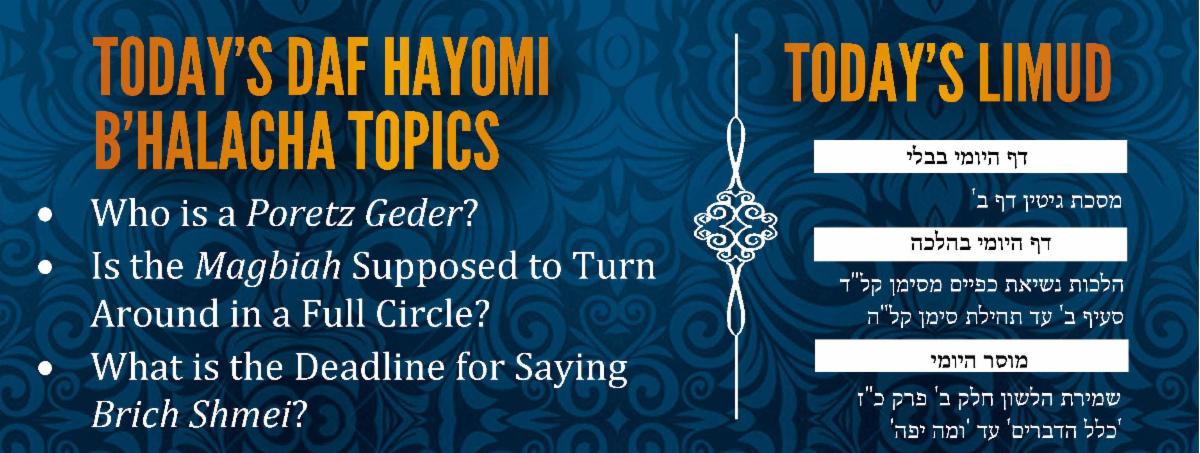
Who is a poretz geder?

Moshe Rabbeinu went up the mountain to accept the second Luchos on a Thursday and came down on a Monday. Therefore, Mondays and Thursdays are considered yemei rachamim, and extra tefillos are recited on these days. Some people also have the custom of fasting. One of the tefillos that was added is Vehu Rachum. It must be said standing, and one who sits during its recitation is called a poretz geder-- one who breaks a public edict and deserves punishment. Some say that only one who omits it entirely is branded a poretz geder and that saying it while sitting is not as severe. Minhagim differ as to whether it should be said out loud or quietly.


סי' קל"ד ס"א ס"ק ג'-ו'


Is the magbiah supposed to turn around in a full circle?


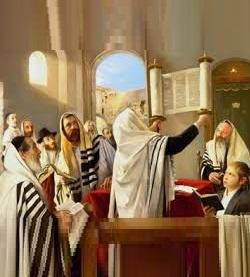
The minhag of the Sefardim is to perform hagbah before Kriyas HaTorah, while the Ashkenazim do hagbah after leining. The mitzvah of hagbah is for the magbiah to raise up the Torah and display its ksav to the tzibur while they say the appropriate pesukim. The magbiah should first turn to his right. According to some opinions, he should then turn to his left and not make a full circle. Others hold that that it is proper to turn around in a full circle. A weak person who cannot hold up the Torah long enough for everyone to see the ksav, should not be honored with hagbah. The Ramban writes that one who does not pick up the Torah for everyone to see is subject to the curse “on the one who does not uphold this Torah”. Later Achronim disagree about whether he is guilty of an actual Torah prohibition or if it is only mid’rabonon with a quasi-source in the Torah.


ס"ב ס"ק ח'-ט' ביאורים ומוספים דרשו 7, 9


What is the deadline for saying Brich Shmei?


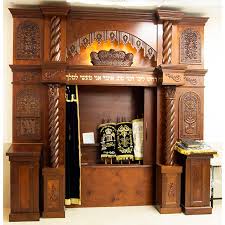
There is a minhag to say Brich Shmei, a passage from the Zohar, when the Sefer Torah is taken out from the Aron Kodesh. Many Achronim hold that it should only be said once the Sefer Torah is removed from the Aron. Others say that it may be even said before the Sefer Torah is taken out. If one is still in the middle of Vehu Rachum or Tachanun when the tzibur reaches Brich Shmei, he should pause and join the tzibur. One may say Brich Shmei until the Torah is opened for reading. In a case where the Sefer Torah is brought from another location into the shul for davening, Brich Shmei should be recited when it is carried in.


ס"ק י"ג ביאורים ומוספים דרשו 14

  • It is an aveirah--punishable by death--to offer ketores which does not contain all the spices which the Torah lists. There is an opinion in the Rishonim that the same holds true when one lists the spices during the recital of the Ketores. Therefore, one should be careful to read the Ketores from a text so as not to omit any of the listed spices.


  • On days when Tachanun is not said, an avel can serve as chazan. On days when Lamenatzeyach is also not recited, however, an avel may not be the chazan. It would be unsuitable for an avel to daven on behalf of people who are in a state of joy.


  • Some congregations have a minhag to recite the Yud-Gimel Middos and Vidui before Vehu Rachum and Tachanun. If one who is not accustomed to saying this is davening in a shul that does say it, he should not deviate from the local custom. 


  • Who instituted Kriyas HaTorah?


  • Who has the obligation of Kriyas HaTorah—the individual or the tzibur?


  • Is there a make-up option when there is no laining?
PLEASE NOTE:  The information in this email is for learning purposes only. Please review the Mishna Berura and Biurim U'Musafim before making a halachic decision. Hebrew words are occasionally transliterated to enable a smoother reading of the text. Common Ashkenazi pronunciation is generally used in these cases.
Daf Hayomi B'Halacha Shiur
Rav Asher Eisenberger
Rabbi Asher Eisenberger
Synopsis of Today's Halachos
Rabbi Yerachmiel Garfield
Synopsis of Today's Halachos
This Week's Limud