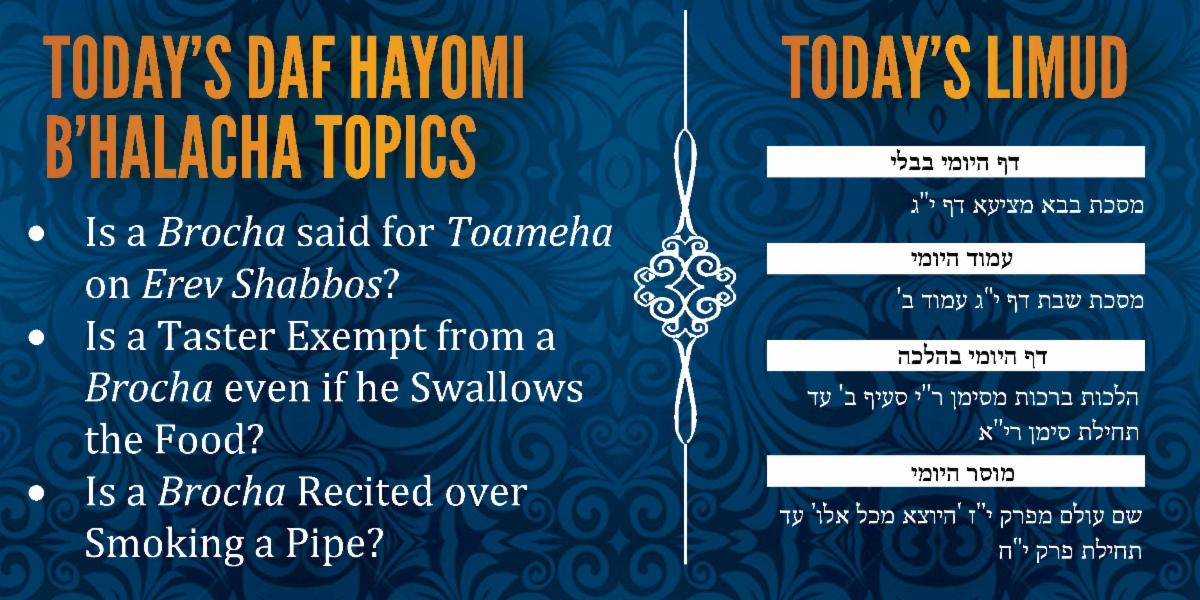
Is a brocha said for toameha on Erev Shabbos?

The Gemara teaches that one who tastes food does not recite a brocha rishona or achrona. Although the taster does have some enjoyment from the food, his intention is not to eat the food for the sake of eating but just to make sure that it has been properly spiced or cooked. The poskim add that even if one tastes food after it has already been fully cooked and cannot be altered, no brocha is recited as long as the intention is just to see if it tastes good. On Erev Shabbos, however, when a person samples the Shabbos food to fulfill the concept of toameha, he should recite a brocha. In this case it is clear that his intention is to eat the food.


סי' רי ס"ב ס"ק יג ביאורים ומוספים דרשו 28 


Is a taster exempt from a brocha even if he swallows the food?


The Rishonim disagree on whether a taster’s exemption from reciting a brocha applies even if he swallows the food (instead of spitting it out after tasting it). According to the opinion that he is exempt even if he swallows the food, there is a limit as to how much he can taste and swallow. For a tavshil--a cooked liquid food--the maximum amount he can taste is a revi’is. For a solid, the maximum amount is a k’zayis. If one will be tasting food from numerous pots, he can taste up to a revi’is or k’zayis from each pot. If one will be spitting out the food, there is no maximum amount he is permitted to taste. Practically, the Rema rules that even if a taster swallows the food, he is exempt from reciting a brocha. Since this ruling is not agreed upon by all, it is best for one who will be swallowing to intend to eat the food (and not just taste it) in order to have a clearcut obligation to recite a brocha.


ס"ב ס"ק יד-יח ביה"ל ד"ה עד


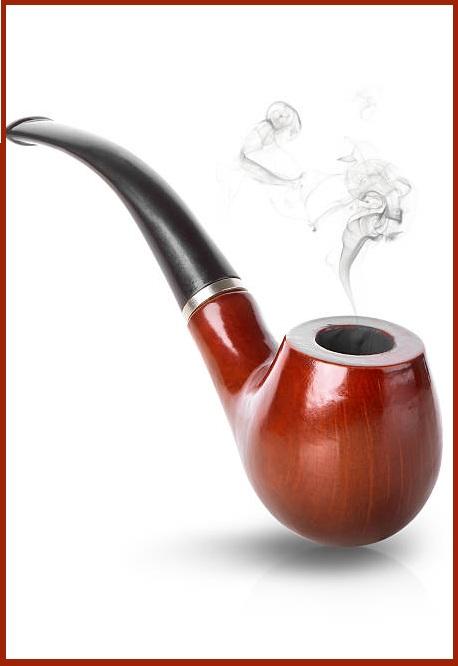
Is a brocha recited over smoking a pipe?


The poskim discuss whether a brocha should be recited before smoking a pipe. Some propose that although inhaling smoke may be similar to tasting food and spitting it out, it is possible that there is an obligation of a birkas hareyach (a brocha over a good smell) in this case. Most Achronim are of the definitive opinion that there is no reason to recite a brocha. They explain that smoke from a pipe is actually foul-smelling, and no one smokes for the sake of the fragrance. Even if a pleasant scent is added, this is merely done to mask the pungent smell of the tobacco. As in the case of potpourri which is placed in a bathroom to hide the odor, there is no brocha required in this scenario.


ס"ק יז ביאורים ומוספים דרשו 30

  • A person is only obligated to recite a brocha achrona on a beverage if he drinks at least a revi’is. Most poskim say that ice and other frozen water products are considered foods, and the amount necessary for a brocha achrona is a k’zayis.


  • The poskim disagree on whether the time frame for drinking a revi’is is the same as the one for eating a kezayis of food (k’dei achilas pras) or whether drinking only qualifies for a brocha achrona if it is done within the amount of time it takes to drink a revi’is in two sips. This second time frame is much shorter than k’dei achilas pras.


  • Some Rishonim propose that if one eats a biryah--a complete fruit, such as a grape--he is obligated to recite a brocha achrona even if he ate less than a k’zayis. Since this is not a universally accepted opinion, Shulchan Aruch says that one should not eat a biryah (in an amount that is smaller than the shiur) to avoid the questionable obligation of brocha achrona.


  • Is there an order in which foods should be eaten?


  • Do apples and nuts have kadimah?


  • Which is chaviv—the tastier food or the healthier one?
PLEASE NOTE:  The information in this email is for learning purposes only. Please review the Mishna Berura and Biurim U'Musafim before making a halachic decision. Hebrew words are occasionally transliterated to enable a smoother reading of the text. Common Ashkenazi pronunciation is generally used in these cases.
Daf Hayomi B'Halacha Shiur
Rav Asher Eisenberger
Rabbi Asher Eisenberger
Synopsis of Today's Halachos
Rabbi Yerachmiel Garfield
Synopsis of Today's Halachos
This Week's Limud