|
DCJS Victims Services News
| |
|
Introducing Our Newest Victims Services Team Members | |
Please join us in welcoming our two newest Victims Services team members, Kelly Carpenter and Bunny Chidester.
| |
|
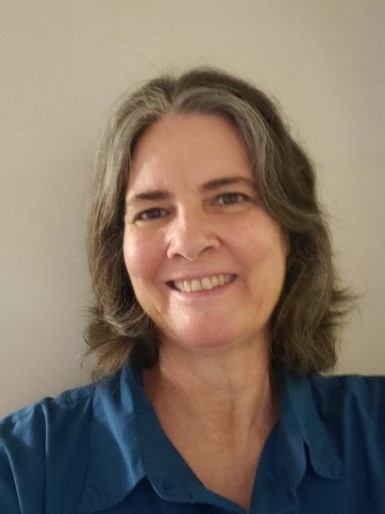
Kelly Carpenter is the new Victims Services Grant Program Specialist for the Shenandoah area. Kelly has over 20 years of experience with victim services, specializing in the response to sexual violence. Prior to joining the Virginia Department of Criminal Justice Services (DCJS), Kelly served as Assistant Director for the Chesterfield County Victim/Witness Assistance Program, the Sexual Assault Payment Program Coordinator for the Virginia Victims Fund and most recently, the Sexual Assault Kit Initiative Project Manager for the Office of the Attorney General.
Kelly holds a Bachelor’s degree in Criminal Justice from Virginia Commonwealth University and lives in Chesterfield, Virginia with her amazing husband, two sweet and sassy teenagers, and assortment of fur babies. When not at work and spending time with family, Kelly loves to crochet, explore nature, and learn more about the world.
| |
 | |
Bunny Chidester joined DCJS in May 2022, as a Victims Services Program Specialist. Bunny has worked in the field of Human Services since 1996, originally in child abuse prevention and mentoring young parents and teens. She has spent many years as an advocate for survivors of sexual and domestic violence, with a passion for Primary Prevention work and youth advocacy. She developed and coordinated a strength-based after school program for "rascally" 7th graders, and a six-year peer mentoring program for 8th-12th grade students in King George, Virginia. Bunny worked as a contract trainer for the Virginia Department of Health, James Madison University, and the Virginia Sexual and Domestic Violence Action Alliance for seven years. In 2013, the Action Alliance awarded her their Blue Ribbon Catalyst Award for Child and Youth Advocacy.
She is certified as a facilitator for the Richmond Peace Education Center’s (RPEC) Conflict Resolution, Help Increase the Peace, and Healing and Rebuilding Our Community (HROC) programs. RPEC awarded Bunny their 2018 Peacemaker of the Year award for her work with youth and her commitment to social justice. She comes to DCJS having worked from 2016–2020 as a Domestic Violence Program Specialist at the VDSS Office of Family Violence, and 2020–2021 at SAFE in Chesterfield as a Prevention Specialist/Grant Coordinator. She loves to do jigsaw puzzles, play in the rain, and is a wildcrafting herbalist.
| |
 | |
Victims Services Spotlight on Abuse Alternatives
Sharon Reed, Victims Services Program Specialist
Abuse Alternatives provides comprehensive, confidential domestic violence services to survivors and their children. The agency is based on the border of Virginia and Tennessee in Southwest Virginia where they offer a wide range of services to include temporary emergency shelter, 24/7 crisis hotline, support groups, children’s programs, transportation, and a multitude of outreach services.
Judy Clark, Director of Outreach Services in Washington County, Virginia, received a domestic violence report that stated the officer had observed a female assaulting the male victim in front of their two children. The report went on to state that the male victim did not speak English so the female suspect was allowed to interpret all communications from the victim to the officer. The female was charged with family abuse and an emergency protective order (EPO) was issued for the children and victim.
Please click the button below to read the entire article and learn more about how Abuse Alternatives collaborated with Latinos in Virginia Empowerment Center to assist all victims in their locality.
| | |
|
Tips for Writing Goals and Objectives:
Ways to Ensure Your Goals Capture the Impact of Your Program
Chrissy Wengloski, Senior Victims Services Program Specialist
No one knows the strengths of your program better than you, but in order to share your work with your community, it is important to be able to clearly explain what you have accomplished. One way to be able to share your work with others is to write clear goals and objectives, which will then lead to outcome data. Check out some simple things to think about when creating or changing your goals and objectives this fiscal year:
What is the difference between a goal and an objective?
A Goal: an overall purpose of the project. This is usually one sentence, and demonstrates an ultimate outcome you are trying to achieve.
An Objective: the specific ways you are going to accomplish your goal(s). This is where you provide all of the details of what and how you are going to get to your goal. Objectives should provide the “who, what, where, and when” of the goal. They should each illustrate a specific action you are taking to achieve the related goal.
How can I improve my goals and objectives?
- Set SMART goals:
- Specific, measurable, attainable, relevant/realistic, and timely.
- Ask yourself:
- How does this goal relate to my mission or project scope? How can I make sure others can see how it is related?
- Does this goal reflect the parts of my project I work hardest on? If not, how can I make sure my hard work is conveyed?
- Will working toward this goal make my project better or am I just trying to showcase my biggest service numbers?
- Are there parts of my project I would like to improve? How can I write a goal to encourage my team to do that?
At the end of the day, while funders and the community love seeing the data you will collect in response to your goals and objectives, it is important to remember that goals and objectives are ultimately for you and your staff! The intent in writing goals and objectives is not just to showcase your work, but also to give your program measurable benchmarks to work toward in order to better serve victims. If you need help thinking through your goals and objectives for your victim serving projects, do not hesitate to reach out to your grant monitor. We are ready to brainstorm or provide suggestions!
| |
We Want to Hear From You!
DCJS Victims Services is in the process of developing a comprehensive sub-recipient administrative guide for grants management. It would be helpful for us to gather feedback from you on topics related to grants management training and technical assistance. Please click on the link below to complete a brief survey so we may better understand your needs.
| | |
|
School Shooting Database Provides Insights for Prevention and Intervention
Julia Fuller-Wilson, State Victims Crisis Assistance and Response Team (VCART) Program Coordinator
With the most recent school shooting in Uvalde, Texas, it seems ever more prudent to understand the circumstances that lead to such tragedies. These events have catastrophic effects on families, schools, and communities at large. The impact is long lasting, and evaluating how and why these shootings occur is essential. Please click the button below to read more about the findings of The American School Shooting Study (TASS).
| |
|
Are Targets Goals?
Program Service Objectives (Targets) for Victim Witness
Grant Programs
Patricia Foster, Victim Witness Program Coordinator
Victim Witness Grant Program (VWGP) goals and objectives (formerly known as targets) are to be completed using local trends and service delivery data. All current DCJS grant funded victim/witness programs must provide annual targets for each required victim and witness service objective. The targets reflect the listing of service objectives required by the Victims of Crime Act (VOCA) and are applicable to local and state funded programs. To document service objectives, applicants must propose the target numbers of direct service victims and witnesses to whom services will be provided during the grant cycle. The targets may be updated once before the progress report of the first quarter of the fiscal year is submitted.
VWGP grantees should evaluate service delivery targets from the previous grant cycle and/or fiscal year to make projections for the current award year. Programs will not be penalized for not meeting targets, as these are projected figures. Targets will be used by DCJS to determine if a program needs technical assistance or support. Crime and environmental trends, staff turnover, collaboration with program sponsor and community partners, and other factors can affect targets in positive or negative ways.
To determine projected annual targets for your locality, consider the following:
- Service targets should be realistic to the services you provide in your locality or statewide project, and based on the specific program caseload.
-
Is your program meeting required service objectives outlined in the Crime Victim and Witness Rights Act (§ 19.2-11.01)?
- Do your services reflect the purpose of your grant award?
- Do your grant targets reflect the changes in trends and cultural competencies for your service area(s)?
Consider if you want to modify targets based on end-of-year cumulative totals of your fourth quarter progress report. Did you meet your targets or go above or below the targets? If you did not meet your targets, consider the circumstances that might have affected your service delivery in order to estimate your future targets. Even with the pending CIMS (Client Information Management System) replacement, which will make analyzing our performance data more meaningful, your forethought helps to best serve your communities’ changing needs.
| |
|
Virginia Sexual and Domestic Violence Professional Standards Resources
Amber Stanwix, Sexual and Domestic Violence Program Professional Standards Coordinator
Sexual and domestic violence agencies throughout the Commonwealth of Virginia play a crucial role in ensuring the safety of survivors, as well as providing vital counseling, housing support, and accompaniment services. In addition, these agencies are required to meet stringent administrative requirements for grant reporting purposes. Finally, many of these agencies have chosen to apply for accreditation under the Virginia Sexual and Domestic Violence Program Professional Standards. This process requires the submission of an application and a site visit, both of which require an investment of time and effort.
With all of these responsibilities, it can be difficult for agencies to dedicate the time or resources to find helpful, reliable information to assist them in performing their tasks. However, in order to provide first class direct services and meet the rigorous administrative requirements of grant reporting, agencies must have access to the latest information in the field. Fortunately, the Professional Standards Team is here to make locating that information easier for all of the sexual and domestic violence agencies in Virginia.
Wondering where everything is located? Please click the button below to see a full list of resources available on the DCJS Victims Services Professional Standards webpage.
| | | |
|
Upcoming Training
August 17, 2022
"Survivor-Centered Economic Advocacy Training Series:
Part 4: Advocate Self-care When Working with Poverty"
August 26, 2022
"Building Capacity for Accessible Victims Services:
Part 1 – Building the Foundation: Terminology and Identifying Barriers."
August 24-26, 2022
"NOVA Basic Victims Crisis Assistance And Response Team (VCART) Training"
September 9, 2022
"Expert Testimony in Sexual and Domestic Violence Cases"
September 13, 2022
"Building Capacity for Accessible Victims Services:
Part 2 – Action Planning for Accessibility."
September 20-23, 2022
"Trauma-Responsive Investigations and Sexual Assault Victim Interviews (TRI-SAVI)"
October 17, 2022
"Building Capacity for Accessible Victims Services:
Part 3 – Lessons Learned and Building Relationships"
| |  |
 | |
New Human Trafficking Laws Take Effect
Chrissy Smith, Victims Services Program Specialist
As of July 1, 2022, there are new human trafficking-related laws in Virginia.
The responsibilities of DCJS staff Angella Alvernaz, State Trafficking Response Coordinator, and McKayla Burnett, State Trafficking Services Grant Program Specialist, have increased as new laws take effect. Two of the new laws, House Bill 283 and Senate Bill 467, require the Virginia Department of Criminal Justice Services (DCJS) to establish training standards for law enforcement personnel so they can recognize, report, and prevent human trafficking. House Bill 258, which will go into effect on January 1, 2023, requires DCJS to create an online course to train hotel employees on the detection and reporting of suspected human trafficking.
Additional bills signed into law include House Bill 526, which adds victims of human trafficking to § 23.1-506, which allows them to be eligible for in-state college tuition and automatically opts them out of public directories to protect their contact information. House Bill 711 provides that a petitioner for a writ of vacatur for victims of sex trafficking “shall not be required to pay any fees or costs for filing a petition… if the petitioner is found to be unable to pay fees or costs…” House Bill 1023 adds human trafficking to the high school family life education curricula.
Since hiring Angella and McKayla, DCJS has established the HtVA Campaign, Anti-Human Trafficking Coordinating Committee, Virginia Child Trafficking Workgroup, and other task forces and workgroups. DCJS has held three-day and five-day sessions of Sexual Exploitation Treatment & Training Services (SETTS) training for over 180 allied professionals, and held multiple sessions of Interdiction for the Protection of Children (IPC), which is specific training for law enforcement officers.
For more information about the DCJS anti-human trafficking efforts, please visit the Human Trafficking Response in Virginia website.
| | |
 |
Victims Services Staff Spotlight:
Featuring Haymanot Cummings, Victims Services Program Specialist
Share a little about your educational and professional background.
I have a Bachelor's degree from University of Central Florida in Political Science with a focus in International Relations with a minor in Nonprofit Management. I then went to graduate school at Florida State University and studied Public Administration. I have primarily worked in the nonprofit and public sector where most of my roles have been in an Administrative/Finance capacity. I previously worked for the State of Florida as a Contract Manager in the Child Welfare arena, as well as a Program Administrator of Florida’s VOCA funding.
What is your role at DCJS Victims Services Section?
My title is Victims Services Grant Program Specialist, and I am a Grant Monitor assigned to the Northern Virginia region. I was previously managing grants in the Western Region of the State.
Why were you interested in working for Victims Services at DCJS?
I did not know much about DCJS when I was searching for jobs as I had recently moved to Virginia from Florida, but the role interested me because of my previous experience at the Attorney General’s Office in Florida, where I served as the Program Administrator for our VOCA program.
What do you enjoy most about your work at DCJS?
I enjoy the camaraderie with my colleagues as well as the support we provide organizations throughout the Commonwealth to ensure victims are receiving an array of services.
What has been your proudest accomplishment at DCJS?
My proudest accomplishment at DCJS is being able to utilize my previous financial experience to assist other monitors as well as our Grants Management team.
Prior to working at DCJS, what is the most unusual or interesting job you have had?
I worked at a post office distribution center in Orlando, FL in December sorting through so many letters and Christmas gifts. It was a temporary job over winter break when I was in undergrad. It was interesting to really learn why some of our mail arrives broken or doesn’t arrive at all!
When you were a child, what did you want to be when you grew up?
I wanted to be an attorney.
If you could only vacation one place for the rest of your life, where would it be and why?
This is a very hard question for me but I would say in Ethiopia as that is where most of my family resides.
What would you title the autobiography of your life?
"The Search and Finding of Wholeness"
| | | | | | |