Connecting

March 14, 2024


Click here for sound of the Teletype

Top AP News

Top AP Photos

AP Merchandise

AP Emergency Relief Fund

Connecting Archive

AP Newsletters

AP Books

AP News Tips

Colleagues,


Good Thursday morning on this March 14, 2024,


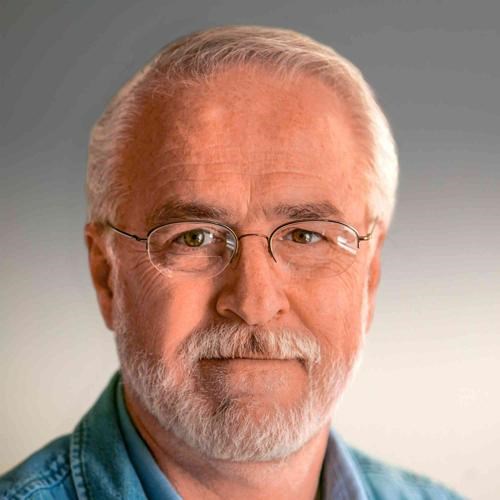
George Widman, an Associated Press photographer for 25 years who was a finalist for the Pulitzer Prize, died last Friday at the age of 79.


We lead today’s Connecting with a story on his career. If you have a favorite memory of working with him, please send it along.


EXAMPLE OF WHAT GOOD JOURNALISM CAN DO: Peggy Walsh – I found that The Last Repair Shop, the LA Times short doc that won an Oscar, is 40 minutes of human and musical joy involving immigrants and poor students. Pure joy. Restored my faith in humanity for today. Another example of what good journalism can do. Click here to view.


Have a great day – be safe, stay healthy, live it to your fullest.


Paul


George Widman, longtime AP photographer and Pulitzer finalist, dead at 79


TRAPPE, Pa. (AP) — George Parker Widman, a longtime Associated Press photographer and a 1988 Pulitzer finalist, died at his home Friday in Trappe, Pennsylvania. He was 79.

Widman was born on Sept. 16, 1944, in Utica, New York, and raised in New Hartford, New York, before studying photography at Rochester Institute of Technology, according to an obituary provided by the family. He worked briefly for the Gannett Utica newspapers before being drafted and going on to serve four years in U.S. Navy intelligence.


He eventually returned to Utica as photography director and also freelanced during the 1970s for a number of print outlets including AP, covering the NFL and general news as well as the Lake Placid and Moscow 1980 Olympics.


In 1982, he became an AP staff photographer and was a Pulitzer Prize finalist for feature photography in 1988 for his photograph of a homeless man in Philadelphia. He retired from the AP in October 2007.


“He was an ace sports photographer but he could shoot anything,” said Sally Hale, a former Pennsylvania bureau chief who worked with Widman in Philadelphia.


Widman said in the obituary, which he wrote, that he “considered his actual flying of the Goodyear Blimp (and nearly crashing it) before the 1985 Live Aid Concert in Philly to be the highlight of his career.” He also wrote of relishing the opportunity to travel to Cartagena, Colombia, to teach photo lighting techniques to South American photojournalists.


Widman’s wife, Sarah, died in June 2012. He is survived by sons Robert Duncan Widman and James Widman and by two grandsons as well as by brother David Widman Jr. and sister Barbara Ann Winfield; another sister, Eleanor Jean Turner, died in 2020.


Details of a planned funeral service and burial were to be announced later.


Click here for link to this story. Shared by Ted Anthony.


Former Mormon bishop highlighted in AP investigation arrested on felony child sex abuse charges


BY JASON DEAREN AND MICHAEL REZENDES


A former bishop in The Church of Jesus Christ of Latter-day Saints who was featured in an Associated Press investigation into how the church protects itself from allegations of sexual abuse was arrested by police in Virginia this week after being indicted on charges he sexually abused his daughter while accompanying her on a school trip when she was a child, according to court filings.


Police and federal authorities had been searching for John Goodrich after a grand jury in Williamsburg on Jan. 17 found probable cause that he committed four felonies, including rape by force, threat or intimidation, forcible sodomy, and two counts of felony aggravated sexual battery by a parent of a child.


Those charges were filed weeks after the AP investigation revealed how a representative of the church, widely known as the Mormon church, employed a risk management playbook that has helped it keep child sexual abuse cases secret after allegations surfaced that Goodrich abused his daughter Chelsea, now in her 30s, at their home in Idaho as well as on a school field trip to the Washington, D.C., area 20 years ago.


Read more here. Shared by Lee Siegel.


On AP ‘Buyline’


Howard Goldberg - I presume many Connecting colleagues reacted with disbelief or dismay to news that "The Associated Press is launching an e-commerce site called AP Buyline.” My initial reaction was to check the calendar to see if this was April 1, until I thought deeper about why AP would take such an initiative. Advertising, long a pillar of support for journalism, has necessarily adapted to changes in technology and consumer habits. Although most retail sales still occur in person in stores, Americans spend more than a trillion dollars a year via e-commerce, and the percentage of retail sales online has been rising for years, especially in certain sectors such as consumer electronics and apparel. Ignoring trends in the flow of consumer spending and advertising placement has not proven a healthy way to support journalism.


Overwhelmed by wealth of great stories


Linda Deutsch - I am overwhelmed with the wealth of great Connecting stories. The belatedly discovered video of Stella Dixon’s mom and the story of it is a treasure. But who can possibly top Kevin LeBoeuf’s tale of his “Master of the Air” dad, surviving a crash, navigating a minefield in the dark, being captured and winding up being presented to Gen. George S. Patton. They should have used his story in the TV series. It’s amazing how many of these heroes never talked about their war until decades later. Breathtaking. And of course, the joy that has been shared over the AP’s first Oscar is a high point for all of us. The stories were great! Congrats to all who were involved in this important film. 


On jury duty and home delivery


Bill Kaczor - Jury Duty scheduled for Monday was canceled on Friday. No explanation given but possibly due to a settlement or plea deal. That means I'm off the hook for at least a year. I could also be excused just because I am 70-plus, but I was kind of looking forward to getting my first look at the new Santa Rosa County (Fla.) courthouse. I also felt that if you can run for president at my age or older, I certainly could do a little jury duty and spare a younger person who might have to take time off from their job. As a notorious night owl, the only thing I wasn't looking forward to was the 8:30 a.m. CDT reporting time when my body clock was still at 7:30 a.m. CST.


No More Home Delivery is working out OK as the local paper has been arriving in the mail in the early PM and the Sunday paper got here on Saturday so I got a jump on the comics and crosswords. We also subscribe to the Sunday New York Times, which used to be delivered by the same guy that tossed the local paper. It, too, arrived by mail, but on Monday. That's not a big deal because I often can't get around to reading it until Monday, anyway, and it usually takes the better part of the week to plow through it.


Images of War: 20 Days in Mariupol


Posted in: Montclair State University Donors


Getting a sobering glimpse of the atrocities of war, more than 100 guests gathered in Presentation Hall in the School of Communication and Media on Montclair State University campus on March 7 for a screening of 20 Days in Mariupol, the Academy Award® winner for best documentary feature film by Pulitzer Prize-winning journalist Mstyslav Chernov.


The film is a vivid and harrowing account of the besieged city of Mariupol during Russia’s invasion of Ukraine, as documented by a team of Ukrainian journalists from The Associated Press. As the only international reporters remaining in the city, they capture what later became the defining images of the war in Ukraine: dying children, mass graves, the bombing of a maternity hospital, and more.


The screening was made possible through the efforts of Jacquie Colgan, who serves as a Bloomfield College of Montclair State University Advisory Board member and is active in a number of humanitarian organizations, including Nantucket Cares and the American Coalition for Ukraine.


“This film shares firsthand accounts of civilians caught in the war zone and gives us a glimpse into the dangers of reporting during such conflict,” said Colgan in her remarks.


Read more here. Shared by Byron Yake.


Connecting wishes Happy Birthday

Larry Blasko


Steve Fox


Pat Milton


Sarah Postle

Stories of interest


FALLEN JOURNALISTS MEMORIAL FOUNDATION SELECTS CHICAGO-BASED JOHN RONAN ARCHITECTS TO DESIGN ITS MEMORIAL AT THE NATIONAL MALL IN WASHINGTON, D.C.


Washington, D.C. – The Fallen Journalists Memorial Foundation today (March 13) announced the selection of John Ronan Architects to design the foundation’s namesake memorial, the first national memorial dedicated to press freedom and journalists who have lost their lives in service to that cause. The selection of the designer for the memorial marks a major milestone in the process leading up to the construction of the memorial, which was approved by Congress and received federal approval to be built at the National Mall in Washington, D.C. Over the coming months, John Ronan FAIA and his team will work with the foundation’s leadership to establish a final design proposal to be presented to various agencies and commission.


John Ronan Architects is an internationally recognized design firm based in Chicago known for innovation, exploration of materiality, and rigorous attention to detail. The firm has received multiple American Institute of Architects (AIA) National Honor Awards for its buildings, including the Poetry Foundation, Gary Comer Youth Center, and the Ed Kaplan Family Institute for Innovation and Tech Entrepreneurship at the Illinois Institute of Technology, where John Ronan is the John & Jeanne Rowe Endowed Chair Professor in Architecture. John is a past recipient of the American Academy of Arts and Letters Architecture Award, and his firm was a competition finalist for the Obama Presidential Center.


“Following a rigorous design team selection process, John Ronan Architects was selected because of his sound grasp of our vision for the memorial, as well as his creativity and attention to detail,” said David Dreier, Chairman of the Fallen Journalists Memorial Foundation. “Equally important, we were inspired by his unique and compelling design concept, which calls for the use of transparent materials to convey themes of clarity and light to reinforce the importance of the work of journalists, photojournalists and a free press.”


At its core, the memorial honors the lives lost in pursuit of the truth and celebrates the First Amendment rights in American democracy. The design concept outlines a compelling memorial experience that engages with the themes of transparency and light, reinforcing the importance of these factors to the work of journalists and to a free press. It will feature a layered assemblage of transparent elements that would appear different from all three sides of the triangular site, alluding to the multiple sides of a story that a journalist must analyze to discern the truth and encouraging visitors to investigate each space through their own journey. Just as journalists play a watchdog role in democracy, the design will highlight the memorial’s diligent watch over the Capitol dome, visible above the memorial’s eastern rim.


Read more here.


-0-


U.S. News Organizations Could Receive $11 Billion Windfall If JCPA Passes. (Inside Radio)


Chances are “pretty good” that Google's precedent-setting decision in December to compensate Canadian news sites $100 million for the use of their content could translate into billions of dollars in payouts to local news sites in the U.S. So says Conan Gallaty, Chairman & CEO of the Tampa Bay Times and Times Publishing Co, who predicts that U.S. news organizations could receive an $11 billion windfall a year if the bill passes.


“If you are in the local news business, the chances of a windfall – and a continued windfall because it wouldn't just be a one-year payment, it would be an ongoing payment – those chances are building by the day. There's a lot of strong momentum,” he said Tuesday at Borrell Miami.


Three years after it was first proposed, the Journalism Competition and Preservation Act is poised to be passed into law this year, said Gallaty who sits on the board of the News Media Alliance, formerly the Newspaper Association of America.


That optimism is based on the push it is getting from Senator Amy Klobuchar (D-MN), who sponsored the legislation, and from Senator John Kennedy (R-LA), the lead Republican sponsor. “There are 18 other senators that have co-sponsored the bill that are pushing it, split between Democrats and Republicans, so it's fully bipartisan bill,” Gallaty said in a session entitled “The Prospects of 'Windfall' Compensation for Local News Sites in 2024.”


Read more here. Shared by Linda Deutsch.


-0-


A Forensics Expert on Princess Kate’s Photo—and How Credentialing Tools Can Help Build Trust in a World of Increasing Uncertainty (Time)


BY HANY FARID


As an academic who has spent the past 25 years developing techniques to detect photo manipulation, I am used to getting panicked calls from reporters trying to authenticate a breaking story.


This time, the calls, emails, and texts started rolling in on Sunday evening. Catherine, Princess of Wales, has not been seen publicly since Christmas Day. The abdominal surgery she underwent in January led to widespread speculation as to her whereabouts and wellbeing.


Sunday was Mother’s Day in the U.K., and Kensington Palace had released an official photo of her and her three children. The image had been distributed by the Associated Press, Reuters, AFP, and other media outlets. The picture then quickly went viral on social media platforms with tens of millions of views, shares, and comments.


But just hours later, the AP issued a rare “photo kill,” asking its customers to delete the image from their systems and archives because “on closer inspection it appears the source has manipulated the image.”


Read more here. Shared by Bill Sikes.


-0-


People trust themselves more than they trust the news. They shouldn’t. (Columbia Journalism Review)


By JACOB L NELSON, ZEVE SANDERSON, SETH C LEWIS


If you’re reading this, you’re probably a news and politics junkie. Someone who reads multiple news sites a day, follows several news organizations on social media, and receives a few email newsletters.


Most people aren’t like this. A 2020 study found that news represents just 14 percent of Americans’ media consumption. Attention does pick up, however, during an election year. While roughly one-third of Americans closely follow the news in non-election years, 39 to 43 percent do so when there’s a presidential election, according to Gallup.


However, new research—and recent reporting about how artificial intelligence is changing the online information environment—suggests that even as people start tuning into the election, they could end up more misinformed, not less.


The reason: People have greater faith in their own abilities to “fact-check” the news than they have in the news itself. In the past year, we have published two academic studies that suggest this faith is misplaced, and that it actually leaves people more likely to believe misinformation.


Read more here.


-0-


The Intersection Magazine: Redefining local reporting (Editor and Publisher)


Diane Sylvester | for E&P Magazine


If you visit the web page of The Intersection Magazine, you’ll notice something unique. The subject titles contain pairings: “PG Politics + Religion” and “Health + Politics.”


This is intentional, said its founder, Delonte Harrod: “As a Black reporter trained in the Black press, that is how Black people live their lives. I will say I think it’s universally how people live their lives. Traditional media reports listicles. So, it’s Politics, Business and Sports. Separated. And that’s not actually how reality works. In Black communities, Black people are heavily religious. And they are involved in politics. So, what does it look like to report on the intersection or convergence of all these things? That’s what I’ve started to do.”


Harrod, a former Maynard Institute Fellow, launched his digital magazine as a Medium site in 2018 to report hyper-locally in Prince George’s County, Maryland. In 2021, he took the magazine to a new level when he was selected to be in that year’s LION Publishing Google News Initiative Startup Boot Camp. The Intersection is a LION Publishing member.


Since then, Harrod has worked to develop a close relationship with community members and activists to learn what issues they are taking on and where his reporting might amplify their concerns and the solutions they seek.


Read more here.


Opinion | Elon Musk’s deal with Don Lemon goes sour (Poynter)


By: Tom Jones


Well, that didn’t take long.


X chief twit Elon Musk has canceled the platform’s deal with former CNN host Don Lemon after one taping of the show. That one taping? A “tense-at-times,” 90-minute interview that Lemon did with Musk.


In an Instagram post, Lemon wrote, “Elon Musk has canceled the partnership I had with X, which they announced as part of their public commitment to amplifying more diverse voices on their platform. He informed me of his decision hours after an interview I conducted with him on Friday. That interview will remain the premiere episode of The Don Lemon Show on Monday, March 18.”


So what happened in the interview that caused Musk to kill Lemon’s show before the first episode even aired?


Read more here.

Today in History - March 14, 2024

Today is Thursday, March 14, the 75th day of 2024. There are 292 days left in the year.


Today’s highlight in history:


On March 14, 1879, Albert Einstein, who would revolutionize physics and the human understanding of the universe, was born in Ulm, Germany.


On this date:


In 1794, Eli Whitney received a patent for his cotton gin, an invention that revolutionized America’s cotton industry.


In 1939, the republic of Czechoslovakia was dissolved, opening the way for Nazi occupation of Czech areas and the separation of Slovakia.


In 1951, during the Korean War, United Nations forces recaptured Seoul.


In 1962, Democrat Edward M. Kennedy officially launched in Boston his successful candidacy for the U.S. Senate seat from Massachusetts once held by his brother, President John F. Kennedy. (Edward Kennedy served in the Senate for nearly 47 years.)


In 1964, a jury in Dallas found Jack Ruby guilty of murdering Lee Harvey Oswald, the accused assassin of President John F. Kennedy, and sentenced him to death. (Both the conviction and death sentence were overturned, but Ruby died before he could be retried.)


In 1967, the body of President John F. Kennedy was moved from a temporary grave to a permanent memorial site at Arlington National Cemetery in Virginia.


In 1980, a LOT Polish Airlines jet crashed while attempting to land in Warsaw, killing all 87 people aboard, including 22 members of a U.S. amateur boxing team.


In 1990, the Soviet Congress of People’s Deputies held a secret ballot that elected Mikhail S. Gorbachev to a new, powerful presidency.


In 1995, American astronaut Norman Thagard became the first American to enter space aboard a Russian rocket as he and two cosmonauts blasted off aboard a Soyuz spacecraft, headed for the Mir space station.


In 2011, Neil Diamond, Alice Cooper, Tom Waits, Darlene Love, Dr. John and Leon Russell were inducted into the Rock and Roll Hall of Fame.


In 2015, Robert Durst, a wealthy eccentric linked to two killings and his wife’s disappearance, was arrested by the FBI in New Orleans on a murder warrant a day before HBO aired the final episode of a serial documentary about his life. (Durst would be convicted in the shooting death of his friend, Susan Berman; he died in January 2022 while serving a life sentence in California.)


In 2018, Stephen Hawking, the best-known theoretical physicist of his time, died at his home in Cambridge, England, at the age of 76; he had stunned doctors by living with the normally fatal illness ALS for more than 50 years.


In 2021, female performers including Beyoncé and Taylor Swift swept the top honors at the Grammy Awards; Beyoncé’s 28th win made her the most decorated woman in Grammy history.


In 2022, country music legend Dolly Parton announced she was pulling out of the nominations for the Rock & Roll Hall of Fame, saying she hadn’t “earned that right.” (She would later reverse course and accept induction into the hall.)


Today’s Birthdays: Michael Caine is 91. Composer-conductor Quincy Jones is 91. Actor Raymond J. Barry is 85. Country singer Michael Martin Murphey is 79. Rock musician Walt Parazaider (payr-ah-ZAY’-dur) (formerly with Chicago) is 79. Actor Steve Kanaly is 78. Comedian Billy Crystal is 76. Actor-writer-comedian-radio personality Rick Dees is 73. Country singer Jann Browne is 70. Actor Adrian Zmed is 70. Prince Albert II, the ruler of Monaco, is 66. Actor Laila Robins is 65. Actor Tamara Tunie (tuh-MAH’-ruh TOO’-nee) is 65. Producer-director-writer Kevin Williamson is 59. Actor Elise Neal is 58. Actor Gary Anthony Williams is 58. Actor Megan Follows is 56. Rock musician Michael Bland is 55. Country singer Kristian Bush is 54. Actor Betsy Brandt is 51. Actor Grace Park is 50. Actor Daniel Gillies is 48. Actor Corey Stoll is 48. Actor Jake Fogelnest is 45. Actor Chris Klein is 45. Actor Ryan Cartwright (TV: “Kevin Can Wait”) is 43. Actor Kate Maberly is 42. Singer-musician Taylor Hanson (Hanson) is 41. Rep. Dan Crenshaw, R-Texas, is 40. Actor Jamie Bell is 38. Rock musician Este Haim (HY’-uhm) (Haim) is 38. NBA star Stephen Curry is 36. Actor Ansel Elgort is 30. Olympic gold medal gymnast Simone Biles is 27. Actor James Freedson-Jackson (Film: “The Strange Ones”) is 22.

Got a story or photos to share?

Connecting is a daily newsletter published Monday through Friday that reaches more than 1,800 retired and former Associated Press employees, present-day employees, and news industry and journalism school colleagues. It began in 2013. Past issues can be found by clicking Connecting Archive in the masthead. Its author, Paul Stevens, retired from the AP in 2009 after a 36-year career as a newsman in Albany and St. Louis, correspondent in Wichita, chief of bureau in Albuquerque, Indianapolis and Kansas City, and Central Region vice president based in Kansas City.


Got a story to share? A favorite memory of your AP days? Don't keep them to yourself. Share with your colleagues by sending to Ye Olde Connecting Editor. And don't forget to include photos!


Here are some suggestions:


- Connecting "selfies" - a word and photo self-profile of you and your career, and what you are doing today. Both for new members and those who have been with us a while.


- Second chapters - You finished a great career. Now tell us about your second (and third and fourth?) chapters of life.


- Spousal support - How your spouse helped in supporting your work during your AP career. 


- My most unusual story - tell us about an unusual, off the wall story that you covered.


- "A silly mistake that you make"- a chance to 'fess up with a memorable mistake in your journalistic career.


- Multigenerational AP families - profiles of families whose service spanned two or more generations.


- Volunteering - benefit your colleagues by sharing volunteer stories - with ideas on such work they can do themselves.


- First job - How did you get your first job in journalism?


Most unusual place a story assignment took you.


Paul Stevens

Editor, Connecting newsletter

paulstevens46@gmail.com