|
|
|
Connecting
June 25, 2024
Click here for sound of the Teletype
| |
|
Colleagues,
Good Tuesday morning on this June 25, 2024,
Today’s issue brings more fascinating stories of colleagues writing about their first bureau as we continue the theme that began with publication two weeks ago of your AP class – your first bureau and the year you started.
Our colleague Larry Margasak had this thought to share, “As a member of Connecting’s 80s club, I like to read the 80s and 90s lists to bring back memories of staffers I worked with and knew by reputation. Now, Connecting has outdone itself with the recent list of AP initial years and bureaus. I can now see names of staffers I have not thought about in years, and cherish my memories. What a great resource Connecting has become!”
This from one of today’s stories, by Frances D’Emilio, remembering when she once debated an offer from San Francisco bureau chief Marty Thompson or one from a newspaper, is classic:
“Seeing I was torn, (San Francisco Examiner managing editor and former AP news editor Jim) Willse imparted this perspective born of his years with AP: If one day you are writing an AP story on your CRT and you collapse on the keyboard, there will be a minute of commotion and exclamations of sadness, but then someone will gently remove you from the chair, sit down, finish your story and send it off on the AP wires. Unconvinced that the same might not be the case in Pacifica – but with fewer colleagues around to notice any slump over the keyboard -- I took COB Thompson’s offer. My AP tenure lasted 44.5 years, all but the first six years abroad as a foreign correspondent.”
(Frances worked in the AP's Rome bureau from 1985 until her retirement this past February. Jim Willsie is a Connecting colleague.)
BOB PENDERGAST DEATH – Robert William Pendergast, who worked for the AP as a night editor in Los Angeles and was the brother of former AP vice president Tom Pendergast, died June 13. Click here for his obituary. Tom Pendergast, who died in 2013, retired from the AP as vice president and director of personnel and labor relations in 1985. He also was chief of bureau in Richmond, Philadelphia and Los Angeles during his nearly 30-year career. He then bought an East Texas weekly, The Winnsboro News, and served as its publisher. Click here for Tom’s obituary. (Shared by Amanda Kell)
Here's to a great day – be safe, stay healthy, live it to your fullest.
Paul
Stories of your first bureau
| |
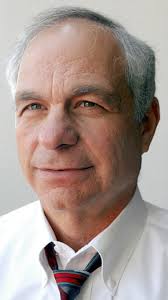
Ron Fournier – former AP Washington bureau chief - Harry King (pictured at right) was the news editor and sports editor when I joined the AP in Little Rock in 1989. It didn’t take long to watch in amazement how he balanced both roles: He was on the phone monitoring a news conference with Razorbacks coach Nolan Richardson, typing notes onto a computer screen while jumping in with a question. Impressive. Then he jumped to a second screen with an out-state dateline and some notes, and proceeded to bang out a lede about a major trial in southeast Arkansas. What is going on?
Then he jumped back to the first screen and took some notes from Richardson. Then back to the second screen for a second paragraph. With his desk phone cradled in his left shoulder, Harry asked Richardson a tough question, typed out the coach’s answer, and wrote on the first screen: FAYETTEVILLE, Ark. (AP) _
Back and forth he went. First screen: Lede on the Richardson newser. Second screen: Nut graf for the trial. First screen: Richardson quote and third graf. Second screen: Prosecutor quote. First screen: Razorback color. Second screen: Defense attorney quote.
I sat slack-jawed in awe and fear, telling myself, “I will never be able to do THAT!”
Finally, after about 10 minutes of this mental gymnastics, Harry said, “Thanks, Coach,” hung up the phone, and filed both stories. Welcome to The AP, kid.
-0-
Norman Black - I joined The AP in the summer of 1974 in Baltimore after working on a (pretty quiet) copy desk at the Greensboro (NC) Daily News. Bureau Chief John Woodfield hired me after putting my wife and I up in his Annapolis home for a few days while we scoped out the area. News editor Larry Siddons helped me get acclimated to the bureau and our first computer system and then promptly assigned me to the overnight.
As luck would have it, I arrived on the overnight just in time for the great strike of Baltimore municipal workers, starting with the trash collectors. It then spread to prison guards, animal control workers, park employees, zoo keepers and eventually, the police department. I was ordered to stay in place at the bureau and spent several days and nights covering the strike. It was my first introduction to covering real "spot news."
-0-
Frances D'Emilio - I took The AP test right out of university, and the university being St. John’s, New York, I would have taken it at 50 Rock, although I have no memory of it. In any case, it yielded no immediate job. Instead, I began as a copy “girl” at the New York Daily News during heady tabloid times in the mid-1970s. Days of running revised headlines from the city room to the gauntlet of lecherous printers one flight down were interspersed with fetching black coffee and American cheese sandwiches for Jimmy Breslin and with admiring Shirley MacLaine practice her leg splits on a newsroom wall while she waited for Pete Hamill to finish his column. There was excitement you couldn’t invent: one day, a perpetually cranky copy editor everyone knew as Curly, who shouted” boy!” to copy “girls” when he wanted to summon one of us and who had only one functional arm, sent a typewriter hurtling across the room at a news editor, whose name I won’t mention but whose rather well-known brother was an editor across the city at the NY Times.
After nine months warming the copy “boy” bench and a few months in upstate New York covering Polish-origin onion farmers and migrant workers for the Times Herald-Record, I detoured to obtain my masters at Columbia’s School of Journalism in spring 1978. Mailing packets of clips to most every newspaper in the Tri-State area as well as to The AP yielded zilch, so I took my job hunt to California and landed a general assignment reporter’s job at the San Francisco Chronicle, a six-month stint during someone’s leave of absence. My second-hand, stick-on-the column 1969 Ford Falcon was stuffed with my belongings and on the verge of pulling out of the driveway of my family home in Queens when my mother shouted from the stoop to say I had a phone call. It was The AP offering a vacation relief spot in one of the Carolinas – I forget which, I’m afraid – but California beckoned, and off I went.
Those six months spanned no shortage of news in San Francisco. Barely a week after the massacre of California-based Peoples Temple followers on Guyana, San Francisco Mayor George Moscone and Supervisor Harvey Milk were assassinated in City Hall. I had just met Milk when I covered a news conference about one of his pet initiatives – fighting dog poop in the city. A sharp politician, Milk saw a fresh face in the reporting ranks, recognized a fellow Long Islander’s accent and invited me to lunch to talk about urban issues. We never had the chance. When the Chronicle stint ended, I was hired as a summer vacation relief reporter at the San Jose Mercury News. The position was at the News’ side, and it being an afternoon paper, shifts began before dawn. The city editor took pity on me since I had a 60-mile drive to work from San Francisco and let me start at 5:30 a.m. instead of at 5 a.m.
After one sweaty drive home from the sizzling South Bay, I lay down on the floor at home just as San Francisco’s afternoon cooling fog started drifting in and pondered how I would survive the commute for three more months. The phone rang. It was AP’s news editor in San Francisco, Bill Schiffman, wondering if I were interested in an eight-month maternity leave position. Then he mused aloud about how I probably didn’t need a job anymore, seeing how he had seen my bylines in the San Jose paper. Exhausted by the heat, I said, sure, why not, and my career at AP began, on July 1, 1979. Unbeknownst to Bill, I knew the reporter going on leave and she had told me she’d likely not return. I had reason to be confident that the position would become permanent and might be mine. Not so simple. When I approached COB Marty Thompson about staying, he was evasive about whether the staffer on leave was returning. So, I spoke to S.F. Examiner managing editor Jim Willse (a former AP news editor), and he offered me a job in the Ex’s suburban bureau in Pacifica, a seaside town. When I told Thompson I had another offer, suddenly he announced that indeed the AP job was open and it was mine.
Hoping to use The AP offer as a bargaining chip to get a commitment from Willse on when I might leave “exile” in Pacifica for the city room, I went back to him. Seeing I was torn, Willse imparted this perspective born of his years with AP: If one day you are writing an AP story on your CRT and you collapse on the keyboard, there will be a minute of commotion and exclamations of sadness, but then someone will gently remove you from the chair, sit down, finish your story and send it off on the AP wires. Unconvinced that the same might not be the case in Pacifica – but with fewer colleagues around to notice any slump over the keyboard -- I took COB Thompson’s offer.
My AP tenure lasted 44.5 years, all but the first six years abroad as a foreign correspondent.
-0-
| 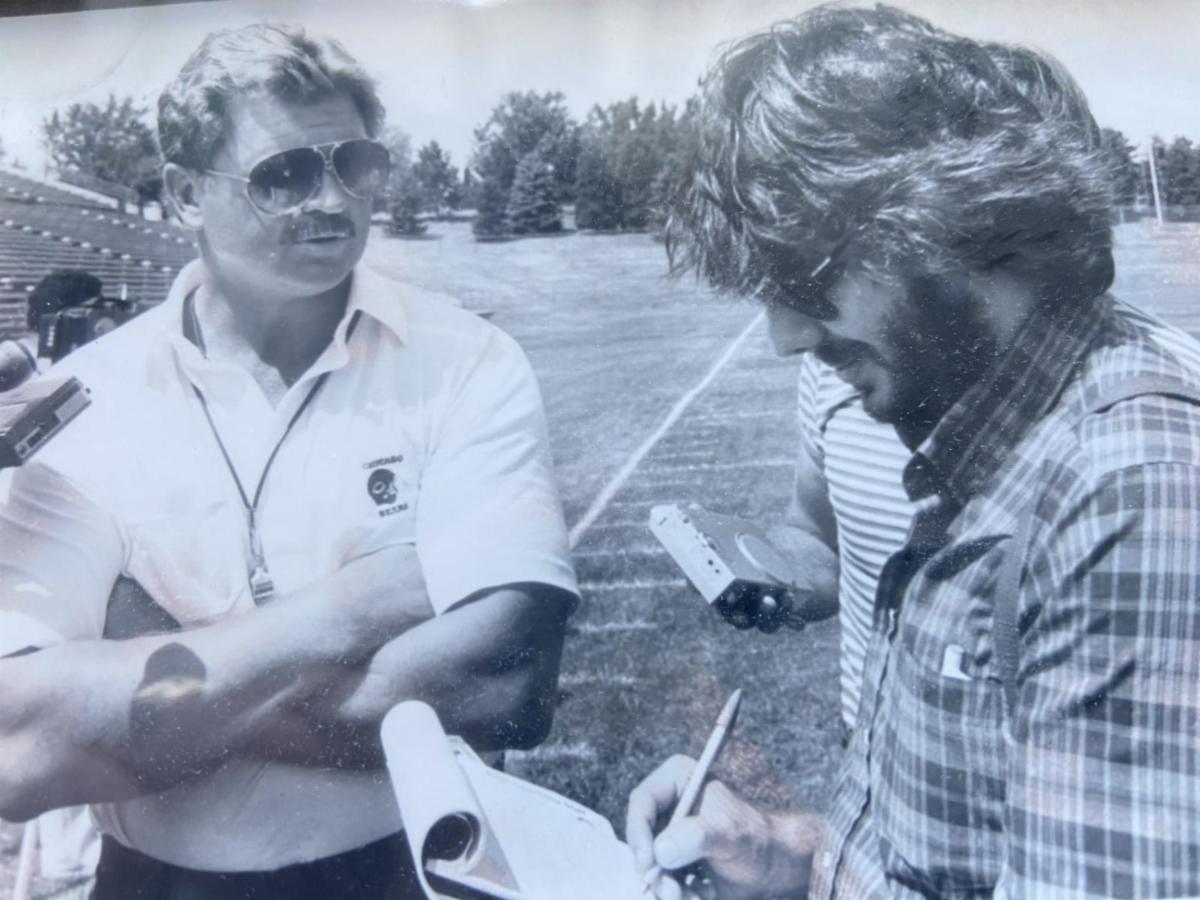 | |
Chicago sportswriter Nick Geranios interviews Chicago Bears coach Mike Ditka during the team’s 1984 Super Bowl winning season.
Nicholas K. Geranios - It was entertaining to read Steve Graham's account of starting in the Helena, Montana, bureau and learning the ropes under news editor Hugh Van Swearingen.
I too started in the Helena bureau after I was hired in 1982 by Van Swearingen, who was bureau chief by then.
He plucked me off the sports staff of the Minot, North Dakota, Daily News, after he called and offered me the chance to take the AP news quiz. I drove through a North Dakota blizzard for 100 miles to reach the Bismarck bureau, where correspondent Kent Flanagan administered the quiz.
In Helena I joined a solid news team that included Tom Laceky, Steve Moore and Bob Anez, led by news editor John Kuglin.
I had a bit of an early mishap when the bureau chief gave me his company car to cover a Montana State University football game in Bozeman.
The car had an oil change the day before, and the mechanic forgot to put the cap on the motor oil case. As a result, as I was driving the 80 miles to Bozeman, oil was leaking out. During my drive back to Helena, the check engine light came on. As I was in the middle of nowhere and no mechanical genius, I figured it was nothing and kept driving.
At some point the rising engine temperature caused the engine to seize up and I was stranded.
The car was towed to a dealership in Bozeman, while I rode a bus back to Helena. It turned out the engine was ruined and had to be replaced.
I was still a probationary employee and feared I would be fired, but Hugh managed to paper everything over with New York and I kept my job. For that I am eternally grateful.
I ended up working 40 years for AP, including stints as a news and sports reporter in Chicago; a legislative staffer in Springfield, Illinois; and a correspondent in Yakima, Washington; Sacramento and Spokane, Washington.
My wife, Ann Joyce, also worked a decade for AP in the elections department. She was the founding administrator of the Spokane Data Center before moving to greener pastures.
-0-
Larry Margasak - In 1965, I attended the Sigma Delta Chi (now Society of Professional Journalists) convention in Kansas City as the president of the Temple University chapter. Fortunately for me, then-Philadelphia assistant bureau chief Jim Walters attended and I sat next to him on the return flight. The students at the convention had to write a story about our visit to the Truman Library, and we were expecting the former president to appear. When he did not show, I no longer cared about the story and just did a rush job that I’m sure had many flaws. Fortunately, we only were assigned ID numbers, so the judges could not know whose story they were reading. Jim was a judge, and it sure sounded like it was my story he was criticizing on the flight home. Then, a miracle. He said there was a temp position opening in Harrisburg to help with legislative coverage. I was thrilled. It turned out that the Pennsylvania legislature was moving from part-time sessions to a full year, so the temp job lasted all of 1965. I even learned that correspondent Harry W. Ball, without my knowledge, had asked the state adjutant general to delay my Air National Guard basic training at Lackland Air Force Base until the legislative session ended. Then it was on to Lackland and a full time position in Philadelphia. Not sure any of this, and a 48-year AP career, mostly in Washington, would have happened without that trip to Kansas City.
Canzano: Sailing a pirate ship into high seas - Readers aboard for the ride.
JOHN CANZANO
CHARLOTTE, N.C. — I’m a pirate. This publication is my ship. I’ve sailed this independent writing endeavor to the other end of the country for the annual Associated Press Sports Editors convention.
JohnCanzano.com is not The Boston Globe, Los Angeles Times, The Philadelphia Inquirer, or USA Today. But I sat at a table alongside a few of those cats at a luncheon on Friday, wishing I could have brought all my readers with me.
I’m here for the annual APSE convention. I’ve been asked to participate in a panel discussion on Saturday afternoon. I’ll attend the awards banquet later in the evening. A collection of my columns from 2023 won first place in the organization’s annual writing contest.
Over the years, I’ve won multiple APSE awards in a variety of writing categories (Enterprise, Investigative, Projects, Columns). But this one is different. It features work published exclusively at JohnCanzano.com.
I work for you now.
So the award belongs to you, too.
It was validating to have a 50-year-old entity — APSE — grant membership to this publication. A line of other independent sports writing operations have since joined, including Marc Stein, Christian Caple, and Tyson Alger. I love that. And so does the APSE, which deserves credit for recognizing that a splinter group can be a viable part of the industry.
Read more here. Shared by Tim Marsh.
Observations on Hank Ackerman, Joe Galu contributions
Peggy Walsh - Hank Ackerman's piece Monday on finding out while recovering from hip surgery that he and fellow diner, Betsy Sims, had deep AP "connections" was delightful.
That they didn't know each other and discovered the link only because she asked about his visiting son and grandson made the story even more wonderful.
It is a small world after all and AP connections are everywhere.
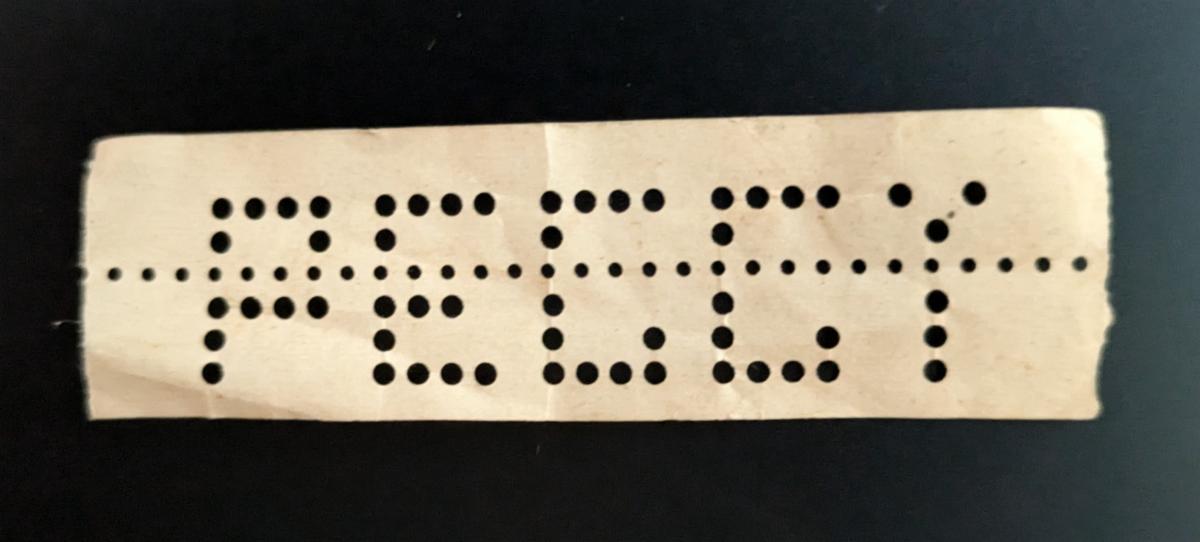
Joe Galu's reminiscing about key punching tape during his first AP job reminded me of something.
| |
|
This was punched for me by Ish Cabrera (apologies if I misspelled) as the Atlanta bureau transitioned from the really old carbon copy books to the old CRTs.
This was during my first couple of years at AP. Then we were one of the first test bureaus for David Lui and Larry Blasko's major changes that modernized everything. All of this happened in less than five years. Whew!
Music unites AP friends
| |
|
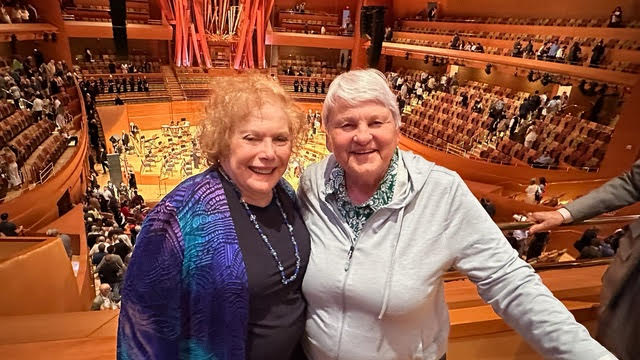
Linda Deutsch - How great to encounter fellow AP/LA retiree Rachel Ambrose at the gorgeous Walt Disney Concert Hall. The occasion was the 15th anniversary concert of The Lawyers Philharmonic and Legal Voices, a spectacular program with lawyers, judges and paralegals displaying their musical talents. They get better every year.
“Oh, we have to take a picture for Paul,” said Rachel.
Her pal Susan Helm clicked the camera.
| |
Connecting wishes Happy Birthday | |
|
Stories of interest
When they won’t even say ‘no comment’ (Columbia Journalism Review)
By PAUL FARHI
As the author of CNN.com’s daily newsletter about the news and entertainment industries, Oliver Darcy regularly reports on some of the world’s most powerful communications companies. Some of those companies, however, don’t bother to communicate with Darcy.
The phrase “did not respond to a request for comment” pops up almost daily in his reporting. “I find it strange, to be honest,” says Darcy. “It’s the job of spokespeople to tell the best story about the companies they represent. And here they are actively laying down the sword and not engaging in the battle.”
Any reporter who has sought comment from the subject of a news story—a basic obligation of impartial journalism—can relate. Nonresponses are rife, and growing rapidly. A Nexis database search of hundreds of news sources for the term “did not respond to a request for comment” returned 728 mentions in May 2014. The same search for May 2019 produced 1,590 hits. In May of this year, the number had grown to 3,616, indicating a fivefold increase in ten years.
The phrase turns up in news stories about every kind of subject—politics, business, sports—and in newspapers, network newscasts, wire-service reports, and blogs. A spokesperson for the maker of Sriracha hot sauce, for example, didn’t respond when the San Francisco Chronicle sought comment about the company’s plans for a temporary halt in production last month. Nor did the representatives of a dancer accused of sexual misconduct when the Hollywood Reporter called about it. A recent New York Times story about Republican threats of retribution for former president Trump’s felony convictions hit the daily double: it included two DNRRCs from two sources.
Read more here. Shared by Myron Belkind.
-0-
This week’s televised debate is crucial for Biden and Trump — and for CNN as well (AP)
By DAVID BAUDER
NEW YORK (AP) — Joe Biden and Donald Trump won’t be alone at Thursday’s debate. Moderators Dana Bash and Jake Tapper of CNN will be on camera, too, and there’s a lot on the line for their network as it fights for relevance in a changing media environment.
CNN has hosted dozens of town halls and political forums through the years, but never a general election presidential debate, let alone one so early in a campaign. No network has.
“This is a huge moment for CNN,” said former CNN Washington bureau chief Frank Sesno, now a media and public affairs professor at George Washington University. “CNN has to reassert itself. It has to show that it led a revolution in news before and can do it again.”
As a television network, CNN is struggling at a time many consumers are cutting off cable and most news outlets wonder if the campaign will ignite consumer interest.
Read more here.
And…
From Poynter: Opinion | This is how you do it: CNN cuts off interview with Trump spokesperson after repeated warnings. Click here to read.
-0-
Off the TV screen and into real life: An MSNBC event illustrates the rise of ‘event journalism’ (AP)
By DAVID BAUDER
NEW YORK (AP) — MSNBC is inviting its fans to a one-day “Democracy 2024” event this September with live panels and a dinner with stars like Rachel Maddow, Chris Hayes and Ari Melber, part of the company’s entrance into the burgeoning field of events journalism.
Live events are a growing business for many news outlets, forced to think of different ways to make money with readership, viewership and advertising revenue declining. MSNBC has ramped up its effort this year with the help of creative director Luke Russert.
The journalism-centered events business has grown in fits and starts before accelerating in recent years. It is particularly robust in Washington, with the Post, Politico, Semafor, Punchbowl News and Puck all active.
“The fact that we’ve seen others in the industry host similar events, that’s been a bit of a precedent,” MSNBC President Rashida Jones said. “One of the benefits of our brand and our content is that there are a lot ways to engage with it.”
Read more here. Shared by Myron Belkind.
-0-
Washington Post Publisher Says He Aided Hack Inquiry. Scotland Yard Had Doubts. (New York Times)
By Jo Becker and Justin Scheck
Will Lewis, now the publisher of the Washington Post, was in full crisis mode in 2011. Then an executive at a subsidiary of Rupert Murdoch’s News Corporation, he was an intermediary to the police detectives investigating a British phone-hacking scandal that had placed the company’s journalists and top leaders in legal peril.
For years, reporters at News Corporation’s best-selling British tabloid had landed scoops by paying public officials and illegally listening to the voice mail messages of royals, politicians, celebrities and even a murdered girl. Mr. Lewis was supposed to cooperate with police, identify wrongdoing and help steer the company through the crisis.
His role, he would later say, was as a force for good. He was “draining the swamp.”
But confidential documents obtained by The New York Times and interviews with people involved in the criminal investigation show that, almost from the beginning, investigators with London’s Metropolitan Police were suspicious of News Corporation’s intentions, and came to view Mr. Lewis as an impediment.
The police suspected that News Corp. was trying to “steer the investigation into a very narrow remit” by pointing the finger at a few journalists “while steering the investigation away from other journalists and editors,” one of the lead detectives wrote in a previously undisclosed internal summary of events.
Read more here. Shared by Scott Charton, Dennis Conrad, Richard Chady.
-0-
Margaret Sullivan on The Post turmoil and media's role in 2024 election (Editor and Publisher)
Episode 242 of "E&P Reports" - A Vodcast series hosted by Mike Blinder
In this exclusive interview with E&P, prominent American journalist, Guardian columnist and media critic Margaret Sullivan discusses the current leadership turmoil at The Washington Post, highlighting Jeff Bezos’ decision to hire Will Lewis as the new publisher and the controversies surrounding his tenure. Sullivan also emphasizes her reshaping her Substack newsletter, “American Crisis,” to address the critical role of the media in informing the public and safeguarding democracy, particularly in the context of the upcoming 2024 election.
Leadership turmoil at The Washington Post
Sullivan highlighted the controversy surrounding Lewis’s appointment and his plans for The Post. “Will Lewis says he’s going to start something called what he refers to as a third newsroom, which is really bizarre. Because if there’s a third newsroom, that suggests that there have been two newsrooms before, and there really weren’t,” she said, adding that this move has led to significant turmoil within the organization. Furthermore, she pointed out that Lewis attempted to suppress stories about his involvement in the phone hacking scandal in Britain, further damaging his credibility.
The impact on The Washington Post’s brand
When asked about the impact of these developments on the Post’s brand, given the already low credibility ratings of news publishers, Sullivan responded, “It’s not good for the brand, particularly because The Washington Post has always been about holding powerful people and institutions accountable. So, when this happens, it sort of cuts into the whole idea of what The Washington Post is.” She emphasized the need for media organizations to innovate while maintaining their core mission — noting that while Bezos could financially withstand losses, it’s not in the nature of billionaires to tolerate them.
Read more here.
The Final Word
|  | |
AP classes, by the year...
(EDITOR'S NOTE: This is a listing of Connecting colleagues who have shared with me the year and the bureau where they started with the AP. If you would like to share your own information, I will include in later postings. Current AP staffers are also welcomed to share their information.)
1951 - Norm Abelson (Boston)
1953 – Charles Monzella (Huntington, WVa)
1955 – Henry Bradsher (Atlanta), Paul Harrington (Boston), Joe McGowan (Cheyenne)
1958 – Roy Bolch (Kansas City)
1959 – Charlie Bruce (Montgomery)
1960 – Claude Erbsen (New York), Carl Leubsdorf (New Orleans)
1961 – Peter Arnett (Jakarta, Indonesia), Strat Douthat (Charleston), Warren Lerude (San Diego)
1962 – Paul Albright (Cheyenne), Malcolm Barr Sr. (Honolulu), Myron Belkind (New York), Kelly Smith Tunney (Miami)
1963 – Hal Bock (New York)
1964 – Rachel Ambrose (Indianapolis), Larry Hamlin (Oklahoma City), Ron Mulnix (Denver), Lyle Price (San Francisco), Hilmi Toros (New York)
1965 – Bob Dobkin (Pittsburgh), Harry Dunphy (Denver), John Gibbons (New York), Jim Luther (Nashville), Larry Margasak (Harrisburg)
1966 – Mike Doan (Portland, OR), Edie Lederer (New York), Nancy Shipley (Nashville), Mike Short (Los Angeles), Marty Thompson (Seattle), Nick Ut (Saigon), Kent Zimmerman (Chicago)
1967 – Dan Berger (Los Angeles), Adolphe Bernotas (Concord), Lou Boccardi (New York), Linda Deutsch (Los Angeles), Don Harrison (Los Angeles), Doug Kienitz (Cheyenne), David Liu (New York), Bruce Lowitt (Los Angeles), Chuck McFadden (Los Angeles), Martha Malan (Minneapolis), Bill Morrissey (Buffalo), Larry Paladino (Detroit), Michael Putzel (Raleigh), Bruce Richardson (Chicago), Richard Shafer (Baltimore), Victor Simpson (Newark), Michael Sniffen (Newark)
1968 – Lee Balgemann (Chicago), John Eagan (San Francisco), Joe Galu (Albany/Troy), Peter Gehrig, Charles Hanley (Albany), Jerry Harkavy (Portland, Maine), Herb Hemming (New York), Brian King (Albany), Samuel Koo (New York), Karren Mills (Minneapolis), Michael Rubin (Los Angeles), Rick Spratling (Salt Lake City), Barry Sweet (Seattle)
1969 - Ann Blackman (New York), Ford Burkhart (Philadelphia), Dick Carelli (Charleston, WVa), Dennis Coston (Richmond), Mary V. Gordon (Newark), Daniel Q. Haney (Portland, Maine), Mike Harris (Chicago), Brad Martin (Kansas City), David Minthorn (Frankfurt), Cynthia Rawitch (Los Angeles), Bob Reid (Charlotte), Mike Reilly (New York), Doug Tucker (Tulsa), Bill Winter (Helena)
1970 – Richard Boudreaux (New York), Richard Drew (San Francisco), Bob Egelko (Los Angeles), Steve (Indy) Herman (Indianapolis), Tim Litsch (New York), Lee Margulies (Los Angeles), Chris Pederson (Salt Lake City), Brendan Riley (San Francisco), Larry Thorson (Philadelphia)
1971 – Harry Atkins (Detroit), Jim Bagby (Kansas City), Larry Blasko (Chicago), Jim Carlson (Milwaukee), Jim Carrier (New Haven), Chris Connell (Newark), Bill Gillen (New York), Bill Hendrick (Birmingham), John Lumpkin (Dallas), Kendal Weaver (Montgomery)
1972 – Hank Ackerman (New York), Bob Fick (St. Louis), Joe Frazier (Portland, Ore.), Mike Graczyk (Detroit), Denis Gray (Albany), Lindel Hutson (Little Rock), Brent Kallestad (Sioux Falls), Tom Kent (Hartford), Nolan Kienitz (Dallas), Andy Lippman (Phoenix), Ellen Miller (Helena), Mike Millican (Hartford), Lew Wheaton (Richmond)
1973 - Jerry Cipriano (New York), Susan Clark (New York), Norm Clarke (Cincinnati), Joe Galianese (East Brunswick), Merrill Hartson (Richmond), Mike Hendricks (Albany), Tom Journey (Tucson), Steve Loeper (Los Angeles), Tom Slaughter (Sioux Falls), Jim Spehar (Denver), Paul Stevens (Albany), Jeffrey Ulbrich (Cheyenne), Owen Ullmann (Detroit), John Willis (Omaha)
1974 – Norman Black (Baltimore), David Espo (Cheyenne), Dan George (Topeka), Robert Glass (Philadelphia), Steve Graham (Helena), Elaine Hooker (Hartford), Sue Price Johnson (Charlotte), Dave Lubeski (Washington), Janet McConnaughey (Washington), Lee Mitgang (New York), Marc Wilson (Little Rock)
1975 – Peter Eisner (Columbus), David Powell (New York), Eileen Alt Powell (Milwaukee)
1976 – Brad Cain (Chicago), Judith Capar (Philadelphia), Dick Chady (Albany), Steve Crowley (Washington), David Egner (Oklahoma City), Marc Humbert (Albany), Charlotte Porter (Minneapolis), Chuck Wolfe (Charlotte)
1977 – Bryan Brumley (Washington), Robert Burns (Jefferson City), Charles Campbell (Nashville), Dave Carpenter (Philadelphia), Ken Herman (Dallas), Mike Holmes (Des Moines), Brad Kalbfeld (New York), Scott Kraft (Jefferson City), John Kreiser (New York), Peter Leabo (Dallas), Kevin LeBoeuf (Los Angeles), Ellen Nimmons (Minneapolis), Dan Sewell (Buffalo), Estes Thompson (Richmond), David Tirrell-Wysocki (Concord)
1978 – Tom Eblen (Louisville), Ruth Gersh (Richmond), Doug Pizac (Los Angeles), Charles Richards (Dallas), Steve Wilson (Boston)
1979 – Scotty Comegys (Chicago), Frances D’Emilio (San Francisco), Brian Friedman (Des Moines), Sally Hale (Dallas), Barry Massey (Kansas City), Phillip Rawls (Nashville), John Rice (Carson City), Linda Sargent (Little Rock), Robert Wielaard (Brussels)
1980 – Jeff Barnard (Providence), Mark Duncan (Cleveland), Bill Kaczor (Tallahassee), Mitchell Landsberg (Reno), Kevin Noblet (New Orleans), David Speer (Jackson), Hal Spencer (Providence), Carol J. Williams (Seattle)
1981 – Paul Davenport (Phoenix), Dan Day (Milwaukee), John Flesher (Raleigh), Len Iwanski (Bismarck), Ed McCullough (Albany), Kim Mills (New York), Mark Mittelstadt (Des Moines), Roland Rochet (New York), Lee Siegel (Seattle), Marty Steinberg (Baltimore), Bill Vogrin (Kansas City)
1982 – Dorothy Abernathy (Little Rock), Al Behrman (Cincinnati), Tom Cohen (Jefferson City), John Epperson (Chicago), Ric Feld (Atlanta), Nick Geranios (Helena), Hpward Gros (New Orleans), Robert Kimball (New York), Rob Kozloff (Detroit), Bill Menezes (Kansas City), David Ochs (New York)
1983 – Scott Charton (Little Rock), Sue Cross (Columbus), Mark Elias (Chicago), Diana Heidgerd (Miami), Carol Esler Ochs (New York), Amy Sancetta (Philadelphia), Rande Simpson (New York), Dave Skidmore (Milwaukee)
1984 – Owen Canfield (Oklahoma City), Wayne Chin (Washington), Jack Elliott (Oklahoma City), Kelly P. Kissel (New Orleans), Joe Macenka (Richmond), Eva Parziale (San Francisco), Keith Robinson (Columbus), Cliff Schiappa (Kansas City), Andrew Selsky (Cheyenne), Patty Woodrow (Washington)
1985 - Betty Kumpf Pizac (Los Angeles)
1986 – Joni Baluh Beall (Richmond), Tom Coyne (Columbia, SC), Dave DeGrace (Milwaukee), Alan Flippen (Louisville), Jim Gerberich (San Francisco), Howard Goldberg (New York), Mark Hamrick (Dallas), Sandy Kozel (Washington)
1987 – Donna Abu-Nasr (Beirut), Dave Bauder (Albany), Chuck Burton (Charlotte), Beth Harris (Indianapolis), Lynne Harris (New York), Rosemarie Mileto (New York), John Rogers (Los Angeles)
1988 – Chris Carola (Albany), Peg Coughlin (Pierre), Kathy Gannon (Islamabad), Steve Hart (Washington), Melissa Jordan (Sioux Falls), Bill Pilc (New York), Kelley Shannon (Dallas)
1989 – Charlie Arbogast (Trenton), Ron Fournier (Little Rock)
1990 – Dan Perry (Bucharest), Steve Sakson (Baltimore), Sean Thompson (New York)
1991 – Amanda Kell (Richmond), Santiago Lyon (Cairo), Lisa Pane (Hartford), Ricardo Reif (Caracas), Bill Sikes (Buffalo)
1992 – Kerry Huggard (New York)
1993 – Jim Salter (St. Louis)
1996 – Patricia N. Casillo (New York)
1997 - Pamela Collins (Dallas), Madhu Krishnappa Maron (New York), Jim Suhr (Detroit), Jennifer Yates (Baltimore)
2000 – Gary Gentile (Los Angeles)
| |
Today in History – June 25, 2024 |  | |
Today is Tuesday, June 25, the 177th day of 2024. There are 189 days left in the year.
Today’s Highlight in History: On June 25, 1950, war broke out in Korea as forces from the communist North invaded the South.
Also on this date:
In 1938, the Fair Labor Standards Act of 1938 was enacted.
In 1942, Gen. Dwight D. Eisenhower was designated Commanding General of the European Theater of Operations during World War II. Some 1,000 British Royal Air Force bombers raided Bremen, Germany.
In 1947, “The Diary of a Young Girl,” the personal journal of Anne Frank, a German-born Jewish girl hiding with her family from the Nazis in Amsterdam during World War II, was first published.
In 1962, the U.S. Supreme Court ruled that recitation of a state-sponsored prayer in New York State public schools was unconstitutional.
In 1973, former White House Counsel John W. Dean began testifying before the Senate Watergate Committee, implicating top administration officials, including President Richard Nixon as well as himself, in the Watergate scandal and cover-up.
In 1990, the U.S. Supreme Court, in its first “right-to-die” decision, ruled that family members could be barred from ending the lives of persistently comatose relatives who had not made their wishes known conclusively.
In 1993, Kim Campbell was sworn in as Canada’s 19th prime minister, the first woman to hold the post.
In 1996, a truck bomb killed 19 Americans and injured hundreds at a U.S. military housing complex in Saudi Arabia.
In 2009, death claimed Michael Jackson, the “King of Pop,” in Los Angeles at age 50 and actor Farrah Fawcett in Santa Monica, California, at age 62.
In 2013, President Barack Obama declared the debate over climate change and its causes obsolete as he announced at Georgetown University a wide-ranging plan to tackle pollution and prepare communities for global warming.
In 2015, the U.S. Supreme Court upheld nationwide tax subsidies under President Barack Obama’s health care overhaul in a 6-3 ruling that preserved health insurance for millions of Americans.
In 2016, Pope Francis visited Armenia, where he recognized the Ottoman-era slaughter of Armenians as a genocide, prompting a harsh rebuttal from Turkey.
In 2021, former Minneapolis police Officer Derek Chauvin was sentenced to 22 1/2 years in prison for the murder of George Floyd, whose dying gasps under Chauvin’s knee led to the biggest outcry against racial injustice in the U.S. in generations.
Today’s Birthdays: Actor June Lockhart is 99. Civil rights activist James Meredith is 91. R&B singer Eddie Floyd (“Knock on Wood”) is 87. Actor Barbara Montgomery is 85. Singer Carly Simon is 81. Actor-comedian Jimmie Walker is 77. Rock musician Tim Finn is 72. Supreme Court Justice Sonia Sotomayor is 70. Actor-writer-director Ricky Gervais (jer-VAYZ’) is 63. Author Yann Martel (“Life of Pi”) is 61. Actor Erica Gimpel is 60. Basketball Hall of Famer Dikembe Mutombo (dih-KEHM’-bay moo-TAHM’-boh) is 58. Actor Angela Kinsey (“The Office”) is 53. Actor Linda Cardellini is 49. Actor Busy Philipps is 45.
| |
Got a photo or story to share? | |
|
Connecting is a daily newsletter published Monday through Friday that reaches more than 1,800 retired and former Associated Press employees, present-day employees, and news industry and journalism school colleagues. It began in 2013. Past issues can be found by clicking Connecting Archive in the masthead. Its author, Paul Stevens, retired from the AP in 2009 after a 36-year career as a newsman in Albany and St. Louis, correspondent in Wichita, chief of bureau in Albuquerque, Indianapolis and Kansas City, and Central Region vice president based in Kansas City.
Got a story to share? A favorite memory of your AP days? Don't keep them to yourself. Share with your colleagues by sending to Ye Olde Connecting Editor. And don't forget to include photos!
Here are some suggestions:
- Connecting "selfies" - a word and photo self-profile of you and your career, and what you are doing today. Both for new members and those who have been with us a while.
- Second chapters - You finished a great career. Now tell us about your second (and third and fourth?) chapters of life.
- Spousal support - How your spouse helped in supporting your work during your AP career.
- My most unusual story - tell us about an unusual, off the wall story that you covered.
- "A silly mistake that you make"- a chance to 'fess up with a memorable mistake in your journalistic career.
- Multigenerational AP families - profiles of families whose service spanned two or more generations.
- Volunteering - benefit your colleagues by sharing volunteer stories - with ideas on such work they can do themselves.
- First job - How did you get your first job in journalism?
- Most unusual place a story assignment took you.
Paul Stevens
Editor, Connecting newsletter
paulstevens46@gmail.com
| | | | |