|
|
|
Connecting
June 12, 2024
Click here for sound of the Teletype
| |
|
Colleagues,
Good Wednesday morning on this June 12, 2024,
Our colleague Frank Bajak ended 41 years of consecutive service at AP on May 31.
His last job was a Boston-based technology writer covering military AI, cybersecurity, privacy and Silicon Valley tech moguls behaving badly. For his next chapter, he’s got a few projects brewing, lots of travel planned and four grandkids to chase.
Frank is the subject of today’s retirement profile. It is my hope that his profile will spur other recent retirees to write about their career. Drop me a note if you’d like more detail. And profiles are not confined to retirees...we'd love to hear your story.
AP JACK STOKES MEMORIAL DINNER: A reminder that the AP-sponsored retiree dinner, named in honor of our colleague Jack Stokes, will be held on Oct. 19 in Kansas City. We have about 30 who have registered, and if you are interested in attending, please let me know. More details to come.
Have a great day – be safe, stay healthy, live it to your fullest.
Paul
Connecting retirement profile
Frank Bajak
|  | |
Photo by Cecilia Malachowski
Frank Bajak - Few people spend an entire career at the same employer these days, but the AP always made it worth my while by letting me write my ticket.
Tom Netter brought me on in 1982 as a local hire in Warsaw in martial law Poland. The rector of Krakow’s Jagiellonian University had granted me a leave of absence. It was a heady time, and I was on a student visa. The communist authorities expelled several leading foreign correspondents, and my daily phone calls often included Lech Walesa. In early 1983, I checked my mailbox at the university and discovered a months-old telex from the Ministry of Higher Education. Return to school or leave the country, it said.
Then-Germany bureau chief Larry Heinzerling gave me a tryout in Frankfurt. I could barely order a meal in German, so Larry kindly recommended me for a temporary job in the U.S. He would become a cherished boss and colleague in my later years as a bureau chief, always a great sounding board and source of support.
Lew Wheaton, COB in the Albany, N.Y. bureau, hired me as vacation relief. Mike Hendricks, the news editor, schooled me – as he did for so many others who went on to prosper. My inexperience glared on an overnight shift Oct. 7, 1983, when a 5.2-magnitude earthquake centered in Blue Mountain Lake shook much of the Northeast. I’d been told to be attentive to members, so I kept answering the phone. Impatient, a staffer in New York City bureau filed the urgent.
I’d later cover my share of quakes -- in Peru, Colombia and Haiti most notably. I hate them. Maybe the worst was being rattled by an aftershock as I filed via BGAN from the roof of a three-story building in Pisco, Peru, in 2007 after an 8.0 quake.
From Albany it was on to Newark N.J. then the foreign desk. The gravel-voiced Nate Polowetzky was the boss, but it was the late, great Frank Crepeau and exacting Ellen Nimmons who taught me the ropes. I lived some big moments of 20th century history vicariously on that desk, much of it as overnight supervisor – Tiananmen Square, the fall of the Berlin Wall, the invasion of Panama, the 1991 Gulf War.
In 1993, I was posted to Berlin and covering Poland again. Highlights included the 50th anniversary of the liberation of Nazi death camps.
| 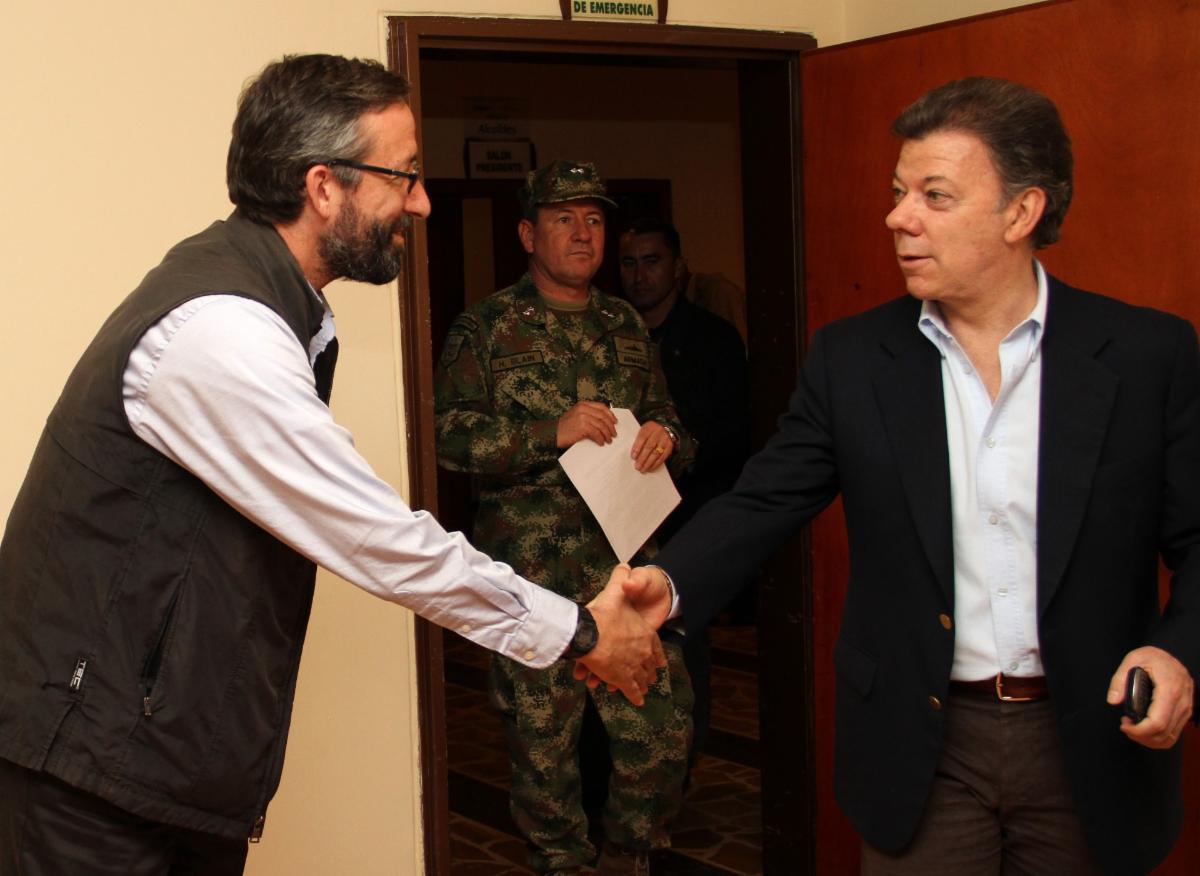 | |
With then-President Juan Manuel Santos of Colombia, Aug. 6, 2011.
Three years later, I was offered Bogota bureau chief. World Services chief Claude Erbsen liked that I was married to a Peruvian (Ceci Malachowski and I had met in Krakow in 1980). Bureau chiefs weren’t just news leaders but also AP business agents in those times.
Relationships we COBs made with local editors and publishers were important. They were often among our best sources. In Bogota, that included the Santos family, longtime owners of El Tiempo. In my tenure, it yielded a president, vice president and the country’s leading columnist.
Leftist FARC rebels had Colombia’s military on its heels in those days. One memorable story I did with photographer Ricardo Mazalan, on the endangered Yellow-Eared Parrot, had to be arranged with the FARC in advance. They controlled the territory. I made it a family affair, taking along my teenage son, Aleszu. He would become an award-winning science journalist, and now runs the Urban Institute’s data visualization shop.
Our daughters are Maya, an artist, and Luna, a social worker.
Colombia was not just the world’s cocaine-trafficking capital but had its highest kidnapping rate and by late 1999 – with three adolescent gringo children to worry about – Ceci and I decided to leave a year early.
Our Bogota-to-New York move would prove epic, likely among AP’s most expensive ever. Highwaymen were regularly hijacking and ransacking port-bound shipping containers on Colombia’s highways. So my bosses agreed to let us crate up our household goods and ship them all by air. Colombia’s deputy police director was kind enough have drug-sniffing dogs inspect our crates. Not a one was opened.
I’d organized AP’s global coverage of the Y2K computer bug and pitched a new position to the AP – technology editor. The late Jon Wolman, then managing editor, approved. AP’s tech coverage was unusually strong already. We had the inimitable Ted Bridis in Washington and Internet Writer Nick Jesdanun in New York.
We fortified coverage in Silicon Valley, getting the requisite hires. I even got the bosses – Darrell Christian was business editor -- to agree to hire a biotech writer, Paul Elias. Mike Warren, then-San Francisco news editor, was a key enabler.
Nick would become deputy tech editor. For life, it turned out. We lost him to COVID in 2020 at age 51..
| 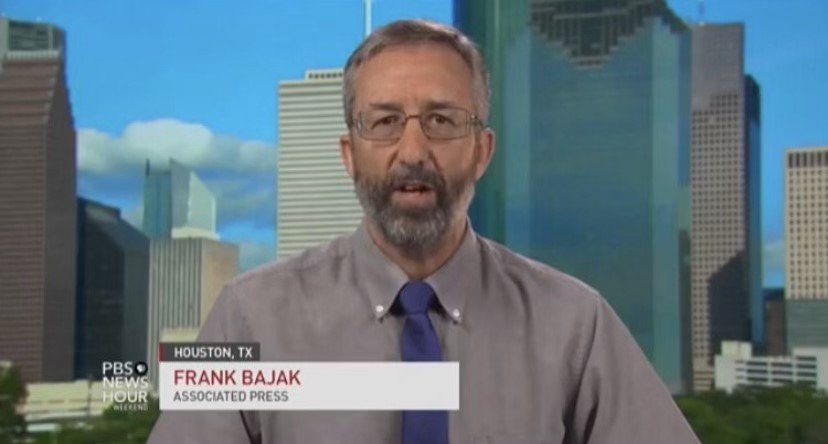 | |
Houston, July 2017. Interviewed by PBS News Hour about my story on the Department of Homeland Security introducing face scans at six U.S. airports to try to catch immigrants overstaying their visas.
Among our hires was a crack Bay Area business writer, Mike Liedtke. He got us in on the ground floor at multiple startups headed for big things including Google when Sergey and Larry were awkward grad students. Another key team member was Brian Bergstein, now Ideas Editor at the Boston Globe.
A little-known fact: I was acting deputy business editor for three months after 9/11 when Kevin Noblet, who held the job, was put in charge of the New York bureau. I can’t say I knew what I was doing. But with folks like Brad Skillman, Rachel Beck and Joyce Rosenberg around, I could fake it.
In 2005, I pitched another new job title to International Editor Debbie Seward: Chief of Andean News, running AP coverage in Colombia, Ecuador, Venezuela, Bolivia and Peru. Niko Price, then Latin America editor, was of course on board.
Back to Bogota we went. In 2011, we moved to Lima. Five years later, we returned to the U.S.
Ceci and I plan to split our time now between Lima and Massachusetts.
Frank Bajak’s email - fbajak@mindspring.com
Interesting tidbits from First Bureau project
Mark Mittelstadt - 1981 (Des Moines) - Interesting back story. I went directly to AP from the editor’s chair of The Record in Cedar Falls, Iowa, a small AM daily owned by the much larger Courier in neighboring Waterloo. Editors at the AP member The Courier got then bureau chief John Lumpkin to delay my start by a couple weeks until my news staff and I completed the Progress edition, an ad-rich multi-section publication the papers did each January. We finished the news wrap late Friday night. I started in the Des Moines bureau on Monday.
-0-
Jennifer Yates – 1997 (Baltimore) - I joined the AP In Baltimore in 1997 as maternity relief. I always joked that the only reason then-COB Linda Stowell hired me was because she felt bad that she lost the writing test I took when I applied and made me take it a second time.
-0-
Charles Hanley – 1968 (Albany) - Let me be the first to proudly declare: Class of '68. That didn't last long. Nine months later, I added Army draftee to my c.v. Then back to Albany AP in January '71. I guess it seemed natural at the time but, looking back, I count myself lucky the law required AP to keep a job open for a draftee ... no matter how incompetent!
-0-
Larry Thorson – 1970 (Philadelphia) - In 1970. In Philadelphia, the day before my 30th birthday. In my first hours I made a tremendous faux pas and wouldn't have been surprised if I'd been fired. Due to a shortage of typewriters on the news desk I was told to borrow the news editor's typewriter which was on a wheeled stand, and he, Herb Pelkey, was out having lunch with COB Doug Bailey. I didn't notice that its wheels were locked, and when I started to roll it to the news desk it tipped over and crashed to the floor. Well, everything still worked, Since there were at least a half-dozen witnesses to this travesty, I confessed as soon as the bosses came back. Herb tested this and that, and it was just fine. Later, Doug Bailey came over and said AP staff got a paid holiday on their birthdays, so I had the next day off. What a relief! Thus the start of a 25-year career that took me to assignments in New York, Tel Aviv, London, Tokyo and Berlin.
His assignment: Travel to Normandy with World War II veterans
| 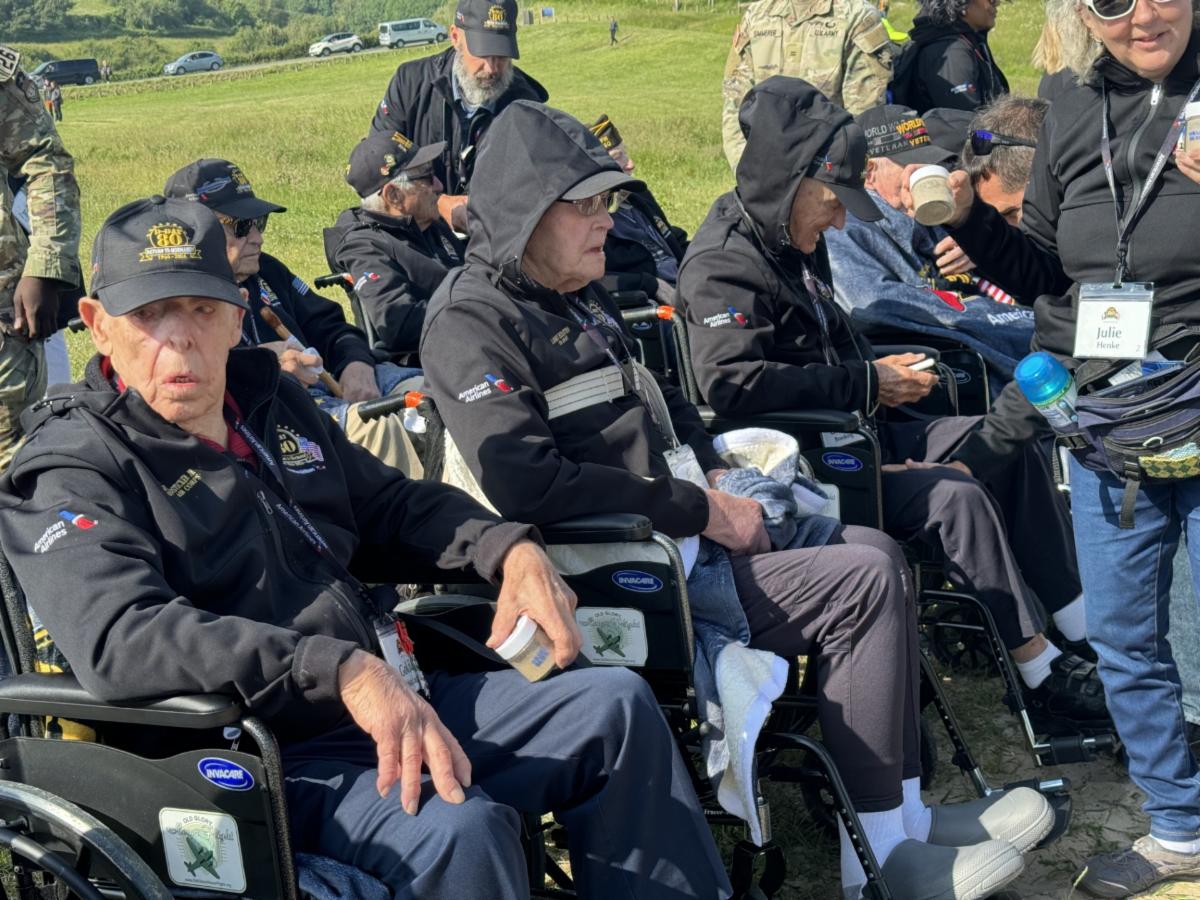 | |
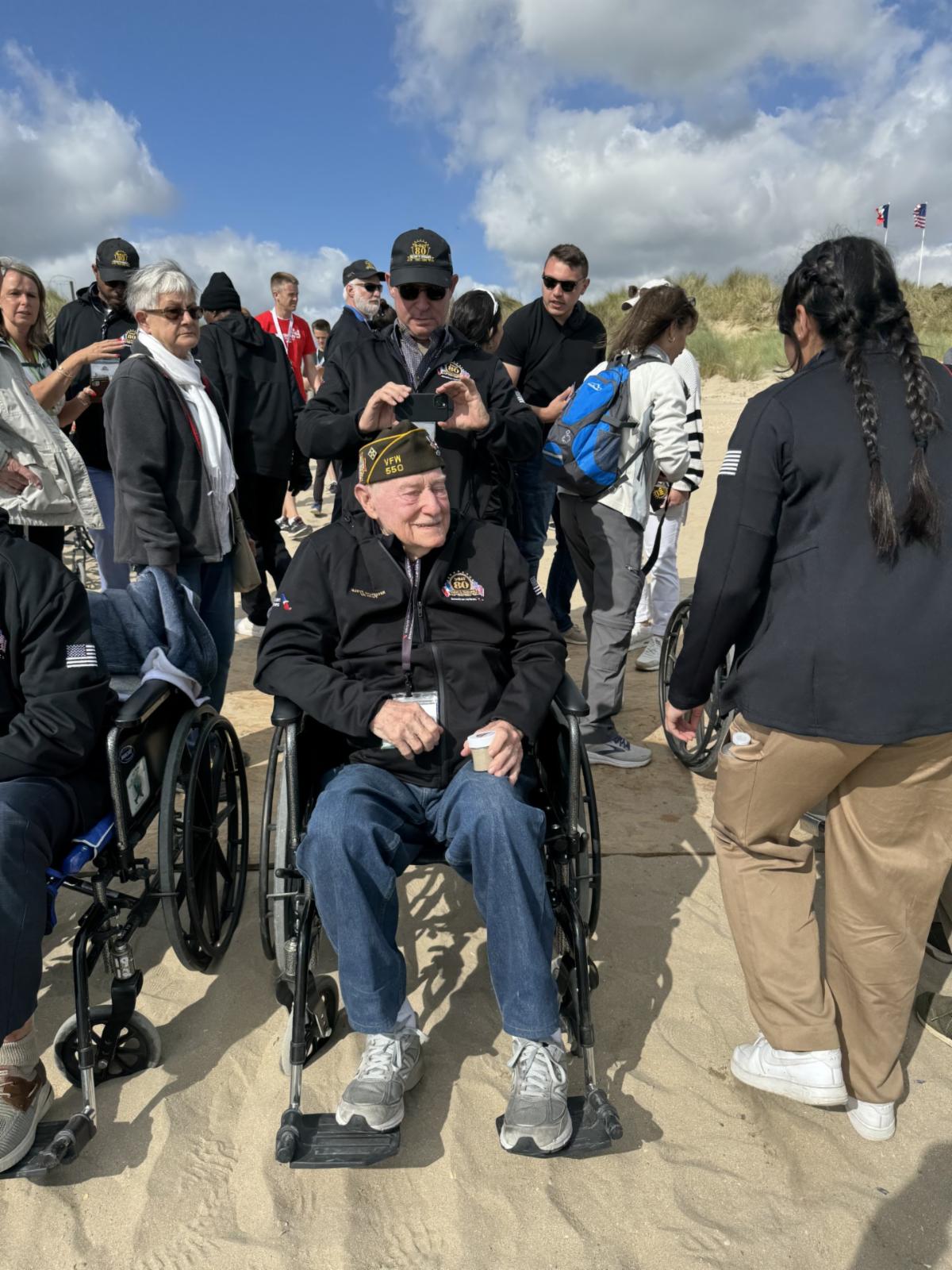
ABOVE - Veterans at Normandy.
RIGHT: Martin Sylvester, 99, wounded and captured at Battle of Bulge.
Photos by Robert Reid.
Robert H. Reid - It was an assignment like few others I’ve had in a 50-plus career – travel to Normandy with nearly 70 World War II veterans for the 80th anniversary of the D-Day landings.
Visiting historical sites is always memorable. Doing so with people who actually took part in those events is at a whole new level.
Take for example, Felix Maurizio, who was helped down the sandy slope to Omaha Beach by two young service members. He enlisted in the Navy the day after Pearl Harbor and ferried soldiers aboard a landing craft onto "Bloody Omaha" in the first wave. The soldiers included his own brother.
“As my brother was walking off of the ramp, I remember telling him ‘keep your head low,’” he said. “And I didn’t see him again until after the war.”
You may be thinking, is it even possible to find World War II veterans physically able to make such a trip?
Turns out there are about 100,000 living veterans of that war. That's a big number but only one percent of the 16 million Americans who served in the Armed Forces from Dec. 7, 1941, until Sept. 2, 1945, according to the National Museum of World War II.
One of them is Robert Pedigo, who had a draft deferment because he was working in a factory manufacturing the Norden bomb site, one of the most closely guarded secrets of the war. But when his brother enlisted, he gave up his deferment and joined the Army Air Corps.
But the brother was discharged early and Pedigo ended up as a gunner and armorer on a B-24 bomber that destroyed a German airfield south of Omaha on D-Day. He said he often pondered how his brother spent the war comfortably at home “and I was overseas getting my butt shot at” in 30 combat missions.
American Airlines and various veterans’ support groups organized the trip, which included a staff of physicians and nurses. I tagged along as a color writer for my current employer, Stars and Stripes.
We assembled at Dallas-Fort Worth airport, flew to Paris and motored by buses to Normandy, touring the landing sites, attending the main ceremony at the Normandy-American Cemetery and flying back.
Miraculously, all the veterans – average age 100-plus -- made it back.
I had visited the Normandy beaches twice before but never with men for whom World War II was a such a defining event of their lives. There were so many memorable moments that it would take too much space to describe them all
A few highlights:
Henry Langehr was anxious to find a greenhouse in the village of Sainte Mere-Eglise onto which he parachuted on June 6, 1944, carrying 100 pounds of explosives. With the help of local officials, he found it.
Or the June 5 parade in Sainte Mere-Eglise, the first Norman town taken by the Americans, thousands turned out, cheering “merci, thank you” as service academy cadets wheeled each of the veterans to the main square. One of the centenarian vets serenaded the crowd with a version of “God Bless America.” A bit off key but no cared.
As the veterans sat in wheelchairs overlooking Omaha, the deadliest of the five Allied beaches, a young U.S. Marine played taps. Not a dry eye in the group.
Veteran Sid Edson, who flew through German flak over Normandy in a B-24 bomber on D-Day, refused to pose inside a jeep parked on the sand as part of a display of World War II equipment at Omaha.
“I’m serious. I won’t do it,” the Brooklyn native snapped at photographers. “That would somehow desecrate the memory of the real heroes – the men who fought and died on this beach that day.”
As my muscles ached climbing the dunes and pushing through crowds, I marveled at how these guys had survived to such advanced ages considering all they had gone through.
One of them, Martin Sylvester, landed at Utah Beach, fought across Normandy and the Huertgen Forest, was wounded and captured in the Battle of the Bulge, escaped German captivity three times, got strafed by a US fighter plane and eluded the SS, which would have killed him because not only was he an American but Jewish.
When an American patrol found him, he was suffering from gangrene and typhus and weighed 80 pounds.
Next April, he turns 100.
CNN staffers fear layoffs as network inks deal with the Associated Press
By Alexandra Steigrad
New York Post
CNN staffers fear a new deal with the Associated Press may spell layoffs at the third-place cable news network.
CNN inked a deal with the Associated Press to use its copy on its website, the first time it has done so since cutting ties with the wire service 14 years ago.
But the deal is sparking concerns among staffers of further job cuts at the struggling cable news network, according to Puck, which first reported the news. The fears come as CNN boss Mark Thompson is sharpening his strategic vision to turn the network around.
CNN canceled its contract with the AP in 2010 in order to focus more on original reporting and expanding its own global news coverage.
Read more here. Shared by Paul Albright, Linda Deutsch.
A lot to catch up on, after 24 years
| 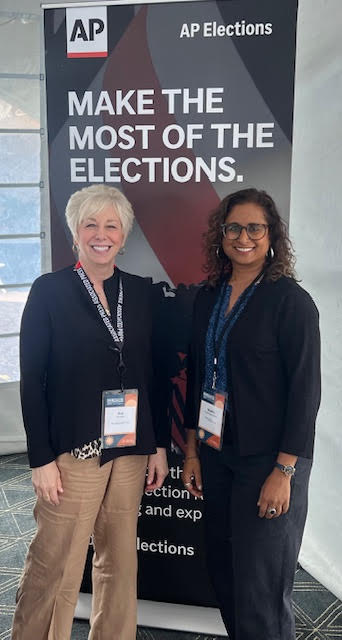 | Eva Parziale, left, AP’s customer engagement manager for AP’s INN elections project, and Madhu Krishnappa Maron, founder of MadhuCoach, met up at INN Days 2024 in San Diego on Tuesday. They first met when Madhu worked at AP in HR, including as director of staffing and diversity, before leaving in 2000. Eva and Madhu hadn’t seen each other in 24 years, and had a great time catching up at the convention. | Connecting wishes Happy Birthday | |
|
AP classes, by the year...
(EDITOR'S NOTE: This is a listing of Connecting colleagues with the year and the bureau where they started with the AP. If you would like to share your own information, I will include in later postings. Current AP staffers are also welcomed to share their information.)
1951 - Norm Abelson (Boston)
1953 – Charles Monzella (Huntington, WVa)
1955 – Henry Bradsher (Atlanta), Paul Harrington (Boston)
1958 – Roy Bolch (Kansas City)
1960 – Claude Erbsen (New York), Carl Leubsdorf (New Orleans)
1961 – Peter Arnett (Jakarta, Indonesia), Warren Lerude (San Diego)
1962 – Paul Albright (Cheyenne), Malcolm Barr Sr. (Honolulu), Myron Belkind (New York)
1963 – Hal Bock (New York)
1964 – Rachel Ambrose (Indianapolis), Larry Hamlin (Oklahoma City), Ron Mulnix
1965 – Harry Dunphy (Denver), John Gibbons (New York), Jim Luther (Nashville), Larry Margasak (Harrisburg)
1966 – Mike Doan (Portland, OR), Mike Short (Los Angeles), Marty Thompson (Seattle), Kent Zimmerman (Chicago)
1967 – Adolphe Bernotas (Concord), Lou Boccardi (New York), Linda Deutsch (Los Angeles), Don Harrison (Los Angeles), Doug Kienitz (Cheyenne), Bruce Lowitt (Los Angeles), Chuck McFadden (Los Angeles), Martha Malan (Minneapolis), Larry Paladino (Detroit), Michael Putzel (Raleigh), Bruce Richardson (Chicago), Victor Simpson (Newark), Michael Sniffen (Newark)
1968 – John Eagan (San Francisco), Joe Galu (Albany), Peter Gehrig, Charles Hanley (Albany), Jerry Harkavy (Portland, Maine), Herb Hemming (New York), Brian King (Albany), Karren Mills (Minneapolis), Michael Rubin (Los Angeles)
1969 - Ann Blackman (New York), Ford Burkhart (Philadelphia), Dick Carelli (Charleston, WVa), Dennis Coston (Richmond), Mike Harris (Chicago), Brad Martin (Kansas City), David Minthorn (Frankfurt), Cynthia Rawitch (Los Angeles), Bob Reid (Charlotte), Mike Reilly (New York)
1970 – Richard Boudreaux (New York), Richard Drew (San Francisco), Steve Herman (Indianapolis), Lee Margulies (Los Angeles), Chris Pederson (Salt Lake City), Larry Thorson (Philadelphia)
1971 – Harry Atkins (Detroit), Jim Bagby (Kansas City), Larry Blasko (Chicago), Jim Carlson (Milwaukee), Jim Carrier (New Haven), Chris Connell (Newark), John Lumpkin (Dallas), Kendal Weaver (Montgomery)
1972 – Hank Ackerman (New York), Mike Graczyk (Detroit), Lindel Hutson (Little Rock), Brent Kallestad (Sioux Falls), Tom Kent (Hartford), Nolan Kienitz (Dallas), Andy Lippman (Phoenix),
1973 - Jerry Cipriano (New York), Susan Clark (New York), Norm Clarke (Cincinnati), Joe Galianese (East Brunswick), Merrill Hartson (Richmond), Mike Hendricks (Albany), Tom Journey (Tucson), Tom Slaughter (Sioux Falls), Jim Spehar (Denver), Paul Stevens (Albany), Jeffrey Ulbrich (Cheyenne), Owen Ullmann (Detroit), John Willis (Omaha)
1974 – Norman Black (Baltimore), Steve Graham (Helena), Elaine Hooker (Hartford), Sue Price Johnson (Charlotte), Dave Lubeski (Washington), Lee Mitgang (New York), Marc Wilson (Little Rock)
1975 – Peter Eisner (Columbus)
1976 – Judith Capar (Philadelphia), David Egner (Oklahoma City), Marc Humbert (Albany), Chuck Wolfe (Charlotte)
1977 – Robert Burns (Jefferson City), Charles Campbell (Nashville), Ken Herman (Dallas), Mike Holmes (Des Moines), Ellen Nimmons (Minneapolis), Dan Sewell (Buffalo), Estes Thompson (Richmond)
1978 - Doug Pizac (Los Angeles), Charles Richards (Dallas), Steve Wilson (Boston)
1979 – Scotty Comegys (Chicago), Brian Friedman (Des Moines), Sally Hale (Dallas), Phillip Rawls (Nashville), Robert Wielaard (Brussels)
1980 – William Kaczor (Tallahassee) Mitchell Landsberg (Reno), David Speer (Jackson), Hal Spencer (Providence), Carol J. Williams (Seattle)
1981 – Paul Davenport (Phoenix), Dan Day (Milwaukee), Ed McCullough (Albany), Mark Mittelstadt (Des Moines), Roland Rochet (New York), Lee Siegel (Seattle), Marty Steinberg (Baltimore)
1982 – Dorothy Abernathy, John Epperson (Chicago), Ric Feld (Atlanta), Robert Kimball (New York), Bill Menezes (Kansas City)
1983 – Scott Charton (Little Rock), Sue Cross (Columbus), Cliff Schiappa (Kansas City), Rande Simpson (New York), Dave Skidmore (Milwaukee)
1985 - Betty Kumpf Pizac (Los Angeles)
1987 – Donna Abu-Nasr (Beirut), Dave Bauder (Albany), Beth Harris (Indianapolis), John Rogers (Los Angeles)
1988 – Kathy Gannon (Islamabad), Melissa Jordan (Sioux Falls)
1989 – Ron Fournier (Little Rock)
1991 – Lisa Pane (Hartford)
1996 – Patricia N. Casillo (New York)
1997 - Pamela Collins (Dallas), Jennifer Yates (Baltimore)
2000 – Gary Gentile (Los Angeles)
| |
|
Stories of interest
The Post at a crossroads: Existential questions in a dire season for news (Washington Post)
By Elahe Izadi and Sarah Ellison
For the people who work at The Washington Post — as well as the people who read it — a window into the motivations of the newspaper’s sometimes-remote owner opened briefly over a 48-hour period last October.
On a Monday night that month, Jeff Bezos played host at his Kalorama mansion to a ceremony honoring the courage of female correspondents. One of them, a Post reporter, shared her account of coming under intense artillery fire in Ukraine, fully expecting not to survive. Bezos, the founder of Amazon and one of the richest people in the world, was mesmerized. He later told the reporter he was moved nearly to tears.
Two days later, he sent an email to staff saying how invigorated he was to spend time with Post journalists — before turning to the health of the business.
After “a full business update, [I] wanted to make sure you know I’m as committed to the future of The Post as ever,” he wrote. “Long term it’s important that The Post return to profitability, a key signal that we’re serving readers in a way that’s important to them.”
Read more here. Shared by Dennis Conrad, Doug Pizac, Michael Rubin, Richard Chady.
-0-
AFP appoints new editor-in-chief as Sophie Huet moves to AI strategy role (PressGazette)
By Charlotte Tobitt
Mehdi Lebouachera has been named the next global editor-in-chief at news agency AFP, starting in November after the US election.
Lebouachera is currently AFP’s chief editor for the Asia-Pacific region, a job he took on in September 2021, overseeing 250 journalists in 26 countries.
He will replace Sophie Huet, who has been global editor-in-chief since 2019. From November Huet will take on a new role leading AFP’s artificial intelligence strategy.
A statement said Huet will be “boosting innovation at AFP and guiding the agency through the changes sparked by the platforms, social media, and artificial intelligence”. AFP, unlike some of its rivals, has not yet signed any licensing deals with AI companies.
Read more here.
-0-
Meet E&P's "15 Over 50" class of 2024 (Editor and Publisher)
Robin Blinder | E&P Magazine
In the last three years, we have announced our “15 Over 50” salute. However, again this year, the nominees have been so deserving that we expanded the group to include more in our salute — while retaining the “15 Over 50” moniker. We were excited about our robust response and our saluting stellar individuals.
They range in age from 50 to 80. Some have spent most of their career in news with one organization, and others have progressed through several positions across organizations. They represent traditional legacy media, digital new media, broadcast and public media organizations — small and large.
The 22 news media professionals you’ll meet were nominated for their strong leadership skills, transformational mindsets, commitment to journalistic and publishing excellence and ability to lead during challenging times. They are hopeful about the future and proud to be part of guiding the next generation forward. We know their passion for this industry will shine through their profiles.
Read more here.
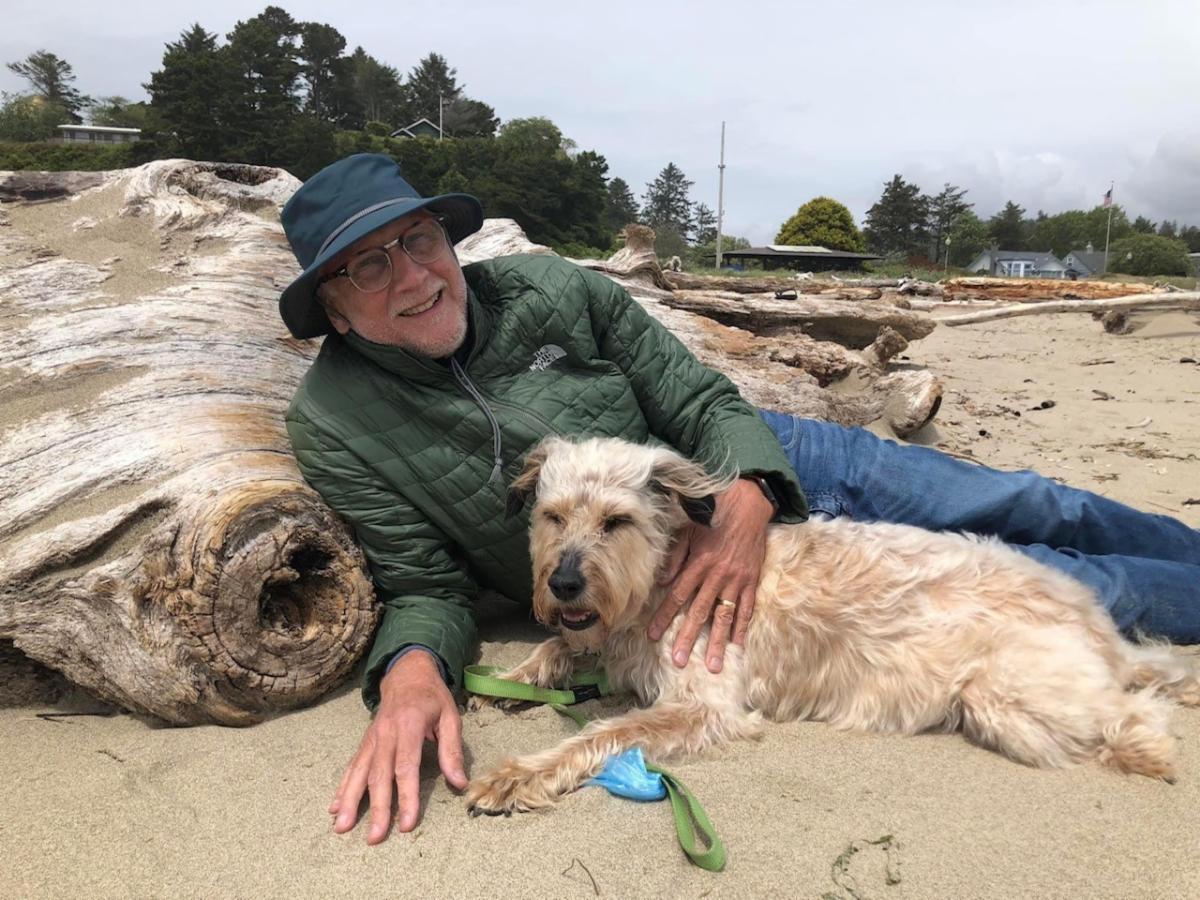
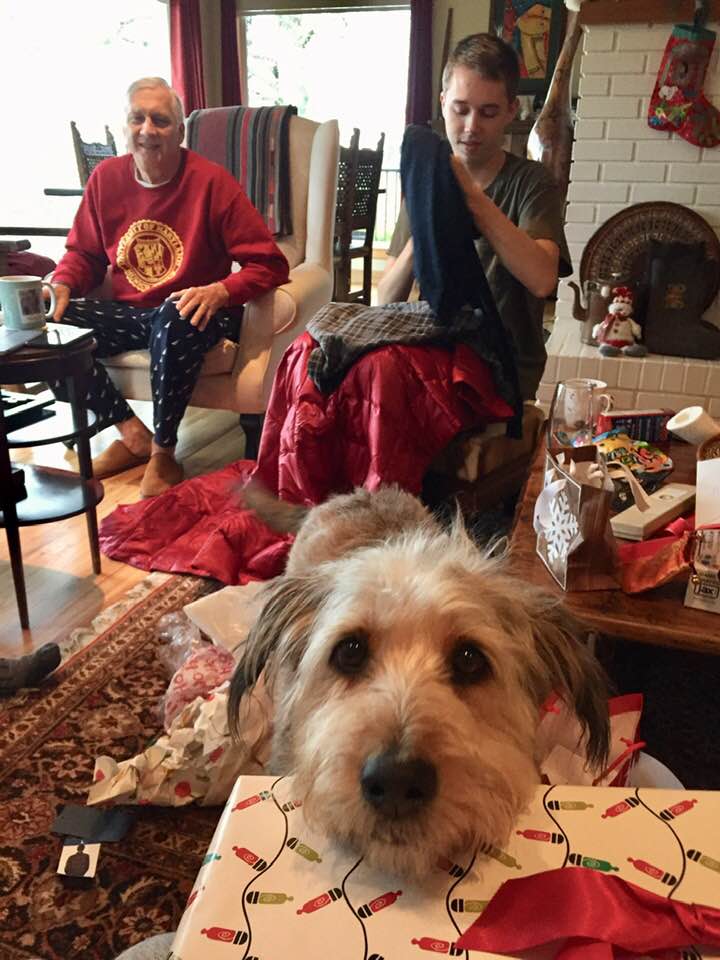
Thanks Paul. Here are photos of Ringo with Zoe in our kitchen in Johannesburg, kayaking in Oregon.(me in background) and during Christmas in Oregon (with Blaine and me in the background).
The Final Goodbye
Ringo, our wonderful dog
| |
|
Andrew Selsky - Ringo, our sweet, strong-willed dog, died Sunday night. Paul (Ye Olde Connecting Editor) saw my Facebook post about Ringo and asked me to write something about his life’s journey, which started in South Africa and ended in Oregon, USA, for Connecting.
I consider Ringo our Christmas dog. My family and I had moved to Johannesburg in 2009 — where we had lived a decade earlier — as I took up a position as AP’s first Africa Editor, when sub-Saharan Africa became one of AP’s five overseas reporting regions (in addition to Europe, the Middle East, Latin America and Asia).
Once the family was ensconced in a house with a lovely walled-in lawn and flowering trees, we decided we wanted a pooch. A week before Christmas, my wife Zoe and our then 13-year-old son Blaine went to the SPCA in nearby Midrand. They were greeted by hundreds of barking dogs penned in behind the fences of the animal shelter.
One dog, though, a skinny mixed-breed terrier about 10 months old, was not barking.
Blaine still remembers that day, 14 1/2 years ago.
“Ringo was very sweetly sitting there, not making a sound, just looking up at us,” Blaine recalls. The SPCA said the dog had been found wandering in an impoverished Black township with no apparent owner. Zoe and Blaine decided he was just the right dog for us.
The animal shelter said that because of red tape, we would have to wait until after Christmas to adopt him, but we wanted the dog with us for the holidays. The SPCA relented and Zoe and Blaine went back to get him a few days later. Our other son Sam named him Ringo, a name that seemed to fit even though he did not resemble the Beatles drummer, aside from a slightly shaggy appearance.
So Ringo was with us for that Christmas and for 14 more. On Christmas morning, as gifts were handed out, Ringo would use his paws and teeth to delicately tear off the wrapping paper on his gifts.
Ringo had clearly survived in the township by scrounging food. Once, soon after we got him, I was walking out of the kitchen with a cookie and it disappeared from my hand in a flash. Ringo had leapt up and deftly snatched it away. It was gone in one gulp. He underwent obedience training and that helped but even so, food left on a counter within his reach, leather boots, numerous dirty socks and underwear and other assorted items were devoured by him.
We’d say that you can take the dog out of the township but you can’t take the township out of the dog. But Ringo was a comfort. He could sense when one of us was stressed, and just be there for you, maybe resting his head on your thigh. You could pet his fur, stroke his soft ears and your worries would start to melt away.
“When Blaine and I picked him out of the hundreds of barking dogs at the SPCA near Johannesburg, I had no idea I would become so attached,” says Zoe.
He was a sweet dog, friendly to everyone, except he did not like hadedas, a prehistoric-looking bird that is ubiquitous in Johannesburg, notable for their large size and piercing calls. If they landed on our driveway or lawn, Ringo, accelerating as if he had been shot from a cannon, would be after them. They would lift off with their huge wings before he got too close, shrieking as they went airborne.
In 2016, we moved to Oregon. By then, our two sons were at university in the US.
The AP paid a company to put Ringo on a Delta flight to Atlanta and then on another flight to Portland.
Ringo enjoyed life in the Pacific Northwest, going on hikes with us in the mountains and along the coast. In the last year or two, he slowed down though. Instead of resisting going back home and wanting to continue a walk as he used to do, he would simply stop walking, despite tugs at the leash, to indicate that he was done.
“He had a good long life,” Blaine says. “As much as he slowed down over time, he was still having a good time, right to the end.”
Goodbye Ringo. Zoe speaks for all of the family when she says: “He was truly a dear soul and I will miss him always.”
| |
Today in History - June 12, 2024 |  | |
Today is Wednesday, June 12, the 164th day of 2024. There are 202 days left in the year.
Today’s Highlight in History:
On June 12, 2016, a gunman opened fire at the Pulse nightclub, a gay establishment in Orlando, Florida, leaving 49 people dead and 53 wounded; Omar Mateen pledged allegiance to the Islamic State group during a three-hour standoff before being killed in a shootout with police.
On this date:
In 1630, Englishman John Winthrop, leading a fleet carrying Puritan refugees, arrived at the Massachusetts Bay Colony, where he became its governor.
In 1776, Virginia’s colonial legislature adopted a Declaration of Rights.
In 1942, Anne Frank, a German-born Jewish girl living in Amsterdam, received a diary for her 13th birthday, less than a month before she and her family went into hiding from the Nazis.
In 1963, civil rights leader Medgar Evers, 37, was shot and killed outside his home in Jackson, Mississippi. (In 1994, Byron De La Beckwith was convicted of murdering Evers and sentenced to life in prison; he died in 2001.)
In 1964, South African Black nationalist Nelson Mandela was sentenced to life in prison along with seven other people, including Walter Sisulu, for committing sabotage against the apartheid regime (all were eventually released, Mandela in 1990).
In 1967, the U.S. Supreme Court, in Loving v. Virginia, unanimously struck down state laws prohibiting interracial marriages.
In 1978, David Berkowitz was sentenced to 25 years to life in prison for each of the six “Son of Sam” .44-caliber killings that terrified New Yorkers.
In 1987, President Ronald Reagan, during a visit to the divided German city of Berlin, exhorted Soviet leader Mikhail S. Gorbachev to “tear down this wall.”
In 1991, Russians went to the polls to elect Boris N. Yeltsin president of their republic.
In 1994, Nicole Brown Simpson and Ronald Goldman were slashed to death outside her Los Angeles home. (O.J. Simpson was later acquitted of the killings in a criminal trial but was eventually held liable in a civil action.)
In 2004, former President Ronald Reagan’s body was sealed inside a tomb at his presidential library in Simi Valley, California, following a week of mourning and remembrance by world leaders and regular Americans.
In 2020, Rayshard Brooks, a 27-year-old Black man, was shot and killed by one of the two white officers who responded after he was found asleep in his car in the drive-thru lane of a Wendy’s restaurant in Atlanta; police body camera video showed Brooks struggling with the officers and grabbing a Taser from one of them, firing it as he fled.
Today’s Birthdays: Sportscaster Marv Albert is 84. Singer Roy Harper is 84. Actor Roger Aaron Brown is 76. Actor Sonia Manzano is 74. Rock musician Bun E. Carlos (Cheap Trick) is 73. Country singer-musician Junior Brown is 72. Singer-songwriter Rocky Burnette is 71. Actor Timothy Busfield is 67. Singer Meredith Brooks is 66. Actor Jenilee Harrison is 66. Rock musician John Linnell (They Might Be Giants) is 65. Actor John Enos is 62. Rapper Grandmaster Dee (Whodini) is 62. Actor Paul Schulze is 62. Actor Eamonn Walker is 62. Actor Paula Marshall is 60. Actor Frances O’Connor is 57. Actor Rick Hoffman is 54. Actor-comedian Finesse Mitchell is 52. Actor Mel Rodriguez is 51. Actor Jason Mewes is 50. Actor Michael Muhney is 49. Blues musician Kenny Wayne Shepherd is 47. Actor Timothy Simons is 46. Actor Wil Horneff is 45. Singer Robyn is 45. Rock singer-musician John Gourley (Portugal. The Man) is 44. Actor Dave Franco is 39. Country singer Chris Young is 39. Actor Luke Youngblood is 38. Actor Ryan Malgarini is 32.
| Got a photo or story to share? | |
|
Connecting is a daily newsletter published Monday through Friday that reaches more than 1,800 retired and former Associated Press employees, present-day employees, and news industry and journalism school colleagues. It began in 2013. Past issues can be found by clicking Connecting Archive in the masthead. Its author, Paul Stevens, retired from the AP in 2009 after a 36-year career as a newsman in Albany and St. Louis, correspondent in Wichita, chief of bureau in Albuquerque, Indianapolis and Kansas City, and Central Region vice president based in Kansas City.
Got a story to share? A favorite memory of your AP days? Don't keep them to yourself. Share with your colleagues by sending to Ye Olde Connecting Editor. And don't forget to include photos!
Here are some suggestions:
- Connecting "selfies" - a word and photo self-profile of you and your career, and what you are doing today. Both for new members and those who have been with us a while.
- Second chapters - You finished a great career. Now tell us about your second (and third and fourth?) chapters of life.
- Spousal support - How your spouse helped in supporting your work during your AP career.
- My most unusual story - tell us about an unusual, off the wall story that you covered.
- "A silly mistake that you make"- a chance to 'fess up with a memorable mistake in your journalistic career.
- Multigenerational AP families - profiles of families whose service spanned two or more generations.
- Volunteering - benefit your colleagues by sharing volunteer stories - with ideas on such work they can do themselves.
- First job - How did you get your first job in journalism?
- Most unusual place a story assignment took you.
Paul Stevens
Editor, Connecting newsletter
paulstevens46@gmail.com
| | | | |