|
|
|
Connecting
July 29, 2024
Click here for sound of the Teletype
| |
|
Colleagues,
Good Monday morning on this July 29, 2024,
I thought I’d start the week with a reminder about an upcoming event just for Associated Press retirees – a dinner sponsored by the AP that will be held Saturday night, Oct. 19, in Kansas City.
The Jack Stokes Memorial Dinner, named for our beloved colleague who died a year ago, will take place at one of Kansas City’s top names in barbeque – Jack Stack Barbeque - Freight House on the south edge of downtown, across the railroad tracks from venerable Union Station. The AP is covering the cost of dinner for a retiree and guest.
About 40 have registered to attend – including some flying in from the coasts – and I hope you will consider being there for a great weekend to meet up with former colleagues. Let me know if you have any questions.
We lead today’s issue with stories behind two outstanding AP photos, told by the photographers who captured the images.
| |
|
And finally, two Kansans celebrate birthdays today and I want to wish them both a wonderful day.
Nancy Landon Kassebaum, who I covered when she was first elected to the US Senate, is 92. I last said hello to her at the 2017 funeral for AP Topeka Correspondent Lew Ferguson, with whom she was a close friend.
And Sophie Michelle Templeton, first grandchild for Linda and me, is Sweet 16 - a rising high school junior who loves tennis, like her mom, grandpa and great grandpa and is a photographer for her high school yearbook.
Here’s to a great week – be safe, stay healthy, live each day to your fullest.
Paul
Focused amid the gunfire, an AP photographer captures another perspective of attack on Trump
| |
|
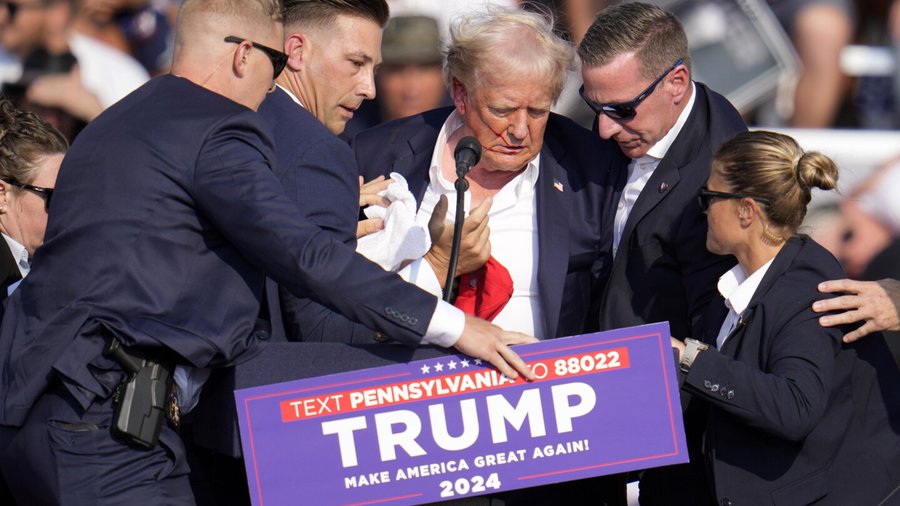
Republican presidential candidate former President Donald Trump is helped off the stage at a campaign event in Butler, Pa., on Saturday, July 13, 2024. (AP Photo/Gene J. Puskar)
BY GENE J. PUSKAR
BUTLER, Pa. (AP) — Gene Puskar has been with The Associated Press for 45 years. Based in Pittsburgh, his career has spanned a wide range of events including the nuclear accident at Three Mile Island, the Sept. 11 attack that downed Flight 93, Stanley Cups and World Series, many presidential and campaign events and, his favorite, the Little League World Series. Here’s what he had to say about making this extraordinary photo.
Why this photo
It was a political rally assignment like hundreds before that I’ve covered over 45 years with The Associated Press – until it wasn’t.
I arrived at the Butler Farm Show at 8 a.m. for hopefully - most don’t start on time - a 5:30 p.m. appearance by former President Donald Trump and the traffic was already backed up to get into the parking lot.
A fairway of Trump merchandise tents were in place and business was boomin’. At 8 a.m.!
The Secret Service designated 10:30 a.m. as the pre-set time for photographers to stake out their spot on the back riser camera stand. I was to be stationed right in the center, 100 feet from the podium. We marked our spots with a tripod or ladder, mine with a giant AP in bright green tape on it.
By 11:30 the pre-set was over, and the Secret Service locked down the site for a security sweep. We were allowed to return, this time through security, at 1 p.m.
A steady stream of local, state and federal politicians riled up the crowd from 1-6 p.m. as they waited for Trump. I stood shoulder to shoulder with three other photographers and cameramen, hot, dehydrated, hungry - waiting for the main attraction to appear at center stage.
How I made this photo
Finally - shortly after 6 p.m. - Trump made his entrance. He stopped every few feet to point to folks in the audience and pump his first and smile. This is often the time photographers have a chance to make a picture, with the candidate or president gesturing and interacting with supporters. The end of remarks is a good time, too, when the subject also works the crowd.
I had my trusty Sony A1 attached to a Sony 400mm f2.8, with a 1.4x telextender on it, sitting on a carbon fiber mono-pod resting on my shoulder. I also had a Sony A9 III with a 28-200mm lens on it.
After turning to supporters who lined the grandstand behind the podium, Trump began his comments.
The microphone on the podium was too high. I was right in his face. So, unless he looked up or to the side, making a worthwhile photo was impossible. After an initial frenzy of shooting photos once he started speaking, I settled down to look for expressive gestures.
These speeches can go on a long time, sometimes over an hour and a half.
Relatively early into Trump’s remarks, he was explaining a graph that showed the number of illegal immigrants who have entered the U.S., he looked to his right, my left, at the giant screen projection when …
a CRACK! CRACK! rang out. I knew it wasn’t a firecracker.
I knelt down on the riser, which still left me about 5 feet in the air, and I looked to the Secret Service snipers on the roof to the right of the stage, my left, whom I had photographed taking their positions nearly four hours earlier.
A few more reports of gunfire. Trump ducked out of frame, then there was a scramble of Secret Service. The agents swarmed the downed candidate, who was still hidden behind the podium.
This image is one of the first I shot once the Secret Service deemed it safe to move Trump after being assured the shooter was down.
It was a few frames later when Trump insisted that his Secret Security detail allow him to pump his fist and yell “fight!” to the crowd, captured by colleague Evan Vucci.
I then followed Trump as he was assisted in a swarm of Secret Service to his SUV.
Why this photo works
The photo speaks for itself. The old saying goes; Question: What does it take to make a great picture? Answer: F11 and be there.
I was there because the AP assigned me there. This is a great responsibility. To those who much is given, much is expected. I simply did what was expected of me as a AP photographer. What tells me I got the shot are the many people at the AP who tell me that I got it. And what makes me feel good/proud is that the AP feels good about the job I did that day.
Click here for link to this story.
One Extraordinary Photo: Charlie Riedel captures Simone Biles in flight at the Paris Games
| |
|
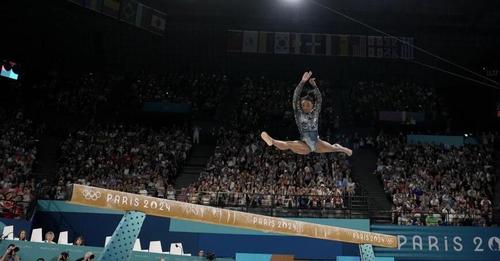
Simone Biles of the United States competes on the balance beam during a women’s artistic gymnastics qualification round at the 2024 Summer Olympics, Sunday, July 28, 2024, in Paris, France. (AP Photo/Charlie Riedel)
By CHARLIE RIEDEL
PARIS (AP) — Charlie Riedel has been an AP staff photographer in Kansas City, Missouri, for 24 years. This is his eighth Olympic games. Here is what Riedel had to say about making this extraordinary photo.
Why this photo?
Simone Biles has been considered the best gymnast in the world for many years and interest in her has only heightened since she walked away from the Tokyo Games three years ago. Since then, Biles has made a comeback and draws huge crowds. I wanted to show a sense of this excitement for her first Olympic appearance since dropping out at Tokyo, so I decided to go wide and include the vastness of Bercy Arena as well as the crowd of photographers capturing this historic moment.
How I made this photo
I shot this image with a Sony A9iii camera using a 24-70mm lens. Being one of a small group of photographers allowed access to the floor, I was able to shoot this from a unique angle and include the masses of photographers shooting from the perimeter of the field of play.
Why this photo works
I believe this photo works because Simone is a small part of the frame in a huge arena. But even though she is small in the frame, she is towering above all the people who are there to watch her.
Click here for link to this story.
Connecting series:
What’s in a name? They’ll tell you
| 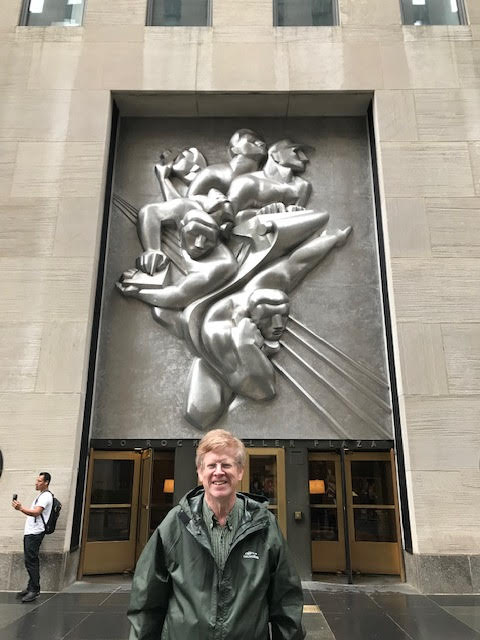 | |
Mick Boroughs - I’ve managed to visit all five boroughs in New York City, which seems appropriate since I’m a Boroughs, and one of five siblings. At least none of us is named ‘Brooklyn.’
Digging into the roots of my family tree, I discovered the original spelling is Bouhereau. I’m a descendant of Elias Bouhereau, an exiled French Huguenot considered Ireland’s first librarian. Now I need to travel to a city - or a borough - named Bouhereau!
… Mick Boroughs (NY General Desk and Special Services, 1982-1986)
-0-
Dennis Conrad - While vacationing in the West in the 1990s, I took a detour to visit Conrad, Montana, a town of about 2000 or so folks that is mainly known for being a county seat. I had a camcorder with me and made a mini-documentary of the place with an assist from my daughter. We had a bit of fun laughing about the place that shared our surname but had so little to offer. I recall the infamous quote, rightly or wrongly attributed to Gertrude Stein, about Oakland, California: “There’s no there there.” As far as I know, Montana’s Conrad has no connection to my family.
| 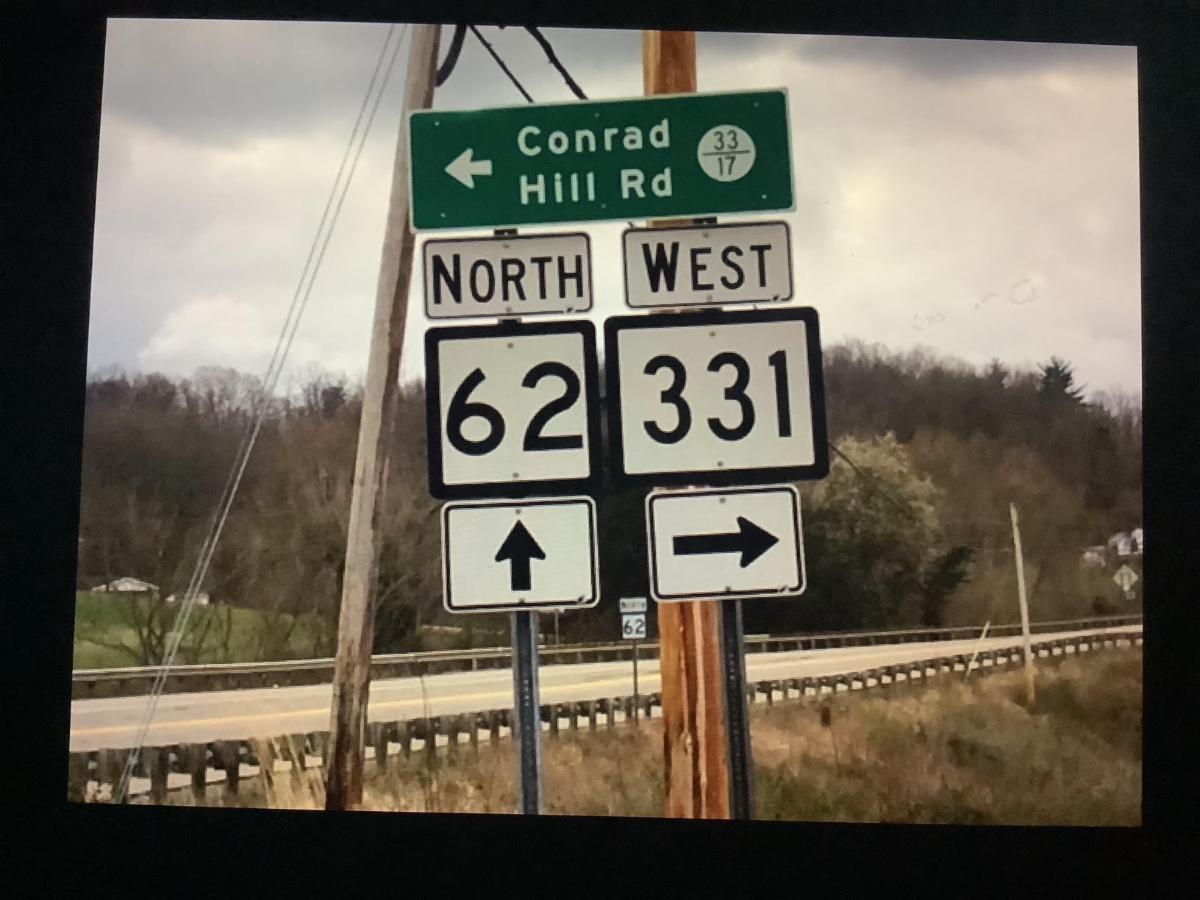 | |
More recently, on what would have been my father’s 102nd birthday, I visited his native Jackson County, West Virginia, where he grew up on a 120-acre farm bought in 1879 by his Civil War veteran grandfather, Henry Conrad, near the hamlet of Cottageville. I took note of a highway sign pointing in the direction of the farm: Conrad Hill Rd. For the record, there is even less to do there than in Conrad, Montana —-one of the reasons Dad left for the Army Air Corps in 1937 and brother Eugene joined the Navy in 1938. Their parents and grandparents are buried in Cottageville. They were buried in Arlington National Cemetery after long military careers that took them all over the world.
-0-
| 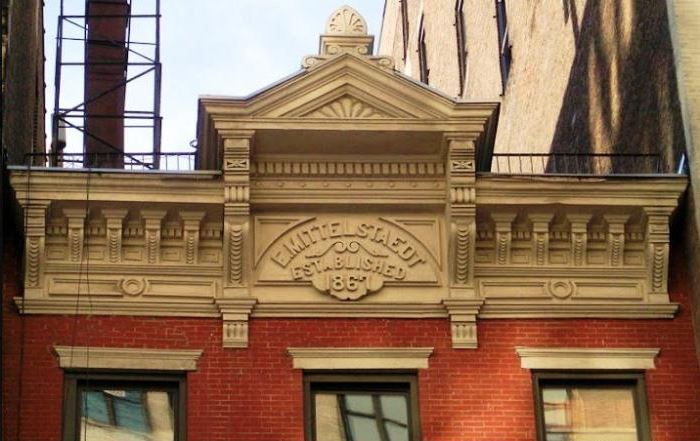 | |
E. Mittelstaedt cornice on Mittelstaedt House in New York City
Mark Mittelstadt - For a name that translates in German to "middle city" or "inner city," it is difficult to find one.
We have never come across a spot in the road named Mittelstadt during our travels. An online search of states where Germans migrated in the 1800s -- New York, New Jersey, Pennsylvania, Wisconsin, Minnesota, Iowa -- also failed to find a town or a village by that name.
A global search identifies one in, you guessed it, Germany. Mittelstadt is a village in the province of Baden-Wurtenberg, along the Neckar River in southwestern Germany near the Black Forest. Alas, we have never visited. On a family vacation in southern Germany more than 50 years ago I recall taking a picture of a street sign pointing to the downtown area reading "Die Stadt Mittel."
Germans differentiate "city" and "town," and categorize municipalities by population. Mittelstadt, "middle town," refers to communities between 20,000 and 100,000 people.
A variation of our family's name is Mittelstaedt. The "ae" likely replaced an umlaut over the letter "a," possibly when overseas arrivals came U.S. immigration. Since childhood I was aware of a Mittelstaedt whose name rolled in the credits of early TV shows like "Leave it to Beaver."
There is an historic Mittelstaedt House at 86 University Place in New York City. Village Preservation, a group advocating for landmark designation of Greenwich Village and the East Village south of Union Square, says its research found that "from its German-immigrant history to its LGBT history, the building was also home to speakeasies, the 'Mayor of Greenwich Village,' a hangout for great lesbian writers, and the man who helped bring public libraries to New York’s poor. This building certainly has more than a few good stories to tell."
-0-
Bill Vogrin - The fun piece you posted from my old pal and fellow Jayhawk John Hanna about his quest to visit every city in the U.S. named "Hanna" brought back fond memories.
First are my memories of young John coming to work in the Topeka bureau as our legislative relief staffer nearly 40 years ago. John was a student at the University of Kansas at the time. (His real education, like my own, started when he came under the mentorship of the legendary Lew Ferguson.)
John's "Connecting" story described his visit to Hanna, Ill., a small town west of Peoria, where I was the correspondent in 1987-94. His post made me immediately think of the late Robert Lee Zimmer, the longtime correspondent in Champaign and our main agriculture writer.
While John wants to visit namesake cities and towns, Bob had a goal of bagging datelines of towns with names related to agriculture.
For example, he visited Farmersville, south of Springfield, for a dateline. I remember him driving to Muddy, east of Carbondale, and to Burnt Prairie and Wheaton. He didn't care how big or small the town was if he could find a story. And he always seemed to dig one up.
Carbondale correspondent Paul de la Garza (also gone too soon) and I would routinely send Bob any little towns we came across where he could visit and base a story.
Back to John's post, just west of the town of Hanna is the town of Farmington. I still remember Bob calling me and inviting me to lunch one day. He was headed to Farmington for a story. He was going to cold call farmers until he found a source for his story.
Then Bob stopped by Peoria on his way home and we had a late lunch!
Once again, Connecting reminds me how lucky I've been to work with some great people over the years. Thanks, Paul.
-0-
| 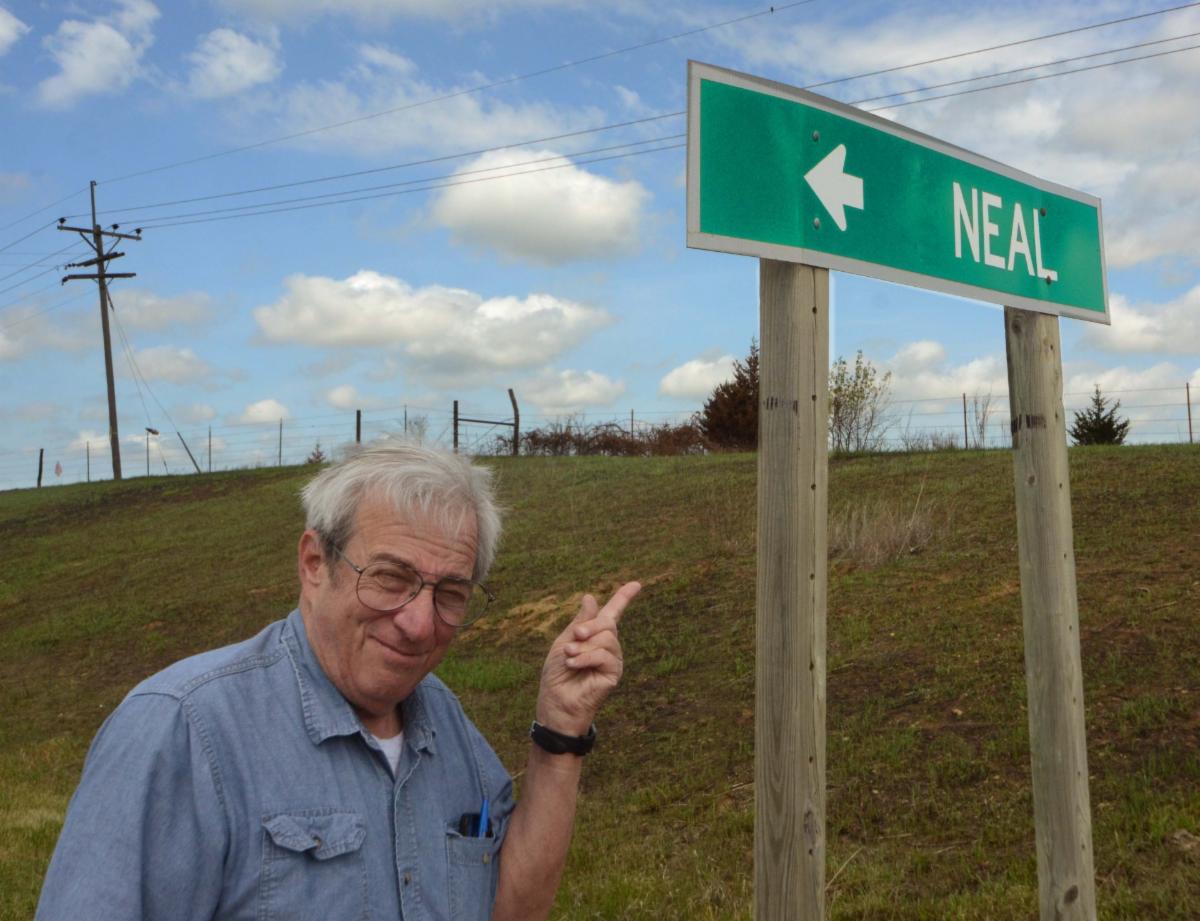 | |
Neal Ulevich - A road trip through the wilds of Kansas some years ago included a stop at Neal, Kansas. I assumed it was, doubtless, named in my honor. The postmistress had other thoughts.
Puzzling newspaper names
| |
|
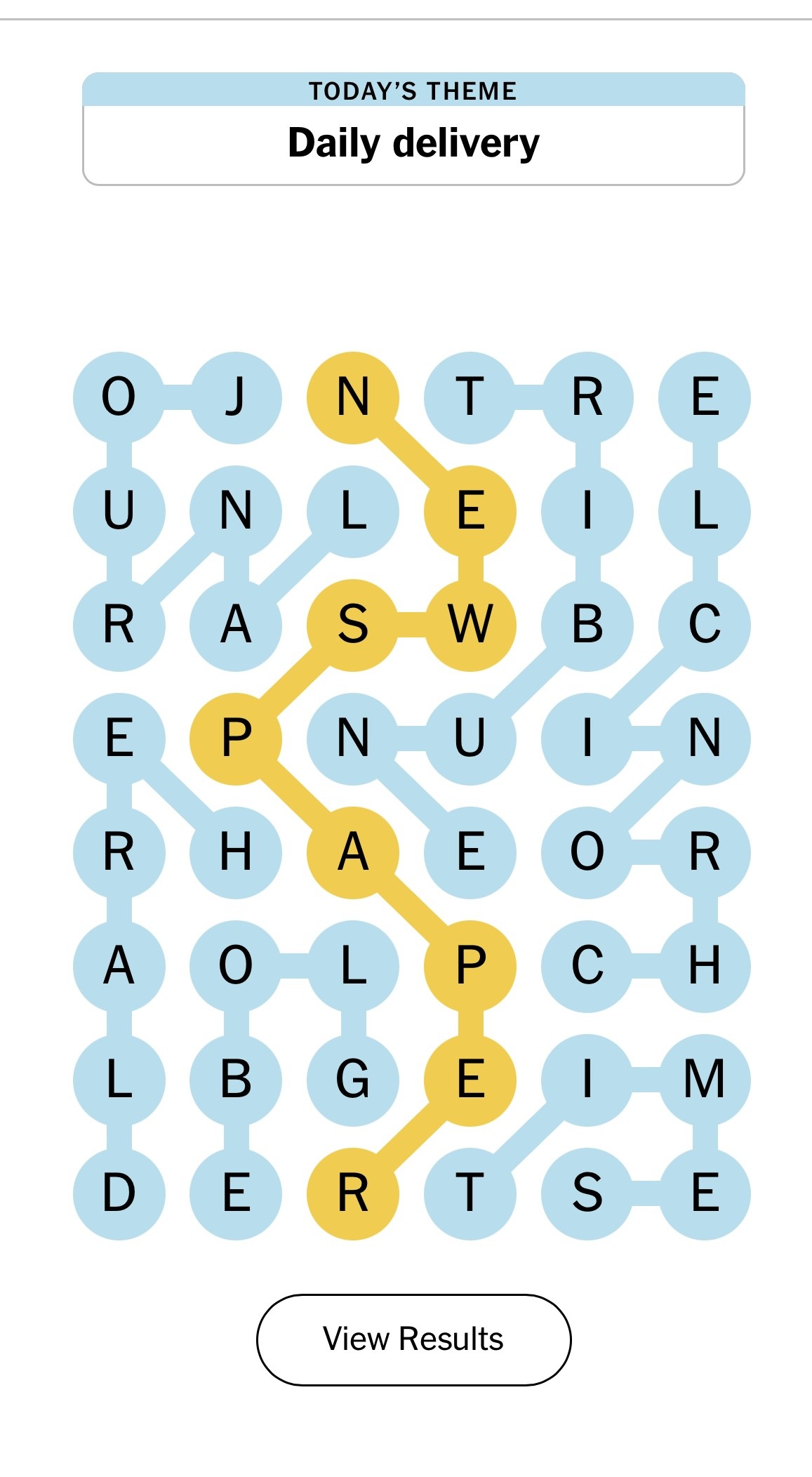
Francesca Pitaro - Sunday's "Strands" puzzle in the New York Times had a journalistic theme. All of the words related to newspaper names: Journal, Chronicle, Tribune, Herald, Times, and Globe. I loved finding all the old newspaper names. And yes, I spend quite a lot of time "puzzling" now that I'm retired.
BEST OF AP - FIRST WINNER
Novel approach engages audience on Venezuela election
| |
|
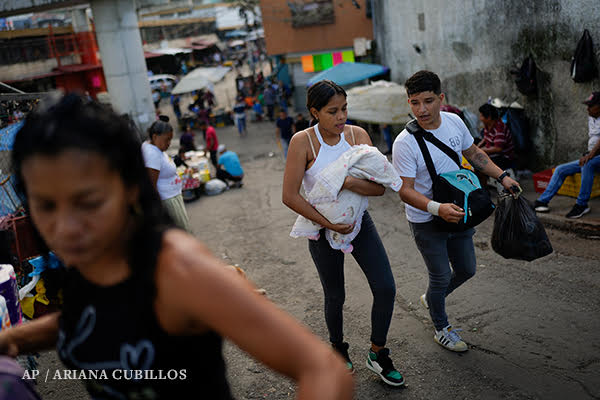
Residents walk through the Petare neighborhood of Caracas, Venezuela, Tuesday, July 16, 2024. AP Photo / Ariana Cubillos
By Regina Garcia Cano
Ten years into Venezuela’s economic and social crisis, it’s difficult to find new ways to engage audiences: The story is complex and nuanced, and the sheer length of crisis means many people have tuned out. That’s what makes Regina Garcia Cano’s story about couples breaking up because one member is leaving the country so good. It makes a difficult, sometimes dry topic immediately relatable.
But it was not an easy one to tell. It can be difficult to find people in Venezuela willing to speak on the record, and with such an intimate subject, many people cited personal, not just political, reasons for not wanting to be interviewed.
In the end, however, Garcia Cano found three people not only willing to have their names used but to share rich details about their heartbreak. One agreed to speak on video and two agreed to be photographed. One even shared an entire WhatsApp exchange with his boyfriend when the man broke the news that he was leaving the country. Dario Lopez painstakingly built an animation that simulated that conversation, bringing it to life.
This was context journalism at its best, using incredibly human and engaging tales to explain the severity of Venezuela’s crisis.
Read more here.
BEST OF AP - SECOND WINNER
The biggest of stories came to the small city of Butler. AP showed how its newspaper met the moment
| 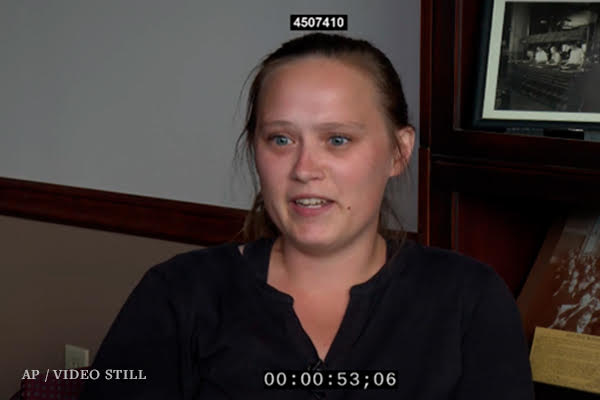 | |
Screenshot from video of reporter moved to tears as she recounted how the crowd turned on her after the shooting.
By David Bauder, Matt Slocum and Joe Frederick
Media reporter David Bauder of the Trends+Culture unit thought a unique angle for the weekend after the Trump shooting would be to explore how Butler’s local newspaper — like so many, struggling in a jumbled journalism economy — responded when the world’s biggest story unfolded in its backyard.
Photographer Matt Slocum and video journalist Joe Frederick got access to the newspaper’s journalists, managers and presses and spent an afternoon doing interviews there and in town. The resulting story revealed not only the news organization’s professionalism but the emotional toll the story was taking on young staffers. One was moved to tears as she recounted how the crowd turned on her after the shooting. But, she said, the story taught her that in being a journalist, she had made the right choice.
All three formats traveled to Butler, thanks to the Democracy grant, to spend time at the newspaper and in town together; this joined-up approach enabled them to interlock strong human stories and look at the American local news industry as a whole.
Read more here.
An anniversary worth noting
|  | |
Connecting wishes Happy Birthday |  | |
Stories of interest
Even on quiet summer weekends, huge news stories spread to millions more swiftly than ever before (AP
By DAVID BAUDER
James Peeler’s phone blew up with messages as he drove home from church in Texas. Reading a book on her couch in Lancaster, Pennsylvania, Wendy Schweiger spied something on Facebook. After finishing a late-night swim in the Baltic Sea off Finland, Matti Niiranen clicked on a CNN livestream.
Each learned that President Joe Biden had abandoned his re-election bid minutes after he dropped a statement online without warning on a summer Sunday.
Eight days after the assassination attempt on former President Donald Trump, it marked the second straight July weekend that a seismic American story broke at a time most people weren’t paying attention to the news. Biden’s announcement was a startling example of how fast and how far word spreads in today’s always-connected world.
“It seemed like a third of the nation knew it instantly,” said longtime news executive Bill Wheatley, “and they told another third.”
News travels fast, as they say
Wheatley, now retired and summering in Maine, had sat down to check his email and absent-mindedly refreshed the CNN.com home site on his computer. If he didn’t learn the news that way, text messages from friends would have alerted him soon after.
Read more here. Shared by Doug Pizac.
-0-
‘Pure adrenaline’: Campaign reporters energized by remade 2024 race (Washington Post)
By Jeremy Barr
For most of the spring, this presidential campaign lacked the high-wattage, earth-shattering storylines that energize the reporters who chronicle them. The presumptive nominees were the same as in 2020. The American people seemed deeply uninterested in news about the race.
Then came Donald Trump’s felony convictions. A month later, President Biden’s shockingly halting debate performance. Then Trump’s survival of an assassination attempt. Finally, last weekend, Biden’s exit from the campaign and his endorsement of Vice President Harris as his replacement.
Thus, a campaign cycle that has long seemed a bit sleepy is now anything but. And reporters are “chomping at the bit,” as one put it, to cover the expected Trump vs. Harris contest.
“A month ago, there was a sense that this campaign was very static,” NBC News chief White House correspondent Peter Alexander said. “I don’t think anybody could feel that way anymore.”
Read more here. Shared by Myron Belkind.
-0-
These mental saboteurs could derail your reporting. Don’t let them. (Poynter)
By: Alexandra Zayas
There’s no end to the obstacles you’ll face as a reporter: Agencies that won’t cough up records. Sources who won’t give you the time of day. Competitors who will try to beat you while flacks spin you and targets try to get your story killed.
We do plenty to troubleshoot those external forces in conference sessions and J-school classes and here at Poynter.
But we don’t talk enough about the more quiet saboteurs — the ones living in your head.
These brain buggers — let’s call them medulla oblongoblins — cloud your judgment and hold you back from doing your best work.
They might convince you that you don’t have a story when you really do, or that you can’t write that damning sentence when you really should. Even scarier, they might block you from gathering crucial evidence that could make an investigation’s entire premise fall apart.
Take a spin through a list of cognitive biases and you’ll spot many that creep up in journalism. (The perils of confirmation bias keep me up at night!)
Read more here. Shared by Paul Albright.
-0-
The media is already failing in its duty to fairly cover Kamala Harris (Guardian)
By MARGARET SULLIVAN
Sure, Harris deserves scrutiny. But she doesn’t deserve smears and stereotypes amplified by journalists and pundits addicted to clicks
It’s going to be ugly, that much is already clear.
In the few days since Kamala Harris began her 2024 campaign for president, the media has shown us where some of their coverage is headed: no place good.
Both the rightwing and traditional media are making some predictable blunders. Add in the swill that circulates endlessly on the social media platforms, and you’ve got a mess.
Take, for example, the recent coverage of a Republican congressman’s smear of Harris.
“One hundred percent she is a DEI hire,” Tim Burchett of Tennessee said on CNN, using the acronym for “diversity, equity and inclusion” to claim that she was ascending because of her race, not on merit. “Her record is abysmal at best.”
Read more here. Shared by Richard Chady.
-0-
The power of photojournalism to define us and our times: Terry Eiler (Cleveland.com)
Defiant, blood-spattered Republican presidential candidate former President Donald Trump is surrounded by U.S. Secret Service agents at a campaign rally in Butler, Pennsylvania, on Saturday, July 13, 2024, after a would-be assassin’s bullet grazed his right ear. The shooter, Thomas Matthew Crooks, was killed by a sharpshooter soon after. (AP Photo/Evan Vucci)
Guest Columnist, cleveland.com
ATHENS, Ohio -- The widely published, iconic photos of a bloodied, fist-pumping Donald Trump after the recent assassination attempt remind us of the enduring power of single images and the unique skills of professionals behind the cameras.
The Trump photo that’s now on TIME Magazine’s cover was taken by Evan Vucci, a 21-year veteran of The Associated Press who won a 2021 Pulitzer Prize for Breaking News Photography with AP colleagues who documented America’s response to the death of George Floyd.
A sampling of commentary on Vucci’s photography of the attempt to assassinate former President Trump in Butler, Pennsylvania:
Read more here. Shared by Ken Klein.
The Final Word
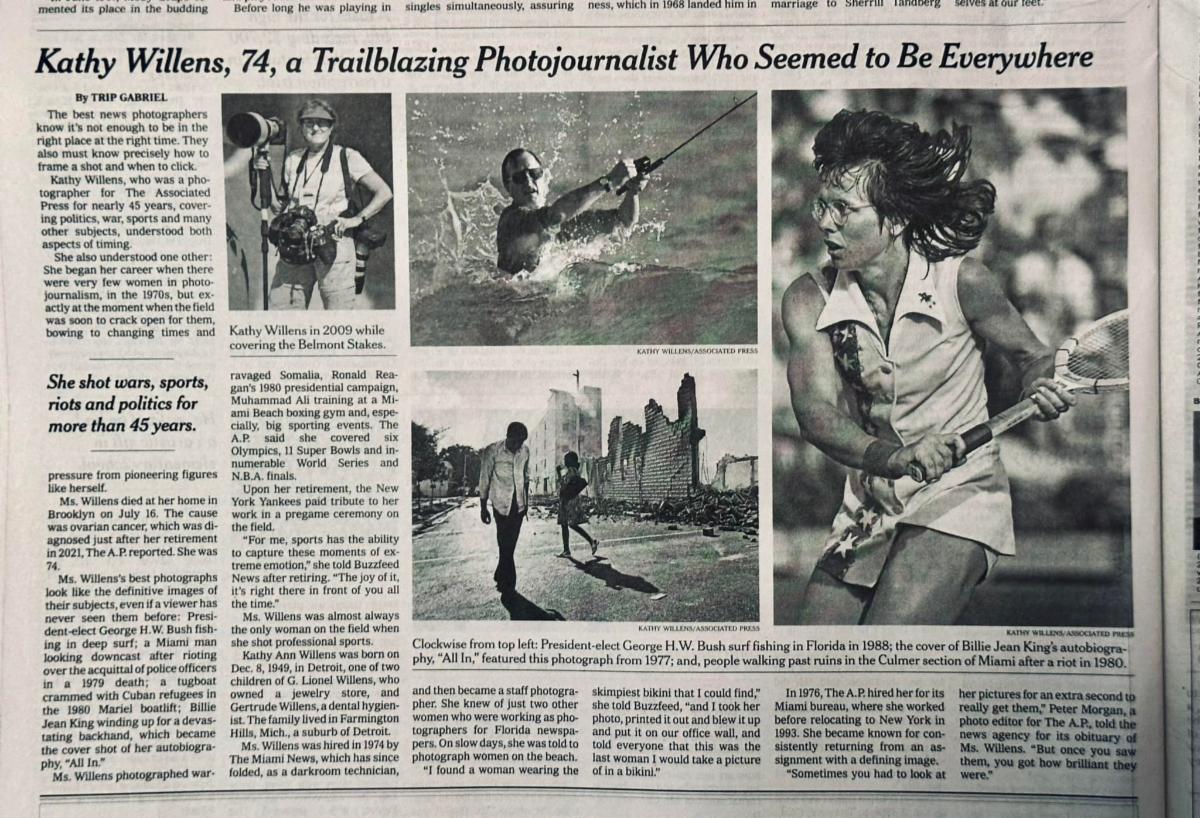
| 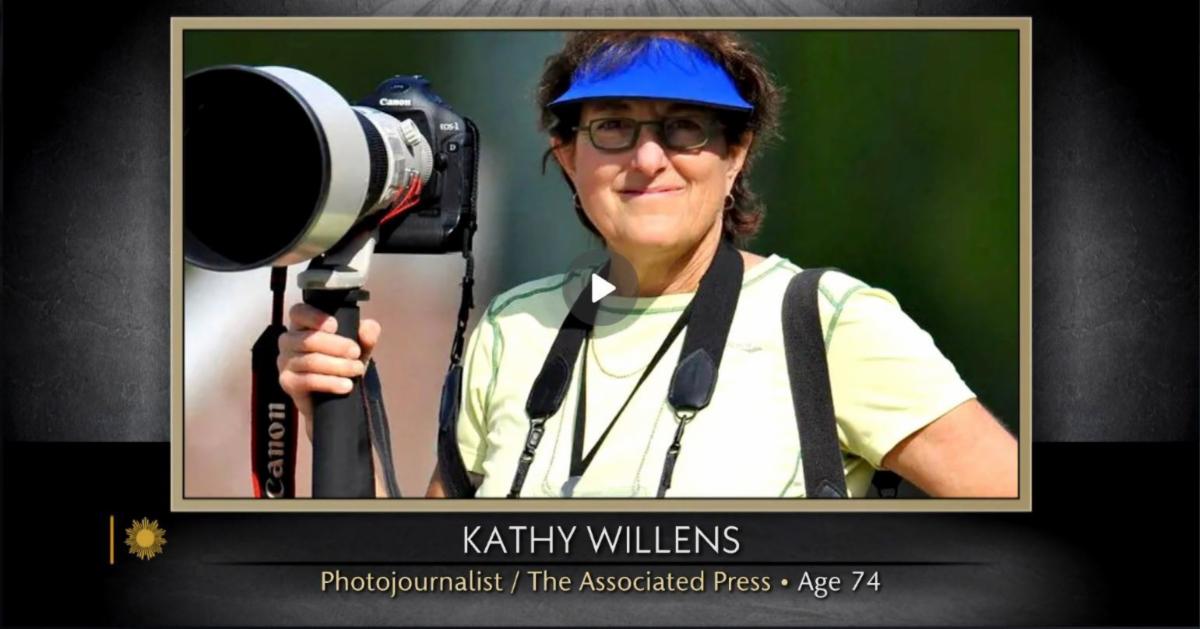 | Our colleague Kathy Willens honored on CBS Sunday Morning listing of those who died in past week. Shared by Margy McCay, Doug Pizac. | And...how the New York Times played her death in Sunday's print edition. Shared by Richard Drew | |
AP classes, by the year...
(EDITOR'S NOTE: This is a listing of Connecting colleagues who have shared the year and the bureau where they started with the AP. If you would like to share your own information, I will include it in later postings. Current AP staffers are also welcome to share their information.)
1951 - Norm Abelson (Boston)
1953 – Charles Monzella (Huntington, WVa)
1955 – Henry Bradsher (Atlanta), Paul Harrington (Boston), Joe McGowan (Cheyenne)
1957 - Louis Uchitelle (Philadelphia)
1958 – Roy Bolch (Kansas City)
1959 – Charlie Bruce (Montgomery)
1960 – Claude Erbsen (New York), Carl Leubsdorf (New Orleans)
1961 – Peter Arnett (Jakarta, Indonesia), Strat Douthat (Charleston. WVa), Warren Lerude (San Diego), Ed Staats (Austin)
1962 – Paul Albright (Cheyenne), Malcolm Barr Sr. (Honolulu), Myron Belkind (New York), Peggy Simpson (Dallas), Kelly Smith Tunney (Miami)
1963 – Hal Bock (New York)
1964 – Rachel Ambrose (Indianapolis), Larry Hamlin (Oklahoma City), John Lengel (Los Angeles), Ron Mulnix (Denver), Lyle Price (San Francisco), Arlene Sposato (New York), Hilmi Toros (New York)
1965 – Bob Dobkin (Pittsburgh), Harry Dunphy (Denver), John Gibbons (New York), Jim Luther (Nashville), Larry Margasak (Harrisburg), Rich Oppel (Tallahassee)
1966 – Shirley Christian (Kansas City), Mike Doan (Portland, OR), Edie Lederer (New York), Nancy Shipley (Nashville), Mike Short (Los Angeles), Marty Thompson (Seattle), Nick Ut (Saigon), Kent Zimmerman (Chicago)
1967 – Dan Berger (Los Angeles), Adolphe Bernotas (Concord), Lou Boccardi (New York), Linda Deutsch (Los Angeles), Don Harrison (Los Angeles), Frank Hawkins (New York), Doug Kienitz (Cheyenne), David Liu (New York), Bruce Lowitt (Los Angeles), Chuck McFadden (Los Angeles), Martha Malan (Minneapolis), Bill Morrissey (Buffalo), Larry Paladino (Detroit), Michael Putzel (Raleigh), Bruce Richardson (Chicago), Richard Shafer (Baltimore), Victor Simpson (Newark), Michael Sniffen (Newark), Kernan Turner (Portland, Ore)
1968 – Lee Balgemann (Chicago), John Eagan (San Francisco), Joe Galu (Albany/Troy), Peter Gehrig (Frankfurt), Charles Hanley (Albany), Jerry Harkavy (Portland, Maine), Herb Hemming (New York), Brian King (Albany), Samuel Koo (New York), Karren Mills (Minneapolis), Michael Rubin (Los Angeles), Rick Spratling (Salt Lake City), Barry Sweet (Seattle)
1969 - Ann Blackman (New York), Ford Burkhart (Philadelphia), Dick Carelli (Charleston, WVa), Dennis Coston (Richmond), Mary V. Gordon (Newark), Daniel Q. Haney (Portland, Maine), Mike Harris (Chicago), Brad Martin (Kansas City), David Minthorn (Frankfurt), Cynthia Rawitch (Los Angeles), Bob Reid (Charlotte), Mike Reilly (New York), Doug Tucker (Tulsa), Bill Winter (Helena)
1970 – Richard Boudreaux (New York), Richard Drew (San Francisco), Bob Egelko (Los Angeles), Steve (Indy) Herman (Indianapolis), Tim Litsch (New York), Lee Margulies (Los Angeles), Chris Pederson (Salt Lake City), Brendan Riley (San Francisco), Larry Thorson (Philadelphia)
1971 – Harry Atkins (Detroit), Jim Bagby (Kansas City), Larry Blasko (Chicago), Jim Carlson (Milwaukee), Jim Carrier (New Haven), Chris Connell (Newark), Bill Gillen (New York), Bill Hendrick (Birmingham), John Lumpkin (Dallas), Kendal Weaver (Montgomery)
1972 – Hank Ackerman (New York), Bob Fick (St. Louis), Joe Frazier (Portland, Ore.), Terry Ganey (St. Louis), Mike Graczyk (Detroit), Denis Gray (Albany), Lindel Hutson (Little Rock), Brent Kallestad (Sioux Falls), Tom Kent (Hartford), Nolan Kienitz (Dallas), Andy Lippman (Phoenix), Ellen Miller (Helena), Mike Millican (Hartford), Lew Wheaton (Richmond)
1973 - Jerry Cipriano (New York), Susan Clark (New York), Norm Clarke (Cincinnati), Jim Drinkard (Jefferson City), Joe Galianese (East Brunswick), Merrill Hartson (Richmond), Mike Hendricks (Albany), Tom Journey (Tucson), Steve Loeper (Los Angeles), Tom Slaughter (Sioux Falls), Jim Spehar (Denver), Paul Stevens (Albany), Jeffrey Ulbrich (Cheyenne), Owen Ullmann (Detroit), Suzanne Vlamis (New York), John Willis (Omaha), Evans Witt (San Francisco)
1974 – Norman Black (Baltimore), David Espo (Cheyenne), Dan George (Topeka), Robert Glass (Philadelphia), Steve Graham (Helena), Tim Harper (Milwaukee), Elaine Hooker (Hartford), Sue Price Johnson (Charlotte), Dave Lubeski (Washington), Janet McConnaughey (Washington), Lee Mitgang (New York), Barry Shlachter (Tokyo), Bud Weydert (Toledo), Marc Wilson (Little Rock)
1975 – Peter Eisner (Columbus), David Powell (New York), Eileen Alt Powell (Milwaukee)
1976 – Brad Cain (Chicago), Judith Capar (Philadelphia), Dick Chady (Albany), Steve Crowley (Washington), David Egner (Oklahoma City), Marc Humbert (Albany), Steven Hurst (Columbus), Richard Lowe (Nashville), John Nolan (Nashville), Charlotte Porter (Minneapolis), Chuck Wolfe (Charlotte)
1977 – Bryan Brumley (Washington), Robert Burns (Jefferson City), Charles Campbell (Nashville), Carolyn Carlson (Atlanta), Dave Carpenter (Philadelphia), Ken Herman (Dallas), Mike Holmes (Des Moines), Brad Kalbfeld (New York), Scott Kraft (Jefferson City), John Kreiser (New York), Peter Leabo (Dallas), Kevin LeBoeuf (Los Angeles), Ellen Nimmons (Minneapolis), Dan Sewell (Buffalo), Estes Thompson (Richmond), David Tirrell-Wysocki (Concord)
1978 – Tom Eblen (Louisville), Ruth Gersh (Richmond), Monte Hayes (Caracas), Doug Pizac (Los Angeles), Charles Richards (Dallas), Reed Saxon (Los Angeles), Steve Wilson (Boston)
1979 – Jim Abrams (Tokyo), Brian Bland (Los Angeles), Scotty Comegys (Chicago), John Daniszewski (Philadelphia), Frances D’Emilio (San Francisco), Pat Fergus (Albany), Brian Friedman (Des Moines), Sally Hale (Dallas), Jill Lawrence (Harrisburg), Warren Levinson (New York), Barry Massey (Kansas City), Phillip Rawls (Nashville), John Rice (Carson City), Linda Sargent (Little Rock), Joel Stashenko (Albany), Robert Wielaard (Brussels)
1980 – Alan Adler (Cleveland), Christopher Bacey (New York), Jeff Barnard (Providence), Mark Duncan (Cleveland), Bill Kaczor (Tallahassee), Mitchell Landsberg (Reno), Kevin Noblet (New Orleans), Jim Rowley (Baltimore), David Speer (Jackson), Hal Spencer (Providence), Carol J. Williams (Seattle)
1981 – Paul Davenport (Phoenix), Dan Day (Milwaukee), John Flesher (Raleigh), Len Iwanski (Bismarck), Ed McCullough (Albany), Drusilla Menaker (Philadelphia), Kim Mills (New York), Mark Mittelstadt (Des Moines), Roland Rochet (New York), Lee Siegel (Seattle), Marty Steinberg (Baltimore), Bill Vogrin (Kansas City)
1982 – Dorothy Abernathy (Little Rock), Al Behrman (Cincinnati), Tom Cohen (Jefferson City), John Epperson (Chicago), Ric Feld (Atlanta), Nick Geranios (Helena), Howard Gros (New Orleans), Robert Kimball (New York), Rob Kozloff (Detroit), Bill Menezes (Kansas City), David Ochs (New York), Cecilia White (Los Angeles)
1983 – Scott Charton (Little Rock), Sue Cross (Columbus), Mark Elias (Chicago), David Ginsburg (Washington), Diana Heidgerd (Miami), Sheila Norman-Culp (New York), Carol Esler Ochs (New York), Jim Reindl (Detroit), Amy Sancetta (Philadelphia), Rande Simpson (New York), Dave Skidmore (Milwaukee)
1984 – Owen Canfield (Oklahoma City), Wayne Chin (Washington), Jack Elliott (Oklahoma City), Kelly P. Kissel (New Orleans), Joe Macenka (Richmond), Eva Parziale (San Francisco), Walt Rastetter (New York), Keith Robinson (Columbus), Cliff Schiappa (Kansas City), David Sedeño (Dallas), Andrew Selsky (Cheyenne), Patty Woodrow (Washington)
1985 – Beth Grace (Columbus), Betty Kumpf Pizac (Los Angeles)
1986 – Joni Baluh Beall (Richmond), David Beard (Jackson), Tom Coyne (Columbia, SC), Dave DeGrace (Milwaukee), Alan Flippen (Louisville), Jim Gerberich (San Francisco), Howard Goldberg (New York), Mark Hamrick (Dallas), Sandy Kozel (Washington), Robert Meyers (London), David Morris (Harrisburg)
1987 – Donna Abu-Nasr (Beirut), Dave Bauder (Albany), Chuck Burton (Charlotte), Beth Harris (Indianapolis), Lynne Harris (New York), Steven L. Herman (Charleston, WVa), Elaine Kurtenbach (Tokyo), Rosemarie Mileto (New York), John Rogers (Los Angeles)
1988 – Chris Carola (Albany), Peg Coughlin (Pierre), Kathy Gannon (Islamabad), Steve Hart (Washington), Melissa Jordan (Sioux Falls), Bill Pilc (New York), Kelley Shannon (Dallas)
1989 – Ted Bridis (Oklahoma City), Charlie Arbogast (Trenton), Ron Fournier (Little Rock)
1990 – Frank Fisher (Jackson), Dan Perry (Bucharest), Steve Sakson (Baltimore), Sean Thompson (New York)
1991 – Amanda Kell (Richmond), Santiago Lyon (Cairo), Lisa Pane (Hartford), Ricardo Reif (Caracas), Bill Sikes (Buffalo)
1992 – Kerry Huggard (New York)
1993 – Jim Salter (St. Louis)
1995 – Elaine Thompson (Houston), Donna Tommelleo (Hartford)
1996 – Patricia N. Casillo (New York)
1997 – J. David Ake (Chicago), Pamela Collins (Dallas), Madhu Krishnappa Maron (New York), Jim Suhr (Detroit), Jennifer Yates (Baltimore)
1998 – Guthrie Collin (Albany)
1999 – Melinda Deslatte (Raleigh)
2000 – Gary Gentile (Los Angeles)
2006 – Jon Gambrell (Little Rock)
| Today in History – July 29, 2024 | |
|
Today is Monday, July 29, the 211th day of 2024. There are 155 days left in the year.
Today in history:
On July 29, 1967, an accidental rocket launch on the deck of the supercarrier USS Forrestal in the Gulf of Tonkin resulted in a fire and explosions that killed 134 service members.
Also on this date:
In 1836, the newly completed Arc de Triomphe was inaugurated in Paris.
In 1858, the United States and Japan signed the Harris Treaty, formalizing diplomatic relations and trading rights between the two countries.
In 1890, artist Vincent van Gogh, 37, died of an apparently self-inflicted gunshot wound in Auvers-sur-Oise, France.
In 1914, transcontinental telephone service in the U.S. became operational with the first test conversation between New York and San Francisco.
In 1921, Adolf Hitler became the leader of the National Socialist German Workers’ (Nazi) Party.
In 1954, the first volume of JRR Tolkien’s novel “The Lord of the Rings” (“The Fellowship of the Ring”) was published.
In 1957, the International Atomic Energy Agency was established.
In 1958, President Dwight D. Eisenhower signed the National Aeronautics and Space Act, creating NASA.
In 1981, Britain’s Prince Charles married Lady Diana Spencer in a glittering ceremony at St. Paul’s Cathedral in London. (They divorced in 1996.)
In 1986, a federal jury in New York found that the National Football League had committed an antitrust violation against the rival United States Football League, but the jury ordered the NFL to pay token damages of just three dollars.
In 1994, abortion opponent Paul Hill shot and killed Dr. John Bayard Britton and Britton’s escort, James H. Barrett, outside the Ladies Center clinic in Pensacola, Florida.
In 1999, a former day trader, apparently upset over stock losses, opened fire in two Atlanta brokerage offices, killing nine people and wounding 13 before shooting himself; authorities said Mark O. Barton had also killed his wife and two children.
In 2016, former suburban Chicago police officer Drew Peterson was given an additional 40 years in prison for trying to hire someone to kill the prosecutor who put him behind bars for killing his third wife.
In 2021, American Sunisa Lee won the gold medal in women’s all-around gymnastics at the Tokyo Games; she was the fifth straight American woman to claim the Olympic title in the event.
Today’s Birthdays: Former Sen. Nancy Kassebaum-Baker is 92. Former Sen. Elizabeth H. Dole is 88. Artist Jenny Holzer is 74. Documentary filmmaker Ken Burns is 71. Style guru Tim Gunn is 71. Rock singer-musician Geddy Lee (Rush) is 71. Rock singer Patti Scialfa (Bruce Springsteen and the E Street Band) is 71. Actor Alexandra Paul is 61. Country singer Martina McBride is 58. Actor Wil Wheaton is 52. R&B singer Wanya Morris (Boyz II Men) is 51. Actor Stephen Dorff is 51. Actor Josh Radnor is 50. Hip-hop DJ/music producer Danger Mouse is 47. NFL quarterback Dak Prescott is 31.
| Got a photo or story to share? | |
|
Connecting is a daily newsletter published Monday through Friday that reaches more than 1,800 retired and former Associated Press employees, present-day employees, and news industry and journalism school colleagues. It began in 2013. Past issues can be found by clicking Connecting Archive in the masthead. Its author, Paul Stevens, retired from the AP in 2009 after a 36-year career as a newsman in Albany and St. Louis, correspondent in Wichita, chief of bureau in Albuquerque, Indianapolis and Kansas City, and Central Region vice president based in Kansas City.
Got a story to share? A favorite memory of your AP days? Don't keep them to yourself. Share with your colleagues by sending to Ye Olde Connecting Editor. And don't forget to include photos!
Here are some suggestions:
- Connecting "selfies" - a word and photo self-profile of you and your career, and what you are doing today. Both for new members and those who have been with us a while.
- Second chapters - You finished a great career. Now tell us about your second (and third and fourth?) chapters of life.
- Spousal support - How your spouse helped in supporting your work during your AP career.
- My most unusual story - tell us about an unusual, off the wall story that you covered.
- "A silly mistake that you make"- a chance to 'fess up with a memorable mistake in your journalistic career.
- Multigenerational AP families - profiles of families whose service spanned two or more generations.
- Volunteering - benefit your colleagues by sharing volunteer stories - with ideas on such work they can do themselves.
- First job - How did you get your first job in journalism?
- Most unusual place a story assignment took you.
Paul Stevens
Editor, Connecting newsletter
paulstevens46@gmail.com
| | | | |