Connecting

July 16, 2024


Click here for sound of the Teletype

Top AP News

Top AP Photos

AP Merchandise

AP Emergency Relief Fund

Connecting Archive

AP Newsletters

AP Books

AP News Tips

Colleagues,


Good Tuesday morning on this July 16, 2024,


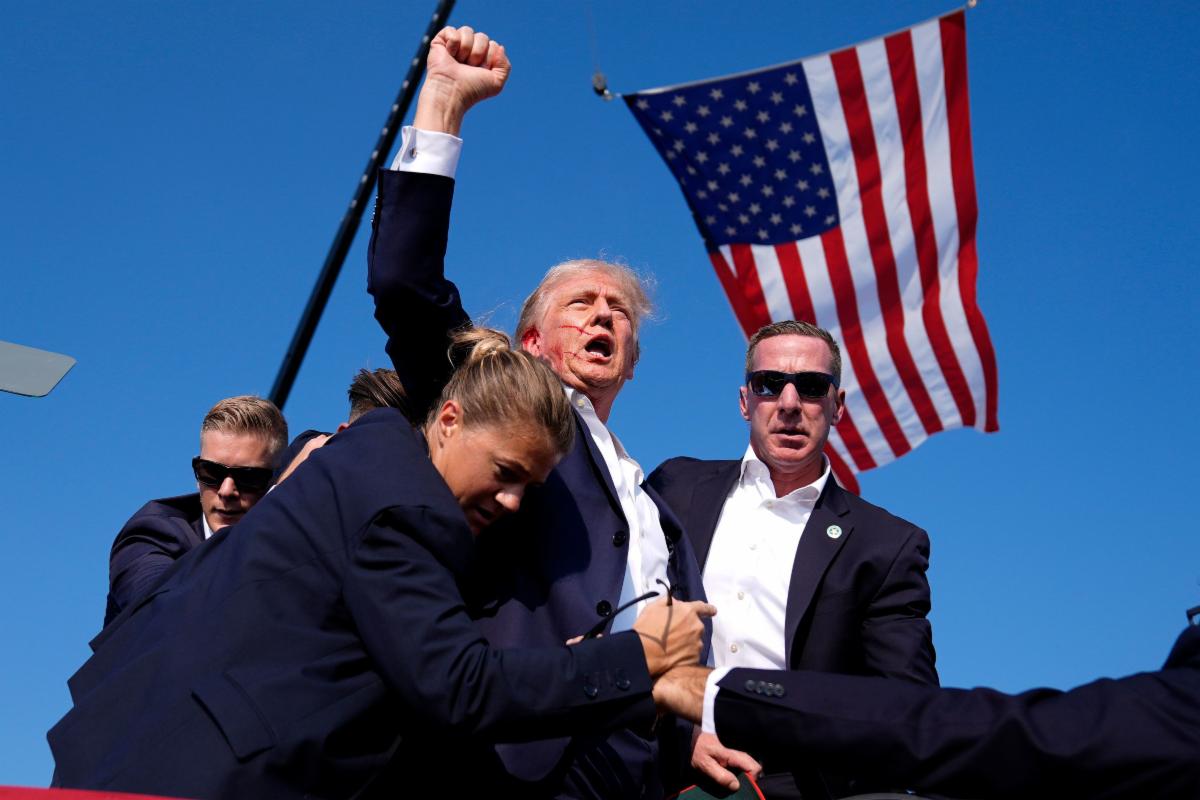
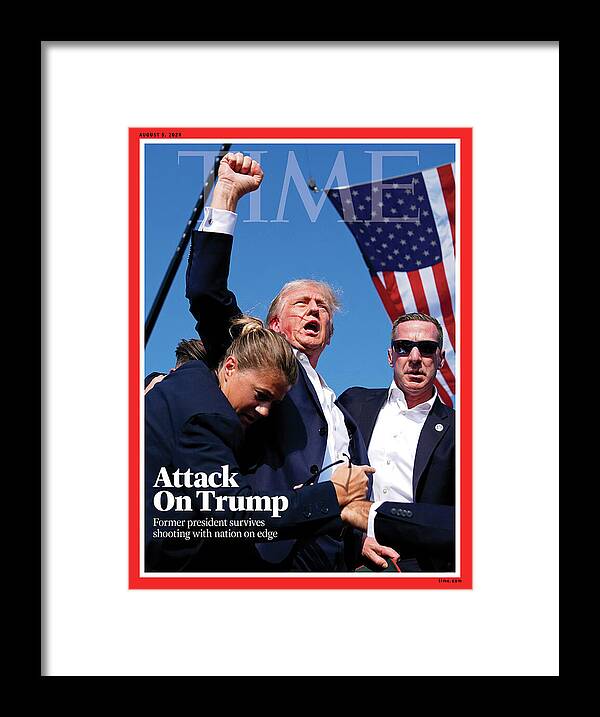
Today’s issue brings you more from Saturday’s coverage of the attempted assassination of former President Donald Trump – including Time Magazine’s use of the now-iconic image by AP Washington photographer Evan Vucci.


Included in our coverage are Connecting colleagues’ thoughts about what happened Saturday.


TRUMP PHOTO COVERAGE: From Wendy Davis Beard - That really is news photo perfection. I just wish Hal Buell could see it. From Chris Connell - Peggy Noonan had a classic line in the WSJ: "Whatever you feel about him, whatever your stand, grant him one of the great gangsta moves of American political history."


We also bring you stories on the retirement of longtime news editor Roger Schneider, the 35th AP anniversary of Anita Snow, a celebration of life event for Jim Willis, and news of our former AP colleague Dwayne Desaulniers joining Reuters.


Here’s to a great day – be safe, stay healthy, live it to your fullest.


Paul


In a world of moving pictures, photographs capture indelible moments in Trump assassination attempt

AP Photo/Evan Vucci


By DAVID BAUDER

AP Media Writer


The photograph of a bloodied Donald Trump with his fist in the air and an American flag looming in the background is quickly emerging as the pivotal image of Saturday’s shooting, and it wouldn’t exist without a journalist who acted quickly and on a hunch.


Video of the assassination attempt at a Pennsylvania rally filled television screens before it was even clear what had happened. Yet the work of The Associated Press’ Evan Vucci, Getty’s Anna Moneymaker and Doug Mills of The New York Times — whose picture caught apparent evidence of a bullet whizzing past Trump’s head — proved the enduring potency of still photography in a world driven by a flood of moving pictures.


Associated Press photojournalist Evan Vucci has covered former President Donald Trump for years, but what occurred on Saturday in Butler, Pennsylvania was a time stopping moment in history, and Vucci recounts his experience from the rally with Trump.


Vucci’s image, one of many he took on Saturday, could also have political implications from many directions — as indelible images often do in the days and years after seismic events happen.


“Without question, Evan’s photo will become the definitive photo from the (assassination) attempt,” said Patrick Witty, a former photo editor at Time, The New York Times and National Geographic. “It captures a range of complex details and emotions in one still image — the defiantly raised fist, the blood, the agents clamoring to push Trump off stage and, most importantly, the flag. That’s what elevates the photo.”


The New York Post ran the photo across the tabloid’s front page on Sunday with a headline describing the former president as “bloodied but unbowed.” Time magazine has put it on its cover. “A legendary American photograph,” The Atlantic wrote in a headline over a story about the image.


Read more here.


Behind the Cover: Interview With the Photographer of the Trump Image 

BY KARA MILSTEIN - TIME PHOTOGRAPHS BY EVAN VUCCI—AP


Early Saturday evening, a series of photos and videos depicting a shocking moment appeared across our digital screens– the attempted assassination of former President Donald Trump at a Pennsylvania campaign rally.


Frame-by-frame, we saw Trump, 78, first grab his head with an expression of confusion as gunshots rang out. Then, photos of Secret Service agents piling on top of Trump behind the podium in front of a crowd of confused onlookers. Followed by images of the swift movement of Trump, blanketed by personnel, off the stage. And then the now-iconic images of Trump with his fist raised, blood smeared on his face, and an American flag rippling behind him. Various iterations of these images, taken by several photojournalists, continue to be shared.


One of those photographs, taken by Associated Press photojournalist Evan Vucci, was chosen to appear on the cover of TIME. The historical significance, the clear composition, the undeniable tension, all appearing in a singular image of an event that stunned the world.


Here’s what Vucci has to say about the moment. The interview has been lightly edited for clarity.


Read more here. Shared by Bill Sikes.


On Trump coverage


John Bolt - There is no doubt that the photo of Trump was an excellent shot, for all the reasons mentioned.


It also shows why AP photographers are among the, if not the, best there are because they don’t just “point and shoot” and that great photos are not just happenstance (although that does happen sometimes, e.g. the NYT photo of the bullet (maybe).


But the first thought that went through my mind when I saw the video and then later the still was: The man has just been shot and he’s already posturing for the cameras.


I fervently hope that the AP refuses to license this picture for campaign purposes. I know there will be other avenues for us to start seeing something similar in campaign ads, but I pray it’s not this one.


-0-


Jim Gerberich - Perhaps cliché, but if a picture is worth a thousand words, Saturday’s coverage in Butler, Pa., is worth 100X. I’m in awe of the stunning report that Evan Vucci, Gene Puskar, Doug Mills, and Anna Moneymaker produced under incredible pressure. I’m guessing that together, they bring 140 years or more of experience to what they do.


There's plenty of video from Butler but the still images from this group have dominated the coverage. It’s a bit early to predict the long-term impact, but it's clear the historic images captured will be forever ingrained in our memories and Butler has added yet another twist to what is already a roller coaster 2024 election.


They shifted in a split second from covering a routine campaign rally to photographing a potential assassination. There's no "do over." Either you got it or you missed it.  Think about that very short timeline going from normal campaign / rally mode to shots fired with Doug Mills’ image of the bullet passing behind Trump overlayed on that timeline. Volumes will be written and the minute details analyzed of Evan’s image capturing Trump departing the stage pumping his fist with the flag in the background.


Many years ago, I was talking with the late Hal Buell about a photo Mills shot. His response was something like, "There’s something special about Doug, I’m not sure exactly what it is, but he’s different from most everyone else." 


Incredible visuals from a great group of journalists. I'm glad they are all safe.


-0-


Mike Holmes - Fortunately, political assassination is one kind of tragedy I never had to cover in my AP career.


The closest I came was a false alarm, and my experience says more about what it was like to work in a pre-computerized AP bureau.


One afternoon in the late ‘70s, we got a phone tip in the Des Moines bureau that someone had tried to kill popular Gov. Bob Ray. The bureau was about a half mile from the Capitol. I arrived to find out that a troubled guy carrying a knife had been stopped by security officers on the Capitol steps.


If memory serves, Ray might not even have been in the building. Details are kind of fuzzy.


What I do remember is that before chasing the story, first I had to finish our phone call from the USDA. We only had one chance to get the daily crop and livestock market results, and Iowa members needed those agate fixtures to move on time … no matter what.


AP will not be same without Roger Schneider

AP Photo/ Charles Rex Arbogast


Scott Bauer - The Associated Press will go on without Roger Schneider, but it will never be the same.


Roger’s retirement caps a distinguished career at AP where he worked as news editor in Wisconsin and Michigan and then as AP reorganized, he led news production for both of those states plus Indiana and Illinois, as if there wasn’t enough to do already.


Reporters, photographers, videographers, editors and everyone else who ever worked with Roger, for a day or a decade, loved him. I honestly can’t recall ever hearing a single person say anything negative about him the past 18 years I’ve known him.


Roger was the human embodiment of calm in the eye of the hurricane. All of us who worked on breaking news with him saw it. His ease with stress helped all of us do our jobs better. He had a Zen-like ability to get the best out of people while never raising his voice, even in the most trying of circumstances.


And he always kept the interest of his staff members first. At his retirement party in Chicago, Roger worked his way around the room praising the people who were there and the stories they had worked on, rather than talking about anything in his accomplished record. But that’s just Roger.


If we’re lucky, each one of us will encounter a Roger during our AP career. I was fortunate enough to work with him twice: first when he was Wisconsin news editor and then again when Wisconsin was put back under his wing the past couple of years. I, and all of us who worked with him, knew just how lucky we were. That’s why his retirement is so bittersweet.


Roger is retiring in Door County, Wisconsin, with his supportive and wonderful wife Nancy. He will be biking the back roads, spending time with grandchildren, cheering on the Packers and not checking his phone every 10 seconds.


Congrats to Roger! You will be so deeply missed.


Roger Schneider’s email - rogschneid@gmail.com


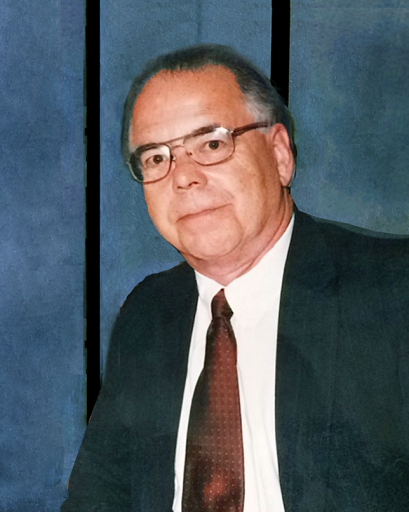
Celebrating the life of Jim Willis

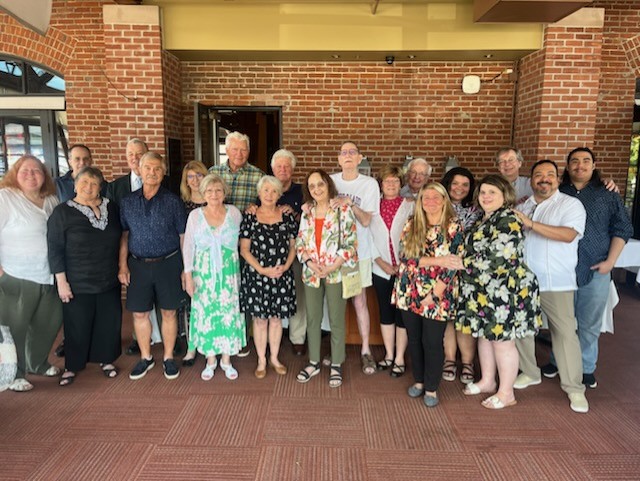
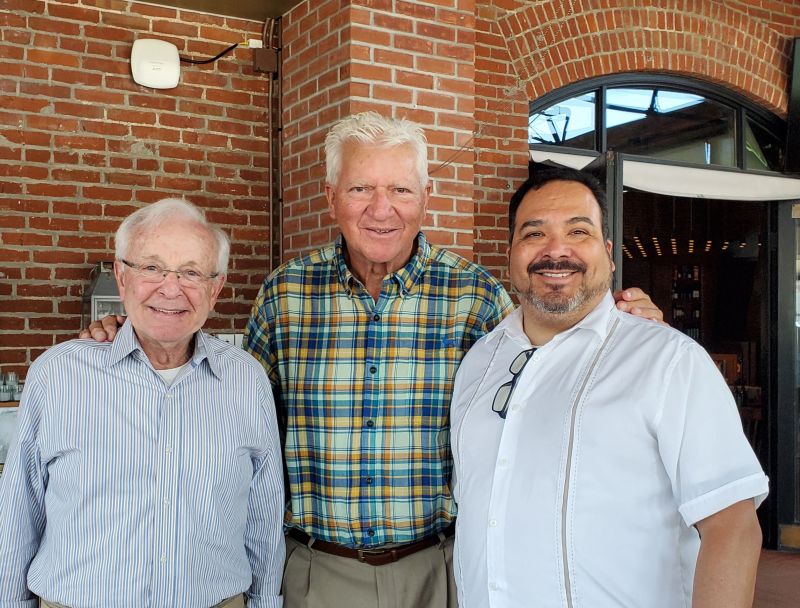
Family, friends and past AP colleagues of Jim Willis gathered at Lidia’s restaurant in downtown Kansas City on Saturday for a celebration of his life – hosted by Jim’s wife Deborah and their two daughters Susan (and her husband Juan Elizondo) and Charon (and her husband Roy Marden).


Jim died at the age of 78 on March 11, 2024.


The top photo shows those who attended the memorial.


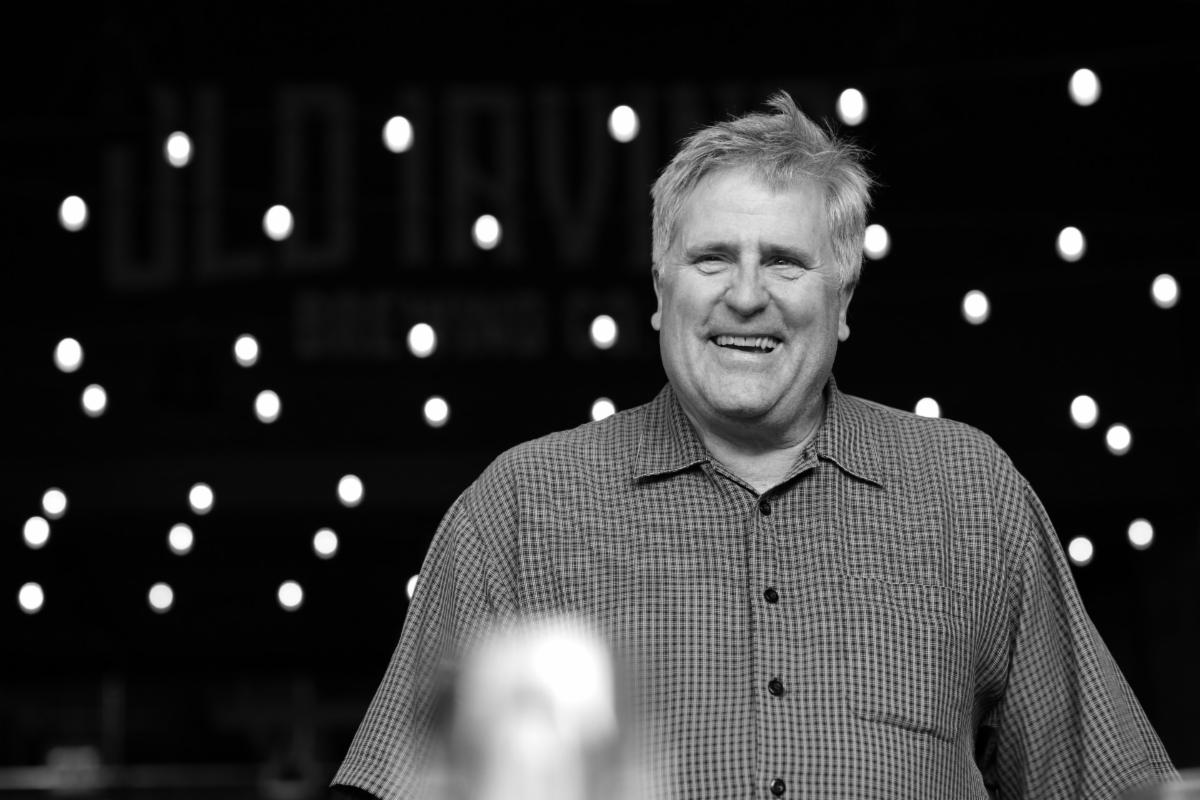
In the second photo are three former AP journalists – from left, Terry Ganey, Paul Stevens and Juan Elizondo.


Juan noted: “My father in law worked in the AP bureaus in Bismarck and Jefferson City. His close friend Terry preceded him as head of the Jeff City bureau. Paul oversaw AP operations in Kansas and Missouri. Paul was in that role when I started my AP career in Jeff City. Terry was reporting for the St. Louis Post-Dispatch in Jeff City when I was a cub reporter.


“Jim died in March and we celebrated his life today in Kansas City. I'm proud to have worked under and alongside these two great men and to have started my professional life in the same office where Jim ended his journalism career. He was a tremendous newsman and outstanding father in law.”


Click here for link to Jim’s obituary.


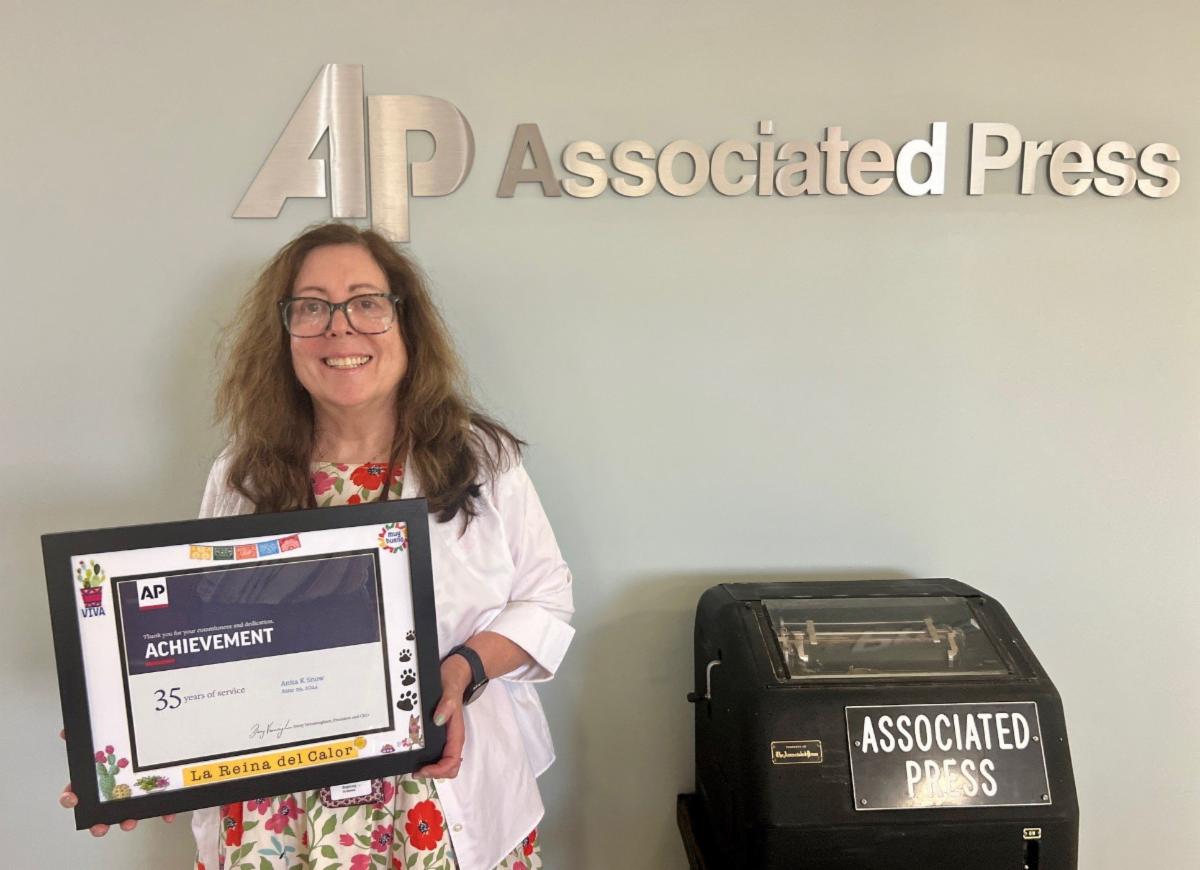
Celebrating Anita Snow’s 35th AP anniversary

Photo by Cheyanne Mumphrey


Terry Tang - We surprised the incomparable Anita Snow with a little celebration for her 35th(!) anniversary with AP. Felicia Fonseca and Cheyanne Mumphrey (happy 5th anniversary, Cheyanne) decorated her desk. I decided I would rather make cupcakes than go buy some. I did Hostess cupcakes knockoffs but wrote Anita’s name instead of squiggly white lines. I also found shaped sprinkles and used them since Anita is on the extreme heat beat. Anyway, yay Anita!


Anita Snow’s email - anitasnow@hotmail.com


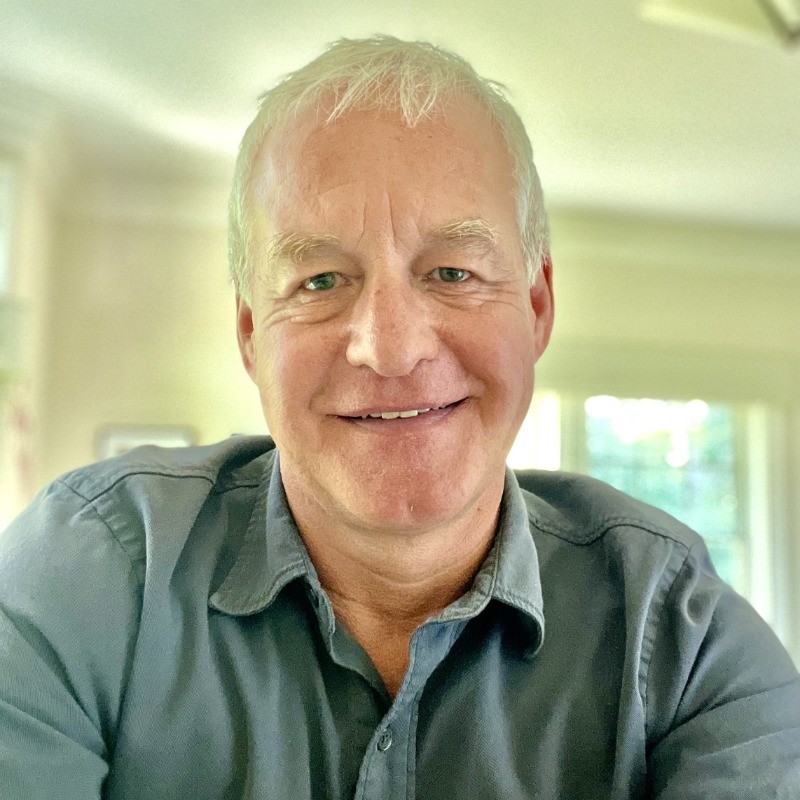
Dwayne Desaulniers joins Reuters after 17 years with AP


Dwayne Desaulniers - “I hear you’ve signed with the Red Sox!” declared a New York City-based colleague this week upon hearing the news that after 17 years with the AP I’ve accepted a role with Reuters. He made me laugh out loud.

There’s no crying in baseball, as we all know, but it would be a lie if I claimed to have not shed a tear leaving my professional and beloved home at AP in NYC.


Reuters is only five years AP’s junior. And like any good baseball team, when the front office invests the team simply gets better. Reuters has over 3,000 staff reporters and photogs and the backing of the Thomson corporation – itself with a long, distinguished history of serving information and data to professionals around the world. Reuters undersells itself and still carries the perception of a “foreign” news agency. But just as the Sox are gaining on the Yanks as we speak, Reuters has been gaining on AP, winning some impressive business this summer.


My goodness, I loved my time at AP because of the people and because of the shared honor of upholding the standards established by all those who came before.


Certainly, wasn’t my choice to leave AP (I would have loved a 'no-trade' clause), but it really doesn’t matter – leaving is leaving and at the end of the day you just miss the colleagues you love and our noble organization.


I landed at AP in 2005 with the title of Newspaper Executive and learned so much from my bosses and colleagues around the country. As a small-town kid from northern Quebec, I was stunned to see the Empire State building from my desk. Imposter, without a doubt! I noticed an opportunity to spend more time helping launch software for our members, who for some time were saddled with lousy software from terribly underfunded vendors. It was an opportunity to increase the connections between AP and the membership. I learned that AP is half a tech company during those years and loved every launch, design meeting and interaction with the amazing team in AP Technology.


Working with members was the real pleasure of the job. As I moved to AP in Boston, I spent four days a week visiting member newsrooms, listening and learning how we can help. AP allowed me to make a difference in the industry and for me, pretty much every day felt like a grand slam.


While it’s tough to leave AP, I’m deeply excited about Reuters’ prospects in the coming months. But more than anything, I’m thrilled to continue serving newsrooms and helping with that daily miracle serving those who give so much digging up news and reporting to our communities. I guess it doesn’t matter what team you play for, it’s the game itself that matters most.


That being said, Go Sox!


Dwayne Desaulnier’s email is - desaulniersd@gmail.com 


Stories of interest


A powerful photograph that could change America forever (Washington Post)


Perspective by Philip Kennicott


Before talking about images, talk about reality. One spectator is dead, two others are critically injured, and American political life is more dangerous today than it was yesterday. Former president Donald Trump was wounded in the right ear and will recover; the body politic was wounded far more deeply, and the prognosis isn’t clear. We don’t yet know the motivation of the shooter, but it seems the threshold between violent rhetoric and violent action has been breached once again, and every time it is crossed, the crossing gets easier.


There is another reality added to all of that: Evan Vucci’s photograph for the Associated Press of Trump in the immediate aftermath of a shooting at a Pennsylvania political rally. Trump is seen with blood on his face, his right arm raised to pump a fist at the crowd while the American flag streams above his head. Independent of how this photograph is read and interpreted, it is strongly constructed, with aggressive angles that reflect the chaos and drama of the moment, and a powerful balance of color, all red, white and blue, including the azure sky above and the red-and-white decorative banner below. Trump seems to emerge from within a deconstructed version of its basic colors.


It is a photograph that could change America forever.


Read more here. Shared by Myron Belkind.


-0-


Wait, does America really still employ a ton of news reporters? (Washington Post) 


Analysis by Andrew Van Dam


Amid all the wringing of hands and gnashing of teeth about the incredible shrinking American news industry, we stumbled on a seemingly hopeful sign when charting arts-related jobs for our columns on authors and musicians.


America has about as many reporters and editors as it did three decades ago, according to our analysis of millions of responses to the Census Bureau’s decennial census and the American Community Survey, the twin pillars that support much of our modern data infrastructure.


Through everything — the rise of the internet, the rise of social media, the fall of Huey Lewis and the News, the novel coronavirus — journalism jobs stayed more or less flat.


We had to look into it.


But maybe not right away.


We cherished our tiny sliver of hope and weren’t ready to reach for the tweezers. It felt nice, however briefly, to coexist with the remote possibility that American journalists were secretly chugging along, hale and hearty as ever.


Read more here.


-0-


Russia Sentences U.S. Journalist in Absentia for Ukraine War Comments (New York Times)


By Neil MacFarquhar


A Moscow court on Monday sentenced in absentia Masha Gessen, the Russian-born American journalist, author and New York Times staff member, to eight years in prison over comments they made about atrocities that the Russian military has been accused of committing in Ukraine.


Russian law enforcement officials charged Mx. Gessen, who lives in the United States and uses the pronoun they, in August over a 2022 interview they gave to Yuri Dud, a popular online Russian journalist. They were put on a wanted list in December.


In the interview — which was broadcast on YouTube and has been viewed more than 6.6 million times — they discussed the apparent massacre by Russian forces of hundreds of people in the eastern Ukrainian city of Buha and others. The corpses of at least 400 civilians were found in Bucha after Russian forces retreated from the city.


Read more here.

AP classes, by the year...


(EDITOR'S NOTE: This is a listing of Connecting colleagues who have shared the year and the bureau where they started with the AP. If you would like to share your own information, I will include it in later postings. Current AP staffers are also welcome to share their information.)


1951 - Norm Abelson (Boston)


1953 – Charles Monzella (Huntington, WVa)


1955 – Henry Bradsher (Atlanta), Paul Harrington (Boston), Joe McGowan (Cheyenne)


1957 - Louis Uchitelle (Philadelphia)


1958 – Roy Bolch (Kansas City)


1959 – Charlie Bruce (Montgomery)


1960 – Claude Erbsen (New York), Carl Leubsdorf (New Orleans)


1961 – Peter Arnett (Jakarta, Indonesia), Strat Douthat (Charleston. WVa), Warren Lerude (San Diego), Ed Staats (Austin)


1962 – Paul Albright (Cheyenne), Malcolm Barr Sr. (Honolulu), Myron Belkind (New York), Kelly Smith Tunney (Miami)


1963 – Hal Bock (New York)


1964 – Rachel Ambrose (Indianapolis), Larry Hamlin (Oklahoma City), John Lengel (Los Angeles), Ron Mulnix (Denver), Lyle Price (San Francisco), Arlene Sposato (New York), , Hilmi Toros (New York)


1965 – Bob Dobkin (Pittsburgh), Harry Dunphy (Denver), John Gibbons (New York), Jim Luther (Nashville), Larry Margasak (Harrisburg), Rich Oppel (Tallahassee)


1966 – Shirley Christian (Kansas City), Mike Doan (Portland, OR), Edie Lederer (New York), Nancy Shipley (Nashville), Mike Short (Los Angeles), Marty Thompson (Seattle), Nick Ut (Saigon), Kent Zimmerman (Chicago)


1967 – Dan Berger (Los Angeles), Adolphe Bernotas (Concord), Lou Boccardi (New York), Linda Deutsch (Los Angeles), Don Harrison (Los Angeles), Doug Kienitz (Cheyenne), David Liu (New York), Bruce Lowitt (Los Angeles), Chuck McFadden (Los Angeles), Martha Malan (Minneapolis), Bill Morrissey (Buffalo), Larry Paladino (Detroit), Michael Putzel (Raleigh), Bruce Richardson (Chicago), Richard Shafer (Baltimore), Victor Simpson (Newark), Michael Sniffen (Newark)


1968 – Lee Balgemann (Chicago), John Eagan (San Francisco), Joe Galu (Albany/Troy), Peter Gehrig (Frankfurt), Charles Hanley (Albany), Jerry Harkavy (Portland, Maine), Herb Hemming (New York), Brian King (Albany), Samuel Koo (New York), Karren Mills (Minneapolis), Michael Rubin (Los Angeles), Rick Spratling (Salt Lake City), Barry Sweet (Seattle)


1969 - Ann Blackman (New York), Ford Burkhart (Philadelphia), Dick Carelli (Charleston, WVa), Dennis Coston (Richmond), Mary V. Gordon (Newark), Daniel Q. Haney (Portland, Maine), Mike Harris (Chicago), Brad Martin (Kansas City), David Minthorn (Frankfurt), Cynthia Rawitch (Los Angeles), Bob Reid (Charlotte), Mike Reilly (New York), Doug Tucker (Tulsa), Bill Winter (Helena)


1970 – Richard Boudreaux (New York), Richard Drew (San Francisco), Bob Egelko (Los Angeles), Steve (Indy) Herman (Indianapolis), Tim Litsch (New York), Lee Margulies (Los Angeles), Chris Pederson (Salt Lake City), Brendan Riley (San Francisco), Larry Thorson (Philadelphia)


1971 – Harry Atkins (Detroit), Jim Bagby (Kansas City), Larry Blasko (Chicago), Jim Carlson (Milwaukee), Jim Carrier (New Haven), Chris Connell (Newark), Bill Gillen (New York), Bill Hendrick (Birmingham), John Lumpkin (Dallas), Kendal Weaver (Montgomery)


1972 – Hank Ackerman (New York), Bob Fick (St. Louis), Joe Frazier (Portland, Ore.), Terry Ganey (St. Louis), Mike Graczyk (Detroit), Denis Gray (Albany), Lindel Hutson (Little Rock), Brent Kallestad (Sioux Falls), Tom Kent (Hartford), Nolan Kienitz (Dallas), Andy Lippman (Phoenix), Ellen Miller (Helena), Mike Millican (Hartford), Lew Wheaton (Richmond)


1973 - Jerry Cipriano (New York), Susan Clark (New York), Norm Clarke (Cincinnati), Joe Galianese (East Brunswick), Merrill Hartson (Richmond), Mike Hendricks (Albany), Tom Journey (Tucson), Steve Loeper (Los Angeles), Tom Slaughter (Sioux Falls), Jim Spehar (Denver), Paul Stevens (Albany), Jeffrey Ulbrich (Cheyenne), Owen Ullmann (Detroit), John Willis (Omaha), Evans Witt (San Francisco)


1974 – Norman Black (Baltimore), David Espo (Cheyenne), Dan George (Topeka), Robert Glass (Philadelphia), Steve Graham (Helena), Tim Harper (Milwaukee), Elaine Hooker (Hartford), Sue Price Johnson (Charlotte), Dave Lubeski (Washington), Janet McConnaughey (Washington), Lee Mitgang (New York), Bud Weydert (Toledo), Marc Wilson (Little Rock) 


1975 – Peter Eisner (Columbus), David Powell (New York), Eileen Alt Powell (Milwaukee)


1976 – Brad Cain (Chicago), Judith Capar (Philadelphia), Dick Chady (Albany), Steve Crowley (Washington), David Egner (Oklahoma City), Marc Humbert (Albany), Steven Hurst (Columbus), Richard Lowe (Nashville), John Nolan (Nashville), Charlotte Porter (Minneapolis), Chuck Wolfe (Charlotte)


1977 – Bryan Brumley (Washington), Robert Burns (Jefferson City), Charles Campbell (Nashville), Dave Carpenter (Philadelphia), Ken Herman (Dallas), Mike Holmes (Des Moines), Brad Kalbfeld (New York), Scott Kraft (Jefferson City), John Kreiser (New York), Peter Leabo (Dallas), Kevin LeBoeuf (Los Angeles), Ellen Nimmons (Minneapolis), Dan Sewell (Buffalo), Estes Thompson (Richmond), David Tirrell-Wysocki (Concord)


1978 – Tom Eblen (Louisville), Ruth Gersh (Richmond), Doug Pizac (Los Angeles), Charles Richards (Dallas), Reed Saxon (Los Angeles), Steve Wilson (Boston)


1979 – Brian Bland (Los Angeles), Scotty Comegys (Chicago), John Daniszewski (Philadelphia),  Frances D’Emilio (San Francisco), Pat Fergus (Albany), Brian Friedman (Des Moines), Sally Hale (Dallas), Jill Lawrence (Harrisburg), Barry Massey (Kansas City), Phillip Rawls (Nashville), John Rice (Carson City), Linda Sargent (Little Rock), Joel Stashenko (Albany), Robert Wielaard (Brussels)


1980 – Alan Adler (Cleveland), Christopher Bacey (New York), Jeff Barnard (Providence), Mark Duncan (Cleveland), Bill Kaczor (Tallahassee), Mitchell Landsberg (Reno), Kevin Noblet (New Orleans), Jim Rowley (Baltimore), David Speer (Jackson), Hal Spencer (Providence), Carol J. Williams (Seattle)


1981 – Paul Davenport (Phoenix), Dan Day (Milwaukee), John Flesher (Raleigh), Len Iwanski (Bismarck), Ed McCullough (Albany), Drusilla Menaker (Philadelphia), Kim Mills (New York), Mark Mittelstadt (Des Moines), Roland Rochet (New York), Lee Siegel (Seattle), Marty Steinberg (Baltimore), Bill Vogrin (Kansas City)


1982 – Dorothy Abernathy (Little Rock), Al Behrman (Cincinnati), Tom Cohen (Jefferson City), John Epperson (Chicago), Ric Feld (Atlanta), Nick Geranios (Helena), Howard Gros (New Orleans), Robert Kimball (New York), Rob Kozloff (Detroit), Bill Menezes (Kansas City), David Ochs (New York)


1983 – Scott Charton (Little Rock), Sue Cross (Columbus), Mark Elias (Chicago), Diana Heidgerd (Miami), Sheila Norman-Culp (New York), Carol Esler Ochs (New York), Amy Sancetta (Philadelphia), Rande Simpson (New York), Dave Skidmore (Milwaukee)


1984 – Owen Canfield (Oklahoma City), Wayne Chin (Washington), Jack Elliott (Oklahoma City), Kelly P. Kissel (New Orleans), Joe Macenka (Richmond), Eva Parziale (San Francisco), Walt Rastetter (New York), Keith Robinson (Columbus), Cliff Schiappa (Kansas City), David Sedeño (Dallas), Andrew Selsky (Cheyenne), Patty Woodrow (Washington)


1985 – Beth Grace (Columbus), Betty Kumpf Pizac (Los Angeles)


1986 – Joni Baluh Beall (Richmond), David Beard (Jackson), Tom Coyne (Columbia, SC), Dave DeGrace (Milwaukee), Alan Flippen (Louisville), Jim Gerberich (San Francisco), Howard Goldberg (New York), Mark Hamrick (Dallas), Sandy Kozel (Washington), Robert Meyers (London)


1987 – Donna Abu-Nasr (Beirut), Dave Bauder (Albany), Chuck Burton (Charlotte), Beth Harris (Indianapolis), Lynne Harris (New York), Steven L. Herman (Charleston, WVa), Rosemarie Mileto (New York), John Rogers (Los Angeles)


1988 – Chris Carola (Albany), Peg Coughlin (Pierre), Kathy Gannon (Islamabad), Steve Hart (Washington), Melissa Jordan (Sioux Falls), Bill Pilc (New York), Kelley Shannon (Dallas)


1989 – Ted Bridis (Oklahoma City), Charlie Arbogast (Trenton), Ron Fournier (Little Rock)


1990 – Frank Fisher (Jackson), Dan Perry (Bucharest), Steve Sakson (Baltimore), Sean Thompson (New York)


1991 – Amanda Kell (Richmond), Santiago Lyon (Cairo), Lisa Pane (Hartford), Ricardo Reif (Caracas), Bill Sikes (Buffalo)


1992 – Kerry Huggard (New York)


1993 – Jim Salter (St. Louis)


1995 – Donna Tommelleo (Hartford)


1996 – Patricia N. Casillo (New York)


1997 – J. David Ake (Chicago), Pamela Collins (Dallas), Madhu Krishnappa Maron (New York), Jim Suhr (Detroit), Jennifer Yates (Baltimore)


2000 – Gary Gentile (Los Angeles)


2006 – Jon Gambrell (Little Rock) 

Today in History - July 16, 2024

By The Associated Press

Today is Tuesday, July 16, the 198th day of 2024. There are 168 days left in the year.


Today’s Highlight in History:


On July 16, 1945, the United States exploded its first experimental atomic bomb in the desert of Alamogordo, New Mexico; the same day, the heavy cruiser USS Indianapolis left Mare Island Naval Shipyard in California on a secret mission to deliver atomic bomb components to Tinian Island in the Marianas.


Also on this date:


In 1790, a site along the Potomac River was designated the permanent seat of the United States government; the area became Washington, D.C.


In 1862, Flag Officer David G. Farragut became the first rear admiral in the United States Navy.


In 1951, the novel “The Catcher in the Rye” by J.D. Salinger was first published by Little, Brown and Co.


In 1957, Marine Corps Maj. John Glenn set a transcontinental speed record by flying a Vought F8U Crusader jet from California to New York in 3 hours, 23 minutes and 8.4 seconds.


In 1964, as he accepted the Republican presidential nomination in San Francisco, Barry M. Goldwater declared that “extremism in the defense of liberty is no vice” and that “moderation in the pursuit of justice is no virtue.”


In 1969, Apollo 11 launched from Cape Kennedy in Florida on the first manned mission to the surface of the moon.


In 1999, John F. Kennedy Jr., his wife, Carolyn, and her sister, Lauren Bessette, died when their single-engine plane, piloted by Kennedy, plunged into the Atlantic Ocean near Martha’s Vineyard, Massachusetts.


In 2004, Martha Stewart was sentenced to five months in prison and five months of home confinement by a federal judge in New York for lying about a stock sale.


In 2008, Florida resident Casey Anthony, whose 2-year-old daughter, Caylee, had been missing a month, was arrested on charges of child neglect, making false official statements and obstructing a criminal investigation. (Casey Anthony was later acquitted at trial of murdering Caylee, whose skeletal remains were found in December 2008; Casey was convicted of lying to police.)


In 2015, a jury in Centennial, Colorado, convicted James Holmes of 165 counts of murder, attempted murder and other charges in the 2012 Aurora movie theater rampage that left 12 people dead.


In 2017, 10 people died at a popular swimming hole in Arizona’s Tonto National Forest after a rainstorm unleashed a flash flood.


In 2018, after meeting with Russian President Vladimir Putin in Helsinki, President Donald Trump openly questioned the finding of his own intelligence agencies that Russia had meddled in the 2016 U.S. election to his benefit. (Trump said a day later that he misspoke.)


Today’s Birthdays: International Tennis Hall of Famer Margaret Court is 82. Football Hall of Famer Jimmy Johnson is 81. Violinist Pinchas Zukerman is 76. Actor-singer Ruben Blades is 76. Rock composer-musician Stewart Copeland is 72. Playwright Tony Kushner is 68. Dancer Michael Flatley is 66. Former actor and teen model Phoebe Cates is 61. Actor Daryl “Chill” Mitchell is 59. Actor-comedian Will Ferrell is 57. Football Hall of Famer Barry Sanders is 56. Actor Corey Feldman is 53. Actor Jayma Mays is 45. Retired soccer star Carli Lloyd is 42. Actor AnnaLynne McCord is 37. Actor-singer James Maslow (Big Time Rush) is 34. Actor Mark Indelicato is 30. Pop singer-musician Luke Hemmings (5 Seconds to Summer) is 28.


Got a photo or story to share?

Connecting is a daily newsletter published Monday through Friday that reaches more than 1,800 retired and former Associated Press employees, present-day employees, and news industry and journalism school colleagues. It began in 2013. Past issues can be found by clicking Connecting Archive in the masthead. Its author, Paul Stevens, retired from the AP in 2009 after a 36-year career as a newsman in Albany and St. Louis, correspondent in Wichita, chief of bureau in Albuquerque, Indianapolis and Kansas City, and Central Region vice president based in Kansas City.


Got a story to share? A favorite memory of your AP days? Don't keep them to yourself. Share with your colleagues by sending to Ye Olde Connecting Editor. And don't forget to include photos!


Here are some suggestions:


- Connecting "selfies" - a word and photo self-profile of you and your career, and what you are doing today. Both for new members and those who have been with us a while.


- Second chapters - You finished a great career. Now tell us about your second (and third and fourth?) chapters of life.


- Spousal support - How your spouse helped in supporting your work during your AP career. 


- My most unusual story - tell us about an unusual, off the wall story that you covered.


- "A silly mistake that you make"- a chance to 'fess up with a memorable mistake in your journalistic career.


- Multigenerational AP families - profiles of families whose service spanned two or more generations.


- Volunteering - benefit your colleagues by sharing volunteer stories - with ideas on such work they can do themselves.


- First job - How did you get your first job in journalism?


Most unusual place a story assignment took you.


Paul Stevens

Editor, Connecting newsletter

paulstevens46@gmail.com