|
|
|
Connecting
July 15, 2024
Click here for sound of the Teletype
| |
|
Colleagues,
Good Monday morning on this July 15, 2024,
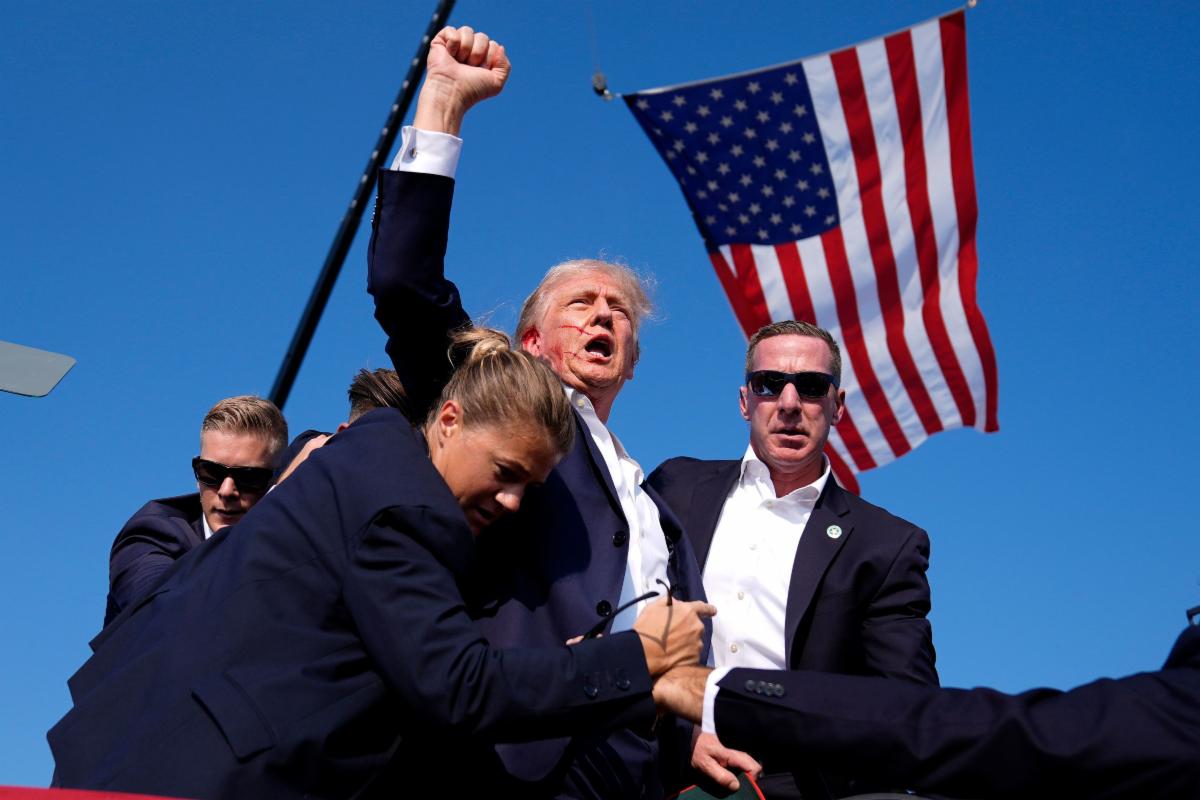
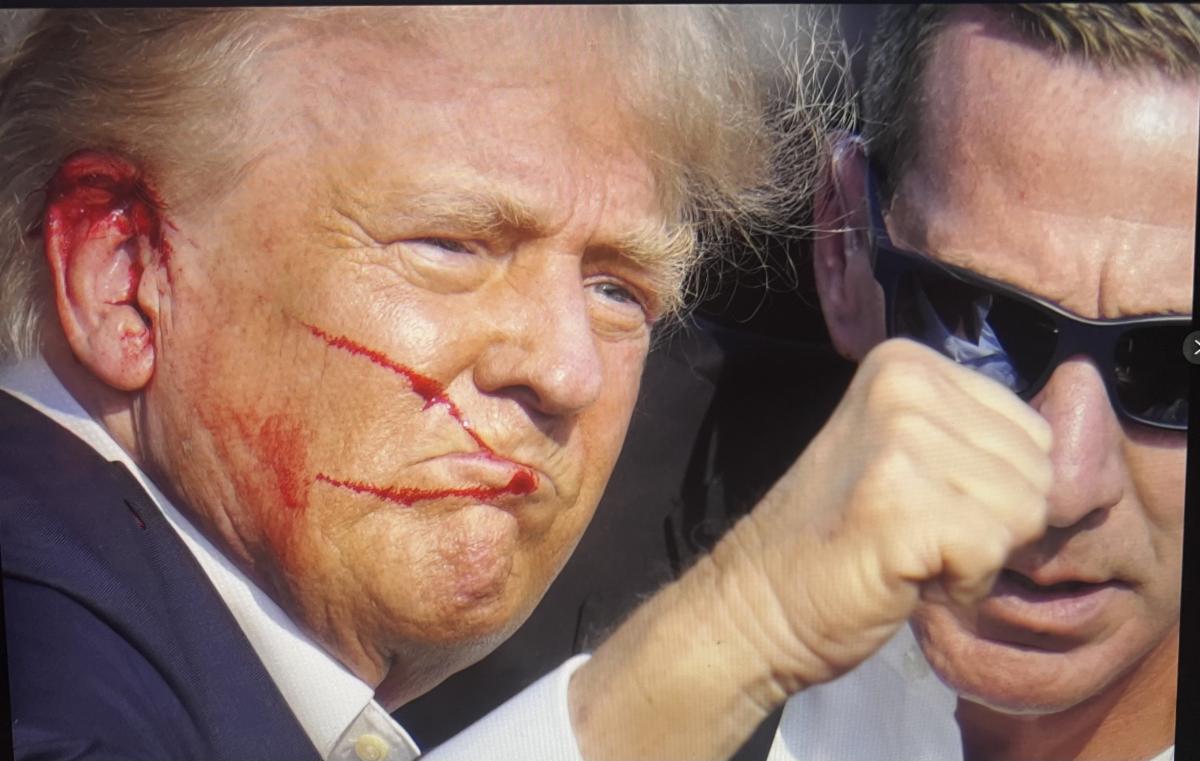
The Atlantic: The photograph, by the Associated Press’s Evan Vucci, became immediately legendary. However you feel about the man at its center, it is undeniably one of the great compositions in U.S. photographic history.
The New Yorker: But what makes the image is Trump. In its surface details, it carries echoes of the marines at Iwo Jima. In the former President’s bloody defiance, it even evokes Rocky Balboa. On that stage, Trump seemed well aware of the image he was creating. It is an image that captures him as he would like to be seen, so perfectly, in fact, that it may outlast all the rest.
The photo they’re describing - shown above - was taken by the AP’s Evan Vucci seconds after former President Donald Trump was being rushed off stage after an assassination attempt during a campaign rally in Butler, Pa., on Saturday.
| |
|
Vucci, AP chief photographer in Washington and a 21-year AP veteran, described the moment when the shots were fired in this AP video. Click here. (Shared by Lauren Easton)
“It’s a moment in history that you have to document, right?” Evan Vucci told The Daily Beast by phone late Saturday, hours after he captured the shocking images. “Being a photographer, you have to, have to be there. I can’t write about it later. I can’t go back in time and get a redo. So you have to do your job.” (Shared by Al Cross)
More from the article:
Thoughts of his safety? Didn’t concern him. Thoughts of his surroundings? Irrelevant at that moment. All he cared about, he said, was what the conditions were to document history.
“What’s going to happen next? What do I need to do? Where do I need to be? What is the light? What is the composition? So those are the things that starts to go through your head,” he said. “It’s very much in the mindset where you’re just now doing your job.”
Videos captured Vucci racing toward the right side of the stage seconds after the shooting, as he believed it best to follow where the Secret Service agents were likely to escort Trump off the platform.
“They stand them up, and then he starts pumping his fists to the crowd,” Vucci said. “At that point you’re just making sure that your composition is good and you’re making the images that you need to make.”
A photo by our colleague Doug Mills, veteran photographer for The New York Times who formerly worked for the AP, appeared to capture the image of a bullet streaking past Trump’s head in the assessment of a retired FBI agent. We bring you the Times’ story.
| |
|
In an interview with PBS’ Scott Detrow, Mills was asked if he had ever spoken with AP’s Ron Edmonds (who died May 31) about how he made the Pulitzer-Prize winning photo of Ronald Reagan after Reagan was shot by John Hinckley in 1981. Colleague Jim Rowley, who shared the link, noted that “for those of us who worked with Ron, this interview is especially poignant.”
Mills’ reply:
MILLS: I have. Ron, you know, was a dear friend of mine, a colleague of mine who I worked at AP with for 15 years. You know, he was, you know, a mentor of mine. And I spoke with him many times about his pictures of the assassination attempt on Ronald Reagan, and I studied them. I - you know, obviously, every anniversary, we would talk about him. I would talk to him about it. And, you know, I asked him one time about it, and he said, you know - I said, how did you not blink? How did you not look up to see where the - where it was coming from? And he said it was just instincts, and I - you know, I really felt like I went forward. I didn't go backwards. You know, and I think that's something that happened to me yesterday. I went forward. Ron never took his eye off President Reagan, and I tried to do the same thing by not taking my eye off of former President Trump.”
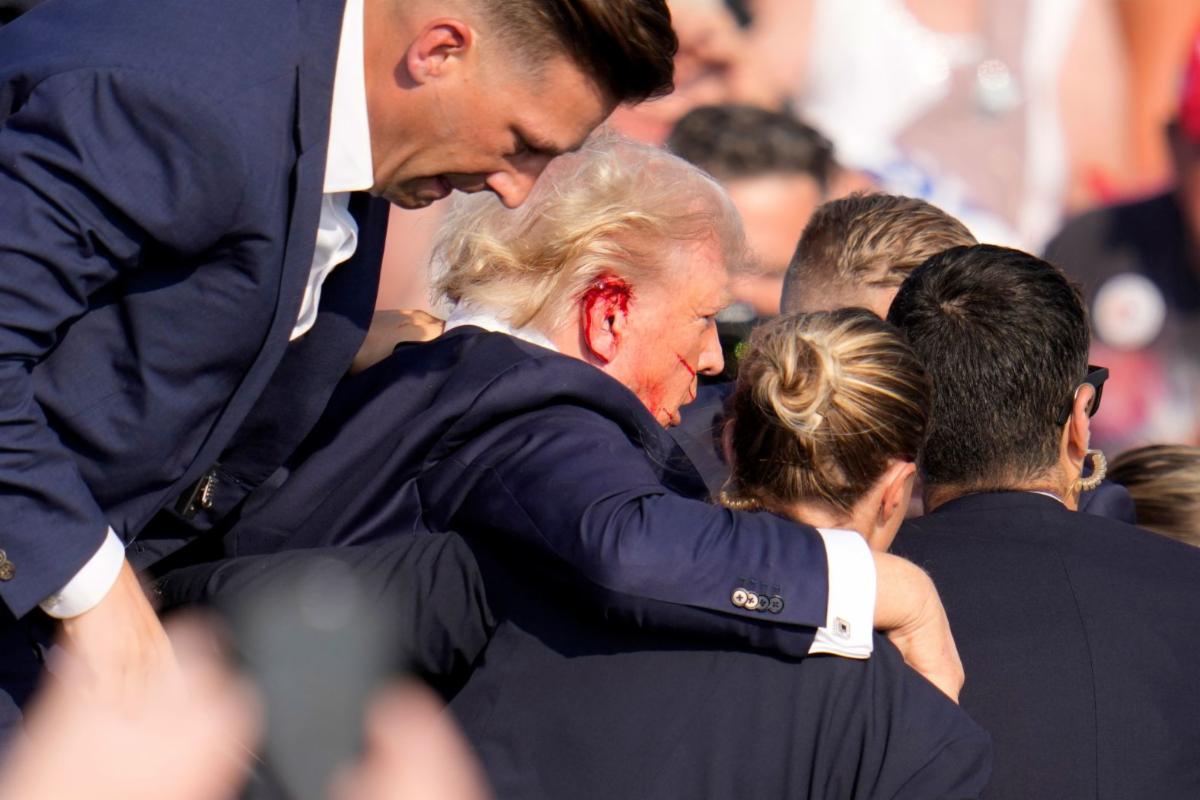
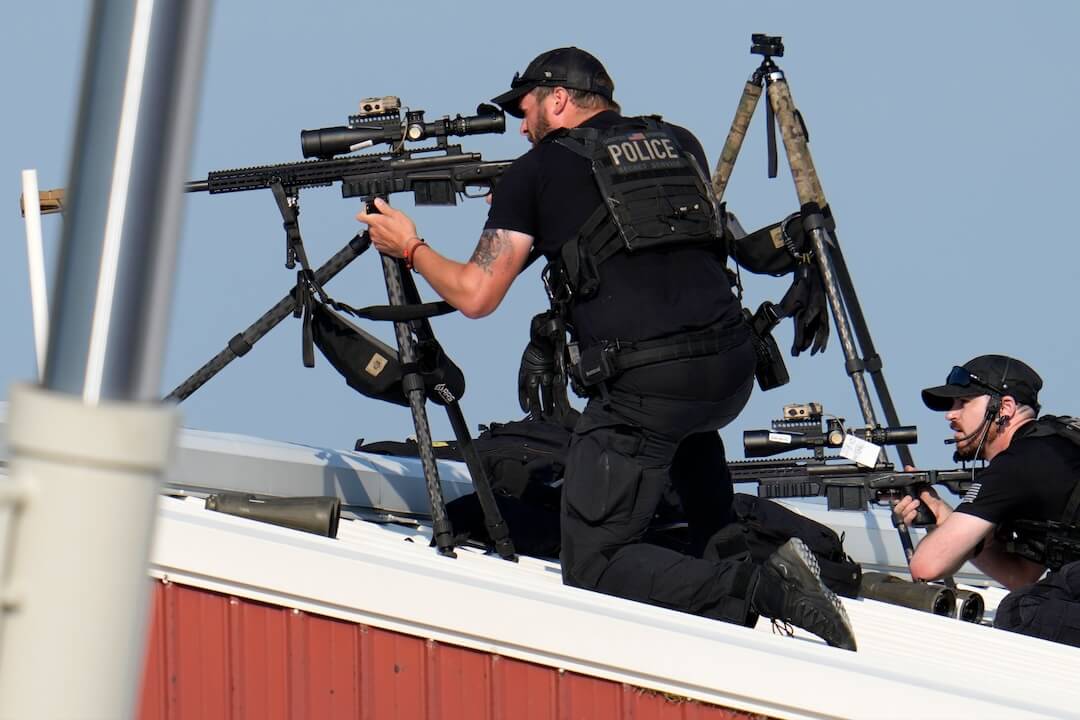
We bring you startling photos from the lens of AP’s Pittsburgh photographer Gene J. Puskar, who took several photos of a bloodied Trump and shifted his focus for an image of police snipers returning fire after shots were fired.
Click here for Poynter’s Tom Jones’ thorough report on the media coverage.
Got any thoughts about the coverage of the attempted assassination? Share them with Connecting.
Here’s to a great week – be safe, stay healthy, live each day to your fullest.
And remember to appreciate journalists like Vucci and Mills and Puskar and the many others covering that historic moment Saturday who ran toward danger, not away from it.
Paul
A Legendary American Photograph
The photo of Trump after the attempt on his life is a badly needed window into the MAGA mindset.
By Tyler Austin Harper
The Atlantic
Donald Trump raises a fist. Blood streaks his face. The sky is high, blue, and empty except for an American flag caught in a hard wind. A Secret Service agent has her arms around his waist. The former president’s mouth is open, in the middle of a snarled shout. We know from video footage that he is yelling “Fight!,” that the crowd is chanting “USA!”
The photograph, by the Associated Press’s Evan Vucci, became immediately legendary. However you feel about the man at its center, it is undeniably one of the great compositions in U.S. photographic history. Although I am deeply relieved that Trump survived this assassination attempt, I am no fan of his. But the first time I saw the photo, I felt an emotion that I later recognized, with considerable discomfort, as a fluttering of unbidden nationalist zeal. What encapsulates our American ideal more than bloody defiance and stubborn pride that teeters just on the edge of foolishness? No hunkering and no hiding—standing undaunted and undeterred, fist-pumping your way through an attempted murder. It was a moment when Trump supporters’ idea of him—strong, resilient, proud—collided with reality.
I can’t help but be moved by this remarkable image, taken by a Pulitzer Prize winner who ran toward the danger, camera in hand, rather than away from it. There is a perverse and paradoxical disjunction between Trump the man, who many argue is a threat to American democracy, and this image of Trump, which seems to capture that same democracy in all its pathology, mythos, and, yes, glory. The Compact editor Sohrab Ahmari tweeted that Trump’s instinct—to reflexively gesture in rebellion after being shot at—is “evidence of a truly extraordinary man.” He is more than a little right. Extraordinary, after all, is not so much a moral descriptor as an aesthetic one.
The image of Trump, bloody with a raised fist, is destined to adorn T-shirts, magazine covers, full-page spreads in history books, campaign ads. I do not think it is an exaggeration to say that the photo is nearly perfect, one that was captured under extreme duress and that distills the essence of a man in all his contradictions.
Many commentators have already surmised that this image alone will cost our current president his reelection bid. Some rushed to juxtapose pictures of Joe Biden, staring awkwardly and looking frail, with an angry, almost-assassinated Trump. One writer took to X to place the Vucci photo side by side with a still from the film Oppenheimer, implying that the photographer, like the inventor of the atomic bomb, may one day come to feel that his greatest achievement slipped out of his control and ushered in a darker world. The left-wing political commentator Cenk Uygur summarized things more simply still: “Trump sticking the hand up and saying, ‘Fight, fight, fight!’ while the crowd chanted ‘USA, USA, USA!’ was bad ass.”
All of these reactions, whether fear or resentment or grudging admiration, are understandable. But I wonder whether they miss the point. The real subject of this photograph is not Donald Trump but his supporters. Many of us have mocked Trump stans—their ridiculous fan art that reimagines him with bulging muscles or fighting in the Revolutionary War; their unshakable and cultish belief in his vigor; their desperate desire to see him as he wants to be seen rather than as he is. Yesterday, for a few moments at least, the Trump of MAGA’s imagination and reality became indistinguishable. Not even the most slavish devotee of the former president could have dreamed up a more iconic portrait.
Tyler Austin Harper is an assistant professor of environmental studies at Bates College and a contributing writer at The Atlantic.
Click here to read more. Shared by Malcolm Ritter.
The Attempt on Donald Trump’s Life and an Image That Will Last
The bloodied former President, his fist raised, flanked by an American flag, is already an indelible portrait of our era of political crisis and conflict.
By Benjamin Wallace-Wells
The New Yorker
Almost immediately after shots rang out at Donald Trump’s rally in Butler, Pennsylvania, the former President flinched onstage, grabbed at his face, and dropped to the ground. In the chaotic moments that followed, Trump was helped to his feet by Secret Service agents, and delivered definitive proof of life: he raised his right fist toward the sky and mouthed to the crowd, “Fight.” In the news photo that circulated shortly after, taken by Evan Vucci, of the Associated Press, Trump is set against a clear blue sky and four Secret Service agents clutch at him, one of whom stares directly at the camera, his eyes shielded by a pair of black sunglasses. An American flag appears to almost float over the scene. Trump’s lips are pursed, his eyes narrowed, and his chin slightly raised. There are streaks of blood atop his right ear, and on his cheek. He is looking out far beyond what the camera can take in—at the public, at the future—and he is defiant. Whoever tried to kill him failed. It is already the indelible image of our era of political crisis and conflict.
Other images, screenshots, and fragments of information rushed onto social media and filled out the story. In one, a Secret Service agent kneeling on the grass turns his body and extends a finger, presumably to identify the shooter, who had reportedly taken up a position on a rooftop outside the rally. In another, taken just after Trump fell to the stage, the former President’s head is framed, a few inches off of the ground with blood dribbling down his cheek, between someone’s legs. And, in a third, taken seconds after Trump rose to his feet, he is being held by several Secret Service agents who have surrounded him; one has both hands over Trump’s head to protect him, but it almost looks as if someone is praying over him. Each of these photographs freezes the moment, draining it of the chaos that is apparent in the live streams. They also add a sense of foreboding; the figures in these images, and anyone who views them, are all waiting, with trepidation, for what comes next. The Trump campaign soon released a statement that said, “He is fine and is being checked out at a local medical facility.” Everyone should agree that that is good news. What happened is horrifying. That flag, hanging at an odd angle, almost upside down, offers a sense of the eeriness of this moment, and of the general dread.
Click here to read more. Shared by Mark Mittelstadt.
A Times Photographer Who Was Feet Away From Trump Describes the Shooting
| 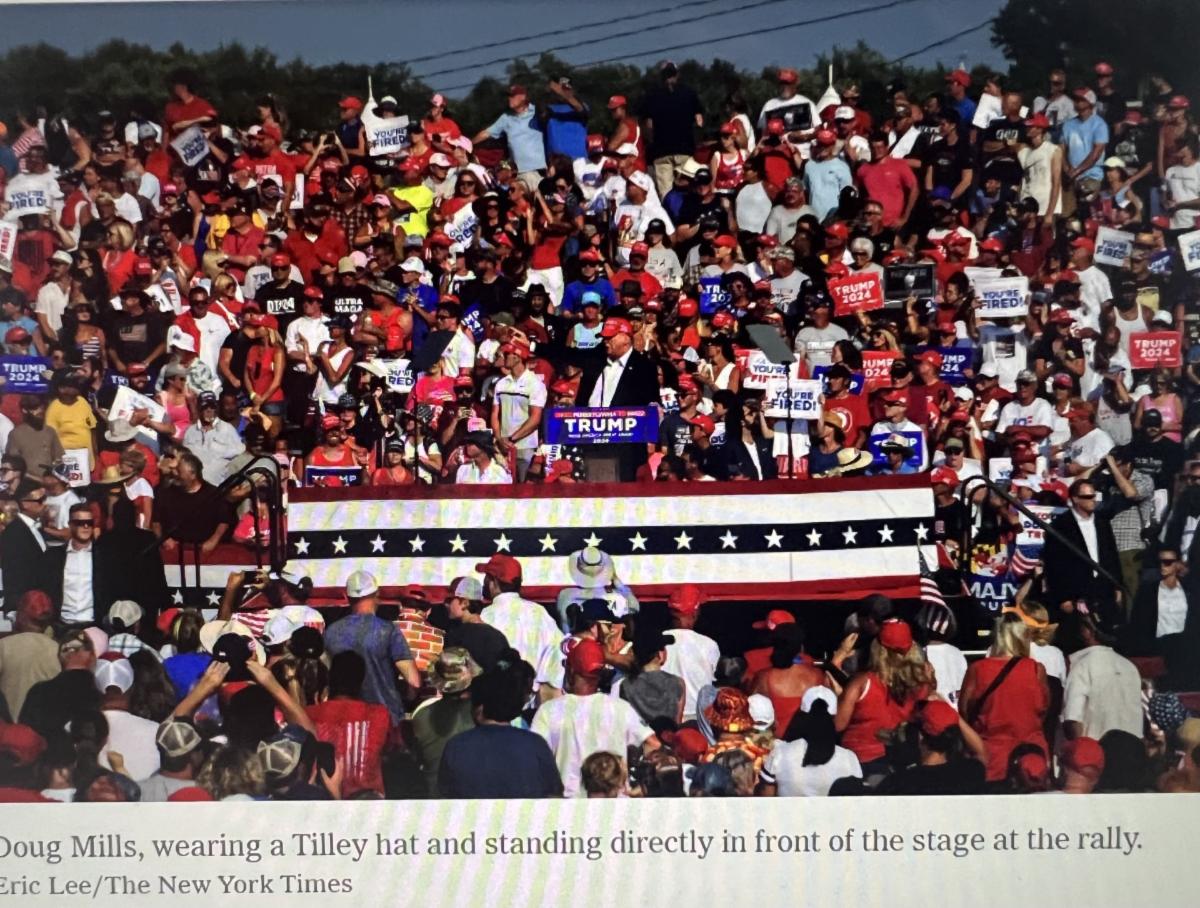 | |
“I hope I get the right shot. I hope I’m not shot myself,” said Doug Mills, who has been photographing presidents since 1983.
By Doug Mills
The New York Times
Doug Mills, a veteran photographer for The New York Times who has been taking photographs of presidents since 1983, was only feet away from former President Donald J. Trump at the rally in Butler, Pa., when shooting started.
He spoke with Victor Mather about the experience.
What did you see and hear today?
It was a very standard, typical rally. The former president was maybe an hour late. The crowd had been hot all day. Donald J. Trump arrived, waving to the crowd, just like any other rally he does.
There’s a pool of photographers, maybe four of us, who were in what is called the buffer area just a couple feet from the former president. We were all jostling around in there trying to get our normal pictures.
All of a sudden, there was what I thought were three or four loud pops. At first I thought it was a car. The last thing I thought was it was a gun.
“I kept taking pictures. He went down behind the lectern, and I thought, “Oh my God, something’s happened.”
Then all the agents started running on the stage, and they basically completely covered him. I could hear them yelling. At first someone saying, “Sir, sir, sir.”
With that, the counter-snipers, also members of the Secret Service, whom we rarely see unless they’re on a roof or something, they come up out of nowhere and were up on the stage holding automatic rifles.
I went from one side of the stage to another to see if I could see him any better. And that’s when he got up and put his fist in the air. And I thought, “He’s alive, he’s alive.”
I could see blood on his face. I kept taking pictures. As tough as he looked in that one picture with his fist looking very defiant, the next frame I took, he looked completely drained. Very, very shocked.
As he came down the steps, the Secret Service completely covered him in a blanket of people and they walked him all the way to his SUV.
What happened in the aftermath?
I turned around and I saw people screaming and heard somebody had been shot in the crowd. They held us in Trump’s normal holding tent for probably 30 minutes.
When we came out we saw the littered field, plastic bottles, cellphones, a motorized wheelchair just abandoned.
In your career, have you ever been in a similar situation?
I’ve always feared being in this situation. I always wondered what I’d do in this situation. I hope I get the right shot. I hope I’m not shot myself.
At first I thought right away, “Could I be shot?” It was scary.
I’ve never been in a more horrific scene. As much as I’ve covered presidents for 35 to 40 years, it’s not something I ever wanted to witness.
There were a lot of members of his staff backstage crying, I got lots of hugs all just saying, “I’m so glad we’re OK.”
I never envisioned being in a situation like this.
Doug Mills has been a photographer in the Washington bureau of The Times since 2002. He previously worked at The Associated Press, where he won two Pulitzer Prizes.
Click here to read more.
Photo Appears to Capture Path of Bullet Used in Assassination Attempt
| 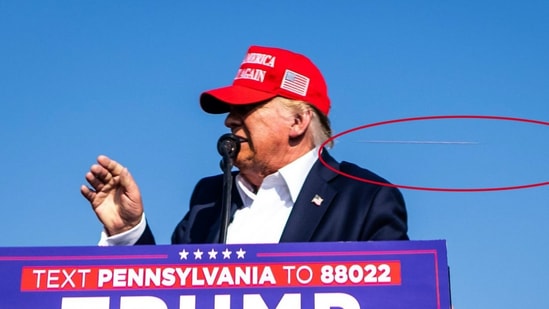 | |
Donald Trump, in a red hat and a blue suit, speaks at a lectern. A red oval is drawn around what appears to be a bullet’s path. Doug Mills/The New York Times
By John Ismay
The New York Times
In documenting the Pennsylvania campaign rally on Saturday afternoon that turned into an attempt on a former president’s life, Doug Mills, a veteran New York Times photographer, appeared to capture the image of a bullet streaking past former President Donald J. Trump’s head.
That is the assessment of Michael Harrigan, a retired F.B.I. special agent who spent 22 years in the bureau.
“It absolutely could be showing the displacement of air due to a projectile,” Mr. Harrigan said in an interview on Saturday night after reviewing the high-resolution images that Mr. Mills filed from the rally. “The angle seems a bit low to have passed through his ear, but not impossible if the gunman fired multiple rounds.”
Simple ballistic math showed that capturing a bullet as Mr. Mills likely did in a photo was possible, Mr. Harrigan said.
Read more here. Shared by Dennis Conrad.
| |
|
Cranial Cardio Answer
Doug Pizac - For those who haven’t come up with an answer yet for Friday’s question, think back to when Kodak film came in yellow boxes that not only had the roll of film in a metal canister inside the box but there was also an instruction sheet included.
The answer to the first question on the color balance is use the “daylight” preset. Why? While it is in the middle of the night on earth, the moon is being lit by the sun. As to which Kelvin temperature it is 5000k (5000-6000K on earth depending on altitude due to atmospheric density).
The solution to the second question on the exposure setting has two answers. You could say the same exposure you would use at high noon on earth, or as to the formula it is f/16 with a shutter speed of 1/ISO which was the general basis on the boxed instruction sheet of olden times.
For example, if you set the camera’s ISO/ASA to 100, the exposure is f/16 at 1/100th of a second. ISO 400 is f/16 at 1/400. This formula is for slide film where you expose for the highlights which is the same with digital cameras today. If shooting b/w film the shutter speed calculation is the same, but the aperture would be f/11 -- a stop brighter -- to expose for the shadows.
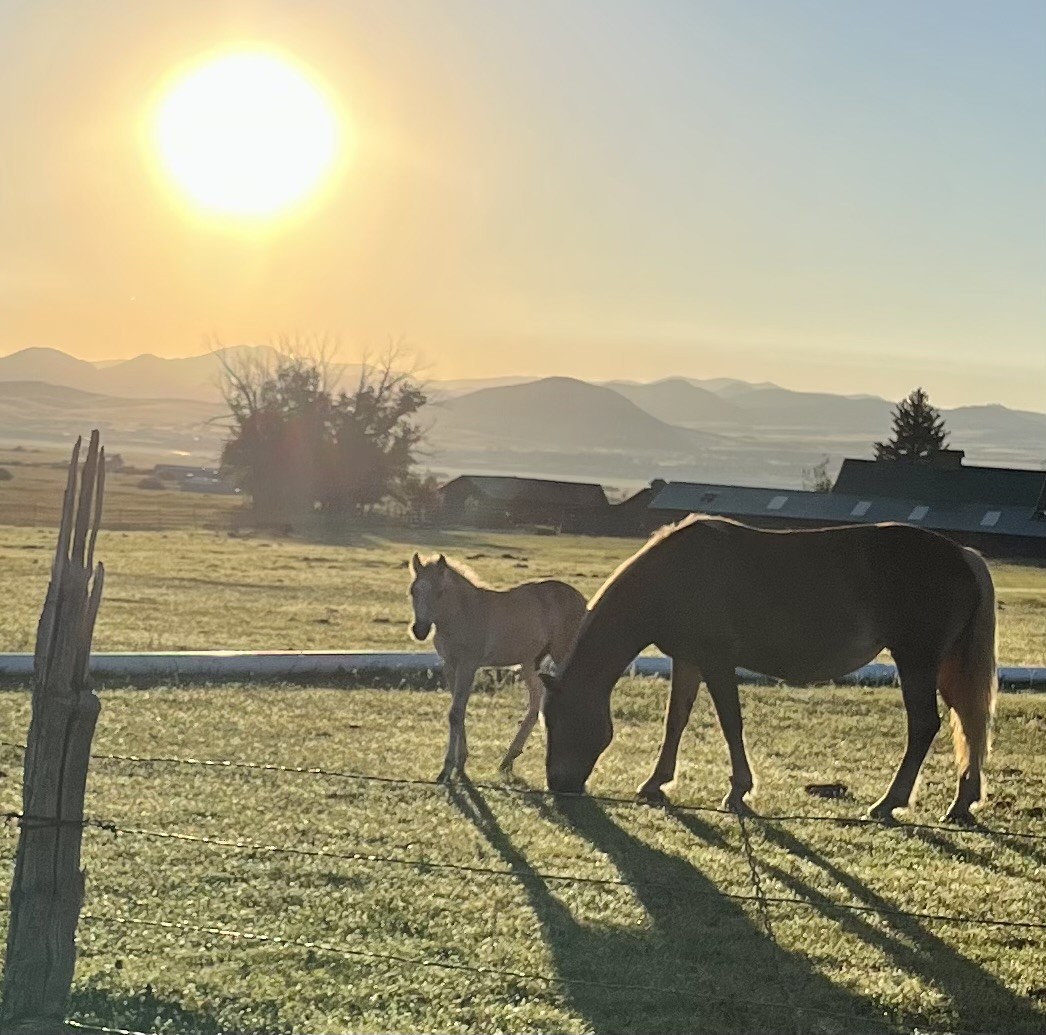
Connecting sky shot – Colorado
| |
|
Norm Clarke - A mare with her foal at a horse ranch at sunrise near Westcliffe, CO.''
BEST OF AP — SPECIAL CITATION
AP produced competition-beating live blog and top shots for historic elections
| |
|
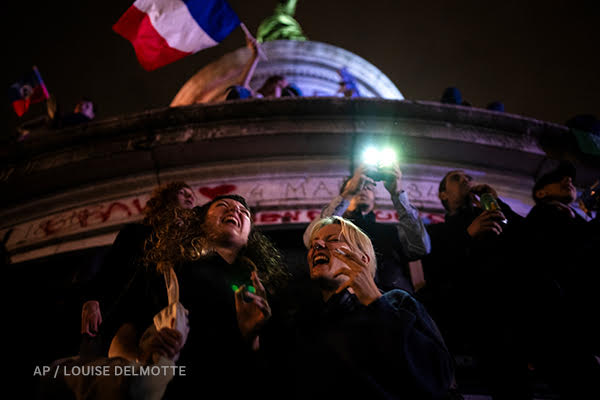
People gather at the Republique plaza after the second round of the legislative election, Sunday, July 7, 2024, in Paris. Surprise polling projections in France say a leftist coalition that came together to try to keep the far right from power has won the most parliamentary seats in runoff elections after a high turnout among voters. AP Photo/Louise Delmotte
By Sylvie Corbet, Lori Hinnant, Jeff Schaeffer, VJ Helena Alves, Christophe Ena, Bridget Virgo, Alastair Grant, Jill Lawless, Danica Kirka, Pan Pylas, Sylvia Hui, Kwiyeon Ha, Brian Melley, Frank Augustein, Kirsty Wigglesworth and Kin-Pong Cheung
The British and French election teams earn a special citation for finding new ways to engage customers and digital readers with breaking election news through live blogs and “latests.” Both the UK and French elections were among the strongest performing liveblogs the AP has ever done. Both were used by thousands of AP customers, meaning tens of millions of eyeballs were on the AP’s turnaround coverage of international elections. In this year of elections (including India’s earlier election that also featured successful live blogging) the perfecting of the liveblog format is driving eyes to our coverage and new audiences that we expect will become permanent consumers of AP news. The consensus of the Best of the Week judges was that this needs to be called out and celebrated with a special citation.
The elections were distinct in their particulars. With France facing the prospect of the far right taking over the government for the first time since the Nazi era, AP’s Paris team and colleagues from around the world worked nonstop. Veteran political reporter Sylvie Corbet used years of sourcing and access to the Elysee Palace to ensure all AP formats were prepared for various outcomes and worked with Lori Hinnant to file aggressive alerts throughout the night. That in turn helped ensure that AP’s France elections live blog — expertly shepherded by live blogs editor Emily Olson — drove the news agenda when the results were unexpectedly a success for the left and center parties. Using deep knowledge of Paris and years of experience covering protests, senior producer Jeff Schaeffer ensured AP had a key top shot at Republique plaza for the aftermath, as well as other important vantage points that allowed us to run more than 24 hours of lives. Video journalist Helena Alves and others used the top shot for a variety of angles including close-ups of tear gas and the wide view showing the gathering was largely peaceful. The team efforts were highlighted by diverse photos throughout.
Read more here.
BEST OF AP - FIRST WINNER
Extreme climate turns personal as woman gives birth on a boat in an Indian monsoon
| |
|
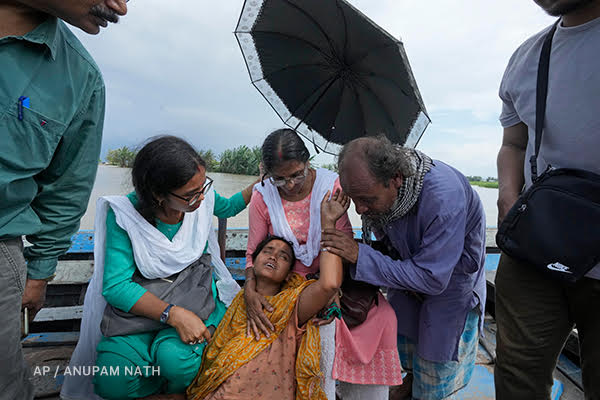
25-year-old Jahanara Khatoon, who is at full-term pregnancy, reacts in pain with onset of labour as she travels on a boat on her way to a health centre, over the River Brahmaputra, in the northeastern Indian state of Assam, Wednesday, July 3, 2024. AP Photo / Anupam Nath
By Anupam Nath
An AP photographer had a rare opportunity to document the harrowing experience of a family displaced by extreme weather in the most personal of circumstances.
Photographer Anupam Nath realized he was about to witness something extraordinary: a baby’s delivery on a boat rushing a family to a medical center. Covering the effects of climate change, he was on a routine embed with a medical team attending residents displaced from their homes on islands flooded by a swollen river.
Nath reached out to Yirmiyan Arthur, Asia-Pacific deputy news director for photography and storytelling, to quickly explain and brainstorm how he would balance coverage for all formats and sent her a quick cell phone picture to help set the scene. Nath’s presence of mind throughout the event led to the chronicling of what he called “one of the most emotional moments of my life.”
Arthur knew this had the potential to be a strong, character-driven story and planned to create a special online presentation that included a video and video loop that helped convey the high anxiety and pressure the family and the medical team were under.
Read more here.
| |
Connecting wishes Happy Birthday | |
Stories of interest
At a Trump rally, shocking images fill TV screens. Then reporters rush to find out what it means (AP)
|  |  |  | |
AP Photos/Gene J. Puskar
By DAVID BAUDER
The images filled television screens across a rattled country on a hot Saturday evening — former President Donald Trump reaching for his bloodied ear as he moved down to the floor of a stage at a Pennsylvania campaign rally and U.S. Secret Service agents rushing to surround him.
While the video was instantly available and repeated dozens of times, its meaning was not as evident. And viewers watched the painstaking process of reporters rushing to fill in the blanks of a political assassination attempt.
“It’s really, really a scary moment in American history,” CNN’s Wolf Blitzer said.
The coverage started immediately
News and broadcast networks began lengthy coverage within moments — as soon as it was apparent that something terrible had happened. What unfolded was a textbook example of the ultimate test for journalists as a big story unfolds: trying to get reliable information as quickly as possible while taking care not to speculate, be overheated or pass on unfounded rumors.
When The Associated Press issued its first alert of the news, at 6:16 p.m. Eastern, it stuck strictly to what could be seen: “Donald Trump escorted off stage by Secret Service during rally after loud noises ring out in crowd.” Similarly, The New York Times’ first word described Trump rushed offstage “after pops that sounded like gun shots were heard.”
Read more here. Shared by Myron Belkind.
-0-
Misinformation spreads swiftly in hours after Trump rally shooting (Washington Post)
By Sarah Ellison, Cat Zakrzewski and Clara Ence Morse
Law enforcement officials quickly launched an investigation into the Saturday shooting of Donald Trump as an assassination attempt. But there were few confirmed details, and into that void, a torrent of unsubstantiated theories flooded social media and other channels, fueling false and dueling realities. In the midst of a fluid presidential race, the shooting’s aftermath offered a window into how quickly false conspiracy theories can spread online in today’s hypercharged political environment.
Even after investigators identified the shooter and confirmed some details of the attack, conspiracies that were born Saturday evening hardened into narratives that further politicized the violence.
Some accounts from the left of the political spectrum immediately claimed that the shooting was a “false flag” operation perpetrated by Trump’s own supporters. Some on the far right accused President Biden of ordering a hit on a political rival.
“Incidents of political violence spawn conspiracy theories and false narratives when people try to spin the event to suit their various agendas,” Megan Squire, deputy director for data analytics at the Southern Poverty Law Center’s Intelligence Project, told The Washington Post. “This incident is no different, with people concocting ‘false flag’ conspiracies and even blaming innocent people for either committing this crime or inspiring it.”
Read more here. Shared by Dennis Conrad.
-0-
Late-night comics have long been relentless in skewering Donald Trump. Now it’s Joe Biden’s turn (AP)
By DAVID BAUDER
NEW YORK (AP) — Stephen Colbert took a slug from his drink glass before his first monologue after President Joe Biden’s disastrous performance during his debate with Donald Trump. This was going to be hard.
But then the CBS “Late Show” host dove right into jokes that were impossible for any political satirist to resist.
“I think that Biden debates as well as Abraham Lincoln — if you dug him up right now,” Colbert said this week.
He had company. Jon Stewart, Seth Meyers and Jimmy Fallon have all found fodder in Biden’s stumbling, slack-jawed performance and in the Democrats’ internal debate over whether the president should drop his campaign for a second term.
Late-night comics have skewered Biden’s Republican opponent, Donald Trump, for years. Some have made no secret that their feelings were not just professional: Colbert moderated a panel discussion between Biden and former presidents Barack Obama and Bill Clinton at a Manhattan fundraiser in March, and ABC’s Jimmy Kimmel held court at a Biden Hollywood event last month.
Read more here.
-0-
The Culture Wars Inside the New York Times (New Yorker)
By Clare Malone
Joe Kahn, the executive editor of the New York Times, is a contained presence. When I met him at the Times’ offices in midtown Manhattan in June, he wore a dark, collared knit shirt beneath a crisply pressed tan blazer and kept small talk to a minimum. Kahn was a star reporter—in 2006, he won a Pulitzer Prize in international reporting—but presiding over the Times newsroom, which numbers more than two thousand employees, can seem, from the outside, like something more akin to the role of a highly credentialled H.R. manager. In February, 2023, an open letter signed by some Times staff and contributors criticized the paper for “editorial bias in the newspaper’s reporting on transgender, non-binary, and gender nonconforming people,” citing specific writers and articles. Kahn’s team held meetings with some of the signatories, and he wrote to the newspaper’s staff that “participation in such a campaign is against the letter and spirit of our ethics policy.” After the attacks of October 7th in Israel and the ensuing war in Gaza, Kahn was again confronted with a newsroom grappling with the convergence of personal conscience and traditional journalistic norms. The Times pushed out a prominent staff writer for its magazine who had signed both the February open letter and another one from last October that called out a Times editorial and broadly criticized mainstream media coverage of the conflict as “racist and revisionist.”
Read more here. Shared by Craig Klugman.
| |
AP classes, by the year...
(EDITOR'S NOTE: This is a listing of Connecting colleagues who have shared the year and the bureau where they started with the AP. If you would like to share your own information, I will include it in later postings. Current AP staffers are also welcome to share their information.)
1951 - Norm Abelson (Boston)
1953 – Charles Monzella (Huntington, WVa)
1955 – Henry Bradsher (Atlanta), Paul Harrington (Boston), Joe McGowan (Cheyenne)
1957 - Louis Uchitelle (Philadelphia)
1958 – Roy Bolch (Kansas City)
1959 – Charlie Bruce (Montgomery)
1960 – Claude Erbsen (New York), Carl Leubsdorf (New Orleans)
1961 – Peter Arnett (Jakarta, Indonesia), Strat Douthat (Charleston. WVa), Warren Lerude (San Diego), Ed Staats (Austin)
1962 – Paul Albright (Cheyenne), Malcolm Barr Sr. (Honolulu), Myron Belkind (New York), Kelly Smith Tunney (Miami)
1963 – Hal Bock (New York)
1964 – Rachel Ambrose (Indianapolis), Larry Hamlin (Oklahoma City), John Lengel (Los Angeles), Ron Mulnix (Denver), Lyle Price (San Francisco), Arlene Sposato (New York), , Hilmi Toros (New York)
1965 – Bob Dobkin (Pittsburgh), Harry Dunphy (Denver), John Gibbons (New York), Jim Luther (Nashville), Larry Margasak (Harrisburg), Rich Oppel (Tallahassee)
1966 – Shirley Christian (Kansas City), Mike Doan (Portland, OR), Edie Lederer (New York), Nancy Shipley (Nashville), Mike Short (Los Angeles), Marty Thompson (Seattle), Nick Ut (Saigon), Kent Zimmerman (Chicago)
1967 – Dan Berger (Los Angeles), Adolphe Bernotas (Concord), Lou Boccardi (New York), Linda Deutsch (Los Angeles), Don Harrison (Los Angeles), Doug Kienitz (Cheyenne), David Liu (New York), Bruce Lowitt (Los Angeles), Chuck McFadden (Los Angeles), Martha Malan (Minneapolis), Bill Morrissey (Buffalo), Larry Paladino (Detroit), Michael Putzel (Raleigh), Bruce Richardson (Chicago), Richard Shafer (Baltimore), Victor Simpson (Newark), Michael Sniffen (Newark)
1968 – Lee Balgemann (Chicago), John Eagan (San Francisco), Joe Galu (Albany/Troy), Peter Gehrig (Frankfurt), Charles Hanley (Albany), Jerry Harkavy (Portland, Maine), Herb Hemming (New York), Brian King (Albany), Samuel Koo (New York), Karren Mills (Minneapolis), Michael Rubin (Los Angeles), Rick Spratling (Salt Lake City), Barry Sweet (Seattle)
1969 - Ann Blackman (New York), Ford Burkhart (Philadelphia), Dick Carelli (Charleston, WVa), Dennis Coston (Richmond), Mary V. Gordon (Newark), Daniel Q. Haney (Portland, Maine), Mike Harris (Chicago), Brad Martin (Kansas City), David Minthorn (Frankfurt), Cynthia Rawitch (Los Angeles), Bob Reid (Charlotte), Mike Reilly (New York), Doug Tucker (Tulsa), Bill Winter (Helena)
1970 – Richard Boudreaux (New York), Richard Drew (San Francisco), Bob Egelko (Los Angeles), Steve (Indy) Herman (Indianapolis), Tim Litsch (New York), Lee Margulies (Los Angeles), Chris Pederson (Salt Lake City), Brendan Riley (San Francisco), Larry Thorson (Philadelphia)
1971 – Harry Atkins (Detroit), Jim Bagby (Kansas City), Larry Blasko (Chicago), Jim Carlson (Milwaukee), Jim Carrier (New Haven), Chris Connell (Newark), Bill Gillen (New York), Bill Hendrick (Birmingham), John Lumpkin (Dallas), Kendal Weaver (Montgomery)
1972 – Hank Ackerman (New York), Bob Fick (St. Louis), Joe Frazier (Portland, Ore.), Terry Ganey (St. Louis), Mike Graczyk (Detroit), Denis Gray (Albany), Lindel Hutson (Little Rock), Brent Kallestad (Sioux Falls), Tom Kent (Hartford), Nolan Kienitz (Dallas), Andy Lippman (Phoenix), Ellen Miller (Helena), Mike Millican (Hartford), Lew Wheaton (Richmond)
1973 - Jerry Cipriano (New York), Susan Clark (New York), Norm Clarke (Cincinnati), Joe Galianese (East Brunswick), Merrill Hartson (Richmond), Mike Hendricks (Albany), Tom Journey (Tucson), Steve Loeper (Los Angeles), Tom Slaughter (Sioux Falls), Jim Spehar (Denver), Paul Stevens (Albany), Jeffrey Ulbrich (Cheyenne), Owen Ullmann (Detroit), John Willis (Omaha), Evans Witt (San Francisco)
1974 – Norman Black (Baltimore), David Espo (Cheyenne), Dan George (Topeka), Robert Glass (Philadelphia), Steve Graham (Helena), Elaine Hooker (Hartford), Sue Price Johnson (Charlotte), Dave Lubeski (Washington), Janet McConnaughey (Washington), Lee Mitgang (New York), Bud Weydert (Toledo), Marc Wilson (Little Rock)
1975 – Peter Eisner (Columbus), David Powell (New York), Eileen Alt Powell (Milwaukee)
1976 – Brad Cain (Chicago), Judith Capar (Philadelphia), Dick Chady (Albany), Steve Crowley (Washington), David Egner (Oklahoma City), Marc Humbert (Albany), Steven Hurst (Columbus), Richard Lowe (Nashville), John Nolan (Nashville), Charlotte Porter (Minneapolis), Chuck Wolfe (Charlotte)
1977 – Bryan Brumley (Washington), Robert Burns (Jefferson City), Charles Campbell (Nashville), Dave Carpenter (Philadelphia), Ken Herman (Dallas), Mike Holmes (Des Moines), Brad Kalbfeld (New York), Scott Kraft (Jefferson City), John Kreiser (New York), Peter Leabo (Dallas), Kevin LeBoeuf (Los Angeles), Ellen Nimmons (Minneapolis), Dan Sewell (Buffalo), Estes Thompson (Richmond), David Tirrell-Wysocki (Concord)
1978 – Tom Eblen (Louisville), Ruth Gersh (Richmond), Doug Pizac (Los Angeles), Charles Richards (Dallas), Reed Saxon (Los Angeles), Steve Wilson (Boston)
1979 – Brian Bland (Los Angeles), Scotty Comegys (Chicago), John Daniszewski (Philadelphia), Frances D’Emilio (San Francisco), Pat Fergus (Albany), Brian Friedman (Des Moines), Sally Hale (Dallas), Jill Lawrence (Harrisburg), Barry Massey (Kansas City), Phillip Rawls (Nashville), John Rice (Carson City), Linda Sargent (Little Rock), Joel Stashenko (Albany), Robert Wielaard (Brussels)
1980 – Alan Adler (Cleveland), Christopher Bacey (New York), Jeff Barnard (Providence), Mark Duncan (Cleveland), Bill Kaczor (Tallahassee), Mitchell Landsberg (Reno), Kevin Noblet (New Orleans), Jim Rowley (Baltimore), David Speer (Jackson), Hal Spencer (Providence), Carol J. Williams (Seattle)
1981 – Paul Davenport (Phoenix), Dan Day (Milwaukee), John Flesher (Raleigh), Len Iwanski (Bismarck), Ed McCullough (Albany), Drusilla Menaker (Philadelphia), Kim Mills (New York), Mark Mittelstadt (Des Moines), Roland Rochet (New York), Lee Siegel (Seattle), Marty Steinberg (Baltimore), Bill Vogrin (Kansas City)
1982 – Dorothy Abernathy (Little Rock), Al Behrman (Cincinnati), Tom Cohen (Jefferson City), John Epperson (Chicago), Ric Feld (Atlanta), Nick Geranios (Helena), Howard Gros (New Orleans), Robert Kimball (New York), Rob Kozloff (Detroit), Bill Menezes (Kansas City), David Ochs (New York)
1983 – Scott Charton (Little Rock), Sue Cross (Columbus), Mark Elias (Chicago), Diana Heidgerd (Miami), Sheila Norman-Culp (New York), Carol Esler Ochs (New York), Amy Sancetta (Philadelphia), Rande Simpson (New York), Dave Skidmore (Milwaukee)
1984 – Owen Canfield (Oklahoma City), Wayne Chin (Washington), Jack Elliott (Oklahoma City), Kelly P. Kissel (New Orleans), Joe Macenka (Richmond), Eva Parziale (San Francisco), Walt Rastetter (New York), Keith Robinson (Columbus), Cliff Schiappa (Kansas City), David Sedeño (Dallas), Andrew Selsky (Cheyenne), Patty Woodrow (Washington)
1985 – Beth Grace (Columbus), Betty Kumpf Pizac (Los Angeles)
1986 – Joni Baluh Beall (Richmond), David Beard (Jackson), Tom Coyne (Columbia, SC), Dave DeGrace (Milwaukee), Alan Flippen (Louisville), Jim Gerberich (San Francisco), Howard Goldberg (New York), Mark Hamrick (Dallas), Sandy Kozel (Washington), Robert Meyers (London)
1987 – Donna Abu-Nasr (Beirut), Dave Bauder (Albany), Chuck Burton (Charlotte), Beth Harris (Indianapolis), Lynne Harris (New York), Steven L. Herman (Charleston, WVa), Rosemarie Mileto (New York), John Rogers (Los Angeles)
1988 – Chris Carola (Albany), Peg Coughlin (Pierre), Kathy Gannon (Islamabad), Steve Hart (Washington), Melissa Jordan (Sioux Falls), Bill Pilc (New York), Kelley Shannon (Dallas)
1989 – Ted Bridis (Oklahoma City), Charlie Arbogast (Trenton), Ron Fournier (Little Rock)
1990 – Frank Fisher (Jackson), Dan Perry (Bucharest), Steve Sakson (Baltimore), Sean Thompson (New York)
1991 – Amanda Kell (Richmond), Santiago Lyon (Cairo), Lisa Pane (Hartford), Ricardo Reif (Caracas), Bill Sikes (Buffalo)
1992 – Kerry Huggard (New York)
1993 – Jim Salter (St. Louis)
1995 – Donna Tommelleo (Hartford)
1996 – Patricia N. Casillo (New York)
1997 – J. David Ake (Chicago), Pamela Collins (Dallas), Madhu Krishnappa Maron (New York), Jim Suhr (Detroit), Jennifer Yates (Baltimore)
2000 – Gary Gentile (Los Angeles)
2006 – Jon Gambrell (Little Rock)
| Today in History – July 15, 2024 | |
|
Today is Monday, July 15, the 197th day of 2024. There are 169 days left in the year.
Today’s Highlight in History: On July 15, 1799, the Rosetta Stone, a key to deciphering ancient Egyptian scripts, was found at Fort Julien in the Nile Delta during the Napoleonic campaign in Egypt.
Also on this date:
In 1834, the Spanish Inquisition was abolished more than 350 years after its creation.
In 1870, Georgia became the last Confederate state to be readmitted to the Union.
In 1913, Democrat Augustus Bacon of Georgia became the first person elected to the U.S. Senate under the terms of the recently ratified 17th Amendment to the U.S. Constitution, providing for popular election of senators.
In 1916, The Boeing Company, originally known as Pacific Aero Products Co., was founded in Seattle.
In 1975, three American astronauts blasted off aboard an Apollo spaceship hours after two Soviet cosmonauts were launched aboard a Soyuz spacecraft for a mission that included a linkup of the two ships in orbit.
In 1976, a 36-hour kidnap ordeal began for 26 schoolchildren and their bus driver as they were abducted near Chowchilla, California, by three gunmen and imprisoned in an underground cell. (The captives escaped unharmed; the kidnappers were caught.)
In 1996, MSNBC, a 24-hour all-news network, made its debut on cable and the internet.
In 1997, fashion designer Gianni Versace, 50, was shot dead outside his Miami Beach home; suspected gunman Andrew Phillip Cunanan, 27, was found dead eight days later, a suicide. (Investigators believed Cunanan killed four other people before Versace in a cross-country rampage that began the previous March.)
In 2002, John Walker Lindh, an American who’d fought alongside the Taliban in Afghanistan, pleaded guilty in federal court in Alexandria, Virginia, to two felonies in a deal sparing him life in prison.
In 2006, Twitter (now known as X) was launched to the public.
In 2019, avowed white supremacist James Alex Fields Jr. was sentenced to life in prison plus 419 years for killing one and injuring dozens of others when he deliberately drove his car into a crowd of anti-racism protesters during a rally in Charlottesville, Virginia.
In 2020, George Floyd’s family filed a lawsuit against the city of Minneapolis and the four police officers charged in his death, alleging the officers violated Floyd’s rights when they restrained him and that the city allowed a culture of excessive force, racism and impunity to flourish in its police force. (The city would agree to pay $27 million to settle the lawsuit in March 2021.)
Today’s Birthdays: Actor Patrick Wayne is 85, R&B singer Millie Jackson is 80, Singer Linda Ronstadt is 78, Author Richard Russo is 75, Musician Trevon Horn is 75, Arianna Huffington, co-founder of The Huffington Post, is 74, Former professional wrestler and Minnesota governor Jesse Ventura is 73, Actor Terry O’Quinn (TV: “Lost”) is 72, Rock drummer Marky Ramone is 72, Rock musician Joe Satriani is 68, Model Kim Alexis is 64, Actor Willie Aames is 64,Actor-director Forest Whitaker is 63, Actor Brigitte Nielsen is 61, Rock drummer Jason Bonham is 58, TV personality Adam Savage (TV” “MythBusters”) is 57, Actor-comedian Eddie Griffin is 56, Actor-screenwriter Jim Rash (TV: “Community”) is 52, Actor Scott Foley is 52, Actor Brian Austin Green is 51, Singer Buju Banton is 51, Actor Diane Kruger is 48, Actor Lana Parrilla is 47, Actor Travis Fimmel is 45, Actor-singer Tristan “Mack” Wilds is 35, NBA point guard Damian Lillard is 34, Actor Iain Armitage (TV: “Young Sheldon”) is 16.
| Got a photo or story to share? | |
|
Connecting is a daily newsletter published Monday through Friday that reaches more than 1,800 retired and former Associated Press employees, present-day employees, and news industry and journalism school colleagues. It began in 2013. Past issues can be found by clicking Connecting Archive in the masthead. Its author, Paul Stevens, retired from the AP in 2009 after a 36-year career as a newsman in Albany and St. Louis, correspondent in Wichita, chief of bureau in Albuquerque, Indianapolis and Kansas City, and Central Region vice president based in Kansas City.
Got a story to share? A favorite memory of your AP days? Don't keep them to yourself. Share with your colleagues by sending to Ye Olde Connecting Editor. And don't forget to include photos!
Here are some suggestions:
- Connecting "selfies" - a word and photo self-profile of you and your career, and what you are doing today. Both for new members and those who have been with us a while.
- Second chapters - You finished a great career. Now tell us about your second (and third and fourth?) chapters of life.
- Spousal support - How your spouse helped in supporting your work during your AP career.
- My most unusual story - tell us about an unusual, off the wall story that you covered.
- "A silly mistake that you make"- a chance to 'fess up with a memorable mistake in your journalistic career.
- Multigenerational AP families - profiles of families whose service spanned two or more generations.
- Volunteering - benefit your colleagues by sharing volunteer stories - with ideas on such work they can do themselves.
- First job - How did you get your first job in journalism?
- Most unusual place a story assignment took you.
Paul Stevens
Editor, Connecting newsletter
paulstevens46@gmail.com
| | | | |