Connecting

July 10, 2024


Click here for sound of the Teletype

Top AP News

Top AP Photos

AP Merchandise

AP Emergency Relief Fund

Connecting Archive

AP Newsletters

AP Books

AP News Tips

Colleagues,


Good Wednesday morning on this July 10, 2024,


After hearing from a number of you about the merits of retaining the Connecting archive that’s included in each issue’s masthead links, we’ve decided to retain it.


Connecting continues to be archived in the AP's official archive system, and relating to this, I share this note from our colleague Jerry Ackerman


“Paul, the closest I came to being an APer was to take the writing test at 50 Rock at a callow age 21, thinking I might land a slot in exciting NYC. I passed easily but didn't hit my target. Sam Blackman's advice was to go back to Chicago and tell them I was available for duty. Instead, I took a circuitous route, ending up at what was then called Chicago's American and later a 31-year run at the Boston Globe. So, do I have a right to speak up about the archive? I've been on the Connecting email list barely three years.


“I hope so. I think it should be held for posterity and made searchable for researchers. U Mizzou? Poynter? Nieman? My alma mater Medill? Columbia? National Archives/Library of Congress? Someday these preserved memoirs will pay off. Try searching 9/11, Groucho Marx, O. J. Simpson., or Walter Mears, George Esper, Linda Deutsch--and you'll see.”


Speaking of Connecting, our newsletter’s esteemed bard and nonagenarian Norm Abelson brings us a poetic verse that leads today’s issue. It came with this note: “Paul - No idea why this thing - where the first letter of each line spells out the title - popped into my head.” Thanks, Norm.


Here's to a great day – be safe, stay healthy, live it to your fullest.


Paul


AN ODE TO CONNECTING


Norm Abelson


Connecting is a fine on-line place to be,

Other sites often seem quite a bore to me.

No sense searching for a sequel,

No way will you find its equal.

Each issue gives us something new,

Charting out many a thoughtful view.

The helm is manned by our friend, Paul,

It's clear he never drops the ball.

Now's the time to raise this rousing cheer:

Go Connecting! - for many and many a year.


Don’t forget what Doug Cornell might say


Rick Cooper - Regarding Doug Pizac's musing about Connecting Old Timers feelings about famed UPI White House correspondent Helen Thomas sitting still for the current goings on at the WH daily press briefings, we should also mention what would have been her other half longtime AP White House correspondent Doug Cornell's reaction to today's goings-on.


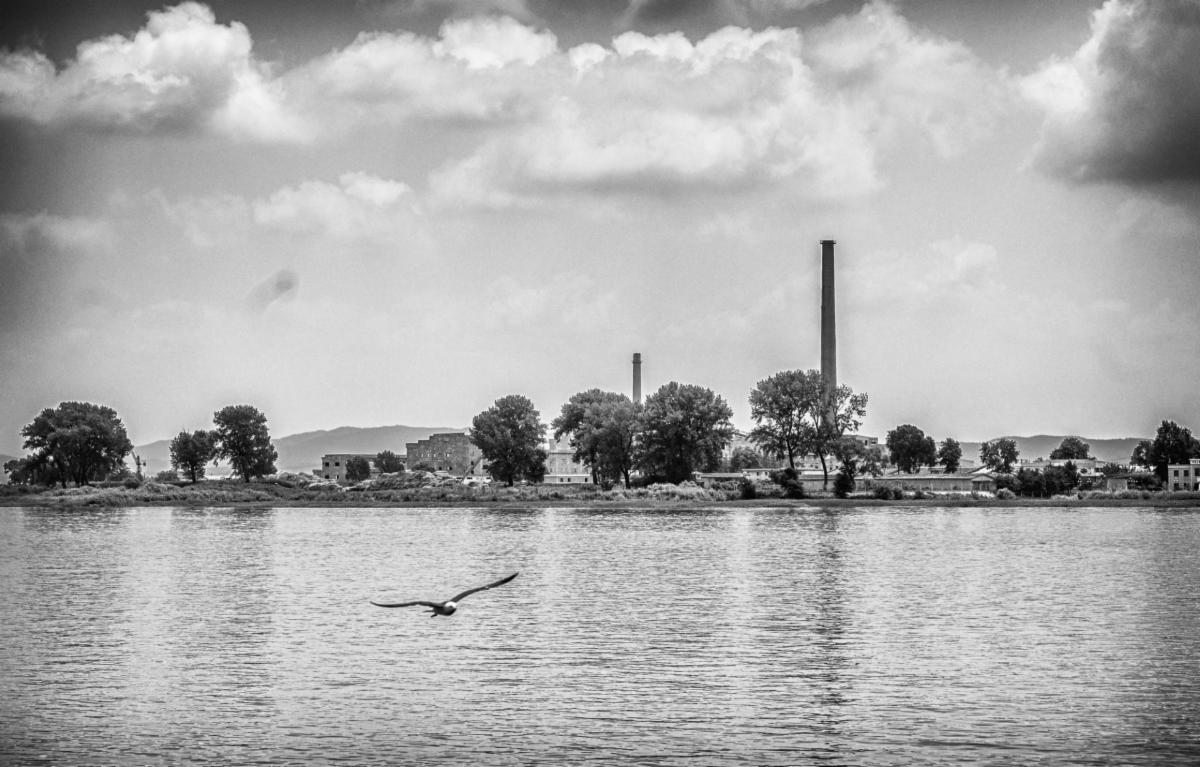
River view

Retired AP newsman Patrick Casey on Wednesday took this photo of Sinuiju, North Korea, from just across the Yalu River during a trip to Dandong in far northeastern China.


BEST OF AP — FIRST WINNER

Global teamwork gives AP scoops on plea deal of Julian Assange

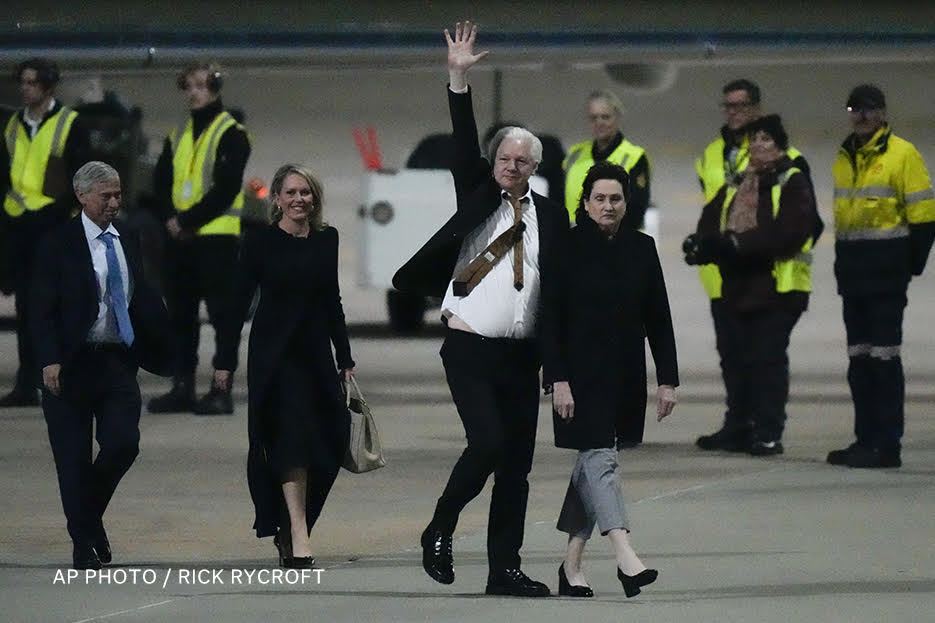
WikiLeaks founder Julian Assange waves after landing at RAAF air base Fairbairn in Canberra, Australia, June 26, 2024. The abrupt guilty plea by WikiLeaks founder Julian Assange was the culmination of negotiations that began a year and a half ago and accelerated in recent months. (AP Photo/Rick Rycroft, File)


By Mari Yamaguchi, Eugene Hoshiko, Mayuko Ono, Charlotte Graham-McLay, Rod McGuirk, Rick Rycroft, Moussa Moussa, Kimberly Esmores, Alanna Durkin Richer, Eric Tucker, Jintamas Saksornchai, Sakchai Lalitkanjan, Haruka Nuga and Jill Lawless


Tokyo, Washington and Australia. New Zealand, Bangkok, London and Saipan. When the global AP mobilizes to ensure an important story has smart and comprehensive coverage, magic can happen. And it certainly did with the coverage of WikiLeaks founder Julian Assange’s guilty plea and its worldwide repercussions.


When news broke that one of the most mysterious and polarizing figures of the information age was going to make a surprise guilty plea on a Pacific island, staffers on four continents banded together to give the AP repeated scoops and coverage of unmatched depth and insight.


Washington reporters Alanna Durkin Richer and Eric Tucker kicked off the coverage with a fully contextualized story that moved alongside the dramatic first alert, also providing a sidebar explaining Assange’s significance. Staffers around the world shadowed Assange’s journey, providing competition-beating breaking news, video, and images — from a U.K. prison to a stopover in Bangkok, to a court in the American territory of Saipan, and finally home to Australia.


Perhaps the clearest sign of the competitive edge was customer usage of AP’s stories and video. Key alerts, which AP produced regularly, were ahead of the competition. This meant digital news sites around the world led with AP’s coverage.


Read more here.


BEST OF AP — SECOND WINNER

South Sudan’s 6M antelope now make up world's largest land mammal migration, but poaching on rise

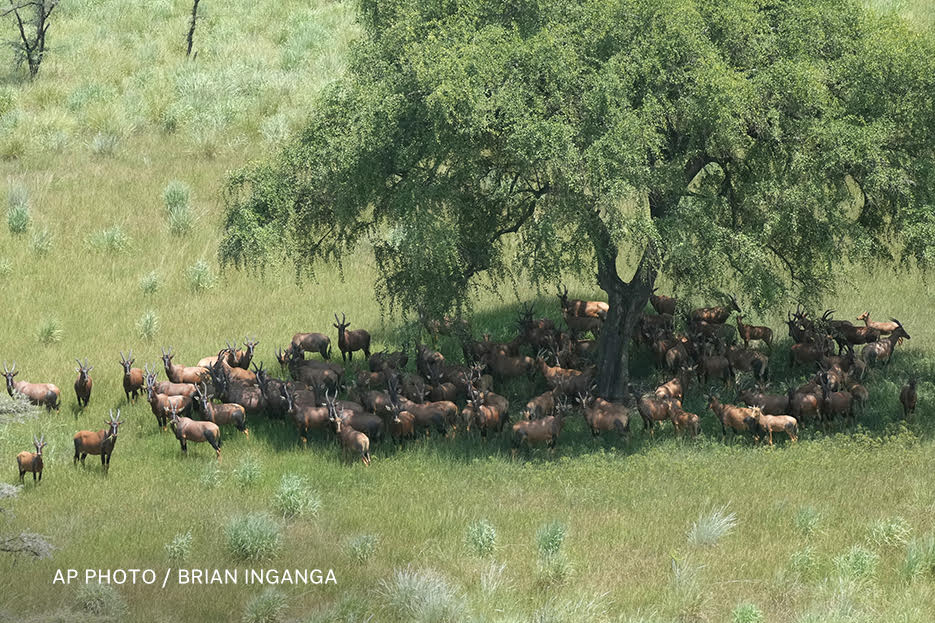
Tiang, a type of the antelope, hide under a tree in South Sudan's national parks and the surrounding areas, Wednesday, June 19, 2024. The country's first comprehensive aerial wildlife survey, released Tuesday, June 25, found about six million antelope. (AP Photo/Brian Inganga)


By Sam Mednick and Brian Inganga


West Africa correspondent Sam Mednick spent half a year fighting for access to cover South Sudan’s spring animal migration, and it paid off when AP was the only international team to gather on-the-ground images, just as the nation announced the world’s largest land mammal migration.


Mednick reached out to the nonprofit African Parks when she learned of their work in South Sudan, but planning was challenging because their work was often in remote areas without communication. She also had to convince them to accept journalists on the ground.


Nairobi-based photographer Brian Inganga’s equipment was briefly seized and held overnight before the pair could finally get out in the field to witness parts of this spring’s migration. Mednick shot video while Inganga handled photos, capturing stunning aerial images of antelope and other creatures racing across the landscape. The pair also obtained visuals that highlighted an important aspect of the story: poaching is seen as a threat to this majestic event, which the government hopes will someday attract tourists to a nation best known for war and violence.


For their teamwork and persistence, which contributed to an important AP scoop on a striking and little-known natural event in a remote and largely under-covered region of Africa, Mednick and Inganga win Best of AP — Second Winner.


Read more here.

Connecting wishes Happy Birthday

Richard Keltner


Nancy Nussbaum

Stories of interest


Rift between press and Biden team deepens over age story (Axios)


Sara Fischer


A testy exchange between reporters and White House press secretary Karine Jean-Pierre Monday highlighted growing tensions between the press corps and the White House over coverage of Joe Biden's age.


Why it matters: Biden's debate performance amplified reporters' existing frustrations about a lack of transparency and access to the president.


The increased coverage of the issue, and Democrats' opinions about it, validated the White House's longstanding belief that the press is overly focused on Biden's age to fill a controversy vacuum in the wake of Trump's 2020 election loss.


Catch up quick: For months, reports have highlighted tensions between the Biden White House and the press, specifically The New York Times.


Read more here.


-0-


The media has been breathlessly attacking Biden. What about Trump? (Guardian)


Margaret Sullivan


It’s possible for two conflicting ideas to be true at once.


And so it is with the mainstream media’s unrelenting focus on Joe Biden’s mental acuity, following his terrible debate performance earlier this month.


First truth: the president’s stumble and the political fallout that followed is a huge, consequential news story that deserves a lot of coverage.


Second truth: the media coverage is overkill – not only too much in quantity and too breathless in tone, but also taking up so much oxygen that a story even more important is shoved to the back burner.


That bigger story, of course, is the former president’s appalling unfitness for office, not only because he tried to overturn a legitimate election and is a felon, out on bail and awaiting sentencing, but because of things he has said and done in very recent weeks. As just one example, he claimed that he doesn’t know anything about Project 2025, the radical rightwing plan hatched by some of his closest allies to begin dismantling our democracy if he wins another term.


Trump’s disavowal is a ridiculous lie, but I doubt most members of the public know anything about it, nor do they likely know much – if anything – about Project 2025.


Read more here.


-0-


USA Today transformed the media world for good. What’s its legacy now? (Washington Post)


By Paul Farhi


It was snappy and colorful. It was new and different.


And much of the rest of the newspaper industry seemed to hate it.


USA Today left critics aghast when it debuted 42 years ago. Rival editors sneered at its bite-sized news stories and its relentlessly cheerful tone. (Headline on a plane crash story in the first edition: “Miracle: 327 survive, 58 die”) The reporting was often so brief and superficial that even insiders joked that their work would win awards for “best investigative paragraph.” It was quickly dubbed “McPaper,” the news equivalent of junk food.


The joke was on the critics. USA Today turned out to be one of the most influential media creations of the past half century. “McPaper” now looks like the prototype for news on the internet, circa 2024.


Read more here. Shared by Dennis Conrad, Myron Belkind.


-0-


‘Wall Street Journal’ sued by star reporter for discrimination (NPR)


David Folkenflik


A disability discrimination lawsuit filed Tuesday by a veteran reporter who left the Wall Street Journal in late spring accuses the paper of seeking to shed staffers who incur significant health care costs by invoking “trumped up performance issues.”


The suit, from former Journal health care reporter Stephanie Armour, follows waves of layoffs directed by Editor in Chief Emma Tucker at a time when the corporate parent News Corp says the paper has enjoyed several years of record profits. The Journal has laid off dozens of journalists from its Washington bureau, national news team, its standards unit and overseas, among other areas.


Armour, one of the paper’s lead reporters on the pandemic, left in May and subsequently took a job with KFF Health News. (KFF Health News has a reporting partnership with NPR.)


“I believe that The Wall Street Journal, in this instance and perhaps in others, trumped up fraudulent false performance metrics and assessments as a means to fire an individual who had seniority, who was relatively well-paid and who had accommodations,” says Rob Housman, Armour’s attorney. “It seems to me that that's the pattern that's occurring with this case and potentially - probably - with others.”


Read more here. Shared by Richard Chady, Doug Pizac, Paul Albright.


-0-


She won a Pulitzer for exposing how the country's poorest state spent federal welfare money. Now she might go to jail. (NBC News)


By Ken Dilanian and Laura Strickler


When Anna Wolfe won the Pulitzer Prize for her dogged reporting on Mississippi’s welfare fraud scandal, she had no inkling she was soon going to have to contend with the possibility of going to jail.


But just over a year after she secured journalism’s top award for exposing how $77 million in federal welfare funds went to athletes, cronies and pet projects, she and her editor, Adam Ganucheau, are contemplating what to pack for an extended stay behind bars. Sued for defamation by the state’s former governor — a top subject of their reporting — they have been hit with a court order requiring them to turn over internal files including the names of confidential sources. They say the order is a threat to journalism that they will resist.


“If one of us goes to jail, we will be the first person to go to jail in the Mississippi welfare scandal,” Wolfe told NBC News, referring to the eight indictments that stemmed from the imbroglio, none of which has yet resulted in a sentence. “How can I make promises to sources that I’m going to keep them confidential if this is possible?”


Read more here.

AP classes, by the year...


(EDITOR'S NOTE: This is a listing of Connecting colleagues who have shared the year and the bureau where they started with the AP. If you would like to share your own information, I will include it in later postings. Current AP staffers are also welcome to share their information.)


1951 - Norm Abelson (Boston)


1953 – Charles Monzella (Huntington, WVa)


1955 – Henry Bradsher (Atlanta), Paul Harrington (Boston), Joe McGowan (Cheyenne)


1957 - Louis Uchitelle (Philadelphia)


1958 – Roy Bolch (Kansas City)


1959 – Charlie Bruce (Montgomery)


1960 – Claude Erbsen (New York), Carl Leubsdorf (New Orleans)


1961 – Peter Arnett (Jakarta, Indonesia), Strat Douthat (Charleston), Warren Lerude (San Diego), Ed Staats (Austin)


1962 – Paul Albright (Cheyenne), Malcolm Barr Sr. (Honolulu), Myron Belkind (New York), Kelly Smith Tunney (Miami)


1963 – Hal Bock (New York)


1964 – Rachel Ambrose (Indianapolis), Larry Hamlin (Oklahoma City), John Lengel (Los Angeles), Ron Mulnix (Denver), Lyle Price (San Francisco), Arlene Sposato (New York), , Hilmi Toros (New York)


1965 – Bob Dobkin (Pittsburgh), Harry Dunphy (Denver), John Gibbons (New York), Jim Luther (Nashville), Larry Margasak (Harrisburg), Rich Oppel (Tallahassee)


1966 – Mike Doan (Portland, OR), Edie Lederer (New York), Nancy Shipley (Nashville), Mike Short (Los Angeles), Marty Thompson (Seattle), Nick Ut (Saigon), Kent Zimmerman (Chicago)


1967 – Dan Berger (Los Angeles), Adolphe Bernotas (Concord), Lou Boccardi (New York), Linda Deutsch (Los Angeles), Don Harrison (Los Angeles), Doug Kienitz (Cheyenne), David Liu (New York), Bruce Lowitt (Los Angeles), Chuck McFadden (Los Angeles), Martha Malan (Minneapolis), Bill Morrissey (Buffalo), Larry Paladino (Detroit), Michael Putzel (Raleigh), Bruce Richardson (Chicago), Richard Shafer (Baltimore), Victor Simpson (Newark), Michael Sniffen (Newark)


1968 – Lee Balgemann (Chicago), John Eagan (San Francisco), Joe Galu (Albany/Troy), Peter Gehrig (Frankfurt), Charles Hanley (Albany), Jerry Harkavy (Portland, Maine), Herb Hemming (New York), Brian King (Albany), Samuel Koo (New York), Karren Mills (Minneapolis), Michael Rubin (Los Angeles), Rick Spratling (Salt Lake City), Barry Sweet (Seattle)


1969 - Ann Blackman (New York), Ford Burkhart (Philadelphia), Dick Carelli (Charleston, WVa), Dennis Coston (Richmond), Mary V. Gordon (Newark), Daniel Q. Haney (Portland, Maine), Mike Harris (Chicago), Brad Martin (Kansas City), David Minthorn (Frankfurt), Cynthia Rawitch (Los Angeles), Bob Reid (Charlotte), Mike Reilly (New York), Doug Tucker (Tulsa), Bill Winter (Helena)


1970 – Richard Boudreaux (New York), Richard Drew (San Francisco), Bob Egelko (Los Angeles), Steve (Indy) Herman (Indianapolis), Tim Litsch (New York), Lee Margulies (Los Angeles), Chris Pederson (Salt Lake City), Brendan Riley (San Francisco), Larry Thorson (Philadelphia)


1971 – Harry Atkins (Detroit), Jim Bagby (Kansas City), Larry Blasko (Chicago), Jim Carlson (Milwaukee), Jim Carrier (New Haven), Chris Connell (Newark), Bill Gillen (New York), Bill Hendrick (Birmingham), John Lumpkin (Dallas), Kendal Weaver (Montgomery)


1972 – Hank Ackerman (New York), Bob Fick (St. Louis), Joe Frazier (Portland, Ore.), Terry Ganey (St. Louis), Mike Graczyk (Detroit), Denis Gray (Albany), Lindel Hutson (Little Rock), Brent Kallestad (Sioux Falls), Tom Kent (Hartford), Nolan Kienitz (Dallas), Andy Lippman (Phoenix), Ellen Miller (Helena), Mike Millican (Hartford), Lew Wheaton (Richmond)


1973 - Jerry Cipriano (New York), Susan Clark (New York), Norm Clarke (Cincinnati), Joe Galianese (East Brunswick), Merrill Hartson (Richmond), Mike Hendricks (Albany), Tom Journey (Tucson), Steve Loeper (Los Angeles), Tom Slaughter (Sioux Falls), Jim Spehar (Denver), Paul Stevens (Albany), Jeffrey Ulbrich (Cheyenne), Owen Ullmann (Detroit), John Willis (Omaha), Evans Witt (San Francisco)


1974 – Norman Black (Baltimore), David Espo (Cheyenne), Dan George (Topeka), Robert Glass (Philadelphia), Steve Graham (Helena), Elaine Hooker (Hartford), Sue Price Johnson (Charlotte), Dave Lubeski (Washington), Janet McConnaughey (Washington), Lee Mitgang (New York), Bud Weydert (Toledo), Marc Wilson (Little Rock) 


1975 – Peter Eisner (Columbus), David Powell (New York), Eileen Alt Powell (Milwaukee)


1976 – Brad Cain (Chicago), Judith Capar (Philadelphia), Dick Chady (Albany), Steve Crowley (Washington), David Egner (Oklahoma City), Marc Humbert (Albany), Steven Hurst (Columbus), Richard Lowe (Nashville), Charlotte Porter (Minneapolis), Chuck Wolfe (Charlotte)


1977 – Bryan Brumley (Washington), Robert Burns (Jefferson City), Charles Campbell (Nashville), Dave Carpenter (Philadelphia), Ken Herman (Dallas), Mike Holmes (Des Moines), Brad Kalbfeld (New York), Scott Kraft (Jefferson City), John Kreiser (New York), Peter Leabo (Dallas), Kevin LeBoeuf (Los Angeles), Ellen Nimmons (Minneapolis), Dan Sewell (Buffalo), Estes Thompson (Richmond), David Tirrell-Wysocki (Concord)


1978 – Tom Eblen (Louisville), Ruth Gersh (Richmond), Doug Pizac (Los Angeles), Charles Richards (Dallas), Reed Saxon (Los Angeles), Steve Wilson (Boston)


1979 – Brian Bland (Los Angeles), Scotty Comegys (Chicago), Frances D’Emilio (San Francisco), Pat Fergus (Albany), Brian Friedman (Des Moines), Sally Hale (Dallas), Jill Lawrence (Harrisburg), Barry Massey (Kansas City), Phillip Rawls (Nashville), John Rice (Carson City), Linda Sargent (Little Rock), Joel Stashenko (Albany), Robert Wielaard (Brussels)


1980 – Alan Adler (Cleveland), Jeff Barnard (Providence), Mark Duncan (Cleveland), Bill Kaczor (Tallahassee), Mitchell Landsberg (Reno), Kevin Noblet (New Orleans), David Speer (Jackson), Hal Spencer (Providence), Carol J. Williams (Seattle)


1981 – Paul Davenport (Phoenix), Dan Day (Milwaukee), John Flesher (Raleigh), Len Iwanski (Bismarck), Ed McCullough (Albany), Kim Mills (New York), Mark Mittelstadt (Des Moines), Roland Rochet (New York), Lee Siegel (Seattle), Marty Steinberg (Baltimore), Bill Vogrin (Kansas City)


1982 – Dorothy Abernathy (Little Rock), Al Behrman (Cincinnati), Tom Cohen (Jefferson City), John Epperson (Chicago), Ric Feld (Atlanta), Nick Geranios (Helena), Hpward Gros (New Orleans), Robert Kimball (New York), Rob Kozloff (Detroit), Bill Menezes (Kansas City), David Ochs (New York)


1983 – Scott Charton (Little Rock), Sue Cross (Columbus), Mark Elias (Chicago), Diana Heidgerd (Miami), Sheila Norman-Culp (New York), Carol Esler Ochs (New York), Amy Sancetta (Philadelphia), Rande Simpson (New York), Dave Skidmore (Milwaukee)


1984 – Owen Canfield (Oklahoma City), Wayne Chin (Washington), Jack Elliott (Oklahoma City), Kelly P. Kissel (New Orleans), Joe Macenka (Richmond), Eva Parziale (San Francisco), Keith Robinson (Columbus), Cliff Schiappa (Kansas City), David Sedeño (Dallas), Andrew Selsky (Cheyenne), Patty Woodrow (Washington)


1985 – Beth Grace (Columbus), Betty Kumpf Pizac (Los Angeles)


1986 – Joni Baluh Beall (Richmond), David Beard (Jackson), Tom Coyne (Columbia, SC), Dave DeGrace (Milwaukee), Alan Flippen (Louisville), Jim Gerberich (San Francisco), Howard Goldberg (New York), Mark Hamrick (Dallas), Sandy Kozel (Washington), Robert Meyers (London)


1987 – Donna Abu-Nasr (Beirut), Dave Bauder (Albany), Chuck Burton (Charlotte), Beth Harris (Indianapolis), Lynne Harris (New York), Steven L. Herman (Charleston, WVa), Rosemarie Mileto (New York), John Rogers (Los Angeles)


1988 – Chris Carola (Albany), Peg Coughlin (Pierre), Kathy Gannon (Islamabad), Steve Hart (Washington), Melissa Jordan (Sioux Falls), Bill Pilc (New York), Kelley Shannon (Dallas)


1989 – Ted Bridis (Oklahoma City), Charlie Arbogast (Trenton), Ron Fournier (Little Rock)


1990 – Frank Fisher (Jackson), Dan Perry (Bucharest), Steve Sakson (Baltimore), Sean Thompson (New York)


1991 – Amanda Kell (Richmond), Santiago Lyon (Cairo), Lisa Pane (Hartford), Ricardo Reif (Caracas), Bill Sikes (Buffalo)


1992 – Kerry Huggard (New York)


1993 – Jim Salter (St. Louis)


1995 – Donna Tommelleo (Hartford)


1996 – Patricia N. Casillo (New York)


1997 – J. David Ake (Chicago), Pamela Collins (Dallas), Madhu Krishnappa Maron (New York), Jim Suhr (Detroit), Jennifer Yates (Baltimore)


2000 – Gary Gentile (Los Angeles) 


Today in History – July 10, 2024

By The Associated Press

Today is Wednesday, July 10, the 192nd day of 2024. There are 174 days left in the year.


Today’s Highlight in History:


On July 10, 1940, during World War II, the Battle of Britain began as the German Luftwaffe launched attacks on southern England. (The Royal Air Force was ultimately victorious.)


Also on this date:


In 1509, theologian John Calvin, a key figure of the Protestant Reformation, was born in Noyon, Picardy, France.


In 1890, Wyoming was admitted as the 44th US state.


In 1925, jury selection took place in Dayton, Tennessee, in the trial of John T. Scopes, charged with violating the law by teaching Darwin’s Theory of Evolution. (Scopes was convicted and fined, but the verdict was overturned on a technicality.)


In 1929, American paper currency was reduced in size as the government began issuing bills that were approximately 25 percent smaller.


In 1951, armistice talks aimed at ending the Korean War began at Kaesong.


In 1962, the first active communications satellite, Telstar 1, was launched by NASA.


In 1985, the Greenpeace protest ship Rainbow Warrior was sunk with explosives in Auckland, New Zealand, by French intelligence agents; one activist was killed.


In 1991, Boris N. Yeltsin took the oath of office as the first elected president of the Russian republic.


In 1991, President George H.W. Bush lifted economic sanctions against South Africa.


In 2002, the House approved, 310-113, a measure to allow airline pilots to carry guns in the cockpit to defend their planes against terrorists (President George W. Bush later signed the measure into law).


In 2015, South Carolina pulled the Confederate flag from its place of honor at the Statehouse after more than 50 years.


Today’s Birthdays: Singer Mavis Staples is 85. Actor Robert Pine is 83. International Tennis Hall of Famer Virginia Wade is 79. Folk singer Arlo Guthrie is 77. Baseball Hall of Famer Andre Dawson is 70. Rock singer Neil Tennant (Pet Shop Boys) is 70. Banjo player Bela Fleck is 66. Actor Fiona Shaw is 66. Singer/actor Jacky Cheung is 63. Actor Alec Mapa is 59. Country singer Gary LeVox (leh-VOH’) (Rascal Flatts) is 54. Actor Sofia Vergara is 52. Actor Adrian Grenier (grehn-YAY’) is 48. Actor Chiwetel Ejiofor (CHOO’-ih-tehl EHJ’-ee-oh-for) is 47. Actor Thomas Ian Nicholas is 44. Singer/actor Jessica Simpson is 44. Actor Emily Skeggs is 34. Pop singer Perrie Edwards (Little Mix) is 31. Actor Isabela Merced is 23.

Got a photo or story to share?

Connecting is a daily newsletter published Monday through Friday that reaches more than 1,800 retired and former Associated Press employees, present-day employees, and news industry and journalism school colleagues. It began in 2013. Past issues can be found by clicking Connecting Archive in the masthead. Its author, Paul Stevens, retired from the AP in 2009 after a 36-year career as a newsman in Albany and St. Louis, correspondent in Wichita, chief of bureau in Albuquerque, Indianapolis and Kansas City, and Central Region vice president based in Kansas City.


Got a story to share? A favorite memory of your AP days? Don't keep them to yourself. Share with your colleagues by sending to Ye Olde Connecting Editor. And don't forget to include photos!


Here are some suggestions:


- Connecting "selfies" - a word and photo self-profile of you and your career, and what you are doing today. Both for new members and those who have been with us a while.


- Second chapters - You finished a great career. Now tell us about your second (and third and fourth?) chapters of life.


- Spousal support - How your spouse helped in supporting your work during your AP career. 


- My most unusual story - tell us about an unusual, off the wall story that you covered.


- "A silly mistake that you make"- a chance to 'fess up with a memorable mistake in your journalistic career.


- Multigenerational AP families - profiles of families whose service spanned two or more generations.


- Volunteering - benefit your colleagues by sharing volunteer stories - with ideas on such work they can do themselves.


- First job - How did you get your first job in journalism?


Most unusual place a story assignment took you.


Paul Stevens

Editor, Connecting newsletter

paulstevens46@gmail.com