|
|
|
Connecting
July 2, 2024
Click here for sound of the Teletype
| |
|
Colleagues,
Good Tuesday morning on this July 2, 2024,
We’re saddened to bring news of the death of our colleague Darrell Christian.
Darrell, who died Monday of Parkinson’s disease at the age of 75, touched nearly all areas of the AP’s news report during his years as sports editor, managing editor, head of MegaSports, business editor and editor-at-large.
“Darrell was the finest story editor I ever saw, with an unerring instinct for the lead and shape of copy and zero tolerance for anything but the best,” said our colleague Mike Silverman, the AP’s managing editor from 2000 to 2007 and senior managing editor through 2009.
We lead with the wire story on Darrell’s death by AP sports writer Ron Blum.
If you would like to share a memory of working with Darrell, please send it along to Mark Mittelstadt – markmitt71@yahoo.com – who will be handling Connecting duties the rest of this week while I am away on vacation in California.
Have a great day – be safe, stay healthy, live it to your fullest.
Paul
Darrell Christian, former AP managing editor and sports editor, dies at 75
| 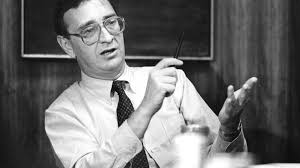 | |
AP Photo/Corporate Archives
BY RONALD BLUM
Darrell L. Christian, a former managing editor and sports editor of The Associated Press known for a demanding demeanor and insistence on excellence during more than four decades with the news agency, died Monday. He was 75.
Christian died of Parkinson’s disease at Elegant Senior Living in Encino, California, according to his wife, Lissa Morrow Christian. He had been diagnosed with Parkinson’s disease around 2015, his wife said.
“Darrell was the finest story editor I ever saw, with an unerring instinct for the lead and shape of copy and zero tolerance for anything but the best,” said Mike Silverman, the AP’s managing editor from 2000 to 2007 and senior managing editor through 2009. ”I had the great good fortune to be his deputy for several years when he was managing editor and much of what I later brought to the job I owed to him.”
A no-nonsense editor known for directness and rigor, Christian modernized AP’s sports coverage during seven years in charge, emphasizing breaking news and in-depth reporting on issues as the sports business, academics and high school safety standards. That coverage earned him a promotion to managing editor under William E. Ahearn, then the executive editor.
“Sports is just an extension of hard news with a slightly different flavor,” Christian told the National Press Club in 2007.
Born on Dec. 26, 1948, Christian was a native of Henderson, Kentucky. He began his newspaper career as a sports writer and sports editor at the Henderson Gleaner in 1964, worked two summers in the AP’s bureau at Charleston, West Virginia, and received a bachelor’s degree from the University of Kentucky in 1969. After serving in the Navy from 1969-1972, Christian joined the AP in Indianapolis in 1972. He became news editor in 1975, moved to the Washington bureau in 1980 and became deputy sports editor in New York the following year.
Christian was promoted to sports editor in 1985, coordinating coverage of the 1988 and 1992 Winter and Summer Olympics and overseeing the addition of featurized approaches to game stories on all major sports events — something he brought to news stories as managing editor.
“When Jackie Robinson came along, sports began to develop a social consciousness,” Christian said at the National Press Club. “It really exploded in the 1970 and early ’80s with television coverage, which brought sports events into the living room and the proliferation of money in sports, the free agency where you suddenly created a whole generation of instant millionaires. And what happened between the lines was no longer enough. That created a public appetite for everything you could possibly want to know about these athletes.”
Called “DLC” throughout the AP, Christian was known for his sharp, concise critiques sent to reporters, left in mailboxes in blue envelopes in the pre-digital era. The “blue notes” were feared among the staff.
Christian said the top story he covered as sports editor was Ben Johnson testing positive for a banned steroid at the 1988 Olympics in Seoul, South Korea, which caused him to work for 48 consecutive hours. Among the major stories he oversaw as managing editor: the O.J. Simpson saga, whose coverage he led with aplomb.
“It was indeed the circus of the century and it was one wild ride to cover it on a day-in, day-out basis,” Christian said.
Christian replaced Martin C. Thompson as managing editor in 1992 and chaired the Pulitzer Prize investigative jury in 1995 and 1996.
“Darrell was an old-school competitive newsman who valued creative stories delivered quickly to readers,” said Kathleen Carroll, the AP’s executive editor from 2002 to 2016. Those values infused every decision he made leading state, national and sports coverage: Make it interesting, write cleanly and get it out the door. His crusty exterior and droll sense of humor barely disguised his deep devotion to fast, accurate, interesting stories and the people who wrote them.”
After six years as managing editor, Christian was succeeded by Jonathan P. Wolman and became director of MegaSports, the AP’s multimedia sports service for newspaper and broadcast members and commercial online services and websites.
“Darrell combined old-school editing skill with a hunger to stay on top of the latest and innovation that would help keep AP competitive at the very beginning of the internet news age,” said Michael Giarrusso, AP’s deputy for newsgathering-global beats, who worked under Christian. “He was as comfortable editing the lead on a story as he was meeting with tech startups that wanted access to AP news or photos.”
Christian became business editor in 2000, and in 2003 was appointed to the newly created position of director of sports data, combining AP Digital’s MegaSports service with the AP’s newspaper sports agate service.
“Behind the gruff old-school newsman exterior was an editor who proved to be a mentor for the next generation of journalists,” said Brian Orefice, a manager of the data division and now vice president of product at Stats Perform, the renamed digital company. “His professional credentials were unquestioned and his advice invaluable.”
|  | |
Associated Press Gramling award winners including from left, Sally Jacobsen, Michael Boord, Colleen Newvine, Darrell Christian of the Stylebook team, Achievement Award, Julia Weeks, Scholarship Award, and AP President Tom Curley during 2011 Gramling Awards dinner in New York.
Christian became editor at large in 2006, then created the AP’s Top Stories Desk in 2008 and managed it until his retirement, when he moved to California.
“Darrell never really stopped doing what he loved, which was to edit and illustrate,” AP golf writer Doug Ferguson said. “He put an emphasis on letting details do the work of adjectives. And he had this terrific ability of knowing what the story was and how to get there. He made us better.”
Christian had been living at home in Encino and still going to a gym and playing golf and softball before he entered Encino Hospital Medical Center on May 24. He was transferred to a rehabilitation facility a few weeks later and moved to the senior living facility on June 25.
Christian’s first marriage ended in divorce. He met Lissa Morrow when he was supervising AP’s coverage at the 1984 Super Bowl in Tampa, Florida, where she was covering for a radio station. In addition to his wife, he is survived by a brother, Scott, and niece Erika Whitman.
Click here for link to this story.
Sensitivity on crime coverage from the closest thing we have to a journalism bible: Letter from the Editor
By Chris Quinn, Editor, cleveland.com/The Plain Dealer
| |
Journalists are an independent bunch, reluctant to cede dominion over their work to outside organizations, and the closest we come to a rule book is through the Associated Press.
For more than 70 years, the AP Stylebook has offered guidelines on usage, spelling, capitalization, cultural sensitivity, reporting principles and more. Every newsroom I’ve worked in has relied on it as a resource. The AP updates the stylebook almost every year.
The 57th edition of the AP Stylebook was released a month ago, and what caught my attention was a new chapter on criminal justice. Crime reporting, which had been relatively unchanged for decades, has evolved rapidly in recent years, and the new chapter addresses those changes. It has advice on mugshots, graphic material and plenty more.
I think many of you will be delighted by the new entry, based on your responses to my recent column about why we did not publish surveillance video from a grocery store shortly before a 3-year-old boy was killed. We did not publish it out of sensitivity for his family.
Here’s what the AP Stylebook entry says about the issue:
“Consider: What public good is served by including graphic details or images of violence, abuse or death? Does each detail advance the story or people’s understanding of what happened; or does it serve just to shock and push people away without accomplishing anything?... Are those details necessary to understand the story? Or are they outweighed by the potential harm to survivors, families, communities?”
Exactly. Just because you can doesn’t mean you should. The entry also recommends considering the impact on journalists who view the graphic images or videos, something we’ve done more and more in recent years. Viewing them is traumatizing.
I love what the AP team has done here. Newsrooms were not thinking this way when I started out, and for many years thereafter. We are now, and that’s a step forward.
Read more here. Shared by John Nolan.
Stories of your paper routes
Dan Day - I carried the Cleveland Press on two routes in my neighborhood in Cleveland Heights, Ohio, and I learned a few lessons.
On the first route, I learned that everybody has an angle. The kid I succeeded quit right after Christmas -- to make sure he got all the Christmas tips.
On the second route, a woman who lived around the block and was married to a cop told me pointedly she would not subscribe to the Press because it was biased against the Cleveland police. Then she shut the door in my face. It was then I decided not to become a publisher -- I wanted to deliver the news, not sell it.
-0-
Molly Gordy - When my dad was 93 and my mom 89, they moved into assisted living. As they were introduced to the other residents the first evening at dinner, a man stood up and said, “Fred, you may not remember me, but you were my family’s paper boy (Milwaukee Journal) when I was 11 years old.” “Of course I remember you, Shlomo” my dad replied, “because your father was the only one on my route who paid me on time.”
-0-
Steve Graham - In 1952, I was living in Chicago, but spent the summer with my grandmother in Los Angeles.
Looking for something to do, I checked with the Los Angeles Times distribution office near the Coliseum to see if they had a summer spot and as luck would have it, they did.
Bundles of newspapers were dropped off at the office in pre-dawn hours and we would begin our days by folding the papers into thirds and stuffing them into a "newspaper tying machine," which would tie a string around them so we could fling them from our bicycles as we plied our routes.
I was busily tying my daily load at 4:52 a.m. on July 21st when the building started to shake. Foolishly, we rushed outside and saw power poles swaying dangerously as were the traffic lights suspended from cables over the nearby intersection.
When things calmed down, we went back into the office and continued feeding our daily load into the potentially vicious tying machines, which I doubt OSHA would tolerate today.
That was the great Kern County quake, also known as the Tehachapi quake which, according to Wikipedia, killed at least a dozen people.
-0-
Mike Harris - I didn't deliver newspapers for very long, but it was definitely a memorable first job.
My brother, Rich, two years younger than me, and I shared the very rural route on what was then the far westside of Madison, WI. When we first moved into our house in the suburb of Orchard Ridge, our street had not yet been paved and houses were sparse and separated by big empty lots.
My parents had the house built on an acre-and-a-half lot shortly after we moved from Cleveland, Ohio, to Madison for my dad's job in 1950. It was seven years later, when I was 14 and my brother 12, that we took on the newspaper route. By that time, the streets in Orchard Ridge were paved and there were more houses. But we were still a one-mile walk from the end of the city bus line.
Our newspaper route spanned a six-block square area and about 30 houses.
Most days, it was just a quick bike ride - maybe an hour - to get out all the papers. But then came the Wisconsin winter and more snow than I had ever seen.
One memorable Sunday morning, we woke at 5 a.m. to the result of a major snowstorm. Despite the snow and ice, a Wisconsin State Journal truck had dropped off the bundles of papers by then. Rich and I put the sections of the papers together, dressed as warmly as we could and faced the outdoors.
There was no bike riding that day. Instead, we took a sled with the papers piled on it and dragged it through the drifts. It took a while, but all the papers were delivered just as the sun came out.
When we got home, shivering and exhausted, we got a great surprise. Our dad, who usually was not an early riser, had a fire going in the fireplace and our mom had hot chocolate and breakfast on the table. We warmed up quickly and knew we had a good story to tell.
The aftermath of that big snowstorm was our worst day, although that sled did get quite a workout over the next couple of months. And we eventually decided one year of that job was enough.
-0-
| 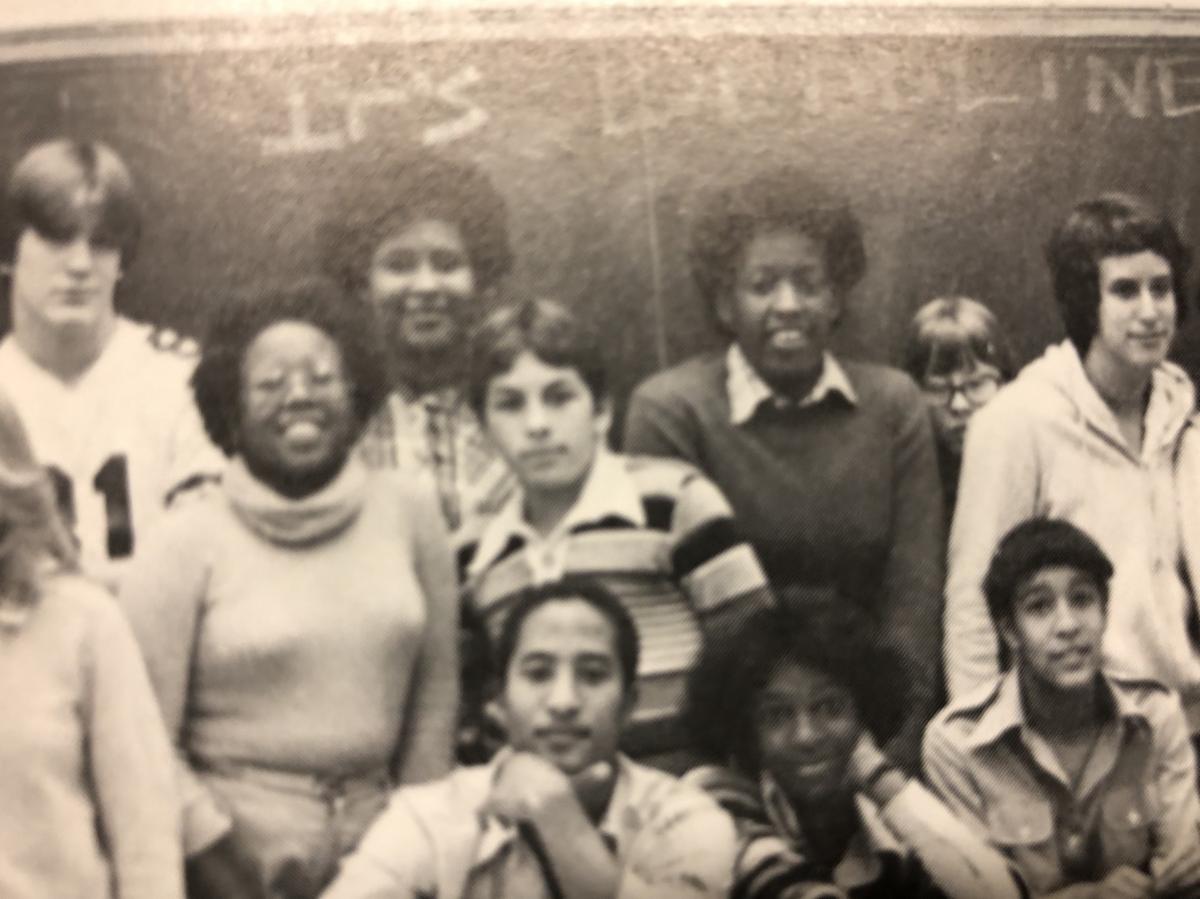 | |
Vince on his school newspaper team...striped shirt..1978!
Vincent Tripodi - Being 12 years old in Hillside, NJ, with baskets on the front and rear of my bike, delivering 80 daily and 120 Sunday Newark Star Ledger papers thru all manner of weather, epic 70's snowstorms included. An assembly line in the garage for Sunday papers, where deliveries to me started on Thursday with entertainment sections, flyers, etc. I could hit a front door pedaling full speed by placing just the right arc on the throw... I'd be two doors down and hear the bang and know I hit a bullseye.
I went from being a paper boy thru age 17, to being editor of my school newspaper (Hillside High School NJ class of 1981) , to eventually AP as head of engineering. Assembling Sunday newspapers at 12 ... assembling news content supply chains at 61!
Memories of your first AP bureau
Brian Bland - My first – and only – AP buro was Los Angeles, for nearly 28 years. But chunks of that time were spent reporting from other states.
| |
|
I came to the AP in 1979 at age 37, with degrees in Radio-TV/Journalism (University of Illinois), three years in the Army (including a year in Vietnam running a combat photo detachment), and a decade of broadcast experience.
I had spent 1969-1978 at radio and TV news departments in the San Francisco Bay area and in Reno, beginning as a writer, then moving to on-air TV reporting. My Nevada duties included covering the legislature and governor’s office in Carson City, where I became friends with the AP’s Brendan Riley – a great guy and a terrific reporter. While covering legislative sessions, I also wrote “print style” stories for the reporters’ pool.
I left Reno to be an assignment editor at a Los Angeles TV station. (Hey, we all make mistakes). Very soon, armed with a recommendation from Riley, I applied to the AP in L.A. and was interviewed by the late great Chuck Lewis. I was frank about my interest in the AP Radio Network but was sincere in saying I’d be proud to be an AP writer. I passed the writers’ test, and waited.
Lewis called a few weeks later; a writer’s slot had opened, and buro chief Ben Brown (another great APer now gone) wanted to take me to lunch. Was I nervous? – yep. In broadcast job interviews, no lunch was involved, just a brief critique of how you sounded and whether your writing was any good. As soon as Ben and I sat down in an eatery near the buro he said, “You’re hired, you know – I just wanted to have lunch to get to know you.” Very gracious – and I was very grateful.
So, I was a 37-year-old AP rookie. Two weeks on, Lewis called me into his office and, smiling, said, “This stuff is for you.” The “stuff” was a box packed with audio gear Lewis had asked AP Radio in Washington to send, so I could file for the network when time allowed. Another encouraging, gracious, gesture.
To cement my job as a writer, I deferred filing for AP Radio for about eight months. My first memorable wire story featured a woman who’d reunited with her two lost daughters after two decades. The story was seen by her long-lost son in northern California, prompting another reunion. In 1980, I was part of the AP team that covered the MGM fire in Las Vegas.
I gradually began doing radio reports on stories I covered for the wire. This led to AP Radio “borrowing” me for several big stories such as the days-long Diablo Canyon nuclear plant opening that drew hundreds of protesters.
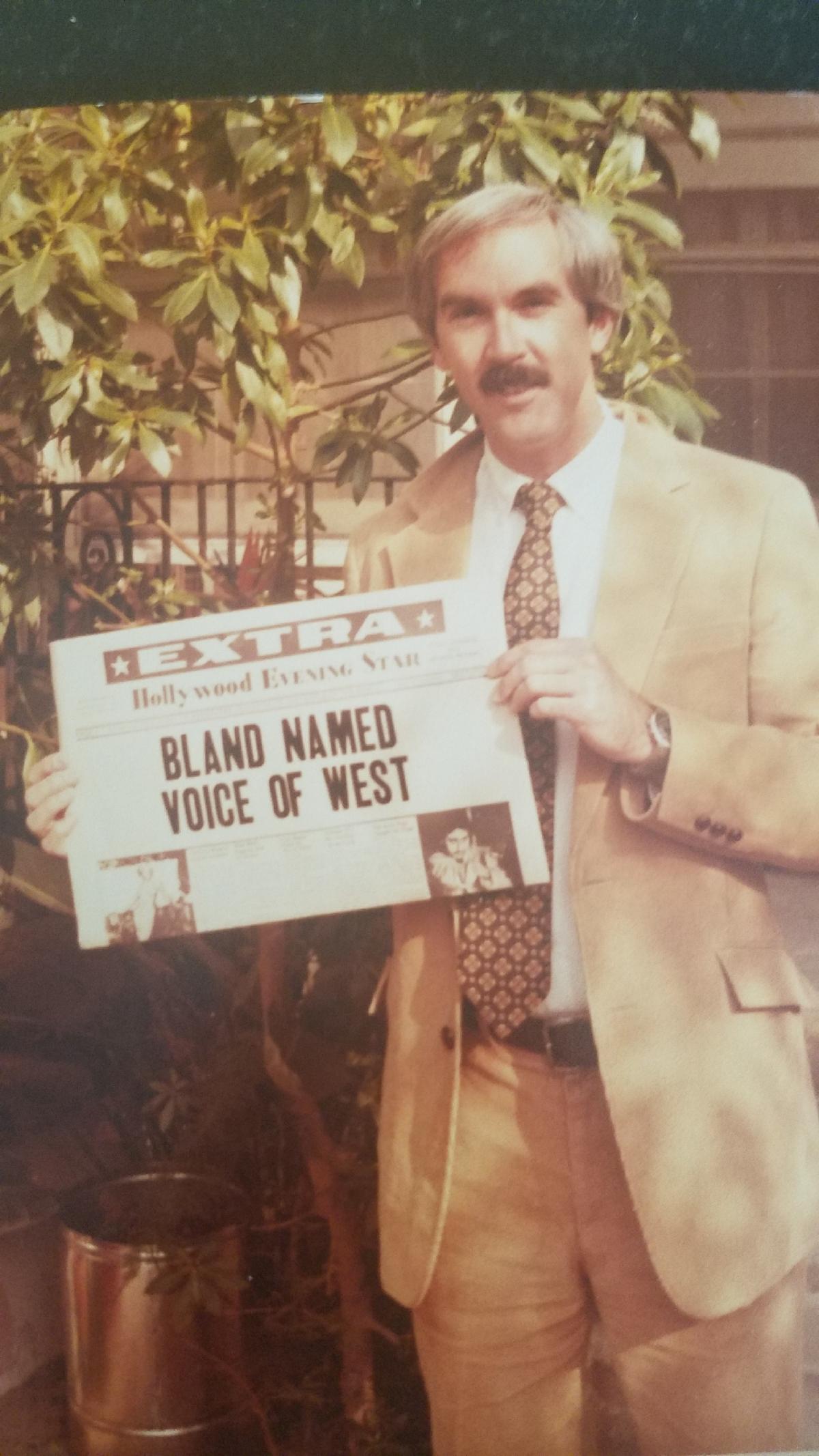
In 1982, the AP Radio Network expanded. I got a call from the new boss, Jim Hood, who told me, chuckling: “I’m gonna make you the voice of the West!” At age 40, I had a job I’d dreamed of since listening to the great radio correspondents of my childhood. A friend promptly had a gag newspaper printed with a headline using Hood’s proclamation.
What followed was a quarter-century of reporting from California and 25 other states, including Hawaii and Alaska, plus about six weeks in Saudi Arabia and Kuwait, always with L.A. as my base. I retired at the end of 2006, with gratitude for my career and the colleagues I was privileged to know, and learn from, in broadcast and print.
-0-
Mitch Landsberg - My AP origin story involves a fateful call to San Francisco COB Marty Thompson, which I’ll get to in a minute. First, I want to talk about one of the ways that call changed my life.
I’m talking about annual camping trips with six other reporters who covered the 1981 session of the Nevada Legislature, an event so searing that we’ve had to relive it … year after year after year after year, right up to the present day.
Let me explain.
When Marty hired me in the fall of 1980, he assigned me to the Reno bureau. The following January, I was designated to help cover the biennial Legislature in nearby Carson City. There, I became part of a four-person team under the tutelage of the peerless Brendan Riley, who was not only one of the AP’s best capitol correspondents but a supremely generous and gifted tutor for young reporters, generations of whom are graduates of the Riley School of Journalism. I am proud to count myself among them.
From Day 1, a bond formed among the correspondents covering the legislature for a variety of print, wire and TV outlets. The work was grueling, and we let off steam together almost every weekend. There were epic, boozy parties, of course, but we also got together for outdoor activities, mostly skiing (both cross-country and downhill) at nearby Lake Tahoe or, as the weather got warmer, hiking. After the legislative session ended in June, a bunch of us went on a backpacking trip in Yosemite National Park. We didn’t know it at the time, but we had started something that would last a lifetime.
Fast forward 30 years. Sometime around the beginning of 2011, four of us received an email from Chris Broderick, who had covered the ‘81 legislative session for the Las Vegas Review-Journal and had gone on to the Portland Oregonian (and, later, Portland State University). He was planning a backpacking trip with two of the other members of our gang and wondered if anyone else wanted to join them.
Everyone instantly said yes.
Thus began an annual tradition that has taken the seven of us – and some later additions -- to some of the most beautiful wilderness in the Western United States, has drawn us together as a band of brothers (it was an all-male group) and brought more laughter and joy into our lives than we ever could have imagined.
| |
|
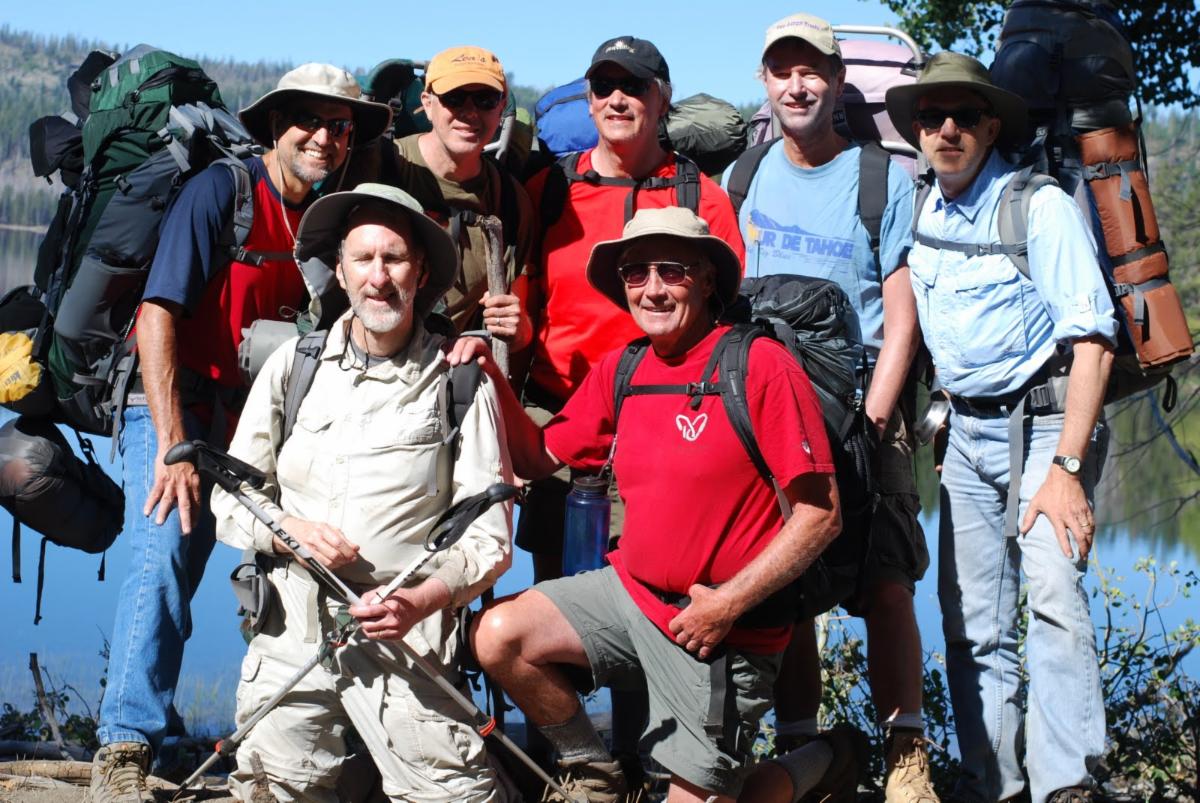
Lassen National Park, 2011. From left: Don Downey, Larry Ryckman, Chris Woodyard, Mitchell Landsberg, Martin Griffith, Chris Broderick, Brendan Riley.
Our group included five people with AP experience: Larry Ryckman, Martin Griffith, Chris Woodyard, Brendan and me.
Larry had been a 19-year-old AP intern in 1981, tagged with the nickname “Boy Wonder” (which we still occasionally call him). He went on to stints with the AP in San Francisco, Seattle, the New York Foreign Desk, Moscow, and as an assistant managing editor in Denver, eventually leaving to work for several Colorado newspapers, including the Denver Post, and ultimately become the founding editor of a very successful online startup, the Colorado Sun. Martin had worked for the Reno Gazette-Journal in 1981 and later joined AP, where he worked in Reno (and Carson City) for many years. Chris worked for the Las Vegas Sun in 1981, did a brief stint for AP in Carson City in 1983, and eventually landed at the Los Angeles Herald-Examiner, Los Angeles Times and USA Today.
Besides Chris Broderick (our de facto leader, known to us as Sarge), the other non-AP colleague was Don Downey, a reporter for a Las Vegas TV station in 1981, and later a documentary filmmaker.
That first year, 2011, we backpacked at Lassen National Park in Northern California. After that, our trips have included the Jefferson Wilderness and Eagle Cap wilderness areas in Oregon; Mt. Rainier and Olympic national parks and the Indian Heaven Wilderness area in Washington State; Yellowstone and Grand Tetons national parks in Wyoming; Channel Islands National Park in California; Zion and Canyonlands national parks in Utah; and Denali National Park in Alaska.
| |
|
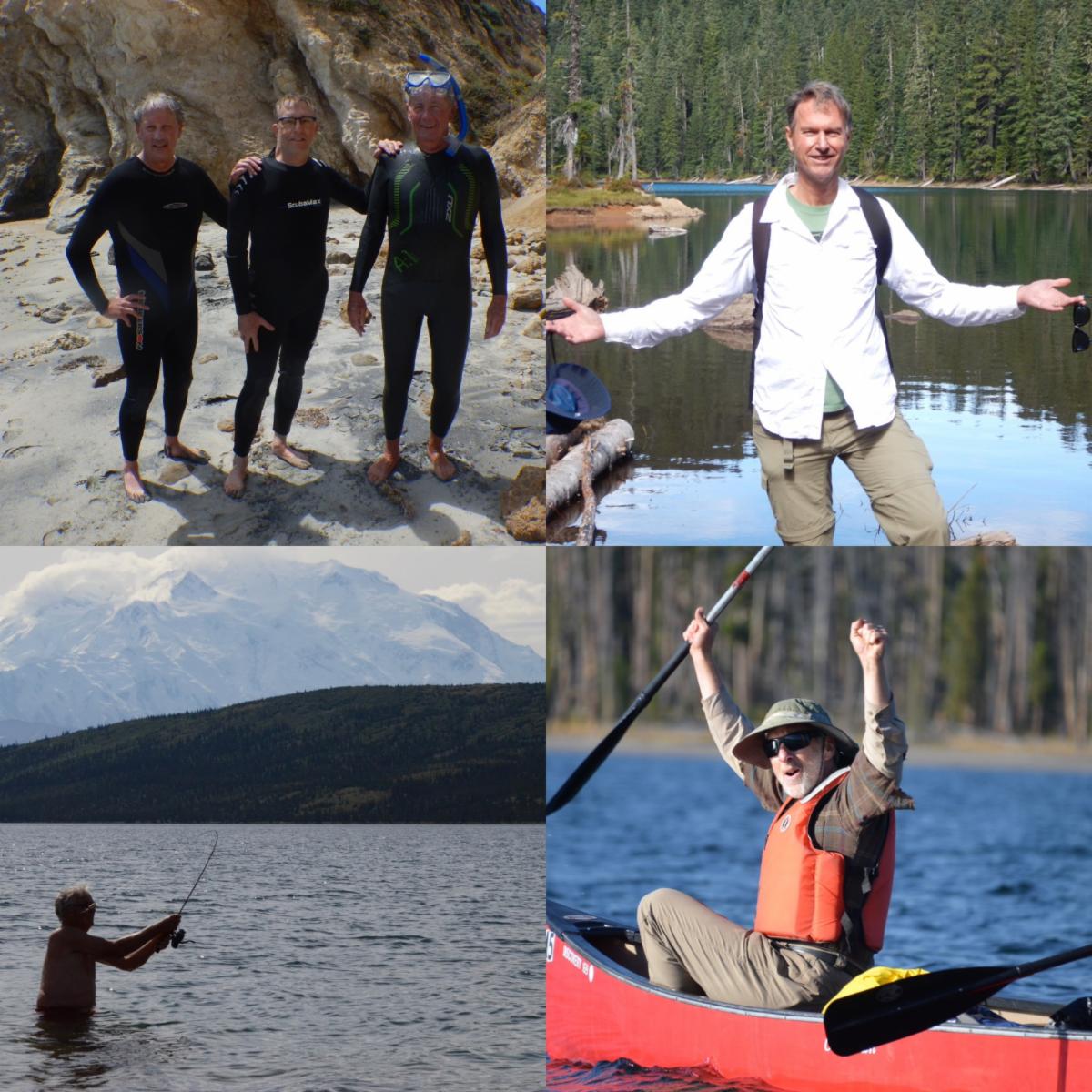
Clockwise from top left: Chris Broderick, Mitchell Landsberg, Brendan Riley, Channel Islands National Park, California, 2018; Chris Woodyard, Indian Heaven Wilderness area, Washington State, 2019; Brendan Riley, Denali National Park, Alaska, 2017; Martin Griffith, Yellowstone National Park, Wyoming, 2016.
Our trips have included endless, hilarious campfire tales; lots of mosquitoes; one unforgettable meteor shower; some successful fishing by Brendan and Larry; some fishless fishing on my part; many freeze-dried meals and what became our official cocktail, Martin’s beloved hot chocolate with peppermint schnapps. (Not better than it sounds.)
For the first 10 years or so, we backpacked. Eventually, we got old and lazy and began car-camping, albeit with a regular itinerary of challenging hikes. We also began including our wives (one of whom – my wife, Mary MacVean – is also an AP veteran). Along the way, we became the closest of friends. Although most of us live hundreds or thousands of miles apart and rarely see one another the rest of the year, we pick up seamlessly when we meet for the next camping trip. It’s as if we were in mid-sentence one September, only to finish the sentence the next September … and the next, and the next.
I can only say that there have been few more enriching experiences in my life.
Now, back to that call to Marty in 1980.
I was leaving my job at a tiny, small-town newspaper, the Ukiah Daily Journal, with open-ended plans to travel until I ran out of money. My boss, a deeply shy managing editor, asked if I would help him find a replacement. That led to my call to Marty – not to ask for work for myself, but to see if he knew of any reporters in Northern California looking for a job. Marty said he’d ask around, but also asked me to get in touch with him when I finished my travels. I did, and that led to my AP job in Reno, followed by New York and Moscow. From there, I went to the L.A. Times, from which I retired two years ago.
Our group already has its plans set for a camping trip in Northern California this fall. On the last night, as we’ve done every year, we’ll convene the Council of Elders – which would be all of us – to begin to plan the next year. I don’t know how many years we’ve got left in us, but I intend to cherish every one.
-0-
Chuck Wolfe - I launched my 28-year AP career in the Charlotte bureau, but this is more about the community and North Carolina’s wacky alcohol laws than the bureau per se.
At issue was how to enjoy a cold one after the night shift, which ended at 12:30 a.m. State law said beer and drinks could not be SOLD after midnight, Eastern STANDARD time. Courts had determined that meant 1 a.m. in DAYLIGHT SAVING time. An old nightside colleague, Dick Waters, showed me how to do it. Upon unstaffing, we would hustle down to Dick’s favorite watering hole a few blocks from the bureau. Then immediately order six beers. The law said only that beer couldn’t be sold after 1 a.m. in the summer, not that it couldn’t be served or consumed.
Another link to Columbian column
Tim Marsh - In 7/1/2024 Connecting, Doug Pizac provided a link to a weekly column by Craig Brown, editor of The Columbian in Vancouver, Wash. I could not access the column with that link. Maybe others also could not access it? A friend in Vancouver provided a different link – click here.
Romek is no Kenny Rogers
| |
|
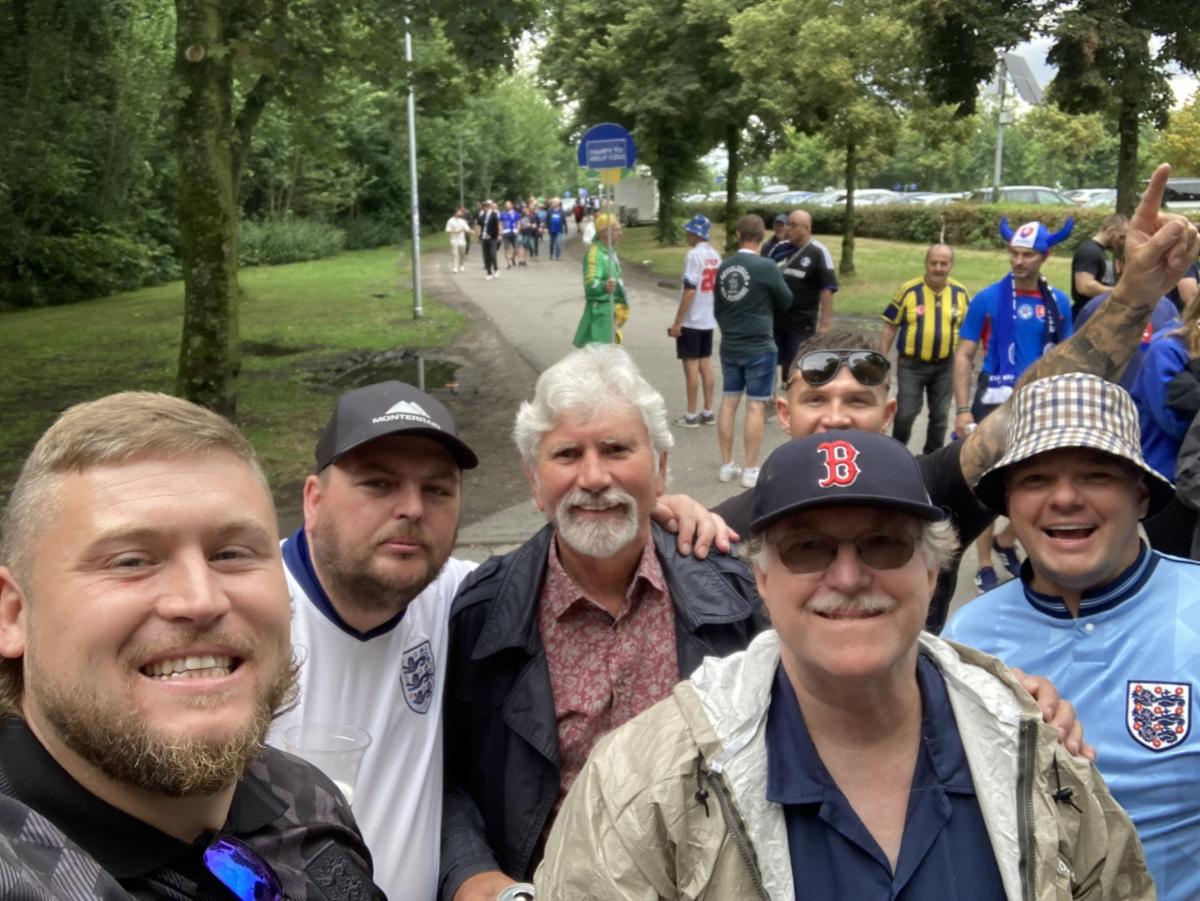
Dennis Conrad - On my way Sunday (with Boston cap) to England vs. Slovakia soccer match in Gelsenkirchen, Germany, along with friend Romek (the older gentlemen), who was best man at my 1975 wedding in Poland. The rest are Brits we met as they spotted my Red Sox gear and quickly started singing “Sweet Caroline” as if we were at Fenway Park. After I began walking away, one Brit hurriedly approached me showing his Googled images of the late singer Kenny Rogers. He then pointed to my friend Romek, seeking confirmation that he had found Kenny’s lookalike. Four hours later, near our car in the parking lot, Romek had to head for the bushes. When he came out, another fan screamed “Kenny!” Upon further discussion at home, we both agreed Romek is no Kenny.
BEST OF AP — FIRST WINNER
DOCUMENTING GAZA’S GENERATIONS OF LOSS, NAME BY NAME
| |
|
Israel-Palestinians-Gaza-Death of a Family Tree Image ID : 24164780207239 Yousef Salem works on his computer in Istanbul, Turkey, Wednesday, April 17, 2024. In December 2023, in a matter of days, 173 of his relatives were killed in Israeli airstrikes. By spring that toll had risen to 270. He spent months filling a spreadsheet with their vital details as news of their deaths was confirmed, to preserve a last link to the web of relationships he thought would thrive for generations more. “My uncles were wiped out, totally. The heads of households, their wives, children, and grandchildren,” he said. AP PHOTO / KHALIL HAMRA
Israel-Palestinians-Gaza-Death of a Family Tree
By Sarah El Deeb
Over months of tenacious work, Beirut-based investigative correspondent Sarah El Deeb documented name by name how Israeli airstrikes in Gaza decimated dozens of Palestinian families, with some losing well over 200 people across generations.
El Deeb, who has worked for the AP in the Middle East since 2000, knows better than most journalists the importance of extended family in Gaza. Early in the war, Palestinians started contacting her about entire families dying under Israeli airstrikes, multiple generations at once. She resolved to document exactly how the war was decimating Gaza’s families, one family tree at a time.
Despite frequent communications cuts and scant official information, she tracked down people from multiple families who were building their own databases of loss to show how the war will affect Palestinian culture and society going forward. El Deeb created a spreadsheet that cross-referenced airstrikes by date and the families killed, including obtaining exclusive access to some of the documentation of the casualties by the non-profit transparency watchdog Airwars. As part of her investigation, AP also geolocated and analyzed 10 Israeli strikes, among the deadliest in the war, between Oct. 7 and Dec. 24. Together the strikes killed more than 500 people.
Using the families’ own video and photos, she and New York-based video investigative journalist Marshall Ritzell created a video to document the toll, leading with an especially moving photo of a wedding party in which only two of the attendees pictured were still alive.
Read more here.
BEST OF AP — SECOND WINNER
AP REPORTS POLITICIAN WHO PUSHED PHILIPPINES NATURAL GAS BOOM IS BEHIND FIRM THAT PLANNED TO PROFIT
| |
|
Philippines LNG Buildout Governor Image ID : 24173015826441 The sun sets over a liquefied natural gas power plant in Santa Clara, Batangas province, Philippines on Tuesday, Aug. 8, 2023. The Philippines is seeing one of the world's biggest buildouts of natural gas infrastructure. AP PHOTO / AARON FAVILA
Philippines LNG Buildout Governor
By Ed Davey
As the Philippines builds out extensive new fossil fuel infrastructure despite the findings of international climate experts that the world cannot afford more, AP climate investigative reporter Ed Davey spent months fighting for documents and digging deep into the Philippines Securities and Exchange Commission. He was able to pierce a corporate veil to show that the governor of the country’s major natural gas development zone had a personal stake in the buildout through layers of shell companies.
Davey realized that the team’s compelling all-formats story on environmental damage from new fossil fuel plants wasn’t the whole story. So, he went all in to answer why the country was choosing this path. After all, making electricity by burning so much more natural gas wasn’t just bad for the environment and climate, it was going to cost Filipinos more for electricity.
With aggressive reporting largely through documents, and building on colleagues’ prior work, Davey made requests to Philippine national agencies and extensively used public documents to gradually uncover a web of holding companies connecting the powerful governor to land sales. The details of deals were often buried deep in corporate documents, some hundreds of pages long.
He tracked down speeches the governor and his wife made to shareholders and business audiences, expressing expectations of wealth for family-owned companies. He was able to show that one of the most influential politicians in the Philippines was behind a company that intended from the beginning to make a fortune from it.
Read more here.
| |
Connecting wishes Happy Birthday |  | |
Stories of interest
A media ‘nervous breakdown’? Calls for Biden’s withdrawal produce some extraordinary moments (AP)
BY DAVID BAUDER
NEW YORK (AP) — If President Joe Biden successfully resists some extraordinary calls in the media to abandon his reelection effort following last week’s debate, he may reflect on the moment that MSNBC’s Mika Brzezinski looked into the camera Monday to begin a 15-minute essay of support.
The “Morning Joe” co-host denounced the “screaming, mocking, jeering” headlines and editorials suggesting Biden leave the campaign following several halting, confused passages by the president during his CNN debate with former President Donald Trump.
The New York Times editorial board urged Biden’s exit, along with some of the newspaper’s columnists. The Atlanta Journal-Constitution followed suit in a front-page editorial on Sunday. The New Yorker’s editor David Remnick wrote that “there is honor in recognizing the hard demands of the moment.” The Washington Post said it hoped Biden spent the weekend soul-searching.
“It has been a collective nervous breakdown like nothing I’ve ever seen,” said Chris Whipple, author of “The Fight of His Life: Inside Joe Biden’s White House.”
Read more here.
| |
AP classes, by the year...
(EDITOR'S NOTE: This is a listing of Connecting colleagues who have shared the year and the bureau where they started with the AP. If you would like to share your own information, I will include it in later postings. Current AP staffers are also welcome to share their information.)
1951 - Norm Abelson (Boston)
1953 – Charles Monzella (Huntington, WVa)
1955 – Henry Bradsher (Atlanta), Paul Harrington (Boston), Joe McGowan (Cheyenne)
1957 - Louis Uchitelle (Philadelphia)
1958 – Roy Bolch (Kansas City)
1959 – Charlie Bruce (Montgomery)
1960 – Claude Erbsen (New York), Carl Leubsdorf (New Orleans)
1961 – Peter Arnett (Jakarta, Indonesia), Strat Douthat (Charleston), Warren Lerude (San Diego), Ed Staats (Austin)
1962 – Paul Albright (Cheyenne), Malcolm Barr Sr. (Honolulu), Myron Belkind (New York), Kelly Smith Tunney (Miami)
1963 – Hal Bock (New York)
1964 – Rachel Ambrose (Indianapolis), Larry Hamlin (Oklahoma City), Ron Mulnix (Denver), Lyle Price (San Francisco), Arlene Sposato (New York), , Hilmi Toros (New York)
1965 – Bob Dobkin (Pittsburgh), Harry Dunphy (Denver), John Gibbons (New York), Jim Luther (Nashville), Larry Margasak (Harrisburg)
1966 – Mike Doan (Portland, OR), Edie Lederer (New York), Nancy Shipley (Nashville), Mike Short (Los Angeles), Marty Thompson (Seattle), Nick Ut (Saigon), Kent Zimmerman (Chicago)
1967 – Dan Berger (Los Angeles), Adolphe Bernotas (Concord), Lou Boccardi (New York), Linda Deutsch (Los Angeles), Don Harrison (Los Angeles), Doug Kienitz (Cheyenne), David Liu (New York), Bruce Lowitt (Los Angeles), Chuck McFadden (Los Angeles), Martha Malan (Minneapolis), Bill Morrissey (Buffalo), Larry Paladino (Detroit), Michael Putzel (Raleigh), Bruce Richardson (Chicago), Richard Shafer (Baltimore), Victor Simpson (Newark), Michael Sniffen (Newark)
1968 – Lee Balgemann (Chicago), John Eagan (San Francisco), Joe Galu (Albany/Troy), Peter Gehrig (Frankfurt), Charles Hanley (Albany), Jerry Harkavy (Portland, Maine), Herb Hemming (New York), Brian King (Albany), Samuel Koo (New York), Karren Mills (Minneapolis), Michael Rubin (Los Angeles), Rick Spratling (Salt Lake City), Barry Sweet (Seattle)
1969 - Ann Blackman (New York), Ford Burkhart (Philadelphia), Dick Carelli (Charleston, WVa), Dennis Coston (Richmond), Mary V. Gordon (Newark), Daniel Q. Haney (Portland, Maine), Mike Harris (Chicago), Brad Martin (Kansas City), David Minthorn (Frankfurt), Cynthia Rawitch (Los Angeles), Bob Reid (Charlotte), Mike Reilly (New York), Doug Tucker (Tulsa), Bill Winter (Helena)
1970 – Richard Boudreaux (New York), Richard Drew (San Francisco), Bob Egelko (Los Angeles), Steve (Indy) Herman (Indianapolis), Tim Litsch (New York), Lee Margulies (Los Angeles), Chris Pederson (Salt Lake City), Brendan Riley (San Francisco), Larry Thorson (Philadelphia)
1971 – Harry Atkins (Detroit), Jim Bagby (Kansas City), Larry Blasko (Chicago), Jim Carlson (Milwaukee), Jim Carrier (New Haven), Chris Connell (Newark), Bill Gillen (New York), Bill Hendrick (Birmingham), John Lumpkin (Dallas), Kendal Weaver (Montgomery)
1972 – Hank Ackerman (New York), Bob Fick (St. Louis), Joe Frazier (Portland, Ore.), Terry Ganey (St. Louis), Mike Graczyk (Detroit), Denis Gray (Albany), Lindel Hutson (Little Rock), Brent Kallestad (Sioux Falls), Tom Kent (Hartford), Nolan Kienitz (Dallas), Andy Lippman (Phoenix), Ellen Miller (Helena), Mike Millican (Hartford), Lew Wheaton (Richmond)
1973 - Jerry Cipriano (New York), Susan Clark (New York), Norm Clarke (Cincinnati), Joe Galianese (East Brunswick), Merrill Hartson (Richmond), Mike Hendricks (Albany), Tom Journey (Tucson), Steve Loeper (Los Angeles), Tom Slaughter (Sioux Falls), Jim Spehar (Denver), Paul Stevens (Albany), Jeffrey Ulbrich (Cheyenne), Owen Ullmann (Detroit), John Willis (Omaha), Evans Witt (San Francisco)
1974 – Norman Black (Baltimore), David Espo (Cheyenne), Dan George (Topeka), Robert Glass (Philadelphia), Steve Graham (Helena), Elaine Hooker (Hartford), Sue Price Johnson (Charlotte), Dave Lubeski (Washington), Janet McConnaughey (Washington), Lee Mitgang (New York), Bud Weydert (Toledo), Marc Wilson (Little Rock)
1975 – Peter Eisner (Columbus), David Powell (New York), Eileen Alt Powell (Milwaukee)
1976 – Brad Cain (Chicago), Judith Capar (Philadelphia), Dick Chady (Albany), Steve Crowley (Washington), David Egner (Oklahoma City), Marc Humbert (Albany), Steven Hurst (Columbus), Richard Lowe (Nashville), Charlotte Porter (Minneapolis), Chuck Wolfe (Charlotte)
1977 – Bryan Brumley (Washington), Robert Burns (Jefferson City), Charles Campbell (Nashville), Dave Carpenter (Philadelphia), Ken Herman (Dallas), Mike Holmes (Des Moines), Brad Kalbfeld (New York), Scott Kraft (Jefferson City), John Kreiser (New York), Peter Leabo (Dallas), Kevin LeBoeuf (Los Angeles), Ellen Nimmons (Minneapolis), Dan Sewell (Buffalo), Estes Thompson (Richmond), David Tirrell-Wysocki (Concord)
1978 – Tom Eblen (Louisville), Ruth Gersh (Richmond), Doug Pizac (Los Angeles), Charles Richards (Dallas), Reed Saxon (Los Angeles), Steve Wilson (Boston)
1979 – Brian Bland (Los Angeles), Scotty Comegys (Chicago), Frances D’Emilio (San Francisco), Pat Fergus (Albany), Brian Friedman (Des Moines), Sally Hale (Dallas), Jill Lawrence (Harrisburg), Barry Massey (Kansas City), Phillip Rawls (Nashville), John Rice (Carson City), Linda Sargent (Little Rock), Robert Wielaard (Brussels)
1980 – Alan Adler (Cleveland), Jeff Barnard (Providence), Mark Duncan (Cleveland), Bill Kaczor (Tallahassee), Mitchell Landsberg (Reno), Kevin Noblet (New Orleans), David Speer (Jackson), Hal Spencer (Providence), Carol J. Williams (Seattle)
1981 – Paul Davenport (Phoenix), Dan Day (Milwaukee), John Flesher (Raleigh), Len Iwanski (Bismarck), Ed McCullough (Albany), Kim Mills (New York), Mark Mittelstadt (Des Moines), Roland Rochet (New York), Lee Siegel (Seattle), Marty Steinberg (Baltimore), Bill Vogrin (Kansas City)
1982 – Dorothy Abernathy (Little Rock), Al Behrman (Cincinnati), Tom Cohen (Jefferson City), John Epperson (Chicago), Ric Feld (Atlanta), Nick Geranios (Helena), Hpward Gros (New Orleans), Robert Kimball (New York), Rob Kozloff (Detroit), Bill Menezes (Kansas City), David Ochs (New York)
1983 – Scott Charton (Little Rock), Sue Cross (Columbus), Mark Elias (Chicago), Diana Heidgerd (Miami), Sheila Norman-Culp (New York), Carol Esler Ochs (New York), Amy Sancetta (Philadelphia), Rande Simpson (New York), Dave Skidmore (Milwaukee)
1984 – Owen Canfield (Oklahoma City), Wayne Chin (Washington), Jack Elliott (Oklahoma City), Kelly P. Kissel (New Orleans), Joe Macenka (Richmond), Eva Parziale (San Francisco), Keith Robinson (Columbus), Cliff Schiappa (Kansas City), David Sedeño (Dallas), Andrew Selsky (Cheyenne), Patty Woodrow (Washington)
1985 - Betty Kumpf Pizac (Los Angeles)
1986 – Joni Baluh Beall (Richmond), David Beard (Jackson), Tom Coyne (Columbia, SC), Dave DeGrace (Milwaukee), Alan Flippen (Louisville), Jim Gerberich (San Francisco), Howard Goldberg (New York), Mark Hamrick (Dallas), Sandy Kozel (Washington), Robert Meyers (London)
1987 – Donna Abu-Nasr (Beirut), Dave Bauder (Albany), Chuck Burton (Charlotte), Beth Harris (Indianapolis), Lynne Harris (New York), Steven L. Herman (Charleston, WVa), Rosemarie Mileto (New York), John Rogers (Los Angeles)
1988 – Chris Carola (Albany), Peg Coughlin (Pierre), Kathy Gannon (Islamabad), Steve Hart (Washington), Melissa Jordan (Sioux Falls), Bill Pilc (New York), Kelley Shannon (Dallas)
1989 – Ted Bridis (Oklahoma City), Charlie Arbogast (Trenton), Ron Fournier (Little Rock)
1990 – Frank Fisher (Jackson), Dan Perry (Bucharest), Steve Sakson (Baltimore), Sean Thompson (New York)
1991 – Amanda Kell (Richmond), Santiago Lyon (Cairo), Lisa Pane (Hartford), Ricardo Reif (Caracas), Bill Sikes (Buffalo)
1992 – Kerry Huggard (New York)
1993 – Jim Salter (St. Louis)
1996 – Patricia N. Casillo (New York)
1997 - Pamela Collins (Dallas), Madhu Krishnappa Maron (New York), Jim Suhr (Detroit), Jennifer Yates (Baltimore)
2000 – Gary Gentile (Los Angeles)
| Today in History – July 2, 2024 | |
|
Today is Tuesday, July 2, the 184th day of 2024. There are 182 days left in the year.
Today’s Highlight in History:
On July 2, 1964, President Lyndon B. Johnson signed into law a sweeping civil rights bill passed by Congress prohibiting discrimination and segregation based on race, color, sex, religion or national origin.
Also on this date:
In 1776, the Continental Congress passed a resolution saying that “these United Colonies are, and of right ought to be, free and independent States.”
In 1881, President James A. Garfield was shot by Charles J. Guiteau (gee-TOH’) at the Washington railroad station; Garfield died the following September. (Guiteau was hanged in June 1882.)
In 1917, rioting erupted in East St. Louis, Illinois, as white mobs attacked Black residents; at least 50 and as many as 200 people, most of them Black, are believed to have died in the violence.
In 1937, aviator Amelia Earhart and navigator Fred Noonan disappeared over the Pacific Ocean while attempting to make the first round-the-world flight along the equator.
In 1962, the first Walmart store opened in Rogers, Arkansas.
In 1976, the U.S. Supreme Court, in Gregg v. Georgia, ruled 7-2 that the death penalty was not inherently cruel or unusual.
In 1979, the Susan B. Anthony dollar coin was released to the public.
In 1986, ruling in a pair of cases, the Supreme Court upheld affirmative action as a remedy for past job discrimination.
In 1990, more than 1,400 Muslim pilgrims were killed in a stampede inside a pedestrian tunnel near Mecca, Saudi Arabia.
In 2002, Steve Fossett became the first person to complete a solo circumnavigation of the world nonstop in a balloon.
In 2018, rescue divers in Thailand found alive 12 boys and their soccer coach, who had been trapped by flooding as they explored a cave more than a week earlier.
In 2020, British socialite Ghislaine Maxwell was arrested in New Hampshire on charges that she had helped lure at least three girls – one as young as 14 – to be sexually abused by the late financier Jeffrey Epstein. (Maxwell would be convicted on five of six counts.)
In 2022, the police chief for the Uvalde, Texas, school district stepped down from his City Council seat amid criticism of his response to the mass shooting that left 19 students and two teachers dead.
Today’s Birthdays: Former Philippine first lady Imelda Marcos is 95. Actor Polly Holliday is 87. Racing Hall of Famer Richard Petty is 87. Former White House chief of staff and former New Hampshire governor John H. Sununu is 85. Former Mexican President Vicente Fox is 82. Writer-director-comedian Larry David is 77. Rock musician Roy Bittan (Bruce Springsteen & the E Street Band) is 75. Actor Wendy Schaal is 70. Actor-model Jerry Hall is 68. Former baseball player Jose Canseco is 60. Race car driver Sam Hornish Jr. is 45. Former NHL center Joe Thornton is 45. Singer Michelle Branch is 41. Actor Vanessa Lee Chester is 40. Figure skater Johnny Weir is 40. Actor-singer Ashley Tisdale is 39. Actor Lindsay Lohan (LOH’-uhn) is 38. Soccer player Alex Morgan is 35. Actor Margot Robbie is 34. Singer-rapper Saweetie is 31. U.S. Olympic swimming gold medalist Ryan Murphy is 29.
| Got a photo or story to share? | |
|
Connecting is a daily newsletter published Monday through Friday that reaches more than 1,800 retired and former Associated Press employees, present-day employees, and news industry and journalism school colleagues. It began in 2013. Past issues can be found by clicking Connecting Archive in the masthead. Its author, Paul Stevens, retired from the AP in 2009 after a 36-year career as a newsman in Albany and St. Louis, correspondent in Wichita, chief of bureau in Albuquerque, Indianapolis and Kansas City, and Central Region vice president based in Kansas City.
Got a story to share? A favorite memory of your AP days? Don't keep them to yourself. Share with your colleagues by sending to Ye Olde Connecting Editor. And don't forget to include photos!
Here are some suggestions:
- Connecting "selfies" - a word and photo self-profile of you and your career, and what you are doing today. Both for new members and those who have been with us a while.
- Second chapters - You finished a great career. Now tell us about your second (and third and fourth?) chapters of life.
- Spousal support - How your spouse helped in supporting your work during your AP career.
- My most unusual story - tell us about an unusual, off the wall story that you covered.
- "A silly mistake that you make"- a chance to 'fess up with a memorable mistake in your journalistic career.
- Multigenerational AP families - profiles of families whose service spanned two or more generations.
- Volunteering - benefit your colleagues by sharing volunteer stories - with ideas on such work they can do themselves.
- First job - How did you get your first job in journalism?
- Most unusual place a story assignment took you.
Paul Stevens
Editor, Connecting newsletter
paulstevens46@gmail.com
| | | | |