Connecting

Aug. 14, 2024


Click here for sound of the Teletype

Top AP News

Top AP Photos

AP Merchandise

AP Emergency Relief Fund

Connecting Archive

AP Newsletters

AP Books

AP News Tips

Colleagues,


Good Wednesday morning on this Aug. 14, 2024,


Former CIA case officer Barry Broman has just published an autobiography, "Indochina Hand," that includes a few stories about the AP correspondents and photographers he encountered in his early years in Southeast Asia.


As he had written in his book, "Risk Taker, Spy Maker", reviewed in Connecting in 2020, Broman lavishes praise on the AP people who helped shape his career.


Our colleague Peter Arnett reviews the autobiography in our lead story for today’s Connecting.


Here’s to a great day – be safe, stay healthy, live it to your fullest.


Paul


A CIA spymaker’s warm memories of his early days with AP staffers in Southeast Asia

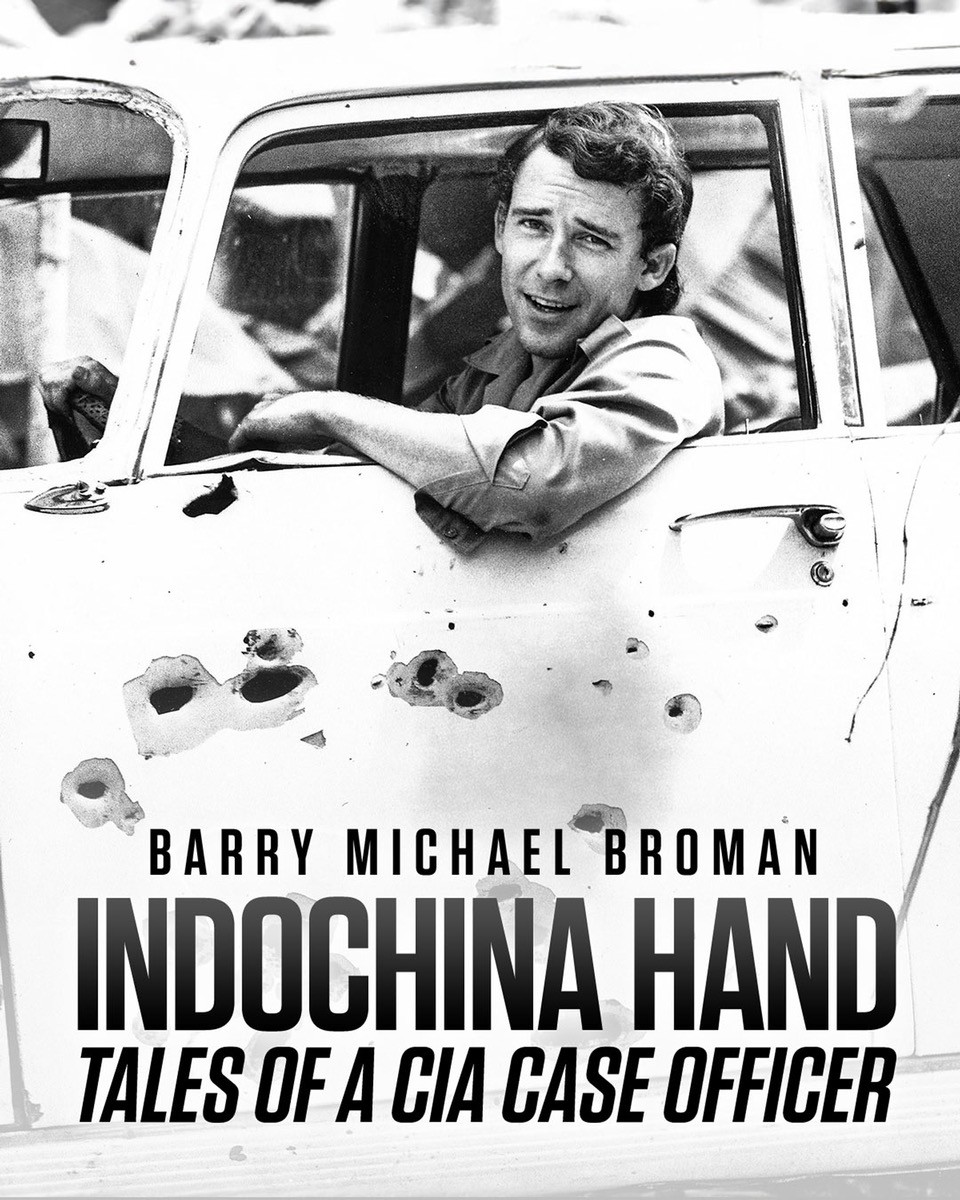
The cover of CIA case officer Barry Broman's new book, "Indochina Hand", features a photograph of the author by AP correspondent Matt Franjola taken in 1974 in Oudong, a former royal capital of Cambodia, after a battle to retake the town temporarily captured by Khmer Rouge guerillas. Broman posed for the picture in the bullet scarred wreckage of a Peugeot 404 automobile destroyed in the battle.


Peter Arnett - After his youthful years of following the flag with his traveling military engineer father and family on special assignment to six states and two foreign countries, Barry Broman spent a quarter of a century as an officer of the Clandestine Service of the Central Intelligence Agency at the height of the Cold War. Before that he was a decorated platoon commander in the U.S. 5th Marines in 1969 fighting Vietcong guerillas west of Danang. He's had enough adventures to fill two autobiographies, the latest "Indochina Hand, tales of a CIA case officer" published by Casemate. 


Amid Broman's tales of battlefield valor and his professional specialty in the CIA, persuading officials from governments opposed to the United States to betray their countries, an unlikely theme emerges; he has a special fondness for the Associated Press and the correspondents and photographers who populated the Southeast Asian bureaus of the wire service in the 1960s and 1970s.


Broman's high regard for embattled AP correspondents and photographers he befriended was evident in his first autobiography "Risk Taker, Spy Maker" published in 2020 that I reviewed for Connecting at that time. His new book primarily gives a more detailed accounting of his activities in America's Clandestine Services, recruiting agents in "Hard Target" adversaries such as China, Russia and North Korea, and in finding lesser fish to catch, such as coaxing unwitting or willing collaborators in other more international population centers to become information "scalps" to support American interests overseas. 

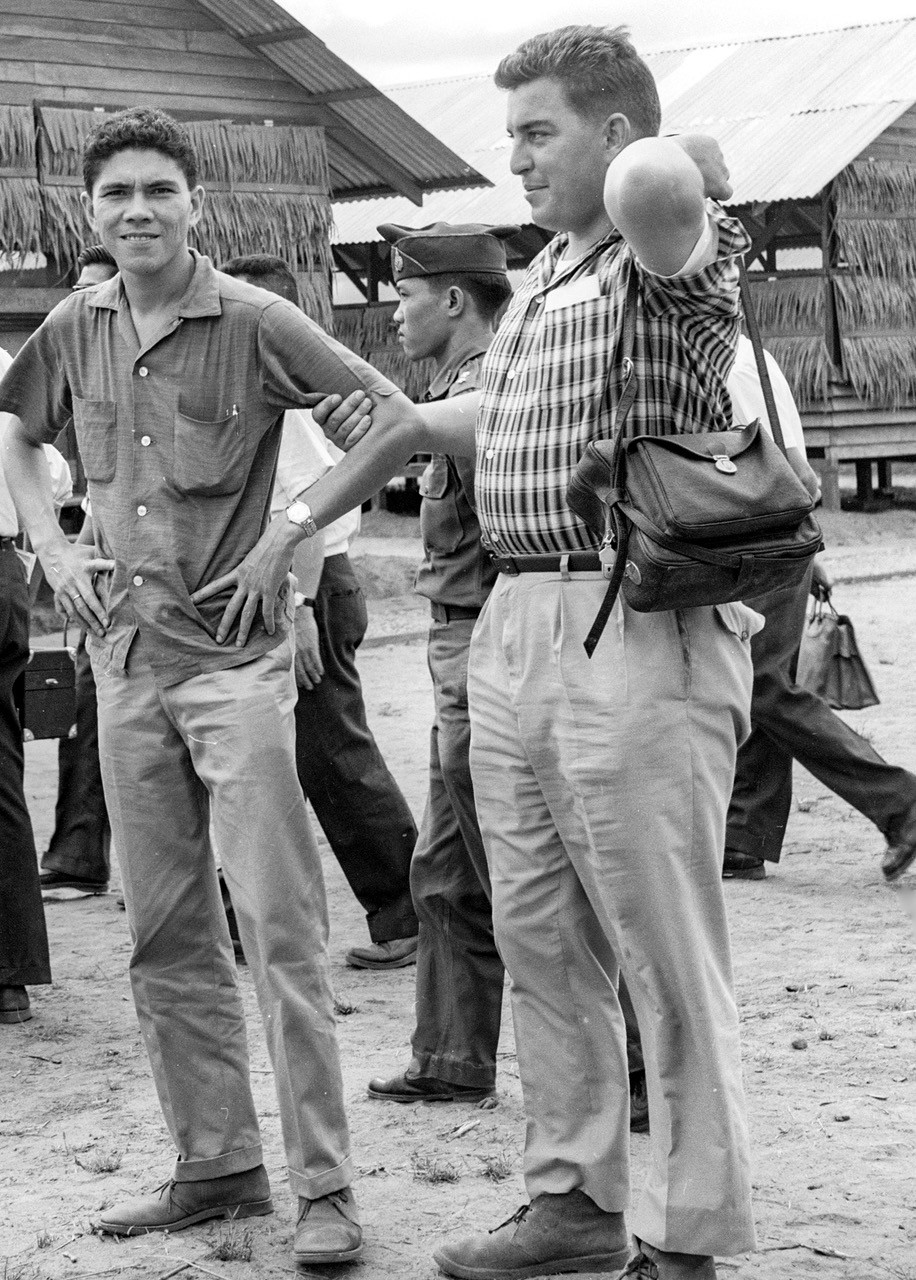
19-year-old Barry Broman took this picture of AP Bangkok bureau chief Antonio Escoda and AP photographer Horst Faas in Korat, Thailand, in 1962 where they were covering U.S. military maneuvers. It is included in his new book in a chapter titled "Associated Press photographer" about his assignments while a temporary staffer in the Bangkok Bureau during a sabbatical year from the University of Illinois.   


On the basis of a handful of his photo clippings from his college newspaper, Broman writes in his new book that he was hired by Escoda to help run the two-man Bangkok bureau's photo responsibilities. "Tony a was a newsman, and didn't want to deal with photos. He told me you will deal with Tokyo photos. I don't want to hear from them." Tokyo was the center of AP photos in Asia, under the command of Harold "Hal" Buell. For the next 12 months Broman was on a whirlwind of photo assignments in Thailand and Cambodia.


Escoda gave the young American another responsibility. "I was to deal with all Japanese clients who might be in Bangkok, or any Japanese in general. I found that strange. Only later did I learn that Tony's Filipino parents had been killed by the Japanese in Manila in 1941, and that his mother, Josefa, a resistance leader, was commemorated on the 1,000-peso banknote as a hero who gave her life for her country. 


Tony rarely had time for socializing with the growing number of media in Bangkok, Broman wrote. "He was busy 14 hours a day keeping the world informed of events in Thailand. We often traveled together covering stories upcountry. From time to time, we would cross paths with Sergei Sverin, the correspondent for TASS, the Soviet news agency. Tony told me to be careful around Sverin. "'He is a KGB officer, a Russian spy. Never give him any information.' I didn't know how Tony knew that Sergei was a spy, but years later when I could, I checked and learned that Tony knew what he was talking about. Sergei was indeed a Soviet intelligence officer."


Broman wrote that while his boss was Tony Escoda, "when Horst Faas came to town I was under his command. He was the only AP staff photographer in Southeast Asia and was based in Saigon." He joined Faas in assignments in Cambodia and in northern Thailand's border with Laos.


In his year in Bangkok, Broman wrote that he grew close to Escoda and his wife Betty and their two young children who lived in a penthouse apartment above the bureau. He wrote, "The AP office was at 103 Patpong Road, then a privately owned street that housed the American USIS library, AP and UPI offices. In 1962 Patpong Road was not the tawdry nightlife scene it became later."


"I learned a lot from Tony," Broman wrote. "In addition to getting my journalistic feet wet, he taught me to drink martinis and play poker, Filipino style. In that he was assisted by Gil Santos, a seasoned AP newsman. Gil helped me write my first published article, 'Filipino entertainers in Bangkok' for the Philippines Free Press."


Later in the 1960s, Escoda, who was educated in the United States, became the first Asian to head the AP's Philippines bureau. He later became the managing editor of the Philippines Herald. 


Broman wrote that he kept in touch with the family in Manila after he joined the CIA, "But sadly Tony passed away all too young from cancer in 1981. Horst Faas passed in 2012. I remember both of them fondly as the men who gave me my start in becoming an Indochina hand. And also, Hal Buell, who rose to become vice president of the Associated Press and hired me for three summers while in college to work as an AP photo editor in Chicago and twice in New York. I was poised to return to the AP after my stint with the Marine Corps, but the CIA made me an offer I couldn't refuse."

Barry Broman took this photograph of AP correspondent Matt Franjola (left) relaxing on a Phnom Penh houseboat in 1974 with his American friends, Dao and Fred Kroll. The CIA agent and the AP reporter grew a close friendship in the closing years of the Cambodian war.


Broman writes that his favorite CIA posting was in embattled Phnom Penh, Cambodia, beginning in 1973, "where I had first visited in 1963 on assignment for the Associated Press." Broman wrote that "with this background it was no surprise that I became good friends with Matt Franjola, the AP bureau chief in Phnom Penh." 


Working undercover as a U.S. Embassy economics officer, Broman wrote that most CIA officers avoid talking to the press. "Which is usually a wise decision. Some journalists, including some in Phnom Penh, would have been delighted to 'Out' a CIA officer. Matt probably suspected that I worked for the CIA, but he never asked." 


Broman wrote that he traveled to the war front regularly with Franjola, impressed by the correspondent's mastering of local languages and his bravery. "Matt went to the front to report on the progress of the war more than any other correspondent I knew. Some didn't go at all, preferring to cover the war from the Cafe de Paris, a tolerable watering hole, or Madame Chantal's opium den. 


"Matt filed his reports from the AP suite at the Hote Phnom, the best of a bad lot of hotels. Thanks to his competent staff -- which included Denis Gray, later a long-serving bureau chief in Bangkok, and Chhay Norn Lay, the best Cambodian newsman I ever met -- the AP outshone the competition on the daily coverage of the war."


Broman's chapter in "Indochina Man" on the last, tragic days of Phnom Penh includes eye-opening accounts of the active social events in Phnom Penh enjoyed by the foreign community of French rubber plantation owners, American business entrepreneurs, wealthy Cambodian elite and yes, journalists.   


Broman wrote that in October 1974 he celebrated his 31st birthday at his villa in Phnom Penh with the theme, where were you in 1962? "Franjola came dressed like a teenage character from the film America Graffiti. For a couple of hours, we put the war aside and danced to the rock and roll music from our youth." Matt Franjola remained covering the Cambodian war for the AP through its last days in 1975, then covered the fall of Saigon soon after. He died in 2015 after a long illness.    

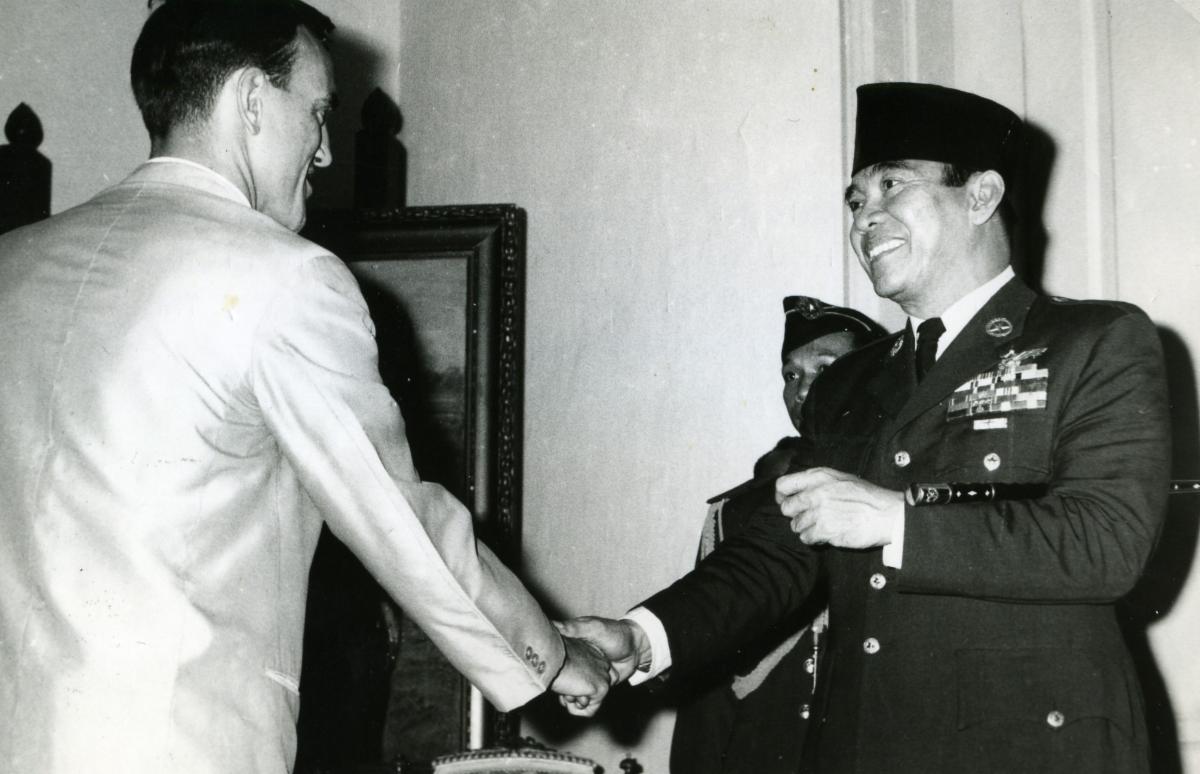
AP correspondent Peter Arnett is greeted by Indonesian President Sukarno at a Merdeka Palace reception in Jakarta in 1961. Arnett was an AP news stringer in Thailand and Laos during Antonio Escoda's early years as Bangkok bureau chief and says Escoda was instrumental in his being hired by the AP when the wire service upgraded its Jakarta bureau in 1961.    


Connecting mailbox


On death of Hugh van Swearingen


Jeff Barnard - I was very sorry to learn of Hugh van Swearingen’s death. As Southern Oregon correspondent I worked for Hugh his whole run in Oregon. And he was one of my favorites. I was interested to learn that Hugh felt it would have been more fun to remain a reporter. That was the way I felt. And he helped me do my best. When I retired, he came all the way from Montana to join us. That meant a lot.


Losing WCBS Newsradio 880 like ‘having one’s heart cut out’


Doug Rowe - WCBS Newsradio 880's demise feels like having one's heart cut out, or being dismembered. I join the mourning of Beth J. Harpaz, Joyce M. Rosenberg, Frank Eltman et al. As an adolescent as far away as Philadelphia, I listened just about from Day One (courtesy of a 50,000-watt, clear channel frequency, which once meant something). One inkling the end was near for the station (or sister station 1010WINS): in the last couple of years, the two stations were sharing staff -- after years of sounding distinctly different. One served as The New York Times of the air, while the other the New York Daily News -- both wonderful. Another bad augury: earlier this year Audacy was like a submersible about to implode from an ocean of debt. A final bit of vinegar poured on the wound? Not finding a proper obit. Even The Athletic's piece was weak, superficial, lacking in context and background. And the lede's analogy missed the mark: It's more like the Yankees went out of business while the Mets continued to operate.


Donating family treasures


Paul Albright - I hope that Connecting teammates noted Margy McCay’s comment (August 9) that “institutions accept donations of family treasures,” citing some donations that she has made. Another example, of course, is Ye Olde Editor’s donation of his mother’s letter to the Truman Library.


In my retirement years of going through heirlooms, scores of family letters, photographs, antique household items, and even a pioneer salesman’s valise have been donated to military and historical museums located in Colorado, Nebraska, North Dakota, and Wyoming. That material spanned our family history from the early 1900s, through two world wars, and into the 1950s. I also learned recently that a hundred or more Navy veteran’s letters from the 1940s that I curated were accepted by the Library of Congress.


If you have items of possible historical interest stored in your attic or basement, try to find them a new home with another interested family member, or search for a library or museum.


EDITOR’S NOTE: And, if it has any AP significance, let AP Archives director Valerie Komor know.


Using words to be purged


Ken Herman - Here you go, a sentence using not one, but all of the words to be purged from the dictionary:


The words to be purged from the dictionary are groak, snollygoster, brabble, lanspresado, twattle, mugwump, smaze, quockerwodger, fudgel and tyromancy.


And Ed Staats (my first bureau chief and the only Connecting colleague I know whose last name is a palindrome) notes: “Nothing wrong with Mugwump.”


When print was king

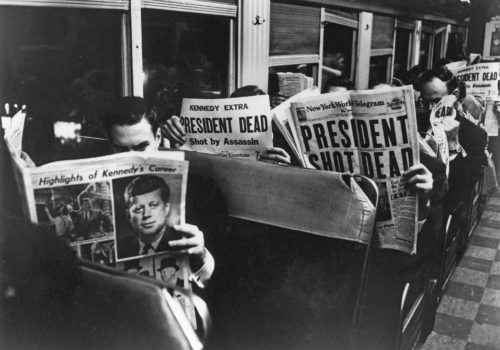
Steve Singer - This photo by Carl Mydans of Life of the Stamford, Conn., commuter line from New York City has become a classic.


The Two Mikes

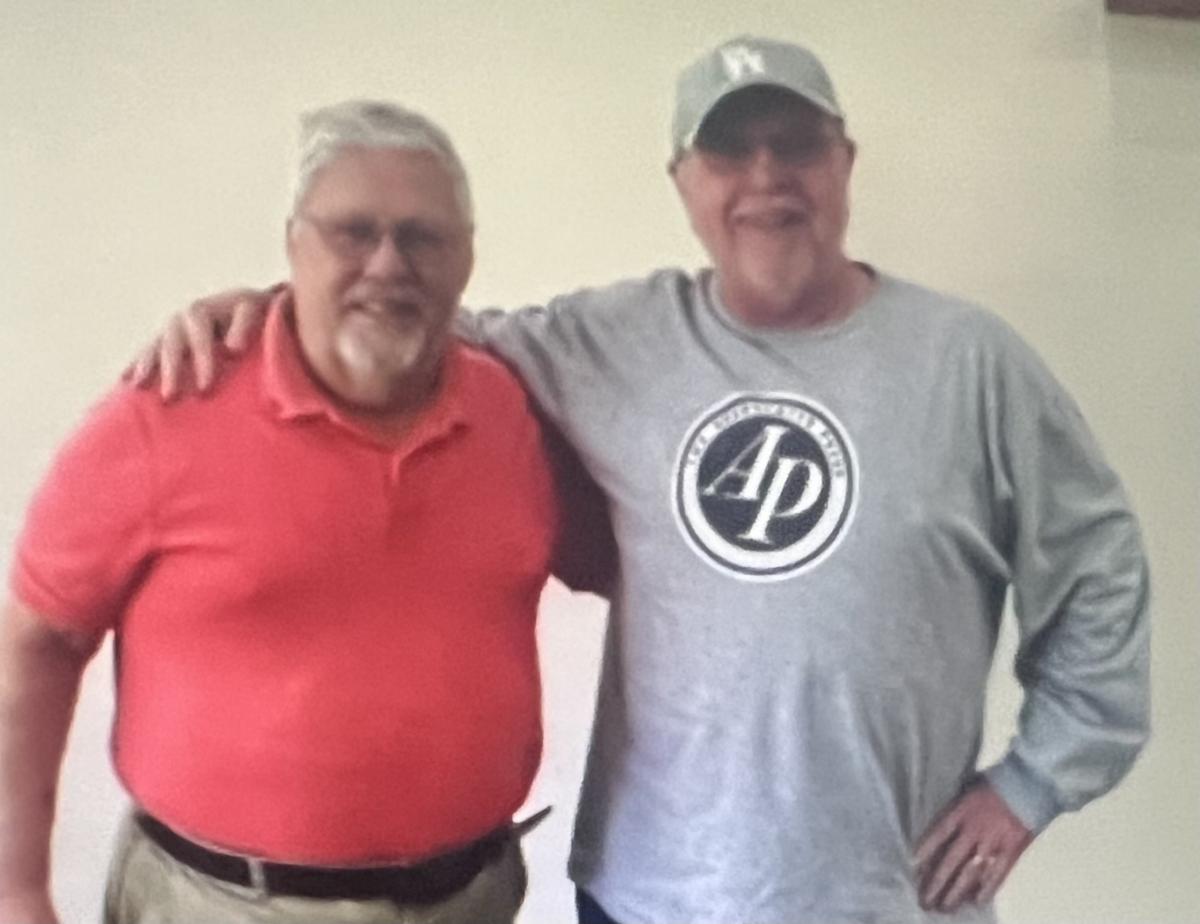
Mike Harris (left, retired AP Motorsports Editor) and Michael Rubin (right, former AP/LA) got together in Napa looking like the old friends they are — going back to the 1970’s. Spouses Judy (Mike) and Linda (Michael) joined for dinner but not for the morning shift breakfast.

Connecting wishes Happy Birthday

George Garties

Stories of interest


Should the media report on hacked campaign documents? (Columbia Journalism Review)


By JON ALLSOP


On February 23, Donald Trump’s presidential campaign compiled a research dossier on J.D. Vance, the senator from Ohio—an apparent early effort to vet Vance as a potential running mate. The dossier ran to 271 pages and was based on publicly available information about Vance; one section detailed his “POTENTIAL VULNERABILITIES,” including his past criticism of Trump. Evidently, Trump was not deterred: on July 15, he confirmed Vance as his pick.


On July 22, “Robert” emailed reporters at Politico. There was no indication as to who Robert really was, but they were offering communications from inside Trump’s campaign, including the early Vance dossier. Politico asked Robert how they obtained the documents. “I suggest you don’t be curious about where I got them from,” Robert replied. “Any answer to this question, will compromise me and also legally restricts you from publishing them.” (All sic.)


On Thursday, Robert sent the dossier to the Washington Post. They declined to talk by phone with a reporter, but suggested they could access other sensitive documents related to Trump’s campaign and legal cases. “Consider me as an anonymous resource who has access to djtfp24 campaign,” Robert said. “There are other stuff too, that I can send you, if this content is in your field of interest. I hope you understand my limitations and my vulnerable position in the campaign.”


Read more here. Shared by Myron Belkind.


-0-


An ex-Kansas police chief who led a raid on a newspaper is charged with obstruction of justice (AP)


BY JOHN HANNA


TOPEKA, Kan. (AP) — A former Kansas police chief who led a raid last year on a weekly newspaper has been charged with felony obstruction of justice and is accused of persuading a potential witness to withhold information from authorities when they later investigated his conduct.


The single charge against former Marion Police Chief Gideon Cody alleges that he knowingly or intentionally influenced the witness to withhold information on the day of the raid of the Marion County Record and the home of its publisher or sometime within the following six days. The charge was filed Monday in state district court in Marion County and is not more specific about Cody’s alleged conduct.


The raid sparked a national debate about press freedom focused on Marion, a town of about 1,900 people set among rolling prairie hills about 150 miles (241 kilometers) southwest of Kansas City, Missouri. Also, newspaper Publisher Eric Meyer’s mother, who co-owned the newspaper and lived with him, died the next day of a heart attack, and he blames the stress of the raid.


Meyer said last week that authorities appear to be making Cody the “fall guy” for the raid when numerous officials were involved. He said Tuesday that he suspects the criminal case ultimately will be resolved through a plea bargain so that Cody will not have a trial that would more fully disclose details about the raid.


Read more here. Shared by Doug Pizac, Myron Belkind.


-0-


There’s an apostrophe battle brewing among grammar nerds. Is it Harris’ or Harris’s? (AP)


BY HOLLY RAMER


Whatever possessed Vice President Kamala Harris to pick Minnesota Gov. Tim Walz as her running mate, it probably wasn’t a desire to inflame arguments about apostrophes. But it doesn’t take much to get grammar nerds fired up.


“The lower the stakes, the bigger the fight,” said Ron Woloshun, a creative director and digital marketer in California who jumped into the fray on social media less than an hour after Harris selected Walz last week to offer his take on possessive proper nouns.


The Associated Press Stylebook says “use only an apostrophe” for singular proper names ending in S: Dickens’ novels, Hercules’ labors, Jesus’ life. But not everyone agrees.


Debate about possessive proper names ending in S started soon after President Joe Biden cleared the way for Harris to run last month. Is it Harris’ or Harris’s? But the selection of Walz with his sounds-like-an-s surname really ramped it up, said Benjamin Dreyer, the retired copy chief at Random House and author of “Dreyer’s English: An Utterly Correct Guide to Clarity and Style”.


Read more here.


-0-


Harris campaign's Google ads rewrite news headlines (Axios)


Sara Fischer


The Harris campaign has been editing news headlines and descriptions within Google search ads that make it appear as if the Guardian, Reuters, CBS News and other major publishers are on her side, Axios has found.


Why it matters: It's a common practice in the commercial advertising world that doesn't violate Google's policies, but the ads mimic real news results from Search closely enough that they have news outlets caught off guard.


According to Google's ad transparency center, the Trump campaign isn't running these types of ads, but this technique has been used by campaigns before.


The ads say that they are sponsored, but it's not immediately clear that the text that accompanies real news links is written by the campaigns and not by the media publication itself.


Read more here. Shared by Mark Mittelstadt.


-0-


Bloomberg hires Miller as managing editor (TBN)


Posted by Chris Roush


Myles Miller has been hired by Bloomberg News to be a managing editor.


Miller has been a reporter for WNBC-TV, where he covered critical stories involving law enforcement, counter-terrorism, and the courts, while also leading breaking news coverage for WNBC-TV, NBCNewYork.com, and FAST/OTT. His reporting during the COVID-19 pandemic earned him the prestigious duPont-Columbia Award and an Emmy Award.


Before joining NBC, Miller held pivotal roles across major networks and publications. As deputy press secretary for the FDNY, he led external and intergovernmental affairs strategies, managed crisis communications and served as spokesperson.


Read more here.


The Final Word


1 big thing: Old is gold (Axios Finish Line)


By Mike Allen and Erica Pandey and Jim VandeHei; Copy edited by Amy Stern.


This summer, we've been fielding emails from Finish Line readers around the country and world about the old habits and gadgets they've held onto even as technology advances.


Why it matters: Sometimes old is better than new.


Here are some readers' enduring habits:


"My bookcases proudly display 24 albums of family photos capturing over 60 years of our family memories. Even with the advent of capturing photos on my phone, I still print at least a dozen or so every few months to add to my collection. Nothing can take the place of sitting in a favorite chair and reliving one's life, one page at a time." —Lois Patton, Brookfield, Wis.


"While everyone else is embracing the smart watches that ding and ping all day, I still love my simple dial-faced watch that runs on a battery and does nothing but tell me the time." —Michelle Langston, Jacksonville, Fla.


"I can't drop the old-fashioned habit of reading a book in bed. With only printed paper and the reading lamp on, there's no blue light, distracting ads, flashing notifications or succumbing to the temptation to read that latest work email. Then lights out." —Larry Bitton, Henderson, Nev.


"[A] Facebook note or a text just doesn't cut it in my book when it comes to saying thank you or happy birthday. … When my mother recently passed away, the cards I received in the mail were uplifting and powerful. You just don't get that same feeling with a Facebook message." —Julie Sizelove, Venice, Fla.


"I love fountain pens. I know the shortcomings — they can be messy, require periodic refilling, it's risky to have one in a pocket while flying, and something just written requires a few seconds to dry and not smear. … [But] at the desk, a good one offers superior ease of writing, and the result is usually far more legible than what ballpoints and gels produce." —Daniel Hoffman, Glenmoore, Pa.


Click here for link to this story, and more.

AP classes, by the year...


(EDITOR'S NOTE: This is a listing of Connecting colleagues who have shared the year and the bureau where they started with the AP. If you would like to share your own information, I will include it in later postings. Current AP staffers are also welcome to share their information.)


NEW ADDITION:

Martha Bellisle, Carson City, 1997


1951 - Norm Abelson (Boston)


1953 – Charles Monzella (Huntington, WVa)


1955 – Henry Bradsher (Atlanta), Paul Harrington (Boston), Joe McGowan (Cheyenne)


1957 - Louis Uchitelle (Philadelphia)


1958 – Roy Bolch (Kansas City)


1959 – Charlie Bruce (Montgomery)


1960 – Claude Erbsen (New York), Carl Leubsdorf (New Orleans)


1961 – Peter Arnett (Jakarta, Indonesia), Strat Douthat (Charleston. WVa), Warren Lerude (San Diego), Ed Staats (Austin)


1962 – Paul Albright (Cheyenne), Malcolm Barr Sr. (Honolulu), Myron Belkind (New York), Dave Mazzarella (Newark), Peggy Simpson (Dallas), Kelly Smith Tunney (Miami)


1963 – Hal Bock (New York), Jeff Williams (Portland OR)


1964 – Rachel Ambrose (Indianapolis), Larry Hamlin (Oklahoma City), John Lengel (Los Angeles), Ron Mulnix (Denver), Lyle Price (San Francisco), Arlene Sposato (New York), Karol Stonger (Indianapolis), Hilmi Toros (New York)


1965 – Bob Dobkin (Pittsburgh), Harry Dunphy (Denver), John Gibbons (New York), Jim Luther (Nashville), Larry Margasak (Harrisburg), Rich Oppel (Tallahassee)


1966 – Shirley Christian (Kansas City), Mike Doan (Portland, OR), Edie Lederer (New York), Nancy Shipley (Nashville), Mike Short (Los Angeles), Marty Thompson (Seattle), Nick Ut (Saigon), Kent Zimmerman (Chicago)


1967 – Dan Berger (Los Angeles), Adolphe Bernotas (Concord), Lou Boccardi (New York), Linda Deutsch (Los Angeles), Don Harrison (Los Angeles), Frank Hawkins (New York), Doug Kienitz (Cheyenne), David Liu (New York), Bruce Lowitt (Los Angeles), Chuck McFadden (Los Angeles), Martha Malan (Minneapolis), Bill Morrissey (Buffalo), Larry Paladino (Detroit), Michael Putzel (Raleigh), Bruce Richardson (Chicago), Richard Shafer (Baltimore), Victor Simpson (Newark), Michael Sniffen (Newark), Kernan Turner (Portland, Ore)


1968 – Lee Balgemann (Chicago), John Eagan (San Francisco), Joe Galu (Albany/Troy), Peter Gehrig (Frankfurt), Charles Hanley (Albany), Jerry Harkavy (Portland, Maine), Herb Hemming (New York), Brian King (Albany), Samuel Koo (New York), Karren Mills (Minneapolis), Michael Rubin (Los Angeles), Rick Spratling (Salt Lake City), Barry Sweet (Seattle)


1969 - Ann Blackman (New York), Ford Burkhart (Philadelphia), Dick Carelli (Charleston, WVa), Dennis Coston (Richmond), Mary V. Gordon (Newark), Daniel Q. Haney (Portland, Maine), Mike Harris (Chicago), Brad Martin (Kansas City), David Minthorn (Frankfurt), Cynthia Rawitch (Los Angeles), Bob Reid (Charlotte), Mike Reilly (New York), Doug Tucker (Tulsa), Bill Winter (Helena)


1970 – Richard Boudreaux (New York), Richard Drew (San Francisco), Bob Egelko (Los Angeles), Steve (Indy) Herman (Indianapolis), Tim Litsch (New York), Lee Margulies (Los Angeles), Chris Pederson (Salt Lake City), Brendan Riley (San Francisco), Larry Thorson (Philadelphia)


1971 – Harry Atkins (Detroit), Jim Bagby (Kansas City), Larry Blasko (Chicago), Jim Carlson (Milwaukee), Jim Carrier (New Haven), Chris Connell (Newark), Bill Gillen (New York), Bill Hendrick (Birmingham), John Lumpkin (Dallas), Kendal Weaver (Montgomery)


1972 – Hank Ackerman (New York), Bob Fick (St. Louis), Joe Frazier (Portland, Ore.), Terry Ganey (St. Louis), Mike Graczyk (Detroit), Denis Gray (Albany), Lindel Hutson (Little Rock), Brent Kallestad (Sioux Falls), Tom Kent (Hartford), Nolan Kienitz (Dallas), Andy Lippman (Phoenix), Ellen Miller (Helena), Mike Millican (Hartford), Ginny Pitt Sherlock (Boston), Lew Wheaton (Richmond)


1973 - Jerry Cipriano (New York), Susan Clark (New York), Norm Clarke (Cincinnati), Jim Drinkard (Jefferson City), Joe Galianese (East Brunswick), Merrill Hartson (Richmond), Mike Hendricks (Albany), Tom Journey (Tucson), Steve Loeper (Los Angeles), Jesus Medina (New York), Tom Slaughter (Sioux Falls), Jim Spehar (Denver), Paul Stevens (Albany), Jeffrey Ulbrich (Cheyenne), Owen Ullmann (Detroit), Suzanne Vlamis (New York), John Willis (Omaha), Evans Witt (San Francisco)


1974 – Norman Black (Baltimore), David Espo (Cheyenne), Dan George (Topeka), Robert Glass (Philadelphia), Steve Graham (Helena), Tim Harper (Milwaukee), Elaine Hooker (Hartford), Sue Price Johnson (Charlotte), Dave Lubeski (Washington), Janet McConnaughey (Washington), Lee Mitgang (New York), Barry Shlachter (Tokyo), Bud Weydert (Toledo), Marc Wilson (Little Rock) 


1975 – Peter Eisner (Columbus), Bill McCloskey (Washington), David Powell (New York), Eileen Alt Powell (Milwaukee)


1976 – Brad Cain (Chicago), Judith Capar (Philadelphia), Dick Chady (Albany), Steve Crowley (Washington), David Egner (Oklahoma City), Marc Humbert (Albany), Steven Hurst (Columbus), Richard Lowe (Nashville), Mike Mcphee (Boston), John Nolan (Nashville), Charlotte Porter (Minneapolis), Chuck Wolfe (Charlotte)


1977 – Bryan Brumley (Washington), Robert Burns (Jefferson City), Charles Campbell (Nashville), Carolyn Carlson (Atlanta), Dave Carpenter (Philadelphia), Jim Drinkard (Jefferson City), Ken Herman (Dallas), Mike Holmes (Des Moines), Brad Kalbfeld (New York), Scott Kraft (Jefferson City), John Kreiser (New York), Peter Leabo (Dallas), Kevin LeBoeuf (Los Angeles), Ellen Nimmons (Minneapolis), Dan Sewell (Buffalo), Estes Thompson (Richmond), David Tirrell-Wysocki (Concord)


1978 – Tom Eblen (Louisville), Ruth Gersh (Richmond), Monte Hayes (Caracas), Doug Pizac (Los Angeles), Charles Richards (Dallas), Reed Saxon (Los Angeles), Steve Wilson (Boston)


1979 – Jim Abrams (Tokyo), Brian Bland (Los Angeles), Scotty Comegys (Chicago), John Daniszewski (Philadelphia), Frances D’Emilio (San Francisco), Pat Fergus (Albany), Brian Friedman (Des Moines), Sally Hale (Dallas), Jill Lawrence (Harrisburg), Warren Levinson (New York), Barry Massey (Kansas City), Phillip Rawls (Nashville), John Rice (Carson City), Linda Sargent (Little Rock), Joel Stashenko (Albany), Robert Wielaard (Brussels)


1980 – Alan Adler (Cleveland), Christopher Bacey (New York), Jeff Barnard (Providence), Mark Duncan (Cleveland), Bill Kaczor (Tallahassee), Mitchell Landsberg (Reno), Kevin Noblet (New Orleans), Jim Rowley (Baltimore), David Speer (Jackson), Hal Spencer (Providence), Carol J. Williams (Seattle)


1981 – Paul Davenport (Phoenix), Dan Day (Milwaukee), John Flesher (Raleigh), Len Iwanski (Bismarck), Ed McCullough (Albany), Drusilla Menaker (Philadelphia), Kim Mills (New York), Mark Mittelstadt (Des Moines), Roland Rochet (New York), Lee Siegel (Seattle), Marty Steinberg (Baltimore), Bill Vogrin (Kansas City)


1982 – Dorothy Abernathy (Little Rock), Al Behrman (Cincinnati), Tom Cohen (Jefferson City), John Epperson (Chicago), Ric Feld (Atlanta), Nick Geranios (Helena), Howard Gros (New Orleans), Robert Kimball (New York), Rob Kozloff (Detroit), Bill Menezes (Kansas City), David Ochs (New York), Cecilia White (Los Angeles)


1983 – Donna Cassata (Albany), Scott Charton (Little Rock), Sue Cross (Columbus), Mark Elias (Chicago), David Ginsburg (Washington), Diana Heidgerd (Miami), Sheila Norman-Culp (New York), Carol Esler Ochs (New York), Jim Reindl (Detroit), Amy Sancetta (Philadelphia), Rande Simpson (New York), Dave Skidmore (Milwaukee)


1984 – Owen Canfield (Oklahoma City), Wayne Chin (Washington), Jack Elliott (Oklahoma City), Kelly P. Kissel (New Orleans), Joe Macenka (Richmond), Eva Parziale (San Francisco), Walt Rastetter (New York), Keith Robinson (Columbus), Cliff Schiappa (Kansas City), David Sedeño (Dallas), Andrew Selsky (Cheyenne), Patty Woodrow (Washington)


1985 – Beth Grace (Columbus), Betty Kumpf Pizac (Los Angeles)


1986 – Joni Baluh Beall (Richmond), David Beard (Jackson), Tom Coyne (Columbia, SC), Dave DeGrace (Milwaukee), Alan Flippen (Louisville), Jim Gerberich (San Francisco), Howard Goldberg (New York), Mark Hamrick (Dallas), Sandy Kozel (Washington), Arlene Levinson (Boston), Robert Meyers (London), David Morris (Harrisburg)


1987 – Donna Abu-Nasr (Beirut), Dave Bauder (Albany), Chuck Burton (Charlotte), Beth Harris (Indianapolis), Lynne Harris (New York), Steven L. Herman (Charleston, WVa), Elaine Kurtenbach (Tokyo), Rosemarie Mileto (New York), John Rogers (Los Angeles)


1988 – Chris Carola (Albany), Peg Coughlin (Pierre), Kathy Gannon (Islamabad), Steve Hart (Washington), Melissa Jordan (Sioux Falls), Bill Pilc (New York), Kelley Shannon (Dallas)


1989 – Ted Bridis (Oklahoma City), Charlie Arbogast (Trenton), Ron Fournier (Little Rock)


1990 – Frank Fisher (Jackson), Dan Perry (Bucharest), Steve Sakson (Baltimore), Sean Thompson (New York)


1991 – Amanda Kell (Richmond), Santiago Lyon (Cairo), Lisa Pane (Hartford), Ricardo Reif (Caracas), Bill Sikes (Buffalo)


1992 – Kerry Huggard (New York)


1993 – Jim Salter (St. Louis)


1995 – Elaine Thompson (Houston), Donna Tommelleo (Hartford)


1996 – Patricia N. Casillo (New York)


1997 – J. David Ake (Chicago), Martha Bellisle (Carson City), Pamela Collins (Dallas), Madhu Krishnappa Maron (New York), Jim Suhr (Detroit), Jennifer Yates (Baltimore)


1998 – Alan Clendenning (New Orleans), Guthrie Collin (Albany)


1999 – Melinda Deslatte (Raleigh)


2000 – Gary Gentile (Los Angeles)


2004 - Jim Baltzelle (Dallas)


2005 – Ric Brack (Chicago)


2006 – Jon Gambrell (Little Rock)

Today in History - Aug. 14, 2024

By The Associated Press

Today is Wednesday, Aug. 14, the 227th day of 2024. There are 139 days left in the year.


Today in history:


On Aug. 14, 1935, President Franklin D. Roosevelt signed the Social Security Act into law, ensuring income for elderly Americans and creating a federal unemployment insurance program.


Also on this date:


In 1936, in front of an estimated 20,000 spectators, Rainey Bethea was hanged in Owensboro, Kentucky in the last public execution in the United States.


In 1942, President Franklin D. Roosevelt and British Prime Minister Winston Churchill signed the Atlantic Charter, which detailed the post-war goals of the two nations.


In 1945, President Harry S. Truman announced that Imperial Japan had surrendered unconditionally, ending World War II.


In 1947, Pakistan gained independence from British rule.


In 1994, Ilich Ramirez Sanchez, the terrorist known as “Carlos the Jackal,” was captured by French agents in Sudan.


In 1995, Shannon Faulkner officially became the first female cadet in the history of The Citadel, South Carolina’s state military college. (However, Faulkner quit the school less than a week later, citing the stress of her court fight, and her isolation among the male cadets.)


In 1997, an unrepentant Timothy McVeigh was formally sentenced to death for the Oklahoma City bombing. (McVeigh was executed by lethal injection in 2001.)


In 2009, Charles Manson follower Lynette “Squeaky” Fromme, 60, convicted of trying to assassinate President Gerald Ford in 1975, was released from a Texas prison hospital after more than three decades behind bars.


In 2016, Usain Bolt became the first athlete to win the 100m dash in three consecutive Olympics, taking gold at the Summer Games in Rio.


In 2021, a 7.2-magnitude earthquake struck Haiti, turning thousands of structures into rubble; the quake left more than 2,200 people dead and injured more than 12,000 others.


Today’s Birthdays: Broadway lyricist Lee Adams (“Bye Bye Birdie”) is 100. College Football Hall of Famer and NFL quarterback John Brodie is 89. Singer Dash Crofts is 84. Country singer Connie Smith is 83. Comedian-actor Steve Martin is 79. Film director Wim Wenders is 79. Singer-musician Larry Graham is 78. Actor Susan Saint James is 78. Author Danielle Steel is 77. “Far Side” cartoonist Gary Larson is 74. Actor Carl Lumbly is 73. Olympic gold medal swimmer Debbie Meyer is 72. Actor Jackee Harry is 68. NASCAR Hall of Famer Rusty Wallace is 68. Actor Marcia Gay Harden is 65. Basketball Hall of Famer Earvin “Magic” Johnson is 65. Singer Sarah Brightman is 64. Actor Susan Olsen (TV: “The Brady Bunch”) is 63. Actor Halle Berry is 58. Golfer Darren Clarke is 56. Actor Catherine Bell is 56. Actor Mila Kunis is 41. Actor Lamorne Morris is 41. Former NFL player Tim Tebow is 37. Actor Marsai Martin is 20.

Got a photo or story to share?

Connecting is a daily newsletter published Monday through Friday that reaches 1,900 retired and former Associated Press employees, present-day employees, and news industry and journalism school colleagues. It began in 2013. Past issues can be found by clicking Connecting Archive in the masthead. Its author, Paul Stevens, retired from the AP in 2009 after a 36-year career as a newsman in Albany and St. Louis, correspondent in Wichita, chief of bureau in Albuquerque, Indianapolis and Kansas City, and Central Region vice president based in Kansas City.


Got a story to share? A favorite memory of your AP days? Don't keep them to yourself. Share with your colleagues by sending to Ye Olde Connecting Editor. And don't forget to include photos!


Here are some suggestions:


- Connecting "selfies" - a word and photo self-profile of you and your career, and what you are doing today. Both for new members and those who have been with us a while.


- Second chapters - You finished a great career. Now tell us about your second (and third and fourth?) chapters of life.


- Spousal support - How your spouse helped in supporting your work during your AP career. 


- My most unusual story - tell us about an unusual, off the wall story that you covered.


- "A silly mistake that you make"- a chance to 'fess up with a memorable mistake in your journalistic career.


- Multigenerational AP families - profiles of families whose service spanned two or more generations.


- Volunteering - benefit your colleagues by sharing volunteer stories - with ideas on such work they can do themselves.


- First job - How did you get your first job in journalism?


Most unusual place a story assignment took you.


Paul Stevens

Editor, Connecting newsletter

paulstevens46@gmail.com