|
|
|
Connecting
April 2, 2024
Click here for sound of the Teletype
| |
|
Colleagues,
Good Tuesday morning on this April 2, 2024,
Mike Feinsilber touched many lives in his journalism career of five decades in Washington, working for United Press International before joining The Associated Press. And in retirement, he was an active contributing member of our Connecting family.
“He wrote with elegance, style, authority, brevity and a gentle playfulness, all in service of finding the humanity in things,” wrote Cal Woodward of AP’s Washington bureau in his excellent wire story Monday on the death of our 89-year-old colleague. Mike's funeral will be at 10:30 am Eastern on Thursday at Temple Sinai in northwest DC.
Two years ago, Mike and Cal combined to share the byline on the AP wire obituary of Washington AP legend Walter Mears.
We’re sorry to bring news of Mike’s death – and among the comments on Mike and his career that are in today’s Connecting are those of three former Washington AP bureau chiefs – Ron Fournier, Sandy Johnson and Julie Pace (now AP’s executive editor).
If you would like to share your own favorite memory of working with Mike, please come ahead.
And, for those of us who loved our dearly departed John Kuglin, longtime AP bureau chief in Helena, be sure to read today's The Final Word.
Here’s to a great day – be safe, stay healthy, live it to your fullest.
Paul
Mike Feinsilber fought the epic AP-UPI rivalry from both camps with wit and grace
| 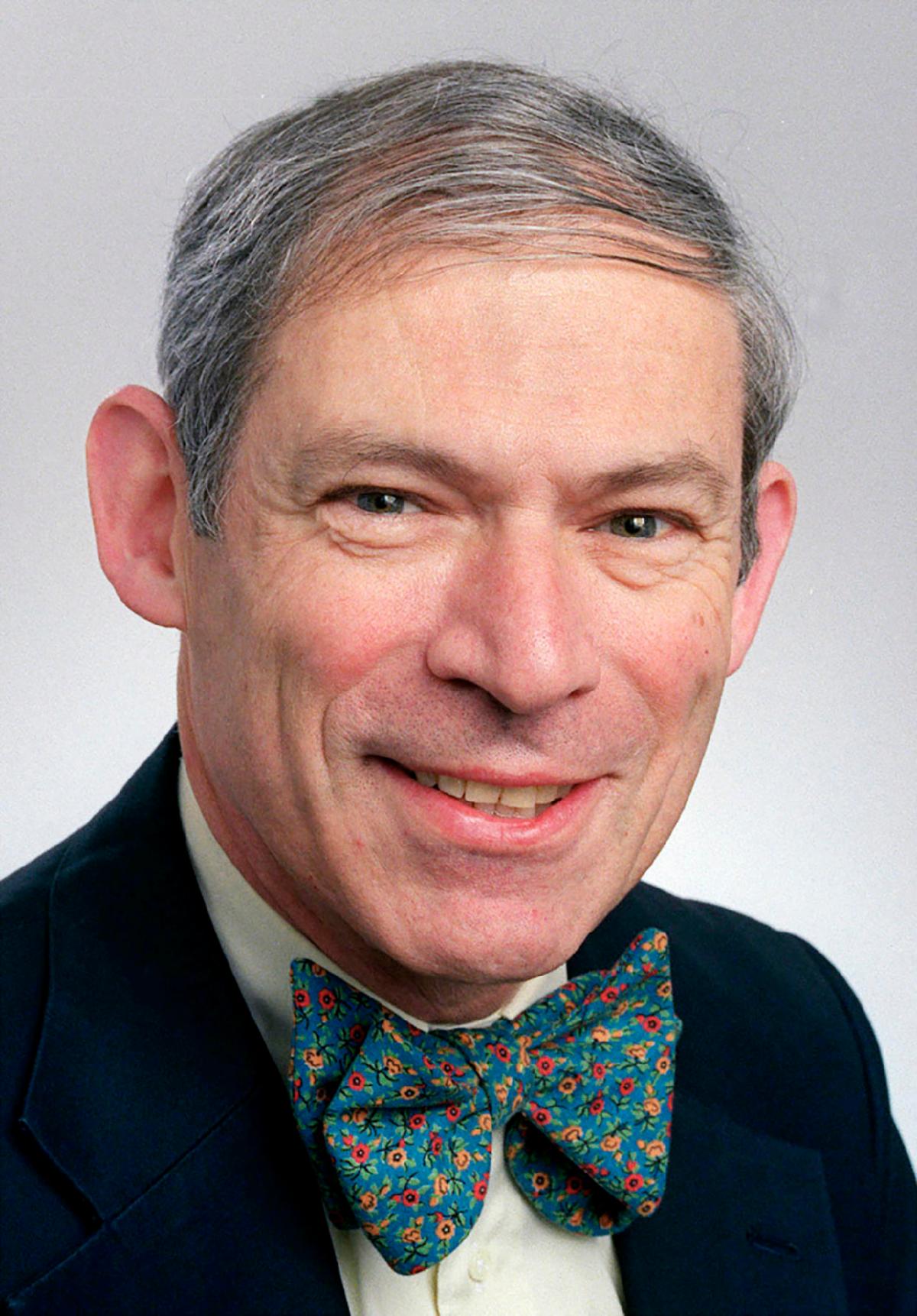 | |
Mike Feinsilber poses for a portrait on Oct. 10, 2007. Feinsilber, whose masterful way with words and mischievous wit enlivened American journalism for five decades, the bulk of them at The Associated Press, died Monday, April 1, 2024. He was 89, a month short of his wish to make it to 90. (AP Photo)
BY CALVIN WOODWARD
WASHINGTON (AP) — Mike Feinsilber, whose masterful way with words and mischievous wit enlivened American journalism for five decades, the bulk of them at The Associated Press, died Monday. He was a month shy of 90.
Feinsilber died at home, said his wife of 55 years, Doris Feinsilber, a pioneering computer programmer at the CIA. “He was doing poorly, but was not in pain,” she said.
Feinsilber’s career was rooted in the wire services and their epic rivalry — working first for United Press International, then for the AP. But he never embodied the just-the-facts stereotype of that trade, though he was as fast as any in the competition to be first.
He wrote with elegance, style, authority, brevity and a gentle playfulness, all in service of finding the humanity in things.
Feinsilber covered a Pennsylvania mine collapse where three trapped miners were rescued. He covered Saigon in the Vietnam War, the impeachment hearings against President Richard Nixon and 18 political conventions, where he was always on the lookout for “outlandish aspects.”
In 1987, as Oliver North submitted to a grilling from a blockbuster congressional hearing on the Iran-contra scandal, Feinsilber summoned the ghosts of scandals past as he related the figures of history who had faced a reckoning in the same room:
“Where Oliver North sits, Joseph McCarthy once sat, on trial on grainy television before the bar of public opinion. Nicholas Katzenbach, representing then-President Lyndon Johnson, sat there in a different decade, defending the making of an undeclared war. All the president’s men sat there, in the summer of 1973, before the dancing eyebrows of Sen. Sam Ervin.”
He loved to write, he said, “especially about the human, the quirky and the unimportant but revealing.”
| |
As much as he defied the wire service stereotypes, he enjoyed them, as in 2018 when he looked back on the rivalry of old.
“AP people believed that AP stories were invariably superior,” he wrote. “They believed they were more thoroughly reported, more deeply backgrounded, more dependably accurate.
“UPI people believed that their stories were invariably more compelling, more sharply and concisely written, more interesting. UPI’s nickname for AP was ‘Grandma.’”
He traced his interest in journalism to a school paper he started in Grade 5, calling it “The Daily Stink” until a teacher persuaded him to call it something else.
After stints as the editor of the Penn State college paper, then as a late-night police reporter at the Intelligencer-Journal of Lancaster, Pennsylvania, he joined UPI upon his graduation in 1956, reporting for over 20 years from Pittsburgh; Columbus, Ohio; Harrisburg, Pennsylvania; Newark, New Jersey; New York; Saigon and finally Washington.
That’s where AP lured him away. A UPI legend never forgave him.
“For 28 years, Helen Thomas scowled at me whenever we ran into each other,” he wrote in an AP remembrance of Thomas in 2013. “‘Traitor,’ she would hiss. She said it with a smile. But she said it.”
He stayed at AP for 22 years, as reporter, news editor and assistant Washington bureau chief, bow-tied at a desk lined with snow globes he collected on his travels. He retired in 2001 but returned for another decade as a part-time writing coach, determined to exile “Grandma” from the news report.
Julie Pace, AP senior vice president and executive editor, recalled how nervous she was going into her first coaching session with Feinsilber but quickly realized “what a gift it was” to learn from him. “Mike was as generous as he was talented, using his considerable skills as a writer to coach countless AP journalists,” she said.
“He was a brilliant journalist who could not only craft an artful news story but also coach any willing listener in how it is done,” said Robert Burns, longtime AP Pentagon and State Department writer.
“A gifted writer who was generous with his gifts,” said Jim Drinkard, a former assistant bureau chief in Washington. ”He was quick to apply his talents to anyone who sought his editing counsel. He was truly a student of language.”
Feinsilber was born in New York City and grew up in Stroudsburg, Pennsylvania, where his parents operated a women’s clothing store. He was a gardener and a bread baker and the co-author with friends of three books.
In one, “American Averages: Amazing Facts of Everyday Life,” he reported that, yes, 28 mailmen are bitten by dogs each day in this country.
The average American laughs 15 times a day, he said, and slurps four gallons of ice cream a year.
Click here for a link to this story.
Remembering Mike Feinsilber
David Briscoe - It’s sadly wonderful that one of the AP’s finest writers, Cal Woodward, crafted for the world the official obituary for the great Mike Feinsilber and his battle to make The Associated Press as far from gray as it ever has been. Mike was the epitome of niceness at the most colorful, fastest and incredible depth of any reporter I ever worked with in Washington, DC.
He was anything but a typical Washington journalist — far too friendly and lacking way too much ego for that ilk.
Mike was a leader and a mentor in the unique world of the wire service’s busiest and, on any given day, most critical news operation. But he led from both the trenches and the newsroom. He was always one of us — not only a boy on the bus, but the man on the desk you could always trust.
My first encounter with him was when he took a keen interest and offered ongoing guidance and enthusiasm for a story that was very important to the Rocky Mountain area where I was news editor in the 1970s — the battle of Mormon dissident Sonia Johnson, who was eventually excommunicated from the Church of Jesus Christ of Latter-day Saints for her work in support of the Equal Rights Amendment which the church opposed. Johnson began her work in the Washington area.
In the 1980s and 90s when we both had desks in Washington, Mike seemed to grasp the importance and potential of stories quicker than anyone. He was able to find fresh angles and off-beat leads when many of us were tangled in the cliches and repetitions that bog down much of Washington journalism.
His reach was broad. He was involved in just about every major story and he made working in the bureau better for everyone. It was great to hear that he continued working with reporters as a writing coach even after his retirement.
Few had more to offer or will be missed more.
-0-
Ron Fournier - We lost a giant of a writer, giant of a man.
There is a belief that the greats of their games can’t coach: It comes too easy to them, and they have no patience for the mediocrity of mere mortals. Eagle-eyed Ted Williams, for example, couldn't understand why every hitter didn't count the seams of a spinning curve. Mike Feinsilber defied type: He was a Hall of Fame writer AND teacher. Gracious, intuitive, insightful, whimsical, Mike made us all better writers and helped us be better people.
-0-
Sandy Johnson – It was a huge coup for AP to hire Mike away from UPI at a time when the wire service rivalry was at its pinnacle. Rox vs Osn. Mike brought his keen news instincts to AP, enhanced by a facility with words that was poetry in journalism. It was our great good fortune that AP wooed Mike to our "side" at a time when it truly mattered. When I became COB in Washington, I turned to Mike to be my ACOB -- a calming writerly influence to my hard news drive. When Mike suffered a head injury while biking on vacation in Maine, he eased into retirement and a second robust career coaching scores of reporters on the finer pointers of writing. He was a legendary talent, the likes of which we may never see again. A poet and a gentleman. And an avid gardener, though that is another story.
-0-
Larry Margasak - Mike was one of those editors who made everyone better. And the best way to describe his writing: a true wordsmith. After Mike retired as Washington ACOB, he came back as the bureau writing coach. This allowed him to continue to improve our stories. And regardless of the latest breaking news, Mike was always the calmest person in the room. Thank goodness we had him.
-0-
Julie Pace – Mike was as generous as he was talented, using his considerable skills as a writer to coach countless AP journalists. As a young reporter, I was so nervous for my first coaching session with him – especially when he pulled out a folder of my clips covered with his hand-written comments. But it quickly became clear how much time and care he had put into his feedback, and what a gift it was to be able to learn from him.
Canceling our Gannett subscription
Tom Kent - After Gannett announced that it would no longer be an AP member, my wife and I sent this message to the executive editor of LoHud, our local Gannett news site in Westchester County, NY:
We’ve been reading that Gannett, presumably including LoHud, is dropping AP news. We’re writing to see if this is true.
LoHud’s coverage of Mamaroneck Village, where we live, is extremely thin. For instance, we have seen zero coverage in LoHud of the very intense debate here over a proposed affordable housing project. Coverage of our village by LoHud and others has been so poor overall that community-minded citizens have had to start their own news site.
So why do we subscribe to LoHud? It’s largely because we feel a responsibility to support the journalism industry, given its critical importance to our nation. However, in return, we would expect Gannett to stand by its responsibility to support the AP, a membership cooperative that is the country’s largest, most reliable, and least biased source of news. (Tom Kent, one of the undersigned, is a former standards editor of the AP, but we would feel the same even if we had no direct connection to AP. Reuters is clearly no substitute.)
It’s hard to believe that Gannett’s reported vow to reinvest in local coverage will have any dramatic effect on your coverage of our local area. If Gannett has now also decided to leave AP in the lurch, we’re perplexed as to why we should continue our subscription at all.
We’d greatly appreciate your thoughts.
Our message, and a follow-up from us, brought no response. We informed LoHud Monday that we have decided to cancel our subscription. Instead, we will contribute to organizations that work to advance journalism.
We cancelled our subscription with a heavy heart, but what once was a useful newspaper has declined to the point that we were supporting it mainly as a charitable gesture. We’ll try to use that money in ways that will do more for journalism, in the US and abroad.
EDITOR'S NOTE: When Tom Kent (former AP standards editor, international editor, Moscow bureau chief among other positions in a 40-plus year career) submitted this, I let him know my jury is still out on continuing the two newspapers that have been home-delivered for years to my driveway - USA Today and The Kansas City Star - both now shorn of any AP copy because of their headquarters' (Gannett and McClatchy) decisions. I remain hopeful that AP's negotiations with both will be fruitful. If not, I will likely follow suit.
A sobering surprise in Normandy
| 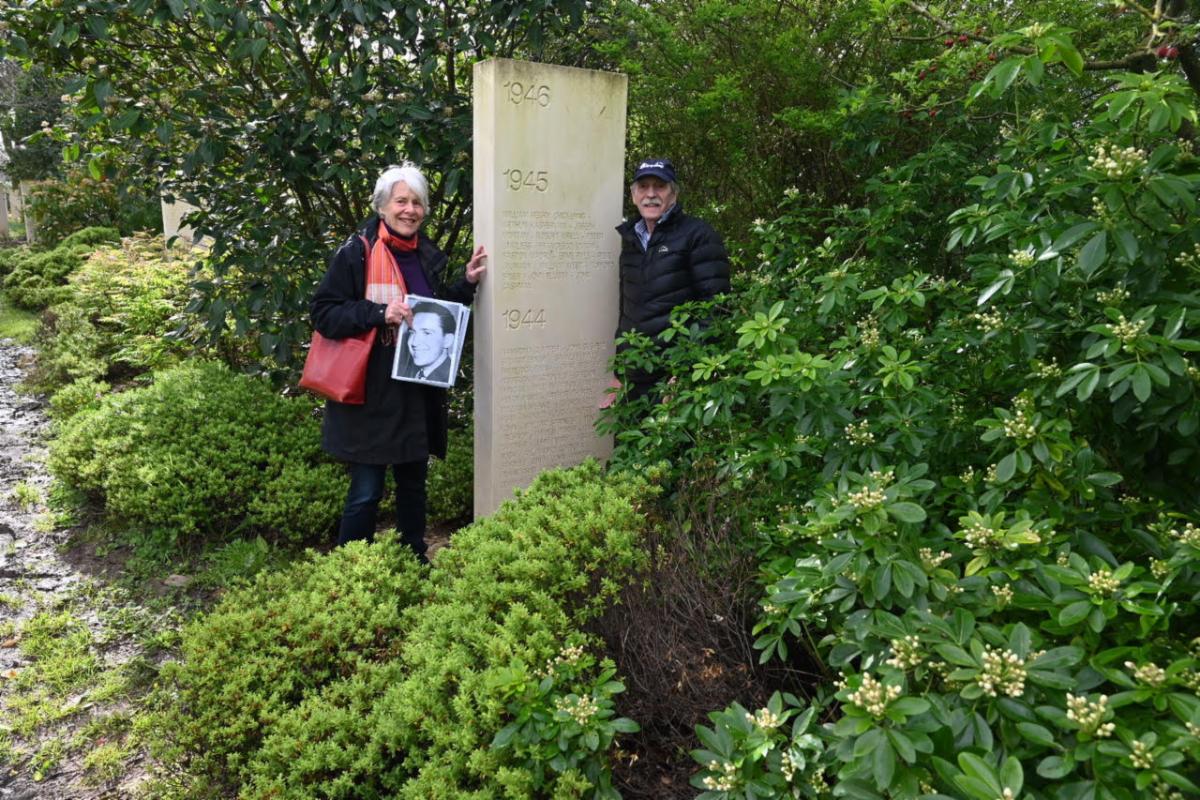 | |
Ann Blackman, holding photo of Morton, and Michael Putzel at memorial bearing Morton’s name and other fallen journalists. Photo by Nigel Stewart
Michael Putzel - BAYEUX, France—On a Spring break trip with our granddaughters to visit the Normandy beaches where Allied forces landed on D-Day, our guide, after learning what we did for a living, surprised us with a detour to a secluded park in nearby Bayeux, where we walked, practically alone, through a touching monument to our colleagues killed in war.
On rectangular slabs of white marble standing tall along both sides of a winding path, still muddy from overnight rain, were the names of journalists. Some, like Ernie Pyle, were familiar from World War II history. Nigel Stewart, our guide, pointed us to one for whom he had brought a photo. It was Joseph Morton, a war correspondent for The Associated Press, who was listed among those killed in 1945, the last year of the war. I remembered the name, having just recently read it in our late colleague Larry Heinzerling's new book, Newshawks in Berlin—The Associated Press and Nazi Germany. Morton disappeared accompanying a 13-member U.S. and British OSS team on a mission in Slovakia to rescue captured Allied flyers. Weeks after the Germans surrendered, Larry's father, Lynn Heinzerling, also a distinguished AP correspondent, went to Austria to find out what had happened to Morton and learned the reporter was captured by the Nazis with the OSS team and transported to the notorious Mauthausen concentration camp in Austria, where they were tortured and shot one at a time on orders from Berlin. Morton was the only reporter known to be executed during the war.
On another slab a few yards farther along were the names of four friends I knew in Vietnam, especially AP's Henri Huet, one of the finest combat photographers of any war. He died with three colleagues from other Western news services: Larry Burrows of Life magazine, Keizaburo Shimamoto of Newsweek and Kent Potter of UPI. Their helicopter was shot down over Laos in 1971. Tu Vu, a stringer for AP, was not named with the others because he was a sergeant in the South Vietnamese army. Nearby was the name Huynh Thanh My, also AP in Vietnam, and so many more.
The memorial was erected by Reporters Without Borders, known as RSF, the initials of its name in French, Reporters Sans Frontieres. Founded in France in 1985 to oppose censorship and defend freedom of expression throughout the world, RSF’s U.S. affiliate is registered as a 501(c)(3) nonprofit organization.
Larry Heinzerling, who worked with AP researcher Randy Herschaft on Newshawks in Berlin, died of cancer before it was finished. Herschaft and Larry’s widow, Ann Cooper, completed the extensive project.
Story behind a cutout of Kim Phuc in Nick Ut’s iconic ‘napalm girl’ photo
|  | |
EDITOR’S NOTE: Connecting noted the alteration in this promotional poster of the iconic Napalm Girl photo by AP’s Nick Ut that won a Pulitzer Prize. The poster promoted a recent conference at Columbia Journalism School on the experiences of journalists who covered the Vietnam War. As noted in a story in Monday’s Connecting, several AP journalists took part – Edie Lederer, Peter Arnett and Nick, as well as Kim Phuc, the badly burned girl, then 9 when the 1972 photo was taken.
Here’s a response on the cutout alteration from Tony Bui, adjunct professor of film in the School of the Arts at Columbia, a spokesperson for the conference organizers.
The intention was for it to be an empty white space for Kim rather than a cut out, and to still preserve the integrity of the photo. It was an artistic decision because part of inviting Kim to Columbia was to give her a chance to redefine herself in her keynote speech and on the panel. She has always been seen as a little girl and a victim, but the white space is our way of saying she will fill that space now as a strong woman, mother and grandmother and that she has so much more to offer than the image of a frightened and naked little girl. That was the thinking behind creating the poster with her in white. With this blank image she will fill it back up her way.
We actually sent the poster in to AP for approval to use the image and was cleared to do so. Please also let the AP (Connecting) know that Kim really liked this concept of her getting to redefine herself with her speech to the Columbia students who have mostly seen her only one way from the original image.
| |
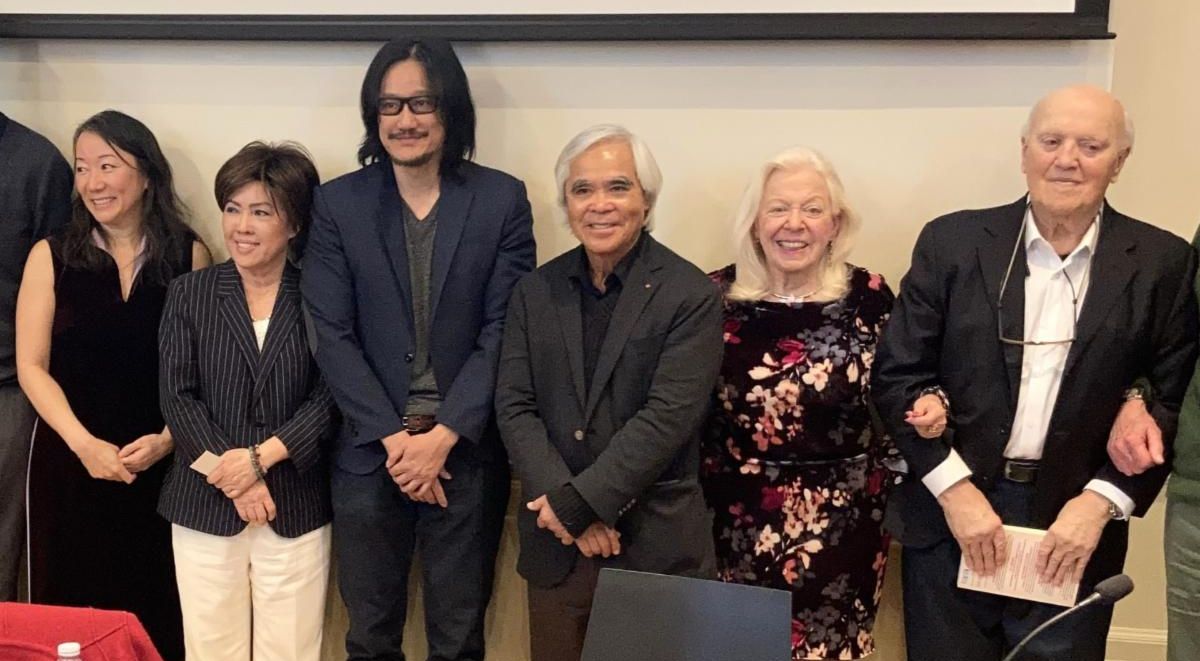
And, this photo taken at the conclusion of the conference, from left: conference organizer Professor Lien-Hang T. Nguyen, director of the Weatherhead East Asian Institute; Vietnamese journalist Nancy Bui; co-conference organizer Tony Bui; AP photographer Nick Ut; AP correspondent Edie Lederer, AP Pulitzer Prize winner Peter Arnett. Photo by Andrew Arnett | |
Connecting wishes Happy Birthday | |
|
Stories of interest
Newspaper edits its column about LSU-UCLA game after Tigers coach Kim Mulkey blasted it as sexist (AP)
BY PAT EATON-ROBB
ALBANY, N.Y. (AP) — The Los Angeles Times has edited a column it published last week about the LSU women’s basketball team ahead of its game against UCLA following criticism from Tigers coach Kim Mulkey, who blasted it as sexist and hurtful.
Mulkey defended her players after they were referred to as “villains” and “dirty debutantes” in a piece first published Friday that likened the Sweet 16 game between LSU and UCLA as a battle of good versus evil.
“How dare people attack kids like that?” she said Saturday. “You don’t have to like the way we play. You don’t have to like the way we trash talk. You don’t have to like any of that. We’re good with that. But I can’t sit up here as a mother and a grandmother and a leader of young people and allow somebody to say that.”
The Times removed those references late Saturday as well as one comparing UCLA’s team to “milk and cookies” and republished the column with a note that said: “A previous version of this commentary did not meet Times editorial standards. It has been updated.”
Read more here. Shared by Adolphe Bernotas, Mark Mittelstadt, Kent Walz.
-0-
Salary To-Do: Gannett CEO Mike Reed Returns To His Previous Rate (MediaPost)
By Ray Schultz
Gannett CEO Mike Reed is being called out for taking a high salary even as the publishing company aggressively cuts expenses.
Reed earned $3.9 million in 2023, 14% more than the prior year, according to the Boston Business Journal.
That’s 76 times the median pay of $50,856 per employee, the Business Journal reports, based on analysis of a proxy report filed with the SEC. The average employee salary fell by $179, it adds.
A look at the proxy report shows that Reed’s base compensation was restored to $900,000 in 2023. In addition, there was a bonus of $1.3 million and $1.7 million in stock awards, the Business Journal adds.
Reed had taken a large pay cut in 2022, bringing his total pay down to $4.5 million, versus $12 million in 2021, according to 2022 reports.
Read more here.
-0-
Israel's parliament passes law intended to shut down Al Jazeera's operation in Israel (Jerusalem Post)
By ELIAV BREUER
Israel’s Knesset (parliament) passed into law on Monday a bill aimed at shutting down the operations of the Qatari state-funded news outlet Al Jazeera in Israel.
The Likud stated on Monday that Prime Minister Benjamin Netanyahu had spoken with Coalition Whip Ofir Katz to ensure that the bill passes and that the prime minister will act immediately to close Al Jazeera according to the procedure laid out in the law.
According to the law, if the prime minister becomes convinced that content broadcast by foreign media “harms in a real way” the nation’s security, the communications minister can bring a resolution to the government to block that media’s television broadcast in Israel, shut down its offices, seize equipment used for its broadcasts, and block its website under certain conditions.
Read more here.
-0-
Third employee of weekly newspaper in Kansas sues over police raid that sparked a firestorm (AP)
BY HEATHER HOLLINGSWORTH
MISSION, Kan. (AP) — An office manager at a weekly newspaper in Kansas is the latest employee to sue over a police raid last year that sparked a firestorm.
Cheri Bentz alleges in the suit filed Friday in federal court that she was unlawfully detained and interrogated, and had her cellphone seized.
Two other employees, reporter Phyllis Zorn and former reporter Deb Gruver, sued previously over the Aug. 11 raid of the Marion County Record’s newsroom. Police also searched the home of Publisher Eric Meyer that day, seizing equipment and personal cellphones.
Then-Marion Police Chief Gideon Cody, who is among the defendants in the suit, said he was investigating whether the newspaper committed identity theft or other crimes in accessing a local restaurant owner’s state driving record. Cody later resigned following the release of body camera video of the raid showing an officer searching the desk of a reporter investigating the chief’s past.
Read more here.
The Final Word
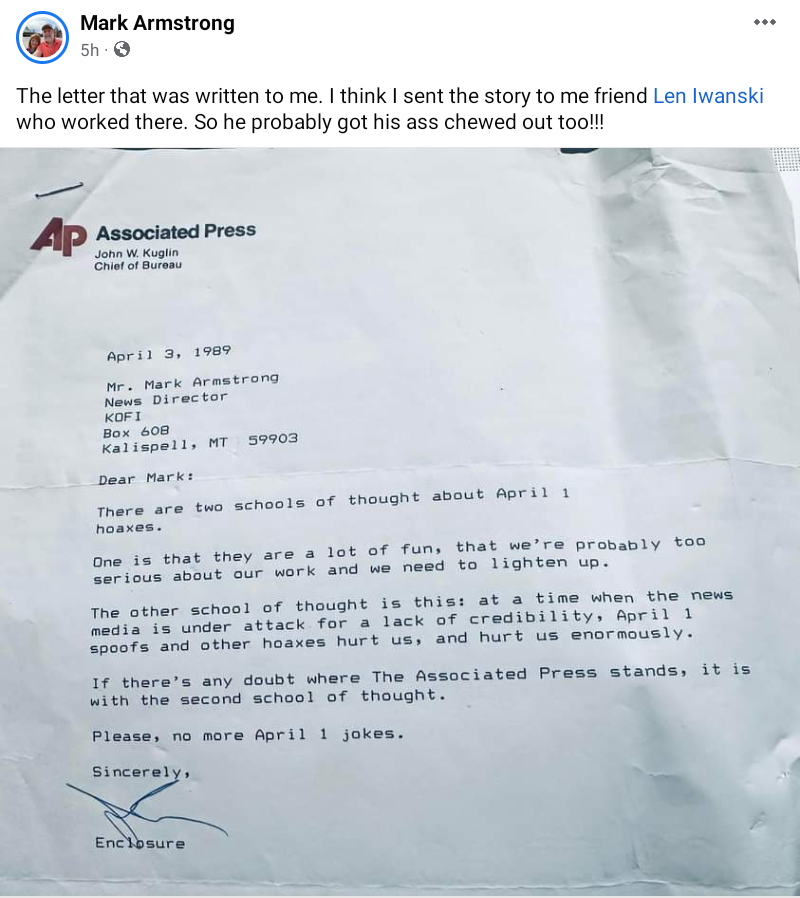
An April Fool's note from John Kuglin to a broadcast member
| |
Shared by Len Iwanski, who said he cannot recall what happened there, "which is just as well." The letter to the member was by the late John Kuglin, longtime Helena bureau chief. | |
Today in History - April 2, 2024 | |
|
Today is Tuesday, April 2, the 93rd day of 2024. There are 273 days left in the year.
Today’s Highlight in History:
On April 2, 2005, John Paul II, the Polish pope born Karol Józef Wojtyła, who became one of the most influential leaders of the 20th and early 21st centuries while working to build a moral foundation in the modern world and playing a crucial role in overthrowing communism, died in his Vatican apartment at age 84.
On this date:
In 1792, Congress passed the Coinage Act, which authorized establishment of the U.S. Mint.
In 1865, Confederate President Jefferson Davis and most of his Cabinet fled the Confederate capital of Richmond, Virginia, because of advancing Union forces.
In 1912, the just-completed RMS Titanic left Belfast to begin its sea trials eight days before the start of its ill-fated maiden voyage.
In 1917, President Woodrow Wilson asked Congress to declare war against Germany, saying, “The world must be made safe for democracy.” (Congress declared war four days later.)
In 1982, several thousand troops from Argentina seized the disputed Falkland Islands, located in the south Atlantic, from Britain. (Britain seized the islands back the following June.)
In 1986, four American passengers, including an 8-month-old girl, her mother and her grandmother, were killed when a terrorist bomb exploded aboard a TWA jetliner en route from Rome to Athens, Greece; the remaining 110 passengers survived.
In 1992, mob boss John Gotti was convicted in New York of murder and racketeering; he was later sentenced to life, and died in prison.
In 1995, after a work stoppage lasting nearly eight months, baseball owners accepted the players’ union offer to play without a contract.
In 2002, Israel seized control of Bethlehem; Palestinian gunmen forced their way into the Church of the Nativity, the traditional birthplace of Jesus, where they began a 39-day standoff.
In 2003, during the Iraq War, American forces fought their way to within sight of the Baghdad skyline.
In 2007, in its first case on climate change, the U.S. Supreme Court, in Massachusetts v. Environmental Protection Agency, ruled 5-4 that carbon dioxide and other greenhouse gases were air pollutants under the Clean Air Act.
In 2012, a gunman killed seven people at Oikos University, a Christian school in Oakland, California. (The shooter, One Goh, died in 2019 while serving a life prison sentence.)
In 2013, North Korea said it would restart its long-shuttered plutonium reactor and increase production of nuclear weapons material in what outsiders saw as its latest attempt to extract U.S. concessions by raising fears of war.
In 2017, Coach Dawn Staley and South Carolina won their first women’s NCAA championship with a 67-55 victory over Mississippi State.
In 2018, anti-apartheid activist Winnie Madikizela-Mandela, who’d been married for nearly 38 years to Nelson Mandela, died in a Johannesburg hospital at age 81.
In 2020, the number of confirmed coronavirus cases worldwide passed the 1 million mark, according to a tally by Johns Hopkins University.
In 2021, rapper DMX was rushed from his home to a suburban New York hospital after going into cardiac arrest; he died a week later.
Today’s Birthdays: Actor Dame Penelope Keith is 84. Actor Linda Hunt is 79. Singer Emmylou Harris is 77. Actor Sam Anderson is 77. Social critic and author Camille Paglia is 77. Actor Pamela Reed is 75. Rock musician Dave Robinson (The Cars) is 75. Country singer Buddy Jewell is 63. Actor Christopher Meloni is 63. Singer Keren Woodward (Bananarama) is 63. Country singer Billy Dean is 62. Actor Clark Gregg is 62. Actor Jana Marie Hupp is 60. Rock musician Greg Camp is 57. Actor Roselyn Sanchez is 51. Country singer Jill King is 49. Actor Pedro Pascal is 49. Actor Adam Rodriguez is 49. Actor Michael Fassbender is 47. Actor Jaime Ray Newman is 46. Rock musician Jesse Carmichael (Maroon 5) is 45. Actor Bethany Joy Lenz is 43. Singer Lee Dewyze (TV: “American Idol”) is 38. Country singer Chris Janson is 38. Actor Drew Van Acker is 38. Actor Briga Heelan (TV: “Great News”) is 37. Actor Jesse Plemons is 36. Singer Aaron Kelly (TV: “American Idol”) is 31.
| |
Got a story or photos to share? | |
|
Connecting is a daily newsletter published Monday through Friday that reaches more than 1,800 retired and former Associated Press employees, present-day employees, and news industry and journalism school colleagues. It began in 2013. Past issues can be found by clicking Connecting Archive in the masthead. Its author, Paul Stevens, retired from the AP in 2009 after a 36-year career as a newsman in Albany and St. Louis, correspondent in Wichita, chief of bureau in Albuquerque, Indianapolis and Kansas City, and Central Region vice president based in Kansas City.
Got a story to share? A favorite memory of your AP days? Don't keep them to yourself. Share with your colleagues by sending to Ye Olde Connecting Editor. And don't forget to include photos!
Here are some suggestions:
- Connecting "selfies" - a word and photo self-profile of you and your career, and what you are doing today. Both for new members and those who have been with us a while.
- Second chapters - You finished a great career. Now tell us about your second (and third and fourth?) chapters of life.
- Spousal support - How your spouse helped in supporting your work during your AP career.
- My most unusual story - tell us about an unusual, off the wall story that you covered.
- "A silly mistake that you make"- a chance to 'fess up with a memorable mistake in your journalistic career.
- Multigenerational AP families - profiles of families whose service spanned two or more generations.
- Volunteering - benefit your colleagues by sharing volunteer stories - with ideas on such work they can do themselves.
- First job - How did you get your first job in journalism?
- Most unusual place a story assignment took you.
Paul Stevens
Editor, Connecting newsletter
paulstevens46@gmail.com
| | | | |