|
|
Connecting
June 21, 2021
Click here for sound of the Teletype |
|
|
Good Monday morning on this the 21st day of June 2021.
We lead today’s Connecting with a profile on Kathy Willens, AP photographer based in New York, who is completing a nearly 45-year career with The Associated Press with plans to retire June 30.
|
|
“Kathy spent some 45 years on the frontline of AP photo coverage (she was among the first women to join the photo staff) and I cannot recall a single kind of news story that failed to face her lens,” said colleague Hal Buell, retired director of AP Photos who headed the department when she was hired.
“For the most part she was quiet and unassuming which belied her careful, insight of the pictures made over those years. Many of her photos had an artistic feel, no doubt thanks to her early education in the arts. She is one of the few staffers who can recall spooling film, hypo and 10-minute photo transmissions. Kathy best described herself and her wide interests: ‘Baseball fan, birder, NPR addict.’ Forgot the important one: photographer.”
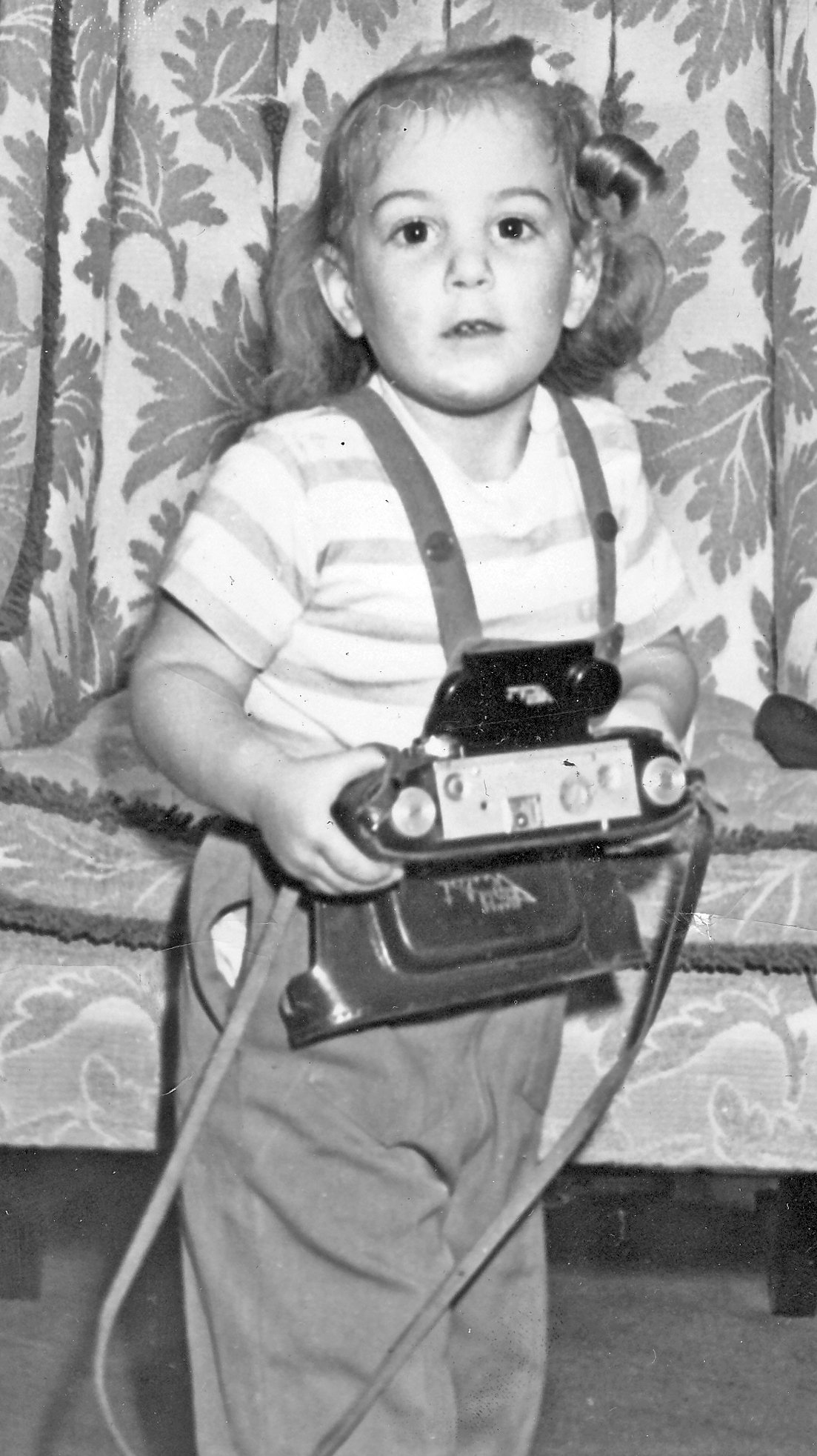
Yes, the photo at right is Kathy – as a toddler holding her dad’s stereo camera in Detroit in 1953. The dye for a career was cast!
If you have a favorite memory of working with Kathy, please send it along.
Here's to a great week ahead. Be safe, stay healthy!
Paul
Connecting Profile
Kathy Willens
'I’m incredibly fortunate that, for nearly 45 years, being an AP photographer has been my front row seat to history in the making.'
|
|
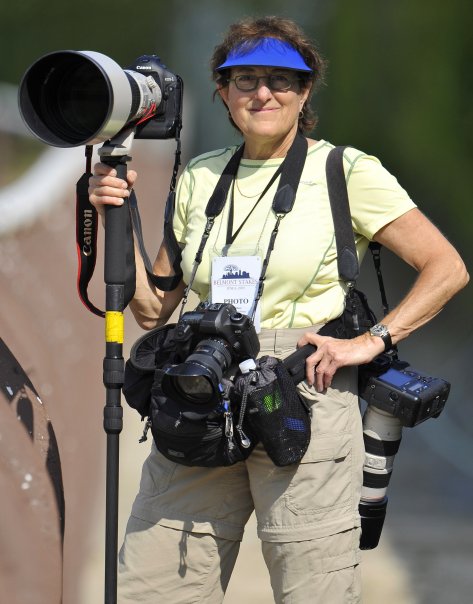
Kathy Willens at the 2009 Belmont Stakes horse race
By Kathy Willens
AP staff photographer
My beginnings as a photojournalist were inauspicious. Fresh out of college at the University of Michigan and after graduating from San Francisco Art Institute in 1972, I moved back home to Detroit. After several years of freelancing for two small suburban Detroit commercial photography studios, I decided I disliked commercial photography and interviewed at the two major Detroit newspapers, the Free Press and the News. It was 1974, the U.S. was in a recession, and no one was hiring an inexperienced photographer. Free Press photo editor Tony Spina kindly met with me, looked at my skimpy portfolio, gave me several rolls of Tri-X black and white film, wished me well, and escorted me to the door.
I shrunk my ambitions and settled for composing wedding announcements and photographing real estate at the Spinal Column, a throwaway pink tabloid produced in a trailer in rural Union Lake, Michigan. People joked it was more appropriate covering the floor of a bird cage. Although I enjoyed it and became great friends with a young writer who composed “Gonzo” journalism in the style of Hunter Thompson, I angered the editor by shooting breaking news and feature photos, which I edited and laid out into small picture stories. I thought they looked good, but he disagreed and fired me.
While one door slammed shut, another opened. I took my embarrassing pink newspaper clips to the Observer and Eccentric, a suburban Detroit newspaper chain, where photo editor and chief photographer Tracy Baker welcomed me as a freelancer. He was blunt but funny. I accepted his constructive criticism and took his advice, attending National Press Photographers Association workshops, where I paid close attention to the superstar photographers’ presentations. My photographic goal had always been to work for National Geographic or Life magazine. But Life magazine had ceased publishing it’s slick, hard copy edition in 1972.
Eventually I landed a job working as a lab technician at the Miami News at age 24. The job was offered to one of the staff photographers at the Observer and Eccentric. She wasn’t interested but passed the tip to me. My folks had recently moved to Florida. At the time I was living in my family’s Michigan home and used my father’s darkroom to process prints for the Spinal Column and the Observer and Eccentric, although the latter had their own darkroom. The Spinal Column had no darkroom, but we banged out stories Remington typewriters onto raw copy paper. I knew nothing about fashion or wedding clothing and had to research styles and fabrics before writing about weddings.
There were few female photojournalists then. But my profile at the News was elevated after I poked my camera into a car stopped along the I-95 freeway with its lights still flashing. A bloody shooting had just occurred and the driver, a Black female, was slumped over the steering wheel. I took a picture, a single frame, when police officer approached the open driver’s side window. He rightfully quizzed me on what I was doing, but I talked my way out of possibly being arrested for contaminating a murder scene or far worse. The shot dominated the Miami News’s front page. Six months later, staff photographer James (J.B. or Jim) Forbes, one of six photo staffers under photo editor Charlie Trainor, moved to the Midwest to work under legendary photo editor/photographer Rich Clarkson, and I landed Forbes’ staff photographer’s spot.
Early on, the News sent feature writer Mary Jane Fine and me and to the U.S. Army base in Fort Jackson, South Carolina to document the first women recruits going through basic training. It was very hot, and the recruits showed their suffering on their faces. That made for some strong photos. The story and got terrific play and I won a national photo award. After a series of front-page news and photo stories at the News, then AP-Miami photo editor Jim Bourdier approached me about working for AP. I was happy at the News and doing fun assignments and the camaraderie. It was a hard choice, so I asked photo editor Charlie Trainor for advice. Although I’d only been there 1-1/2 years, Charlie recommended I take the AP job. Luckily, I did. The News, an afternoon newspaper competing with much larger and more robust Miami Herald located in the same building, shut down not long after. Some News employees took jobs in the Cox newspaper chain which bought the ailing News, the Cox but soon closed it as afternoon papers lost their clout.
As a female covering sports, I was an anomaly. Although the Miami Herald had a handful of women photographers, few photographed sporting events. A day before my first University of Miami football game, editor Trainor dragged an enormous black telephoto lens from the equipment closet, opened the dusty case and asked if I would be able to use it for Saturday’s game. The lens was clearly from another era. I looked at my all-male photo colleagues faces, who were gathered around awaiting my response. Instead, I asked about the lens’s background. I believe the lens was a Hulcher, a giant 1930’s and 40’s-era camera used to capture rapid sports sequences from a distance. Charlie asked if I knew what a wishbone was. “A turkey bone!” I responded confidently. It turns out a wishbone is a football formation. Everyone broke into peals of laughter at my expense.
|
|
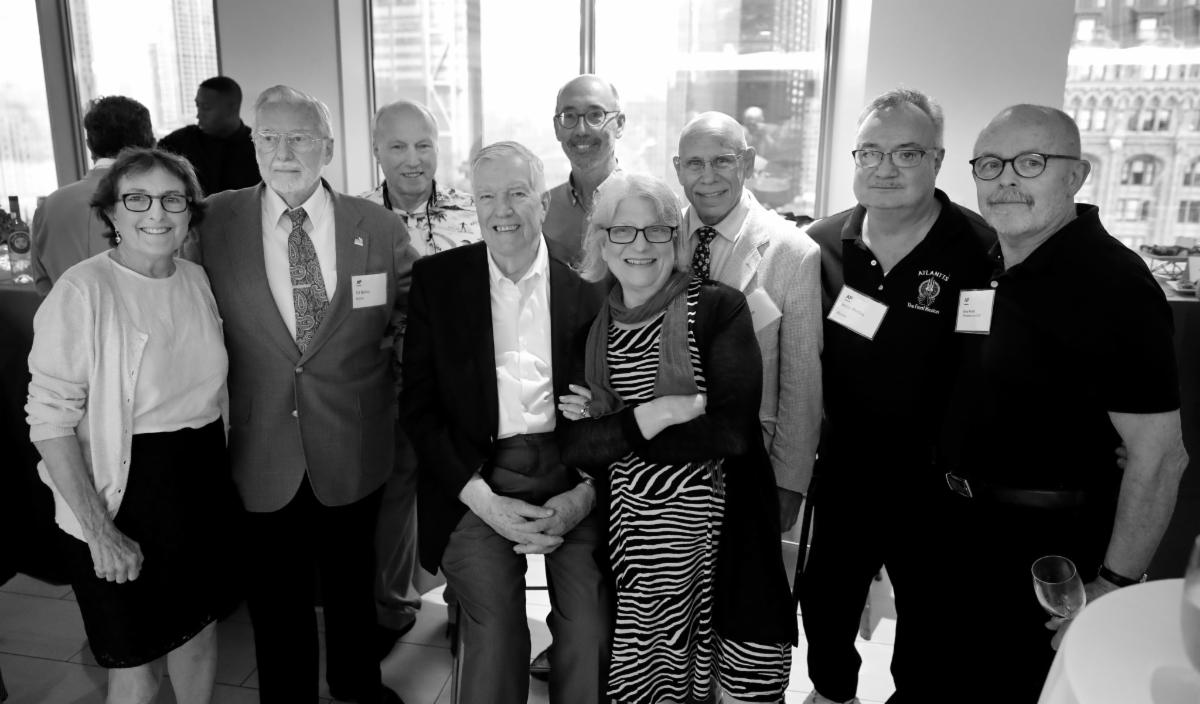
AP photo retirees (and Kathy) at the 25-year dinner at AP headquarters about two or three years ago. Among them, retired AP photo Director Hal Buell, front and center, Far left Kathy Willens, retired photographer Ed Bailey, photo editor Sam Heiman, (back row), retired photographer Ron Frehm (back row), Photographer Richard Drew, front row, far right. Retired photo editor Barbara Woike, too. Photo equipment manager Jesus “G” Medina, (photo by Charles Rex Arbogast).
My first days at AP were similar. I worked with three male photo colleagues, most many years my senior. They were skeptical and waiting for me to screw up. But photo editor Bourdier took me under his wing and was genuinely interested in my survival. Reid Miller was the AP-Miami bureau chief. When Bourdier transferred to his native New Orleans, fellow photographer Phil Sandlin took over. Sandlin was very experienced at everything, a great sports photographer and helpful too, but he was often busy traveling up and down the coast to Kennedy Space Center, (then called Cape Canaveral), for shuttle and other NASA rocket launches. Photographer Hal Moore was often in Latin America covering wars and revolutions. I didn’t meet him until a year after being hired. Bob Hannah was the third photographer and I, a “wire rookie,” was the fourth. Hannah was based on Florida’s West coast covering news and sports in Tampa, St. Petersburg and Orlando. Photographer Mark Foley was in Tallahassee, covered Florida’s state legislature and other news and the Florida Panhandle. There were no staff photographers in Orlando and Tampa as there are now.
On slow days, I went to Miami Beach searching for feature photos. For my male colleagues, it was a common assignment that meant tracking down a young, beautiful, busty, swimsuit-clad woman and making “cheesecake” photos of her. I did this for a while, but soon got tired of it. This was the early 70’s and the burgeoning women’s rights movement made me aware that those kinds of photos perpetuated male dominance and superiority and female suppression. One Sunday, I tracked down and photographed a photo of young female beachgoer wearing the skimpiest bikini on the beach, made a huge 16x20 print of the photo and plastered it on the photo department wall. I told Sandlin that would be the last “cheesecake photo” I would ever take. It worked. I believe the photo was still there when the bureau moved to its present location in Miami’s Federal Reserve.
The biggest stories I covered in Miami were the 1980 Miami riots and the Cuban boatlift in the same year. The riots were sparked when four white police officers accused of the shooting death of Black insurance salesman Arthur McDuffie were acquitted in a trial that had been moved from Miami to Tampa. The verdict came down on a Saturday night. Over a period of three violent days, 18 people were killed, hundreds injured, and National Guard troops were called in to restore order. Overnight it became the top story in the nation.
I was the only AP staff photographer in Miami when the riots erupted. With only a few years’ experience, I managed a steady stream of urgent phone calls and only left the office to shoot pictures the next morning, with J. Scott Applewhite, then a locally based freelancer. Luckily Applewhite volunteered to make pictures the first night. Scott returned to the office with a bandaged head and a smashed windshield but also had dramatic photos. By Monday morning reinforcements arrived. All of us AP photographers used rental cars, heading to the affected areas in groups of four, protected by flak jackets and helmets and often following large police multi-vehicle patrols. After three days of rioting, things calmed down. It was a jarring reminder of how quickly underlying racial tensions can erupt into violence and chaos. As a Detroit native, I should have known; I experienced firsthand the 1967 riots that also rocked Newark.
The 1980’s Cuban, or “Mariel” boatlift, after a Cuban port on the country’s northern shore, was another ‘baptism of fire.’ After thousands of Cubans desperate to leave the country stormed Havana’s Peruvian embassy by thousands, Cuba’s President Fidel Castro invited anyone who wanted to leave to go to the nearest port. Simultaneously he emptied Cuban jails. Ferried by freighters, private boats from Miami, and makeshift rafts, as many as 250,000 Cubans made the short trip from Mariel to Key West, fleeing their homeland. Many were transferred to Miami’s Orange Bowl stadium and to tent cities for temporary housing. In Key West, for weeks I worked with Peruvian freelance photographer Fernando Yovera. Most of the boats arrived in darkness. For weeks the two of us worked in tandem, documenting the influx, taking turns sleeping, shooting, processing, printing and transmitting our photos and those of AP’s members.
|
|
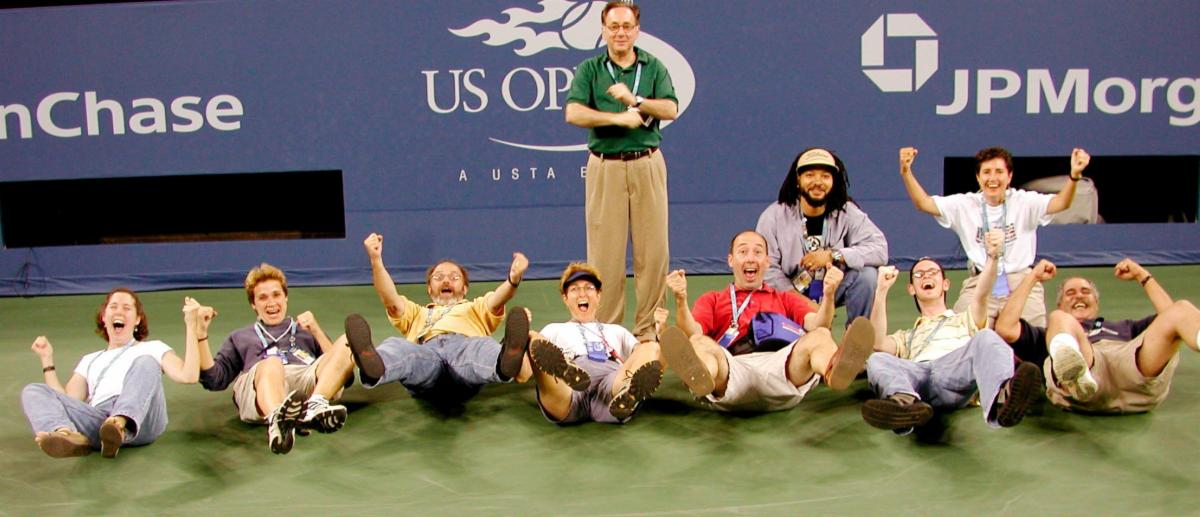
The 2005 US Open (tennis) photo crew posing for a weird photo on the court at the tournament’s conclusion. L-R: Front row: sports photo editor Melissa Einberg, photographer Amy Sancetta, photographer Richard Drew, Kathy Willens, photographer Mark Lennihan, photo editor Chad Rachman, sports photo editor Paul Kazdan.
This went on for months and grew into a huge immigration story. Miami photo editor Phil Sandlin and Pulitzer-Prize winning AP photographer Eddie Adams came down for a few days much later, but by then things had slowed. We even had time to see a movie. “I am Curious Blue,” a sequel to “I am Curious Yellow,” (their choice-not mine!), but all three of us slept through it!
Florida was known for its football teams and Miami had two great teams when I was there. The Miami Dolphins, led by Don Shula and quarterback Dan Marino, and the University of Miami Hurricanes, led by Lou Saban, Howard Schnellenberger and Jimmy Johnson in the years I covered the team. Under Johnson’s reign, they became one of the best teams in the country. There was no national championship game at the time, but the Orange Bowl was often the biggest game of the season next to the Rose Bowl. I was lucky to cover both teams throughout the 70’s, 80’s and early 90’s, but the mid-to late 80’s were peak for both. The Florida Gators and the Florida State Seminoles were also good, hugely popular and very exciting to cover. There’s nothing like college football for excitement and energy.
In 1992, Hurricane Andrew blew through South Florida, leaving a swath of destruction and plenty of great pictures in its wake. I was part of the team documenting the Category Five storm. Andrew was so powerful a wind-speed recording device in the Everglades broke after gusts of over 200 mph. My Miami home lost power for two weeks, (no AC in August!) but the bureau staff worked through adversity. Once the roads were clear enough to drive (my block was blocked by huge trees for several days), I was assigned to Homestead, which bore the brunt of the storm’s force, and recall seeing a moving van that had been blown atop a building. On another day, I went South to Homestead Air Force Base for the arrival of a cargo plane of supplies but couldn’t find it. All the road signs and landmarks had been blown away. I pulled off the highway where I thought the exit had been, hopped out and discovered a destroyed metal road sign in the grass marking the Homestead AFB exit. I arrived barely in time for the plane’s arrival and unloading.
After 20+ years of nonstop news and sports in Miami, I transferred to AP-New York when then photographer Susan Ragan transferred to AP’s San Francisco bureau. Moving to New York was a major adjustment. For the first three months, I drove only on Sundays. It was wonderful to work with legendary AP photographers Marty Lederhandler and Richard Drew, and to meet New York headquarters photo editors I knew only by phone.
On slow afternoons, we’d gather in the in the back room of the photo department at AP headquarters in Rockefeller Center. Lederhandler would pull mementos from his locker one at a time and tell stories. Marty told of being a Signal Corps lieutenant who, after photographing allied forces troops landing at Utah Beach on D-Day in 1944, he loaded his film into a tiny cannister, and strapped it to a homing pigeon’s belly to ship the film to London. The pigeon turned west instead of east and was intercepted in Germany, running in German newspapers with Lederhandler’s credit. Marty also told of photographing Mickey Mantle and Marilyn Monroe their heyday. He kept us all entertained and was a great colleague.
Soon after landing in AP-New York-AP in 1993, I was assigned to cover famine and civil war in Somalia. By the time I arrived, the unrest had grown. I intended to follow up by photographing a young, malnourished boy from Mogadishu’s outskirts initially documented by AP photographer John Gaps III. Despite finding the boy, the same day, 24 United Nations peacekeepers were ambushed in the capital. We sped back to Mogadishu and went straight to the hospital. Once we reached the city’s outskirts, our ride became frenzied and dangerous as our car dodged groups of armed and angry Somalis. Our driver and a translator, essentially a pair of armed fixers, told me to stay down so I wasn’t visible to the angry mobs. When I stepped out of the car, a white female photographer in a sea of dark-skinned Muslim men, I was immediately surrounded by shouting angry Somalis objecting to my presence. After a tense discussion about the importance of documenting the injured for the world to witness, I was escorted inside where injured and bleeding victims were everywhere.
Working with former Miami bureau chief Reid Miller and two AP correspondents, including Tina Susman, who was kidnapped in Somalia a year later and released 20 days later, I spent six harrowing weeks in Somalia. Photographing became more challenging each day as conditions deteriorated. Dozens of international news crews, reporters and photographers had flooded into country, but tensions continued. I teamed up with a German TV crew for protection and better access. They had funds to for a chartered aircraft, so we were more mobile. We traveled to the countryside where things were calmer. One day, I traveled by U.S. military helicopter to independent Somaliland where to sit in on and photograph a meeting of Somali elders trying to broker a peace deal. Returning to the city, several days later a group of international journalists, including AP, were “invited” to photograph Somali warlord Mohammed Farrah Aidid in a press conference. This was ironic. Aidid had recently led a successful effort to oust most U.S. troops forces based there. Of course, we went. Later, German-based AP freelancer Hansi Kraus was sent in to assist and then replaced me. We worked together for a few days when most of my gear was stolen at knifepoint. This was only weeks after my passport had been stolen while I photographed alone among a thick group of curious children. But the aid groups in country told me this was common. Often Somalis would approach them trying to sell their passports back to them. Three weeks after my departure, Kraus and three other journalists, including young Reuters photographer Dan Eldon and a TV crew, were killed. It was about six months before the “Black Hawk Down” incident in which American bodies were famously dragged through the streets by enraged Somalis objecting to their presence. I’m lucky to have left the country alive and was relieved to return to Nairobi, where I was able to get replace my passport so I could return to the U.S.
After my Somali experience, I decided to limit myself to less dangerous assignments, which translated into a lot of sports coverage. Throughout my career, I’ve always shot sporting events. For me the most prestigious events were covering summer Olympics in Los Angeles (1984), Barcelona (1992), Atlanta (1996), Sydney (2000) and Beijing (2008) and the winter games in Nagano, Japan (1998). Standouts were LA in ‘84 where I experienced Olympic opening ceremonies for the first time, and Barcelona for the camaraderie and nightlife. After the work was done, we journalists gathered in the restaurants, which traditionally were open past midnight and were also full of locals. Nagano was special for the snow monkeys in a park outside of the city. Sydney and Beijing stood out for the friendliness and helpful nature of Olympic volunteers. Atlanta was by far the worst due to a bombing and the subsequent uneasiness, and multiple snafus in transporting the media. In Nagano, an aggressive snow monkey mistook my fake fur hat for an aggressor and tried to grab it, but I backed off in time.
I’ve been to 11 Super Bowls, all with AP. At Super Bowl 49, Tom Brady led the Patriots to an upset victory over the Seattle Seahawks. My camera was “tethered” to an ethernet cable which transmitted my images directly to editors in the AP’s workroom. Near the end of the game, as other photographers got in position to photograph the winning team celebrating, which should have been the Seahawks, I was in position for a Patriots’ game-winning interception. Because this a Super Bowl, this is the photo for which I am remembered by many photo colleagues, but it’s not a personal favorite.
In 1981, I did a six-week stint in El Salvador filling in for AP photographer Patrick Hamilton in the wake of the death of four nuns. In the San Salvador hotel whose windows had been broken by violence, I met longtime friend and colleague Peter Morgan. Peter was a freelancer for a photo agency and working with a Boston Globe reporter. He joined AP as a photographer, hopped over to photograph for Reuters, was promoted to photo manager there, left Reuters to become AP’s New York-New Jersey photo manager, and is now deputy director of the AP’s East region. In Salvador, I made an overnight foray into the Salvadoran countryside to photograph a small town under siege by guerillas. In a clinic that was peppered by gunfire through the night, I met a young LA-based TV reporter Los Angeles named Connie Chung as her crew and I, and the clinic’s medical staff pressed our faces to the terrazzo floor for safety. Just getting there was a challenge. We travelled there in a press vehicle convoy waving white flags stopping frequently to cross deep trenches dug by the Salvadoran national guardsmen. The trenches were designed to keep guerillas from laying siege to rural villages.
In 1982, I covered Pope John Paul II’s visit to Argentina but stayed to document the subsequent collapse of the country’s ruling junta, briefly reuniting with former Miami photo editor Bourdier there and working alongside photographer Eduardo diBaia. Before leaving Miami for New York, in the 80’s and early 90’s, I took a keen interest in documenting Miami’s Haitian refugee community. Because of Miami’s proximity to the Caribbean and Latin America, I accompanied a New-York based Latin desk writer on a papal trip to Mexico. I also worked alongside AP photographer Ricardo Mazalan while in Colombia covering a presidential election and flew to nearby Peru for the inauguration of President Alberto Fujimori.
After moving to AP headquarters, New York bureau photo editor Joan Rosen chose me to be AP’s “tight pool” photographer for Pope John Paul II’s 1995 visit the city. Working alongside a CNN cameraman and the Pope’s Vatican photographer, we made a memorable visit to a tiny chapel tucked inside a Yonkers seminary. The Pope’s arrival generated a rapturous response among the hundred or so seminarians, each of whom knelt and kissed his hand. I’d positioned myself on an aisle for good photo angles. The pope walked among rows of the crying faithful, pausing at each for the emotional men to kiss his ring. When he stopped at my row, the pope extended his hand. Being Jewish and uncertain what to do, I shook his hand instead.
More recently, with most sports paused during the pandemic, when I discovered local stories, I photographed then wrote the text myself. The bureau writers were swamped keeping up with constantly changing pandemic regulations and daily gubernatorial and mayoral press conferences. This was even before New York Gov. Andrew Cuomo’s multiple sexual harassment allegations. No one had time to write soft feature stories.
|
|
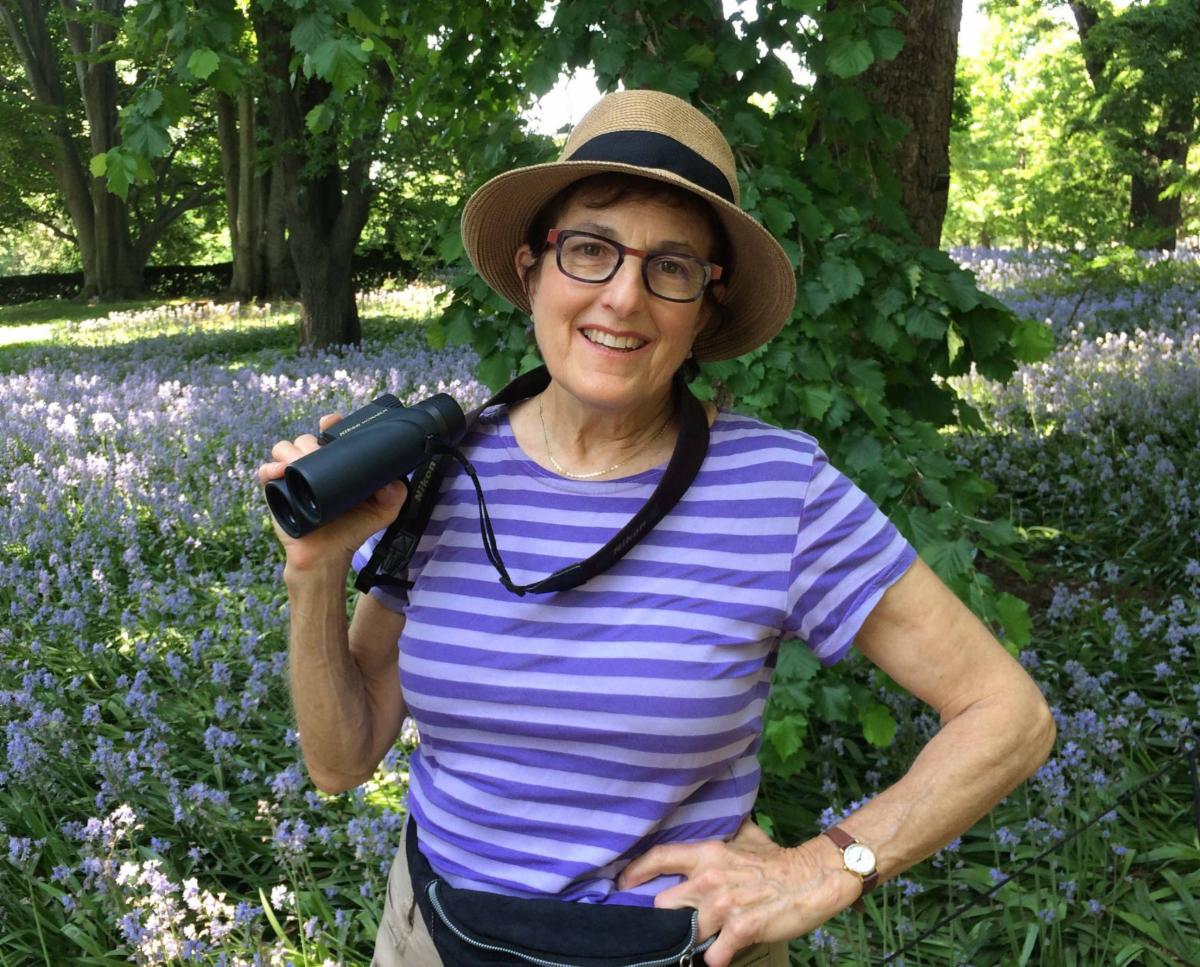
In my spare time, I often go birdwatching with friends and members of the Brooklyn Bird Club. I’ve become active in the group, leading teams in competitive spring and fall migration counts over the past five to eight years. I’ve also learned from the many experienced birders in the neighborhood. Some of the birdwatchers are also excellent photographers. Several years ago, I took a birdwatching expedition to the High Andes with seven other birders and a private guide. This outdoor hobby saved me during the pandemic, especially during the winter when everything was closed and there wasn’t much to do. I’m fortunate to live near Prospect Park, which is a green oasis in an urban environment. The pandemic also attracted man younger birders seeking a safe outdoor activity that can be done alone or in small groups.
Another favorite vacation from the past: Safari and wildlife viewing in Africa’s Masai Mara National Park after the harrowing trip to Somalia. My favorite “post-Olympic” vacation was a dawn walking tour around the base of Australia’s Ayers Rock.
There’s no way I would have had these irreplaceable experiences, nor would I have met as many interesting or well-known people without having worked for the Associated Press. I’m incredibly fortunate that, for nearly 45 years, being an AP photographer has been my front row seat to history in the making. Although all my retired friends tell me they love it, I fully expect that retirement is going to be a stiff challenge for me. Yet, I’m looking forward to slowing the accelerated pace enough to look for and listen to the birds. This is my equivalent to “stopping to smell the flowers” while I still have the chance to.
Connecting series
Is negativity toward life a requirement to be a good reporter?
Bruce Lowitt (Email) - Seems to me Vladimir Putin would make a great reporter, considering his observation (compliments of Leo Tolstoy) that "There is no happiness in life, only a mirage of it on the horizon."
-0-
Lee Mitgang (Email) - President Biden's comment that "to be a good reporter, you got to be negative..." brings to mind a panel I was on in the early '90s at Teachers College, Columbia University discussing how education reporters were covering the hot topic of school choice and vouchers. The audience included some pretty media savvy folks, among them the heads of a number of Washington-based education lobby organizations, most of whom I'd dealt with many times. At some point in the give-and-take, one of them said that our primary purpose as reporters should be the betterment of schools generally, and public education specifically. I recall replying that we all want better schools but as a reporter, my first responsibility was to supply our readers with the best and fairest information I could about the taxpayer-funded institution I was covering. As such, I said, "I'm not your enemy, and I'm not your friend." To this day, I'm amazed at the blowback I got from this supposedly sophisticated audience who -- like thin-skinned presidents -- either don't fully understand or don't accept what reporters do for a living. I still stand by my answer.
-0-
Eric Quinones (Email) - I don’t think good reporters need to be negative. Good reporters need to be fair-minded, tough and fearless enough to ask questions that people in power view as negative because those questions make it difficult to avoid or spin the answers. Good reporters need a thick skin and a commitment to seeking truth for the public good. I often joke that one of the reasons I left the AP and daily journalism was because I couldn’t figure out the right follow-up question to “no comment.” But there’s more than a kernel of truth in that joke — I really looked up to my colleagues who were better at handling confrontation and obfuscation during interviews and press conferences. As a newbie on the AP Biz desk in the mid ’90s, for example, I would listen to our tech reporter Evan Ramstad (one of the sweetest people you’ll ever meet) go toe-to-toe with sources on the phone with his hands waving and his voice rising because he wanted truthful answers to fair questions. Evan is not a negative person, nor were the other seasoned journalists who mentored me during my time at the AP. They believed in the AP’s mission to uncover truth and tell fair, objective stories, because that’s what good reporters do. And that’s why I have so much respect and admiration for them.
-0-
John Wylie (Email) - Q. To be a good reporter, do you need to be negative and have a negative view of life?
I say that just the opposite is true. I crossed the Rubicon Saturday and am now officially a part of the OPA's Half Century Club. Throughout those 50 years, I've said or thought every day that I have the best job in the world. I get up each morning with no idea what the day will bring. Maybe I'll be talking to a police officer who saved a little child from wandering into a busy street, discovered the child was alone because Mom worked a day job and a night job to keep her family fed, clothed and housed, but sometimes the overnight sitter fell asleep early. The cop found a place for the child to spend the nights safely. I got to write about it, spreading the word about an important service. Maybe I'll get to see a major figure make a surprise visit to town and make a speech that makes history, which I get to record. Maybe I'm able the next day to follow up on an elderly lady who was swindled and in the process found she had a lot of company. Maybe I missed a day's sleep following up tips, but in the end we wrote the story, the swindlers were jailed and the victims' money was returned. Each day I have had the chance to go into the world, follow the news where it takes me and when I'm satisfied the facts are solid and I can write a compelling story explaining what those facts mean--and how they can be used to fix a problem. I love history, I love talking to people, and I love history--especially writing about it.
That's my job every day--studying history, talking to people, looking for documents and places to research, writing about it and hopefully create something that will make the world a little better place. It sounds corny, but I still wonder how I got lucky enough to work doing what I love, actually get paid to do it. If I'm really lucky, maybe I'll inspire another young historian/story teller/collector of fascinating people with fascinating stories to share.
If that's having a negative view of life then perhaps we all should adopt it? I prefer that sometimes those "negative" questions are asked because the reporter or editor has the same joy about going to work in the morning--that when the sun sets in the evening the world will be just a little bit better place.
Connecting mailbox
Taking exception
Charles McFadden (Email) - In Friday’s New York Times obituary of New Yorker writer Janet Malcolm, writer Katherine Q. Seelye included the following sentence from Malcolm:
“Every journalist who is not too stupid or too full of himself to notice what is going on knows that what he does is morally indefensible.”
What rubbish. Malcolm didn’t know what she was talking about.
I spend some seven years as a journalist with The AP and what I did was not “morally indefensible.” I, along with the late Doug Willis, Marty Thompson, Lyle Price, Mike Rubin, Bill Stall, Jim Lagier, Susan Sward, Bob Egelko, Linda Deutsch and many, many, others did work that was not “morally Indefensible.” We were all trying to tell the people what was going on. Many of us are still trying.
And what about the dozens and dozens of journalists from The AP and other news organizations who gave their lives in pursuit of the truth? "Morally indefensible”? No.
Malcolm obviously got caught up in a desire to be chic and fashionably vicious. Her statement was, well, morally indefensible.
-0-
Heidgerds celebrate 25th anniversary
|
|
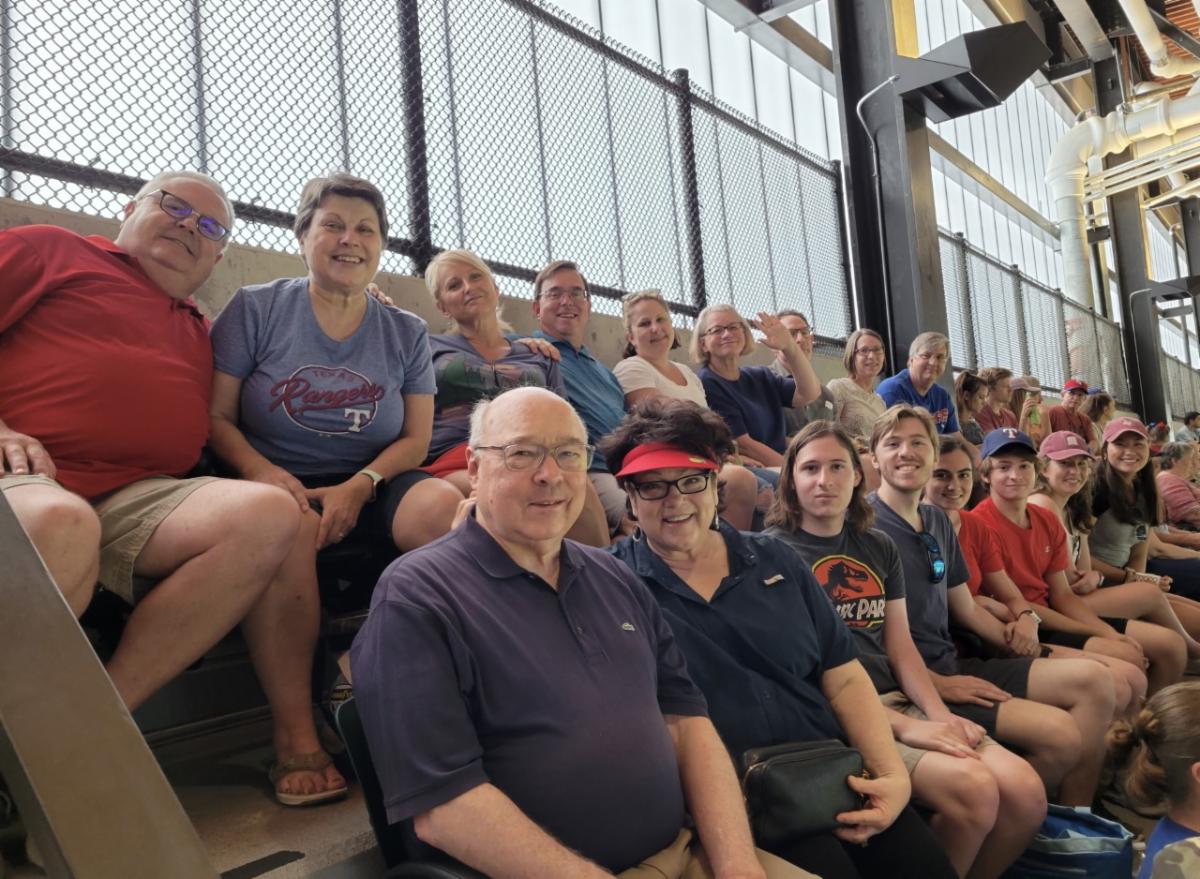
ARLINGTON, Texas - Texas AP retiree Diana Heidgerd and her husband Paul (top row/left) celebrated their 25th wedding anniversary by attending a Texas Rangers game Sunday afternoon with some Dallas AP staffers and other friends. The AP folks include (top row): sports writer Schuyler Dixon (fourth from left), newswoman Jamie Stengle (fifth from left) and business writer Dave Koenig (seventh from left). The Minnesota Twins beat the Rangers 4-2. The Heidgerd’s anniversary is Tuesday, June 22.
-0-
Okeh is OK
|
|
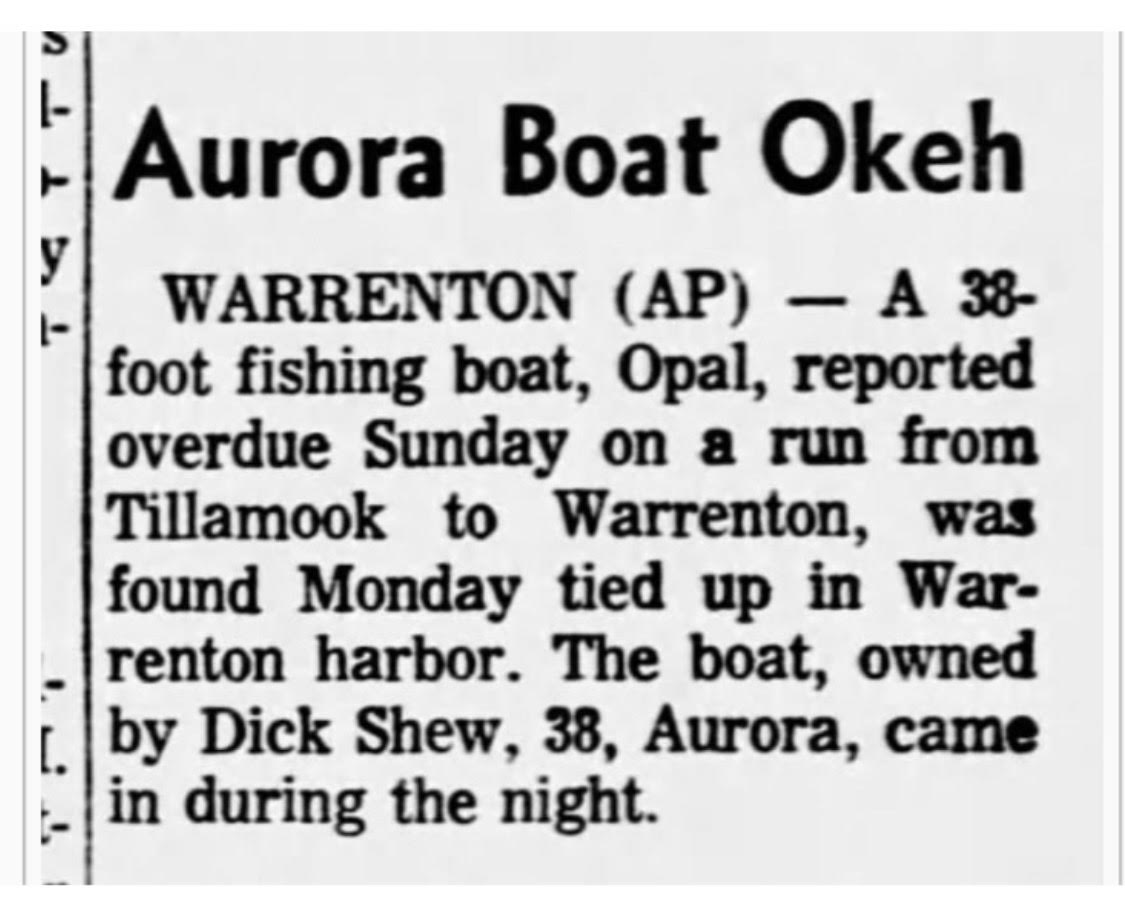
Tim Marsh (Email) - AP Stylebook says only “OK, OK'd, OK'ing, and OKs” is okay.
In 1970, my first newspaper job was as a reporter for the morning Oregon Statesman in Salem, Ore. "OK" and “okay” were not used. Statesman stories used "Okeh” or “okeh.” See clipping from Nov. 7, 1967, Statesman. Dateline is Warrenton, Ore., on the Oregon coast.
-0-
One on ones
Hal Bock (Email) - I got to thinking the other day of some of the people I went 1-on-1 with in my 40 years of writing sports at the AP.
Start with Joe DiMaggio and Muhammad Ali. Add Hank Aaron (more than once) and Hank Greenberg. Then there was Mickey Mantle and Ernie Banks, Sparky Anderson and Lefty Gomez. Breakfast with Joe Montana, lunch with Dick Butkus, dinner with Bob Feller. A trip around the Indianapolis Motor Speedway with Mario Andretti driving the pace car at 100 mph. There were scores of others, too.
Then there was Randall ``Tex'' Cobb, a boxer preparing for a fight with Ali that never happened because of a training camp injury. He kept calling me ``Darlin' '' It was rather disconcerting.
Quite an adventure.
-0-
Reflection on Father’s Day and recent D-Day anniversary
|
|
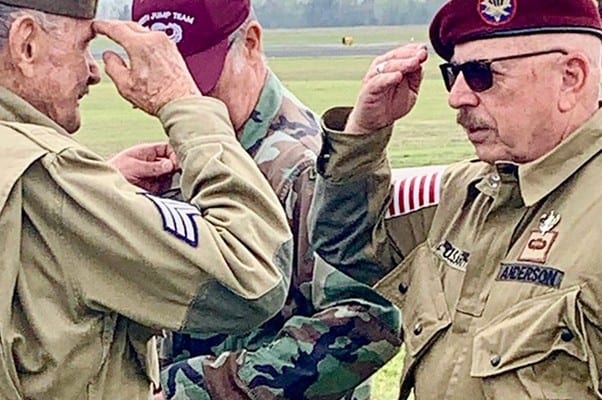
Sgt. Daniel McBride, D-Day veteran of 101st Airborne, awards renewal jump wings to Cold War Airborne vet Dennis Anderson. (Photograph by Julia Akoury)
Dennis Anderson (Email) - Like many AP retirees I continue to write and report. I also recently renewed my military parachutist credentials, awarded new jump wings by D-Day 101st Airborne veteran Sgt. Daniel McBride after making jumps from a D-Day vintage C-47 Skytrain transport, the kind that dropped 13,000 American paratroopers in the earliest hours of the “Day of Days.” This link from Aerotech News includes GoPro video on YouTube of my jump, with camera chest-mounted above my reserve chute. Technology!
Days of Days – D-Day 1944, and Dad’s Day 2021
By DENNIS ANDERSON
It’s worth remembering with Father’s Day coming up, that for a lot of us born during the Baby Boom, World War II was the war that our fathers and grandfathers fought and won — and they defeated Nazi Germany and the Empire of Japan in winning it.
Father’s Day on June 20 falls just a couple of weeks after June 6, the commemoration of D-Day, 1944, the “Day of Days,” when the United States and its Allies launched the largest seaborne invasion in history, joined by thousands of airborne troops, all the vast effort to defeat Adolf Hitler’s Third Reich and end Nazi tyranny.
In the Antelope Valley, there was a time when a reporter could pick up a phone and interview a veteran of D-Day on the spot. Those days are mostly gone now, but not completely. For example, Navy man Art Ray, veteran of D-Day lobbing shells over the beaches from the cruiser USS Quincy, is still among us.
“The Quincy was a good ship,” he recalled recently in a telephone interview. “We cruised up and down the coast of France for two weeks after D-Day,” sending shells ashore to take out Nazi artillery batteries and troop formations.
Opinion: ‘We want to differentiate ourselves from television’: News outlets tossing old approaches to covering crime
Opinion by Erik Wemple
Media critic, The Washington Post
The Boston Globe this year received an inquiry from a woman in its coverage area. Her son had died an untimely death. The Globe had mentioned the man “in a couple of minor crime stories,” according to Jason Tuohey, the Globe’s digital managing editor. The woman didn’t want the coverage “tagged to his name for the rest of eternity,” says Tuohey.
The inquiry came via Fresh Start, a program that the Globe launched in January seeking input from people mentioned in long-ago articles. The initiative, said the Globe, was an attempt “to better understand how some stories can have a lasting negative impact on someone’s ability to move forward with their lives.”
The 10-person Fresh Start committee acted favorably on the request, says Tuohey.
The long-term impact of petty-crime coverage flashed into the media-news realm this week, as the Associated Press announced some directives of its own on this front. No longer would the wire service publish names in minor crime stories, “which we sometimes cover and pick up from member news organizations as one-off briefs because they are ‘odd’ and of interest to our customers,” writes John Daniszewski, the AP’s vice president for standards.
Read more here. Shared by Myron Belkind
Best of the Week
Mother and child reunion is only a photo away; determined AP team is there to record it
|
|
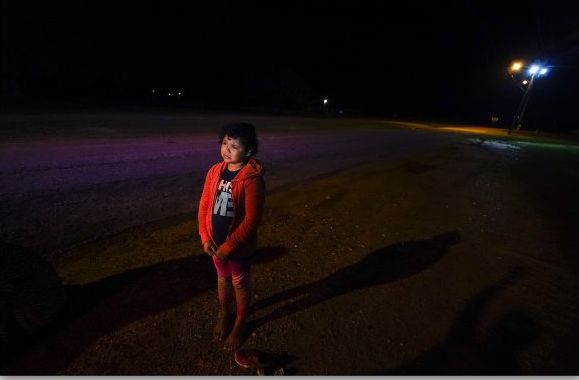
Emely, 8, of Honduras, stands alone after turning herself in upon crossing the U.S.-Mexico border in La Joya, Texas, May 13, 2021. Her mother, Glenda Valdez, was at her home in Austin watching a Univision newscast one afternoon in May, when she recognized Emely in the AP photo on the broadcast. She knew at once that it was her daughter. Desperate, she immediately began making calls to U.S. authorities, the network and refugee agencies. AP PHOTO / GREGORY BULL
On a midnight assignment at the U.S.-Mexico border in mid-May, photographer Greg Bull, video journalist Eugene Garcia and reporter Adriana Gómez Licón met an 8-year-old Honduran migrant named Emely. Bull made a picture as Emely stood alone and barefoot after crossing into Texas with a group of strangers and turning herself into border agents. Garcia produced a heart-wrenching video story that featured young Emely sobbing in the dark.
Just more than three weeks later, thanks to Bull’s photograph, reporter Acacia Coronado, photographer Eric Gay and video journalist Angie Wang were on hand when Emely hugged her mother for the first time in six years.
Glenda Valdez was at her Austin home when she saw Bull’s picture on a Univision broadcast, setting her on a mission to find Emely, who she did not know had been sent by her father from Honduras to the U.S. Valdez reached out to Univision, which did subsequent stories as she sought answers from authorities. Meanwhile, AP’s efforts to find Valdez stalled and Univision did not initially respond to our overtures. But thanks to daily persistence and negotiation by West Region deputy director for video Brian Skoloff, Univision ultimately offered to share exclusive access to a reunion — noting they would not even have had the mother’s emotional story without AP’s presence on the border that night.
Best of the States
AP Exclusive: Secret panel investigating Louisiana State Police unit’s treatment of Black motorists
|
|
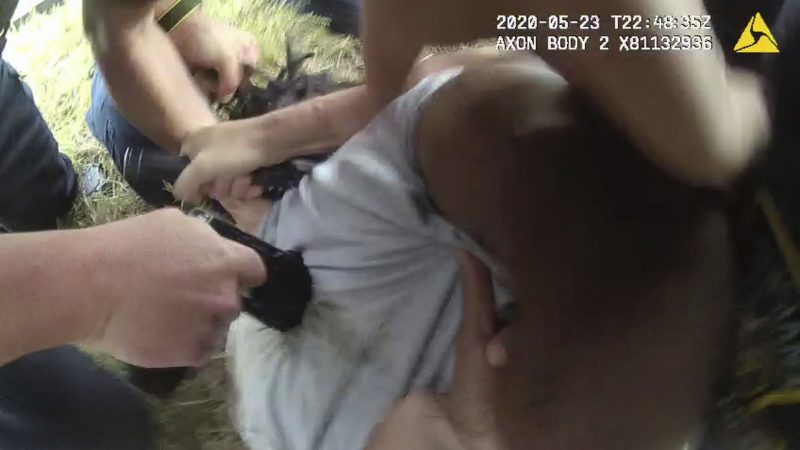
An unidentified law enforcement officer applies an electric weapon to the back of motorist Antonio Harris as officers restrain Harris on the side of a road after a high speed chase in Franklin Parish, La., May 23, 2020, in an image from Louisiana State Police body camera video. Troop F of the State Police, a 66-officer unit, has become notorious in recent years for alleged acts of brutality that have resulted in felony charges against some of its troopers. LARRY SHAPPLEY / LOUISIANA STATE POLICE VIA AP
From the very beginning of Jim Mustian’s stellar reporting on the death of Black motorist Ronald Greene, he has been driven by two main questions: What really happened to Greene on the night of his 2019 arrest? And was this a pattern of how Louisiana state troopers treated other Black motorists?
Mustian answered the first last month when he exclusively obtained body camera video showing troopers stunning, choking, punching and dragging the unarmed Greene as he apologized and begged for mercy. And he began the process of answering the second this past week when he exclusively reported that the Louisiana State Police has convened a secret panel to investigate whether the same unit involved in Greene’s arrest was systematically targeting other Black motorists for abuse.
Stories of interest
When the Local Paper Shrank, These Journalists Started an Alternative (New York Times)
By Katharine Q. Seelye
When Jon Mitchell, the mayor of New Bedford, Mass., delivered his state of the city address in 2019, he made an unusual plea.
“Support your local paper,” he said, referring to The Standard-Times, New Bedford’s daily newspaper. “Your city needs it to function effectively.”
Owned by Gannett, the parent company of USA Today and more than 250 other dailies, The Standard-Times was getting thin. Like thousands of newspapers across the country, it was taking on the characteristics of a “ghost” paper — a diminished publication that had lost much of its staff, curtailing its reach and its journalistic ambitions.
Now, two years later, the mayor’s assessment is more blunt.
Read more here. Shared by Lou Boccardi, Sibby Christensen, Dennis Conrad.
-0-
Editor of paper that endured newsroom shooting says goodbye (AP)
ANNAPOLIS, Md. (AP) — The editor of the Capital Gazette, which won a special Pulitzer Prize citation for its coverage and courage in the face of a massacre in its newsroom, is leaving the Maryland newspaper.
Rick Hutzell, who worked at the Annapolis paper for more than three decades, authored a farewell column that was published on the paper’s website Saturday morning.
Hutzell said he took a buyout that was offered by the newspaper’s parent company. The Capital Gazette was owned by Tribune Publishing until it was purchased last month by Hedge fund Alden Global Capital.
Hutzell was editor of the paper when five employees were shot to death in the newsroom in 2018.
Read more here. Shared by Adolphe Bernotas, Lou Boccardi.
-0-
A Dad and an Audience of One (New York Times)
By David Vecsey
Our house often mimicked the sounds of a newsroom: the rustling of the paper over morning coffee; the ringing of phones; the pounding of a heavy black Royal typewriter, each volley of keystrokes followed by a ding and the slap of the carriage return; and then the dictation of that day’s copy.
In a deep, slow, clear voice, my father, George Vecsey, would read his freshly written Sports of the Times column — one of thousands he wrote over some 30 years — to a machine somewhere inside The New York Times Building. Every word, every comma, every quote mark, every proper name spelled out. Everything in its place.
He’d read into the phone, “NEW PARAGRAPH The frustration was on the Rangers’ faces EM-DASH a few of them filled with tears EM-DASH as the players clumped off the ice a few minutes later COMMA and it was in the words of CAPITAL H-e-r-b SPACE CAPITAL B-r-o-o-k-s as he talked about OPEN QUOTES LOWERCASE C closing the gap PERIOD CLOSE QUOTES NEW PARAGRAPH.”
Read more here. Shared by Lou Boccardi, Sibby Christensen.
The Final Word
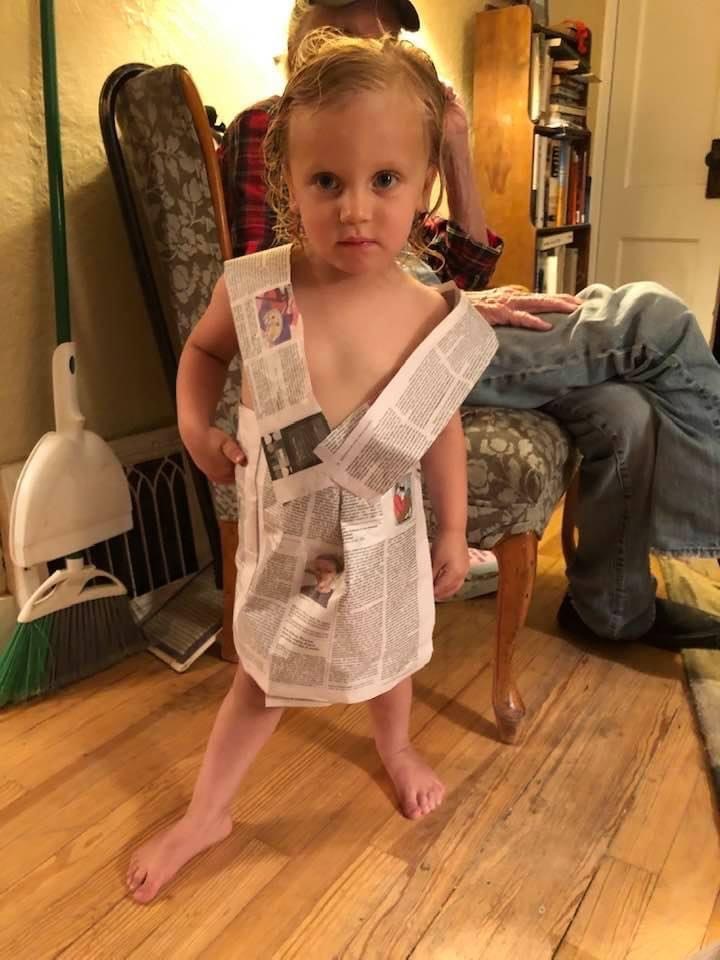
Who said newspapers have no use?
|
|
Colleague Lindsey Tanner's granddaughter Esme, 2 1/2 years old, likes to use newspapers to draw on and cover herself with. So, Lindsey said, "we found another creative use to while away the time June 6 while her mom was giving birth to her baby sister." |
|
A special section
celebrating AP's 175th
|
|
AP store for 175th, vintage merchandise |
|
The AP has created a store with 175th anniversary merchandise available for purchase, as well as items branded with some of AP’s most historic logos. The site can be reached by clicking here.
|
|
AP Through Time: A Photographic History |
|
AP Through Time: A Photographic History” - created by Director of Corporate Archives, Valerie Komor, is a keepsake commemorating AP’s 175th year. Small in size (6 ¾ x 6 ¾ in.), it is organized chronologically in eight segments that trace the broad outlines of AP’s development from 1846 to the present: Beginnings, Evolution, New Century, Modernity, Expansion, One World, Speed, and Transformation. Click here to view and make an order.
|
|
AP at 175 video
This video celebrates the unique role AP has played since 1846.
|
|
Today in History - June 21, 2021 |
|
Today is Monday, June 21, the 172nd day of 2021. There are 193 days left in the year.
Today’s Highlight in History:
On June 21, 1964, civil rights workers Michael H. Schwerner, Andrew Goodman and James E. Chaney were slain in Philadelphia, Mississippi; their bodies were found buried in an earthen dam six weeks later. (Forty-one years later on this date in 2005, Edgar Ray Killen, an 80-year-old former Ku Klux Klansman, was found guilty of manslaughter; he was sentenced to 60 years in prison, where he died in January 2018.)
On this date:
In 1788, the United States Constitution went into effect as New Hampshire became the ninth state to ratify it.
In 1942, German forces led by Generaloberst (Colonel General) Erwin Rommel captured the Libyan city of Tobruk during World War II. (Rommel was promoted to the rank of Field Marshal; Tobruk was retaken by the Allies in November 1942.)
In 1943, Army nurse Lt. Edith Greenwood became the first woman to receive the Soldier’s Medal for showing heroism during a fire at a military hospital in Yuma, Arizona.
In 1954, the American Cancer Society presented a study to the American Medical Association meeting in San Francisco which found that men who regularly smoked cigarettes died at a considerably higher rate than non-smokers.
In 1963, Cardinal Giovanni Battista Montini was chosen during a conclave of his fellow cardinals to succeed the late Pope John XXIII; the new pope took the name Paul VI.
In 1973, the U.S. Supreme Court, in Miller v. California, ruled that states may ban materials found to be obscene according to local standards.
In 1977, Menachem Begin (men-AH’-kem BAY’-gihn) of the Likud bloc became Israel’s sixth prime minister.
In 1982, a jury in Washington, D.C. found John Hinckley Jr. not guilty by reason of insanity in the shootings of President Ronald Reagan and three other men.
In 1989, a sharply divided Supreme Court ruled that burning the American flag as a form of political protest was protected by the First Amendment.
In 1997, the WNBA made its debut as the New York Liberty defeated the host Los Angeles Sparks 67-57.
In 2002, one of the worst wildfires in Arizona history grew to 128,000 acres, forcing thousands of homeowners near the community of Show Low to flee.
In 2010, Faisal Shahzad (FY’-sul shah-ZAHD’), a Pakistan-born U.S. citizen, pleaded guilty to charges of plotting a failed car bombing in New York’s Times Square. (Shahzad was later sentenced to life in prison.)
Ten years ago: The Food and Drug Administration announced that cigarette packs in the U.S. would have to carry macabre images that included rotting teeth and gums, diseased lungs and a sewn-up corpse of a smoker as part of a graphic campaign aimed at discouraging Americans from lighting up. Amid street protests, Greek Prime Minister George Papandreou survived a confidence vote.
Five years ago: Hillary Clinton, during a visit to the battleground state of Ohio, said Donald Trump would send the U.S. economy back into recession, warning that his “reckless” approach would hurt workers still trying to recover from the 2008 economic turbulence. North Korea fired two suspected powerful new Musudan midrange ballistic missiles, according to U.S. and South Korean military officials, the communist regime’s fifth and sixth such attempts since April 2016. The Obama administration approved routine commercial use of small drones in areas such as farming, advertising and real estate after years of struggling to write rules to protect public safety.
One year ago: An initially peaceful protest in Portland, Oregon, against racial injustice turned violent, as police used flash-bang grenades to disperse demonstrators throwing bottles, cans and rocks at sheriff’s deputies. Spectators in Raleigh, North Carolina, cheered as work crews finished the job started by protesters and removed a Confederate statue from atop a 75-foot monument. NASCAR said a rope shaped like a noose had been found in the garage stall of Bubba Wallace, the only full-time Black driver in NASCAR’s elite Cup Series, at a race in Talladega, Alabama. (Federal authorities found that the rope had been hanging there for months, and that it was not a hate crime.) New York Mayor Bill de Blasio said the American Museum of Natural History would remove from its entrance a statue depicting Theodore Roosevelt on horseback with a Native American man and an African man standing alongside; critics said it symbolized colonial expansion and racial discrimination.
Today’s Birthdays: Composer Lalo Schifrin is 89. Actor Bernie Kopell is 88. Actor Monte Markham is 86. Songwriter Don Black is 83. Actor Mariette Hartley is 81. Comedian Joe Flaherty is 80. Rock singer-musician Ray Davies (The Kinks) is 77. Actor Meredith Baxter is 74. Actor Michael Gross (Baxter’s co-star on the sitcom “Family Ties”) is 74. Rock musician Joe Molland (Badfinger) is 74. Rock musician Don Airey (Deep Purple) is 73. Rock musician Joey Kramer (Aerosmith) is 71. Rock musician Nils Lofgren is 70. Actor Robyn Douglass is 69. Actor Leigh McCloskey is 66. Cartoonist Berke Breathed is 64. Actor Josh Pais is 63. Country singer Kathy Mattea is 62. Oregon Gov. Kate Brown is 61. Actor Marc Copage (koh-PAJ’) is 59. Actor Sammi Davis is 57. Actor Doug Savant is 57. Country musician Porter Howell is 57. Actor Michael Dolan is 56. Writer-director Lana Wachowski is 56. Actor Carrie Preston is 54. Actor Paula Irvine is 53. Rapper/producer Pete Rock is 51. Country singer Allison Moorer is 49. Actor Juliette Lewis is 48. Actor Maggie Siff is 47. Musician Justin Cary is 46. Rock musician Mike Einziger (Incubus) is 45. Actor Chris Pratt is 42. Rock singer Brandon Flowers is 40. Britain’s Prince William is 39. Actor Jussie Smollett is 39. Actor Benjamin Walker is 39. Actor Michael Malarkey is 38. Pop singer Kris Allen (TV: “American Idol”) is 36. Pop/rock singer Lana Del Rey is 36. Actor Jascha Washington is 32. Country musician Chandler Baldwin (LANCO) is 29. Pop singer Rebecca Black is 24.
|
|
Got a story or photos to share? |
|
Got a story to share? A favorite memory of your AP days? Don't keep them to yourself. Share with your colleagues by sending to Ye Olde Connecting Editor. And don't forget to include photos!
Here are some suggestions:
- Second chapters - You finished a great career. Now tell us about your second (and third and fourth?) chapters of life.
- Spousal support - How your spouse helped in supporting your work during your AP career.
- My most unusual story - tell us about an unusual, off the wall story that you covered.
- "A silly mistake that you make"- a chance to 'fess up with a memorable mistake in your journalistic career.
- Multigenerational AP families - profiles of families whose service spanned two or more generations.
- Volunteering - benefit your colleagues by sharing volunteer stories - with ideas on such work they can do themselves.
- First job - How did you get your first job in journalism?
- Connecting "selfies" - a word and photo self-profile of you and your career, and what you are doing today. Both for new members and those who have been with us a while.
- Most unusual place a story assignment took you.
Paul Stevens
Editor, Connecting newsletter
paulstevens46@gmail.com
|
|
|
|
|
|
|